





Working Out After 50: How to Build Muscle
In this article, I share exactly how I recommend women over 50 approach exercise so they can build and maintain muscle, protect bone density and support long-term health. I explain why strength training becomes even more important at this stage of life, outline the most effective types of workouts to prioritize and cover key safety considerations to keep in mind. This post is written specifically for women 50+ who value functional strength, longevity and feeling capable in their bodies over chasing fitness trends.
Quick Links:
Why Exercise Matters After 50
If you’re over 50 and wondering how you should be working out at this stage of life, I want you to know something first: your body is not “past its prime.” It’s simply in a different phase, and that phase requires intention, strategy and strength.
Exercise at this stage in your life is about protecting, strengthening and future-proofing yourself (regardless of your current fitness level).
After 50, hormonal changes – especially the decline in estrogen – accelerate muscle loss, decrease bone density and increase the risk of metabolic changes. Muscle mass naturally declines with age (a process called sarcopenia), and without resistance training, that decline speeds up significantly.
I don’t say that to scare you. I say it because this is empowering: muscle loss is not inevitable at a rapid rate if you train for it. A solid exercise program has a variety of health benefits.
Regular exercise after 50 can:
- Preserve and build lean muscle mass
- Improve bone density and reduce the risk of osteoporosis
- Support joint stability and reduce aches and pain
- Improve insulin sensitivity and blood sugar regulation
- Boost metabolism and help maintain a healthy body composition
- Improve balance and reduce risk of falls
- Support heart health and circulation (reducing your risk of heart disease and high blood pressure)
- Enhance cognitive function and reduce the risk of dementia
- Improve mood and reduce anxiety and depression
- Increase energy levels
- Support independence as you age
I truly believe strength training (weightlifting) is one of the most powerful anti-aging tools available.
Best Exercises to Incorporate
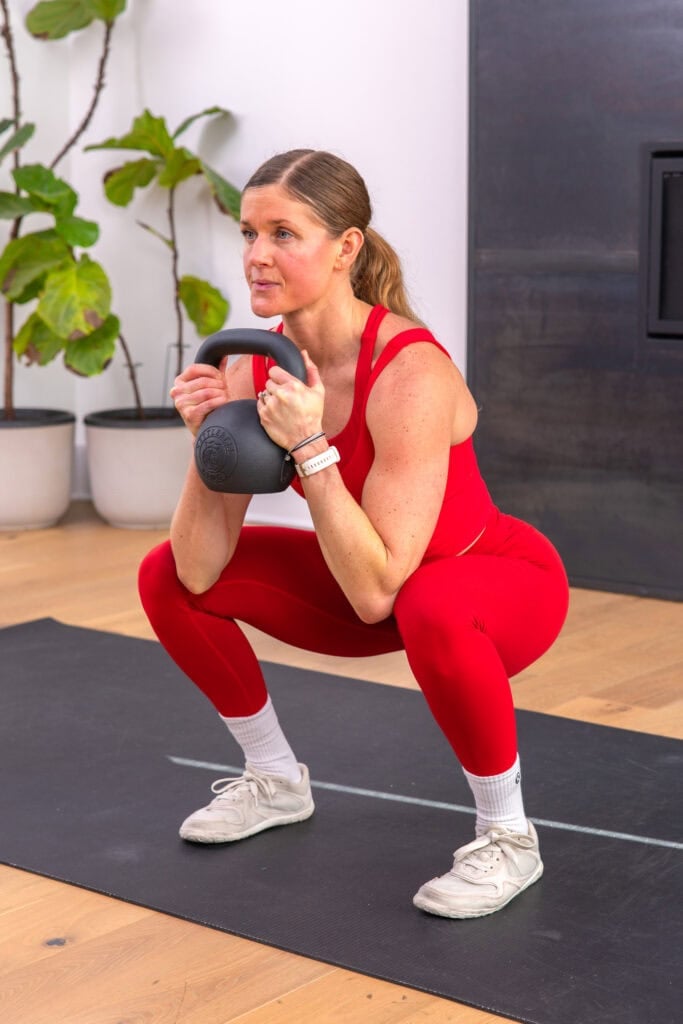
- Squats: These are a foundational exercise that translates to everyday life. Sitting down and standing up safely requires lower-body strength. Squats strengthen the glutes, quads and core while also supporting bone density in the hips and spine.
- Deadlifts or Hip Hinges: Hip hinge patterns strengthen the posterior chain (glutes, hamstrings and lower back). These muscles protect the spine and make lifting groceries, laundry baskets or grandchildren safer and easier.
- Step-Ups: This exercise improves single-leg strength and balance. Stair climbing is a real-life movement, and training it intentionally reduces fall risk and builds hip stability.
- Lunges or Split Squats: These moves challenge balance, coordination and unilateral strength. Training 1 leg at a time helps address imbalances and strengthens stabilizing muscles around the hips and knees. If squats or lunges are uncomfortable for your knees, try working up to them with substitutions and modifications.
- Glute Bridges or Hip Thrusts: Strong glutes support the lower back, improve posture and reduce knee strain. They are foundational for long-term mobility.
- Rows: This exercise strengthens the upper back and improves posture. Many women over 50 experience forward-rounded shoulders, and rowing movements counteract that pattern while protecting shoulder health.
- Chest Press: A chest press will help you maintain upper-body pushing strength. This movement supports daily activities like pushing doors, getting up from the floor and maintaining balanced shoulder strength.
- Overhead Press: Reaching overhead is a functional necessity. This movement supports shoulder mobility and strength while helping maintain bone density in the upper spine.
- Push-Ups: While challenging, push-ups offer an excellent, low-impact way to combat muscle loss, enhance upper-body strength and support joint health – especially when you don’t have access to weights.
- Farmer’s Carries: I love loaded carries. Holding weight while walking strengthens the core, grip, shoulders and hips all at once. Carrying also builds real-world strength that translates directly into daily life.
- Planks (and Other Core Stability Exercises): These build deep core stability, not just surface-level abdominal strength. A strong core protects the spine and improves balance.
- Bird Dogs or Dead Bugs: These deep core movements reinforce controlled spinal stability. They teach the body how to move the limbs while keeping the core engaged, which is critical for injury prevention.
- Single-Leg Balance Work: I intentionally program balance work because fall risk increases with age. Training balance improves joint stability, coordination and confidence in movement.
- Incline Walking or Brisk Walking: I encourage regular walking because it supports cardiovascular health while remaining joint-friendly. Incline walking, in particular, strengthens the lower body and supports bone health.

Ideal Workouts
As a personal trainer, when I structure workouts for women over 50, I focus on 4 key categories: aerobic exercise, strength training, functional movement and core plus mobility work. Each one plays a specific role in supporting heart health, preserving muscle and bone, improving balance and maintaining the strength and freedom to move well for decades to come. Ultimately, incorporating different types of exercise targeting all of your major muscle groups will be best.
Aerobic Exercise
Cardio matters at any age, especially for heart health. I recommend that you aim for 150-160 minutes per week of low to moderate-intensity aerobic exercise. I prefer lower-impact exercises that will get your heart rate up while being joint-friendly: walking (especially incline walking), cycling, swimming, rowing and elliptical are all great options. Keep in mind that cardio should support your strength training, not replace it.
Workouts to try:
- 10-Minute Low-Impact HIIT
- 10-Minute Beginner Cardio
- 15-Minute Bodyweight Cardio
- 15-Minute Standing Cardio
- 15-Minute Beginner HIIT Workout
- 15-Minute Standing Cardio
- 35-Minute Low Impact Cardio
Strength Training
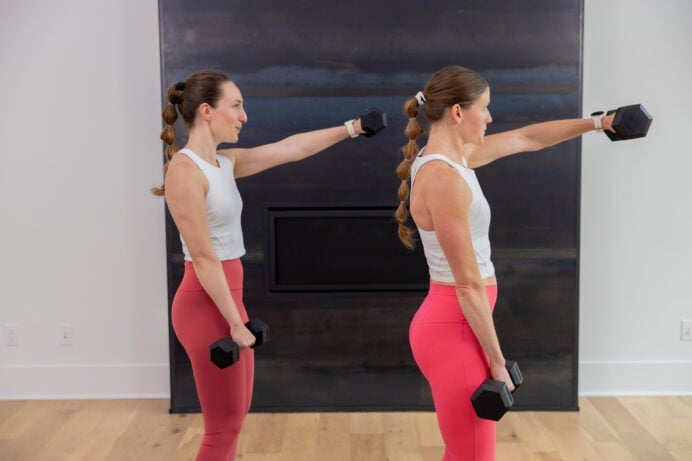
Lifting weights is a non-negotiable in my opinion. It helps combat muscle loss, strengthens bones, supports metabolism and protects joints. I encourage focusing on compound movements that train multiple muscle groups at once: squats, deadlifts, rows, chest presses, overhead presses, lunges, step-ups and core stability exercises are some of the best strength training exercises you can do.
Muscle does not disappear because of age alone – it disappears from lack of stimulus. That means that the key is progressive overload, or gradually challenging your muscles over time. That might mean increasing weight, adding reps or improving control and tempo.
Workouts to try:
- 20-Minute Standing Full-Body Dumbbell Workout
- 20-Minute Full Body Strength
- 25-Minute Full-Body Dumbbell Workout
- 30-Minute Full-Body Strength
- 35-Minute Strength Building Workout
- 35-Minute Full Body Dumbbell Workout
Functional Movement
Functional movements that support real life should also be a priority. You have to train movements that support the things you do every day, such as carrying groceries, getting up from the floor, climbing stairs, reaching overhead and rotating safely.
Farmer’s carries, step-ups, rotational core work and single-leg balance exercises are valuable.
Workouts to try:
- 20-Minute Full-Body Functional Strength Training
- 20-Minute Full-Body Functional Training
- 20-Minute Full-Body Strength and Abs
- 35-Minute Full Body Unilateral Strength
- 35-Minute Full Body Strength and Abs
Core and Mobility
Both core training and mobility work are important in keeping you strong and capable. As a whole, the core supports nearly every movement you do. A strong core improves your posture, protects your spine, reduces risk of injury and helps you move with more power and control in your daily life.
Mobility is also crucial because recovery becomes increasingly important after 50. I recommend: daily mobility work (hips, shoulders, thoracic spine), gentle stretching after workouts, prioritizing sleep and managing stress.
Workouts to try:
- 5-Minute Thoracic Mobility
- 8-Minute Hip Mobility
- 8-Minute Lower Back Relief
- 10-Minute Deep Core Workout
- 10-Minute Standing Mobility and Recovery
- 10-Minute Active Recovery Yoga
- 15-Minute Full-Body Mobility
- 15-Minute Beginner Pilates
LET’S GET STARTED
FREE 12-Week Workout Plan
Download the PDF calendar for a free 12-week workout plan so you can easily access your daily workouts.
Download PDF
Tips for Success
Training after 50 is a powerful tool, but you also need to be smart about how you train. Here’s what I personally recommend:
- Focus on form before load. Quality movement always comes first.
- Warm up properly. 5-10 minutes of dynamic movement can make a major difference.
- Respect recovery. Soreness is not a badge of honor.
- Prioritize protein intake to support muscle repair and growth.
- Avoid drastically under-eating. Under-fueling makes muscle maintenance harder.
- Progress gradually. Tendons and ligaments adapt more slowly than muscles.
- Address joint pain early rather than pushing through it.
- Get medical clearance if returning after a long break or managing chronic conditions.
This is not the time to train as you did at 25, and that’s completely fine. It’s the time to train with intelligence and purpose.
FAQs
How many days per week should someone over 50 work out?
For most women over 50, I typically recommend strength training 3-4 days per week. This allows enough stimulus to build and maintain muscle, while also allowing time for proper recovery. If you are new to strength training, I recommend starting with 2-3 full-body strength sessions per week and building from there. On non-lifting days, I encourage gentle movement like walking, mobility work or low-impact cardio. If you need to pull back during your strength training routine, try adding a deload week.
What are the best exercises for maintaining bone density after 50?
When it comes to bone density, you should prioritize resistance training and weight-bearing movements. Exercises like weighted squats, deadlifts, lunges, step-ups, overhead presses and rows are great options. Again, progressive overload or gradually increasing resistance over time is what stimulates bone adaptation. Using light weights forever will not create the same protective effect.
Is strength training safe after age 50?
Yes, I believe strength training is one of the safest and most protective forms of exercise when done correctly. Muscle loss, bone loss and decreased balance can increase fall risk and injury risk far more than properly programmed strength training. At the end of the day, safety comes down to: proper technique, appropriate weight or load selection, gradual progression and adequate recovery.
How can adults over 50 prevent injury while exercising?
Injury prevention is more about strategy than intensity. Prioritize warming up with dynamic movement, strengthen your stabilizing muscles (glutes, core, upper back), progress intensity gradually and prioritize sleep, recovery and mobility.
How does exercise after 50 support metabolism and healthy aging?
After 50, metabolic changes are often tied to declining muscle mass and hormonal shifts. The more lean mass you maintain, the more supported your resting metabolism becomes. Strength training helps preserve and build muscle while improving your insulin sensitivity, supporting blood sugar regulation and reducing inflammation.
Regular, Daily Movement Is Essential
Exercise becomes even more important after 50 because hormonal changes impact muscle and bone health. Strength training, aerobic exercise, functional movement and core plus mobility work should all be included in your exercise routine to support bone density, balance, metabolism and long-term independence.
At the end of the day, the goal is to train for strength, resilience and longevity. Regular physical activity is one of the most powerful investments anyone can make in overall health, energy and quality of life, no matter their age. It’s never too late to build strength.
More Posts
Fitness EducationPin This: Working Out After 50: Building Muscle
8 comments
Thank you. I am training with you for about a year now. I do have my ups and downs, but I appreciate your support
Thank you for following along with the workouts! Keep up the great work! -Lindsey
Great article! I started doing your HIIT workouts but now do whatever workout program shows up in my box on Sundays. Being in my late 50s it’s nice to be back to working out with programs that switch up every other week and are enjoyable.
Question: Monday-Friday I incline walk on my treadmill for 30 minutes before doing one of your programs (just finished Overload 30 today). On weekends I walk outside in a hilly area for about 40 minutes. I’ve been doing your various programs since early fall last year but haven’t visibly seen any definition changes in my arms or legs so I’m a little frustrated. I also have a “menopause belly”. Do hormonal changes make it take longer to see changes in muscle definition? If not, any ideas on how to actually “see” results faster? I feel better and clothes fit better so I know there is progress but I’d love to see some nice, toned arm/shoulder/back muscles as well as definition in my legs to make my efforts visible to myself and others as a point of pride for the time and effort I’m putting into working out. Any suggestions are appreciated.
I’m thankful for you and Rachel every morning- and your husband in that workout series too- you make it enjoyable and easy to show back up each day.
Hi Tricia! Thank you so much for the kind words and for being so consistent since early fall—that’s a big accomplishment! Hormonal changes during menopause can make visible muscle definition take a bit longer, especially with changes in fat distribution and muscle-building. The progress you mentioned—feeling better and clothes fitting better—are great signs that your body is changing. To help definition show more, focus on progressively increasing weights when you can, getting enough protein, and allowing for recovery. Sometimes slightly reducing steady-state cardio and putting that energy into lifting heavier can help muscles become more visible over time. You’re clearly putting in the work—keep going, and thank you for being part of the community! -Lindsey
Thank you for this article. Turning 50 and perimenopause has hit me like a ton of bricks. I have stopped working out because I am so tired. I want to give this plan a try. I appreciate all you do Lindsey! I have been working out with you for 5 years.
I hope you find this helpful! Keep up the great work! -Lindsey
THANK YOU for this!!! I am 51 and found NML about 1.5 years ago. I love your workouts and can’t wait to do this one.
I am so glad you found your way to NML, Becky! Thanks for putting the workouts to such good use! -Lindsey