


9 Deep Core Exercises
In this deep core workout, I focus on low-impact, intentional exercises that target the muscles supporting your spine, posture and pelvic floor muscles to help you move and feel stronger in everyday life. I designed this workout to build a stable strength foundation without crunches or sit-ups, making it ideal for beginners, those returning to exercise or anyone looking to train smarter. You’ll move through 9 of my favorite deep core exercises you can do at home, using controlled, functional movements that prioritize alignment, breath and long-term core strength.
Workout Specifics
Improve deep core stability and strength with the best deep core exercises found in this guided ab workout.
I recommend adding core workouts like this to your routine 1-2 times a week to improve strength and definition in the abs and core. For extra emphasis on the core, follow this 28-Day Deep Abs Challenge.
Before starting this at-home core workout, I recommend some breathing exercises to warm up and activate your transverse abdominis muscles. To find your transverse abdominis muscles, fake cough. The muscles you feel ‘pop’ when you cough are your transverse abdominis muscles.
To engage them, imagine there is a string between your hip bones, and as you exhale, that string (or your TA muscles) is pulling your hip bones together. Maintain this core activation and engagement throughout each exercise.
Workout Equipment
No equipment needed for this bodyweight-only, pilates-inspired core routine.
Workout Instructions
Follow along with the guided Deep Core Workout for Women on YouTube, led by me — your certified personal trainer, Lindsey Bomgren.
Your Workout Looks Like This:
- 9 Deep Core Exercises
- Timed Intervals (40 seconds of work, 20 seconds rest; complete as many reps as you can in the timed interval)
- Perform Each Exercise x1 Set (No Repeat)
10-Minute Deep Core Workout Outline
1. Bear Crawl Hover
Targets: Deep transverse abdomen muscles, rectus abdominis (six-pack ab muscles), oblique muscles, shoulders, back, legs, glutes and quads.
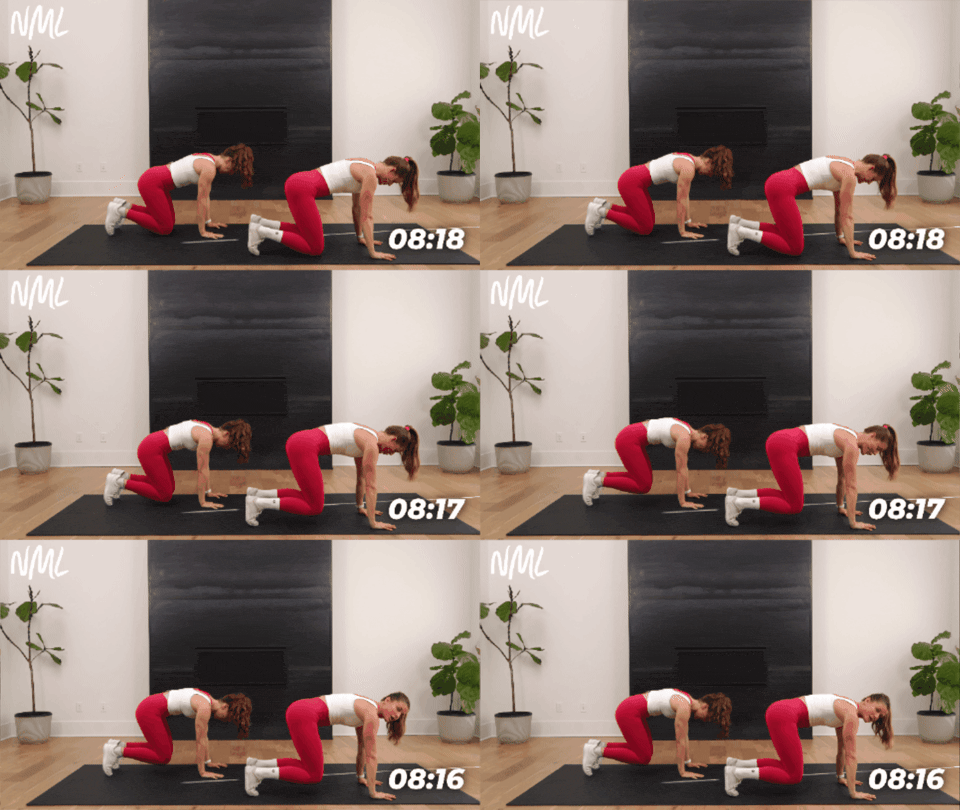
How to Do a Bear Crawl Hover
- Start in a tabletop position, shoulders stacked over wrists and hips stacked over knees.
- Inhale, taking a deep breath as you let your belly slightly drop as you breathe through your midsection.
- Exhale, drawing your abs tight around your torso as you tuck your toes under and lift your knees 1 inch off the mat, finding a bear crawl. Hold for a 3-count.
- Inhale as you lower your knees to the mat, finding a neutral spine and returning to the starting position.
2. Forearm Plank
Targets: Upper abs, lower abs, obliques, shoulders, glutes and thighs.
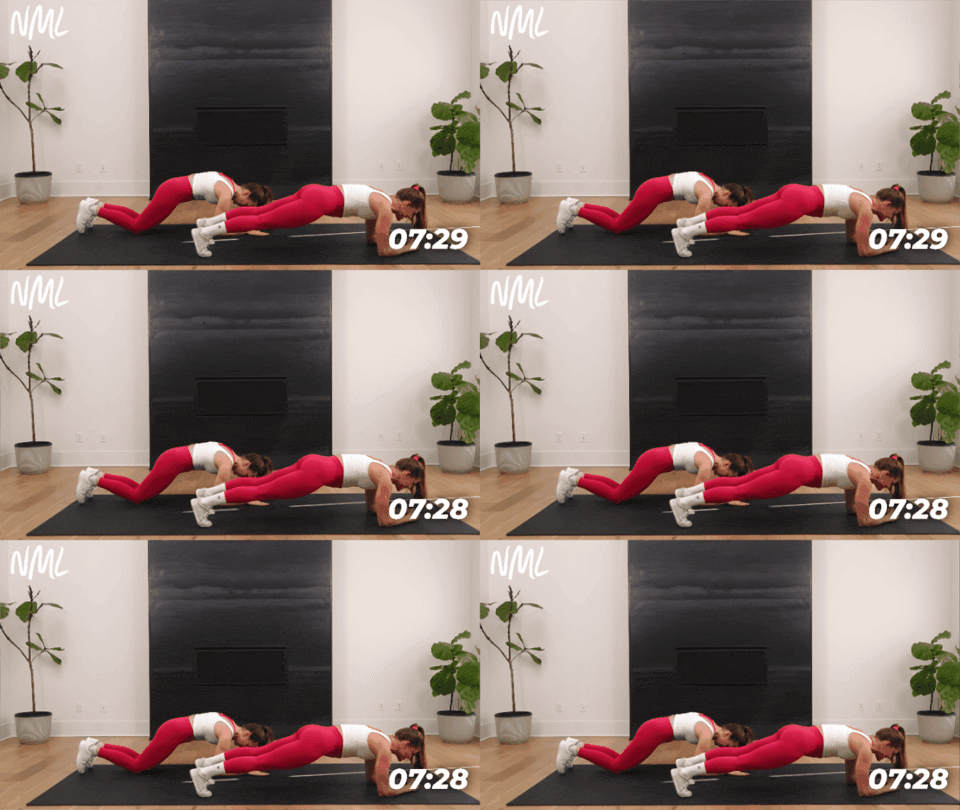
How to Do a Forearm Plank
- Start on all fours, then lower your forearms to the floor. Your elbows should be directly under your shoulders.
- Step your feet back so your body forms a straight line from head to heels.
- Engage your deep core by pulling your belly button in towards your spine. Focus on keeping your hips even, avoiding any piking or sagging.
Modification: Plank variations (like a forearm plank, high plank or side plank) are extremely effective ways to engage the deep core. If being in the plank position hurts your wrists, check out these modifications for wrist pain.
3. C-Curve Knee Drive
Targets: Deep transverse abdominal muscles, lower abs and obliques.
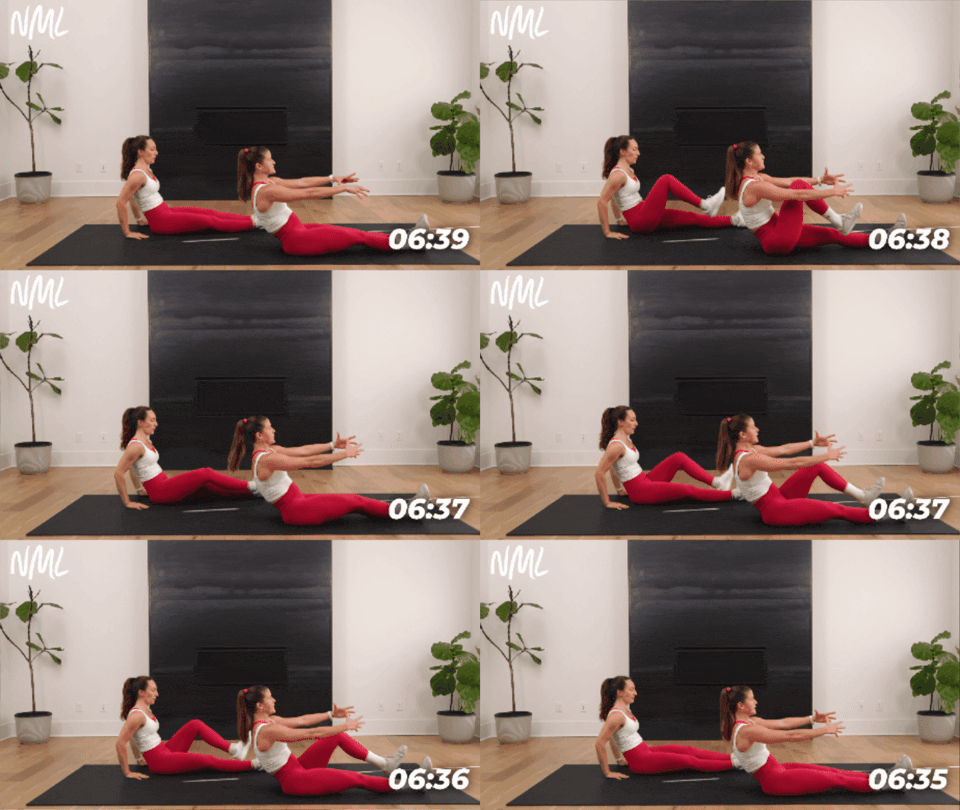
How to Do a C-Curve Knee Drive
- Start seated with your legs out long in front of you.
- Slightly lean back and scoop your belly in as you gently roll your spine into a “C” shape (also called a C-curve), tucking your tailbone under as you round your spine. Extend your arms long in front of you.
- Keeping your core engaged, alternate pulling first your left knee towards your chest, then your right knee into your chest.
4. C-Curve Arm Sweep
Targets: Deep transverse abdominal muscles, upper abs and obliques.
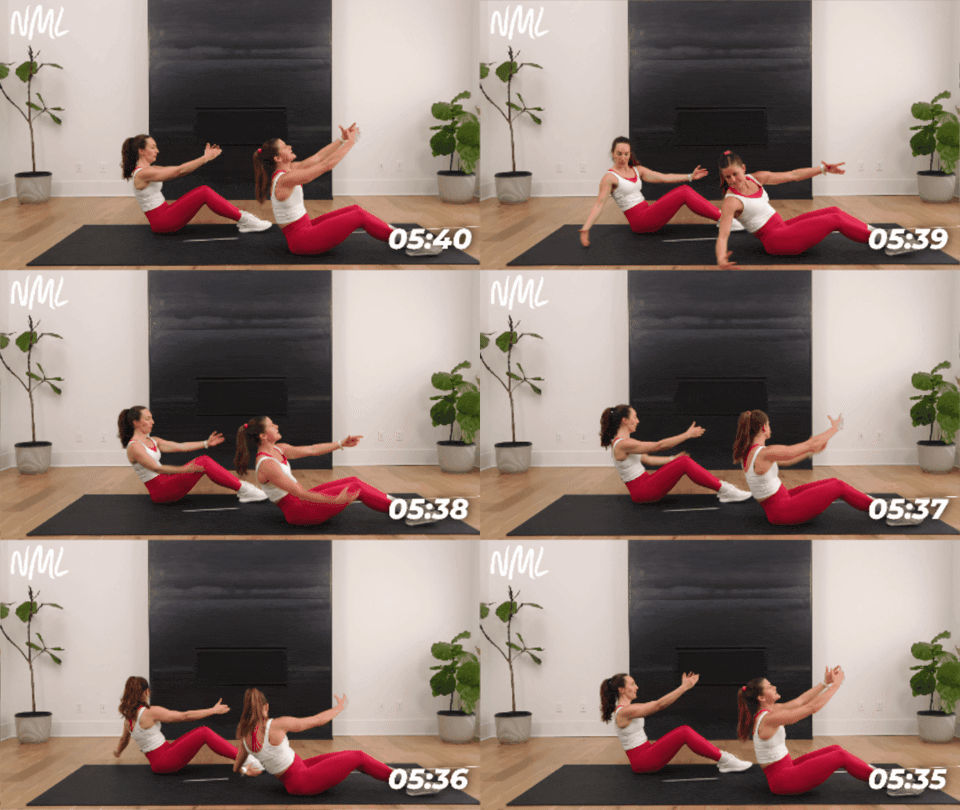
How to Do a C-Curve Arm Sweep
- Start seated with your legs out long in front of you.
- Slightly lean back and scoop your belly in as you gently roll your spine back into a C-curve, tucking your tailbone under as you round your spine. Extend your arms long in front of you.
- Inhale as you open your chest towards the right, sweeping your right arm behind you to tap the mat behind your right hip.
- Exhale to return to the center, then repeat on the left.
5. Full Body Roll Up (Pilates Roll Up)
Targets: Rectus abdominis, transverse abdominal muscles, upper abs and lower abs.
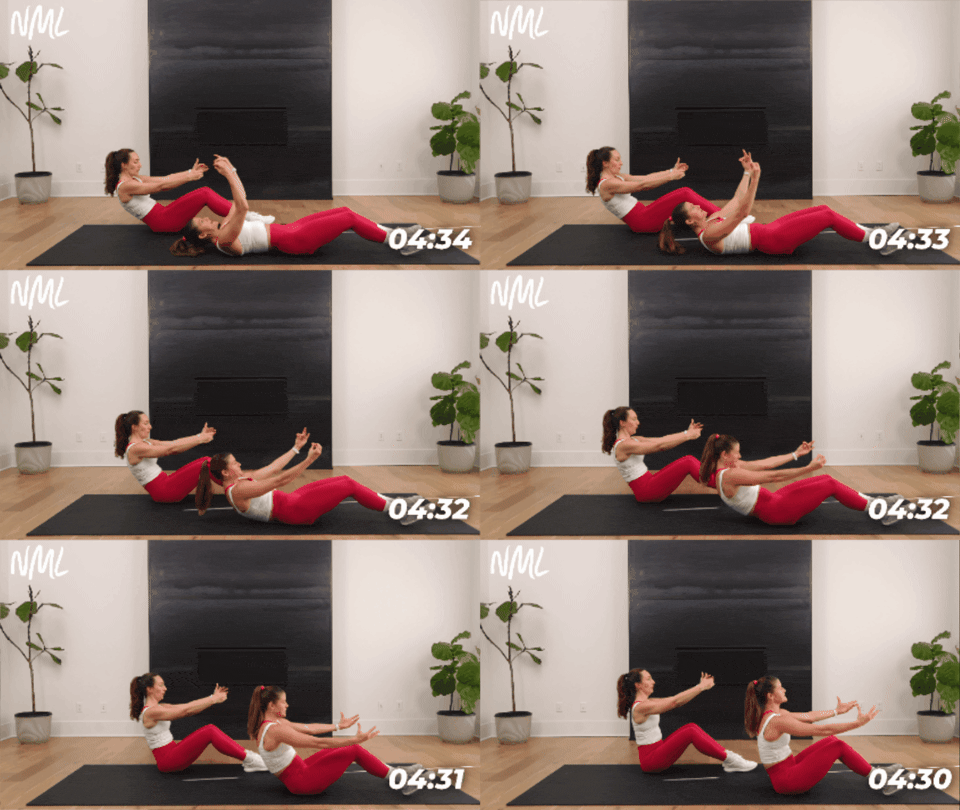
How to Do a Pilates Roll Up
- Start lying on your back with legs extended and arms reaching overhead, palms facing up. Keep ribs gently pressed down.
- Inhale, lift your arms toward the ceiling.
- Exhale, tuck your chin to your chest, and begin to roll up 1 vertebra at a time, reaching your arms forward as you peel your spine off the mat. Keep the movement slow and controlled.
- At the top, sit tall for a moment, then begin to exhale and roll down slowly, scooping your belly and articulating your spine back to the mat, returning to the starting position.
6. Dead Bug
Targets: Deep core muscles (transverse abdominis), lower abdominal muscles, hips, shoulders and back (posterior and anterior deltoids).
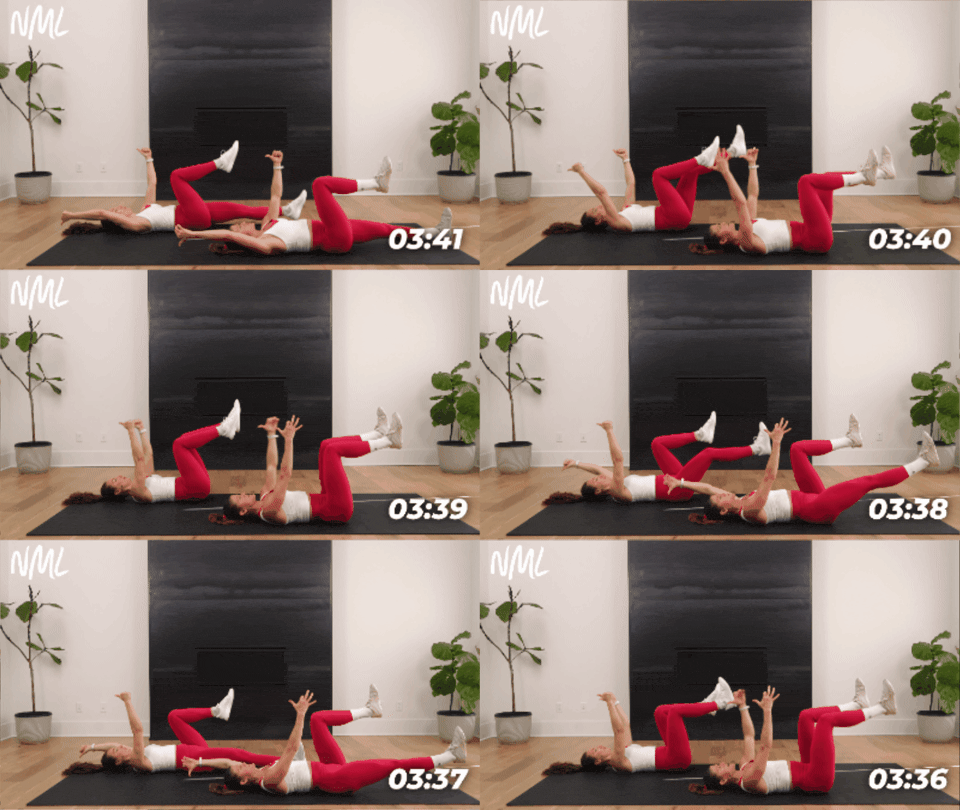
How to Do a Dead Bug
- Lie on your back flat on the floor, performing a slight pelvic tilt to press your lower back into the mat. Lift your knees to form a 90-degree angle (knees stacked on top of hips). Inhale, letting your belly expand.
- Exhale, engaging your core. Extend your left leg and right arm away from your body, lowering the right hand and left foot towards the ground with control. Left arm and right leg remain in place. With control, inhale as you return to center.
- Then repeat on the opposite side. Exhale as you extend your right leg and left arm away from the body, lowering the left hand and right foot towards the ground. With control, return to the starting position.
7. Hollow Rock Hold
Targets: Upper abs, lower abs, obliques and transverse abdominal muscles.
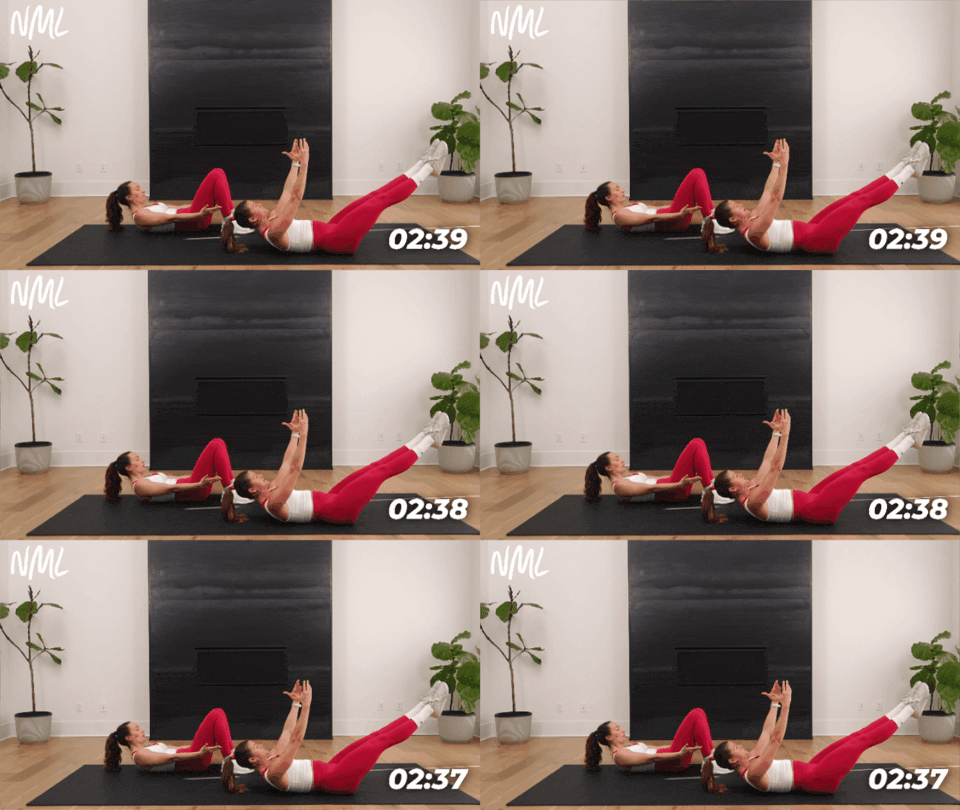
How to Do a Hollow Rock Hold
- Start lying on your back with your legs straight. Lift your arms straight overhead, so your wrists are stacked over your shoulders.
- Activate your transverse abdominal muscles by imagining there is a string connecting your hip bones and attempting to pull them closer together.
- Then, lift your neck and shoulders off the mat before lifting both legs off the mat, attempting to keep your legs as straight as possible.
8. Straight Leg Pull
Targets: Deep core muscles (transverse abdominis), lower abdominal muscles and hip flexors.
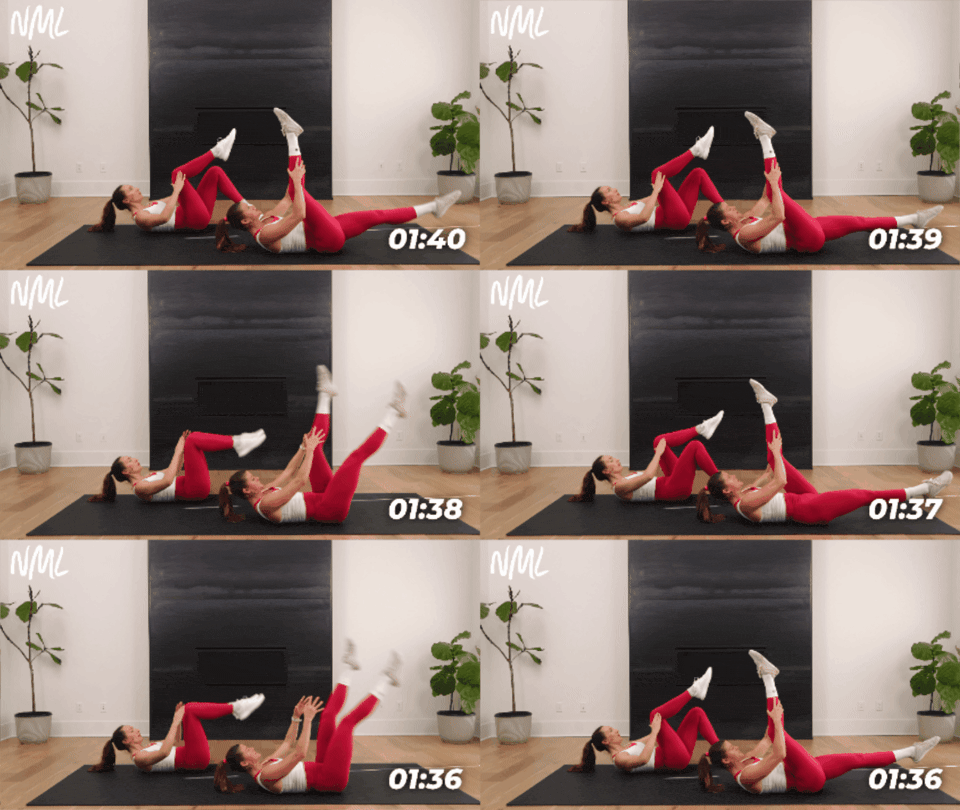
How to Do a Straight Leg Pull
- Lay flat on the floor, legs extended away from your body. Activate your core by pressing your lower back into the mat. Lift your neck and shoulders off the ground.
- Keeping both legs straight, hover your left heel off the ground and pull your right leg in towards your chest, catching it with both hands around your calf. Pulse your leg in for a 2-count.
- Then switch, “scissoring” your legs as you pull the left leg in towards your chest and kick the right leg out, hovering the right heel off the ground. Pulse for a 2-count.
- Continue this pattern, alternating legs with each rep.
9. Roller Boat
Targets: Upper abs, lower abs, obliques, hip flexors and transverse abdominal muscles.
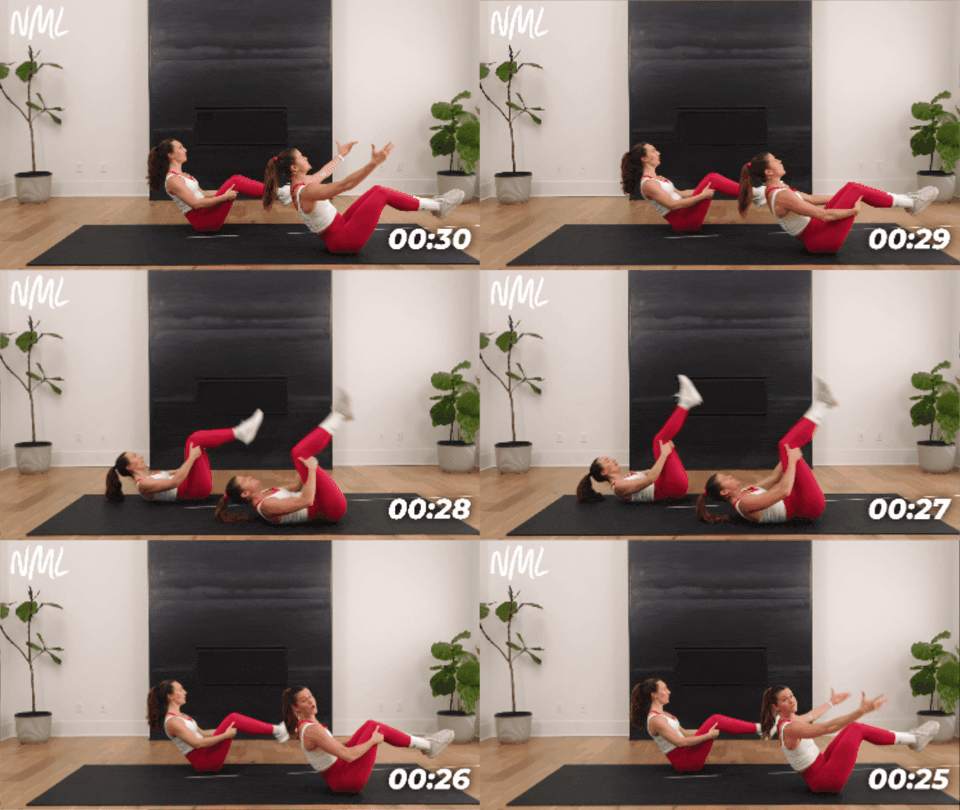
How to Do a Roller Boat
- Sit on the mat, knees bent at 90 degrees and feet flat on the floor. Tilt your hips forward, rounding through the spine as you pull your navel towards your spine (making a ‘C’ shape with your upper body). Keep your shoulders down and the crown of your head towards the ceiling.
- Clasp your hands behind your thighs and roll onto your back.
- Then, use momentum and your core muscles to roll yourself up to a seated position. Option to lift your hands, extending them away from your body.
- Hold the extended position for a moment. Then place your hands behind your thighs and repeat the roll.
Read A 5-Star Review ⭐⭐⭐⭐⭐
“2 years postpartum and I totally forgot what a difference core breathing makes before starting an ab workout!! This was such a well-rounded workout, thank you for all you do to strengthen and empower women (especially us moms)!”
— Megan R.
What Muscles Make Up the Deep Core?
The deep core includes the muscles that stabilize your spine, pelvis and ribcage. These include:
- Transverse abdominis: The deepest layer of ab muscles, wrapping around your torso like a corset.
- Multifidus: Small muscles along your spine that provide stability.
- Diaphragm: The large, dome-shaped muscle that sits below your lungs and aids in breathing.
- Pelvic floor: A group of muscles (pubococcygeus, iliococcygeus, coccygeus and puborectalis) that support your bladder, uterus and bowels.
- Internal Obliques: Deeper side core muscles that assist with rotation and core stabilization.
The deep core muscles act like a natural “corset” or stabilizing belt around your spine and pelvis. When these muscles are strong and activated, they help keep your body upright, aligned and steady during everyday movements as well as big lifts like squats and deadlifts.
Working together with the upper abs, lower abs and obliques, your deep core forms the foundation of all movement. When it’s weak or underactive, your hips, back and legs often compensate, putting extra stress on the body and increasing the risk of low back pain or knee injuries.
FAQs
What are the signs of a weak deep core?
Common signs of a weak deep core include lower back pain, poor posture, difficulty balancing and feeling strain in the hips or back during everyday movements or workouts. You might also notice doming or bulging in the abdomen, trouble engaging your core without holding your breath, or relying heavily on your neck, shoulders or obliques during ab exercises.
Are deep core exercises safe for beginners or people with back pain?
When done correctly, pelvic floor and deep core exercises are generally safe and recommended for beginners and people with back pain. These exercises emphasize controlled movement, proper alignment and breathing, which helps support the spine rather than load it. That said, it’s important to move slowly, focus on form and modify as needed, especially if you’re recovering from injury or managing chronic pain.
How do deep core exercises improve posture and balance?
Deep core exercises strengthen the muscles that stabilize the spine and pelvis, which play a role in upright posture and balance. When these muscles are functioning well, your body can maintain better alignment with less effort.
Are deep core exercises better for abs and overall core strength?
Deep core exercises train the foundational muscles of the core, which help improve overall core strength more effectively than focusing on surface-level ab exercises alone. While they may not produce the same immediate “burn” as crunches, they create a strong core that supports better movement, performance and long-term abdominal strength. The “Big 3” core exercises are modified curl-ups, side planks and bird dog. All target the deep core muscles and are effective for overall core strength.
How can you engage the deep core without overtraining the obliques?
To engage the deep core without overtraining the obliques, focus on gentle abdominal tension, breath control and exercises that emphasize stability over rotation or side bending. Cues like drawing the rib cage down, breathing into the sides and back of the body and maintaining a neutral spine can help target the deep core while keeping the obliques from taking over.
More Workouts
Core and AbPin This: Best 9 Deep Core Exercises
no comments