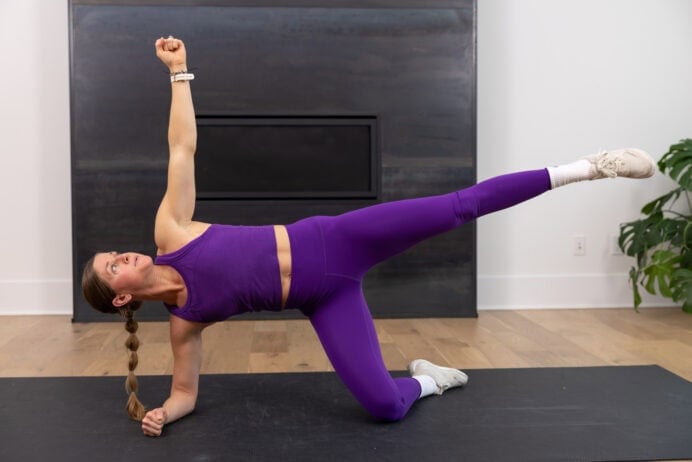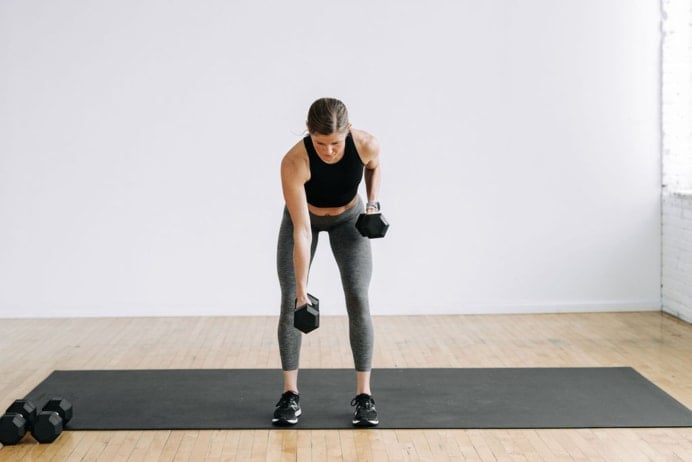



7 Best Lower Ab Exercises
Fire up and define your core with this focused lower ab workout designed to strengthen the lower abs and deep stabilizing muscles. This no-equipment, bodyweight routine helps improve core strength, stability and control – making it ideal for beginners through advanced exercisers thanks to built-in modifications. This workout includes planks, dead bugs, leg lowers, scissor kicks, bicycle crunches, seated ab tucks and more to challenge your core from every angle.
Lower Ab Workout Details
This lower ab workout combines 7 effective bodyweight exercises to strengthen the lower portion of your core, improve posture and help reduce back pain. By targeting the lower abs and deep core muscles with controlled, focused movements, it helps build strength, stability and endurance.
For best results, add this to your workout routine 1-2 times per week on its own or at the end of a strength or cardio session. It pairs well with full-body strength training and deep core workouts, giving your midsection balanced development without overtraining. Rest for at least 1 day between dedicated core sessions to allow for recovery.
The most effective lower core exercises are those that emphasize posterior pelvic tilt and controlled leg movement, such as dead bugs, leg lifts, reverse crunch variations and seated ab tucks. To truly target the lower abs, focus on slow, controlled reps, keeping your lower back gently pressed into the floor and engaging your deep core rather than swinging your legs. Toning the lower belly area comes from a combination of consistent strength training, progressive overload, proper nutrition and overall body fat reduction. Spot reduction alone isn’t possible, but strengthening these muscles will improve definition and control.
Beginners should start with foundational movements like forearm planks, dead bugs, bent-knee leg lowers and modified crunch variations to build core awareness and stability before progressing to more advanced workouts and exercises like scissor kicks, leg raises, mountain climbers or bicycle crunches. These basic, strong core exercises create the strength foundation needed for more dynamic lower ab work.
If you feel these exercises primarily in your hip flexors, switch to a beginner-friendly modification, reduce your range of motion, or incorporate hip mobility work before continuing. Anyone with current low back injuries, hip flexor strains, abdominal separation (such as unmanaged diastasis recti), or who experiences pain during core work should consult a medical professional before attempting this workout.
Read A 5-Star Review ⭐⭐⭐⭐⭐
“I started working out with you guys in 2021 when I was pregnant with my daughter. I love the intensity of your channel and the way you always offer modifications (both easier and harder). After my c-section, it’s been a tough journey learning to activate my lower abs again, but workouts like this make it fun and achievable. Thanks for everything you do!”
— Katherine W.
Workout Equipment:
Optional exercise mat. Otherwise, no equipment is needed for this bodyweight workout.
Workout Instructions:
Follow along with the guided Lower Ab Challenge on YouTube, led by me — your certified personal trainer(CPT), Lindsey Bomgren.
Your Workout Looks Like This:
- 7 Lower Ab Exercises for Women
- Timed Intervals (40 seconds of work, 20 seconds of rest)
- Repeat All 7 Moves x 1 Set (No Repeats)
Workout Outline
1. Forearm Plank and Alternating Knee Drop
Targets: Transverse abdominals, upper abs, lower ab muscles and shoulders.
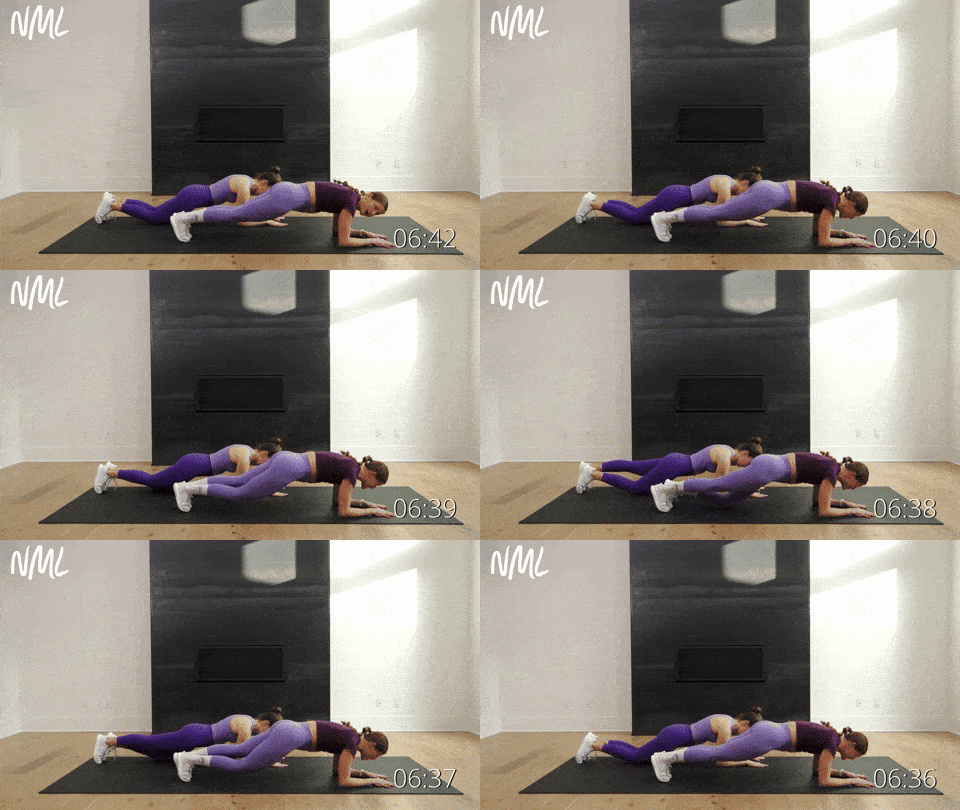
How to Do a Forearm Plank and Alternating Knee Drop
- Start in a tabletop position with shoulders stacked over wrists (soft bend in the elbows) and hips over knees. Drop down to your forearms, shoulders stacked over elbows and hands in front of you.
- Step both feet back and extend the legs straight, balancing on your toes. Pull up on your kneecaps and push back on your heels to keep your core engaged as you find a forearm plank position. Your body forms a straight line from your head through your heels.
- Hold this low plank position, maintaining a straight line with your body, gaze slightly in front of you.
- Drop the right knee to the ground, aiming to touch the mat.
- Straighten the right leg before alternating the knee drop, this time dropping the left knee to the ground.
Modification: Hold a modified plank for the duration of the exercise, popping 1 knee up at a time while keeping the other knee on the ground.
2. Dead Bug
Targets: Transverse abdomen (deep core muscles below your rectus abdominis or six pack ab muscles), lower abdominals and hip flexors.
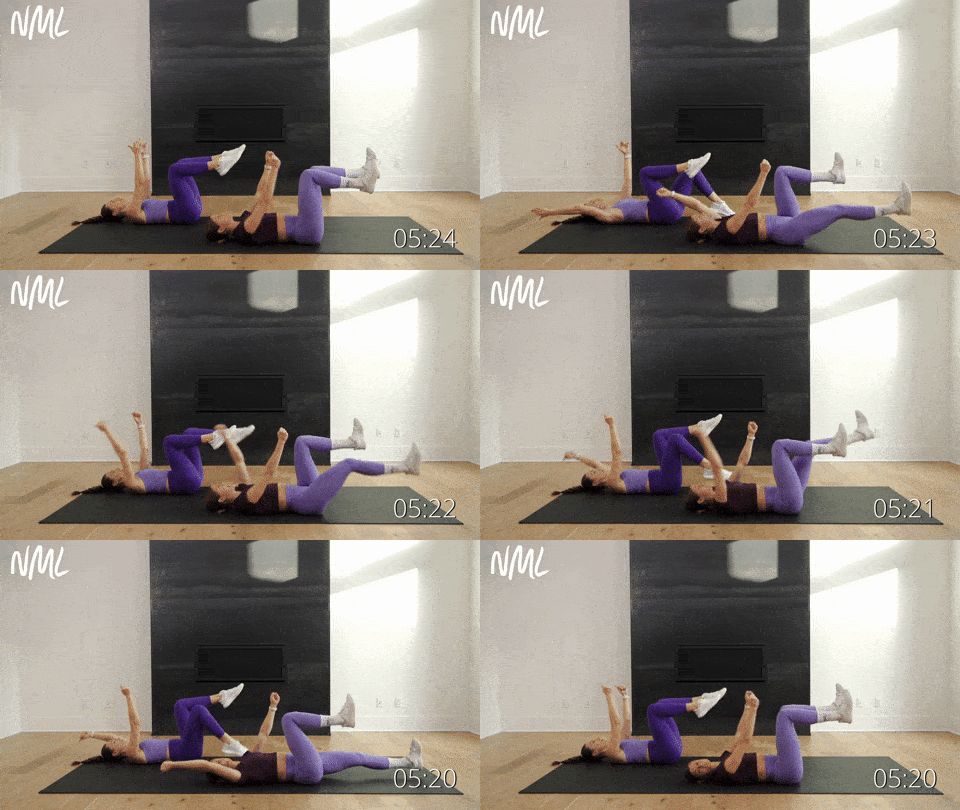
How to Do a Dead Bug
- Lie flat on the mat, performing a slight pelvic tilt to press your lower back into the mat and drawing your belly button towards your spine. Think about wrapping your abdominal wall around your torso.
- Bring your legs up, knees bent at 90 degrees, shins parallel to the floor. Extend your arms straight overhead, wrists stacked over shoulders.
- Contract your ab muscles to engage your core as you extend your right arm overhead while simultaneously straightening your left leg. Return to the starting position.
- Then extend your left arm overhead while simultaneously straightening your right leg. Return to the starting position and repeat.
Modification: Reduce the range of motion to reduce the intensity. You can keep bends in both knees rather than kicking straight out to scale this exercise as well.
3. Butterfly Crunches
Targets: Deep transverse abs, lower abs, pelvic floor and inner thighs.
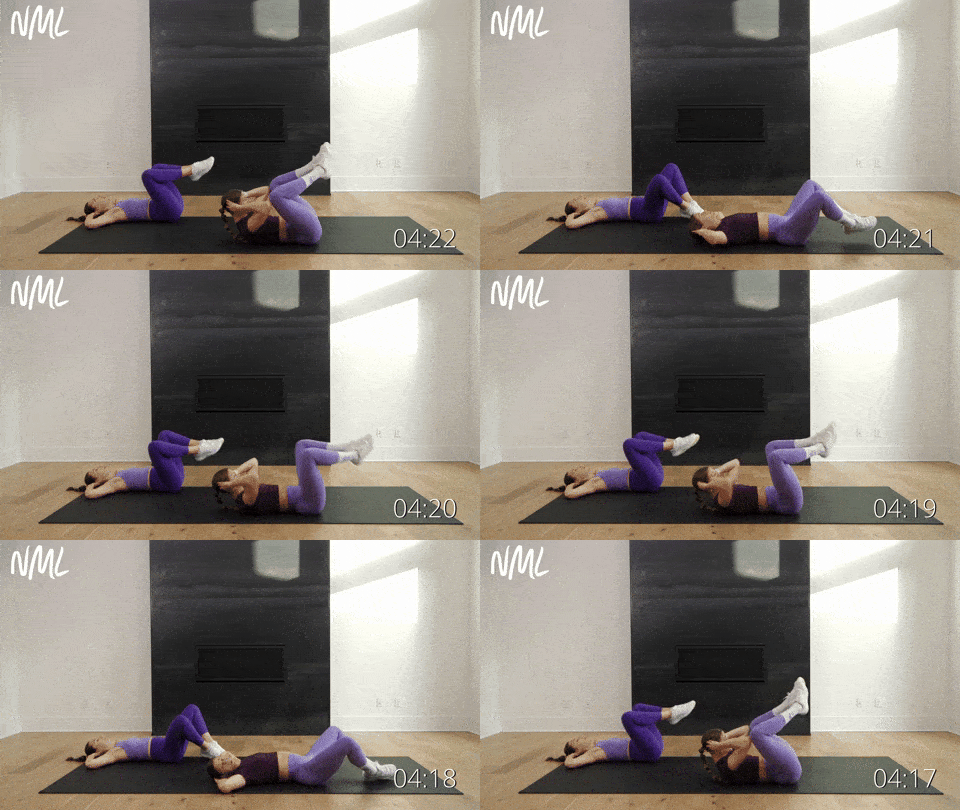
How to Do a Butterfly Crunch
- Lie on your back, placing your hands behind your head, legs bent at a 90-degree angle (knees above hips). Bring the soles of your feet to touch, knees wide.
- Keeping your low back pressed into the floor (pelvic tilt), brace your core and exhale as you perform a crunch, lifting the upper body (head, neck and shoulders) off the mat as you pull your legs in towards your chest. Aim to tap your elbows to your knees (keeping the knees wide).
- With control, inhale as you slowly lower your head, neck and shoulders back to the mat, simultaneously lowering the heels towards the mat.
Modification: Leave your head, neck and shoulders on the mat throughout the movement, bringing just the knees in towards the chest, then tapping the toes back to the ground.
4. Alternating Leg Lower and Hip Lift
Targets: Rectus abdominis, transverse abs and lower abs.
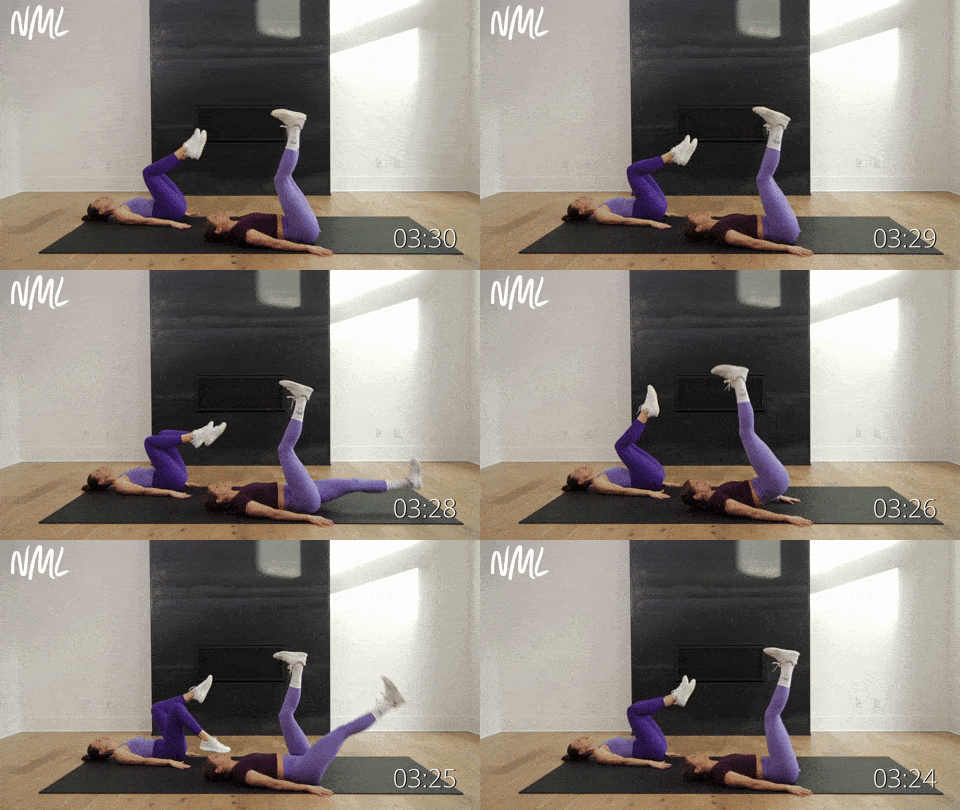
How to Do an Alternating Leg Lower and Hip Lift
- Lie on your back. Press your lower back firmly into the mat and think about “wrapping” your abdominal wall around your core.
- Straighten your legs and extend them over your hips, with the bottom of your feet facing the ceiling.
- Perform a hip lift by pressing your palms into the mat as you lift the hips and butt as high off the ground as you can.
- Lower the hips and glutes back down to the mat with control.
- Then slowly lower 1 leg towards the ground, keeping both legs as straight as possible. Focus on keeping your lower back pressed into the mat.
- Hover your heel above the mat, then pull it back up to the starting position.
- Repeat the hip lift, then perform a leg lower on the opposite leg.
Modification: Bend both knees, shortening the distance each leg travels. Option to omit the hip lift and instead pull the knees in towards the chest.
5. Leg Lowers and Scissor Kicks
Targets: Rectus abdominis, transverse abdominis, hip flexors and erector spinae.
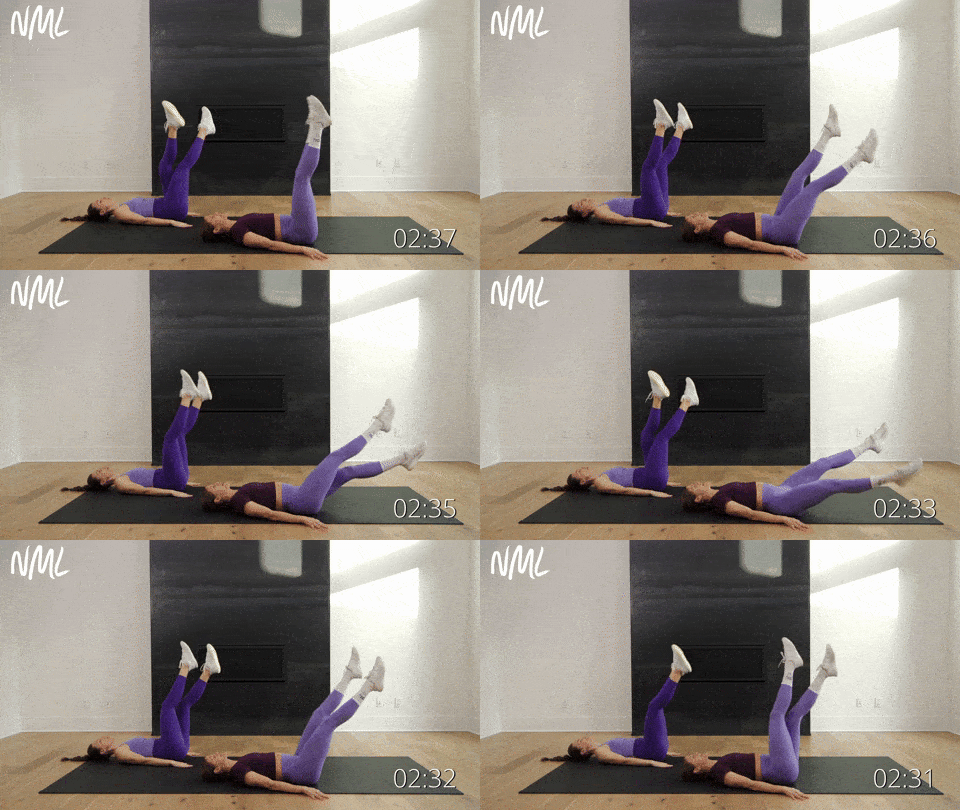
How to Do a Leg Lower and Scissor Kick
- Start lying on your back, flat on the floor. Press your lower back firmly into the mat and think about “wrapping” your abdominal wall around your core.
- Straighten and lift your legs to extend them over your hips. The bottom of your foot is facing the ceiling.
- Kick your feet in a scissor motion, pulling the left foot just over the right foot, then reversing the movement to kick the right foot just over the left foot.
- As you perform scissor kicks, slowly lower the legs down towards the ground on a 4-count. Keep the core engaged and low back pressed firmly into the mat as you move your legs towards the ground.
- Then reverse the movement to return the legs to the starting position, pulling the legs back up until the feet are directly over the hips. Continue to kick the feet in a scissor motion throughout the movement.
Modification: Option to omit the leg lowers and perform scissor kicks with the feet directly overhead.
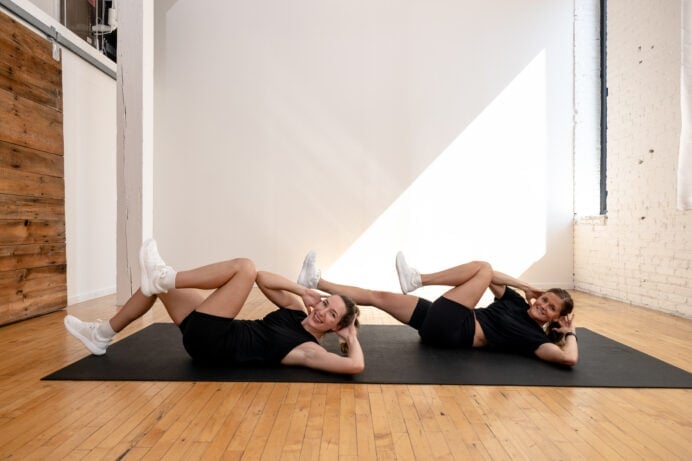
6. Bicycle Crunch
Targets: Rectus abdominis, transverse abdominal muscles, external obliques, internal obliques and hips.
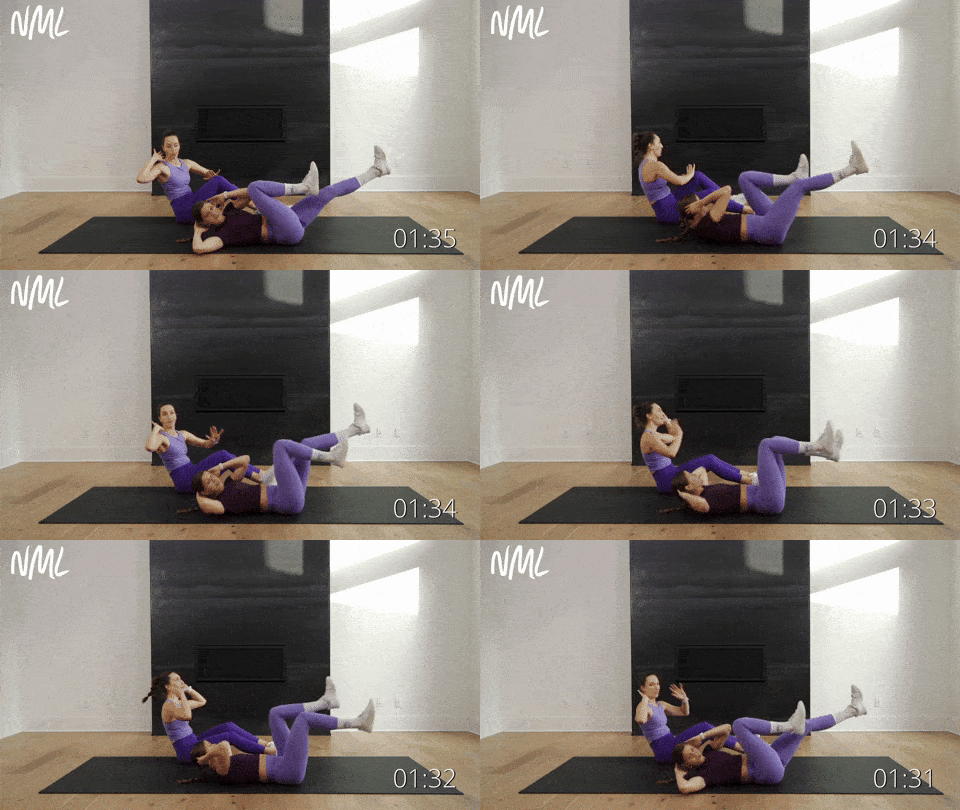
How to Do a Bicycle Crunch
- Start lying flat on your back, your lower back pressing firmly into the mat. Bring your legs to a raised 90-degree bend.
- Lift your head, neck and shoulder blades off the ground (avoid straining your neck). Place your hands behind your head and think about pressing your head into your fingertips.
- Lift your right elbow towards your left knee as you extend your right leg long. Aim to touch the left elbow to the mat.
- Slowly return to the starting position and repeat on the other side. Pull your left elbow towards your right knee as you extend your left leg long; your right elbow touches the mat.
- Continue to repeat this “bicycling” movement, alternating knee to elbow crunches.
Modification: Option to perform seated bicycle crunches. Rather than lying back on the mat, maintain a seated position as you pull your opposite knee to your chest, tapping the knee with your opposite hand.
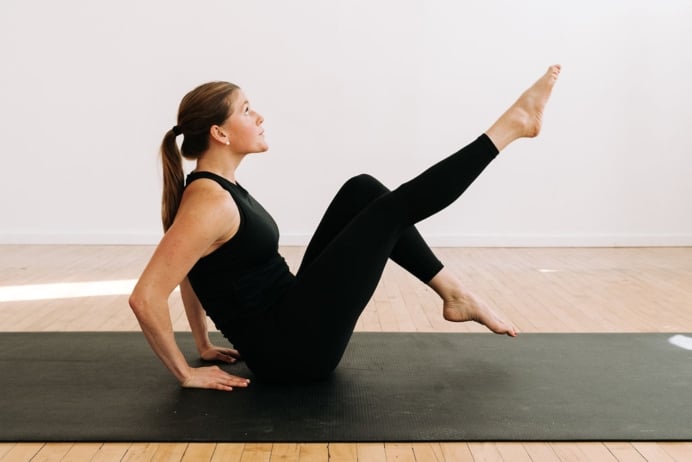
7. Seated Ab Tucks
Targets: Rectus abdominis, transverse abdominis, hips and hip flexors.
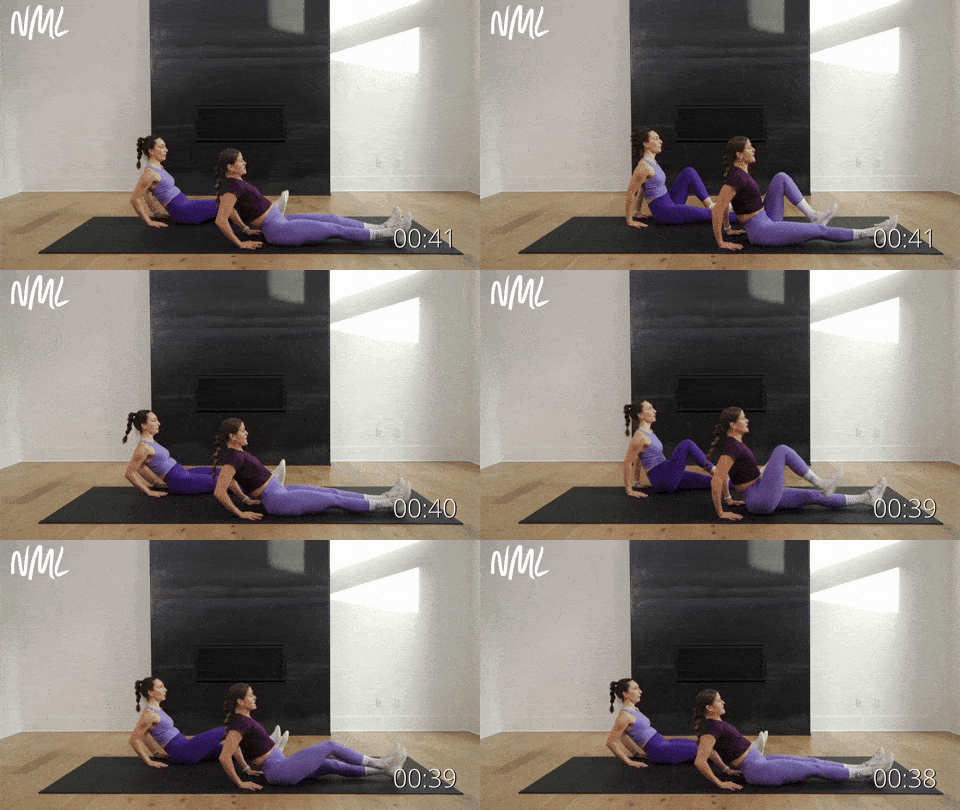
How to Do a Seated Ab Tuck
- Start sitting on the floor with your legs straight out in front of you. Lean back slightly, sitting on your sit bones (2 sitting bones and tailbone), keeping a nice, long spine, shoulders down and back.
- Place your hands just behind your butt for support.
- Slowly pull the left knee in towards the chest as you sit forward slightly to meet the knee.
- With control, lean back as you straighten the left leg out in front of you. Then alternate, this time pulling the right knee in towards the chest.
Free 7-Day Ab Challenge
FAQs
Are low-rep ab exercises effective for building lower abs?
Yes, low-rep ab exercises can be effective if they’re challenging enough. Like any muscle group, the lower abs respond to progressive overload, so harder variations performed with control and proper form (think slow leg lowers or weighted reverse crunches) can build strength and muscle just as effectively as higher-rep endurance work.
How often should you train lower abs for the best results?
Training lower abs 2-3 times per week is ideal for most people. Because the core is involved in many compound lifts and daily movements, it doesn’t need to be trained every day. Allow at least 24-48 hours of recovery between focused sessions for optimal strength and definition gains.
Why are lower abs so hard to develop?
Lower abs can be challenging to develop because they’re often weaker than the upper portion of the rectus abdominis and tend to be overshadowed by dominant hip flexors. Additionally, body fat distribution (especially in the lower abdomen) is influenced by genetics and hormones, which can make visible definition in that area slower to achieve.
Can diet and alcohol intake affect lower ab definition?
Absolutely. While strengthening exercises build the muscle, overall nutrition plays a major role in how visible your lower abs appear. A balanced diet that supports muscle growth and body fat management is key, and excessive alcohol intake can hinder recovery, disrupt hormones, increase water retention and contribute to fat storage. This can make lower ab definition harder to see.
Do Pilates exercises help strengthen the lower abs?
Yes, Pilates is highly effective for strengthening the lower abs because it emphasizes deep core engagement, controlled leg movements, and proper pelvic positioning. Exercises like leg lowers, toe taps and tabletop variations train the transverse abdominis and lower portion of the rectus abdominis, improving both strength and core stability.
More Workouts
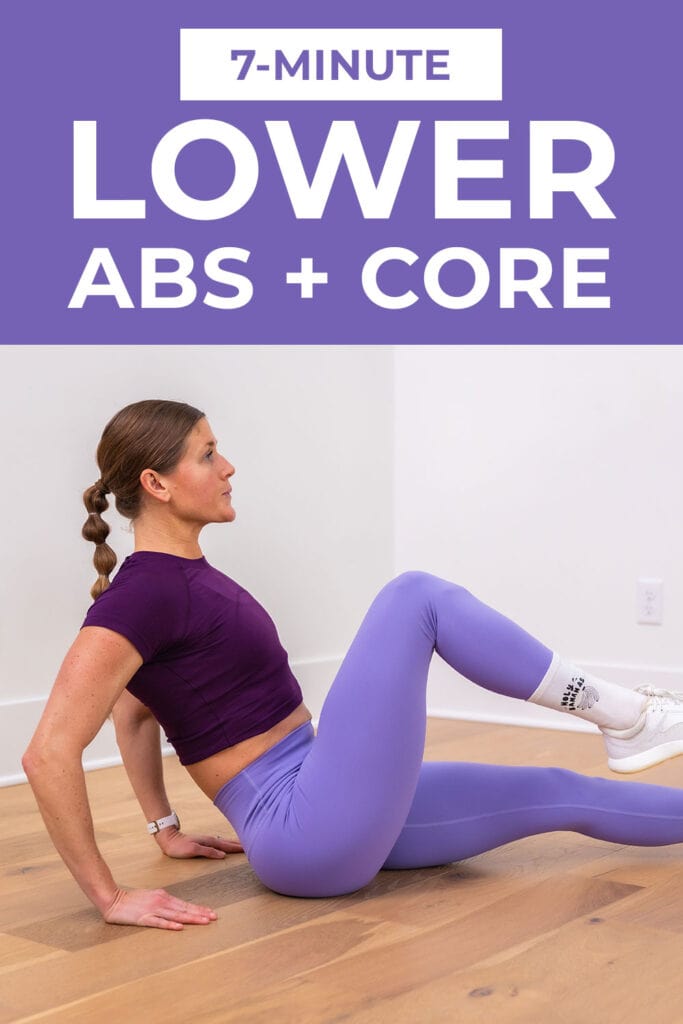
Core StrengtheningPin This: 7 Best Exercises for Lower Abs
no comments