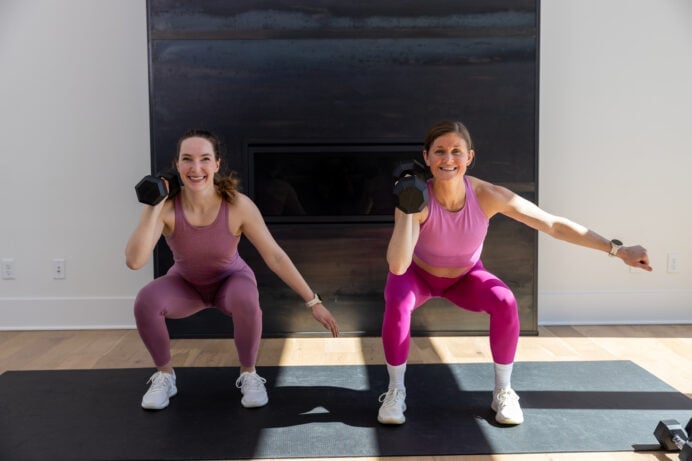



Compound Workouts and 8 Exercises to Build Strength
These compound workouts will help you build total-body strength and endurance using a variety of my favorite compound exercises. These moves hit multiple muscle groups at once, making them ideal if you’re short on time or want the most efficient workout possible. In this post, I’ll walk you through each workout, the best compound strength exercises and how to get an effective training session at home with just a pair of dumbbells.
Quick Links:
7 Compound Workouts
1. 9 Best Compound Exercises (Full Body)
- Equipment: Medium-to-Heavy Set of Dumbbells
- Workout Format: 9 total body exercises are done in timed intervals. Perform each exercise for 40 seconds of work, followed by 20 seconds of rest. Repeat all 9 exercises x2 sets. You’ll end the workout with a 4-minute AMRAP (repeating 4 dumbbell exercises from the workout in as many rounds as possible).
- Pregnancy/Postpartum Friendly: Follow the modifier in the workout as needed.
2. 7 Best Strength Training Exercises
- Equipment: Medium-to-Heavy Set of Dumbbells
- Workout Format: 7 full-body strength exercises are done in timed intervals. Perform each exercise for 45 seconds of work, followed by 15 seconds of rest. Repeat all 7 exercises x3 sets.
- Pregnancy/Postpartum Friendly: Follow the modifier in the workout as needed.
3. 35-Minute Full-Body Circuit Workout
4. 30-Minute Full-Body Dumbbell Workout
5. 30-Minute Full-Body Workout At Home
6. Dumbbell HIIT Workout (35-Minute Supersets)
7. 20-Minute Full-Body Strength (No Repeats and No Jumping)
8 Best Compound Exercises
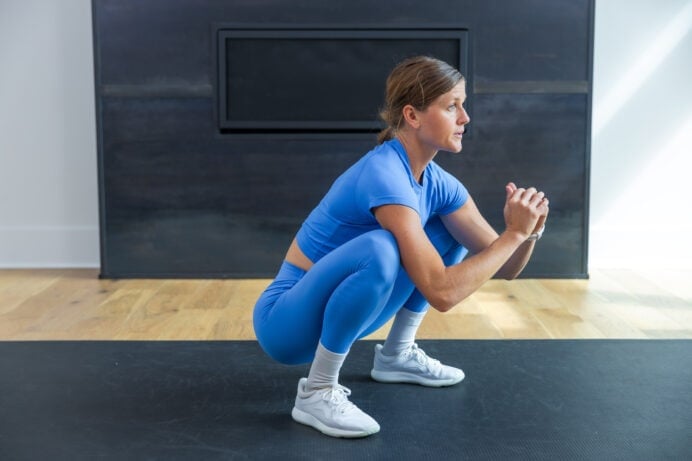
1. Squat
Targets: Lower body – glutes, quadriceps, hamstrings, hips and core.
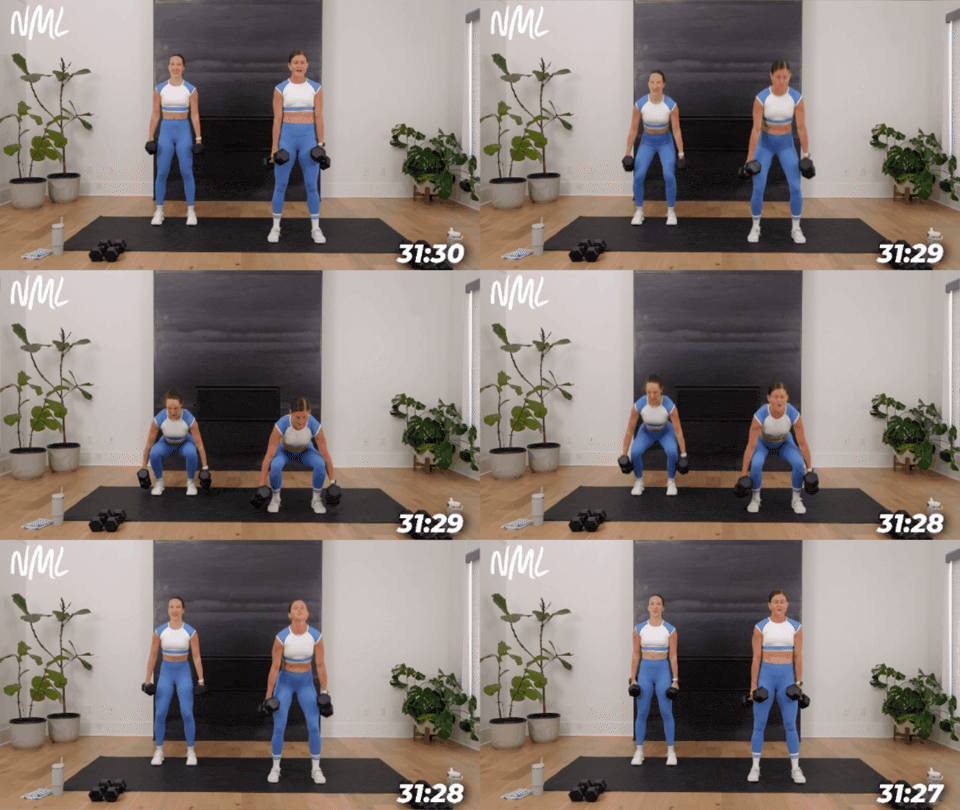
How to Do a Squat
- Start standing with your feet shoulder-width apart and knees slightly bent, holding a pair of dumbbells at your sides.
- Lower down into a squat position, lowering your hips down parallel with your knees. Drive your knees out toward your outer toes.
- Drive through your heels to stand tall, returning to a standing position.
2. Deadlift
Targets: The posterior chain or backside of the body. Specifically targeting the hamstrings, glutes, hips, calves, lower back and core.
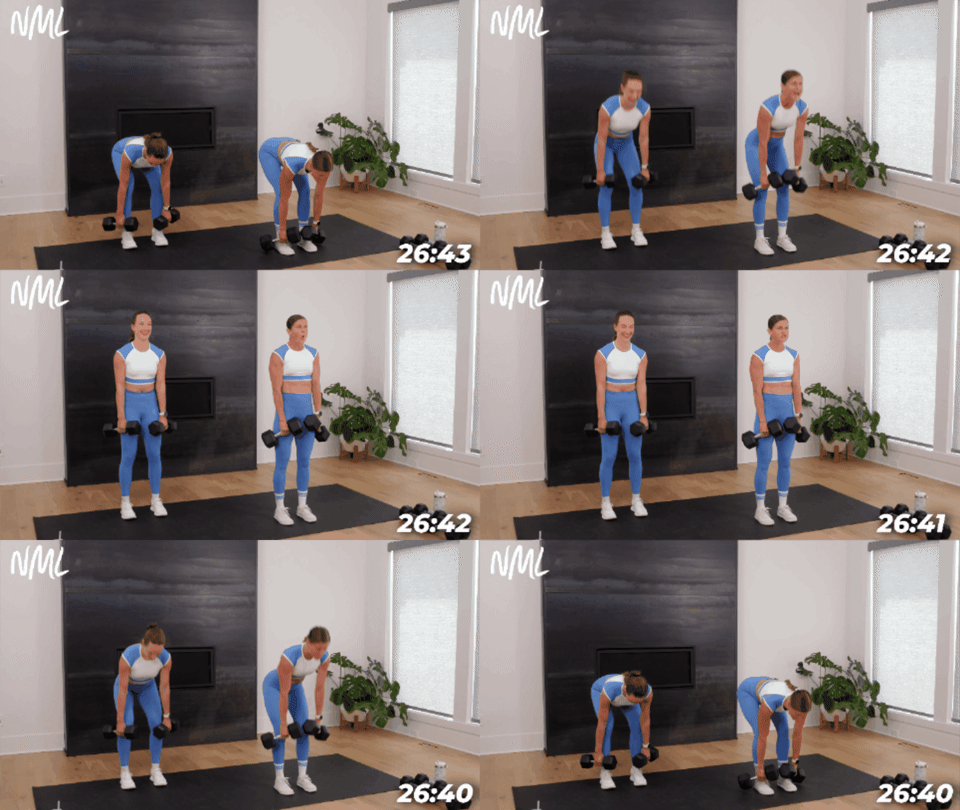
How to Do a Deadlift
- Start standing with your feet shoulder-width apart and knees slightly bent. Hold a dumbbell in each hand at your thighs (overhand grip, palms face your body).
- Hinge forward at the hips, pushing your hips back as you lower the dumbbells down along the front of your body. You should feel a stretch in the back of your legs (hamstrings). Focus on keeping your back in neutral alignment with your neck and shoulders throughout the entire movement (straight line from head to tailbone). Keep a slight bend in your knees to avoid ‘locking out’ the joint.
- Drive through your heels, squeezing your glutes as you drive your hips forward to return to standing.
3. Lunge
Targets: Legs, glutes, quads, hamstrings, hips, thighs and core.
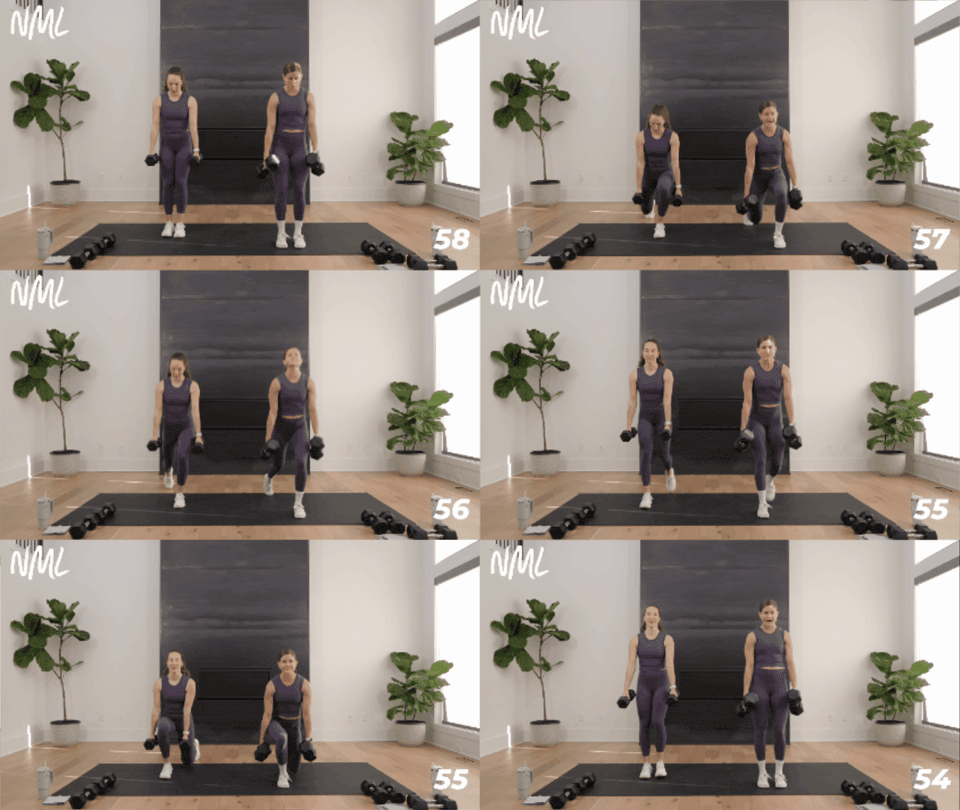
How to Do a Lunge
- Start standing in a neutral position, feet hip-width apart, holding a dumbbell in each hand, palms facing in towards each other (hammer curl grip).
- Step your left foot back into a reverse lunge. Lower your left knee towards the mat, aiming for a 90-degree angle in both knees.
- Hold for a moment, then drive through your front heel to return to standing.
- Then alternate the movement, this time stepping your right foot back into a reverse lunge.
Modification: If lunges hurt your knees, try an isometric hold.
4. Push-Up
Targets: Chest, shoulders, triceps, back, abs and core muscles.
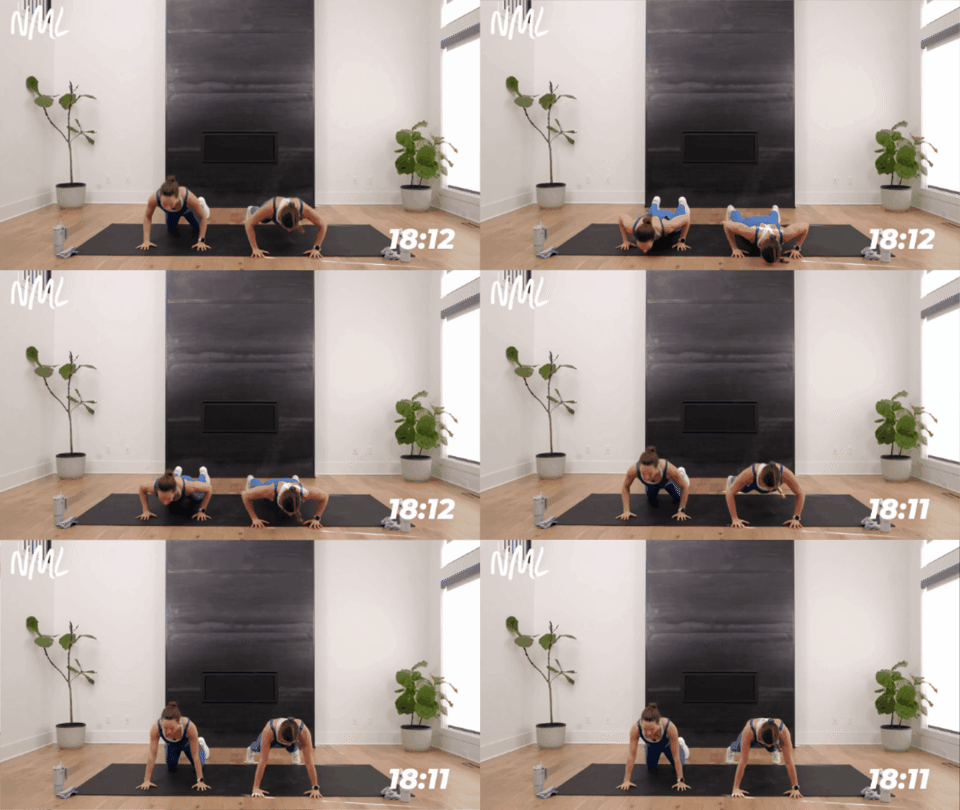
How to Do a Push-Up
- Start in a standard high plank position, feet hip-width apart and shoulders stacked over your wrists. Press evenly into your hands to distribute your weight amongst all 10 fingers.
- Hold this plank position, maintaining a straight line with your body, gaze slightly in front of you.
- Slowly lower your chest down towards the ground as your elbows fall back towards your hips (not out to the sides, keep elbows tight to the body).
- Once you’ve reached the bottom of your push-up, exhale as you push back up into a high plank position (the top of your push-up position).
Modification: If you can’t do a full push-up on your toes, substitute incline push-ups.
5. Pull-Up
Targets: Upper and lower back – latissimus dorsi (lats), erector spinae, trapezius (traps), biceps, pectoralis major and minor (chest) and core.
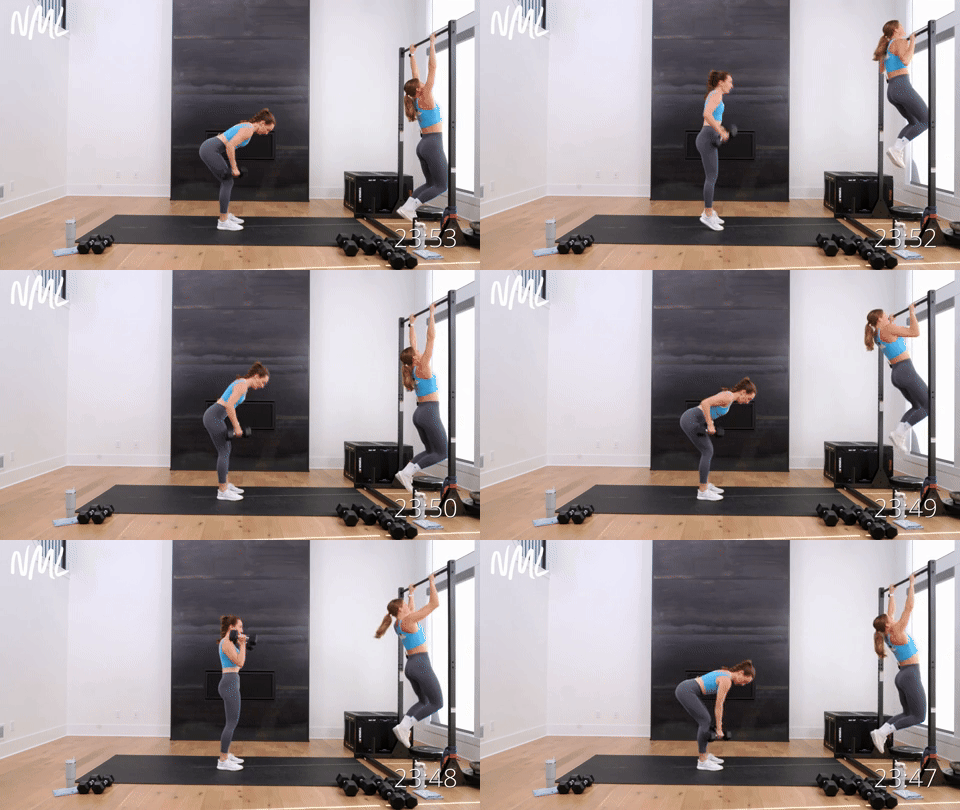
How to Do a Pull-Up
- Stand underneath your pull-up bar, feet hip-width apart, neck and shoulders relaxed.
- Reach up and grip the pull-up bar with your palms facing away from your body (overhand grip), hands slightly wider than shoulder-width distance apart.
- Allow your body to hang freely with your arms fully extended.
- Initiate the pull-up by squeezing your shoulder blades together and pulling your chest towards the bar. Keep your elbows pointed downward throughout the movement.
- Continue to pull your body, pulling your chest up until your chin is above the bar, or as high as you can comfortably go. Keep your core engaged and your body straight throughout the movement.
- Slowly lower yourself back down to the starting position, extending your arms fully.
Modification: Option to perform assisted pull-ups with a long loop resistance band, chin-ups (your palms will face in towards your face or perform a dumbbell back row and clean.
6. Back Row
Targets: Latissimus dorsi (or lats; the largest back muscle known for its large, flat “V” shape).
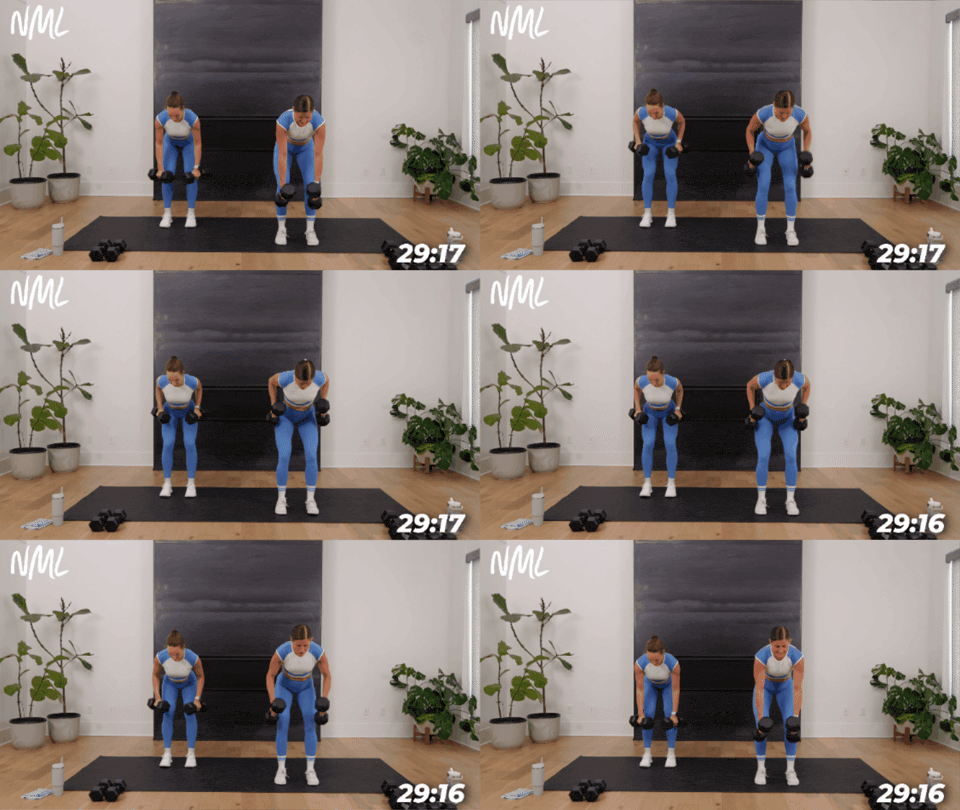
How to Do a Back Row
- Stand with your feet slightly wider than shoulder-width apart, knees slightly bent. Grip a set of dumbbells, palms facing in towards each other.
- Hinge forward at the hips until your body is in a straight line, neck in line with your spine, flat back, and belly button pulled back towards your spine.
- As you pull the weights back towards your hips in a rowing movement, squeeze your shoulder blades together. Stop when your elbows are in line with your hips.
- With control, slowly lower the dumbbells back down to the starting position. Think up on a 1-count, down slow and controlled on a 2-count.
7. Tricep Dip
Targets: The lateral and medial heads of your triceps and core.
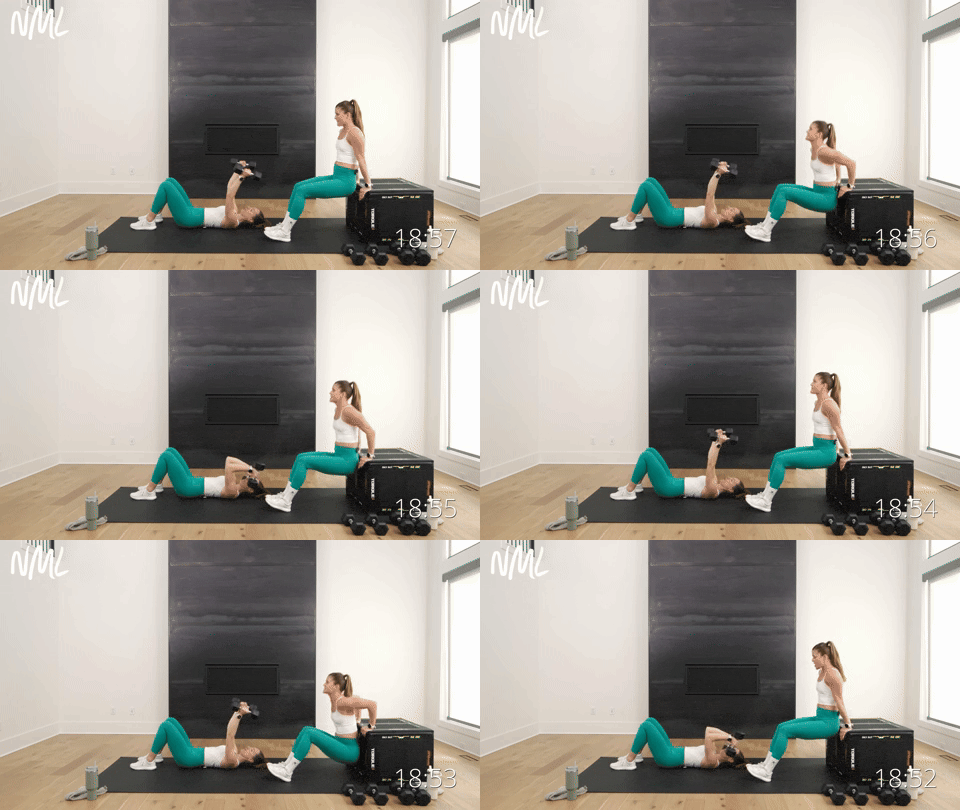
How to Do a Tricep Dip
- Grip the edge of a chair or bench, fingertips pointed toward your butt or toes, elbows bent. Note, you can also perform tricep dips sitting on the ground with your knees bent at 90 degrees and your hands behind you (fingertips facing your butt).
- Keeping your back close to the chair, lower yourself, bending at the elbows until your elbows reach a 90-degree angle.
- Press through your palms, using your triceps to push you back up to the starting position.
Modification: Option to perform dumbbell skull crushers instead.
8. Overhead Press
Targets: Both the anterior and lateral heads of the deltoid, rear delts, triceps and upper back muscles.
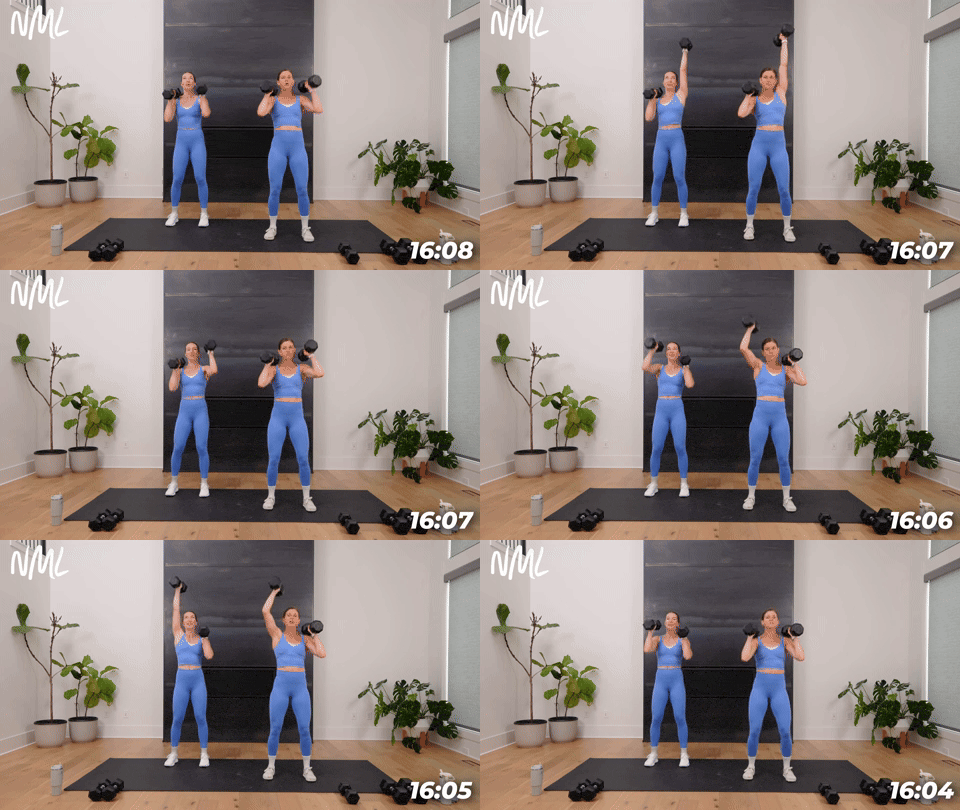
How to Do an Overhead Shoulder Press
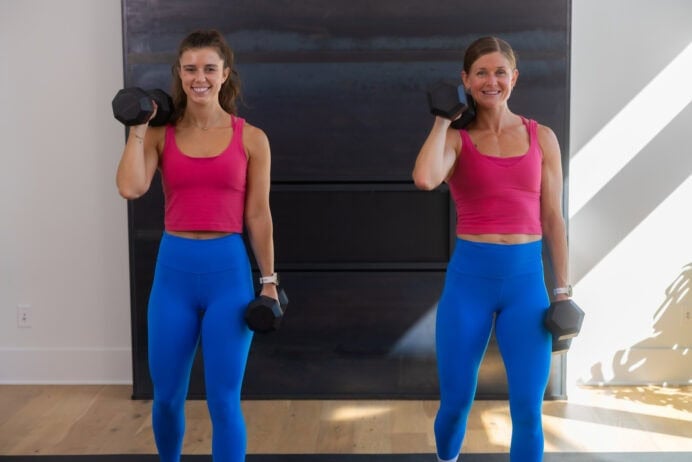
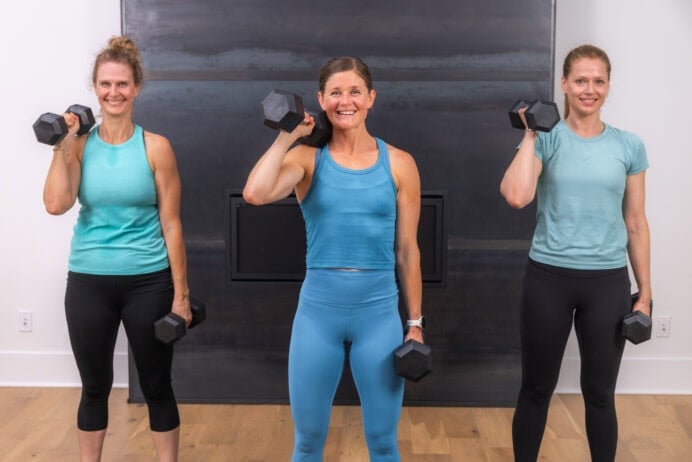
- Stand with your feet shoulder-width apart, knees slightly bent. Hold a pair of dumbbells at shoulder height, palms facing in towards each other (neutral grip). Your shoulder blades are pulled back and down.
- Engage your core, slightly tucking your pelvis to protect your lower back. Push the dumbbell in your right hand overhead until your right arm is fully extended. Keep the dumbbell in your left hand racked at your shoulder.
- Lower the dumbbell in your right hand down to shoulder height, returning it to the starting position.
- Switch arms, pushing the dumbbell in your left hand overhead until your left arm is fully extended. Keep the dumbbell in your right hand racked at your shoulder.
- Lower the dumbbell in your left hand down to shoulder height, returning it to the starting position.
What Are Compound Workouts and Exercises?
As a fitness trainer and mom, I’ve learned that my workouts have to work as hard as I do. Between school drop-offs and nap-time windows, I rely on exercises that deliver the biggest strength benefits in the least amount of time. That’s why compound dumbbell exercises form the foundation of my routine. These are multi-joint movements that engage several major muscle groups at once, helping me build strength that actually supports daily life (carrying kids, lifting groceries or tackling the endless tasks of motherhood).
When I design workouts, I focus on the major muscle groups that target full-body strength: glutes, quads, hamstrings, chest, shoulders, back, arms and core. Compound movements naturally target these areas together, making them efficient for busy women training at home. I love compound leg exercises like squats, deadlifts, lunges and hip thrusts, as well as compound arm exercises like push-ups, pull-ups, bent-over rows and presses. Each of these strengthens multiple muscle groups at once, which keeps my workouts simple but effective.
Deadlifts are one of the most effective compound movements because they recruit so many muscles at once and translate directly into everyday functional strength. But truly, the most effective exercise is always the one that someone can perform consistently and confidently. I use a variety, like goblet squats, Romanian deadlifts, push-ups and dumbbell rows, that are accessible for any fitness level. Whether you are a beginner working out at home, pregnant or postpartum, compound exercises are for you.
Ideally, you’d add compound movements to your training routine 2-4 times per week. A focused 20-30 minutes is enough to build strength and muscle tone without feeling overwhelmed. Some weeks, I follow a lower-body day, upper-body day and full-body day. Other weeks, especially when life feels extra chaotic, I stick to 2-3 full-body sessions built around my go-to lifts. Both approaches support functional fitness, mobility and long-term strength.
Benefits of Compound Exercises
One of the biggest benefits of incorporating compound exercises is how efficiently they build full-body strength. These exercises recruit multiple muscle groups rather than a single, specific muscle group. That level of muscle engagement makes the body work harder, which improves strength and coordination at the same time. Instead of isolating a small muscle, I’m training my body to function as a connected system, which carries over into better balance, posture, range of motion, and fewer muscle imbalances and aches during daily tasks.
Compound exercises also create an ideal environment for muscle growth. Because they involve large muscle groups working together, they generate more tension, allow you to lift heavier loads and often increase your heart rate as well. These are the 2 key factors for building stronger, more defined muscles. This is why a few well-chosen compound movements can transform a workout. They stimulate the body more effectively than a handful of isolated exercises, and they do it in much less time. For any woman juggling work, family or a busy home life, that efficiency can’t be beat.
What I love most is how these movements build confidence. As strength improves, everyday activities start feeling lighter and easier. Carrying kids on my hip, lifting a heavy box or stepping onto a stool feels more controlled and supported. That’s functional fitness at its core: training in a way that enhances the way I live my life, not just the way I look in a mirror.
FAQs
What is the difference between functional training and strength training?
Functional training focuses on movements that carry over into everyday life – lifting, bending, pushing, pulling, rotating and stabilizing. The goal is to move better, not just lift heavier weights. Strength training, on the other hand, is designed to increase strength and growth in specific muscles or patterns. Both are important, but functional training tends to use more multi-joint, dynamic exercises, while isolated strength training exercises can be more structured and targeted.
Why should you include compound lifts and free weights in your workouts?
Compound lifts and free weights require your muscles to work together, just like they do in real life. They challenge your balance, coordination and stability, which means you recruit more muscle fibers and burn more energy in less time. They also help you get stronger faster because you can progressively overload more effectively than you can with machines or isolated movements.
What underrated compound exercises help build muscle?
A few of my favorite compound exercises include single-leg deadlifts, renegade rows, thrusters, deficit reverse lunges and push presses. These moves hit multiple muscle groups at once, and many challenge your power, conditioning and mobility. They’re great additions to your compound workout routine.
Are compound exercises better than isolation exercises?
Yes, compound exercises are a great place for beginners to start. They teach your body how to move well, improve coordination and build a strong foundation quickly. As long as you focus on form and start with lighter weights, compound movements are both safe and effective for all fitness levels.
Let’s Get Stronger Together
Compound exercises are multi-joint movements that work several major muscle groups at once, making them efficient for muscle building – especially for busy women who need workouts that deliver real results in a limited time. Moves like squats, deadlifts, lunges, push-ups and rows improve balance, posture, coordination and everyday functional strength while also creating the ideal conditions for increasing muscle mass. Just 2-4 focused sessions per week can make daily tasks feel easier and help you feel stronger and more capable.
Free 2-Week Strength Program
More Workouts
Full-BodyPin This: Best Compound Workouts and Exercises to Build Strength
no comments