


7 Pull-Up Bar Exercises to Build Strength
These 7 pull-up bar exercises are designed to improve functional strength, grip strength, core strength, coordination, shoulder stability, body awareness and long-term bone health, making this an incredible addition to any workout routine. If you’re a busy mom looking for the highest return on your workout investment or a career woman trying to fit in an effective workout before heading to the office, this pull-up bar workout is for you – and the best part is, you don’t need a whole gym to knock this one out!
Being able to lift your own body weight is a true test of functional strength, making pull-up bar exercises the king of calisthenics.
Using a pull-up bar for an entire workout is a great way to extend your time spent controlling your bodyweight while in the hang position and work multiple muscle groups at once. There’s a reason every military base has multiple sets of pull-up bars.
Training to move your body through space and time whenever you need to is the real mark of functional fitness. Concentrating on calisthenics like the ones in this workout will help build the base for movements like the l-sit, toes-to-bar and muscle-up.
One of the most common questions I get from clients is, “How do I get stronger without getting bulky?” I almost always point them toward the pull-up bar. Exercises like pull-ups, chin-ups and hanging core exercises build functional strength, improve grip strength and challenge your entire upper body and core using nothing more than your own body weight!
A Brief Overview
These pull-up bar exercises challenge nearly every major upper-body muscle group while strengthening your core and improving grip strength. Add them to your back and biceps workout, or combine them for a challenging upper-body and core workout using nothing more than your body weight.
For an added challenge, choose 1 or 2 of these pull-up bar exercises and perform them in a Tabata workout. It’s a great way to increase the intensity while building strength and improving your cardiovascular endurance.
Because these exercises use your own body weight instead of heavy external resistance, they can be a safe and effective way to build strength. However, if you’re recovering from an upper-body injury or surgery, consult your healthcare provider before performing pull-up bar exercises or hanging from your hands for extended periods.
Equipment to Have on Hand
Equipment Needed: Pull-up bar and optional pull-up assist bands.
Instructions
Choose 3-5 exercises from the list below and follow these rep and set ranges:
- Beginners: Aim for 2-3 sets of 8-10 reps
- Intermediate: Aim for 3-4 sets of 10-12 reps
- Advanced: Aim for 4-6 sets of 12-15 reps
Pull-Up Bar Exercises Outline
1. Dead Hang
Targets: Grip strength, forearms, shoulders, lats, upper back and core.
How to Do a Dead Hang
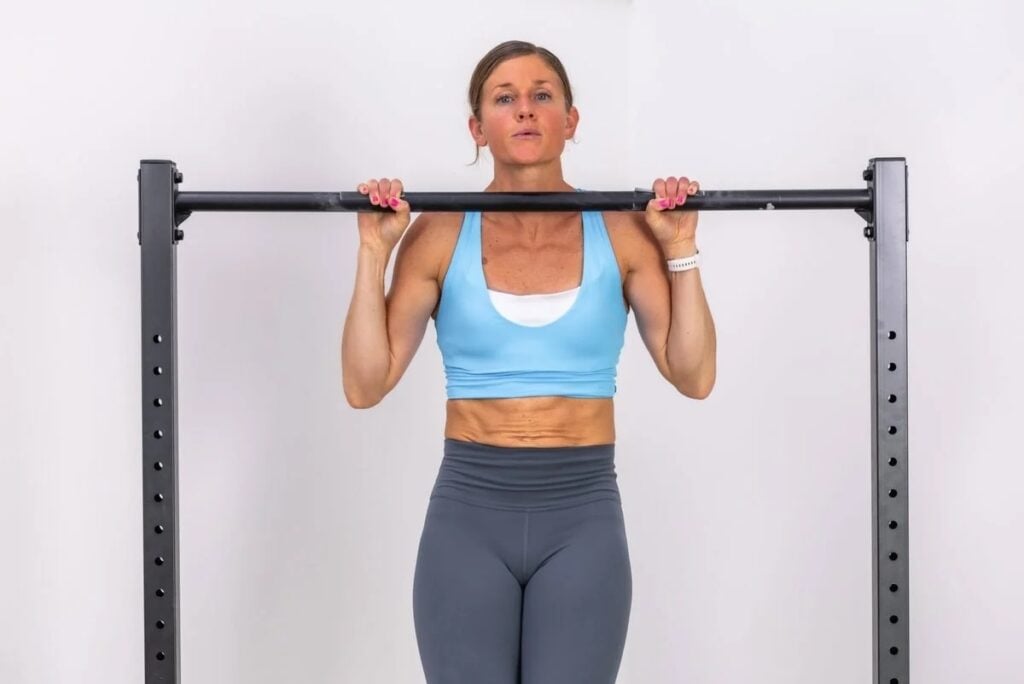
- Grip a pull-up bar with an overhand grip, placing your hands slightly wider than shoulder-width apart.
- Step or lift your feet off the floor and allow your body to hang with your arms fully extended.
- Engage your core, keep your shoulders pulled down away from your ears and maintain a controlled, steady position.
- Hold for the desired amount of time while breathing normally, then carefully lower your feet back to the floor.
Modification(s): Keep one or both feet lightly on the floor or on a sturdy box to reduce the amount of body weight you’re supporting while you build grip strength and confidence.
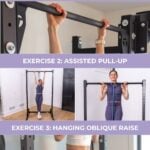
2. Assisted Pull-Ups
Targets: Latissimus dorsi (lats), biceps, rhomboids, trapezius (traps), deltoids (shoulders), forearms and core.
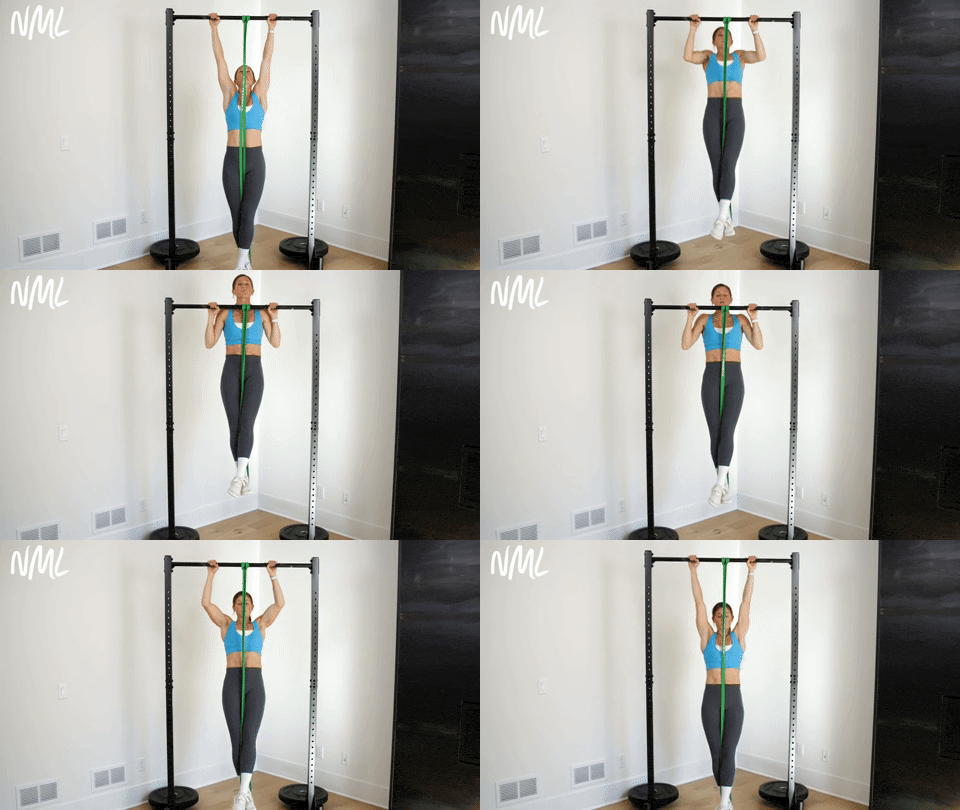
How to Do an Assisted Pull-Up
- Secure a long loop resistance band around the center of a pull-up bar. Place one foot or knee into the band for assistance.
- Grip the pull-up bar with an overhand grip, positioning your hands slightly wider than shoulder-width apart.
- Hang with your arms fully extended, engage your core and pull your shoulders down and back.
- Pull your chest toward the bar by driving your elbows down until your chin reaches or clears the bar, or as high as you can comfortably go.
- Slowly lower yourself back to the starting position with control, fully extending your arms before repeating.
Modification(s): Use a thicker resistance band or place both feet in the band for additional assistance. As you build strength, gradually transition to a lighter band until you’re able to perform an unassisted pull-up.
3. Pull-Ups
Targets: Latissimus dorsi (lats), biceps, rhomboids, trapezius (traps), deltoids (shoulders), forearms and core.

How to Do a Pull-Up
- Reach up and grip the pull-up bar with your palms facing away from your body (overhand grip), hands slightly wider than shoulder-width distance apart.
- Hang from the bar: Allow your body to hang freely with your arms fully extended.
- Perform the pull-up: Initiate the pull-up by squeezing your shoulder blades together and pulling your chest towards the bar. Keep your elbows pointed downward throughout the movement.
- Complete the pull-up: Continue to pull your body, pulling your chest up until your chin is above the bar, or as high as you can comfortably go. Keep your core engaged and your body straight throughout the movement.
- Lower yourself down: Slowly lower yourself back down to the starting position, extending your arms fully to return to the starting position.
Common Mistakes: Instead of thinking “chin over bar,” think “elbows to hips.” This encourages proper muscle engagement and prevents excess straining or swinging.
Modification(s): If you can’t do a pull-up, start by performing assisted pull-ups with a resistance band. Then, increase max pull-up reps by following a pull-up progression program. You could also substitute ring rows for pull-ups.
4. Chin-Ups
Targets: Lats, biceps, forearms, upper back, core and grip strength.
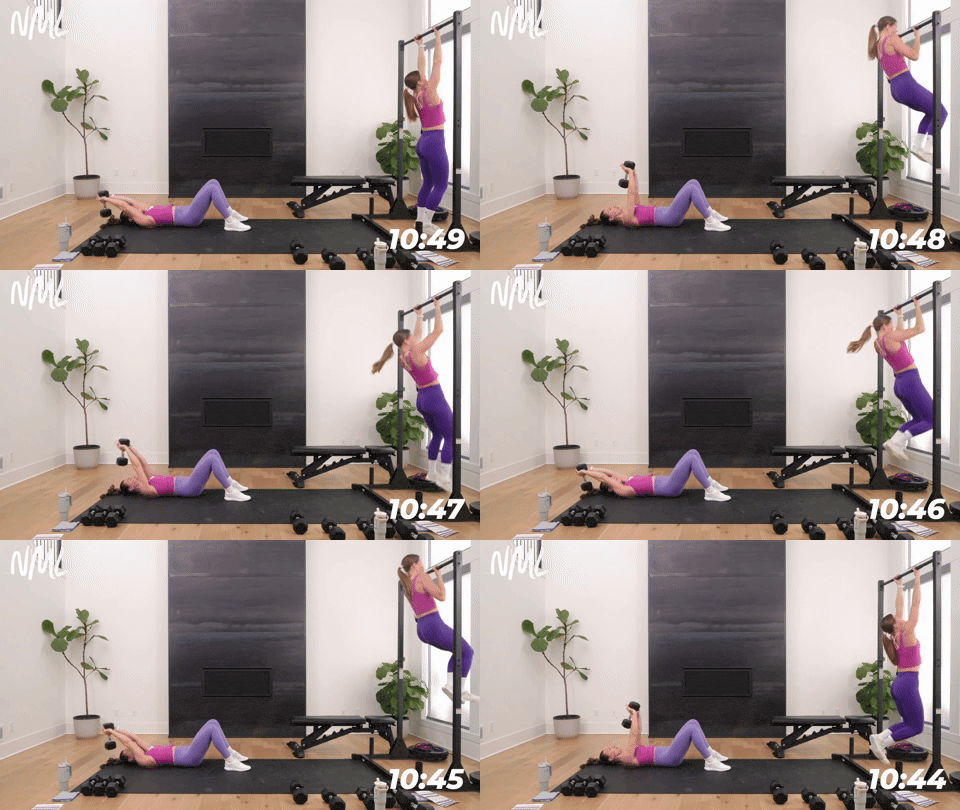
How to Do a Chin-Up
- Grip a pull-up bar with an underhand grip, placing your hands about shoulder-width apart.
- Hang with your arms fully extended, engage your core and pull your shoulders down and back.
- Pull your chest toward the bar by driving your elbows down and back until your chin reaches or clears the bar.
- Pause briefly at the top, then slowly lower yourself back to the starting position with control until your arms are fully extended.
- Repeat for the desired number of repetitions while maintaining a controlled, steady movement.
Modification(s): Use a resistance band for assistance or perform negative chin-ups by slowly lowering yourself from the top position. As you build strength, gradually reduce the amount of assistance until you can perform an unassisted chin-up.
5. Knee Raises
Targets: Core, hip flexors, lower abs, obliques, forearms and grip strength.
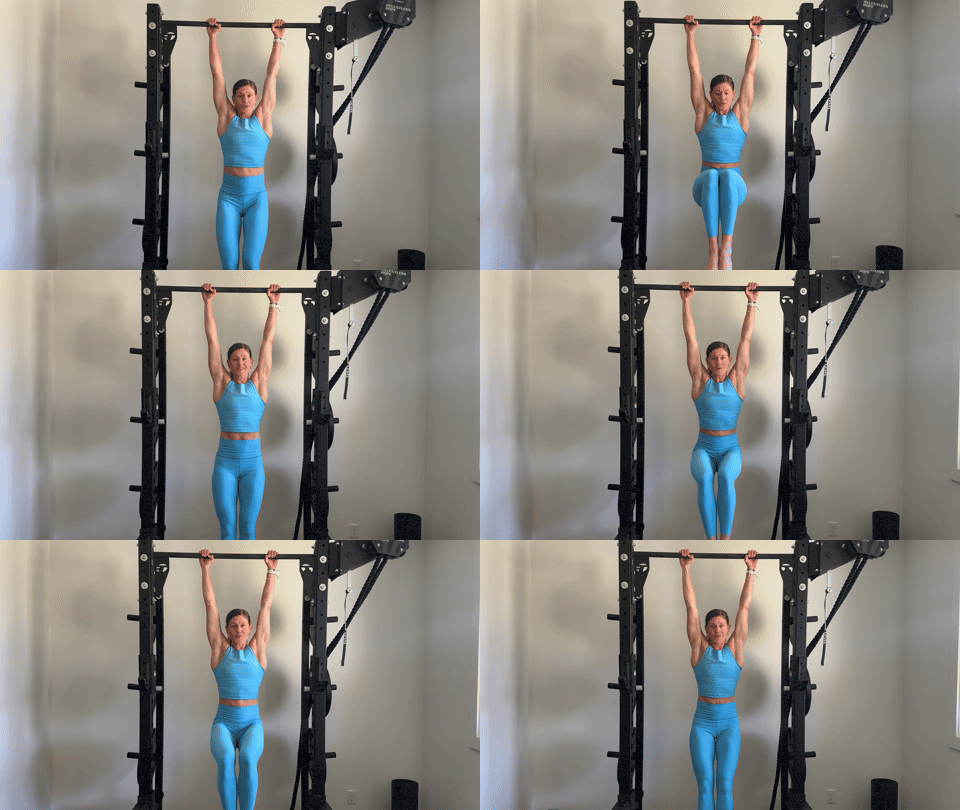
How to Do a Knee Raise
- Grip a pull-up bar with an overhand grip, placing your hands slightly wider than shoulder-width apart.
- Hang with your arms fully extended, engage your core and pull your shoulders down and back to create a stable starting position.
- Keeping your upper body as still as possible, slowly raise your knees toward your chest by bending at your hips and knees.
- Pause briefly at the top, then slowly lower your legs back to the starting position with control, avoiding momentum.
- Repeat for the desired number of repetitions while maintaining a steady, controlled movement.
Modification(s): Lift your knees only as high as you can while maintaining good form, or perform one knee raise at a time to reduce the difficulty. Focus on slow, controlled repetitions rather than lifting your knees as high as possible.
6. Leg Raises
Targets: Core, lower abs, hip flexors, obliques, forearms and grip strength.
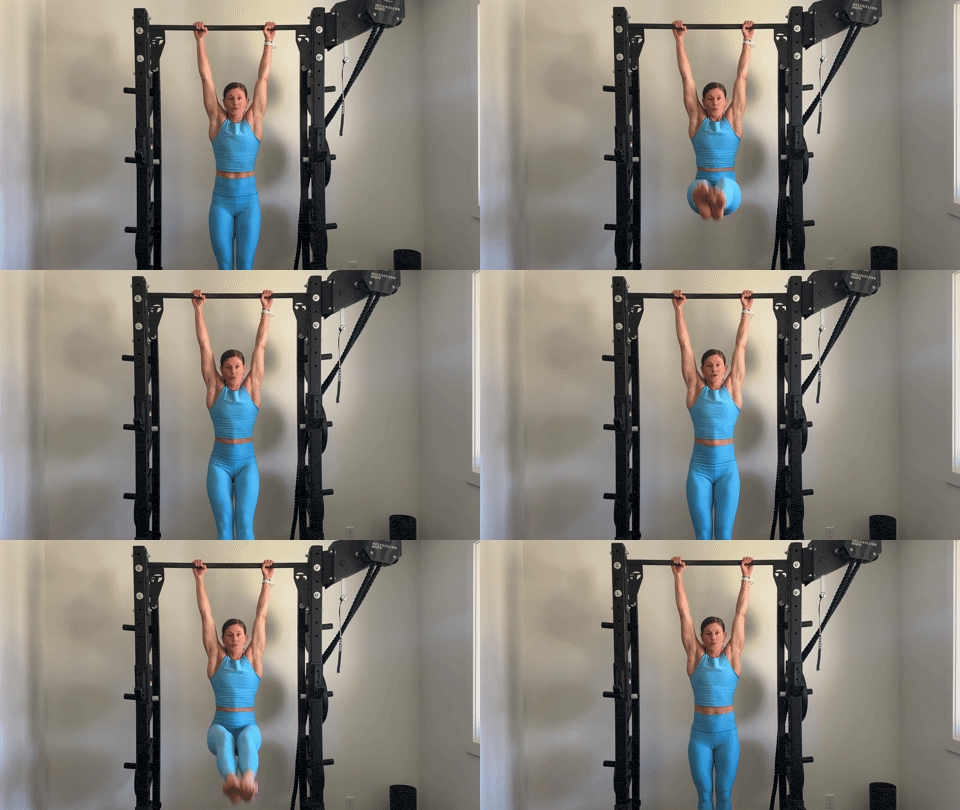
How to Do a Leg Raise
- Grip a pull-up bar with an overhand grip, placing your hands slightly wider than shoulder-width apart.
- Hang with your arms fully extended, engage your core and pull your shoulders down and back to create a stable starting position.
- Keeping your legs straight, slowly raise them until they are parallel to the floor or as high as you can comfortably lift while maintaining control.
- Pause briefly at the top, then slowly lower your legs back to the starting position without swinging or using momentum.
- Repeat for the desired number of repetitions while keeping your core engaged throughout the movement.
Modification(s): Bend your knees slightly or reduce your range of motion until you build the core strength needed to perform a full hanging leg raise. Focus on slow, controlled repetitions rather than lifting your legs as high as possible.
7. Hanging Oblique Raise
Targets: Obliques, core, hip flexors, lower abs, forearms and grip strength.
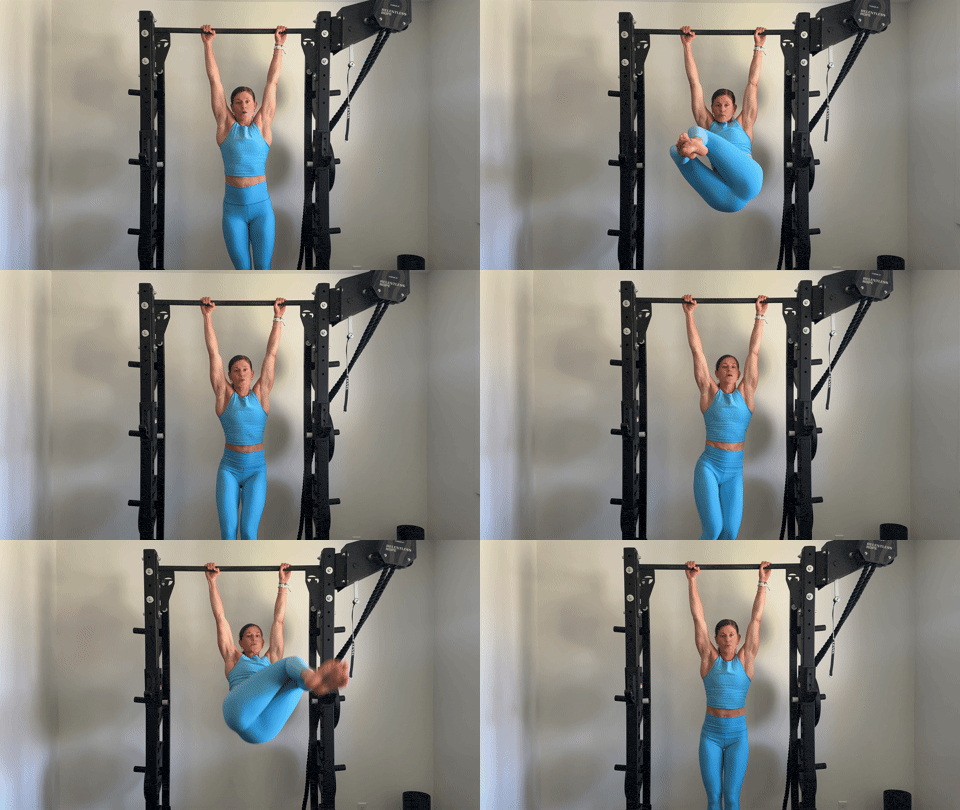
How to Do a Hanging Oblique Raise
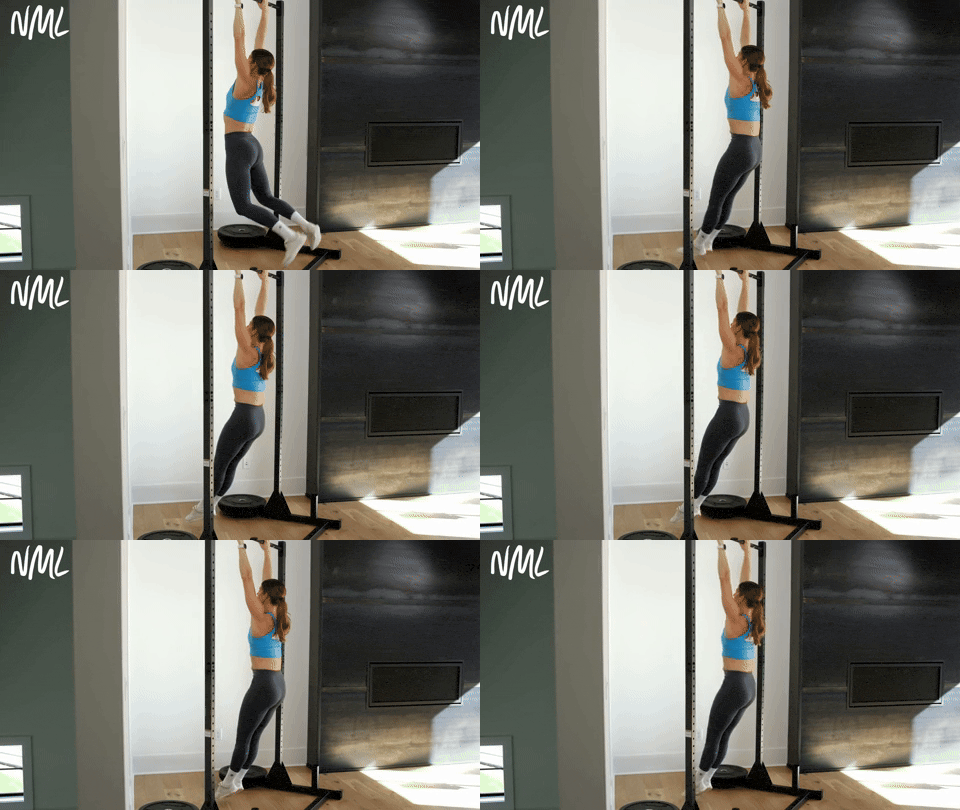
- Grip a pull-up bar with an overhand grip, placing your hands slightly wider than shoulder-width apart.
- Hang with your arms fully extended, engage your core and pull your shoulders down and back to create a stable starting position.
- Keeping your knees bent, raise them toward one side of your chest by rotating through your hips and engaging your obliques.
- Slowly lower your legs back to the starting position with control, then repeat on the opposite side.
- Continue alternating sides while keeping your upper body as steady as possible and avoiding momentum.
Modification(s): Reduce your range of motion or perform alternating standing knee raises with a slight torso rotation until you build the core strength and grip strength needed to perform the movement while hanging.
FAQs
Can I get a full-body workout using only a pull-up bar?
Yes! A pull-up bar can be used for a variety of bodyweight exercises that strengthen your back, biceps, forearms, core and hip flexors while improving grip strength and coordination. Pair pull-up bar exercises with movements like push-ups, dips and bodyweight squats for a well-rounded full-body workout.
How can beginners build strength for their first pull-up?
Start by building grip strength and upper-body strength with beginner-friendly pull-up bar exercises like dead hangs, scapular pull-ups and negative pull-ups. You can also use resistance bands for assistance as you develop the strength, coordination and confidence needed to perform your first full pull-up.
What are some common pull-up mistakes to avoid?
The most common pull-up mistakes include swinging your body for momentum, shrugging your shoulders, using only a partial range of motion and failing to engage your core. Focus on controlled movements, keep your shoulders pulled down and back, and perform each repetition through a full range of motion to build strength safely and effectively.
How often should I do pull-up bar exercises?
Most people can safely perform pull-up bar exercises 2-3 times per week as part of a balanced strength training routine. Be sure to allow your muscles time to recover between sessions, especially if you’re working on challenging movements like pull-ups, chin-ups or hanging leg raises.
More Roundups
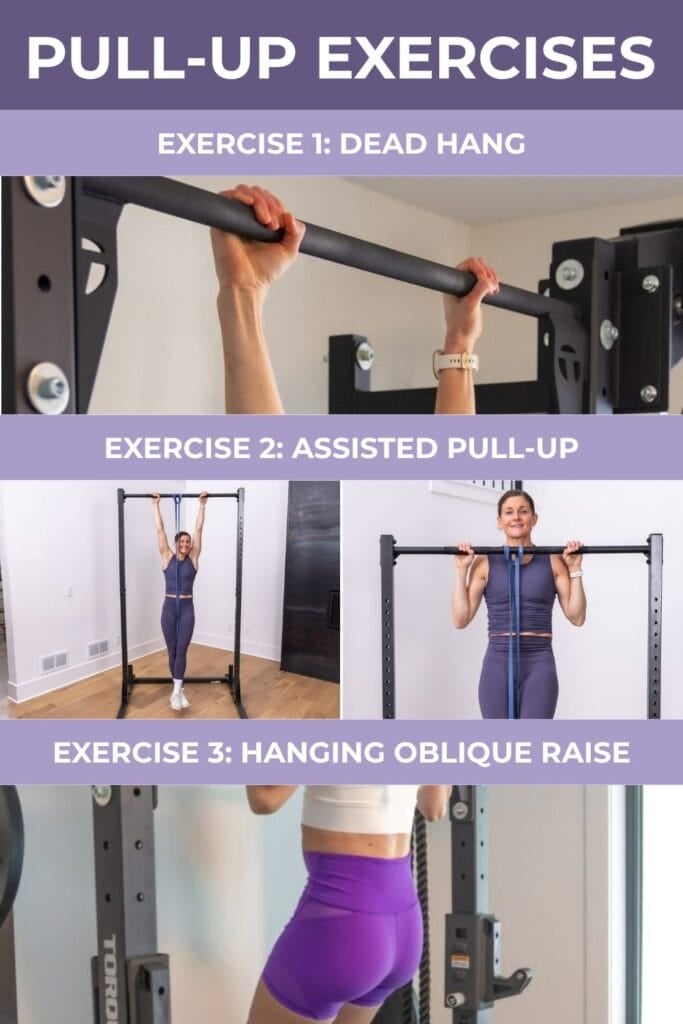
Exercises and WorkoutsPin This: Best Pull-Up Bar Exercises for Building Strength
This post includes affiliate links. I do earn a commission for products purchased using these links (at no additional cost to you). Thank you for supporting Nourish Move Love, making the content you see on this blog possible.
no comments