


9 Best Lat Exercises
Build overall strength and relieve back pain with these 9 lat exercises designed to target the largest muscle in your upper body. This roundup is perfect for women looking to build core and upper-body strength, with or without equipment. You’ll find a mix of dumbbell and bodyweight exercises that help build lat and core strength, relieve back pain, improve upper-body endurance and functional power.
Strong and developed lats are essential to all women, whether you are building muscle or chasing kids, and are often underutilized or even forgotten. The Latissimus Dorsi, or “Lats,” are often considered to be the Gluteus Maximus of the upper body. Your lat muscles are a major player in posture, spine stability and the connection point for the arms to the powerhouse of the body and your core; they deserve your attention.
I love lat exercises because they are the foundation for every functional movement I do on a day-to-day basis, and it doesn’t hurt that I feel strong doing them. Introducing lat exercises into your regular workout routines can help you improve your quality of life and increase your overall fitness level.
Functional movements like these are sure to relieve back pain, improve your posture, help you build strength, complement your upper-body routine and leave you feeling strong and confident.
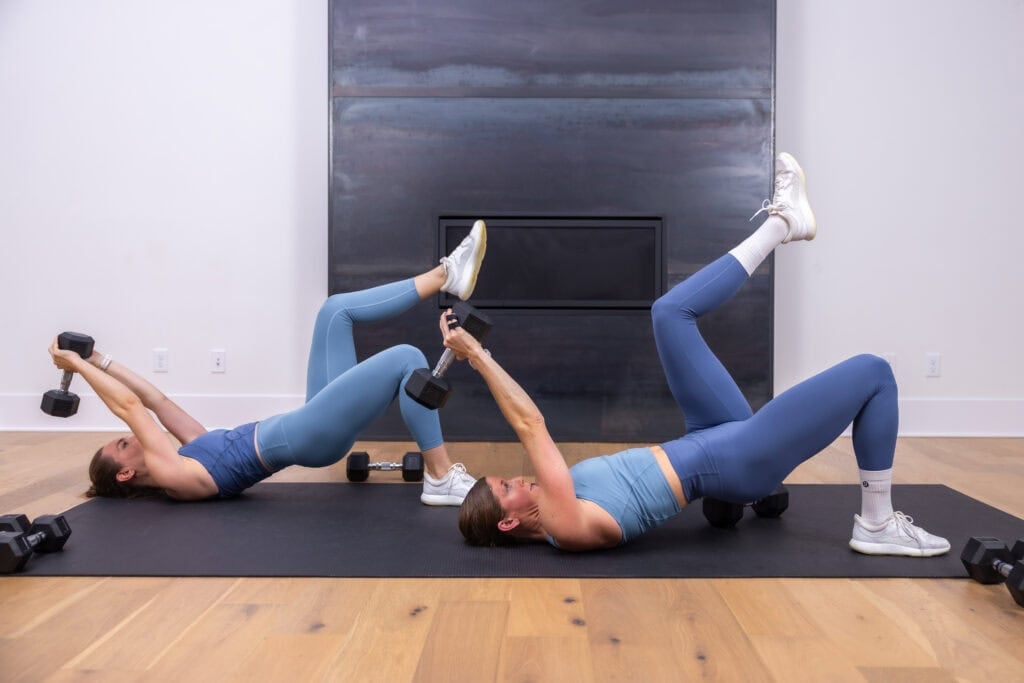
What to Know About These Exercises
The main component in all of these lat exercises will be a pulling movement, but you’ll find some compounded with a push as well. The pull focuses the movement to the lats, making it the focus over your arms.
The goal is to build core strength and stability, build strong lats and improve power output and support auxiliary muscle groups in the upper body through controlled reps and progressive overload. The variations of these exercises will meet the needs of weight lifters and moms, whether at home or at the gym.
I recommend adding 2-4 of these exercises to your upper-body workouts 1-2 times per week, even for beginners. You can pair them with bicep exercises, shoulder training or add some of these movements onto the end of a serious leg day. If you have access to gym equipment, lat pulldowns, barbell rows and cable rows are some of the best exercises you can do for your lats as well. Incorporate repetitions of these exercises into your back workouts to challenge your full range of motion and address muscle imbalances.
Note: If you have a history of lower back pain from lifting, shoulder impingement or significant wrist pain, I suggest modifying your range of motion or reducing your load, as well as sticking to banded and bodyweight movements. You can also consult a medical professional before adding loaded lat work if you’ve had any pain or injuries in that area.
Necessary Equipment
- Medium to heavy set of dumbbells or free weights. I suggest 5-20 lbs, depending on your strength level. Most women will use 10-15 lb dumbbells for row and pullover movements.
- Pull-up bar if you’d like to complete pull-ups.
- Optional sturdy bench, chair and/or box for incline rows.
- Optional barbell for landmine rows.
If you’re new to strength training, form is key here. Start lighter, focusing on perfect form and only increasing weight once you are familiar with the ins and outs of each movement. If the final 2-3 reps begin to feel challenging while maintaining good technique, you’re in the right weight range.
Instructions
Your lat workouts can look like this: choose 2-4 exercises from the list below. Then perform:
- Beginners: Aim for 2-3 sets of 8-10 reps
- Intermediate: Aim for 3-4 sets of 10-12 reps
- Advanced: Aim for 4-6 sets of 12-15 reps
Focus on controlled reps and proper form. Rest for approximately 40-60 seconds between sets.
This structure is flexible. You can also complete these exercises in a timed-interval circuit for a quick, efficient home workout. I’d recommend performing each exercise for 40 seconds of work, followed by 20 seconds of rest.
Lat Exercises Outline
1. Deadlift
Targets: Latissimus dorsi major, emphasizing the upper and middle sections. This move also seriously challenges the posterior chain, including the glutes and hamstrings.
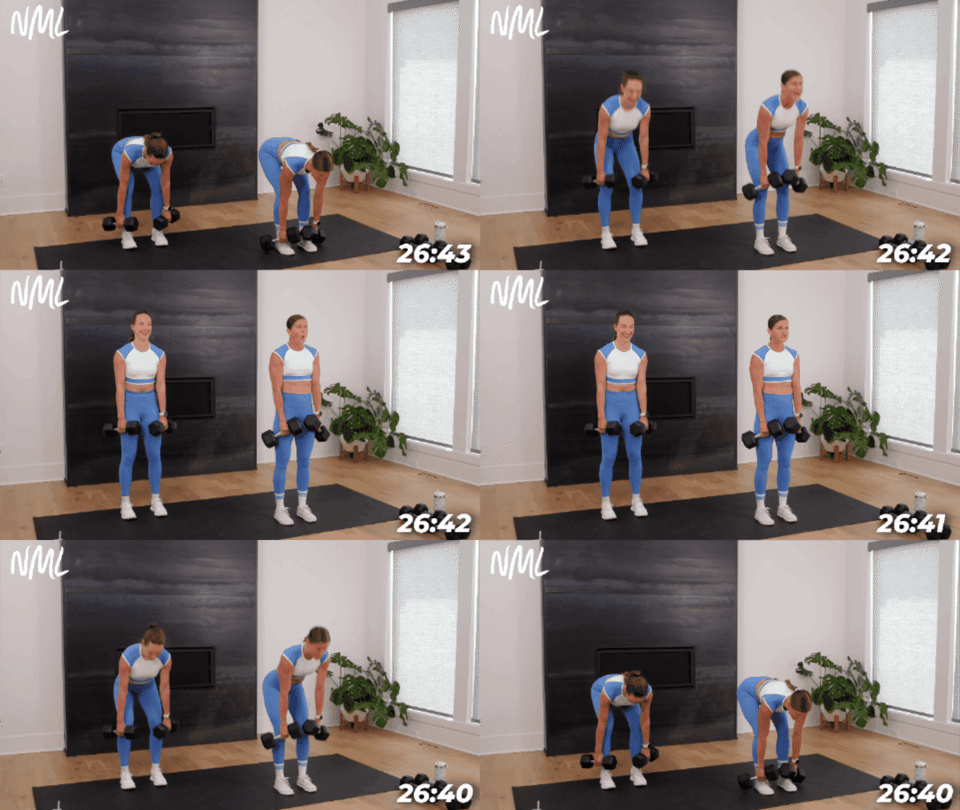
How to Do a Deadlift
- Stand with your feet hip-width apart, holding a dumbbell in each hand in front of your hips (palms facing in towards your body).
- Hinge at the hips, pushing your hips back towards the wall behind you as you glide the dumbbells down the front of your legs, keeping your core tight, slightly bending both knees. Lower your dumbbells until you feel a stretch in the hamstrings. The range of motion will look different for everyone.
- Drive through your heels to push your hips forward, pulling the dumbbells back up towards your hips and returning to the starting position. Aim for full hip extension at the top of the movement.
Modification(s): Reduce weight or replace the dumbbells with a heavy-weight resistance band. Place the band on the ground and take a shoulder-width stance inside it. Then grab the band outside your feet and conduct the movement. The tension will increase or decrease the closer or farther your hands are on the band relative to your feet.
2. Dumbbell Back Row
Targets: Lats with emphasis on the middle and lower sections. You can target one or the other specifically by pulling to the chest (targets the middle lat) or to the hip (targets the lower lat).
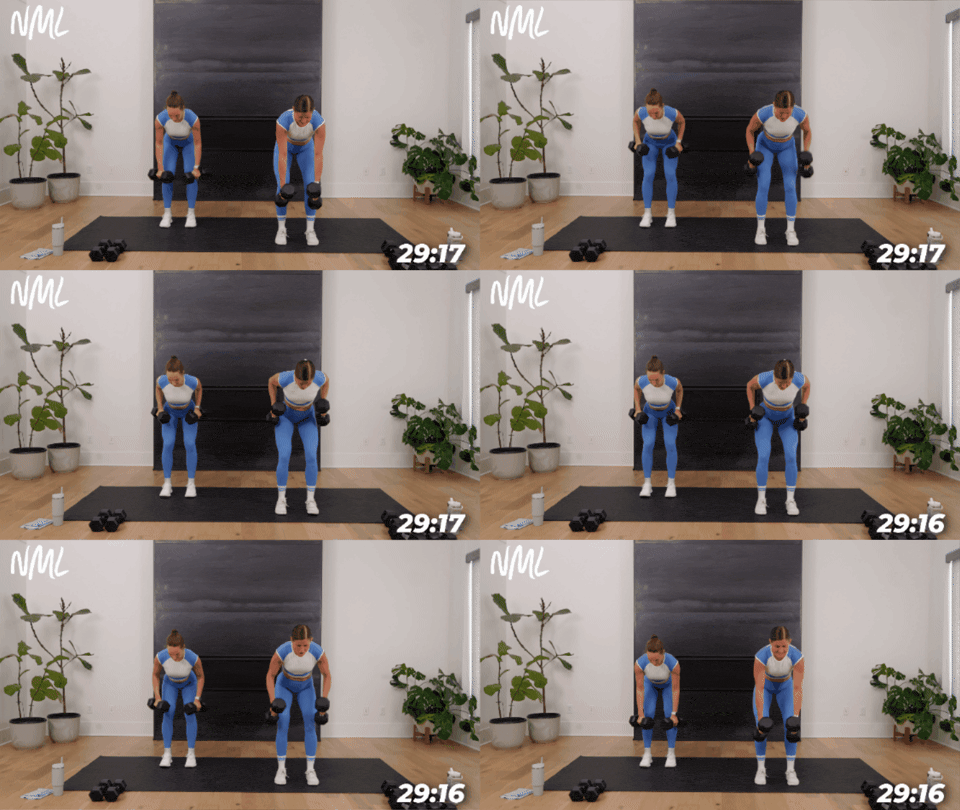
How to Do a Dumbbell Bent-Over Row
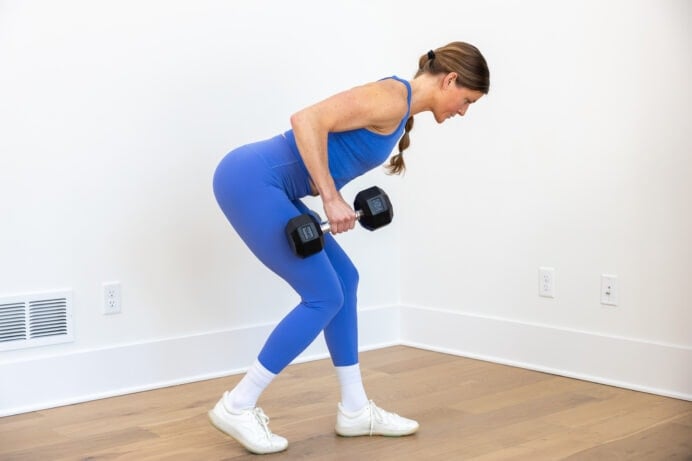
- Stand with your feet slightly wider than shoulder-width apart, knees slightly bent. Grip a set of dumbbells, palms facing in towards each other.
- Hinge forward at the hips until your body is in a straight line, neck in line with your spine, flat back and belly button pulled back towards your spine.
- As you pull the weights back towards your hips or glutes in a rowing movement, squeeze your shoulder blades together. Stop when your elbows are in line with your hips.
- With control, slowly lower the dumbbells back down to the starting position. Think up on a 1-count, down slow and controlled on a 2-count during these dumbbell rows.
Modification(s): Reduce weight or use a medium-weight resistance band. Step into the band and place 1 foot on the ground. Then grab the loose end of the band. The tension will increase or decrease the closer or farther your hands are on the band relative to your foot.
3. Plank Row (Renegade Row)
Targets: Lats, core, shoulders and chest. This movement is close to a full-body exercise that is great for when you are in a time crunch.
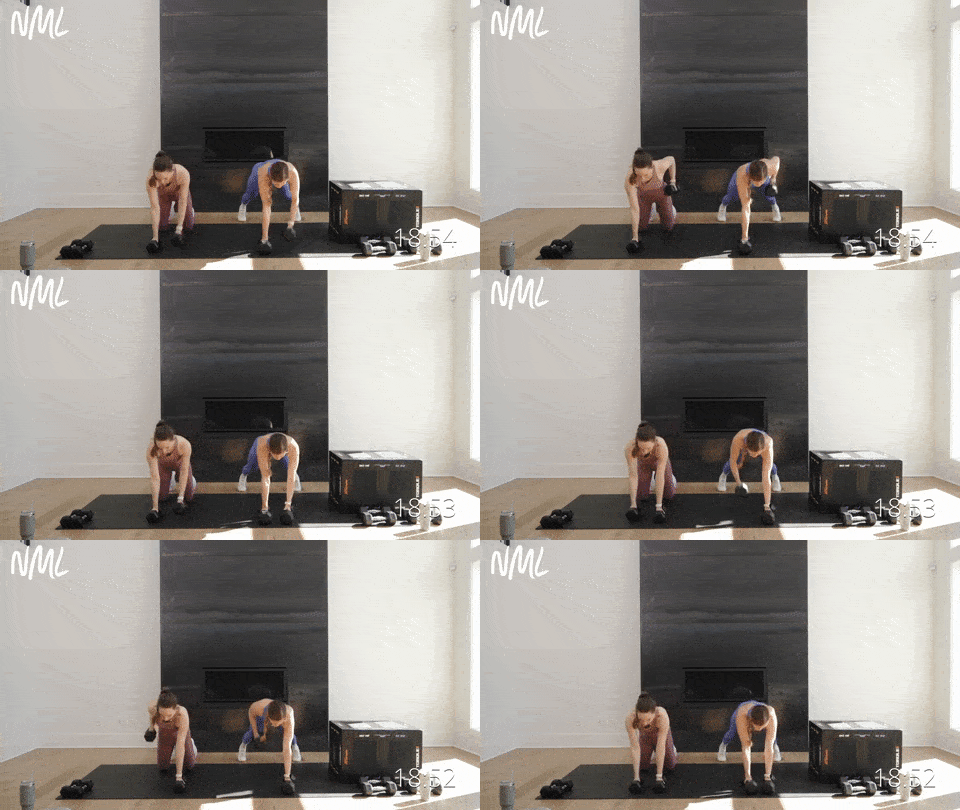
How to Do a Plank Row (Renegade Row)
- Start in a high plank position with your hands directly under your shoulders and feet shoulder-width apart.
- Hold a dumbbell in each hand, with your palms facing each other and your arms extended. Your wrists should be in line with your shoulders.
- Engage your core and keep your back straight as you row 1 dumbbell up towards your chest, keeping your elbow close to your body. Try to keep your hips and shoulders parallel to the floor.
- Lower the dumbbell back down to the starting position, then repeat the movement, performing a single-arm row on the other arm.
- Alternate rowing the dumbbells, keeping your core engaged and maintaining a stable plank position throughout the exercise.
Modification(s): Drop to your knees and perform a modified plank and row. Alternatively, place your dumbbells on an incline (such as a bench or box) to bring the ground closer to you.
4. Straight Arm Pullback
Targets: All lat muscles are used by eliminating the biceps and using the shoulder as a hinge point.
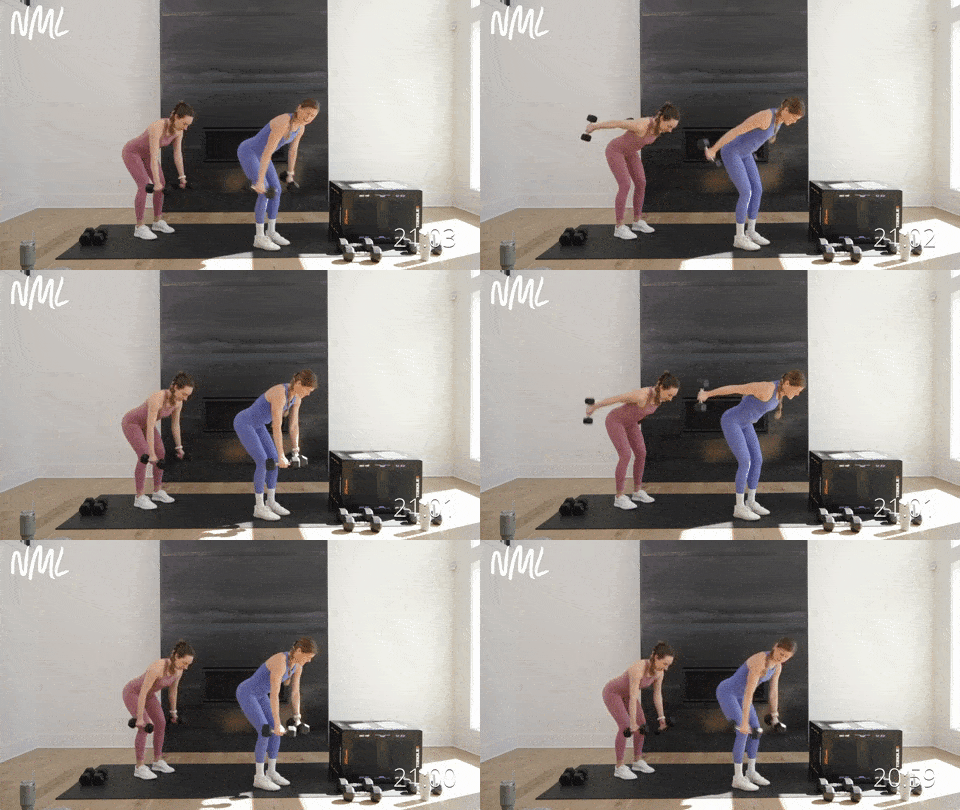
How to Do a Straight Arm Pullback
- Stand with your feet shoulder-width apart, knees slightly bent. Grip a set of dumbbells, palms facing in towards each other.
- Hinge forward at the hips at approximately a 45-degree angle until your body is in a straight line (torso parallel to the mat).
- Keep your arms straight as you pull both dumbbells back to your hips (just past your hips).
- Control the dumbbells back down. Return to the starting position, trying not to let the dumbbells touch at the bottom.
5. Pull-Ups
Targets: Primarily the lats simultaneously as well as the upper chest, with some core stability work to keep your body from swinging while conducting the movement.
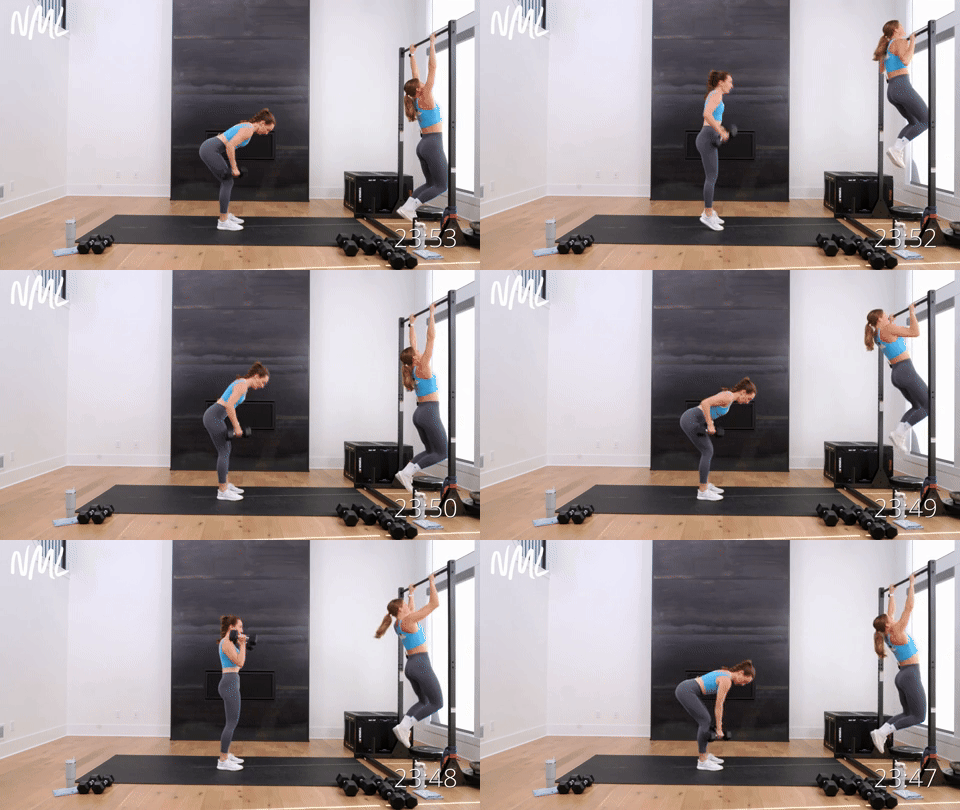
How to Do a Pull-Up
- Use a box or bench to mount the pull-up bar with an overhand grip just outside shoulder-width for a pull-up, or with an underhand grip at shoulder-width for a chin-up.
- Engage your core and squeeze your shoulder blades together to create tension in your shoulders and engage your lats prior to pulling your chest to the bar.
- Once you have created this stable position, pull your chest to the bar vertically, avoiding leaning back too far. Stop when your eyes pass the bar.
- After a brief pause, lower yourself to the starting position slowly and with control. Dropping to the bottom can cause undue stress and injury to the shoulders.
Modification(s): Use a medium- to heavy-weight resistance band to assist with your pull-ups until you can complete them unassisted for your desired rep count.
You can also follow my free 12-week pull-up program, which takes you from beginner progressions to your first unassisted pull-up, or opt for assisted pull-ups.
6. Dumbbell Pullover
Targets: This movement primarily engages your lats and chest. The lats for the major movement and the chest for stability.
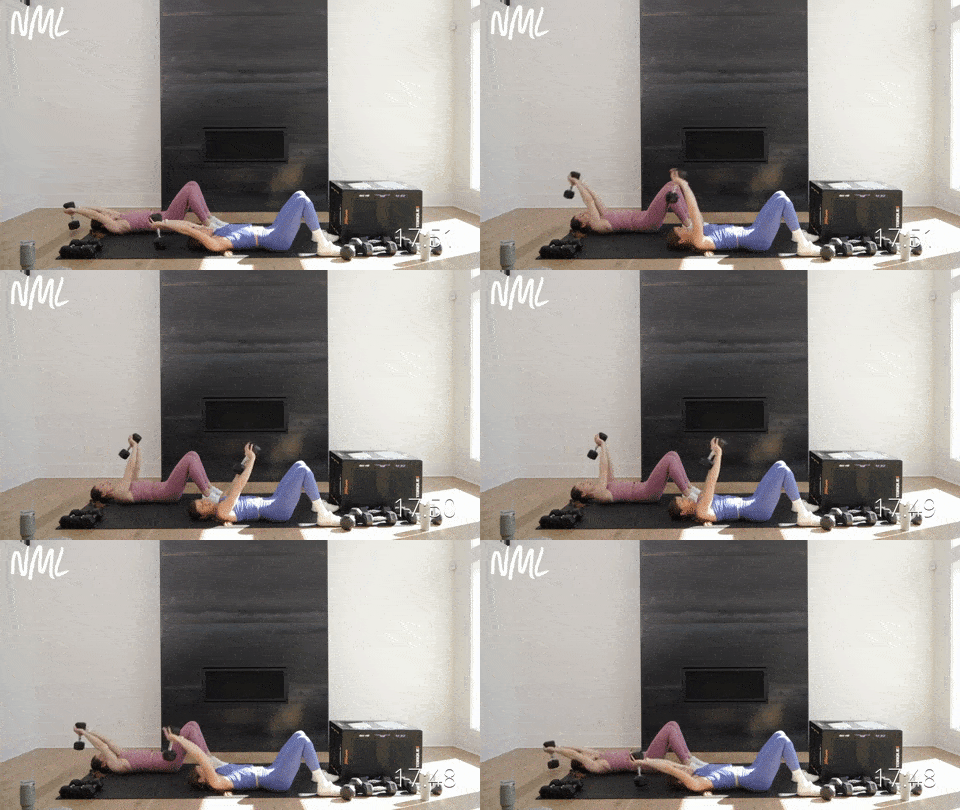
How to Do a Dumbbell Pullover
- With a single dumbbell, lie down with your back on a bench or across a chair. Lift the dumbbell above your head with both hands while gripping the dumbbell by the weight and not the bar.
- Keep your arms straight with the pit of your elbows pointing toward your head. Then lower the weight in an arc from in front of your face to behind your head.
- The bottom of this movement is when you reach full extension and begin to feel the weight of the dumbbell stretch in your chest. Pause at full extension and then begin the pull, returning to the starting position.
- To pull the weight back to the starting position, engage your lats and make the mind-to-muscle connection as you drive the weight back out in front of your face in the overhead position.
Modification(s): You can substitute a dumbbell for a light to medium-weight resistance band attached to a fixed point, like a table leg.
7. Gorilla Row
Targets: Mainly the lats and core, with some emphasis on the shoulders and arms. This movement will also help with overall stability and hip mobility due to the wide stance position.
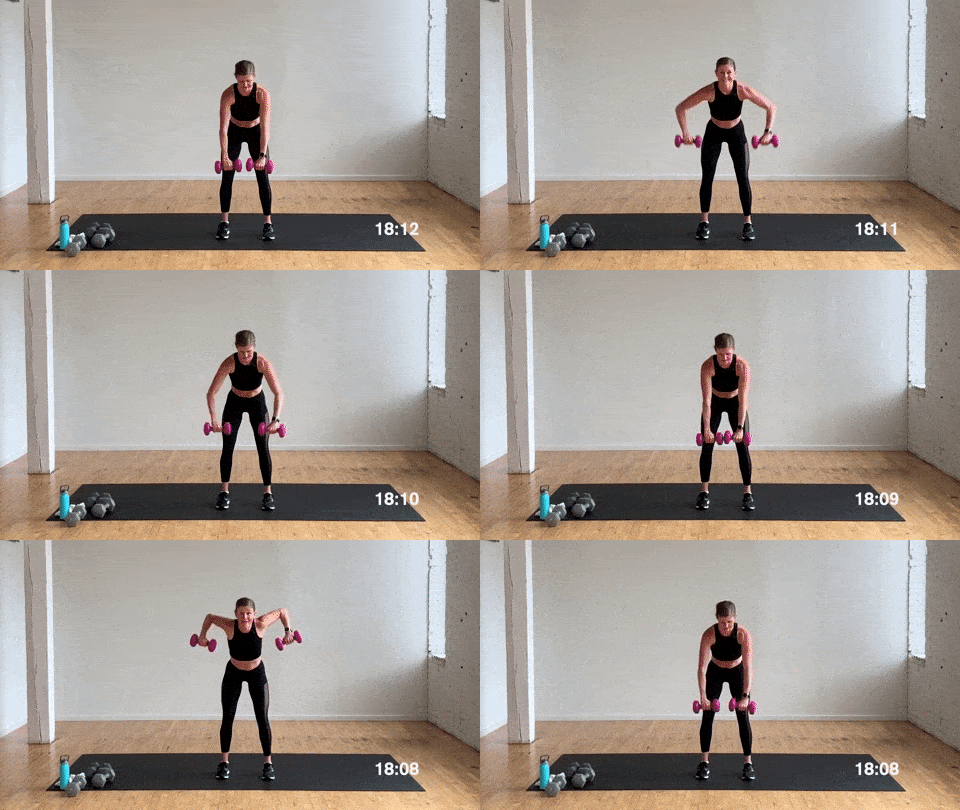
How to Do a Gorilla Row (Wide Grip Row)
- Take up a stance with your feet slightly outside of shoulder-width, ensuring your hips are lower than your shoulders. You should tighten your core and glutes throughout the entirety of the movement for the whole rep count.
- Grip a set of dumbbells, palms facing in towards your body (wide row position).
- Pull your elbows wide towards the ceiling, squeezing your shoulder blades together as you bring your elbows parallel to your shoulders. Control the dumbbells back down to the starting position.
Modification(s): You can swap kettlebells for dumbbells if you’d prefer.
8. Landmine Row
Targets: This move is great for your entire back, engaging the lats, traps and erector spine. It also targets your core.
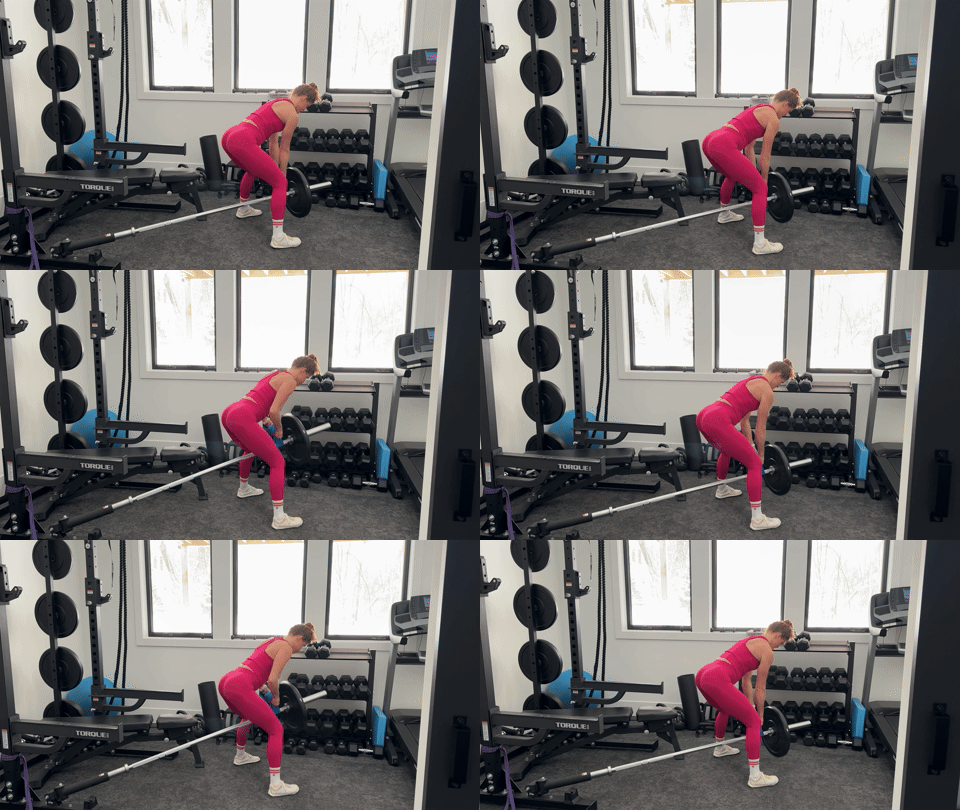
How to Do a Landmine Row
- Use the barbell in a landmine attachment or a landmine machine and place the appropriate weight for you on the opposite end.
- Grab your favorite V-bar handle and wrap it under the weighted end so you can use the handles to lift the weight.
- Bend at the waist with a straight spine until your upper body is at a 45-degree angle to the ground.
- From this position, row the weight toward your chest while squeezing your shoulder blades together. Control the descent of the weight to return to the start and then row again.
- Avoid yanking the weight and attempt to keep your upper body in the same position throughout the movement.
9. Incline Row
Targets: This movement isolates the upper back muscles, including the lats, rhomboids, and rear delts, by eliminating the legs from the exercise, connecting the mind to muscle.
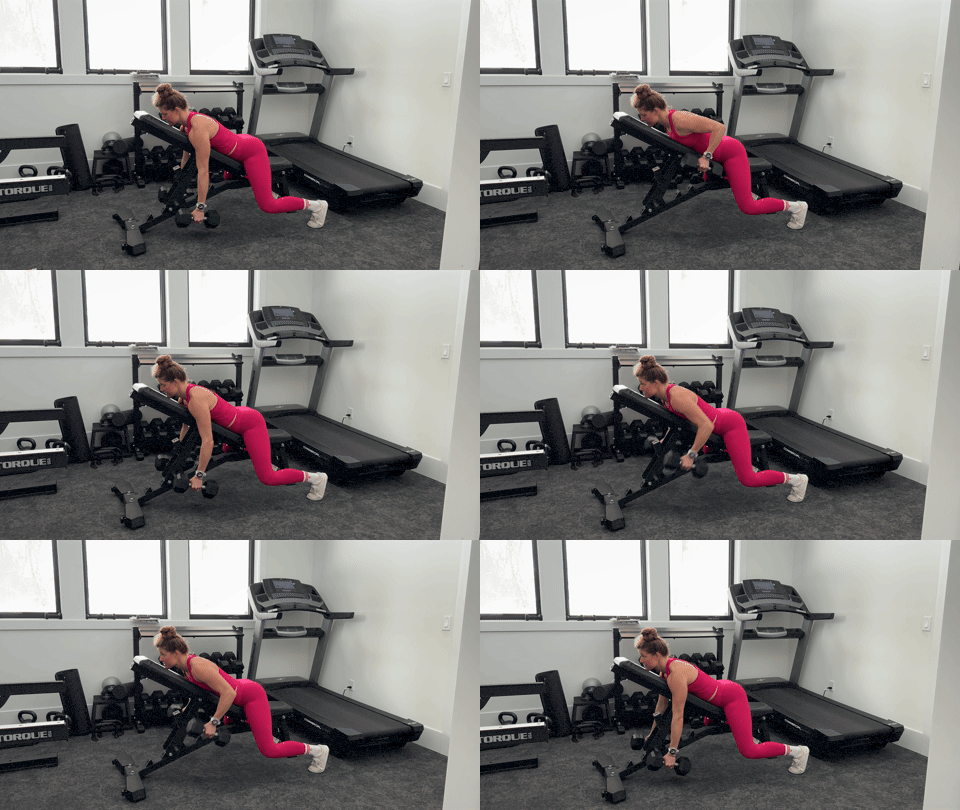
How to Do an Incline Row
- Set up an adjustable bench at a 45-degree angle and stage your dumbbells on the ground, either side of and toward the head of the bench.
- Mount the bench by placing your chest against the inclined portion and planting your feet about shoulder-width apart. Avoid lying on the bench by engaging your abs and glutes throughout the movement.
- Once in position, grip the dumbbells in each hand while maintaining a neutral neck position by looking straight ahead.
- While gripping the dumbbells firmly, pull them using your upper arms and squeeze your shoulder blades together. You will want to pause for at least 1 second at the top of the lift before lowering the weight back down.
Modification(s): Lowering the bench from a 45-degree angle to a 30-degree angle can help beginners identify the muscles being used by further isolating the back and establishing the mind and muscle connection. A lighter weight should be used as well, so you can focus on identifying the correct back muscle groups to avoid making this an arm exercise.
FAQs
How often should you train your lats for optimal growth?
You should train your lats 2-3 times per week if growth is your goal.
How can you perform free-weight lat exercises safely?
Ensure you are training with appropriate weight and as close to perfect form as possible, and the risk of injury will stay minimal.
Are lats difficult to grow?
Lats can be difficult to grow for multiple reasons, the most common being a lack of mind and muscle connection. If you use good form paired with slow and concentrated movements, you’ll strengthen the mind and muscle connection, eliminate compensation from other muscle groups and see results faster.
Are 2 exercises enough to build lats?
Yes! Combining a vertical pulling exercise with a horizontal row can be more than enough to grow and strengthen your lats as long as you maintain the mind-muscle connection and good form.
More Workouts
Upper-BodyPin This: 9 Best Lat Exercises
no comments