


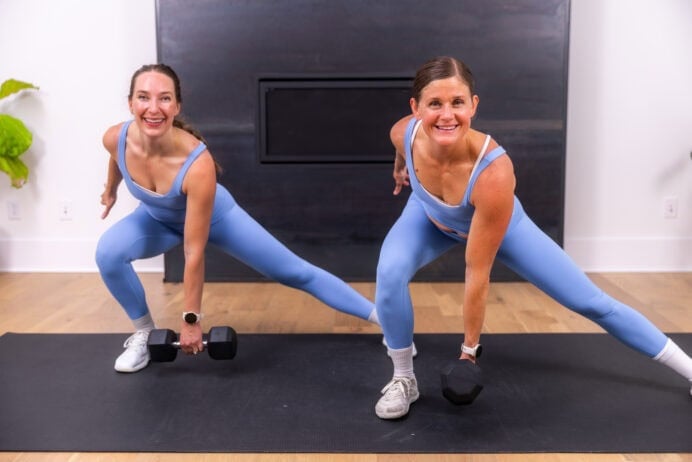



20-Minute Calves and Core Workout (Max 20 Day 4)
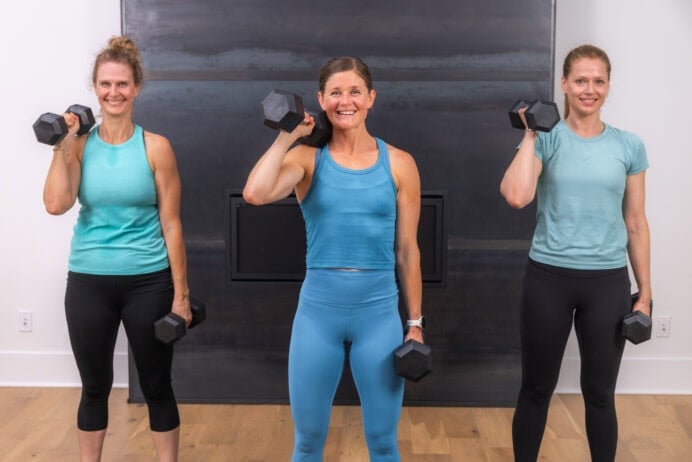
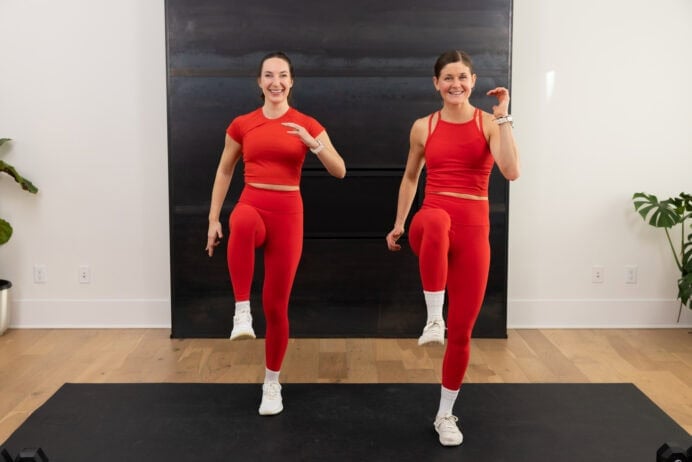
Skip the crunches and sit-ups — these dumbbell core exercises build real strength and definition. This strength-based calves and core workout uses dumbbells to build stability, power and functional strength through movements like woodchops, overhead marches, snatches, single-leg deadlifts and calf raises. The result is better posture, stronger ankles and knees and less strain on your lower back.
This is DAY 4 of my Max 20 Program.
LET’S GET STARTED
Download Your FREE Workout Plan & Workout Tracker Here
Download the PDF calendar for this workout plan with a daily workout tracker so you can measure your progress.
Download Plan
Day 4 of my Max 20 Program focuses on building core and calf strength through functional, standing dumbbell exercises that challenge your stability, balance and control.
Your core isn’t just your abs; it’s your body’s powerhouse. It stabilizes your spine, transfers force between your upper and lower body, and keeps you balanced through everyday movement. Your calves play a huge role in that stability too — they control ankle strength, balance and the ability to move efficiently through steps, jumps and single-leg work.
That’s why I love exercises that challenge core stability and calf strength at the same time. Moves like a dumbbell snatch with an overhead march force your core to brace while your body stabilizes under load. An uneven side bend and calf raise fires up the obliques while building ankle and calf strength. Rotational movements like woodchops build the kind of strength that carries into real-life twisting and turning.
The goal of these exercises is to teach your body how to brace, balance, rotate and stabilize under load. When your core, hips and calves learn to work together, you build strength that supports everything from workouts to everyday movement.
Workout Details
Build core strength and stability with these weighted ab exercises. This complex dumbbell workout includes a variety of exercises targeting your upper abs, lower abs, deep core and calves from all angles.
I suggest doing this dumbbell core workout once a week as part of a well-rounded workout routine.
Workout Equipment
Single Dumbbell. I’m using 20-35 lbs.
Workout Instructions
Follow along with the guided 20-Minute Calves and Core Workout on YouTube, led by me — your certified personal trainer, Lindsey Bomgren.
Your Workout Looks Like This:
- 20 Rep Buy In
- 4 Dumbbell Ab and Core Strength Exercises
- Timed Intervals (Complete each exercise for 45 seconds of work, followed by 15 seconds of rest.)
- Repeat All 4 Exercises x 4 Sets
Workout Outline
1. Goblet Hold Calf Raise
Targets: Low abs, obliques, calf muscles (the gastrocnemius and soleus) and Achilles tendon.
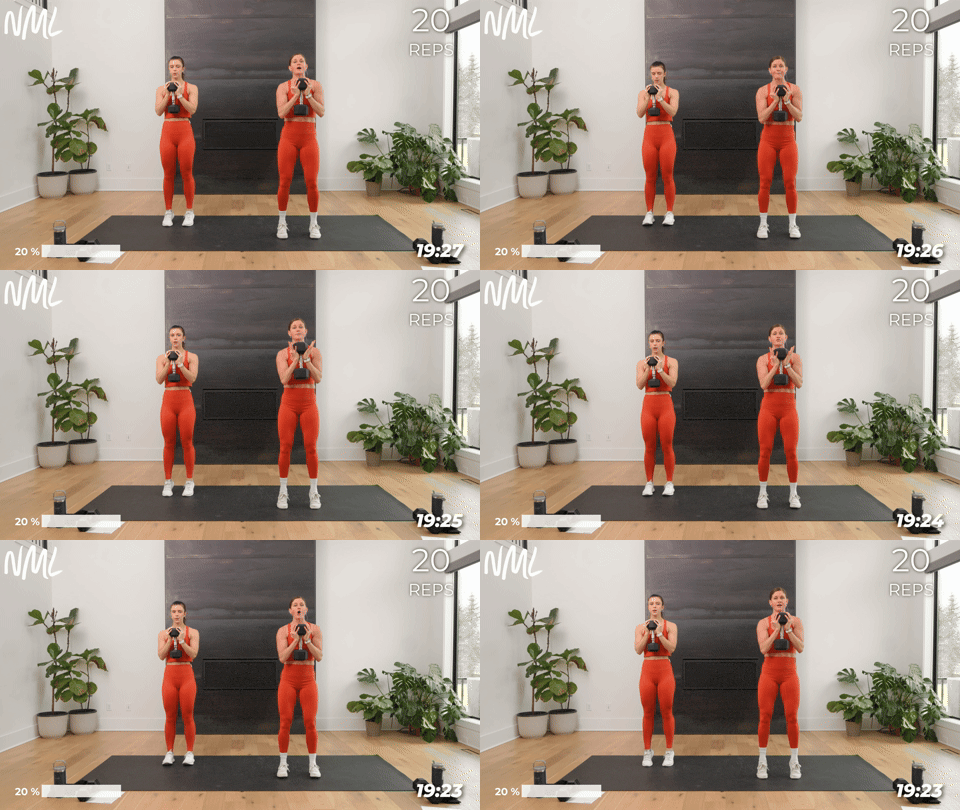
How to Do a Goblet Hold Calf Raise
- Start standing on a flat surface, feet shoulder-width apart. Keep your back straight and core engaged to stand tall. Hold a dumbbell vertically at your chest, elbows tucked in.
- Slowly and with control, lift yourself up onto the balls of your feet, heels rising above the ground.
- Lift your heels until you feel a stretch along the back of your legs, balancing on your toes.
- Then, slowly lower your heels back to the ground, returning to the starting position.
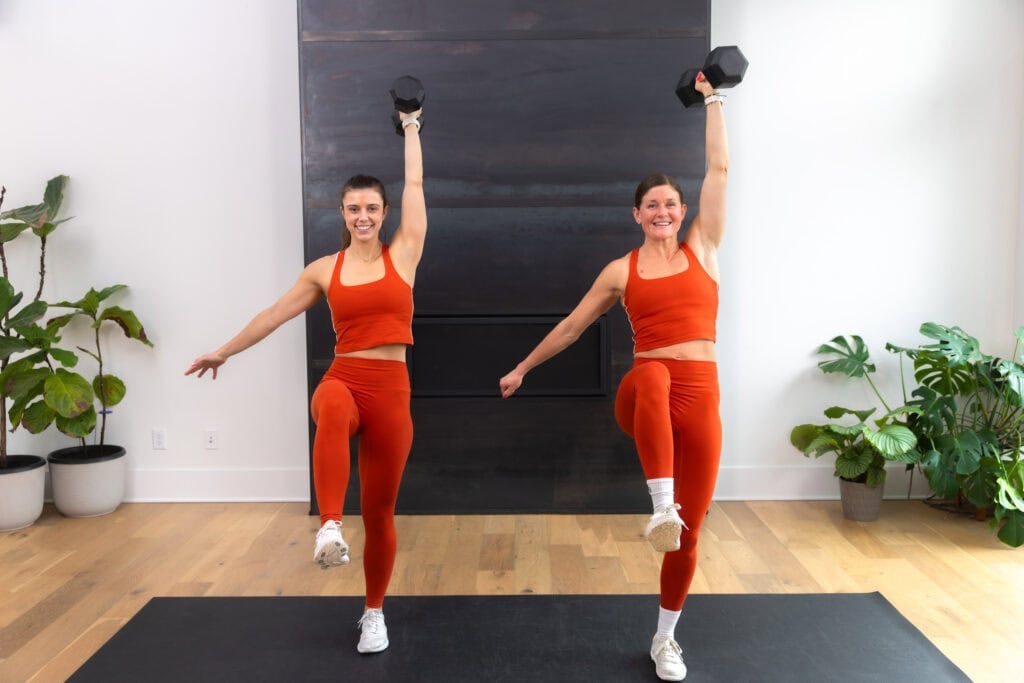
2. Dumbbell Snatch and Overhead March
Targets: Legs, hamstrings, hips, glutes, back, shoulders and deep transverse abdomen muscles (core).
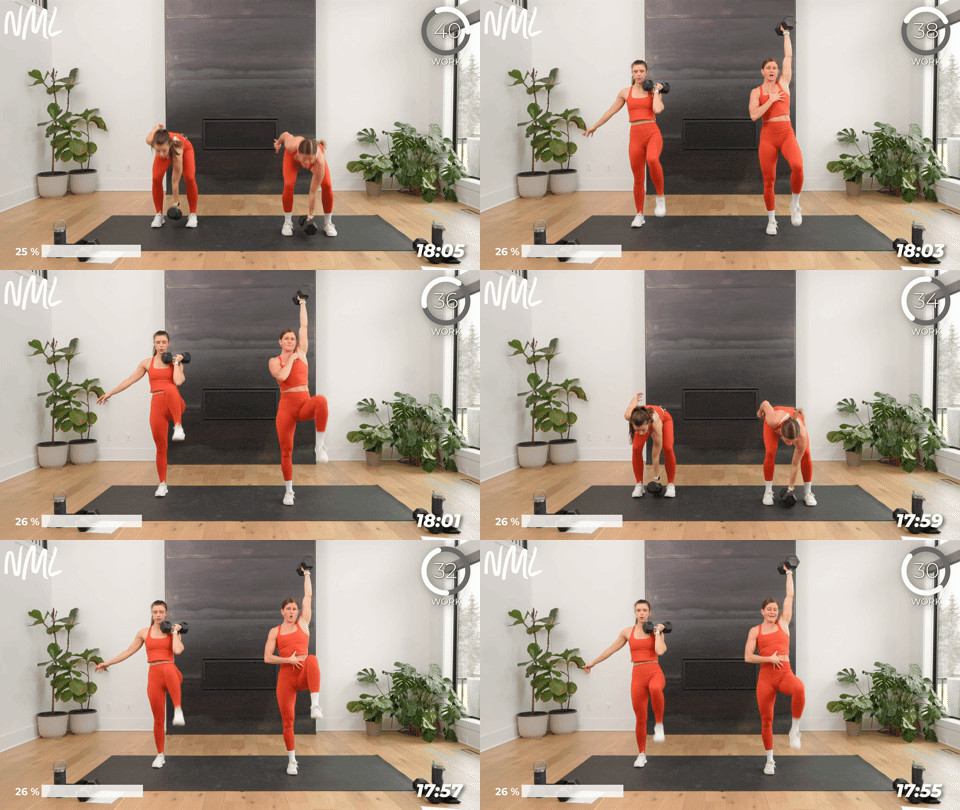
How to Do a Dumbbell Snatch and Overhead March
- Start standing, feet shoulder-width apart, knees slightly bent. Hold one dumbbell in your right hand at your side (palm facing in).
- Hinge forward at the hips, pushing your hips back as you lower the dumbbell down the front of your body. You should feel a stretch in the back of your legs (hamstrings).
- Then, drive your hips forward as you ‘snatch’ the weight overhead with your right arm (using the power and momentum created by your legs and hips). You should finish standing tall with your right arm straight overhead; lock out your elbow.
- While holding the dumbbell overhead, perform 3 knee drives, first lifting your right knee so that your right thigh is parallel to the ground, then repeating with the left knee.
- Plant both feet on the ground and, with control, slowly lower the dumbbell back down to shoulder height.
Modification: Perform a dumbbell clean instead of a full snatch, catching the dumbbell at shoulder height.
3. Uneven Side Bend and Calf Raise
Targets: Calves, glutes, obliques, upper abs and lower back.
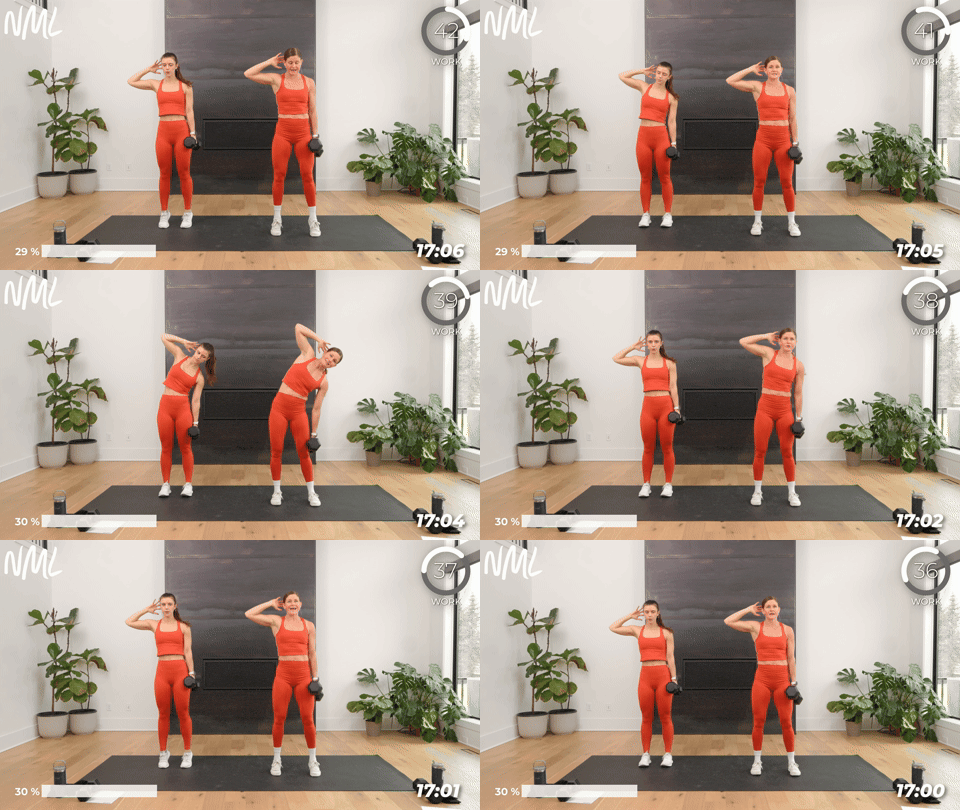
How to Do an Uneven Side Bend and Calf Raise
- Stand with your feet hip-width apart and knees slightly bent. Hold a dumbbell in your right hand at your side.
- Let the weight gently pull your torso down as you slide the dumbbell along your right thigh, bending through your right side. You should feel a stretch through the opposite (left) obliques.
- Engage your left obliques to pull your torso back to an upright position.
- Once upright, brace your core and evenly distribute your weight through both feet.
- Slowly rise onto the balls of your feet, lifting your heels off the ground.
- Lift your heels as high as you can with control, balancing on your toes and feeling the calves engage.
- Slowly lower your heels back to the ground, returning to the starting position.
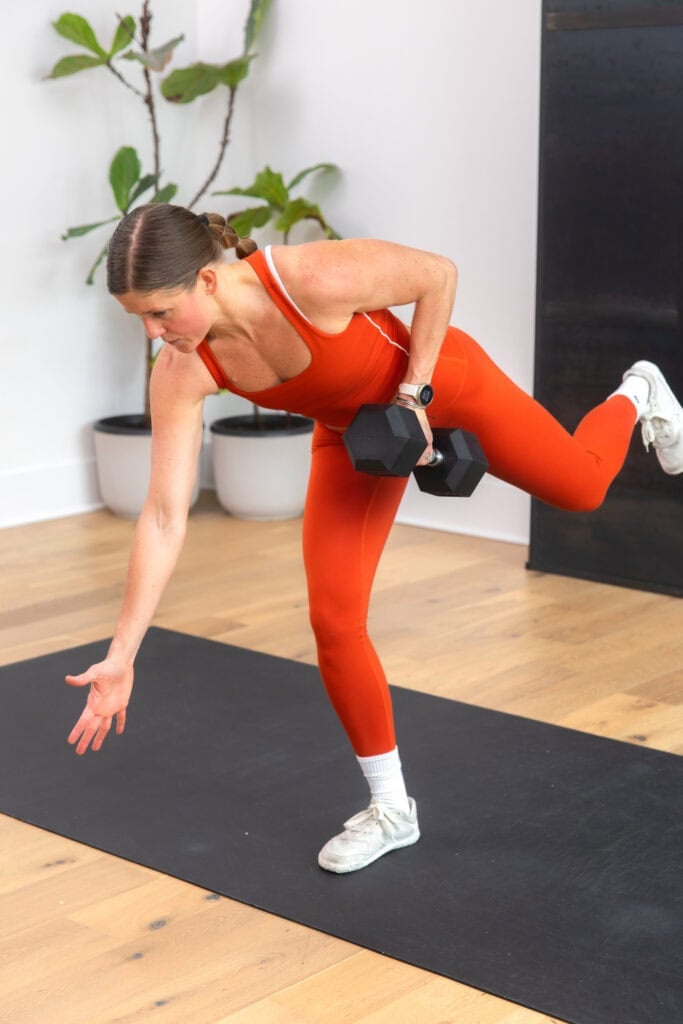
4. Single-Leg Deadlift and Uneven Single-Arm Back Row
Targets: The posterior chain or backside of the body — hamstrings, glutes, hips, lower back, mid-back, arms, biceps, abs and core.
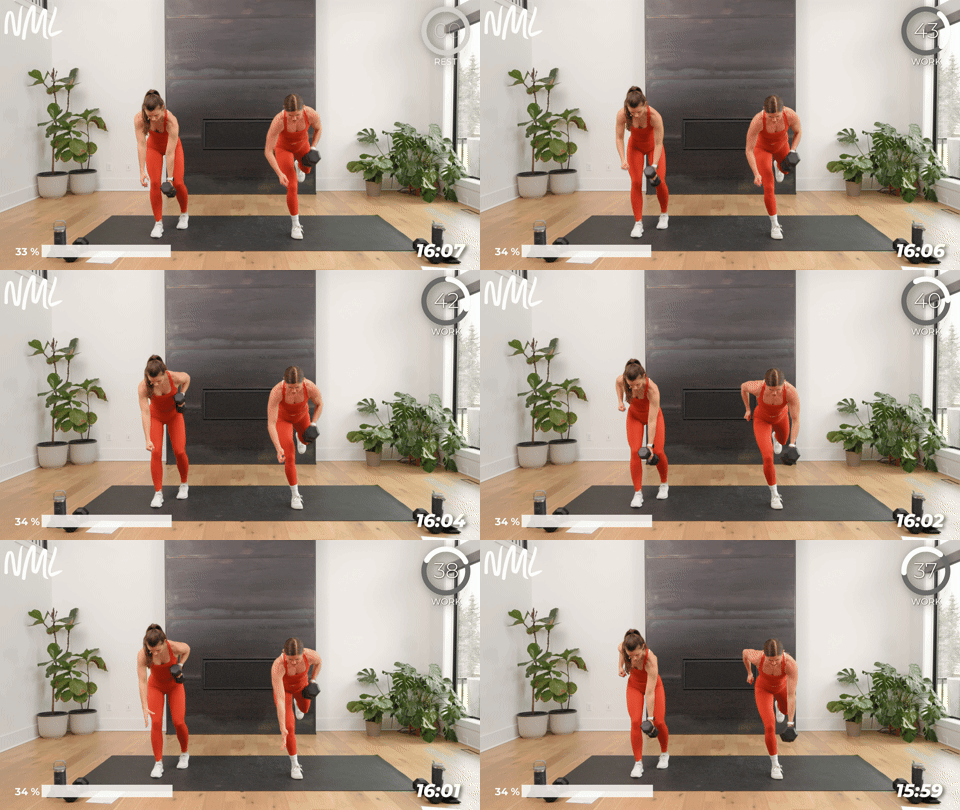
How to Do a Single-Leg Deadlift and Uneven Single-Arm Back Row
- Start standing with your feet hip-width apart, knees slightly bent. Hold one dumbbell in your right hand, palm facing your body.
- Transfer your weight into your left foot and float your right foot off the floor.
- With your left knee slightly bent, hinge at your hips as you lower the dumbbell down towards the ground, balancing on your left leg. Keep your hips square to the mat. You should feel a good stretch in your left hamstring (back of your left leg) at the bottom of this movement. The range of motion looks different for everyone.
- Hold this single-leg deadlift position, then perform a single-arm row by pulling the dumbbell back toward your right hip.
- Lower the dumbbell with control.
Modification: Perform a staggered deadlift rather than a single-leg deadlift for more balance support.
5. Dumbbell Woodchop
Targets: The deep transverse abdominis muscle, oblique muscles, legs, back and shoulders.
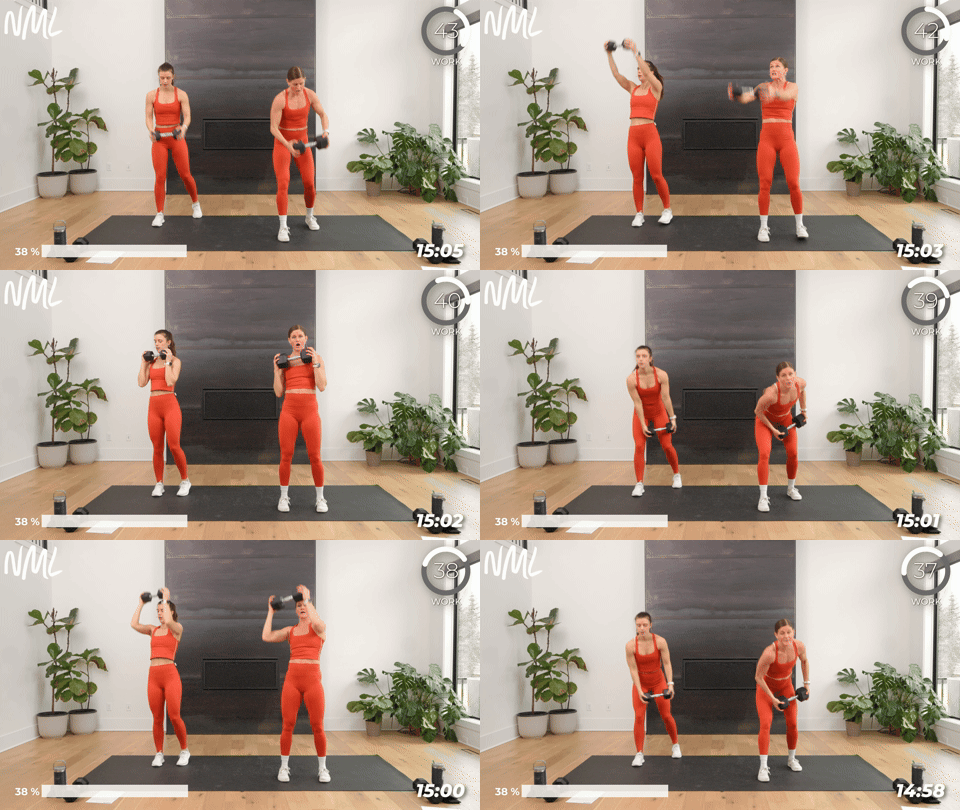
How to Do a Dumbbell Woodchop
- Start standing in an athletic stance, feet shoulder-width apart, soft bend in your knees, core engaged. Hold one dumbbell horizontally between your hands.
- Bend your knees as you bring the dumbbell to the outside of your right knee.
- Then exhale as you use your legs, hips and glutes to drive the dumbbell crossbody, extending your arms up overhead on the left side. Think right knee to left shoulder.
- Lower the dumbbell with control back towards your right knee. Return to the starting position and repeat this movement.
FAQs
Should I train my calves and core together?
Training your calves and core together is a smart way to build functional strength. Many standing movements target the core while also strengthening smaller accessory muscles that are often overlooked (like the calves). As you perform core exercises that require you to transfer your weight and press through the big toe, your calves, ankles and deep core muscles work together to improve balance, stability and control.
How long does it take to build a stronger core?
Most people will begin to feel stronger and more stable within 4-6 weeks of consistent core training. 20-30 minutes of core work done 2-3 times a week is more than enough to see and feel results. Factors like genetics, diet, workout frequency and intensity will influence how quickly you see visible results.
What weight is best for calves and core workouts?
The best weight for core and calf exercises depends on your fitness level. You should choose a weight that challenges you without compromising your form. I recommend starting light. Using 5-15 lb dumbbells is a great starting point. As your strength improves, gradually increase the weight to keep progressing and building strength.
Max 20: FREE 2-Week Functional Training Program
A 2-week at-home workout program, designed to make strength training simple and get results in the time you actually have.
If you liked this calves and core workout, download the FREE 2-Week Workout Plan.
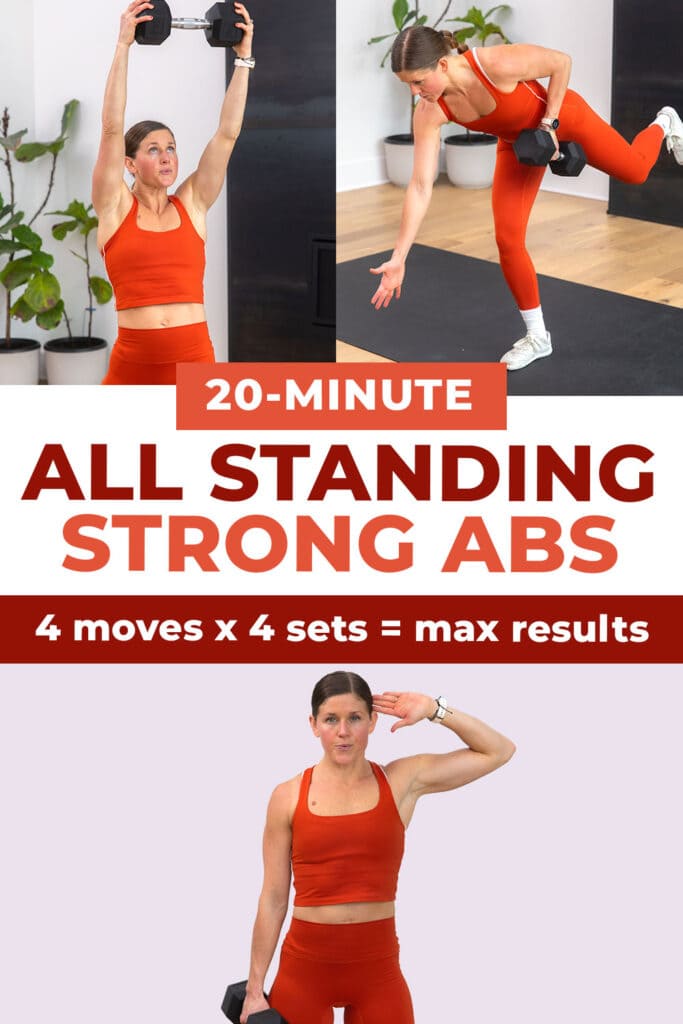
Pin This 20-Minute Calves and Core Workout
no comments
Leave a Comment