





30-Minute Full Body HIIT
HIIT workouts (high-intensity interval training) deliver maximum results in minimal time by alternating short bursts of all-out effort with short rest periods. This time-efficient full-body HIIT routine is scalable for beginners to advanced athletes, with low-impact options for each exercise provided. Increase endurance, burn calories and build explosive athletic power at home with this quick HIIT workout.
As a personal trainer, one of the biggest mistakes I see people making when they want to increase muscle definition or lose weight is jumping on the treadmill or elliptical for hours.
Although steady-state cardio has its place, HIIT (high-intensity interval training) workouts deliver effective results in less time than other types of training, which makes it a great option for people who are short on time. HIIT workouts are also known for being particularly effective at burning fat and supporting weight loss.
HIIT workouts involve alternating short, intense bursts of exercise with brief recovery periods. During your “work” interval, the goal is to be working at 80-90% of your maximum heart rate (MHR). Alternating bursts of all-out effort with short periods of rest keeps your heart rate high for the entire workout, maximizing calorie burn and increasing endurance.
MEMBER SPOTLIGHT
MEET MOLLY!
Today’s workout features one of our amazing YouTube Community Members – Molly! Molly is a busy mom of 3 and founding YouTube Member.
For more exclusive workout challenges, live workouts, nutrition chats, and direct support from our team, become a YouTube Member today.
Join Team NML
For more exclusive workout challenges, live workouts, nutrition chats, and direct support from our team, become a YouTube Member today.
The intensity of this type of training means that the most effective HIIT workouts are generally short, with the majority being under 30 minutes. The goal is to be working at a pace so challenging you can’t sustain it for much longer than that.
Although HIIT workouts are high-intensity by nature, there are ways to scale the workouts to make them appropriate for all fitness levels. You can adjust the exercises to be low-impact, decrease the work time, increase the rest time or perform fewer sets of each exercise to make HIIT workouts beginner-friendly.
HIIT is more of a workout framework than a specific style of training (such as lifting weights or running). That’s why there are so many variations of HIIT workouts, including HIIT with weights, HIIT tabata and barre HIIT. This means you can tailor your HIIT training workouts at home to fit your schedule, equipment available and personal preferences.
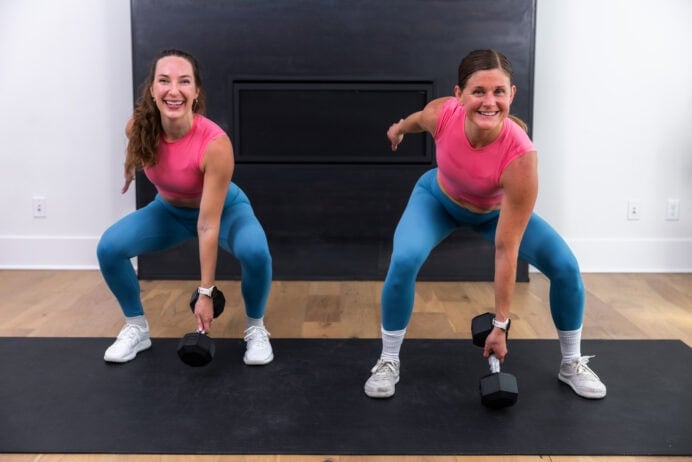
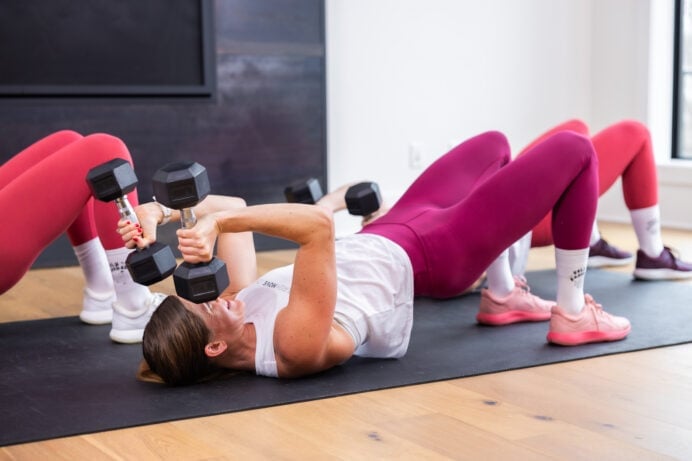
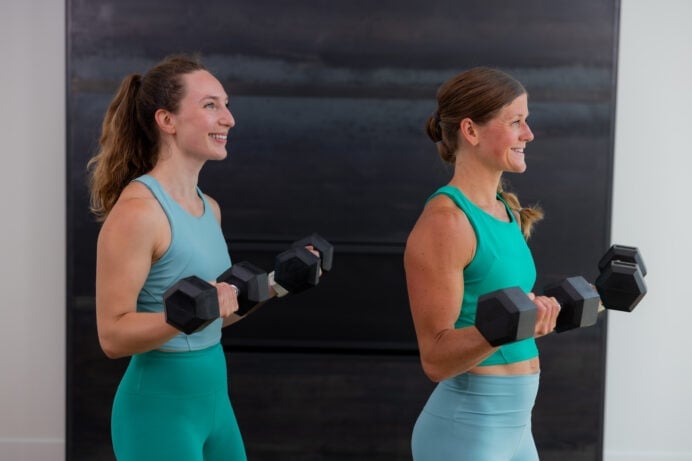
The guided 30-Minute HIIT Workout on YouTube includes 3 circuits of full-body HIIT exercises. If you only have 10 minutes to work out, I recommend the bodyweight circuit below!
Read A 5-Star Review ⭐⭐⭐⭐⭐
“I am a 27-year-old still at home with my parents not always able to get in the actual gym! So grateful for these workouts and this community. It’s not just for moms, but for everyone!”
— Marie
Bodyweight HIIT Circuit
Workout Outline
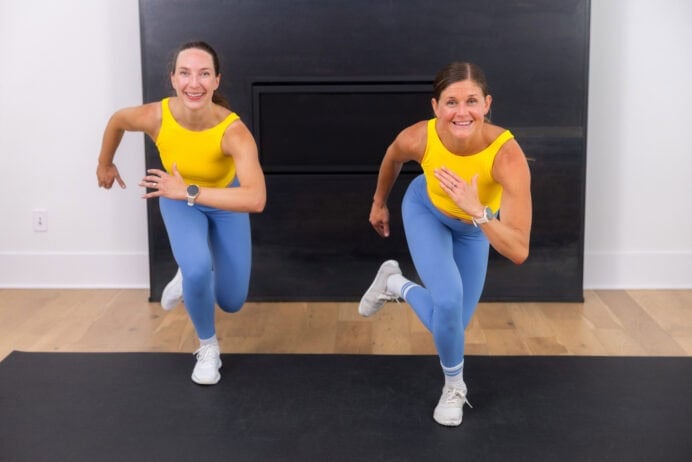
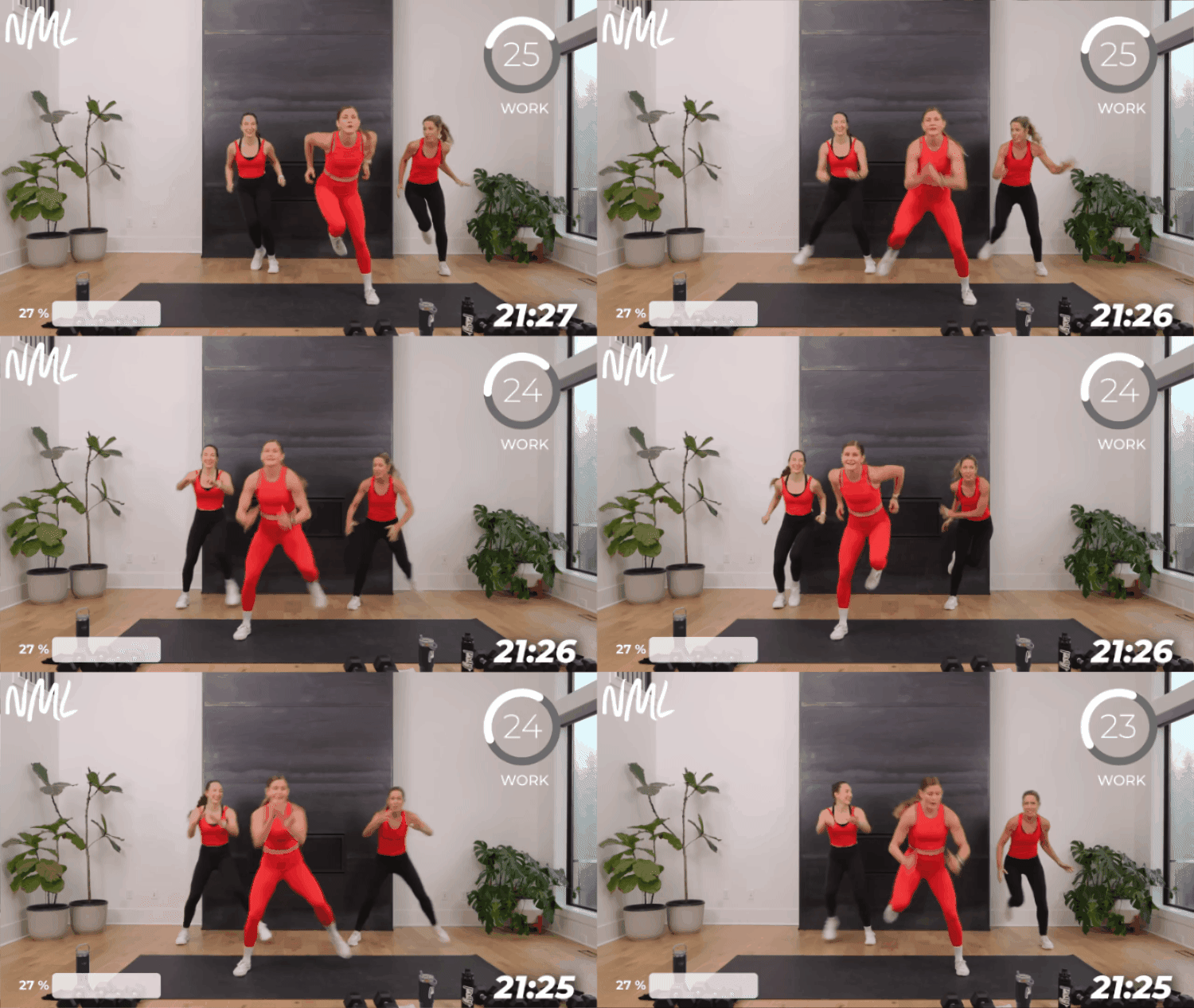
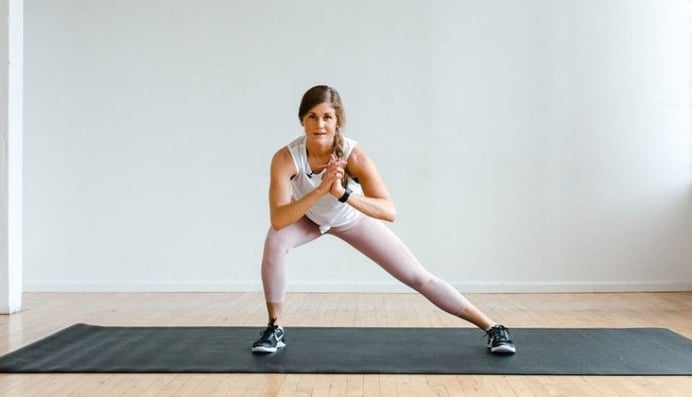
1. Lateral Bounds
Targets: Legs, quads, outer glutes (gluteus medius), inner thighs, calves and core.
How to Do a Lateral Bound
- Start standing on the right side of your mat with your feet shoulder-width apart.
- Lower down into an athletic stance, knees bent, ready to move.
- Drive off your right leg to bound laterally to the left, landing softly on your left foot.
- Reverse the motion, driving off your left leg to bound to the right, landing softly on your right foot.
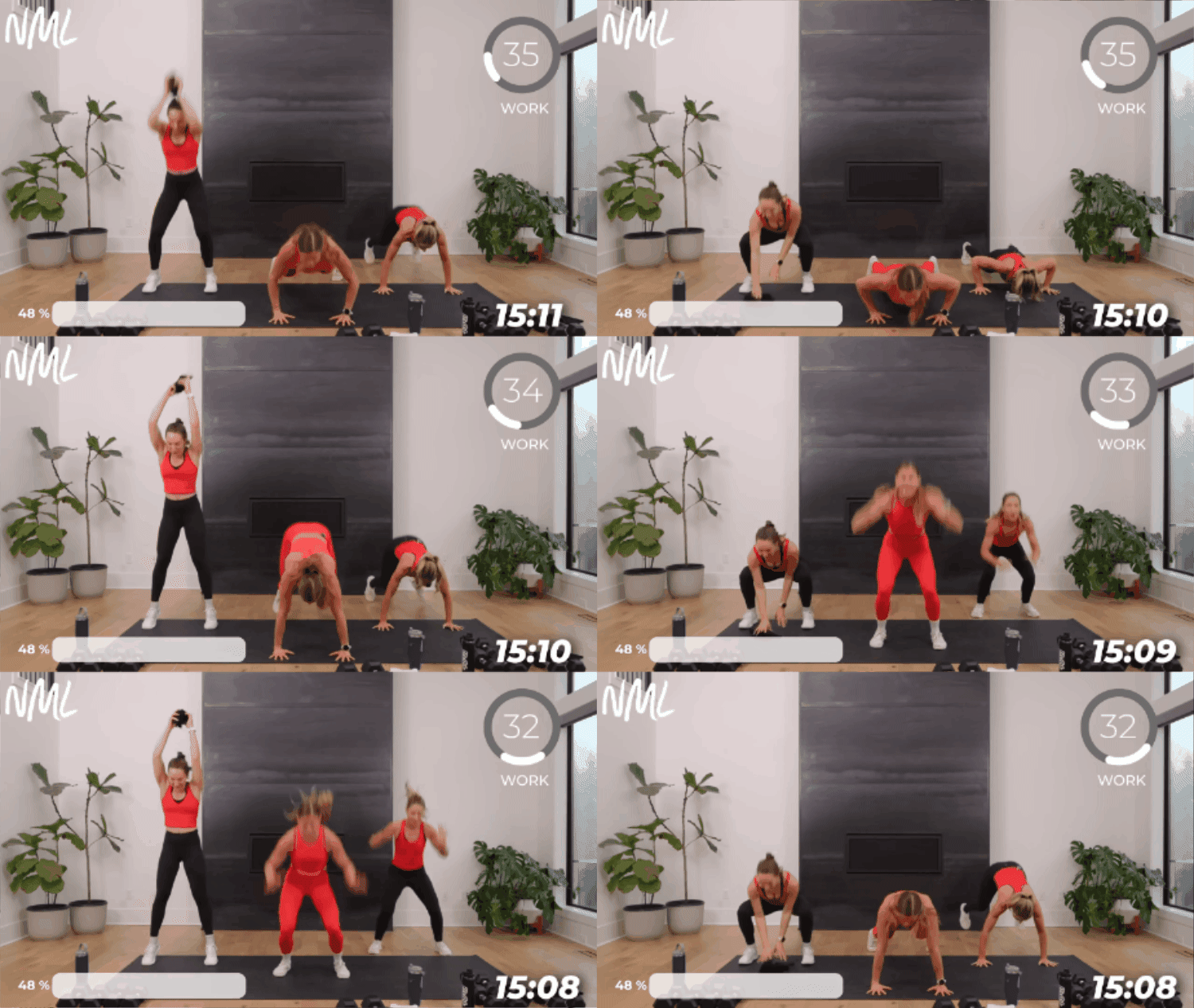
2. Push-Up Burpees
Targets: Upper body (chest, arms, triceps, back, shoulders), lower body (legs, glutes, hips) and core.
How to Do a Push-Up Burpee
- Start standing, feet shoulder-width apart, arms at your sides.
- Bend your knees and drop your hips as you lower into a squat position, then place your hands on the floor directly in front of your feet.
- Shift your weight into your hands as you jump your feet back to softly land on the balls of your feet in a high plank position. Your body should form a straight line from your head to your heels.
- Elbows fall back toward your body as you lower your chest toward the ground, bringing your chest to meet the floor. Press back up and return to high plank.
- Jump your feet up, landing outside your hands in a loaded squat position. Then drive through your legs to explode up, reaching arms overhead as you stand tall, returning to starting position.
Modification: Substitute towel slams for burpees. Or perform walking burpees, stepping your feet in and out of plank position rather than jumping. If you struggle with push-ups, try one of these push-up modifications, or check out my free push-up program!
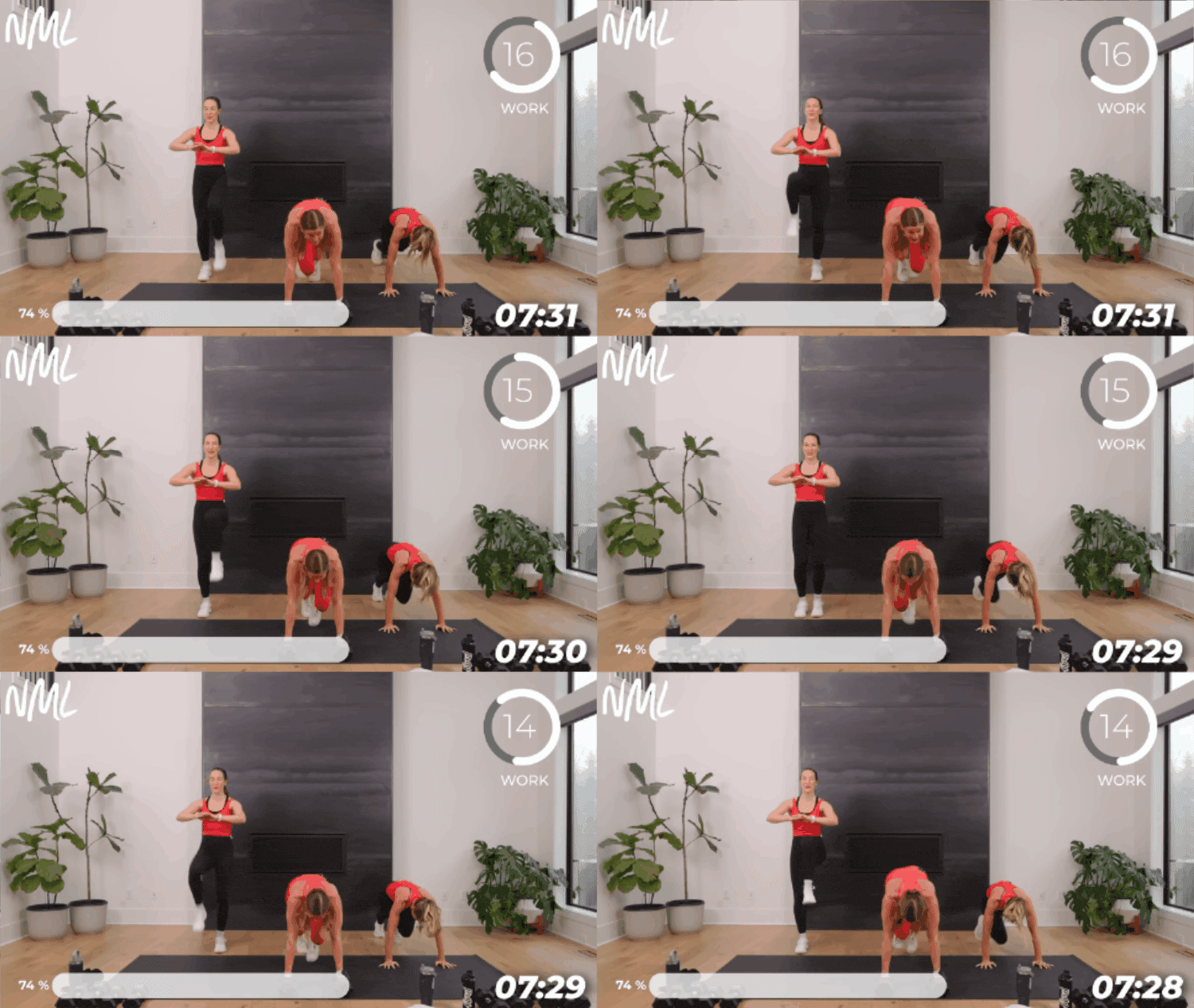
3. Mountain Climbers
Targets: Upper abs, lower abs, obliques, shoulders, glutes and thighs.
How to Do a Mountain Climber
- Start in a high-plank position with your shoulders stacked over your wrists, weight evenly distributed among all 10 fingers. Pull your kneecaps up toward your belly.
- Hold this position, maintaining a straight line with your body, gaze slightly in front of you.
- Then, drive your right knee toward your left elbow before quickly driving your left knee toward your right elbow.
- Continue this pattern, alternating knee drives toward your chest at a rapid pace, as if “running” in a plank position.
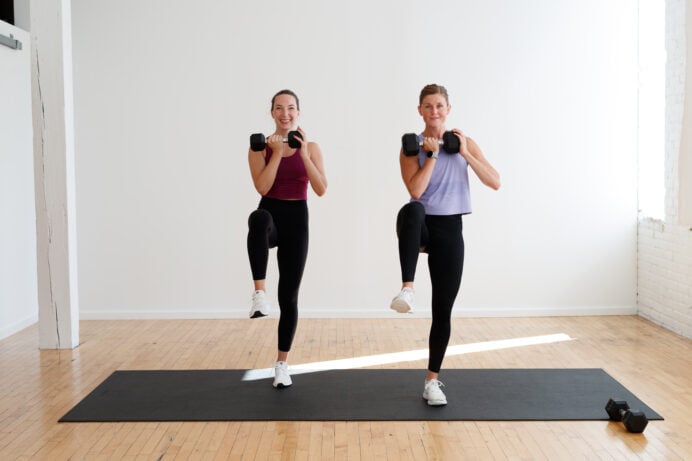
Modification: Perform standing marches or high knees.
FAQs
How often should I do HIIT workouts each week for optimal results?
It depends on your fitness level and goals. I recommend beginners start with performing 1 HIIT workout per week. More advanced fitness enthusiasts can perform 2-3 HIIT workouts per week, alternating with lower-intensity strength training workouts. For optimal results, follow a well-rounded workout plan that includes a mix of strength and HIIT workouts.
Who should avoid HIIT workouts?
HIIT workouts are effective, but they’re also taxing. You should talk to your medical care provider before attempting any HIIT workouts if you have cardiovascular issues, respiratory issues or chronic joint pain. If you’re pregnant, postpartum or a complete beginner, I recommend starting with low-impact versions of HIIT exercises.
Should I do HIIT before or after weight training?
You should prioritize the type of training that matches your fitness goals. If your goal is to build strength or build muscle, put weight training first. If your goal is to improve cardiovascular fitness and performance, put HIIT sessions first. Most people will benefit from doing HIIT after weight training, as it allows you to maintain proper form during your lifting session.
Do I need to warm up before a HIIT workout?
Yes, properly warming up before a HIIT workout is crucial to prevent injury and optimize performance. A dynamic warm-up prepares your joints for impact, wakes up the nervous system and increases your core temperature, preparing the body for exercise and minimizing risk of injury. Don’t skip the cool-down either!
What are the benefits of HIIT compared to steady-state cardio?
Both HIIT workouts and moderate-intensity steady-state cardio workouts have health benefits like strengthening your heart, lowering your blood pressure, reducing blood sugar levels and lowering your risk of heart disease. The main benefit of HIIT workouts compared to steady-state cardio is the amount of time required. Whereas steady-state cardio workouts can often last 45-60+ minutes, a 20-minute HIIT workout is enough to encourage fat loss and increase endurance. HIIT workouts are also known for the “after-burn effect”, also known as Excess Post-Exercise Oxygen Consumption (EPOC). This means your body continues to burn extra calories for hours after your workout is completed.
Free 2-Week Strength + HIIT Program
More Workouts
HIITPin This Full-Body HIIT Workout
no comments
Leave a Comment