





Functional Strength Training
I know what it’s like to squeeze in a workout before the kids wake up or during a rare quiet moment, only to wonder why it doesn’t make everyday tasks feel any easier. After years as a trainer and mom of 3, I’ve found that functional strength training changes that. It builds real-life strength that actually supports the way I move through my day. In this post, I’ll share what functional strength training is, why it matters and how it can fit into a busy, full life.
Quick Links:
- What Is Functional Strength Training?
- The Benefits
- How to Structure a Functional Training Routine
- Common Mistakes to Avoid
- Some of My Favorite Functional-Based Workouts
- Essential Exercises
- FAQs
What Is Functional Strength Training?
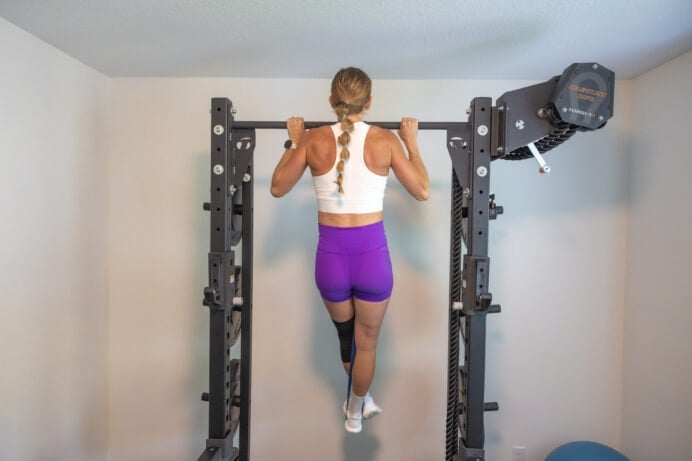
Functional strength training focuses on movements that mirror what I’m already doing all day – lifting, reaching, bending, carrying, twisting – just with more intention and resistance. It’s less about isolating a specific muscle group and more about improving overall functionality, so I can build muscle and support my daily activities in a way that actually feels useful.
Think about picking up a toddler from the floor (that’s a squat), carrying a laundry basket up the stairs (a loaded carry), reaching up to put dishes away (shoulder strength and stability) or twisting to grab something from the back seat (core rotation). Functional training builds strength in those exact patterns, so my body is better prepared for real life, not just the workout itself.
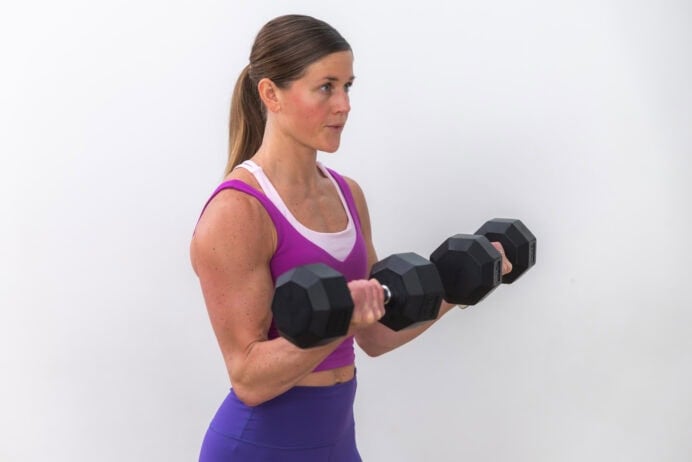
What makes it different from other workout styles is the purpose behind the movement. Traditional weight lifting often isolates one specific muscle group at a time (like bicep curls or leg extensions), while functional training uses multiple muscle groups together, the way the body naturally moves. HIIT or fast-paced cardio workouts can be great for boosting cardiovascular endurance, but they’re not always focused on controlled muscle building. Functional strength training slows things down just enough to focus on form, stability and coordination. This helps me build overall strength that actually carries over into daily life and long-term wellness.
The Benefits
- Builds real-life strength: Functional training supports the movements I use every day, helping me feel stronger and more capable during busy routines.
- Improves core stability: A strong core supports balance, posture and protects my back during lifting and twisting.
- Reduces risk of injury: Training movement patterns (not just muscles) helps me move safely and build strength that lasts.
- Supports muscle building: Using tools like resistance bands, bodyweight exercises, dumbbells or even a barbell, I can effectively build muscle in a way that translates to real life.
- Saves time with efficient workouts: Full-body movements let me combine strength and even a bit of cardio into one efficient workout routine.
- Enhances balance and coordination: Movements like single-leg exercises improve stability and control.
- Supports better posture: Strengthening key muscle groups helps counteract daily habits like sitting and scrolling.
- Boosts energy and endurance: A mix of strength and light cardio workouts improves both muscular and cardiovascular endurance.
- Adaptable for any fitness level: Whether I’m using bodyweight, bands or weights, I can scale based on my current fitness level and fitness goals.
- Builds confidence in movement: Functional training helps me feel strong and capable in everyday life, not just during a workout.
How to Structure a Functional Training Routine
When I structure a functional strength training program, I keep it simple and intentional. Every session has a purpose, and each part supports my bigger picture of building strength for real life.
A balanced functional strength session may include a 5-10 minute warm-up focused on mobility, activation and light bodyweight exercises, 15-25 minutes of functional strength movements (squats, hinges, push-ups, pull-ups and carries), optional conditioning and 5 minutes of a cool down.
I’ve found that 3-5 functional strength workouts per week is a sustainable sweet spot, especially in a busy season of life.
- 3 days/week (ideal for most busy moms): Full-body functional workouts each day (example: Monday, Wednesday, Friday).
- 4 days/week (if schedule allows): Alternate focus days (for example: lower body and core, upper body and carry), while still keeping movements functional.
- 5 days/week (if schedule allows): Again, alternate focus days (for example: full body, upper body, lower body, core, full body).
On in-between days, I keep things light. Walking, stretching or staying active with my kids is a great way to support overall wellness on active recovery days.
Fitting It Into Real Life
Fitting functional strength training into real life isn’t about having a perfect, uninterrupted hour. This is about making things work within the time I actually have. Even short sessions can support muscle building, cardio and long-term progress toward my fitness goals.
Here are a few ways I make functional training fit into a full, sometimes unpredictable schedule:
- Split sessions throughout the day: 15 minutes in the morning and 10-15 minutes later – this still supports my training program.
- Nap-time power sessions: Quick, efficient full-body workouts using bodyweight or resistance bands.
- Early morning workouts: Simple, focused routines that build overall strength without overcomplicating things.
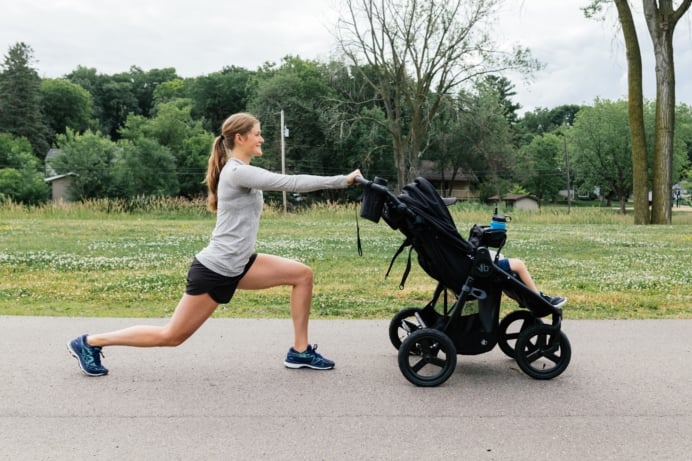
- Movement while kids play: Squats, lunges, carries – it all adds up.
- Everyday movement as training: Turning daily activities into intentional strength work.
- Short, consistent sessions: Choosing consistency over perfection every time.
- Minimal equipment: Whether it’s a barbell, dumbbells, kettlebells or just bodyweight exercises, keeping it simple removes barriers.
At the end of the day, consistency matters more than perfection. When I focus on building strength that supports my life (not just chasing a hard workout), I create a routine that actually sticks.
Common Mistakes to Avoid
- Treating it like random circuits: One of the biggest mistakes I see is jumping from exercise to exercise without any real structure. Functional training should be intentional.
- Prioritizing speed over control: It’s easy to rush through movements, especially when time is limited, but that’s where form breaks down. I focus on moving with control and purpose, because that’s what actually builds strength that carries into real life.
- Using weights that are too light (or too heavy): If the weight is too light, I’m not really challenging my muscles. If it’s too heavy, my form suffers. Functional strength lives in that middle ground where I can move well and feel the work.
- Skipping core engagement: The core is involved in almost every functional movement. Ignoring it (or only training it at the end) can limit progress and increase the risk of injury.
- Neglecting unilateral work (one side at a time): Real life isn’t perfectly balanced. I’m often carrying a child on one hip or holding something in one hand. Training one side at a time helps correct imbalances and builds more practical strength.
- Ignoring mobility and warm-ups: Jumping straight into strength work without preparing the body can lead to stiffness and poor movement patterns. Even a quick 5-minute warm-up makes a noticeable difference.
- Chasing exhaustion instead of effectiveness: Sweaty doesn’t always mean effective. Functional training isn’t about being completely wiped out; it’s about building strength that actually supports daily movement.
- Inconsistency: Doing one intense workout and then skipping a week won’t get you far. Consistency – even in shorter sessions – is what leads to real, lasting progress.
- Overcomplicating the workouts: I don’t need dozens of exercises or fancy equipment. Sticking to simple, foundational movements done well is far more effective (and sustainable).
Some of My Favorite Functional-Based Workouts
- 20-Minute Full Body Functional Strength Training
- 20-Minute Full Body Functional Training
- 20-Minute Functional Core Strength Training
- 30-Minute Full Body Dumbbell Workout
- 30-Minute Full Body Strength Workout
- 30-Minute Effective Full Body Workout
- 35-Minute Strength Building Workout
- 35-Minute Full-Body Dumbbell Workout
1. Squats
Targets: Legs, glutes, quadriceps, hamstrings, hips and core.
How to Do a Squat
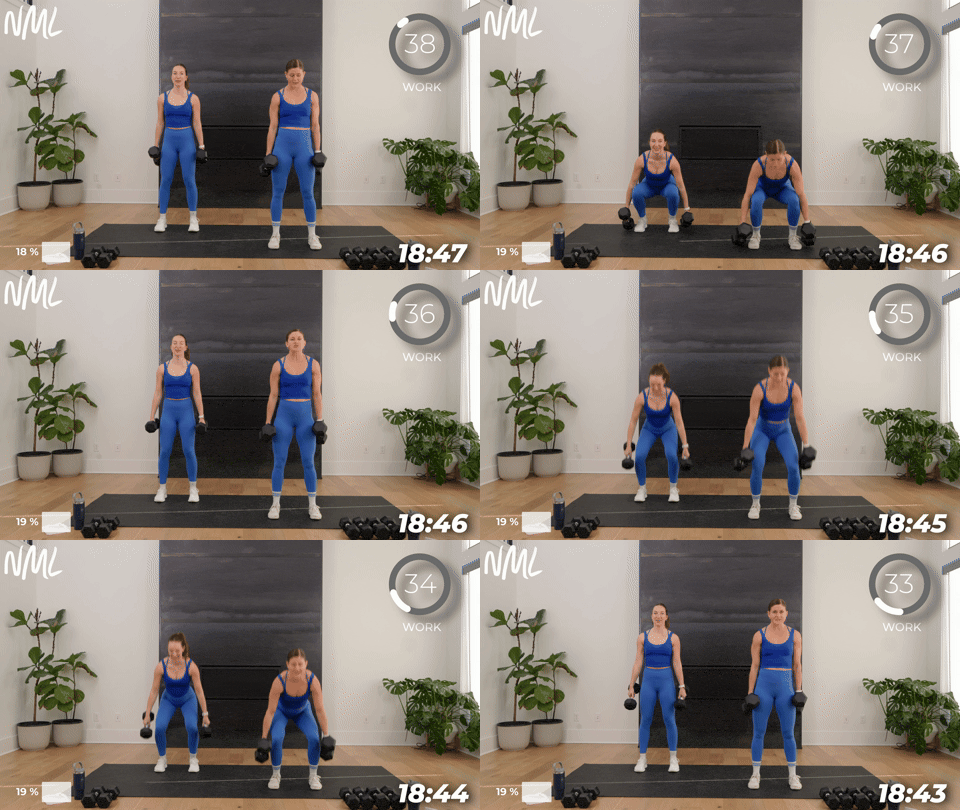
- Start standing feet shoulder-width apart, knees slightly bent. Hold a dumbbell in each hand outside your thighs.
- Lower down into a squat position, lowering your hips down to be parallel with your knees. Drive your knees out toward your outer toes.
- Drive through your heels to stand tall, returning to a standing position.
2. Lunges
Targets: Quads, glutes, hamstrings, core and calf muscles.
How to Do a Lunge
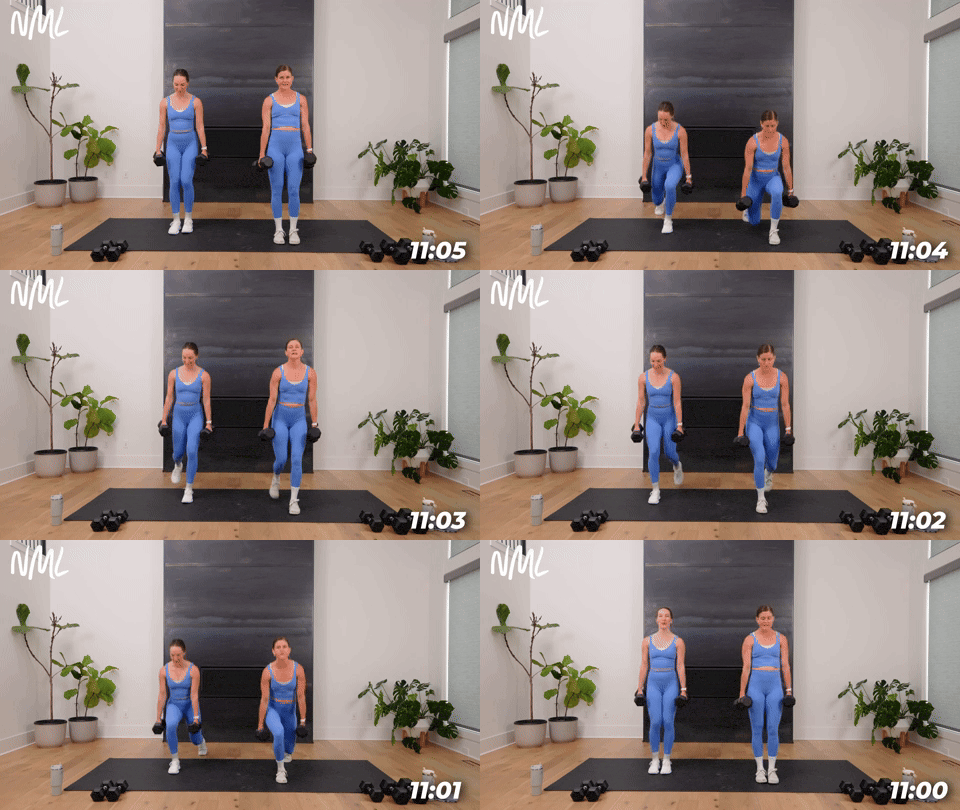
- Stand with your feet hip-width apart. Hold a dumbbell in each hand at your sides.
- Step your right leg back into a reverse lunge, dropping your right knee down towards the ground as you lower your hips until both knees reach a 90-degree angle. The front thigh is parallel to the floor.
- Squeeze your left glute, keeping the weight in your front (left) heel as you straighten your left knee, pushing back up to a standing position.
Modification: If lunges hurt your knees, substitute one of these lunge/squat alternatives.
3. Farmer’s Carry
Targets: Forearm flexors and extensors, trapezius (upper and middle), shoulders and deep core muscles. The glutes, hamstrings, quads and calves assist in stabilizing the hips and supporting posture while walking under load.
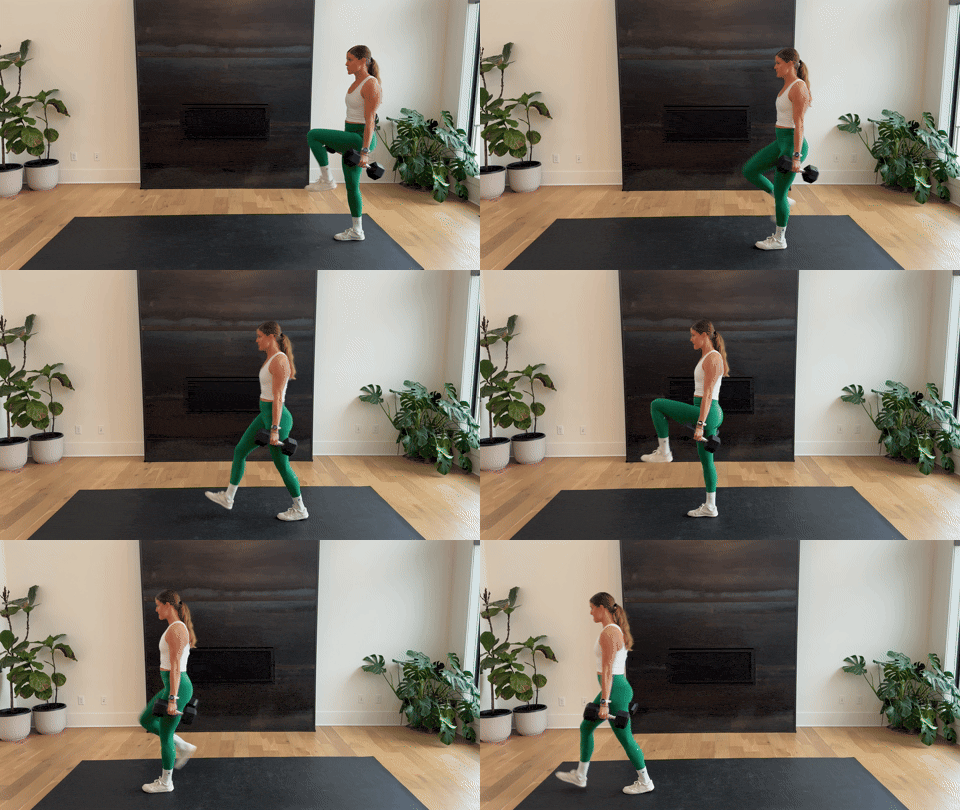
How to Do a Farmer’s Carry
- Stand tall with your feet hip-width apart, holding a dumbbell in each hand at your sides, palms facing inward.
- Let your arms hang long, then brace your core and gently pull your shoulders down and back to maintain strong posture.
- Begin walking forward with small, controlled steps, keeping your chest lifted and spine neutral.
- Squeeze the handles firmly as you walk, resisting the urge to lean or sway side to side.
4. Deadlifts
Targets: Gluteus maximus, hamstrings, erector spinae and your core, also known as the posterior chain.
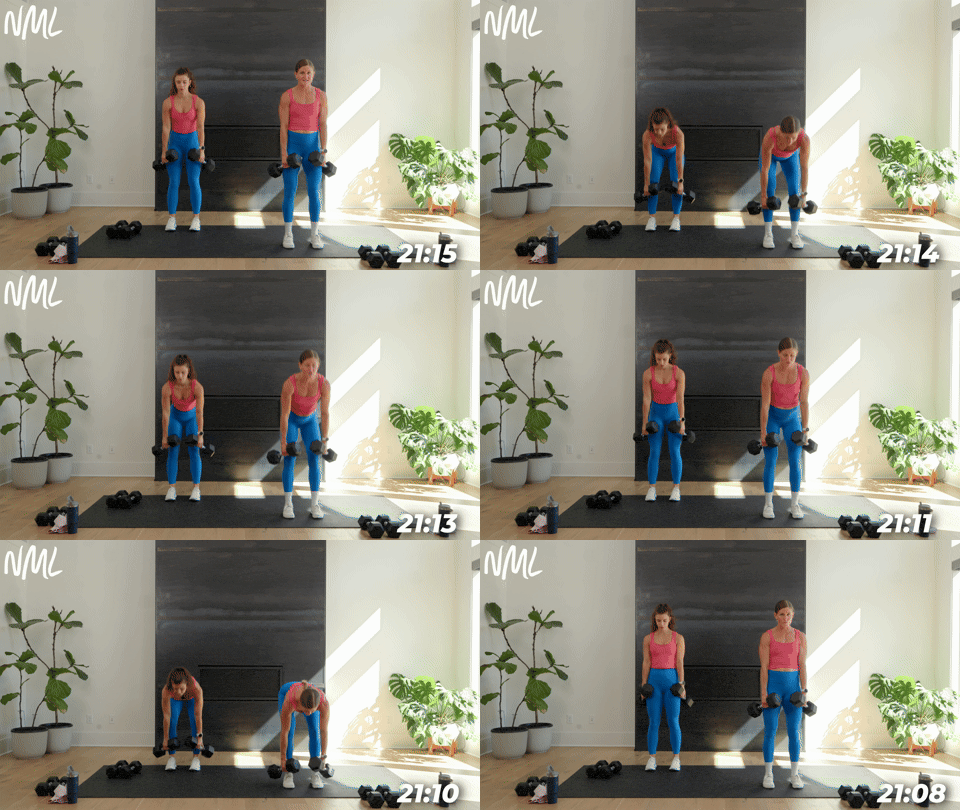
How to Do a Deadlift
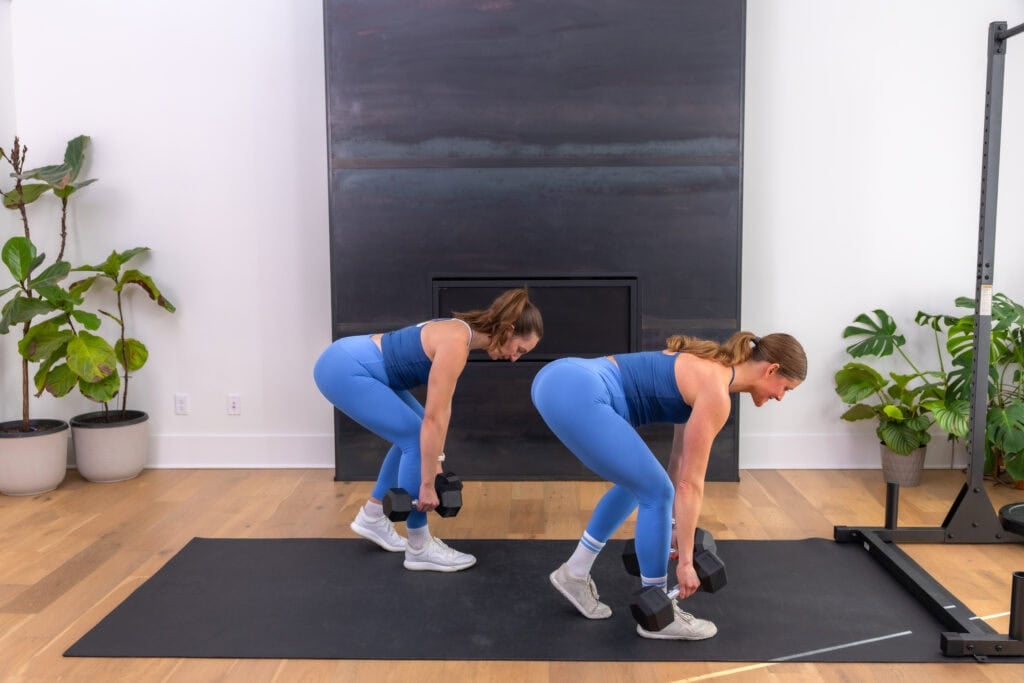
- Start with your feet about hip-width apart while holding your dumbbells. Hold your dumbbells in an overhand grip at or around hip level.
- From the start position, be sure to set your posture by pulling your shoulders back, keeping your chest proud and your spine neutral.
- Begin the movement by hinging at the waist and moving your hips back, keeping a slight bend in your knees.
- Lower the weight slowly and with control along your legs until you feel a strong stretch in your hamstrings. A good point of reference is about mid-shin.
- Be sure to keep the dumbbells close to your body throughout the movement.
- Maintain this position by driving your hips forward and returning to the standing position. Squeeze your glutes at the top of each rep for full engagement of the posterior chain.
5. Push-Ups
Targets: Chest, shoulders, triceps, back and core muscles.
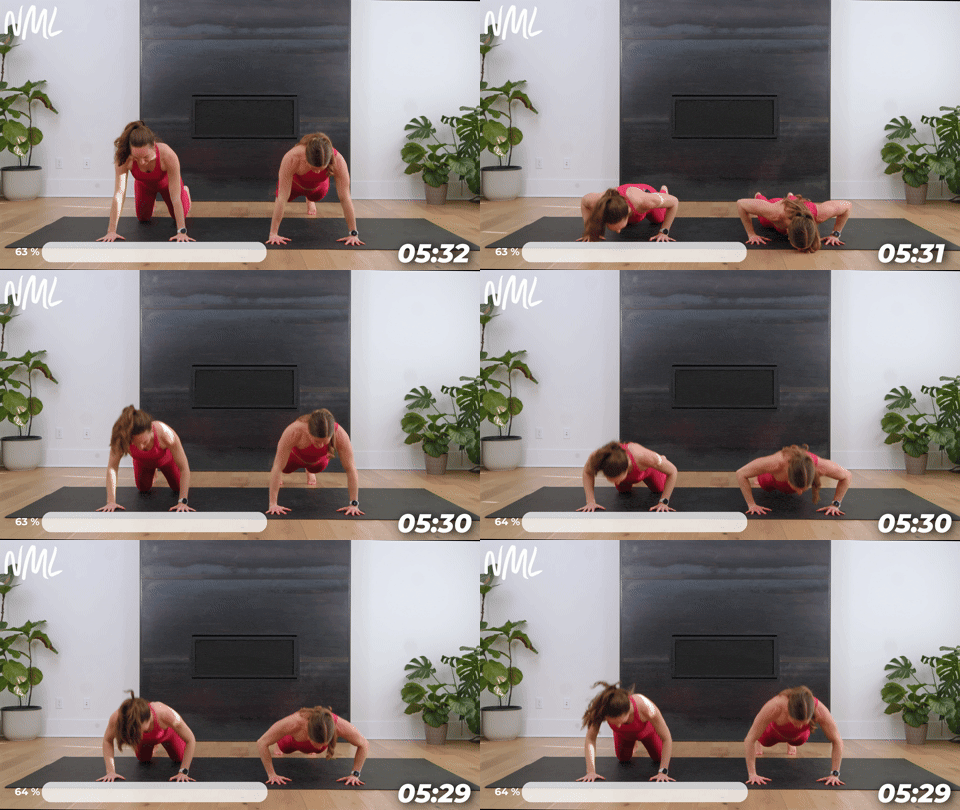
How to Do a Push-Up
- Start in a standard high plank position, feet hip-width apart and shoulders stacked over your wrists. Press evenly into your hands to distribute your weight amongst all 10 fingers.
- Hold this plank position, maintaining a straight line with your body, gaze slightly in front of you.
- Slowly lower your chest down towards the ground as your elbows fall back towards your hips (not out to the sides, keep elbows tight to the body).
- Once you’ve reached the bottom of your push-up, exhale as you push back up into a high plank position (the top of your push-up position).
Modification: If push-ups hurt your wrists or you can’t do a full push-up on your toes, substitute one of these push-up modifications. Or check out my entire 12-week push-up progression program!
6. Rows
Targets: Latissimus dorsi (or lats; the largest back muscle known for its large, flat “V” shape).
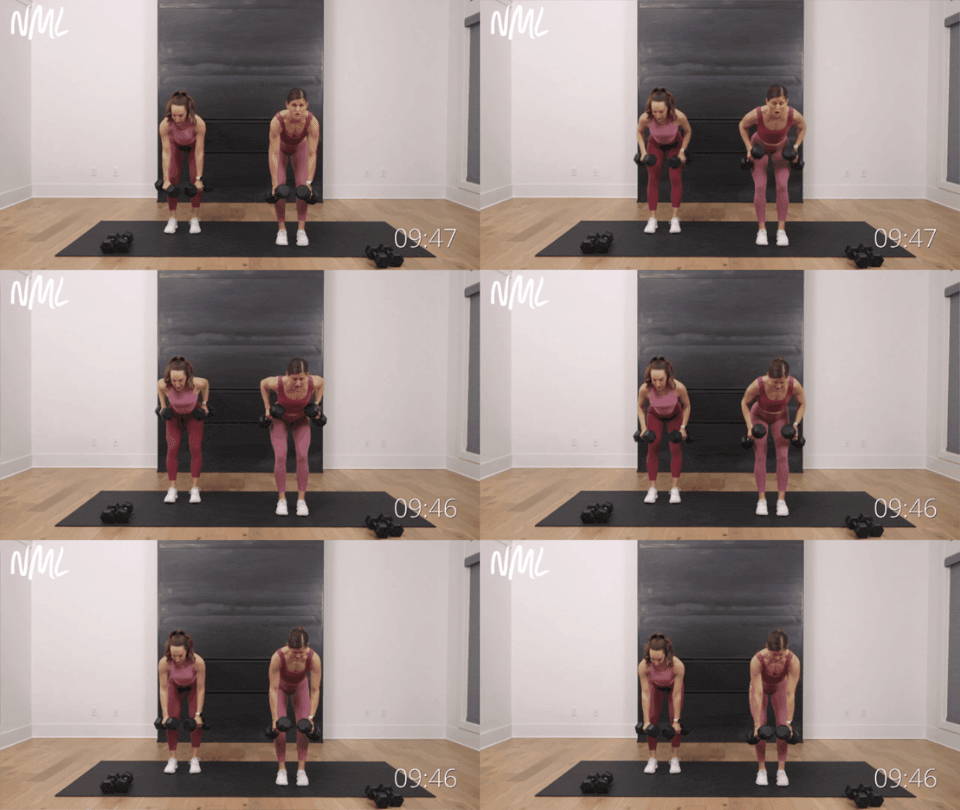
How to Do a Row
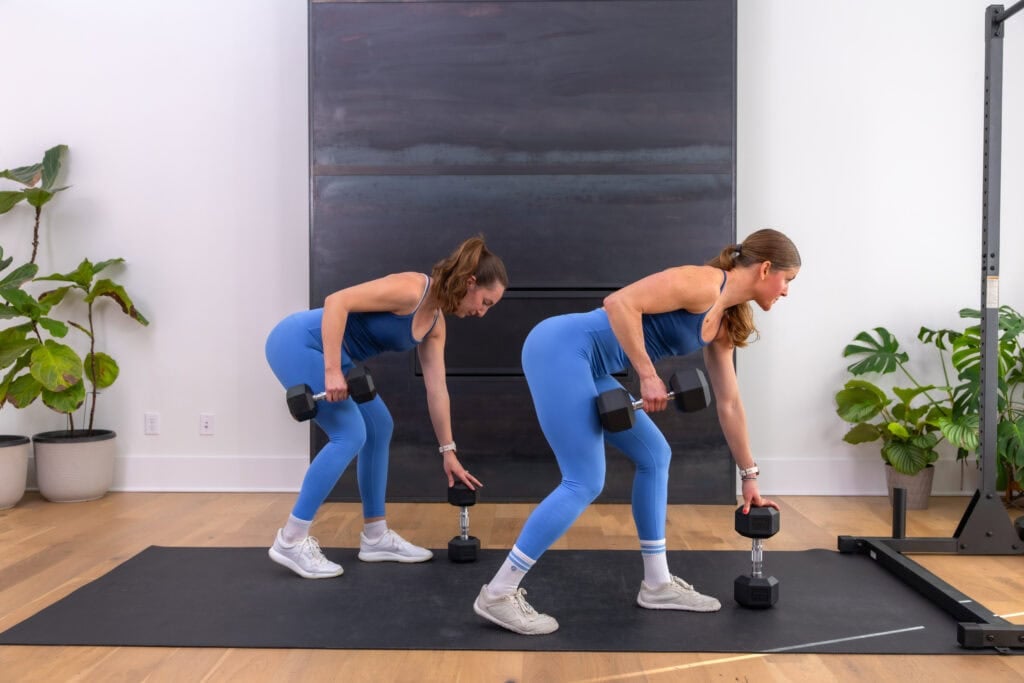
- Stand with your feet slightly wider than shoulder-width apart, knees slightly bent. Grip a set of dumbbells, palms facing in towards each other.
- Hinge forward at the hips until your body is in a straight line, neck in line with your spine, flat back and belly button pulled back towards your spine.
- As you pull the weights back towards your hips or glutes in a rowing movement, squeeze your shoulder blades together. Stop when your elbows are in line with your hips.
- With control, slowly lower the dumbbells back down to the starting position. Think up on a 1-count, down slow and controlled on a 2-count.
7. Step-Ups
Targets: Quads and all 3 parts of the glutes — the gluteus maximus, gluteus medius and gluteus minimus.
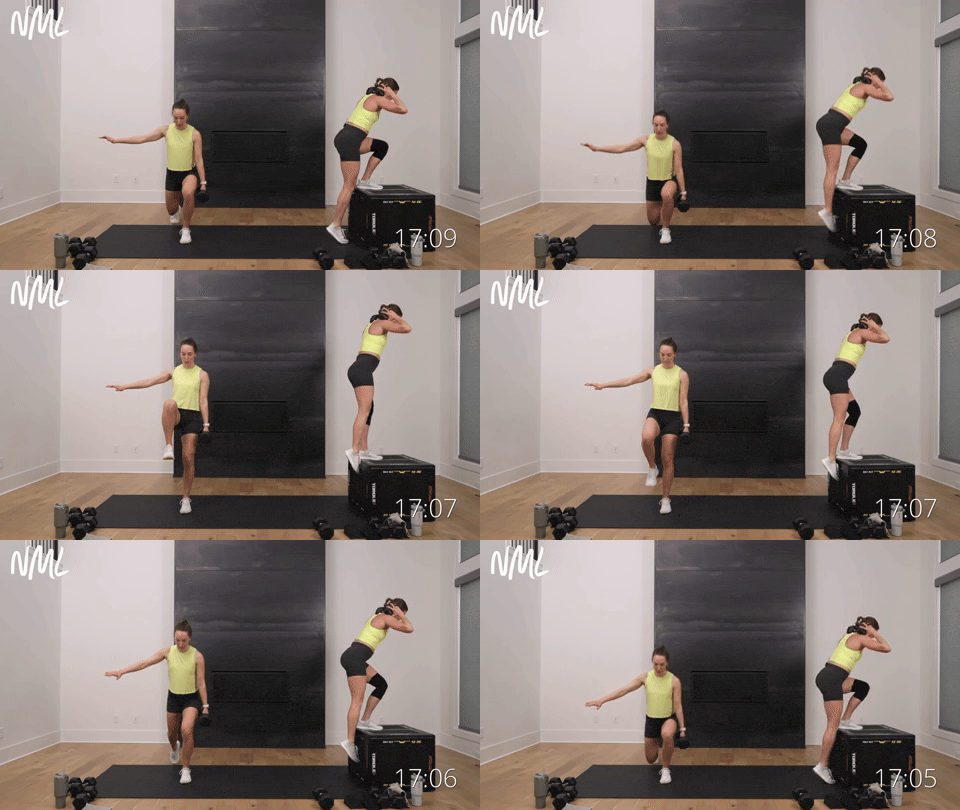
How to Do a Step-Up
- Start standing, feet shoulder-width apart, core tight and engaged. Option to hold a dumbbell vertically at your chest (goblet hold) or racked horizontally on your back.
- Step your right foot up onto a bench or chair, planting your right heel firmly on the surface.
- Using the muscle in your right quad (rather than momentum from your left leg), press through your right heel to stand tall.
- With control, slowly lower your left foot down to touch the ground, returning to the starting position. In this variation, we’re increasing the time under tension by lowering down to the ground on a 3-count.
Modification: The lower the step, the less intense this exercise is. The bottom step of a staircase is a great place to start. If you don’t have a step available, perform a reverse lunge with a knee drive or a staggered squat with a knee drive.
8. Planks
Targets: Transverse abdominals, upper abs, lower abs and shoulders.
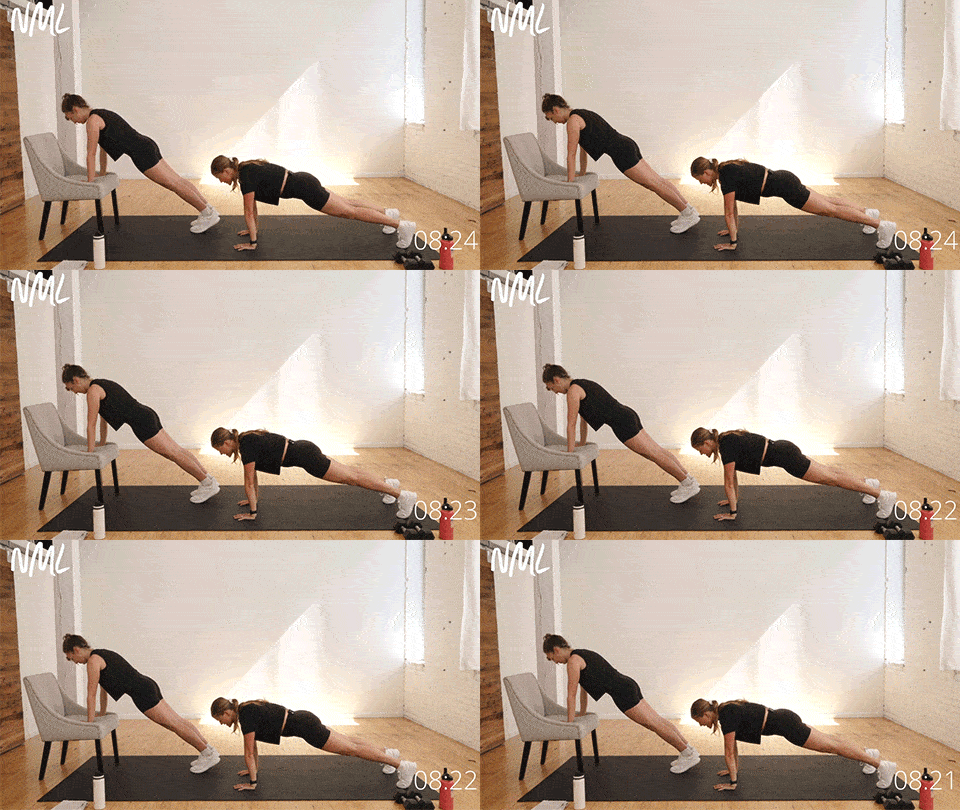
How to Do a Plank
- Start in a table top position with shoulders stacked over wrists (soft bend in the elbows) and hips over knees. Hands are planted firmly on the mat, weight evenly distributed between all ten fingers.
- Then step both feet back, legs extended long, balancing on your toes. Pull up on your kneecaps and push back on your heels to keep your core engaged.
- Hold this plank position, maintaining a straight line with your body, gaze slightly in front of you.
Modification: Place your hands on a raised surface (such as a chair, couch, or countertop).
FAQs
How often should you do functional strength training?
If you’re a beginner, I recommend aiming for about 3 sessions per week as a sustainable starting point. That’s enough to build strength and see progress without overwhelming an already full schedule. If you’re more advanced in your training, aim for 4-5 functional strength sessions a week.
Is functional strength training suitable for beginners?
Yes, this is actually one of the best places to start. Functional movements are based on things the body is naturally designed to do, so they’re very adaptable. I can modify exercises by adjusting weight, range of motion or tempo, which makes it approachable whether someone is brand new to fitness or getting back into a routine after time off.
What are additional examples of functional strength training exercises?
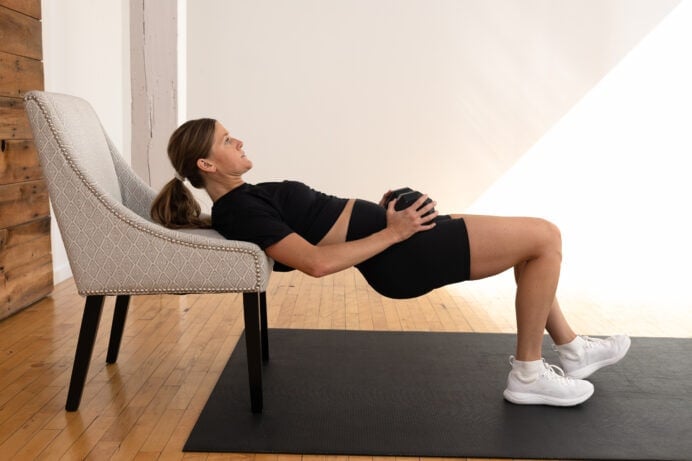
Some of my go-to exercises include squats, deadlifts, lunges, step-ups and hip bridges for lower-body strength. For upper body and core, I like push-ups, rows, overhead presses, planks and rotational movements like Russian twists or wood chops. Carries (like farmer’s carries or suitcase carries) are also effective and often overlooked, especially for building core stability and real-life strength.
Building Strength to Support Your Daily Life
At the end of the day, functional strength training isn’t about doing more; it’s about doing what actually matters. I’ve learned that when I focus on movements that mirror real life, structure my workouts with intention and stay consistent, I build strength that shows up far beyond the workout itself.
From understanding the core movement patterns, to creating balanced sessions, to avoiding common mistakes, it all comes back to one goal: building a body that feels capable, supported and strong in everyday life, not just during a workout, but in the moments that really count – carrying kids, managing a home, moving through a full day without feeling completely drained.
Functional fitness has changed the way I approach training, because it meets me where I am and supports the life I’m actually living.
More Posts
Educational FitnessPin This: A Complete Guide to Functional Strength Training
This post includes affiliate links. I do earn a commission for products purchased using these links (at no additional cost to you). Thank you for supporting Nourish Move Love, making the content you see on this blog possible.
Leave a Comment
one comment
Love love love this format and the program/videos.