





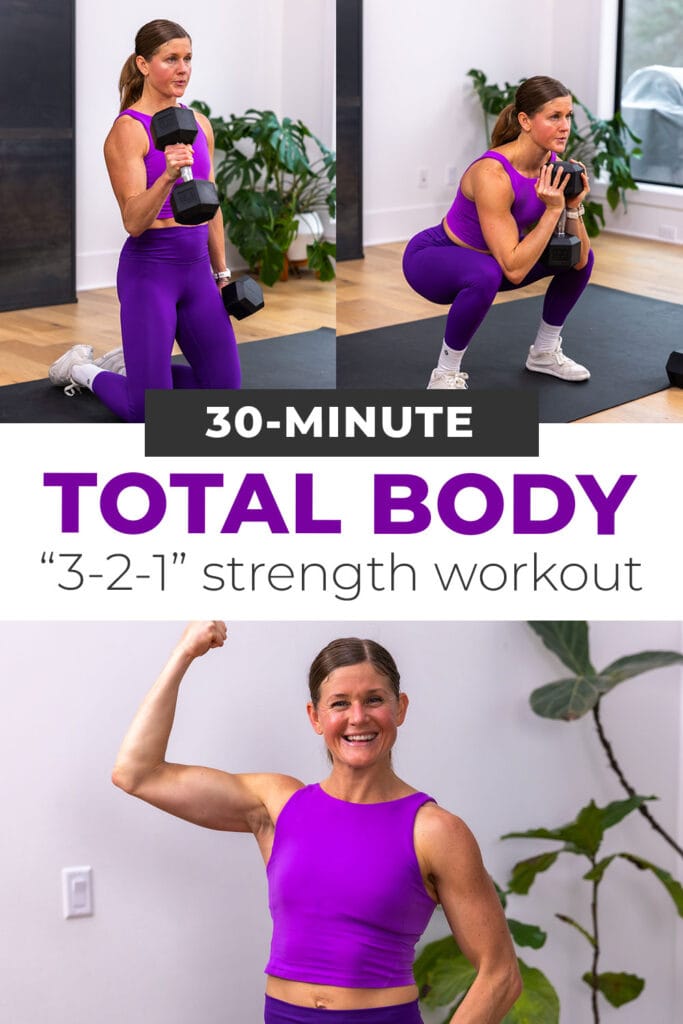
30-Minute Full Body Home Workout (3-2-1 Format)
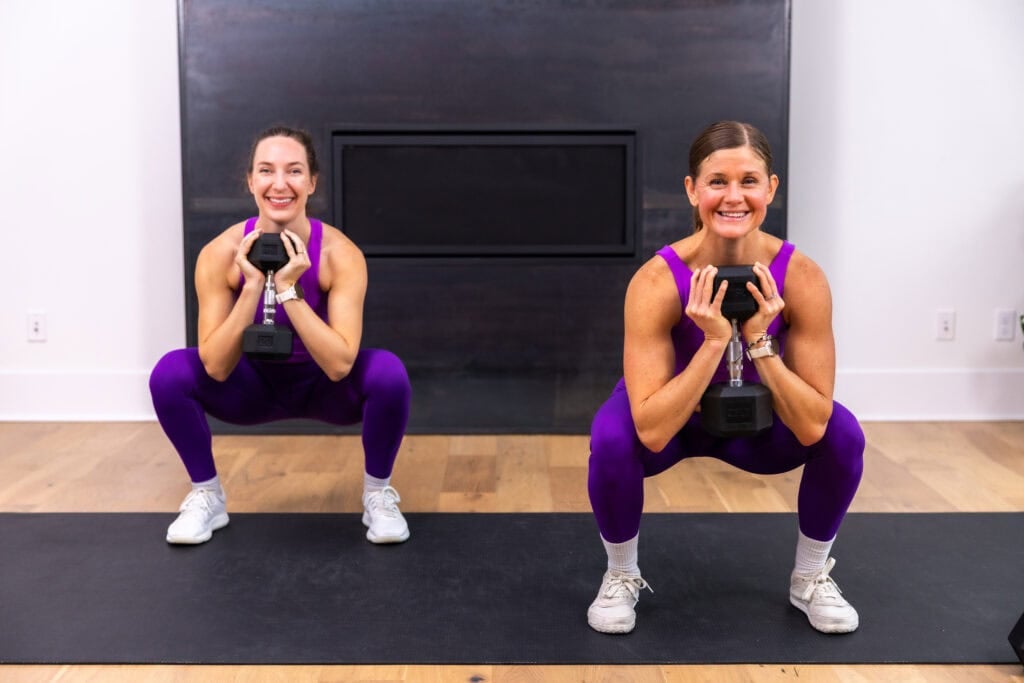
Engage every major muscle group at home with this full-body strength workout. Using the 3-2-1 method (3 minutes lower body, 2 minutes upper body and 1 minute core), you’ll train every major muscle group with compound dumbbell moves that build strength and elevate your heart rate. Grab your weights and follow along for a fast, effective total-body session.
There’s no single “right way” to program a full-body strength workout, but today’s “3-2-1” format is a new personal favorite of mine.
- 3 Minutes of Lower Body Exercises
- 2 Minutes of Upper Body Exercises
- 1 Minute of Core Exercises
I love this “3-2-1” method of breaking down a full-body workout into circuits of isolated muscle groups because it allows us to fully fatigue each major muscle group before moving on to the next block.
You’ll spend more time on larger muscle groups (like those found in the lower body), as those tend to take more stimulus to grow. Smaller, accessory muscles (like those in the core) take less time to fatigue, which is why the work time is shorter as the workout goes on.
In my opinion, a good full-body strength workout focuses on compound exercises (like squats or back rows), uses minimal equipment and can be completed in 30 minutes or less. That minimizes wasted time, makes the workout accessible whether you have access to a gym or not, and allows for you to build strength without overworking the muscle and risking injury. Today’s workout checks all my boxes!
PS: Does the “3-2-1 method” sound familiar? Check out my 3-2-1 Workout Plan: a complete 7-day workout plan with a mix of barre/pilates workouts, strength training workouts and HIIT cardio workouts you can do at home!
Read A 5-Star Review ⭐⭐⭐⭐⭐
“I usually don’t love repeating big sets, but this workout format was awesome, would love to see more! The time flew by and I was dead by the end 😅 Thank you NML!
— Kelley H.
Workout Details
Build muscle definition in the entire body with this 30-minute at home workout. 3 efficient circuits target the legs, arms and core, combining the benefits of split training and full body training in one workout.
Add full-body strength workouts like this to your home workout routine 1-2 times a week to reach your weight loss and fitness goals.
Workout Equipment
Medium to Heavy Dumbbells. I’m using 20-30 lbs.
If you’re a beginner, I recommend starting with 5-10% of your body weight per dumbbell. That’s about 8-15 lbs if you weigh 150 lbs. Increase gradually as your form and confidence improve.
Don’t have dumbbells available? Check out these bodyweight exercises for strength or these kettlebell strength exercises.
Workout Instructions
Follow along with the guided Full-Body Strength Workout on YouTube, led by me — your certified personal trainer (CPT), Lindsey Bomgren.
Your Workout Looks Like This:
- Guided Warm-Up and Cool-Down
- 3 Circuits (1 leg circuit, 1 arm circuit and 1 core circuit)
- Timed Intervals (For circuits 1 and 2, perform each strength exercise for 40 seconds, rest for 20 seconds. For circuit 3, perform the exercises back-to-back for 30 seconds each (1 minute of work total)
- Repeat x3 Sets
Note: I re-filmed this workout to improve the audio and video quality (and change up some of the exercises!). You can find the original workout video here. If you try both, I’d love to know your favorite!
Workout Outline
Circuit 1:
Circuit 2:
Circuit 3:
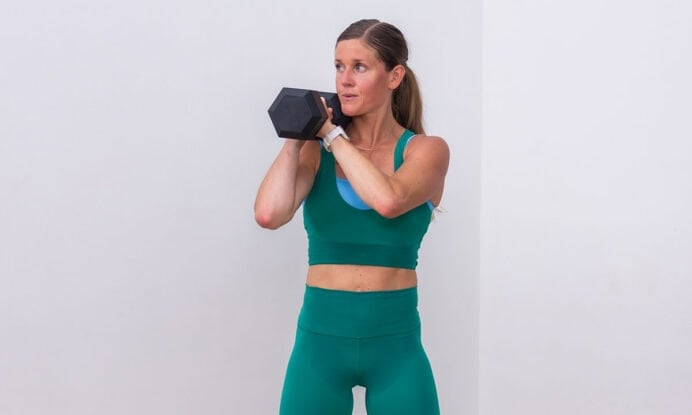
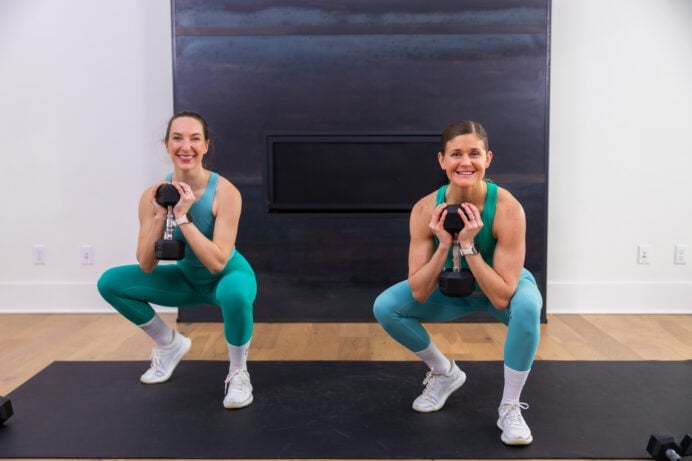
1. Goblet Squat
Targets: Legs, glutes, quads, hamstrings, hip abductors, chest and core.
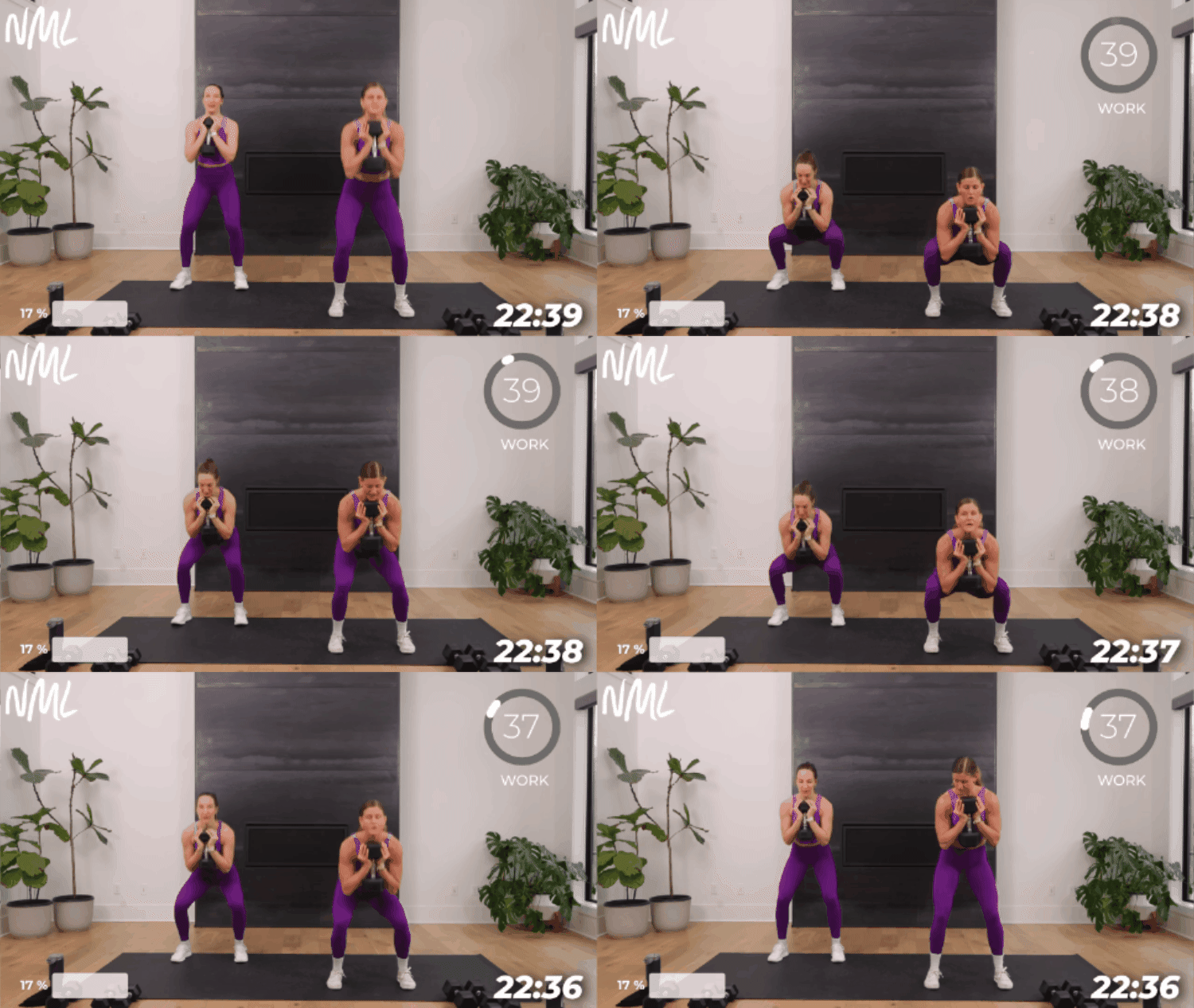
How to Do a Triple-Tension Goblet Squat
- Stand with your feet hip-width apart. Hold a dumbbell vertically at your chest in a goblet hold.
- Inhale as you bend your knees and sit your hips back (as if sitting down in a chair). Aim for 90-degree bends at each knee, focusing on pushing your knees out (not letting them cave in). Keep your torso upright.
- Exhale as you press through your heels to straighten your legs, lifting halfway out of your squat.
- Inhale, lowering back to the bottom of a squat position.
- Finally, exhale to stand, keeping a slight bend in both knees to maintain tension throughout the entire movement. The goal is to never stand straight up during the work interval.
Modification: If squats hurt your knees, try one of these lunge and squat alternatives.
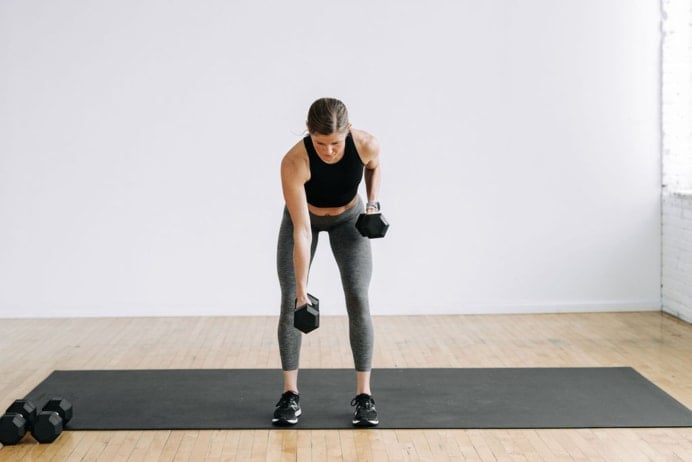
2. Deadlift and Split Lunge
Targets: Legs, glutes, quads, hamstrings, hip flexors, lower back and core.
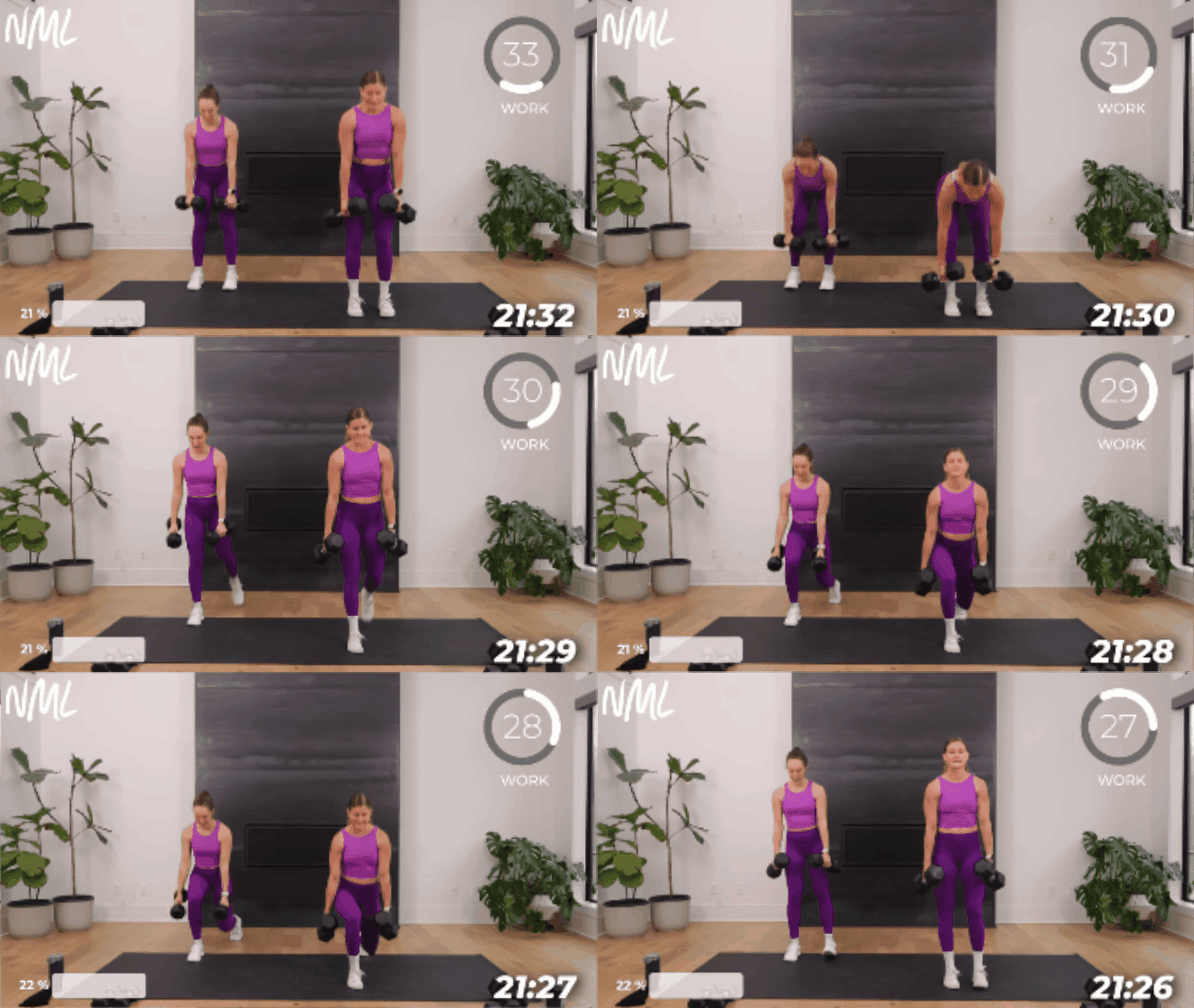
How to Do a Romanian Deadlift and Split Lunge
- Start standing, feet hip-distance apart, holding a dumbbell in each hand at your sides, palms facing your body.
- Hinge at your hips, pressing your glutes back towards the wall behind you as you glide the dumbbells down the front of your legs. Engage your core to protect your lower back.
- Exhale, pressing through your heels to stand tall, returning to the starting position.
- Step your right leg back into a reverse lunge position, dropping your back right knee towards the ground. Lower your hips until both knees reach a 90-degree angle, front left thigh parallel to the floor. Shoulders remain stacked over hips.
- Press into your front left heel, squeezing your glutes to stand tall. Repeat, performing 2 split lunges.
- Step your right leg up to meet your left, returning to the starting position.
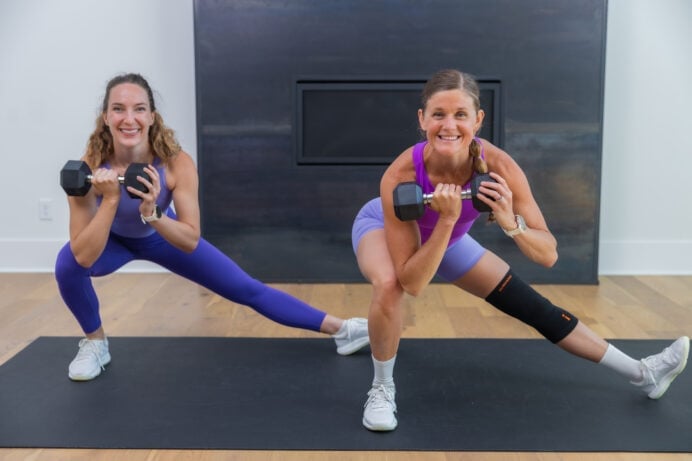
3. Lateral Lunge
Targets: Gluteus medius (the outer part of your butt used for side-to-side movements), quads, hamstrings, hip adductors and abductors, hip flexors and calves.
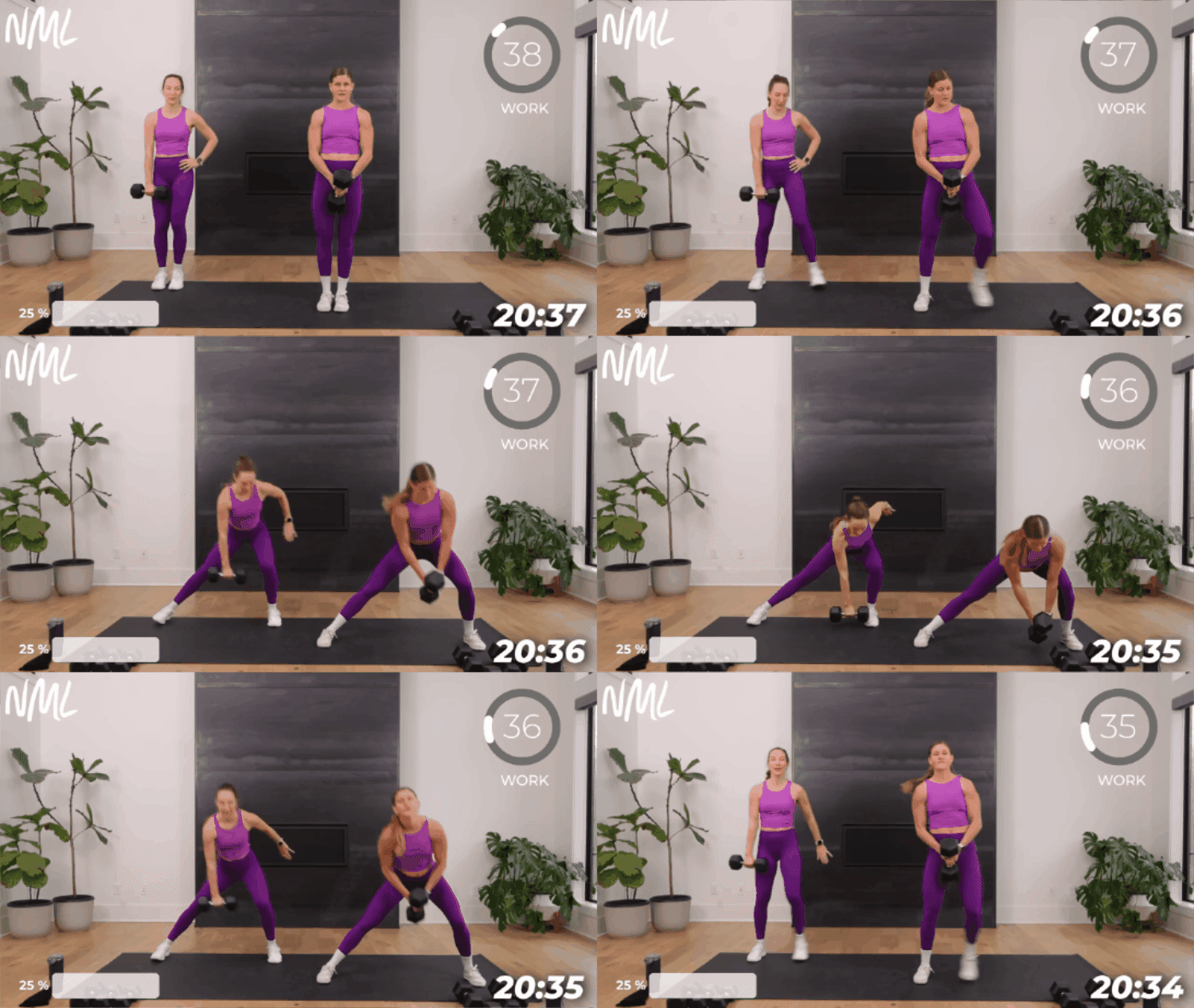
How to Do a Lateral Lunge
- Stand with your feet under your hips, holding a dumbbell in your right hand.
- Step your left leg out to the side as you push your hips back, bending your left knee while leaving your right leg straight. Think of performing a single-leg squat with your left leg. Knees and toes are pointing forward.
- Then, drive off your left foot to reverse the movement, stepping back to center.
4. Push-Up and Back Row
Targets: Lats, rhomboids, trapezius, deltoids, rear deltoids, rotator cuff muscles, chest, biceps, triceps, abdominals and obliques.
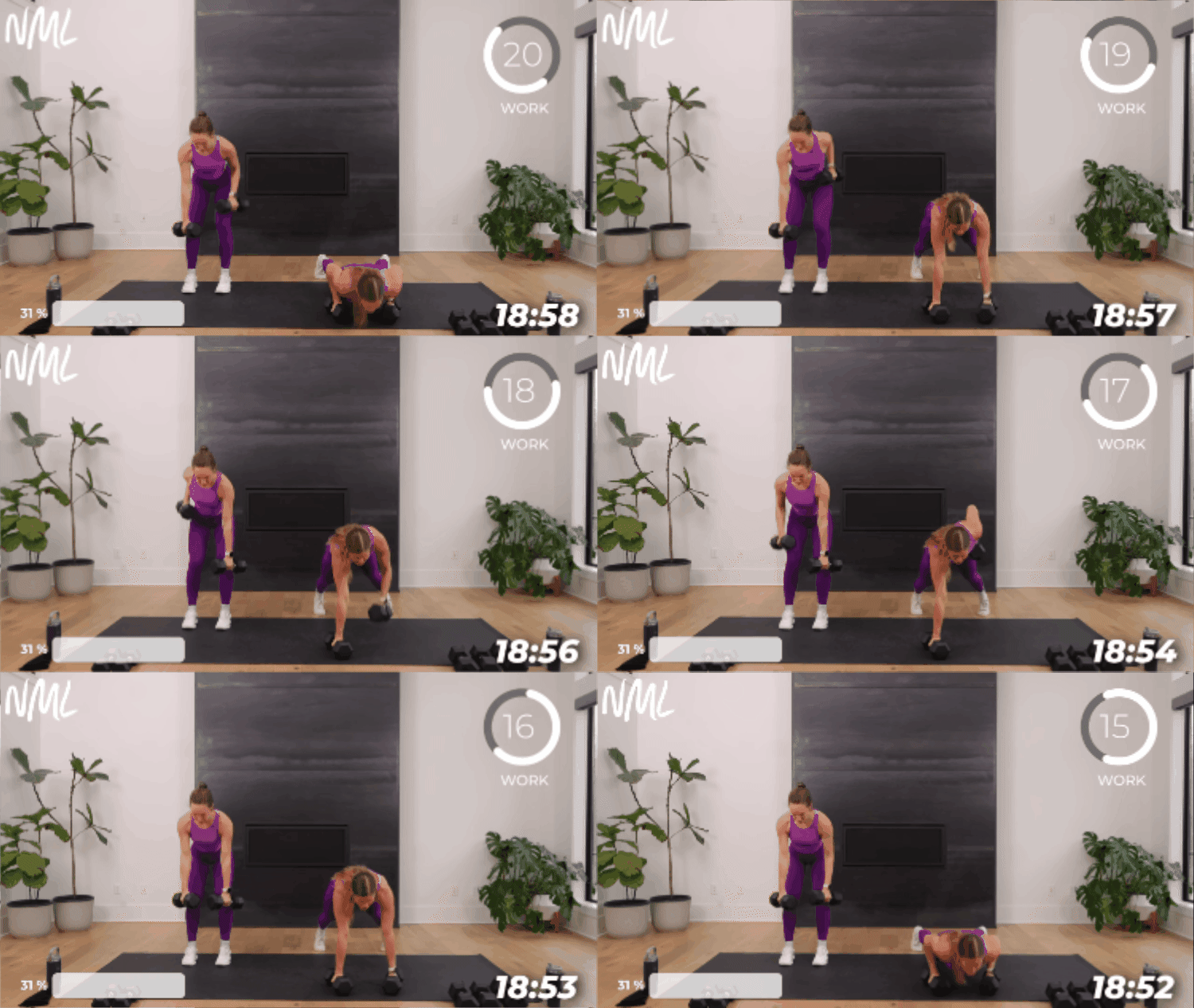
How to Do a Push-Up and Back Row
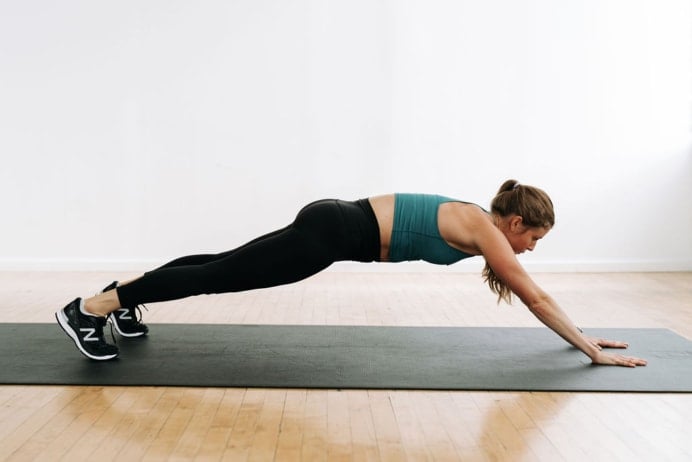
- Start in a high plank position, both hands on your dumbbells, shoulders stacked over wrists, core engaged. Shoulder blades are pulled back and down.
- Lower your chest to the ground, elbows falling back towards your hips. Exhale, pressing up to return to a high plank position.
- Engage your core and keep your back straight as you pull your right elbow to your right hip, performing a single-arm back row on the right side. Keep your hips and shoulders even. Repeat, performing 2 back rows.
- Continue this pattern, alternating 1 push-up with 2 single-arm plank back rows.
Modification: Option to perform alternating single-arm back rows from a standing position. Alternatively, perform incline push-ups by placing your hands on a chair or bench. Ready to get better at push-ups? Check out my free push-up program!
5. Kneeling Curl and Press
Targets: Upper arm (biceps), back, shoulders and core.
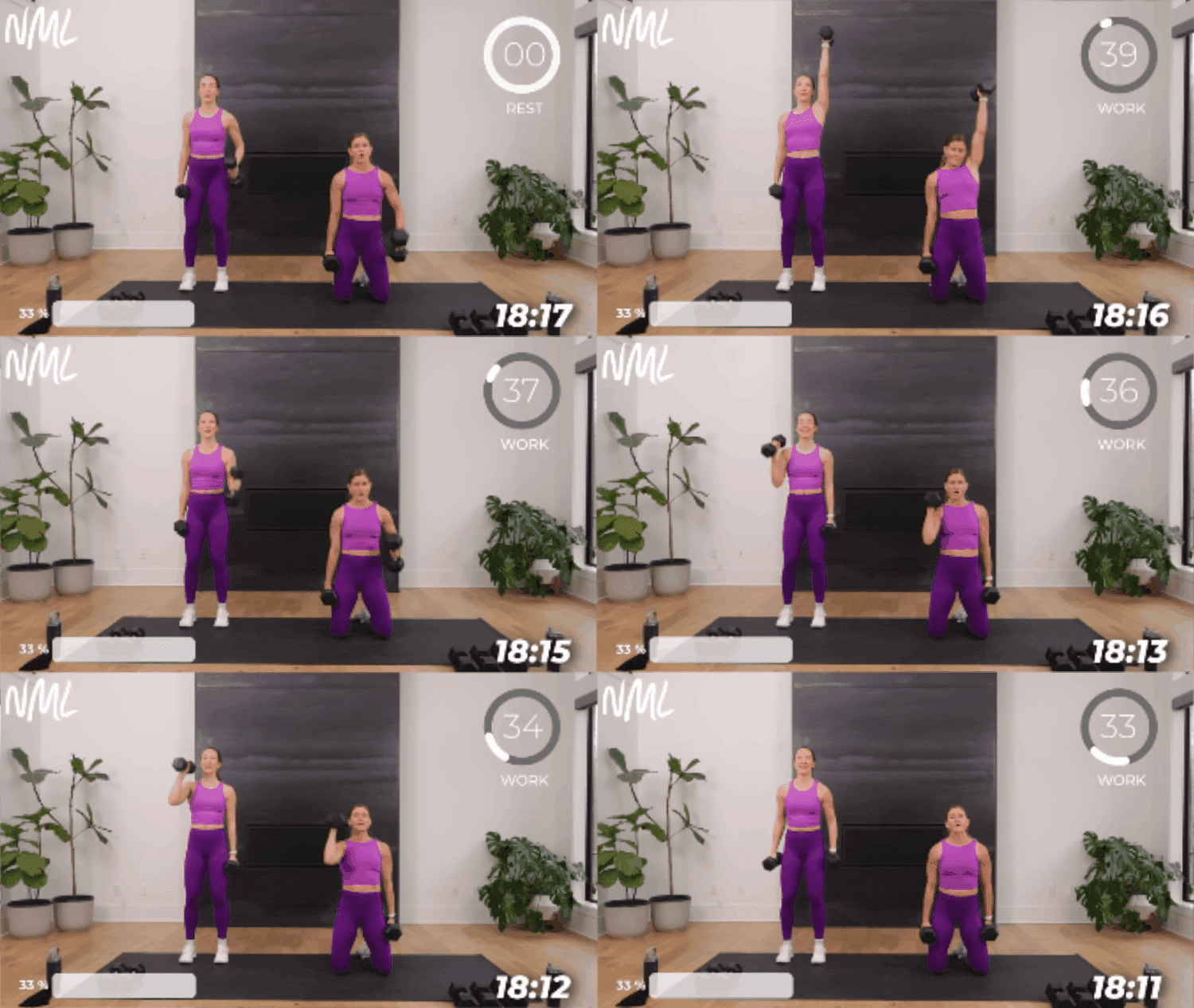
How to Do a Kneeling Curl and Press
- Start in a kneeling position, both knees on the mat with legs bent at 90 degrees, toes tucked under and core engaged. Hold a dumbbell in each hand, palms facing in towards each other.
- Starting on the right side, squeeze the front of your arm to curl the dumbbell up to your right shoulder.
- Then, press the dumbbell straight overhead, right wrist stacked over right shoulder to perform an overhead press.
- With control, lower the dumbbell to your shoulders. Then, reverse your curl, bringing your dumbbell back to the starting position at your hips.
- Alternate sides with each rep.
Modification: Perform a standing alternating bicep curl and shoulder press.
6. Reverse Crunch
Targets: The lower abs and obliques. Also improves stability throughout the lower back, hips and spine.
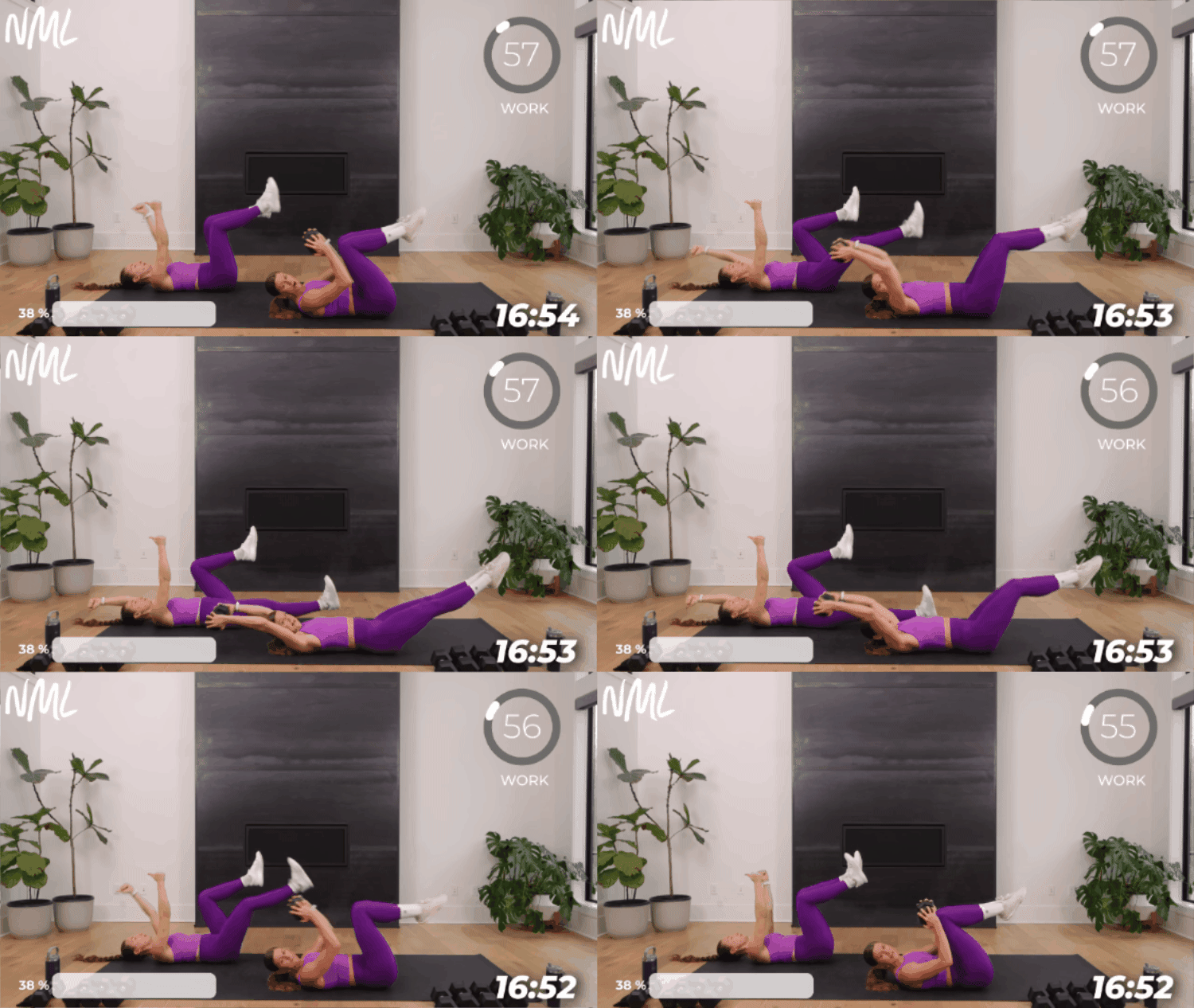
How to Do A Reverse Crunch
- Start lying on your back, core engaged, holding a single dumbbell horizontally between both hands.
- Inhale, extending your legs and arms away from each other, floating them off the mat. Focus on keeping your lower back pressed into the mat to engage your deep core muscles.
- Exhale, pulling your elbows and knees in towards the center of your body, crunching through your midsection.
Modification: Perform a dead bug if crunching isn’t available to you.
7. Seated Twist
Targets: Upper abs, lower abs, obliques, core and hips.
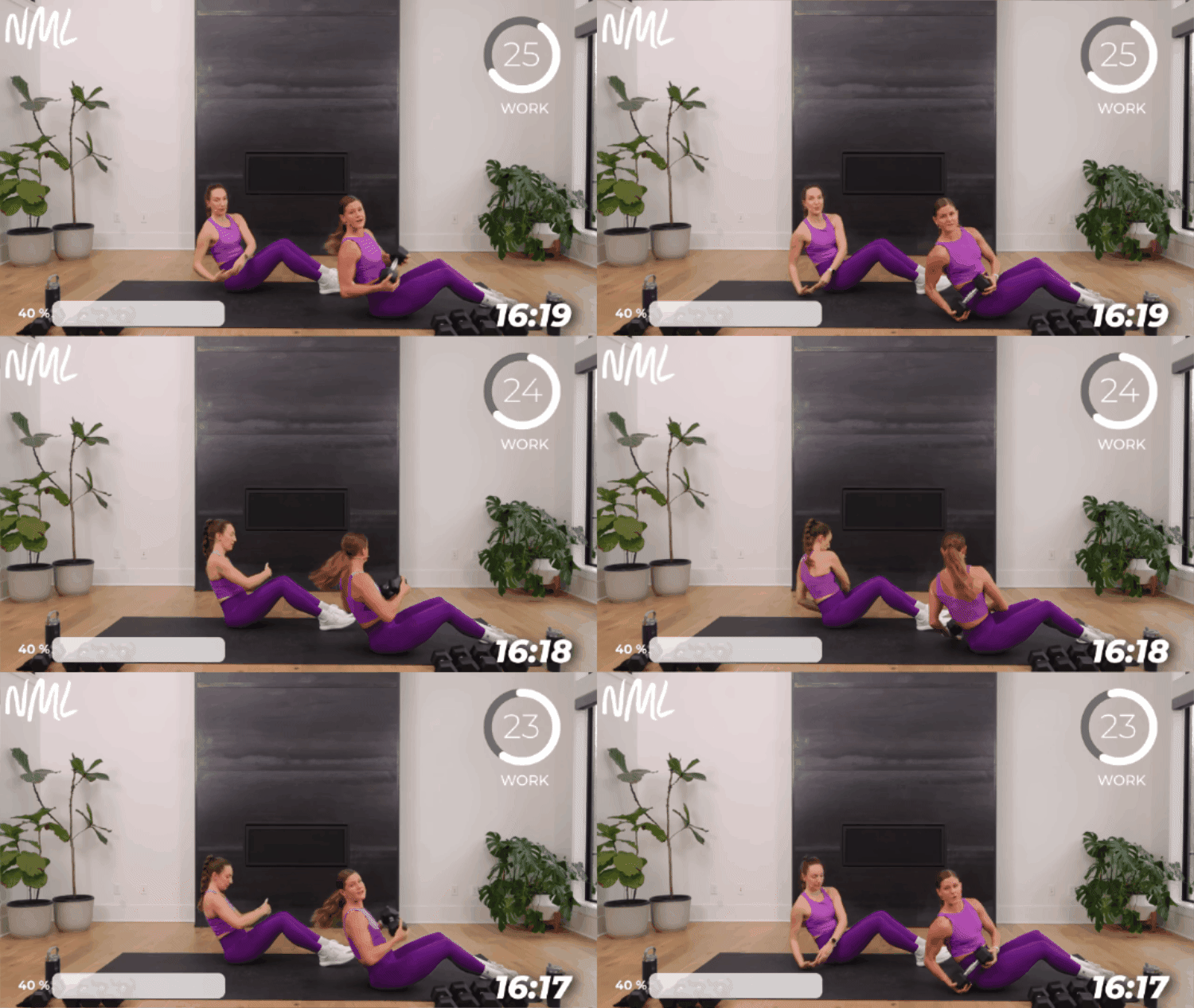
How to Do a Seated Twist
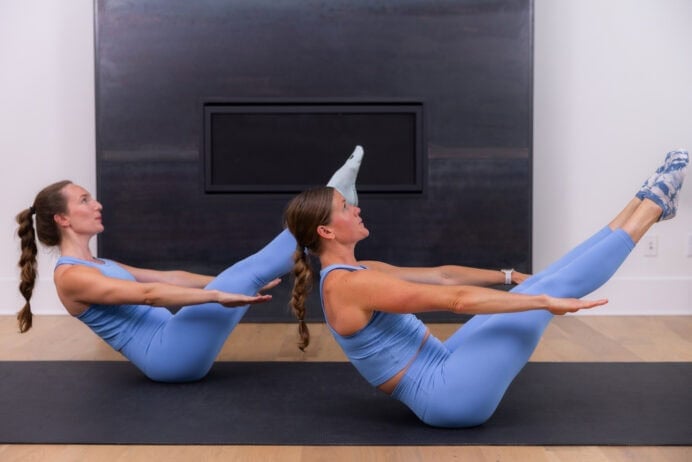
- Start in a seated position, sitting on your sit bones as you lean back; heels resting on the ground (option to float one or both feet to increase intensity). Hold a dumbbell horizontally at your chest, both elbows bent at 90 degrees.
- Pull your right elbow back towards your right hip as you rotate through your torso to tap your hands to the mat near your right hip.
- Use your obliques and abs to return to center.
- Then reverse the movement, pulling your left elbow back towards your left hip as you rotate through your torso to tap your hands to the mat near your left hip.
FAQs
Are full-body strength workouts effective?
Full-body strength workouts are incredibly effective for muscle growth, fat loss and cardiovascular health. If you’re limited on time and only workout a few days a week, I recommend focusing on full-body workouts, because that allows you to train each major muscle group multiple times during the week.
What are the benefits of full-body strength training?
Full-body training is efficient, effective and functional for athletes of all experience levels. Full-body workouts tend to burn more calories than split training workouts in the same amount of time because so many muscles are being recruited.
Should you do cardio on rest days when strength training?
You can perform light cardio as a form of active recovery on rest days without hindering muscle repair from strength training. That said, beginners may need total rest on their rest days, while more advanced lifters may find light cardio like walking or swimming reduces muscle soreness and assists in muscle recovery.
Does cardio help with toning and overall fitness?
Cardio helps with overall fitness by improving heart health, improving endurance and burning calories. Cardio can also be a useful tool for lowering body fat, which reveals the muscle definition built through hypertrophy and heavy lifting (which is key to that “toned” appearance).
Can beginners do full-body strength workouts safely?
Full-body strength workouts are some of the safest workouts for beginners to start with, because they’re an accessible introduction to weight training without a high of risk of injury or overtraining. I recommend following along with a guided beginner full-body strength workout to learn proper form.
Free 2-Week Strength Program
More Workouts
Strength TrainingPin This: At-Home Full-Body Workout (30 Minutes, 3-2-1 Method)
6 comments
Loved this workout format for a full body day. Not such a fan of the additional counters, it’s quite over stimulating…. But if that’s what the people want, I’m going to have to learn to love it!
Thank you for another fantastic workout! You and Rachel are amazing!!
Thank you for the feedback, Jessica! Appreciate you sharing this. And thank you for choosing to sweat with NML – keep up the great work! -Lindsey
Fantastic Workout…APPRECIATE YOU
So glad you enjoyed this one, Dana! Thanks for trying it! -Lindsey
Hi Lindsey,
I am really interested in following your workout programs. It’s not very often that I find free workouts online. I want to thank you for that. I am 56, in menopause and have been trying to loose the same 20-25 lbs for years. My question is, which one of your workouts would be a good one to start with? Thanks in advance.
Hi Lana! Thanks for reaching out! I’d recommend checking out our Strong 20 Workout Program. It’s a low impact, functional strength training program and is a great place to start. -Lindsey