


6 Best Hip Hinge Exercises
This roundup features the best hip hinge exercises to strengthen your glutes, hamstrings, core and posterior chain while improving hip mobility, stability and everyday movement. Whether you’re new to strength training or looking to improve your deadlift, kettlebell swing or other hip hinge movements, these exercises will help you build proper technique, improve movement mechanics and support injury prevention while helping you move with greater confidence.
Hip-hinge exercises are often overlooked, even for moderately active women who run and work out regularly.
Your pelvis and hip joints serve as the foundation for many everyday movements, from lifting groceries to picking up your kids to performing exercises in the gym. Learning to move through a proper hip hinge can improve functional strength, protect your lower back and help you move with confidence for years to come.
These hip-hinge exercises specifically target and improve the biomechanics at the major junction (or hingepoint) of the body, where your lower-body and upper-body connect through your core muscles.
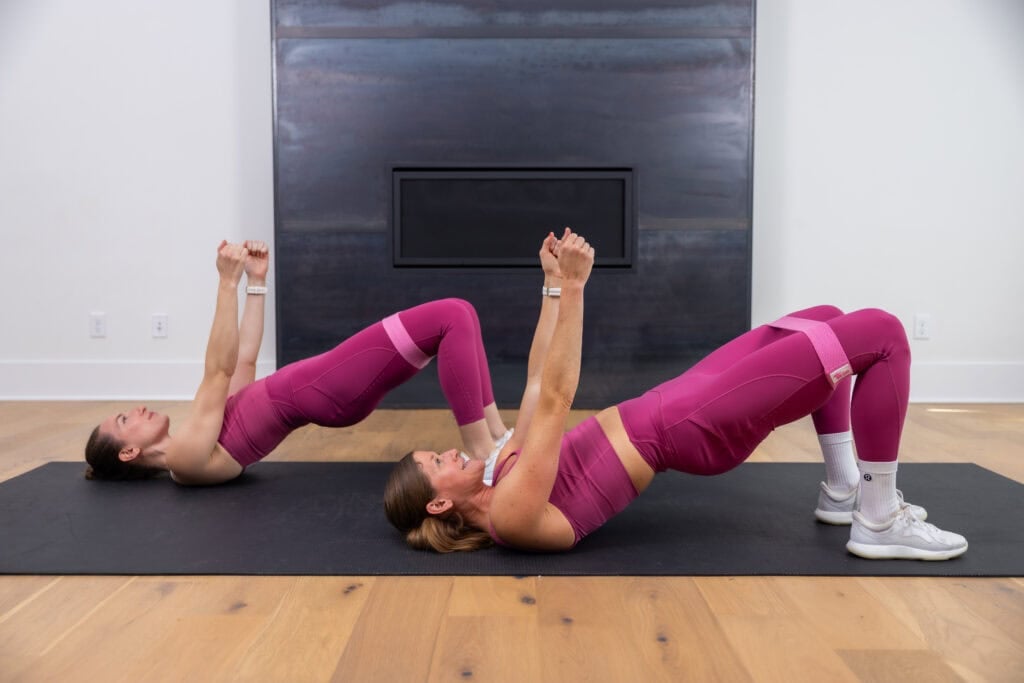
A Quick Rundown
These hip-hinge exercises work the hips through their natural range of motion while building strength and increasing mobility and flexibility. They are great to throw into a solid warm-up or sprinkled into your current leg day and can be done by anyone at any fitness level.
While these exercises are designed to be safe and effective for most fitness levels, always listen to your body and prioritize proper form. If you’re recovering from an injury or surgery, consult your healthcare provider before adding heavy resistance or dynamic movements to your routine.
Equipment to Have on Hand
Equipment Needed: Medium-weight dumbbells (10–25 pounds) or a kettlebell (15–35 pounds), depending on your fitness level and experience with hip hinge exercises.
Instructions
Choose 3-5 exercises from the list below and follow these rep and set ranges:
- Beginners: Aim for 2-3 sets of 8-10 reps
- Intermediate: Aim for 3-4 sets of 10-12 reps
- Advanced: Aim for 4-6 sets of 12-15 reps
Hip Hinge Exercises Outline
1. Good Morning
Targets: Legs, glutes, quadriceps, hamstrings, hip flexors, erector spinae, lower back muscles and core.
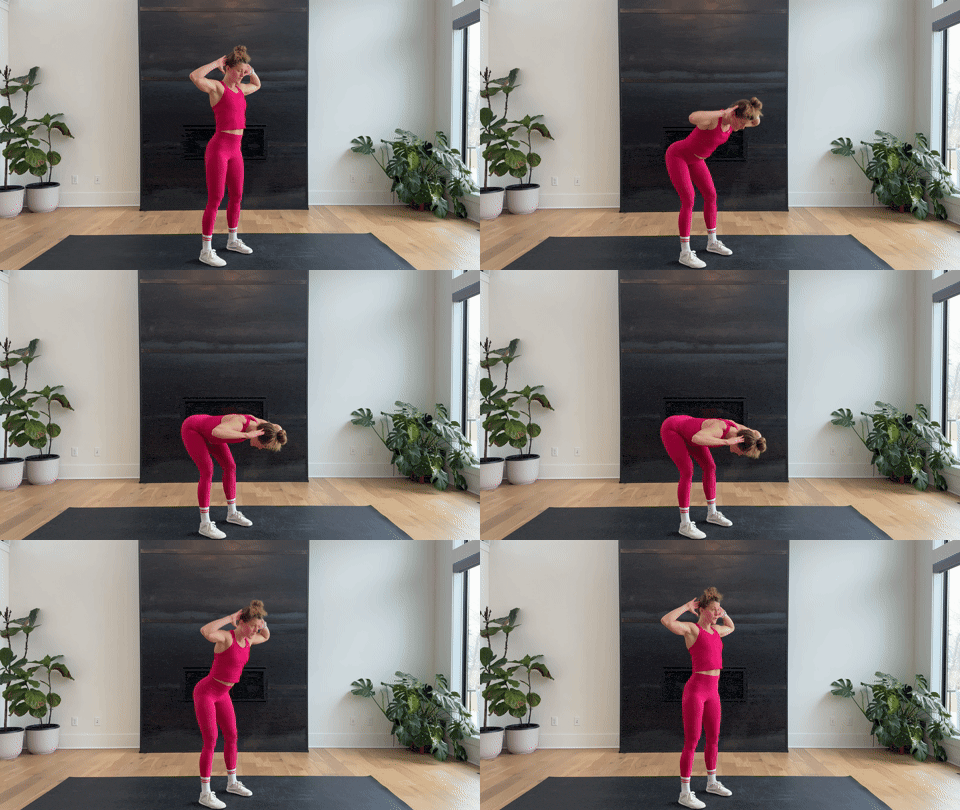
How to Do a Good Morning
- Start in a standing position, feet shoulder-width apart, core engaged. Place your hands behind your head, squeezing the shoulder blades and engaging the back.
- With a slight bend in your knees, hinge forward at the hips until your torso is parallel to the ground. Your core is engaged and your spine is neutral (back flat). You should feel a stretch in your hamstrings (the back of your legs) at the bottom of the movement.
- Reverse the movement, driving through your heels to stand tall, returning to the starting position (torso upright).
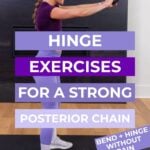
2. Resistance Band Hip Hinge
Targets: Posterior chain, glutes, hamstrings, core, hips and lower back.
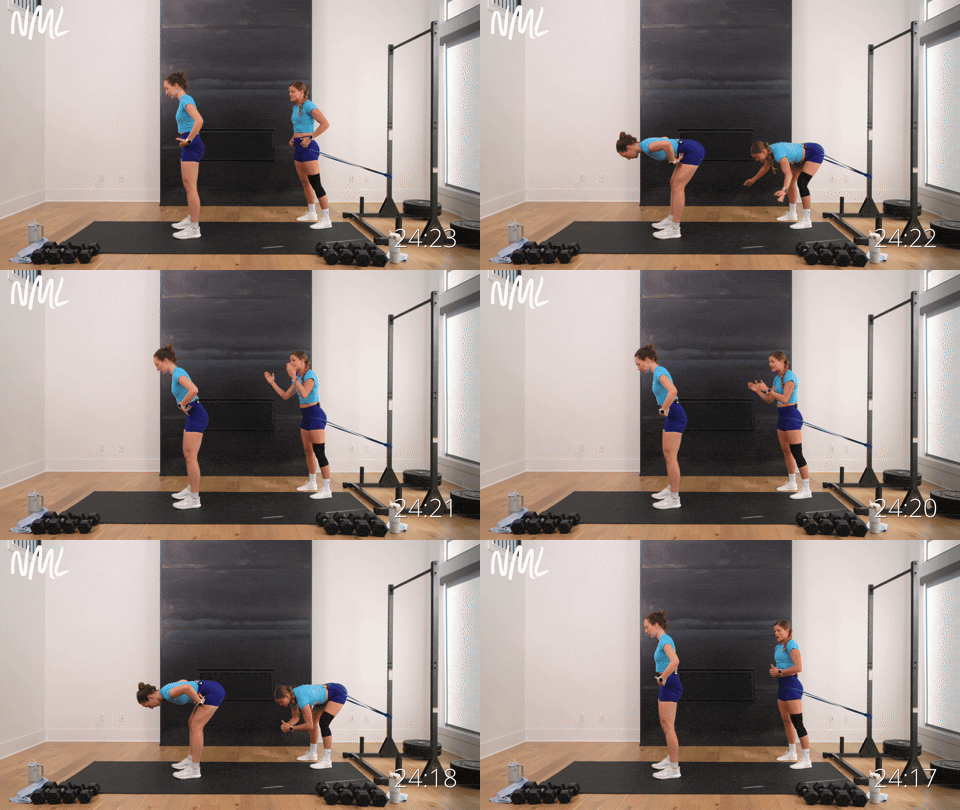
How to Do a Resistance Band Hip Hinge
- Stand with your feet hip-width apart on the center of a resistance band. Hold 1 end of the band in each hand and bring your hands to the front of your hips so the band creates tension.
- Engage your core and maintain a neutral spine as you push your hips back, allowing your knees to bend slightly while keeping your chest lifted.
- Continue hinging until you feel a stretch in your hamstrings, keeping the band close to your body throughout the movement.
- Press through your heels and drive your hips forward to return to a standing position, squeezing your glutes at the top.
- Repeat for the desired number of repetitions, maintaining control and proper hip-hinge technique.
Modification(s): Use a lighter resistance band or reduce your range of motion while learning the movement. Focus on pushing your hips back and maintaining a neutral spine before increasing the resistance.
3. Bodyweight Glute Bridge
Targets: Glutes, hamstrings and hip abductor muscles.
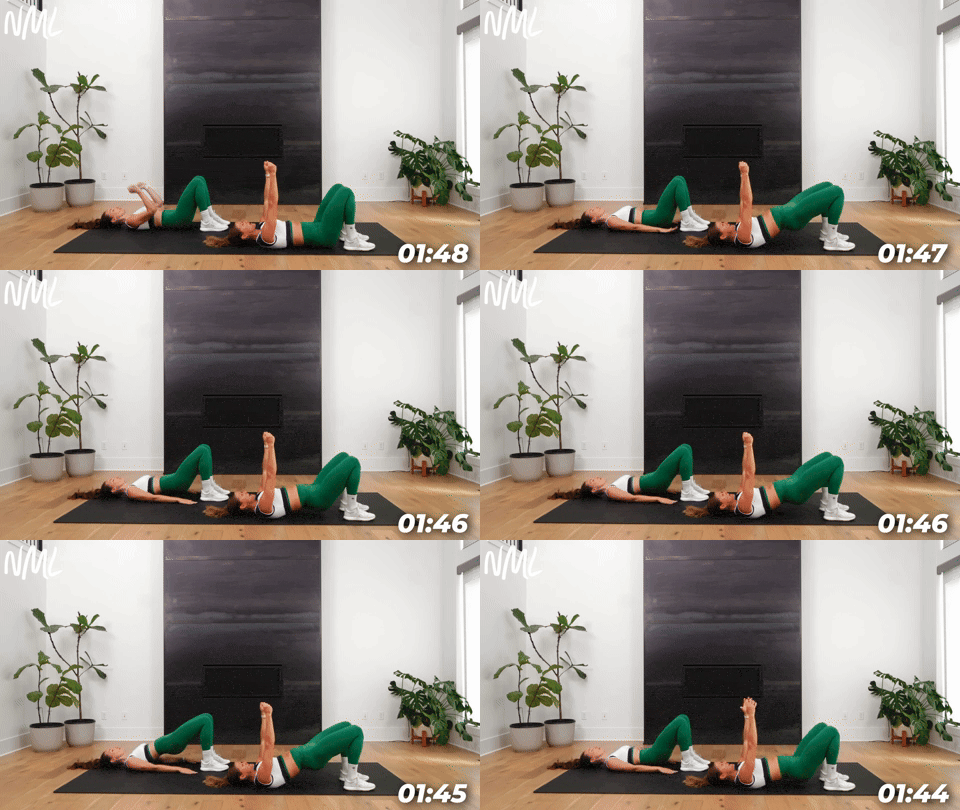
How to Do a Bodyweight Glute Bridge
- Lie on your back with your knees bent and your feet flat on the floor, about hip-width apart. Rest your arms at your sides with your palms facing down.
- Engage your core and press through your heels to lift your hips off the floor until your knees, hips and shoulders form a straight line. Squeeze your glutes at the top while maintaining a neutral spine.
- Slowly lower your hips back to the floor with control, then repeat for the desired number of repetitions.
Modification(s): Reduce your range of motion by lifting your hips only as high as you can while maintaining a neutral spine. Rest briefly between repetitions if needed to maintain proper form.
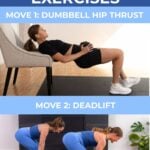
4. Dumbbell Hip Thrust
Targets: Glutes (both the gluteus maximus and gluteus medius), hamstrings and hip adductors.
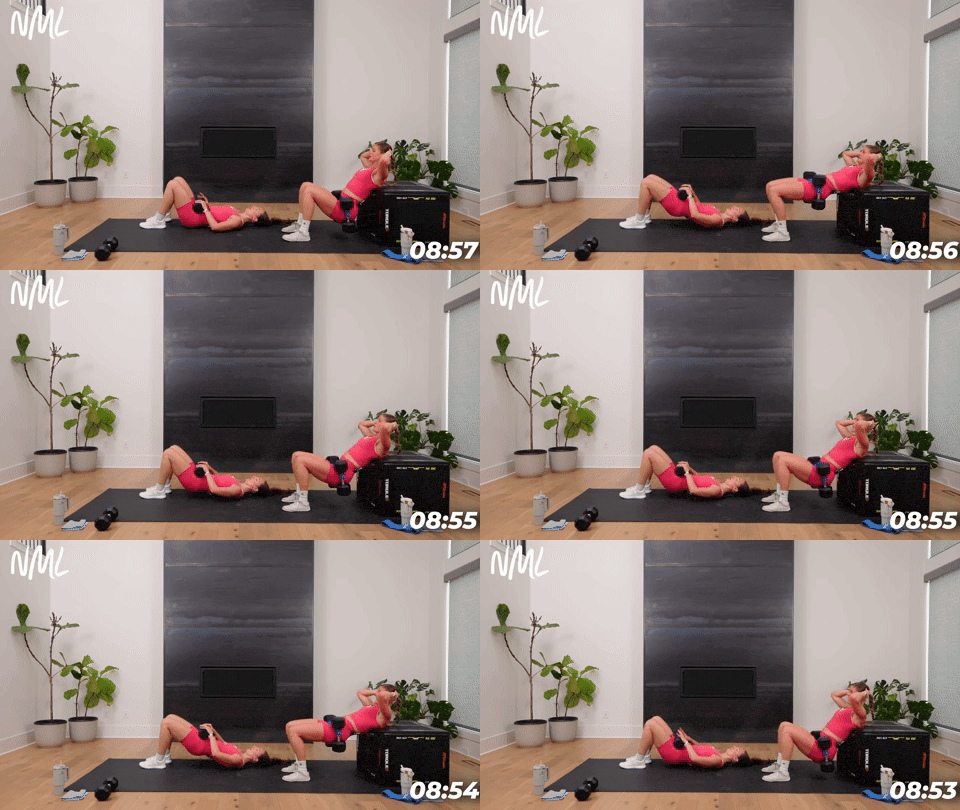
How to Do a Dumbbell Hip Thrust
- Sit in front of a bench or chair, feet shoulder-width apart and planted on the floor. Then rest your upper back on a bench. Hold 1 dumbbell at your hips, resting on your hip bones.
- Press through the heels to lift your hips (or thrust your hips) until your knees, hips and shoulders form a straight line. Squeeze your glutes and keep your abs drawn in so you don’t overextend your back during the exercise.
- Hold at the top of the hip thrust for a moment before lowering your hips back to the starting position with control.
Modification(s): Perform glute bridges from the floor if you don’t have a bench or box available.
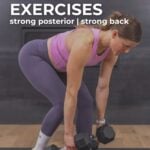
5. Deadlift
Targets: Glutes, hamstrings, quadriceps, core, spinal erectors, lats and forearms.
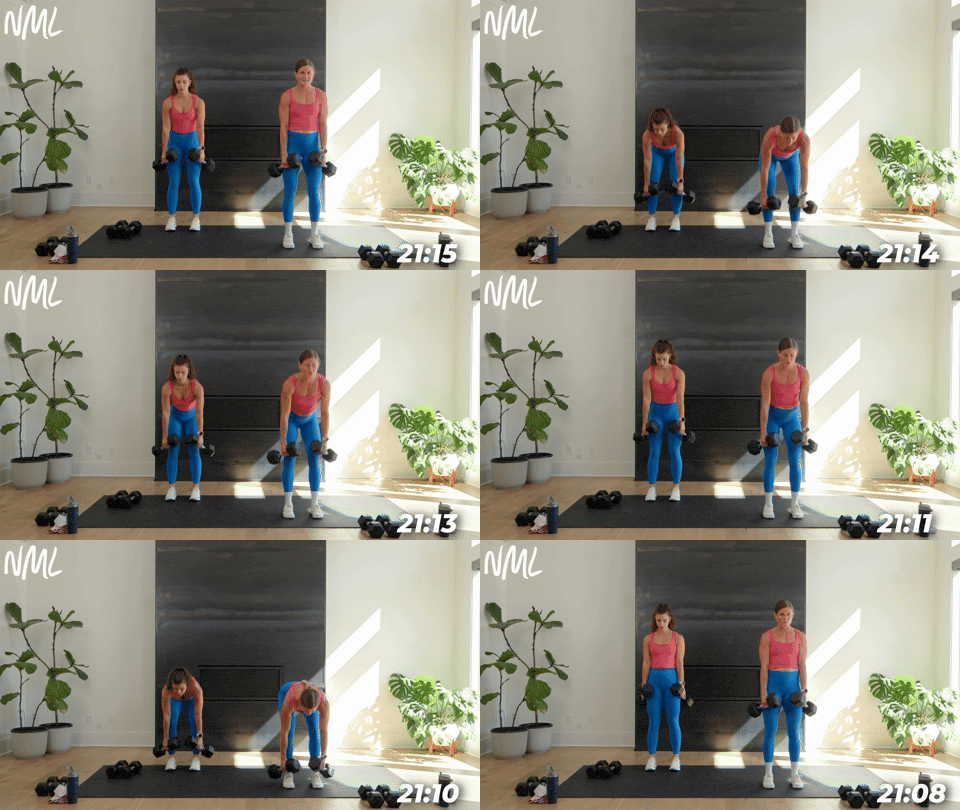
How to Do a Deadlift
- Stand with your feet hip-width apart, holding a pair of dumbbells in front of your thighs with your palms facing your body.
- Engage your core, keep a neutral spine and hinge at your hips by pushing them back as you lower the weight toward your shins.
- Lower the weight until you feel a stretch in your hamstrings or the weights reach about mid-shin, keeping them close to your legs.
- Drive through your heels and squeeze your glutes as you extend your hips and knees to return to a standing position.
- Finish tall with your shoulders back and core engaged, then repeat for the desired number of repetitions.
Note(s): If you are doing conventional deadlifts with a barbell, begin with the loaded barbell on the floor. The barbell should be about mid-shin height. Use other plates or blocks to raise the barbell to the mid-shin level to avoid added stress to the lumbar spine. The setup for the barbell deadlift is the same, but done in reverse from the dumbbell deadlift because the weight is lifted from the floor instead.
Modification(s): If you’re new to the deadlift, practice the hip hinge using a dowel or perform a kettlebell deadlift with a lighter weight to learn proper technique before progressing to a barbell deadlift.
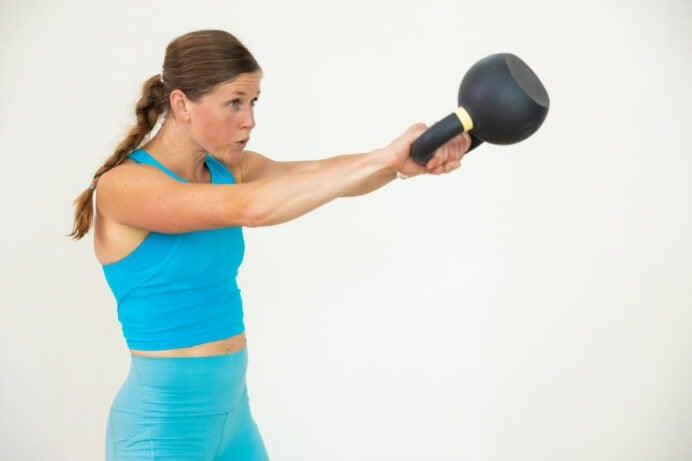
6. Kettlebell Swing
Targets: Glutes, hamstrings, posterior chain, core, hips, spinal erectors and stabilizing muscles in the back and shoulders.
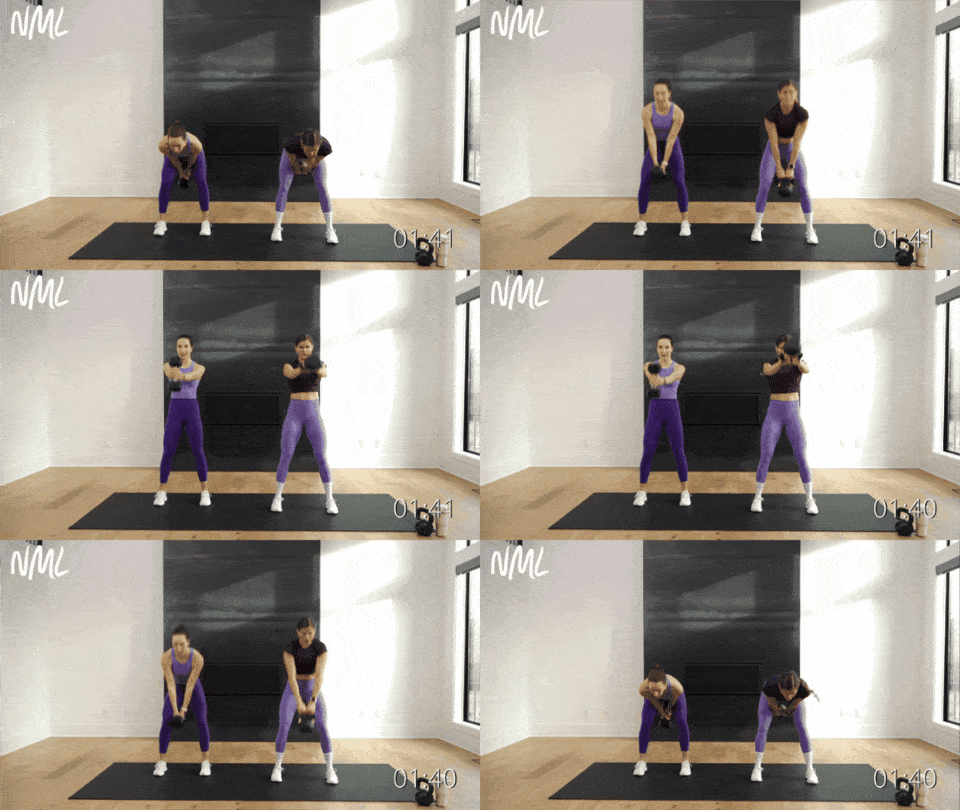
How to Do a Kettlebell Swing
- Start standing with your feet wider than shoulder-width apart; engage your core.
- Hinge forward at the hips to reach for the kettlebell handle with both hands. Place your hands on the horns of the bell, palms facing your body.
- Then, with a slight bend in your knees and weight in your heels, ‘hike’ the kettlebell back between your legs to start the swing movement.
- Drive through your heels to stand tall, pushing your hips forward as you squeeze your glutes to swing the kettlebell up to shoulder height. Aim for shoulder height, with arms extended out away from the body. Think long, loose arms (your arms are just a vehicle for moving the bell; your hips and glutes generate the power to move it).
- As the kettlebell begins to descend, think of catching the weight with your hip hinge, loading the glutes and hamstrings.
FAQs
What are the most common hip hinge mistakes to avoid?
The most common hip-hinge mistakes include rounding the lower back, bending too much through the knees, failing to push the hips back and losing a neutral spine. Focus on keeping your core engaged, hinging from the hips and moving with control to improve your form and reduce your risk of injury.
Why do I struggle to hip hinge?
Many people struggle to hip-hinge because they’re unfamiliar with the movement pattern or lack hip mobility, core stability or body awareness. Practicing the movement with a dowel or performing beginner-friendly hip-hinge exercises, such as glute bridges, can help improve your technique and confidence.
Is the Romanian deadlift a hip hinge exercise?
Yes! The Romanian deadlift (RDL) is one of the best hip-hinge exercises for strengthening the glutes, hamstrings and posterior chain. It teaches proper hip-hinge technique by emphasizing hip flexion and hip extension while helping you maintain a neutral spine throughout the movement.
More Roundups
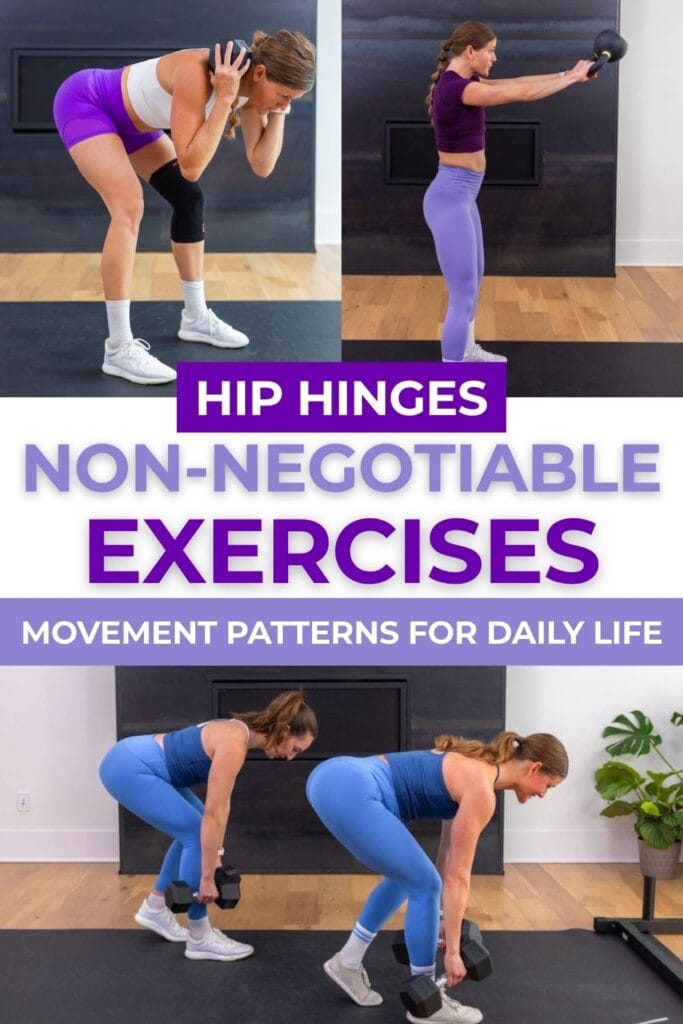
Exercises and WorkoutsPin This: 6 Best Hip Hinge Exercises
This post includes affiliate links. I do earn a commission for products purchased using these links (at no additional cost to you). Thank you for supporting Nourish Move Love, making the content you see on this blog possible.
no comments