



10 Waist Exercises for a Strong Core and Obliques
These 10 waist exercises are designed for women who want to build a stronger, more stable core – no equipment needed. Targeting the obliques, deep core and stabilizing muscles, this roundup includes a mix of stability holds and dynamic movements to build functional strength for everyday life.
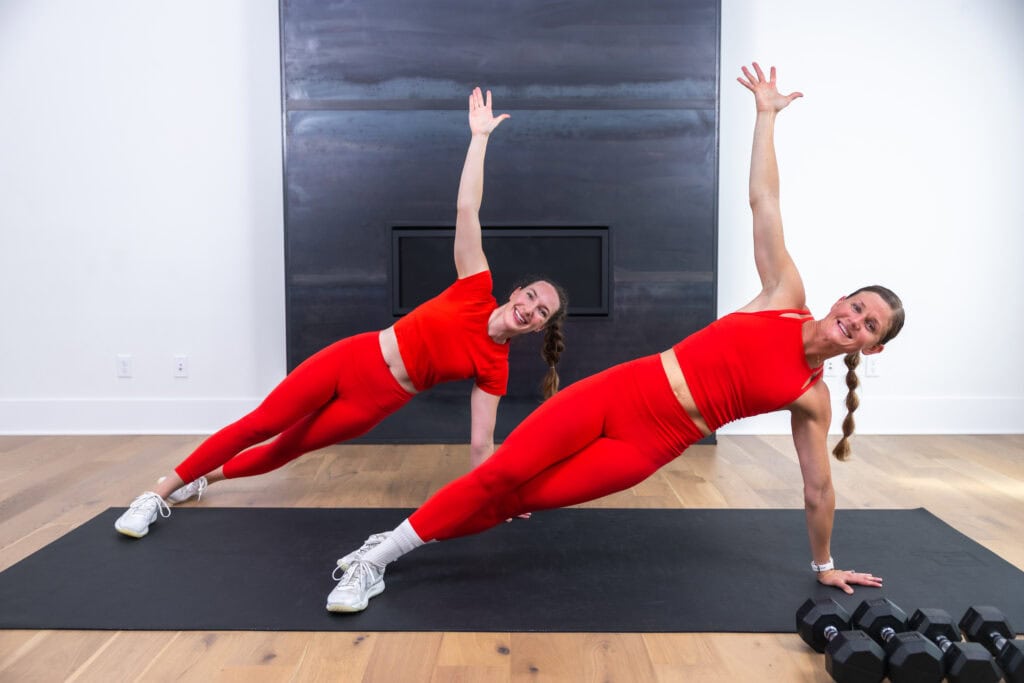
The core and obliques do a lot more than most people realize. They stabilize your spine, support your posture and protect your low back during everything from heavy lifts to picking something up off the floor. Training them consistently with intention and variety is one of the best things you can do for your overall strength and long-term movement health.
That’s why I built this roundup around exercises that challenge the core in multiple ways. Some of these movements ask your core to resist rotation and stay stable under load. Others build strength across the full spectrum of what your obliques and deep core muscles are designed to do. Together, they give you a well-rounded foundation that supports everything else you’re already doing in the gym and outside of it.
A Brief Overview
These exercises emphasize control over intensity, so they pair well with both strength training and cardio or low-impact conditioning days. You can incorporate them into a warm-up, add them to the end of a strength session or perform them as a standalone core workout.
I typically recommend completing the exercises you choose 2-3 times per week, depending on your fitness routine and recovery needs. Anyone with existing low back pain, recent abdominal surgery or core-related injuries should modify movements as needed or consult a healthcare professional before starting.
Equipment
Optional dumbbells. Can do this entire workout with just your bodyweight.
Instructions
Choose 3-5 waist exercises from the list below and follow these work and rest intervals:
- Beginner: 30 seconds work, 15 seconds rest. Perform each exercise x1 set.
- Intermediate: 40 seconds work, 20 seconds rest. Perform each exercise x2 sets.
- Advanced: 45 seconds work, 15 seconds rest. Perform each exercise x3 sets.
Waist Exercises Outline
1. Seated Twist
Targets: Rectus abdominis, obliques and hip flexors.
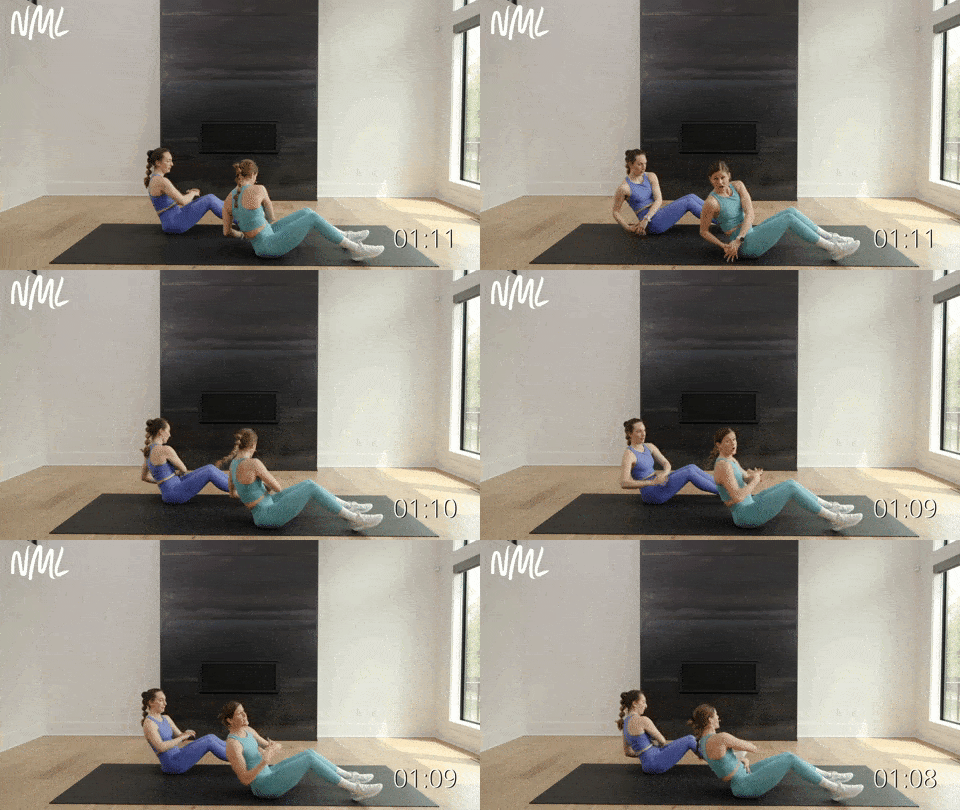
How to Do a Seated Twist
- Start seated, balancing on your sit bones as you lean back slightly. Keep your heels on the floor, or lift one or both feet to make the movement more challenging.
- Rotate your torso to the right, drawing your right elbow back toward your right hip as you tap your hands down toward the mat beside your right side.
- Engage your abs and obliques to pull back through center, drawing your belly button in toward your spine as you return with control.
- Then rotate to the left, drawing your left elbow back toward your left hip as you tap your hands down toward the mat beside your left side.
2. Bird Dog
Targets: Posterior chain (backside of the body) and transverse abdominis.
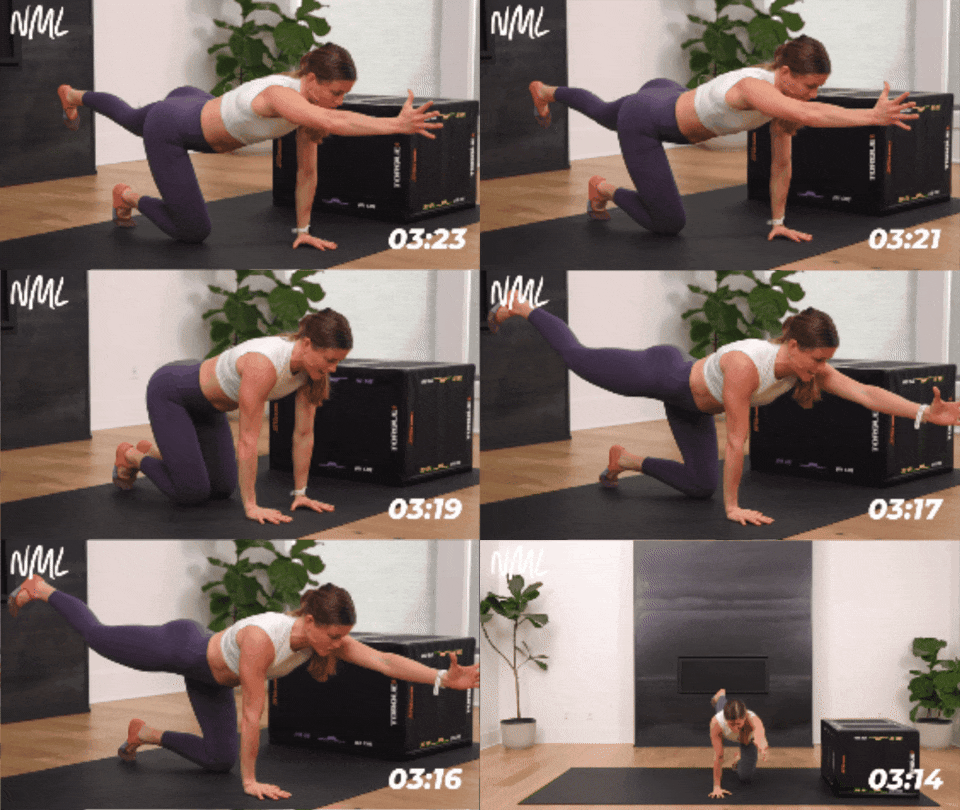
How to Do a Bird Dog
- Start in a quadruped position on your hands and knees, with your hands under your shoulders and knees under your hips. Keep your core muscles engaged and your spine in a neutral position.
- Extend your right leg straight back while reaching your left arm forward, keeping both lifted and in line with your body.
- Pause briefly in this extended position, maintaining balance and control, before returning to the starting position.
- Repeat on the opposite side, extending your left leg back and your right arm forward.
3. Bicycle Crunch
Targets: Rectus abdominis, transverse abdominis and obliques.
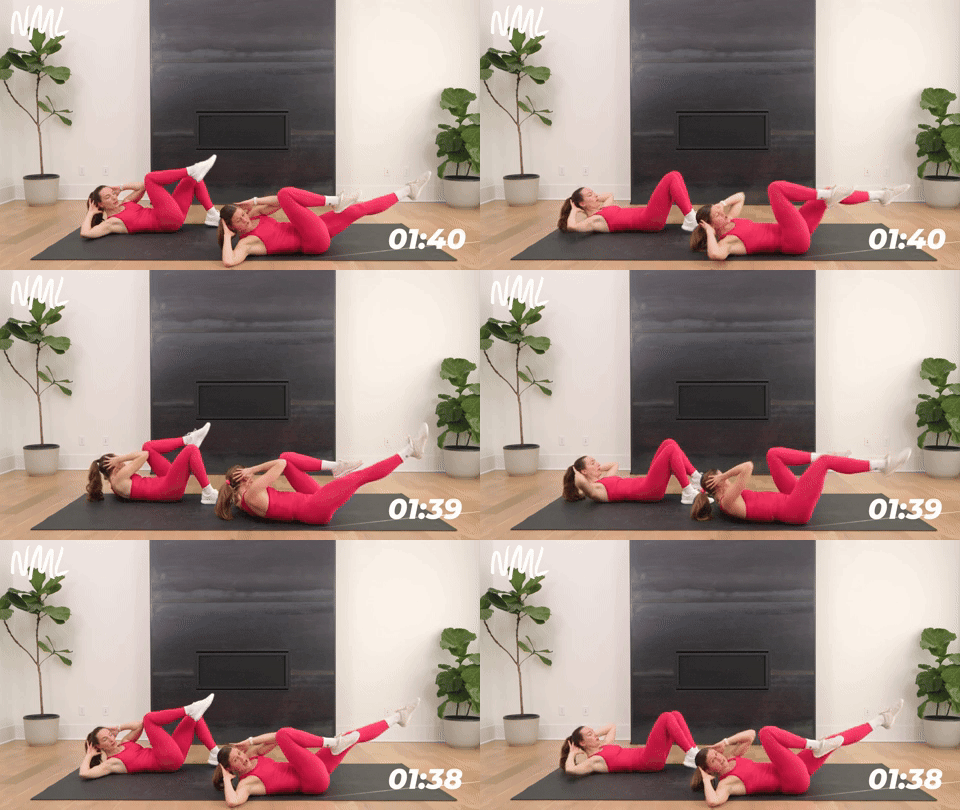
How to Do a Bicycle Crunch
- Start lying on your back with your lower back pressed into the mat. Lift your legs into a tabletop position with knees bent at 90 degrees.
- Bring your hands behind your head and lift your head, neck and shoulders off the floor. Keep your elbows wide.
- Rotate your torso to bring your right elbow toward your left knee while extending your right leg straight out.
- Return to center with control, then switch sides, bringing your left elbow toward your right knee as your left leg extends out.
- Continue alternating sides in a slow, controlled “bicycling” motion.
Modification(s): Keep both feet closer to the ground and reduce the range of motion by keeping the knees more bent throughout the movement.
4. Side Plank
Targets: Internal and external obliques and transverse abdominis.
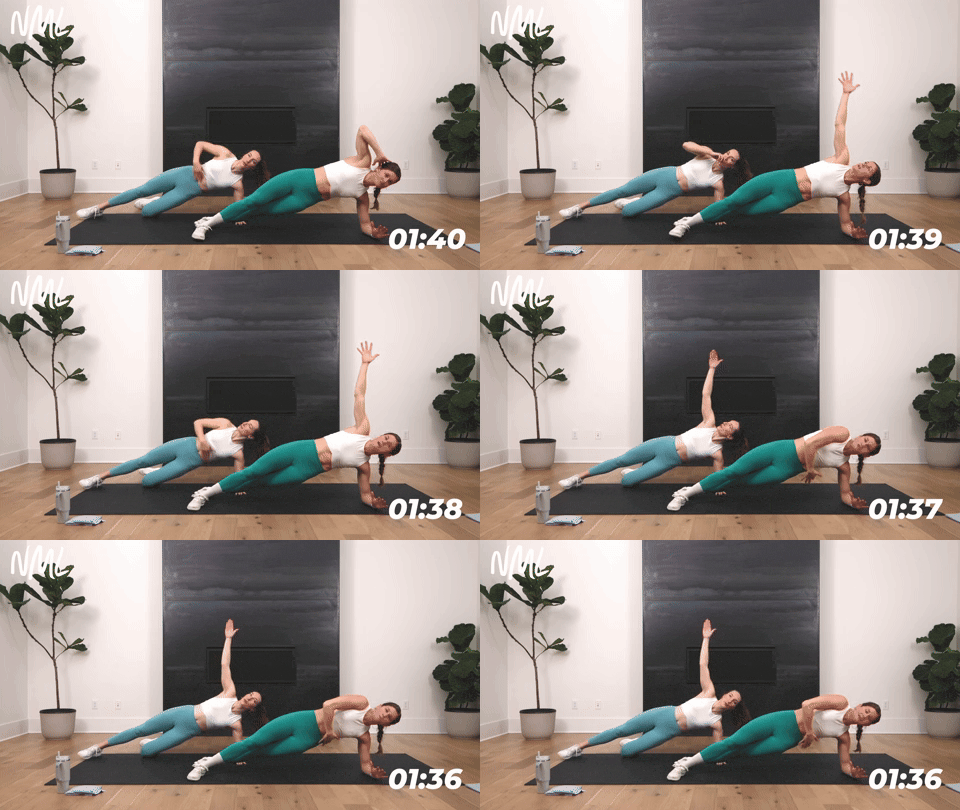
How to Do a Side Plank
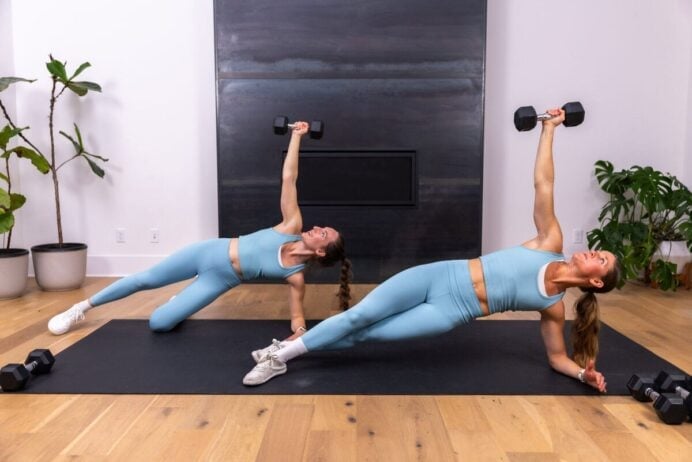
- Start lying on your side with your right forearm on the mat and your right shoulder stacked directly over your right elbow.
- Press through your forearm to lift your hips off the ground, balancing on the outside edge of your right foot. Stack your left foot on top of your right, or stagger your feet for added stability.
- Place your left hand behind your head or extend it overhead while keeping your hips lifted and stacked. Maintain a straight line from head to heels, and hold this position with control, keeping your core engaged.
Modification(s): Drop your bottom knee to the ground instead of keeping both legs extended while maintaining the same upper-body position.
5. Side Plank Hip Dips
Targets: Internal and external obliques and transverse abdominis.
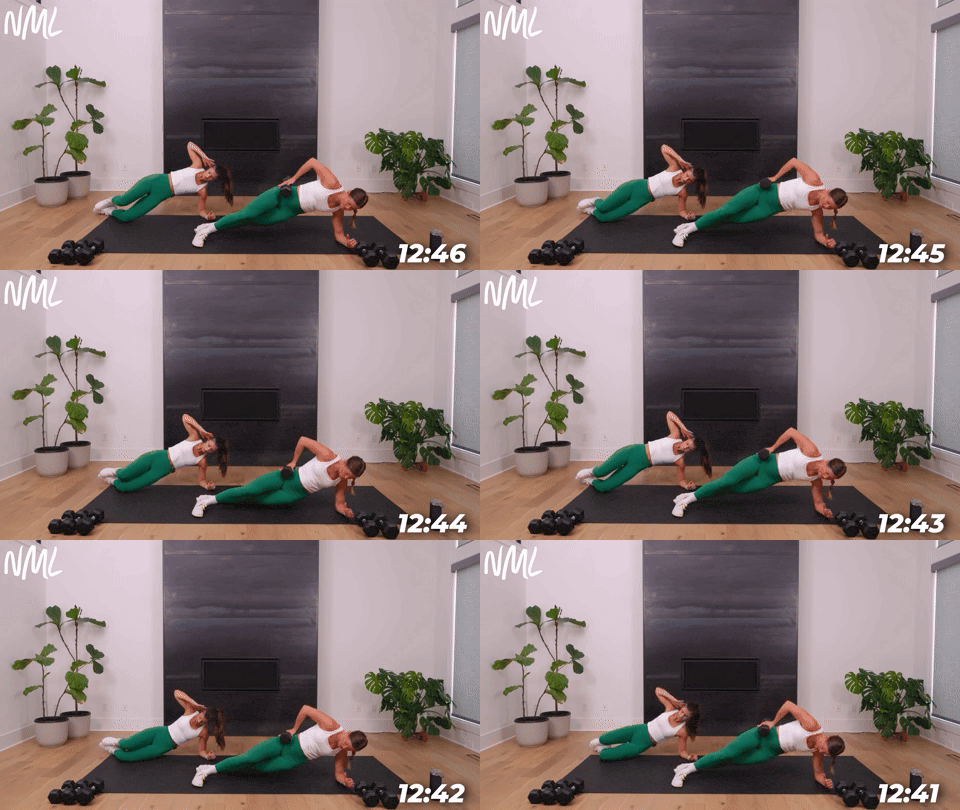
How to Do a Side Plank Hip Dip
- Start lying on your right side with your right forearm on the mat and your right shoulder stacked directly over your right elbow. Option to place a dumbbell on your left hip for added resistance.
- Press through your forearm to lift your hips off the ground, balancing on the outside edge of your right foot. Stack your left foot on top of your right, keeping your body in a straight line from head to heels.
- With control, lower your hips a few inches toward the ground without fully resting.
- Engage your obliques to lift your hips back up into a strong side plank position. Repeat the movement in a controlled rhythm.
Modification(s): Perform the exercise with your bottom knee on the ground for added support.
6. Plank Shoulder Tap
Targets: Shoulders, triceps, chest, and core (rectus abdominis, transverse abdominis and obliques).
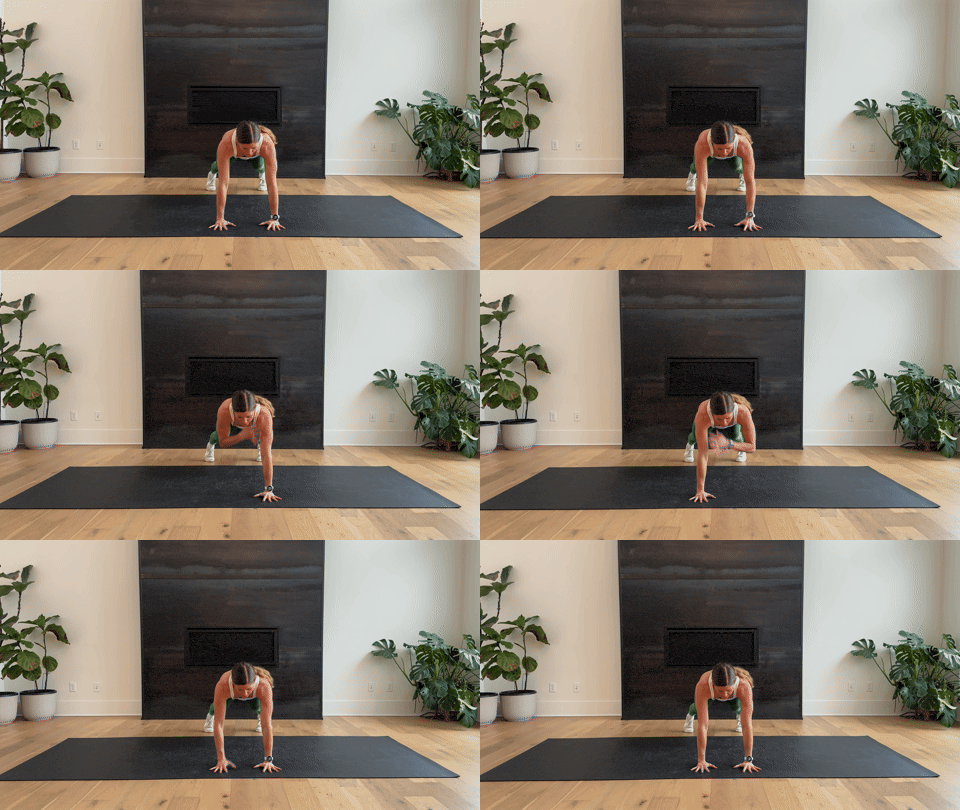
How to Do a Plank Shoulder Tap
- Begin in a high plank with your hands placed directly under your shoulders and feet set hip-width apart or slightly wider for stability. Keep your body long and aligned from head to heels while engaging your core.
- Shift your weight slightly into your left side as you lift your right hand to tap your left shoulder, working to keep your hips steady and square to the floor.
- Place your right hand back down, then repeat on the opposite side by lifting your left hand to tap your right shoulder. This completes one rep.
- Continue alternating sides, moving slowly and focusing on minimizing any rotation or sway through your hips and torso.
Modification(s): Lower your knees to reduce the load on your core and upper body. You can also perform the movement with your hands elevated on a bench or sturdy surface.
7. Prone Superman
Targets: Lower back (erector spinae), glutes, hamstrings, shoulders and core.
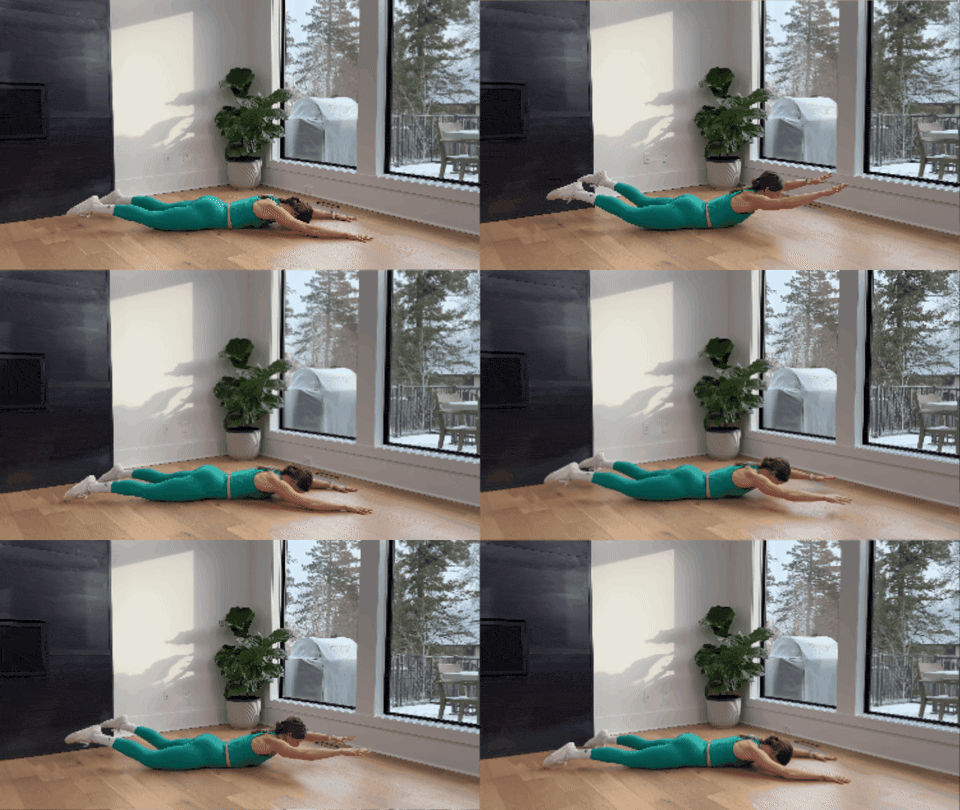
How to Do a Prone Superman
- Lie face down on a mat or flat surface with your legs extended straight behind you. Reach your arms overhead so your body is fully lengthened from fingertips to toes. Keep your neck in a neutral position by looking down toward the floor.
- Engage your core and lift your arms, chest and legs off the ground at the same time, creating a long, controlled extension through your body.
- Pause briefly at the top, squeezing your glutes and upper back to maintain the lift.
- Lower your arms, chest and legs back down with control to return to the starting position.
Modification(s): Perform a bird dog instead, extending the opposite arm and opposite leg from a quadruped position.
8. V-Up Crunches
Targets: Rectus abdominis, hip flexors and obliques.
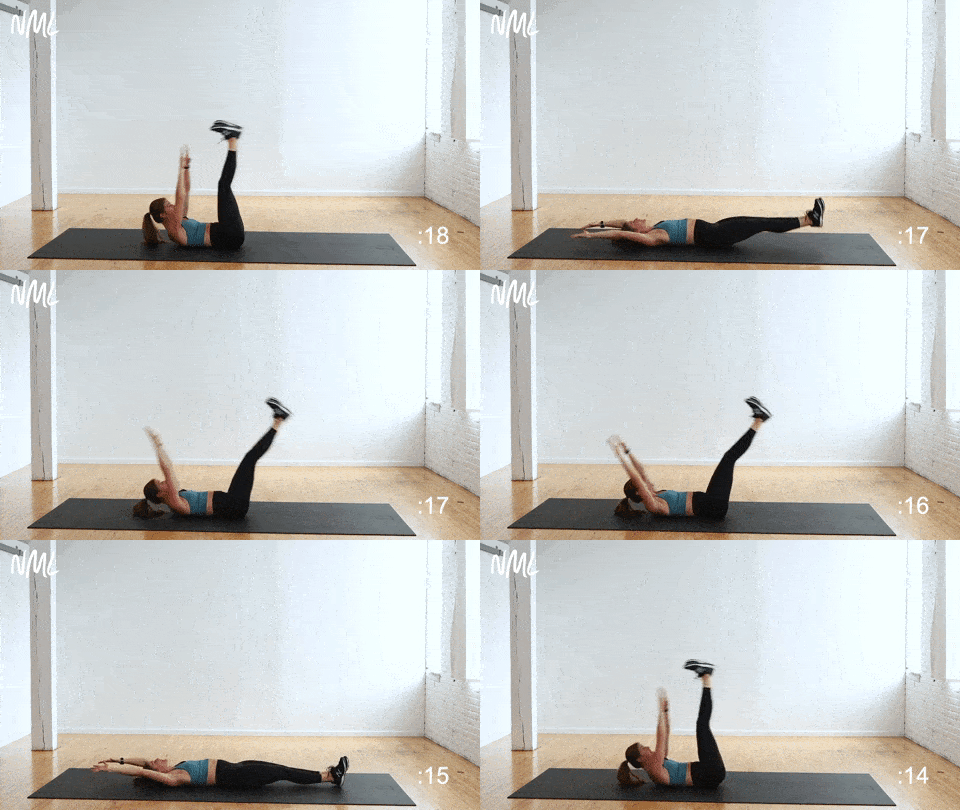
How to Do a V-Up Crunch
- Lie flat on your back with your legs extended and arms reaching overhead. Keep your core engaged and your lower back gently pressed into the mat.
- Lift your upper body and legs off the floor, simultaneously, reaching your hands toward your feet as your body forms a “V” shape.
- Pause briefly at the top with control, avoiding momentum through the movement.
- Lower your upper body and legs back down with control to return to the starting position.
Modification(s): Try a variation of oblique crunches, but forward-facing. Keep both legs on the ground with knees bent and feet together. Squeeze your core and lift your head, neck and shoulders off the mat while maintaining control through the movement.
9. Plank Arm Reaches
Targets: Rectus abdominis, transverse abdominis and shoulders.
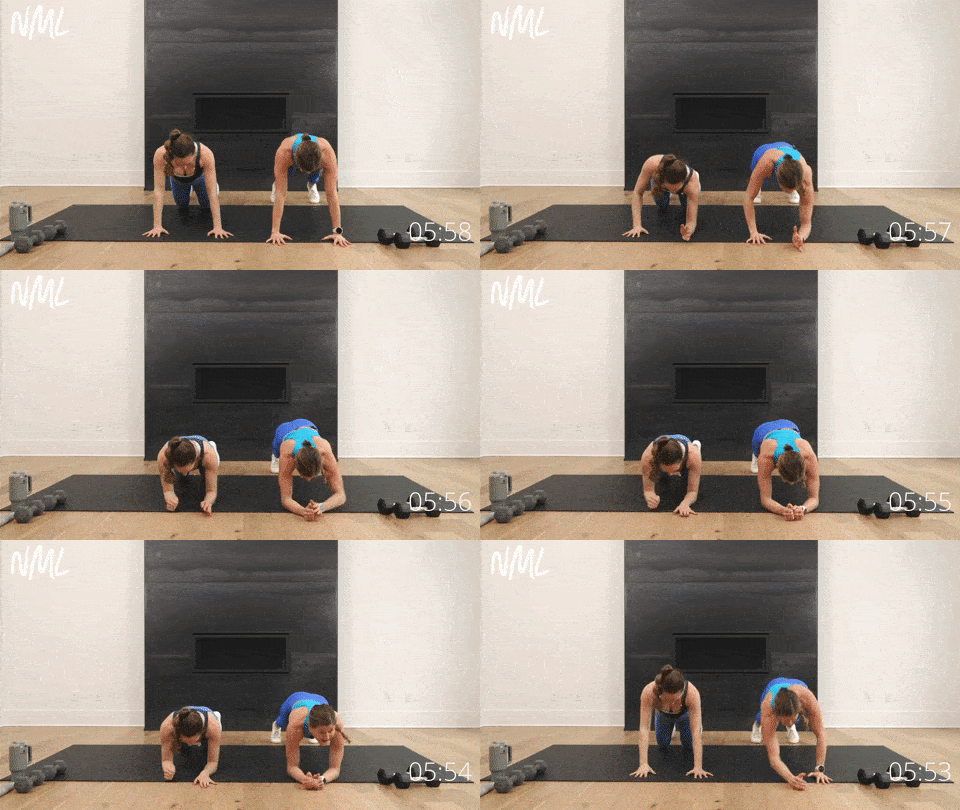
How to Do a Plank Arm Reach
- Start in a high plank position with your shoulders stacked directly over your wrists and your feet set hip-width apart. Keep your body in a straight line from head to heels and engage your core.
- Shift your weight slightly into your supporting arm as you lift your right hand and reach it straight out in front of you. Avoid letting your hips rotate or shift.
- Bring your right hand back to the floor with control, then repeat on the left side by reaching your left arm forward.
- Continue alternating arms in a slow, controlled rhythm, focusing on keeping your torso as stable as possible throughout the movement.
Modification(s): Drop your knees to the mat while maintaining a straight line from head through hips. Feeling wrist pain? Try one of these plank alternatives.
10. Dead Bug
Targets: Transverse abdominis, rectus abdominis, hip flexors, shoulders and back.
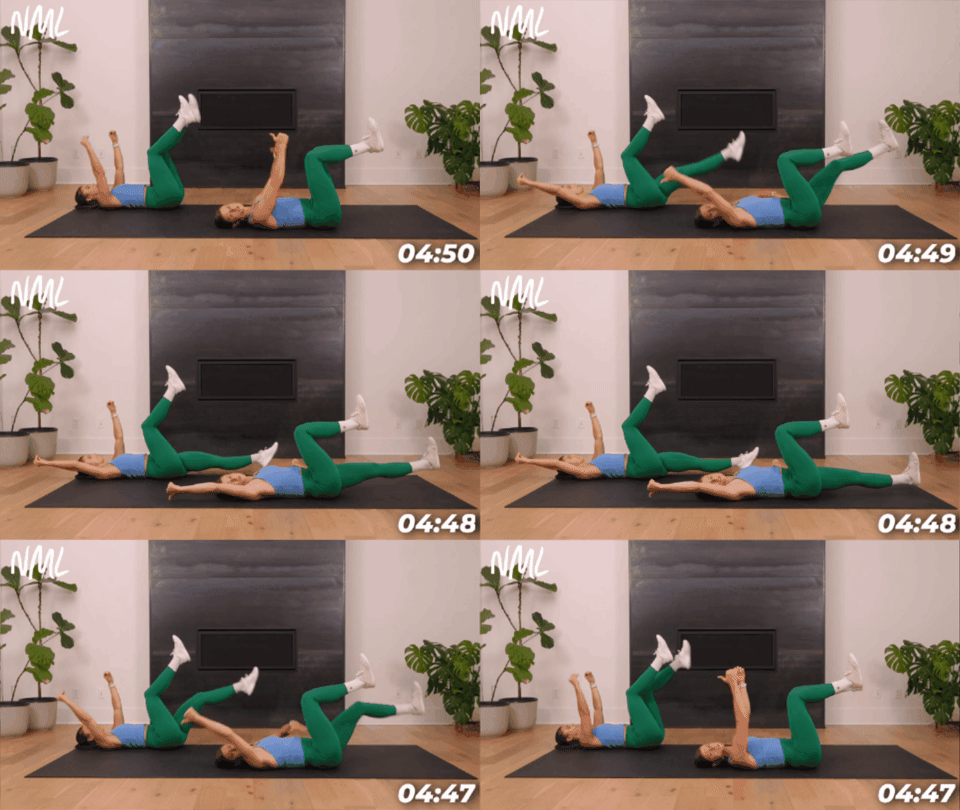
How to Do a Dead Bug
- Lie on your back with your arms extended toward the ceiling and your knees bent at 90 degrees, stacked over your hips. Gently press your lower back into the mat to engage your core. Option to hold a dumbbell in each hand as you extend your arms upward.
- Slowly extend your right leg long while reaching your left arm overhead toward the floor, keeping both movements controlled and your lower back stable.
- Return to the starting position, then repeat on the opposite side by extending your left leg and right arm.
- Continue alternating sides in a slow, controlled pattern, focusing on keeping your core engaged and your back pressed into the mat.
Modification(s): Use just your bodyweight, or reduce the range of motion by keeping a slight bend in the knees throughout the exercise.
FAQs
What part of the body is the waist?
The waist is the midsection of the body located between the ribcage and the hips. It includes the abdominal muscles, the oblique muscles along the sides and surrounding stabilizing muscles that support posture, spinal alignment and rotational movement.
Waist circumference and BMI are sometimes used as general health markers, including in relation to heart disease risk. But I prefer to focus more on building core strength, stability and how the body moves and feels in training rather than spot reduction or a slimmer waist.
How long does it take to see results from waist exercises?
Results vary based on consistency, overall training routine and lifestyle factors. Over time, consistent training can improve how your core feels and performs. If your goal is weight loss or changes in your waistline, both are usually tied to overall body composition changes and a calorie deficit, rather than core exercises alone.
Waist exercises are a great place to start for building core strength and improving your body’s movement, but they are most effective when combined with a full-body routine. I prioritize a functional approach to training that goes beyond burning calories or reducing weight measurements. It carries over into better movement, posture and overall strength in and out of the gym.
A Stronger Core for Every Day Strength
These waist exercises bring together a mix of rotation, stability and deep core control to help build strength that carries over into everyday movement. Each one challenges the core in a slightly different way, so that you can train it as a system rather than just individual muscles.
I like to think about core training as something that shows up in everything I do, not just ab workouts or HIIT-style finishers. The goal isn’t chasing an hourglass figure or to lose belly fat, but building strength that supports how the body moves and functions day to day.
The goal is always consistency over perfection. Whether you’re starting a new routine or adding them to your existing Pilates or strength training, coming back to these movements regularly can build lasting strength.
More Workouts
Core StrengtheningPin This: 10 Waist Exercises for a Stronger Core
This post includes affiliate links. I do earn a commission for products purchased using these links (at no additional cost to you). Thank you for supporting Nourish Move Love, making the content you see on this blog possible.
no comments