


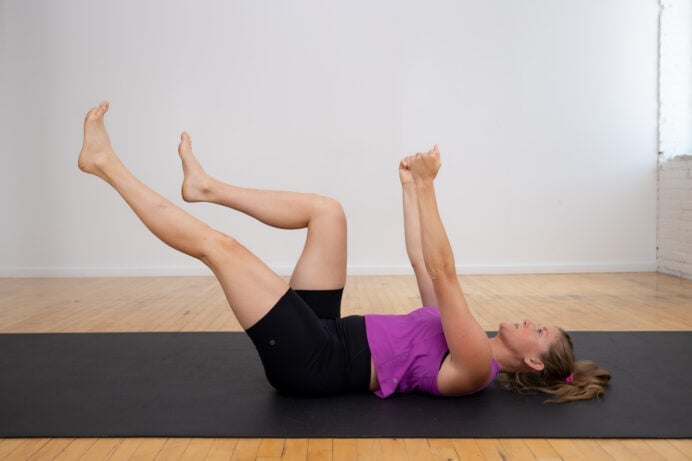
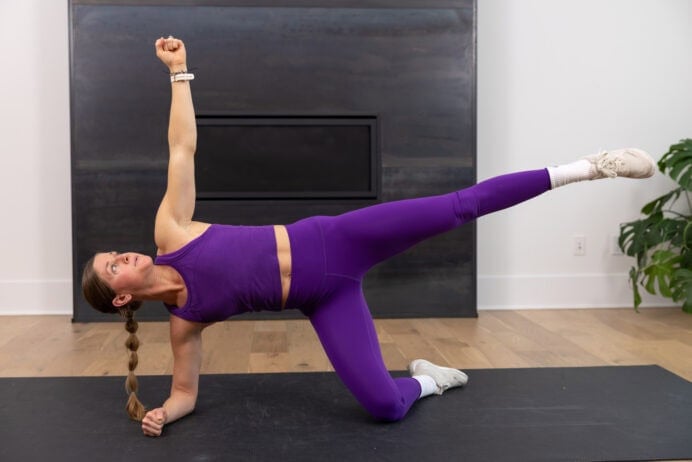
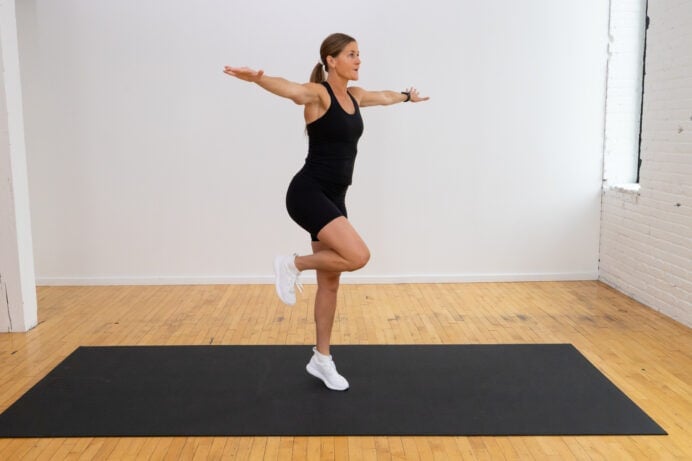



Diastasis Recti Workout Plan (Free 28-Day Program)
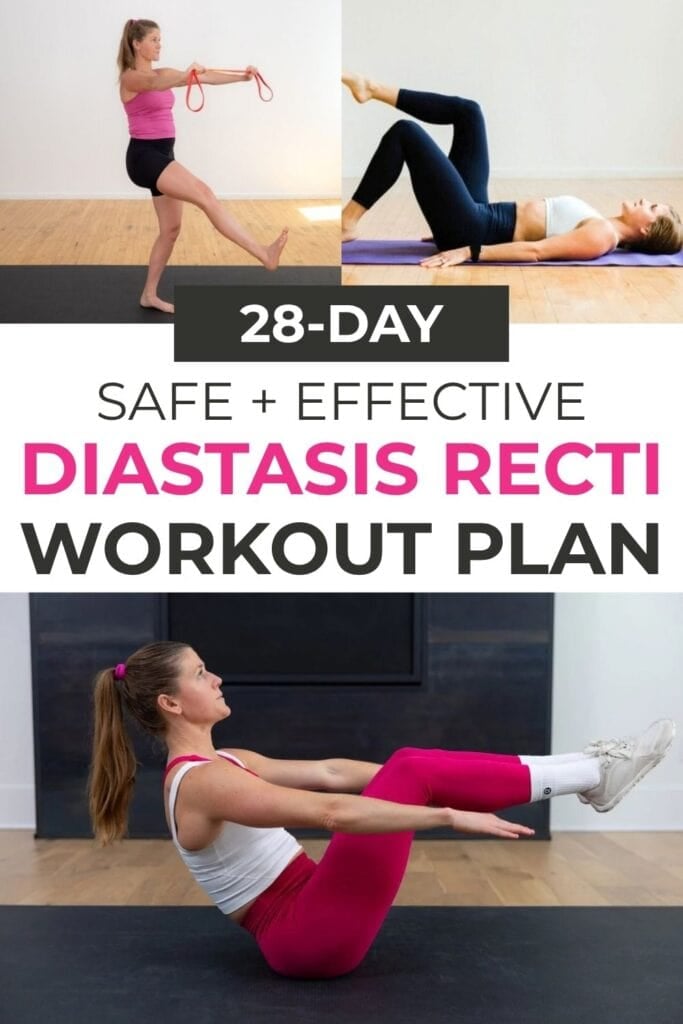
Repair diastasis recti with this free 28-day diastasis recti workout plan, featuring 10-minute at-home workouts designed to rebuild core and pelvic floor strength. Created in collaboration with a pelvic floor physical therapist, this program includes daily guided videos with form cues and modifications to help you reconnect with your core after pregnancy.
Quick Links:
This diastasis recti exercise program was created by Lindsey Bomgren, Certified Personal Trainer and PROnatal Fitness Certified for Prenatal Training and Postnatal Training, in collaboration with my pelvic floor physical therapist, Dr. Sari Abelson, PT, DPT.
Diastasis recti (DR) is a separation of the abdominal muscles and connective tissue that commonly occurs during pregnancy as the belly grows. If you’re unsure whether you have it, here’s how to check for diastasis recti at home.
Before starting this or any postpartum exercise program, get clearance from your healthcare provider and follow their guidance based on your birth experience and recovery.
Once you’re ready, this 28-day plan breaks core work into manageable 10-minute workouts you can follow at home, with guided videos to help you work through each day.
Who This Diastasis Recti Workout Plan Is For
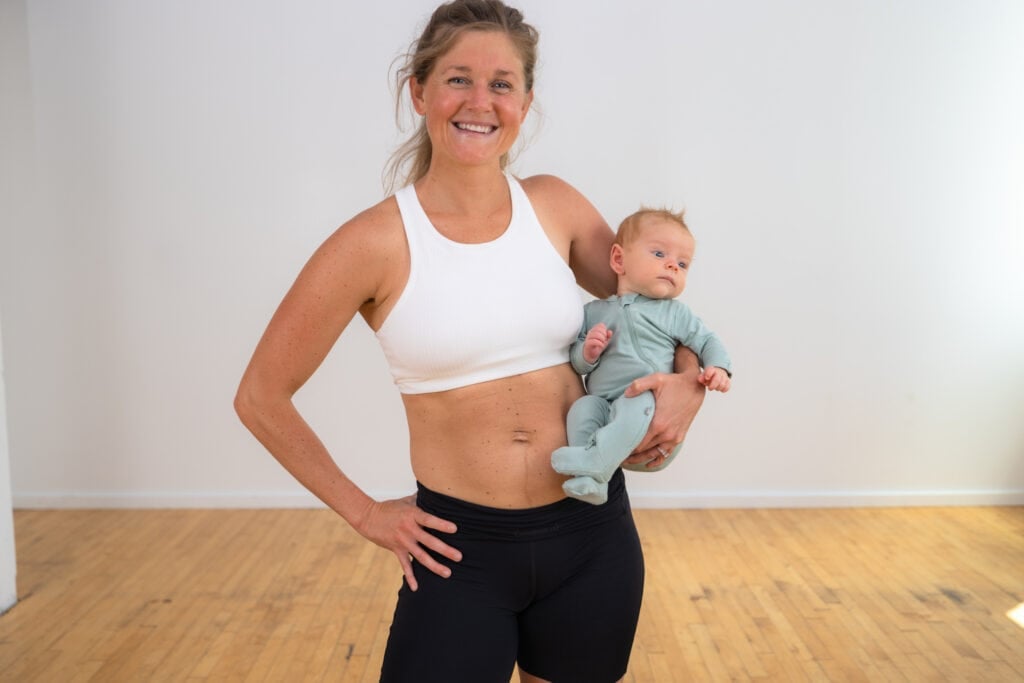
This free 28-day diastasis recti program is designed for moms who are:
- Cleared by their healthcare provider for gentle postpartum exercise.
- Looking for a guided diastasis recti healing program they can do at home in 10 minutes a day.
- Wanting to rebuild core and pelvic floor strength after pregnancy.
- Looking to improve deep core strength and abdominal muscle function.
- A few weeks, months or even years postpartum and ready for a structured plan.
Looking for an easy postpartum snack? These 3-ingredient healthy cookies are perfect for breastfeeding moms.
LET’S GET STARTED
Download Your Free Diastasis Recti Workout Plan (PDF)
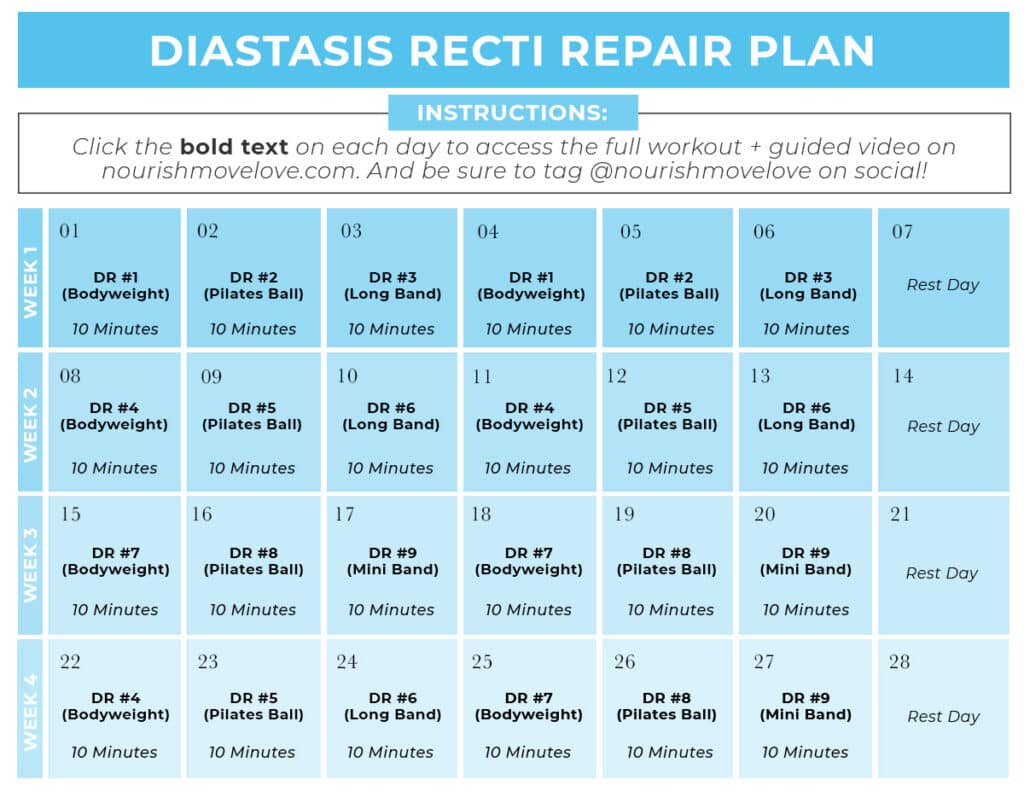
Download the PDF calendar for this 28-day diastasis recti workout plan so you can easily access your daily workouts.
Download Plan
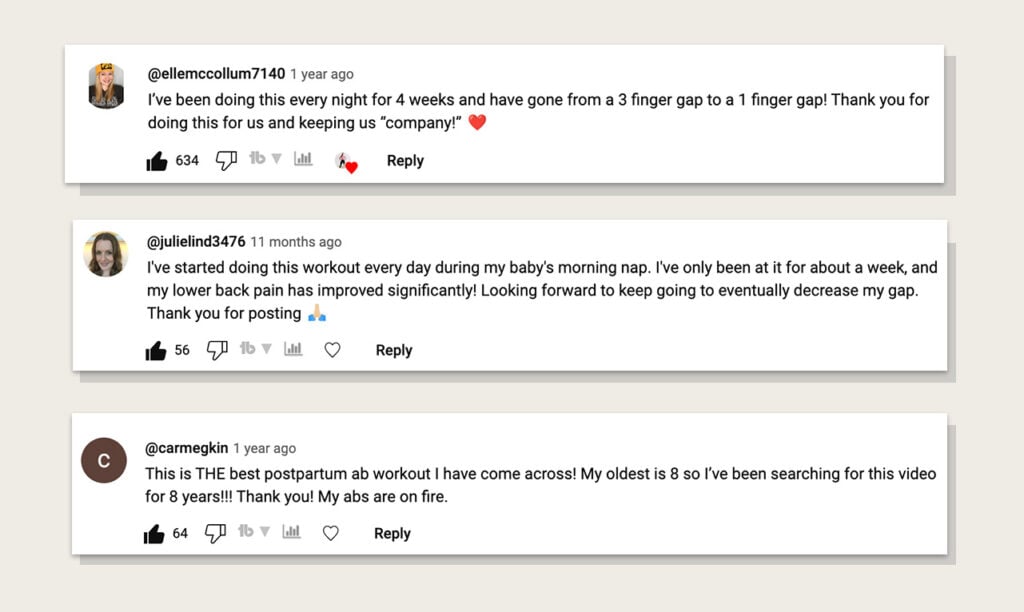
Already completed this challenge? Leave a review!
Week 1
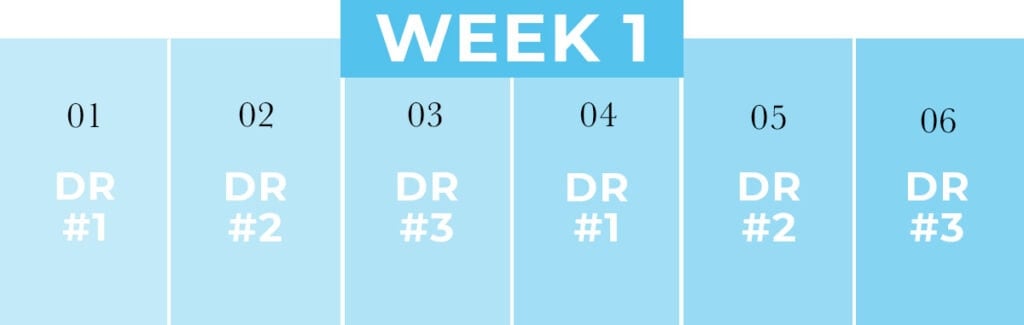
Day 1: 10-Minute Diastasis Recti #1
- Workout Time: 10 Minutes
- Equipment: Bodyweight Only
- YouTube Link: 10-Minute Diastasis Recti Workout (#1)
Day 2: 10-Minute Diastasis Recti #2
- Workout Time: 10 Minutes
- Equipment: Pilates Ball
- YouTube Link: 10-Minute Diastasis Recti Workout (#2)
Day 3: 10-Minute Diastasis Recti #3
- Workout Time: 10 Minutes
- Equipment: Long Loop Resistance Band
- YouTube Link: 10-Minute Diastasis Recti Workout (#3)
Day 4: 10-Minute Diastasis Recti #1
- Workout Time: 10 Minutes
- Equipment: Bodyweight Only
- YouTube Link: 10-Minute Diastasis Recti Workout (#1)
Day 5: 10-Minute Diastasis Recti #2
- Workout Time: 10 Minutes
- Equipment: Pilates Ball
- YouTube Link: 10-Minute Diastasis Recti Workout (#2)
Day 6: 10-Minute Diastasis Recti #3
- Workout Time: 10 Minutes
- Equipment: Long Loop Resistance Band
- YouTube Link: 10-Minute Diastasis Recti Workout (#3)
Rest and Recovery Days
This plan includes one rest day a week to use when you need, but of course, you can take more rest days as needed. That might look like doing nothing, going on a walk or following one of our popular stretching and recovery workouts:
- 8 Stretches to Relieve Back Pain
- 8 Upper Body Stretches for Breastfeeding Moms
- 7 Best Sciatica Stretches
- 5 Best Hip Flexor Stretches
Week 2
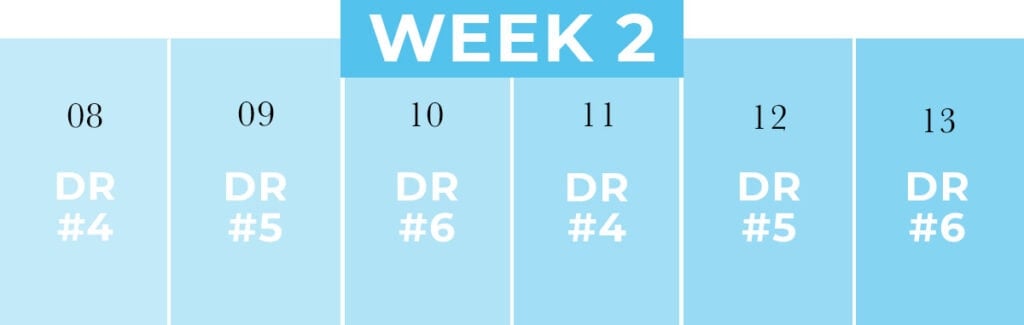
Day 8: 10-Minute Diastasis Recti #4
- Workout Time: 10 Minutes
- Equipment: Bodyweight Only
- YouTube Link: 10-Minute Diastasis Recti Ab Workout (#4)
Day 9: 10-Minute Diastasis Recti #5
- Workout Time: 10 Minutes
- Equipment: Pilates Ball
- YouTube Link: 10-Minute Diastasis Recti Ab Workout (#5)
Day 10: 10-Minute Diastasis Recti #6
- Workout Time: 10 Minutes
- Equipment: Long Loop Resistance Band
- YouTube Link: 10-Minute Diastasis Recti Ab Workout (#6)
Day 11: 10-Minute Diastasis Recti #4
- Workout Time: 10 Minutes
- Equipment: Bodyweight Only
- YouTube Link: 10-Minute Diastasis Recti Ab Workout (#4)
Day 12: 10-Minute Diastasis Recti #5
- Workout Time: 10 Minutes
- Equipment: Pilates Ball
- YouTube Link: 10-Minute Diastasis Recti Ab Workout (#5)
Day 13: 10-Minute Diastasis Recti #6
- Workout Time: 10 Minutes
- Equipment: Long Loop Resistance Band
- YouTube Link: 10-Minute Diastasis Recti Ab Workout (#6)
Week 3
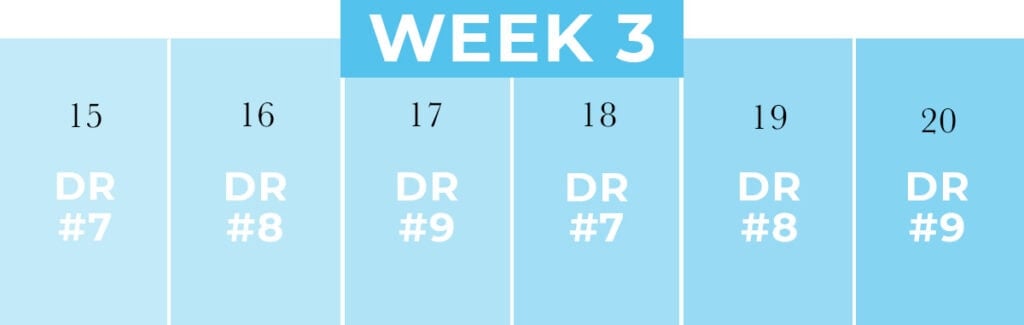
Day 15: 10-Minute Diastasis Recti #7
- Workout Time: 10 Minutes
- Equipment: Bodyweight Only
- YouTube Link: 10-Minute Abs After Baby (#7)
Day 16: 10-Minute Diastasis Recti #8
- Workout Time: 10 Minutes
- Equipment: Pilates Ball
- YouTube Link: 10-Minute Beginner Abs for Women (#8)
Day 17: 10-Minute Diastasis Recti #9
- Workout Time: 10 Minutes
- Equipment: Mini Loop Resistance Band
- YouTube Link: 10-Minute Diastasis Recti Ab Workout (#9)
Day 18: 10-Minute Diastasis Recti #7
- Workout Time: 10 Minutes
- Equipment: Bodyweight Only
- YouTube Link: 10-Minute Abs After Baby (#7)
Day 19: 10-Minute Postpartum Core #8
- Workout Time: 10 Minutes
- Equipment: Pilates Ball
- YouTube Link: 10-Minute Beginner Abs for Women (#8)
Day 20: 10-Minute Diastasis Recti #9
- Workout Time: 10 Minutes
- Equipment: Mini Loop Resistance Band
- YouTube Link: 10-Minute Diastasis Recti Ab Workout (#9)
Week 4
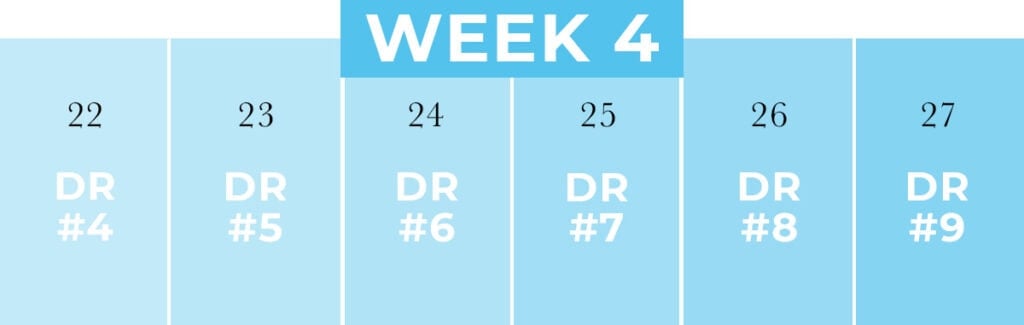
Day 22: 10-Minute Diastasis Recti #4
- Workout Time: 10 Minutes
- Equipment: Bodyweight Only
- YouTube Link: 10-Minute Diastasis Recti Ab Workout (#4)
Day 23: 10-Minute Diastasis Recti #5
- Workout Time: 10 Minutes
- Equipment: Pilates Ball
- YouTube Link: 10-Minute Diastasis Recti Ab Workout (#5)
Day 24: 10-Minute Diastasis Recti #6
- Workout Time: 10 Minutes
- Equipment: Long Loop Resistance Band
- YouTube Link: 10-Minute Diastasis Recti Ab Workout (#6)
Day 25: 10-Minute Diastasis Recti #7
- Workout Time: 10 Minutes
- Equipment: Bodyweight Only
- YouTube Link: 10-Minute Abs After Baby (#7)
Day 26: 10-Minute Diastasis Recti #8
- Workout Time: 10 Minutes
- Equipment: Pilates Ball
- YouTube Link: 10-Minute Beginner Abs for Women (#8)
Day 27: 10-Minute Diastasis Recti #9
- Workout Time: 10 Minutes
- Equipment: Mini Loop Resistance Band
- YouTube Link: 10-Minute Diastasis Recti Ab Workout (#9)
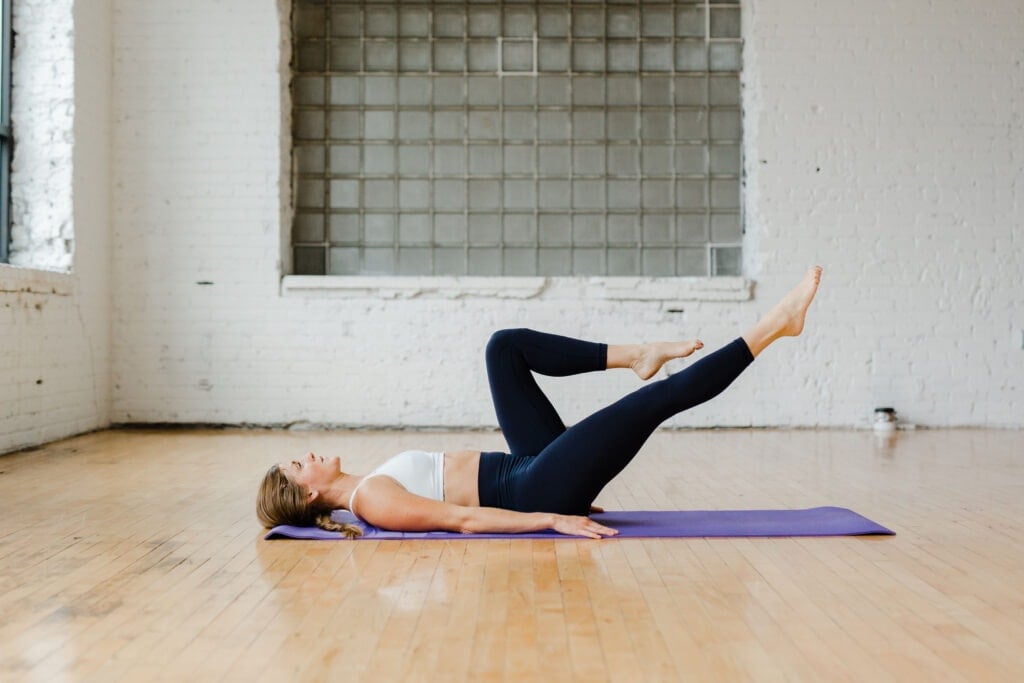
Find This Diastasis Recti Workout Plan on YouTube
 Youtube Playlist
Diastasis Recti Workout Plan Details
1. Gym Equipment Needed:
This equipment is optional but recommended. If you don’t have the equipment available, you can also perform each ab exercise in this program with just your bodyweight.
A Pilates ball. You can also use a kid’s squishy ball or a throw pillow if you don’t have a Pilates ball available.
A long loop resistance band (Discount Code: NML). You can also use a towel if you don’t have a resistance band available.
A mini loop resistance band (Discount Code: NML). You can also use an old sports bra if you don’t have a mini resistance band available.
2. Time Requirement:
10 minutes per day, 6 days per week. Take more rest days as needed.
You can also start with 2-3 days a week and gradually increase as you feel ready. If you’re strength training with diastasis recti, focus on moves you can do with control and follow any guidance from your healthcare provider as you return to exercise.
Show yourself some grace, mama! Do your best and forget the rest. After all, you brought a human into this world. You’re pretty dang strong.
3. Fitness Level:
All fitness levels. The daily workout videos offer exercise variations, modifications and options to increase or decrease the intensity as needed.
4. Cost:
FREE! No sign-up needed; this is a FREE Diastasis Recti Workout Plan.
FAQs
How Do I Know If I Have Diastasis Recti?
Diastasis recti is extremely common during pregnancy and the postpartum period. Symptoms of diastasis recti include a visible bulge or “mommy pooch” that protrudes just above or below the belly button, as well as coning or doming when you contract your ab muscles.
The diastasis, or split, is measured by the number of finger spaces that fit between the rectus abdominis muscles. You can evaluate yourself by following this step-by-step guide.
When Can I Start Diastasis Recti Exercises After Having a Baby?
Every postpartum recovery experience is different. I personally started doing these pelvic floor exercises around 2 weeks postpartum. If you had a C-section, your recovery and return to exercise may look different, so follow your healthcare provider’s guidance on when to start and how to progress rather than jumping into a postpartum challenge.
Before returning to running or HIIT, take the postpartum fitness test to assess your readiness for higher-impact exercise. If you have questions or concerns, reach out to your healthcare provider.
How Often Should You Do Diastasis Recti Exercises?
This 28-day diastasis recti workout program is made up of 10-minute workouts, 6 days a week. Take additional rest days as needed. You can start these exercises for diastasis recti 2-3 days a week if that feels more manageable. Gradually increase the frequency as you feel ready, based on your recovery and your healthcare provider’s guidance.
How Long Does It Take to Heal Diastasis Recti With Exercise?
There’s no set timeline for healing diastasis recti. Every postpartum body and recovery experience is different, and progress depends on factors like the severity of the ab separation and how your core muscles function.
Think of this diastasis recti exercise routine as a starting point for rebuilding core strength, not a guarantee that your abdominal separation will resolve in 4 weeks. After completing the program, you can assess your progress. If you have questions or concerns, a pelvic floor physical therapist can help you evaluate your core function and determine next steps.
Can You Really Fix Diastasis Recti?
Yes, it is possible to improve diastasis recti without surgery. Many postpartum women work to improve an abdominal separation through targeted abdominal exercises and physical therapy, like the exercises in this program.
It’s not just about closing the gap between the abdominal muscles or a flatter stomach. Strengthening the transverse abdominis, the deep core muscles that help support the abdominal wall, can help improve tension across the gap and overall core function. The goal with the best diastasis recti program is to improve how your abdominal muscles work together.
Can I Lift Weights With Diastasis Recti?
Yes, many women with diastasis recti can continue strength training with appropriate modifications. Focus on breathing throughout each movement, exhaling during the effort and avoiding holding your breath or bearing down. Watch for coning or doming along the abdominal wall, which can be a sign that an exercise needs to be modified.
Start with weights and exercises you can control while maintaining good breathing and core tension. If you experience pain, pelvic pressure or heaviness, leaking or other concerning symptoms, stop and consult your healthcare provider. Once you’re ready to build a routine, check out this postpartum workout plan for more guided exercises, including full-body workouts.
When Is It Too Late to Fix Diastasis Recti?
It’s not too late to work on diastasis recti, even if you’re years postpartum. Targeted core exercises can help improve deep core strength and function, regardless of how long it’s been since pregnancy. While results vary from person to person, you can still make progress with consistent, appropriate exercises.
What Happens If Diastasis Recti Goes Untreated?
In some cases, diastasis recti will resolve itself. However, if the separation is severe and not healing on its own, untreated diastasis recti can lead to weakened abdominal muscles, chronic lower back pain, pain during sex, urinary incontinence, pelvic floor dysfunction or pelvic pain.
What Exercises Help Diastasis Recti?
Deep core breathing, pelvic tilts, heel slides, glute bridges and bent-knee marches are common starting points for diastasis recti exercises. These movements target the deep core muscles and help build strength and function in the abdominal wall, including the linea alba, the connective tissue between the abdominal muscles.
Crunches, planks and sit-ups aren’t automatically off-limits, but they may need to be modified depending on your core function. Explore more diastasis recti exercises for additional guidance.
How to Download and Use This Diastasis Recti Workout Plan
- Download the Diastasis Recti Repair Challenge PDF by clicking here, or bookmark this webpage for reference as weekly workouts are outlined above.
- Save this workout calendar to your mobile device home screen for easy access.
- Open this workout calendar PDF in the Safari browser on your phone.
- Tap the bottom arrow in the center of your screen.
- Select ‘Add to Home Screen’.
- Hover over and then click on the bold text each day to access the workout on nourishmovelove.com. Or scroll up to find the daily workouts on YouTube above.
- You can also access all of the home workout videos on this workout challenge calendar on YouTube via this YouTube Playlist: 28-Day Diastasis Recti Program (FREE!).
- Share your daily workouts with me by tagging @nourishmovelove on social and ‘Pin’ the daily workouts on Pinterest so you can do them again.
Wondering Which Program To Do Next?
After completing this 28-day diastasis recti workout plan, you have a few options:
- Repeat this diastasis recti program. This is a great option if you’re still experiencing coning or doming during core exercises or are less than 6 weeks postpartum.
- Advance to my 30-day postpartum workout plan. This plan is designed for moms 6+ weeks postpartum looking for a safe way to return to exercise after pregnancy. It focuses on low-impact strength training and includes core repair exercises.
- Advance to Strong 20. Strong 20 is a low-impact functional strength training program. It’s the next program I recommend after completing the postpartum workout plan.
More Workouts
Postpartum WorkoutsPin This Diastasis Recti Workout Plan
Leave A Review
Your review helps us keep creating free workouts.
Did you love this workout challenge or notice your core strength improving? We would truly appreciate a review! Every single one helps us keep creating free fitness content that supports you in your health journey.
There are no reviews yet. Be the first one to write one.
Note: Before beginning any new exercise program you should consult with your physician or midwife. The information provided with this workout challenge is intended for general information and use; it does not include specific, individualized recommendations and is not intended as medical advice. Before you begin any new exercise program Nourish Move Love, LLC recommends that you consult with your physician. Nourish Move Love, LLC primarily educates clients to assume more personal responsibility for their health by adopting a healthy and active lifestyle.
This post may include affiliate links and I earn a small commission on products purchased using these links. All words and opinions are my own. Thank you for supporting Nourish Move Love.
Leave a Comment
6 comments

Hi,
I’m 16 months postpartum and excited to start. I have diastasis recti after my second child. Should I do this one or the post partum workouts program? Also we are planning to start trying for our third. Is it okay to do these while possibly being pregnant with a third?
Hi Jessica! I’d recommend starting with this diastasis recti program. You can certainly do these workouts while pregnant. -Lindsey
The article provides a good overview of what diastasis recti is and how it can be treated through exercise. The 28-day program is well-structured, with daily guided videos that progressively increase in difficulty. This helps to ensure that participants are gradually building strength and not overexerting themselves.
Overall, the “Diastasis Recti Workout Plan (28-Day Program)” is a well-designed and practical resource for new mothers who are looking to repair their abdominal separation after pregnancy.
Thank you for sharing this means so much! So glad to hear our DR program and resources have been helpful for you and to others to properly build strength to repair the abdominal separation after pregnancy! You are so awesome – keep coming back for more!
Would it be okay to do this program at the same time as the Postpartum Plan? Or should this plan be done on it’s own first?
Danielle! Great question, you can absolutely do the DR Program alongside our 30 Day Postpartum Plan — they pair perfectly together! If you a 6 weeks or less Postpartum we suggest only doing the DR Program, but if you are beyond 6 weeks, you can pair both plans together! -Lindsey