





10-Minute HIIT Workout (Full Body)
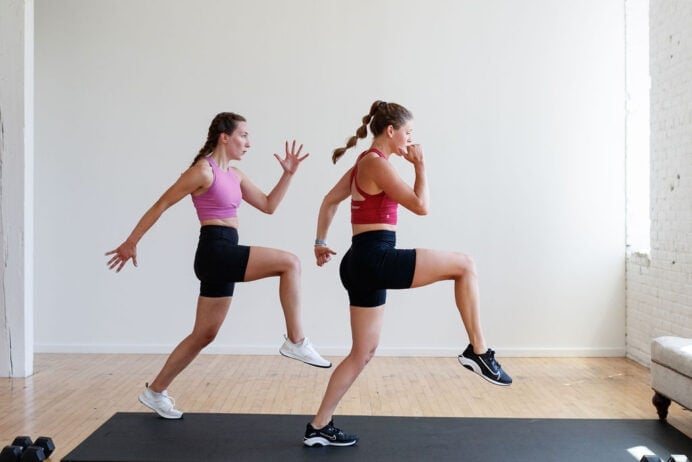
This intense HIIT, full-body cardio workout is designed for fat burning, building muscle and improving cardiovascular health using just bodyweight – no equipment needed. It combines explosive movements like squats, lunges, push-ups, burpees and plyometric jumps to create a powerful cardio HIIT workout that drives endurance, supports well-being and helps burn a lot of calories in a short window of time. As a Max 20 add-on, it works as a high-impact finisher within a structured workout routine, making it a highly efficient home workout option for anyone looking to elevate their exercise routine.
When I program this into the Max 20 plan, I treat it as a short, high-impact finisher after a full-body strength day. I’ll include it 1-2 times per week on non-consecutive days, depending on recovery, to elevate heart rate, support fat burning and fully fatigue the muscles without extending the workout too long. Because Max 20 is designed for efficiency, this 10-minute HIIT format fits perfectly into a busy schedule while still delivering a full-body cardio challenge.
HIIT, or high-intensity interval training, alternates short bursts of all-out effort with brief recovery periods. I’ve found that even a 10-minute HIIT workout can be extremely effective when intensity is high. It challenges both strength and cardiovascular systems in a condensed timeframe while helping build muscle endurance and support overall well-being. These short sessions are efficient for fat burning, improving cardiovascular health and increasing post-workout calorie burn, making them a smart addition to a weekly exercise routine. Over time, consistent HIIT can also support heart health and may contribute to lowering blood pressure when paired with a balanced lifestyle.
I typically include 1-3 short HIIT sessions per week, depending on the rest of my workout routine, making sure I balance them with strength training, mobility work and proper recovery. For me, it’s not about adding more; it’s about using focused, intentional effort to get the most out of each home workout.
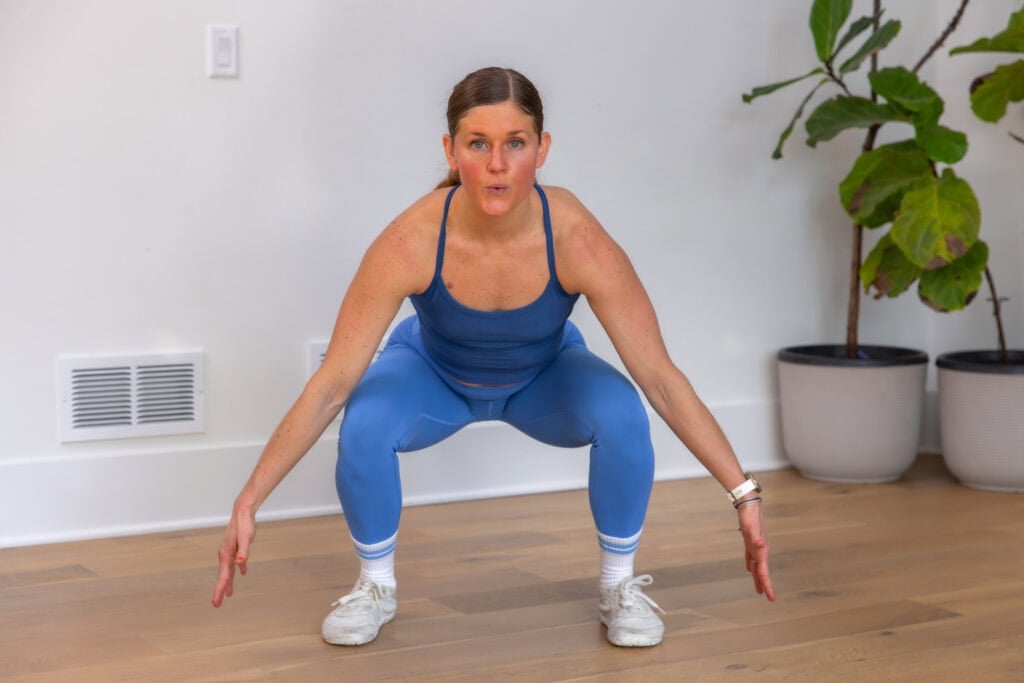
Read A 5-Star Review ⭐⭐⭐⭐⭐
“Love this one. Perfect move break in my home office!”
— Amy W.
Workout Specifics
This high-energy, full-body HIIT training workout is built to elevate heart rate, support fat burning and build muscle without any equipment needed. It includes scalable options so the intensity can be adjusted to match different fitness levels, making it accessible within a wide exercise routine.
This can be added to a workout routine 1-2 times per week, ideally on non-consecutive days, to complement strength training or lower-intensity cardio HIIT work. It also works well as a standalone home workout or as a conditioning finisher after resistance training. If following a structured plan, it’s best used as a supplemental cardio day rather than stacked on heavy training sessions.
This workout may not be suitable for individuals with joint issues, cardiovascular conditions or those recovering from injury unless cleared by a healthcare professional. Beginners should start with lower-intensity modifications and prioritize form, recovery and overall well-being.
Workout Equipment
No equipment needed. You just need your body weight for today’s HIIT workout.
Workout Instructions
Follow along with the guided 10-Min Cardio Workout on YouTube, led by me — your certified personal trainer, Lindsey Bomgren.
Your Workout Looks Like This:
- 3 Circuits (Strength, HIIT, Isometric)
- 3 Exercises Per Circuit
- Timed Intervals (perform each exercise for 40 seconds of work, followed by a 15-second rest period)
- No Repeat (performing each exercise x 1 set)
HIIT Workout Outline
Strength Circuit:
HIIT Circuit:
Isometric Circuit:
1. Rapid Air Squats
Targets: Lower body – glutes, quads, hamstrings, calves and core.
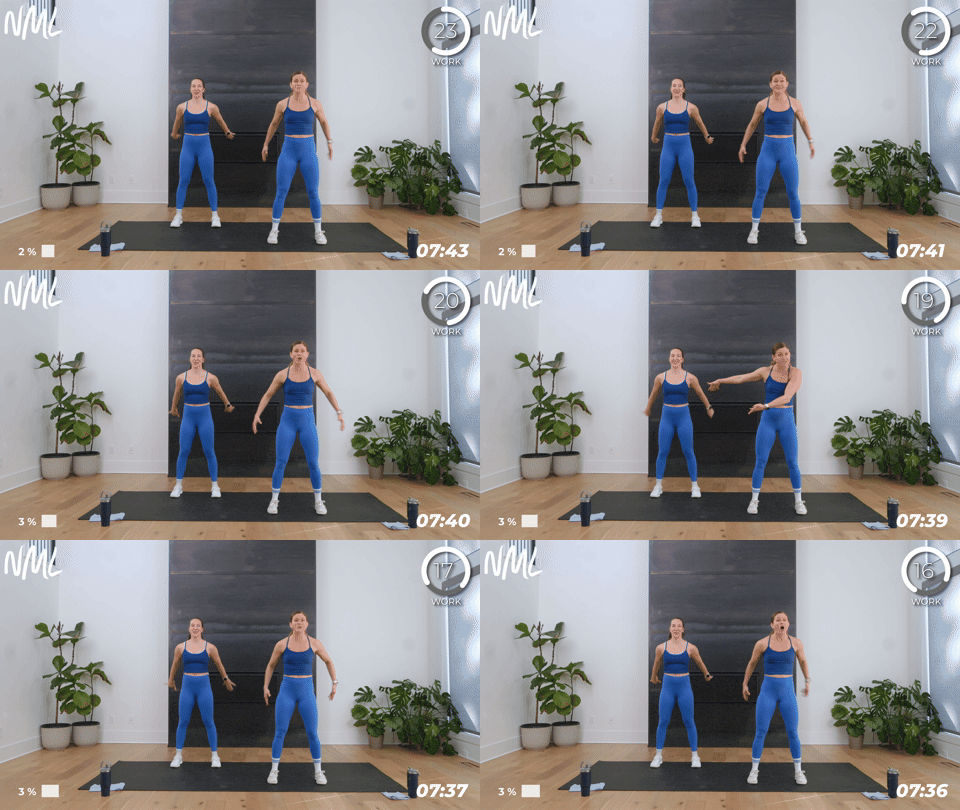
How to Do a Rapid Air Squat
- Start standing with your feet shoulder-width apart, toes slightly turned out and core engaged.
- Lower your hips back and down into a squat, keeping your chest lifted and knees tracking over your toes.
- Drive through your heels to stand up, then immediately lower back into the next squat at a quick, controlled pace.
- Continue moving rapidly while maintaining proper form, keeping your weight evenly distributed and core tight throughout.
Modification: Slow the movement down and reduce the depth of your squat, or use a chair as a target to help guide your range of motion.
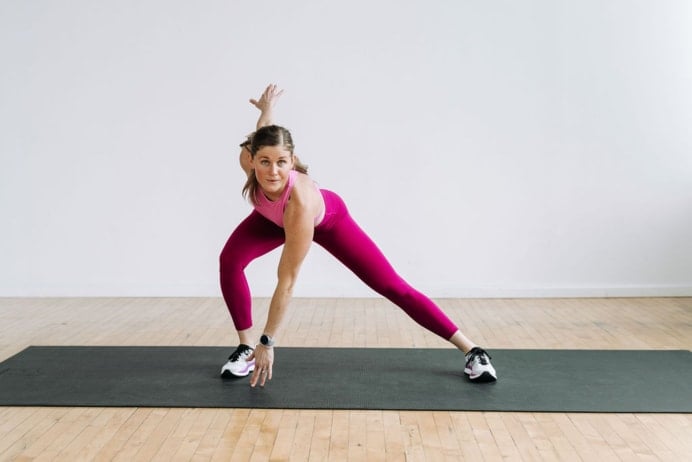
2. Alternating Lateral Lunges
Targets: Lower body – glutes, quads, hamstrings, inner thighs (adductors) and core.
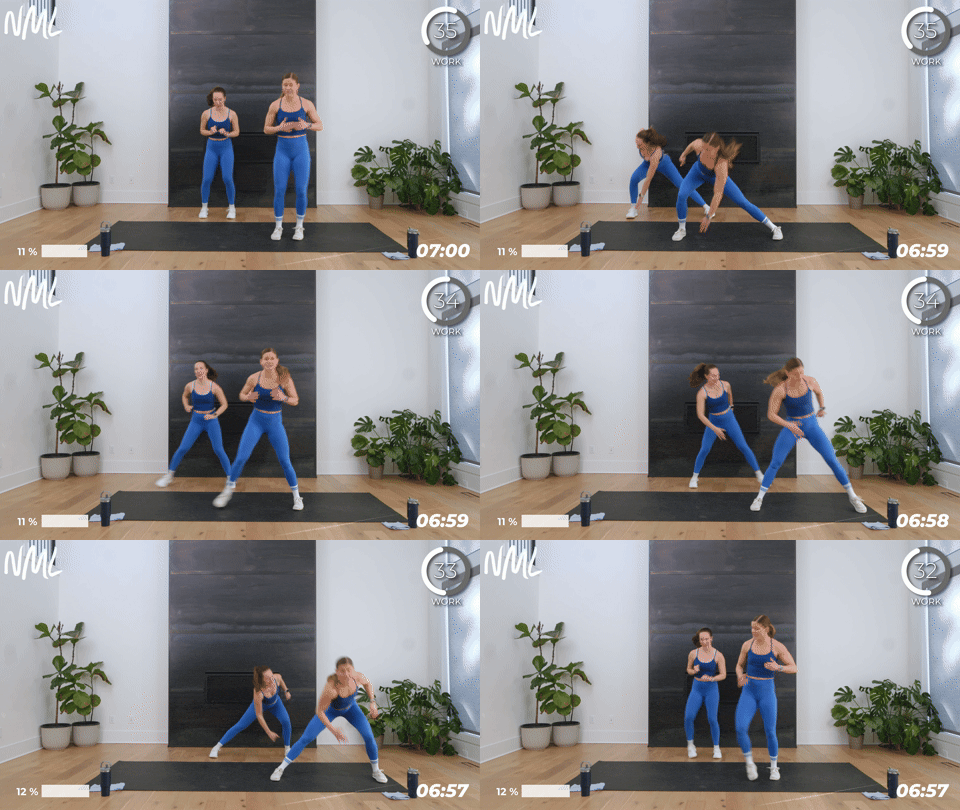
How to Do an Alternating Lateral Lunge
- Start standing tall with your feet together and core engaged.
- Step your right foot out wide to the side, pushing your hips back as you bend your right knee while keeping your left leg straight.
- Lower until your right thigh is nearly parallel to the ground, keeping your chest lifted and weight in your heel.
- Drive through your right foot to return to the center, then repeat on the left side, alternating sides with control.
Modification: Decrease the depth of the lunge and shorten your step width, or hold onto a stable surface for balance and support. If this exercise hurts your knees, sub a modification.
3. Push-Up and Arm Extension
Targets: Upper body – chest, shoulders, triceps; core and stabilizing muscles.
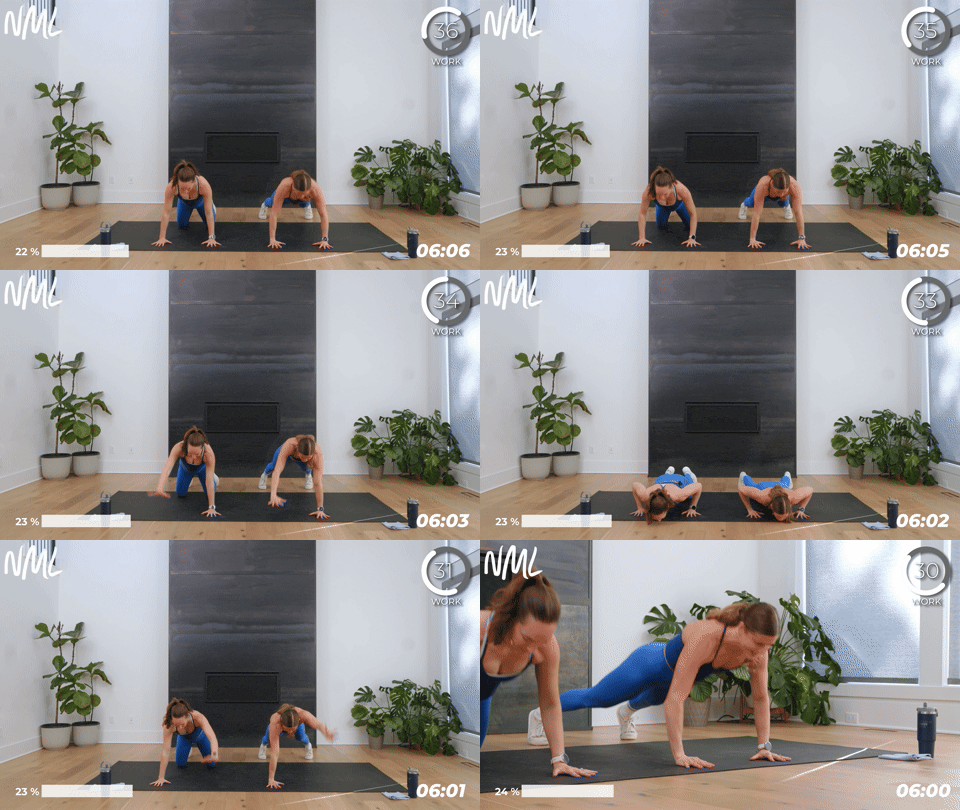
How to Do a Push-Up and Arm Extension
- Start in a high plank position with your shoulders stacked over your wrists, feet hip-width apart, and core engaged.
- Lower your chest toward the ground to perform a push-up, keeping your elbows at about a 45-degree angle from your body.
- Press back up to a strong plank, then extend your left arm straight out in front of you, keeping your hips as stable as possible.
- Place your left hand back under your shoulder, perform another push-up, then extend your right arm forward. Continue alternating arm reaches after each push-up.
Modification: Drop to your knees for the push-up or widen your feet to create a more stable base during the arm extension. If push-ups hurt your wrists, sub a modification.
4. Squat Jumps
Targets: Lower body – glutes, quads, hamstrings, calves; core and power development.
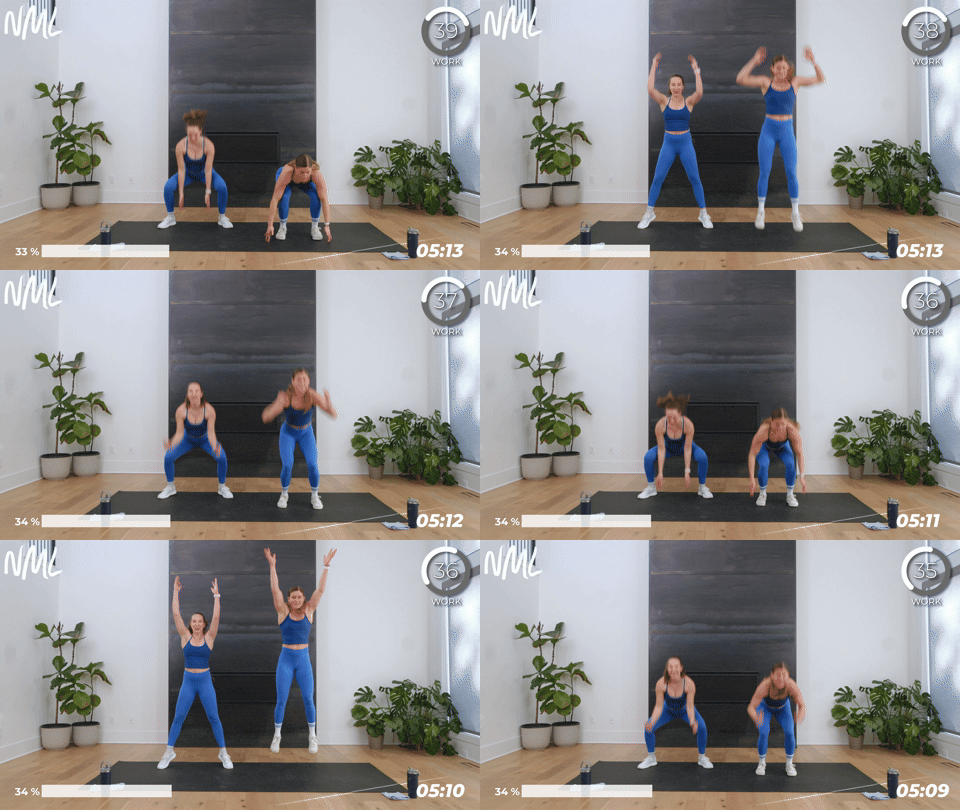
How to Do a Ground Touch Squat Jump
- Start standing with your feet close together, core engaged and chest lifted.
- Lower into a squat, sending your hips back while keeping your knees tracking forward, and reach your fingertips down to lightly brush the ground near your feet.
- Explosively drive through your feet to jump straight up, extending your hips, knees and ankles.
- Land softly with your feet close together, immediately lowering back into the next squat and repeating at a controlled, quick pace.
Modification: Remove the jump and perform a fast squat to calf raise, still reaching toward the ground at the bottom.
5. Lateral Bounds
Targets: Lower body – glutes, quads, hamstrings, calves; hips (abductors/adductors) and core; power and agility.
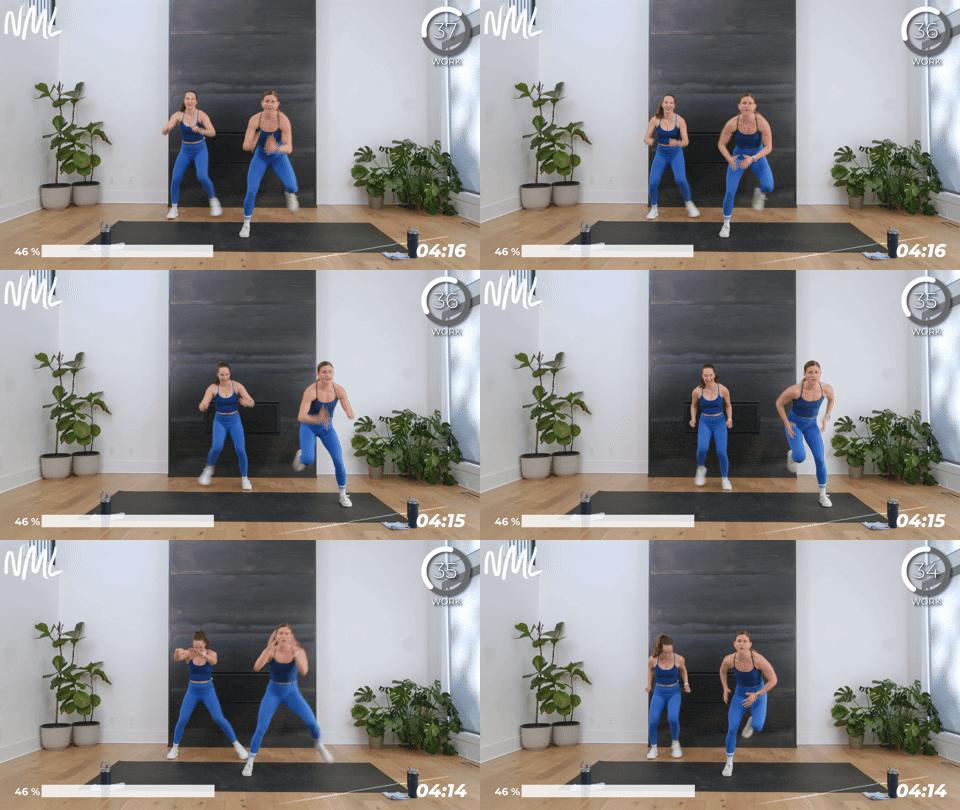
How to Do a Lateral Bound
- Start standing on your right foot with a slight bend in your knee and your core engaged.
- Push explosively off your right leg to jump laterally to the left, landing softly on your left foot while sending your hips back and keeping your chest lifted.
- Absorb the landing with a bent knee, keeping your knee in line with your toes and your opposite leg hovering off the ground for balance.
- Immediately bound back to the right, jumping side to side with control and power.
Modification: Step side to side instead of jumping, focusing on a controlled lateral squat shift rather than explosive movement.
6. Push-Up Burpee
Targets: Full body – chest, shoulders, triceps, quads, glutes, hamstrings; core and cardiovascular system.
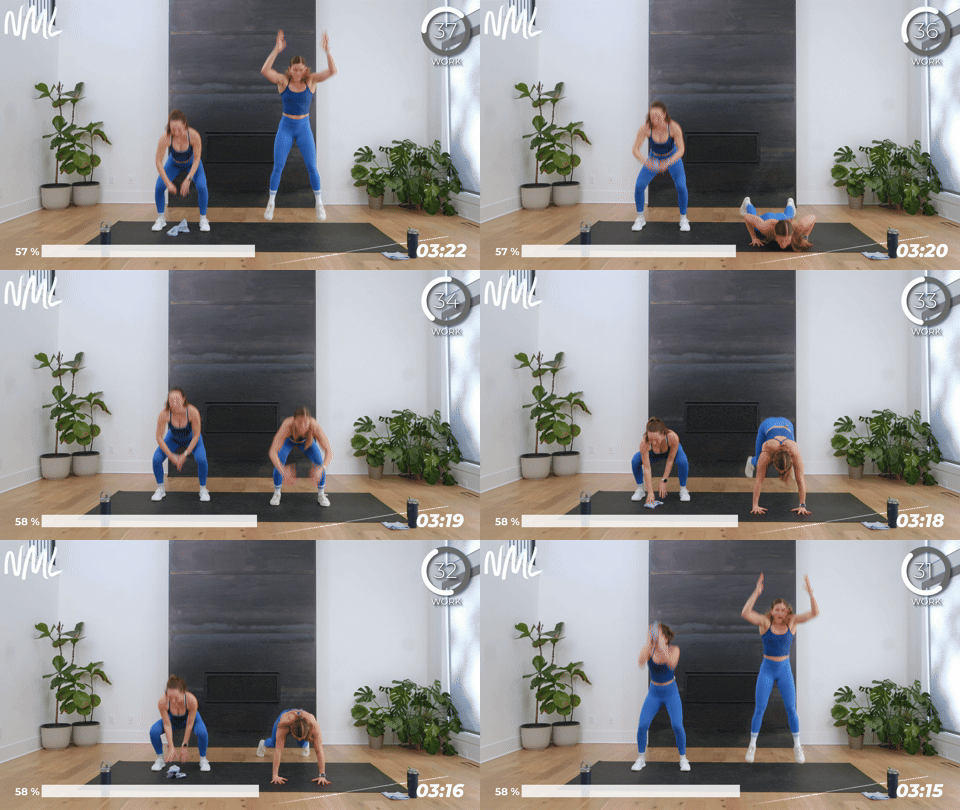
How to Do a Push-Up Burpee
- Start standing with your feet hip-width apart and core engaged.
- Lower your hands to the ground and jump or step your feet back into a high plank position.
- Perform a push-up by lowering your chest toward the floor and pressing back up to the plank.
- Jump or step your feet forward toward your hands, then explosively drive through your feet to jump up, reaching your arms overhead.
- Land softly and immediately flow into the next repetition.
Modification: Step back and forward instead of jumping, and drop to your knees for the push-up to reduce intensity. Alternatively, sub towel slams.
7. Chair Squat Hold
Targets: Lower body – glutes, quads, hamstrings, calves; core stability and muscular endurance.
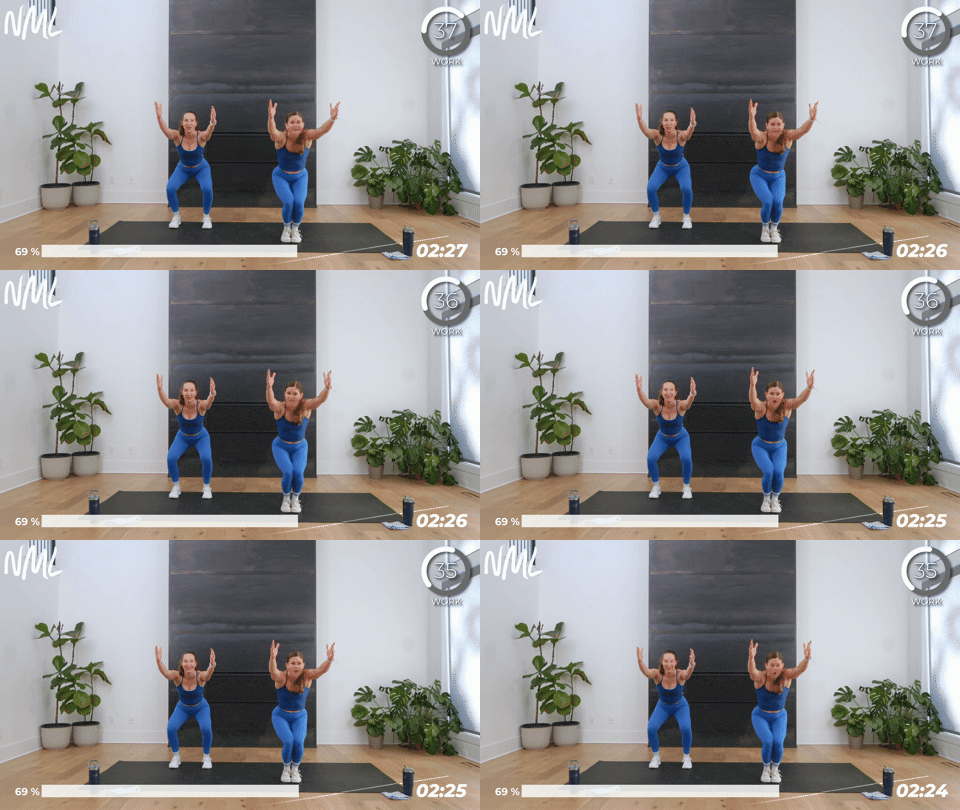
How to Do a Chair Squat Hold
- Start standing with your feet about hip- to shoulder-width apart, core engaged, and chest lifted.
- Lower your hips back and down as if you’re sitting into a chair until your thighs are roughly parallel to the ground, or as close as you can comfortably maintain.
- Hold this position isometrically, keeping your weight in your heels, knees tracking over your toes, and your spine tall.
- Maintain steady breathing and resist the urge to shift forward or collapse in the chest for the full duration of the hold.
Modification: Reduce the depth of the squat or lightly touch a chair or bench with your hips for support while maintaining tension in the legs.
8. Lateral Squat Hold
Targets: Lower body – glutes (especially left side), quads, hamstrings, inner thighs (adductors), calves; core and hip stability.
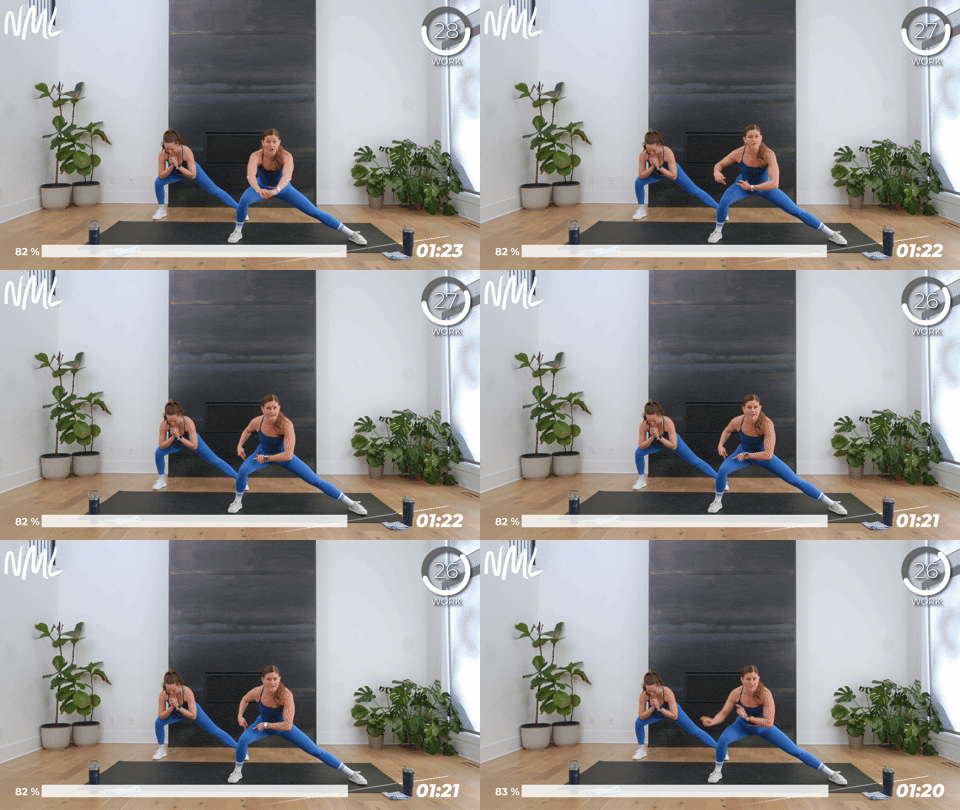
How to Do a Lateral Squat Hold
- Start standing with your feet wider than hip-width apart, toes pointing slightly forward and core engaged.
- Shift your weight to your left side by bending your left knee and sending your hips back, while keeping your right leg extended straight.
- Lower into a lateral squat position until your left thigh is as close to parallel to the ground as comfortable, keeping your chest lifted and your left heel grounded.
- Hold the position isometrically, maintaining tension in your left leg while keeping your right foot flat and your torso upright.
Modification: Reduce the depth of the squat or place your hands on your thighs for support while holding the position.
9. Plank Hold
Targets: Core – abdominals, transverse abdominis; shoulders, chest, back, glutes and stabilizing muscles.
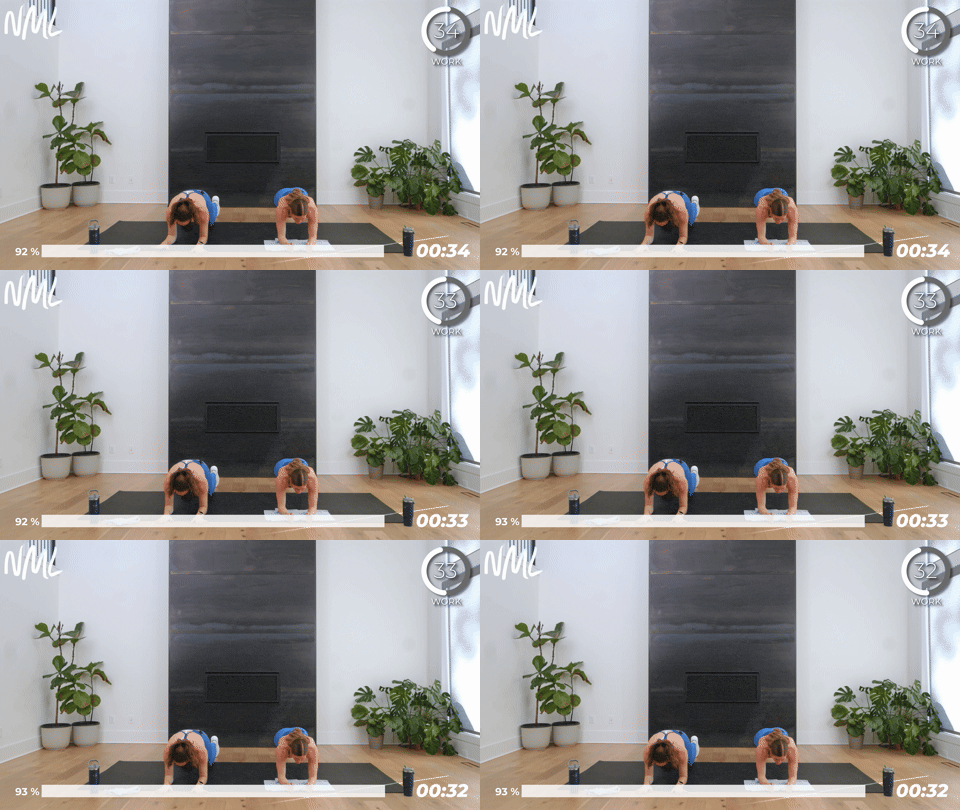
How to Do a Plank Hold
- Start in a high plank position with your hands directly under your shoulders and your body forming a straight line from head to heels.
- Engage your core by drawing your belly button toward your spine and squeezing your glutes to keep your hips level.
- Keep your neck neutral, eyes looking slightly ahead of your hands, and avoid letting your hips drop or lift too high.
- Hold the position steadily while maintaining controlled breathing and full-body tension.
Modification: Drop to your knees while maintaining a straight line from shoulders to knees, or perform the plank on your forearms for added support.
FAQs
Is HIIT suitable for beginners?
Yes, HIIT can be suitable for beginners when it’s scaled appropriately. I always recommend starting with lower-impact modifications, shorter work intervals and longer rest periods to build a solid foundation before increasing intensity.
Can you get fit with a 10-minute HIIT workout every day?
A 10-minute HIIT workout can absolutely be effective, but doing it every day isn’t always the best approach. I’ve found that fitness improves most when HIIT is balanced with strength training, mobility work and recovery days, rather than relying on daily high-intensity sessions.
Is it effective to do HIIT after strength training?
Yes, adding HIIT after strength training can be very effective. I like using it as a finisher to elevate my heart rate, increase calorie burn and fully fatigue the muscles without taking away from my strength work.
Does HIIT raise cortisol levels?
HIIT does temporarily raise cortisol, which is a normal response to intense exercise. In my experience, this isn’t a problem when workouts are programmed thoughtfully and paired with proper recovery, sleep and nutrition.
Are jumping jacks considered a HIIT exercise?
Jumping jacks themselves are a cardio movement, but I use them within HIIT workouts to drive intensity. When performed at a high effort in timed intervals, they absolutely function as part of an effective HIIT session.
More Workouts
HIITPin This 10-Minute HIIT Workout
Leave a Comment
one comment
Thank you for this 10 min HIIT! AND for the great modifications! I am older and have had surgeries over the years and have never been able to recover my previously great condition. I am inspired to begin to improve my endurance and condition. 10 min is doable for me!