





Yoga Exercises: 11 Poses to Try
This yoga exercise roundup includes 11 foundational poses that build total-body strength, improve flexibility and reinforce proper alignment. It’s ideal for beginners learning the basics, but also perfect for anyone who wants to complement strength training or HIIT with smart mobility work. Together, these poses target the core, glutes, shoulders and hips while enhancing balance, recovery and mind-body connection.
Exercise Roundup Specifics
If you’ve done any of my workouts, you know I lean toward intense power flows and athletic, strength-driven training. But even the most high-energy routine benefits from slowing down and mastering the basics. This roundup of 11 yoga poses focuses on foundational movements that build strength, improve flexibility and reinforce proper alignment – perfect whether you’re brand new to yoga or layering it into a tougher training plan.
Think foundational poses like Downward Dog, Warrior II, Triangle, Cat-Cow, Happy Baby, Corpse (Savasana) and Mountain (Tadasana). These are the basic yoga poses for beginners because they show up in almost every class and create the strength and mobility needed for more advanced flows. If you’re starting, Downward Dog is one of the best places to begin because it strengthens the upper body, stretches the posterior chain and teaches you how to connect breath to movement.
To fit these into your yoga practice, aim for 2-3 sessions per week. A beginner session can be just 15 minutes, moving slowly through each pose with intention. You can also use them as a dynamic warm-up before lifting, a mobility-focused recovery day between HIIT workouts or a short finisher to stretch tight muscles.
If you prefer guidance, look for short beginner vinyasa yoga classes, hatha yoga or restorative yoga videos that clearly explain alignment and offer modifications. That instruction can make a big difference when you’re learning proper form.
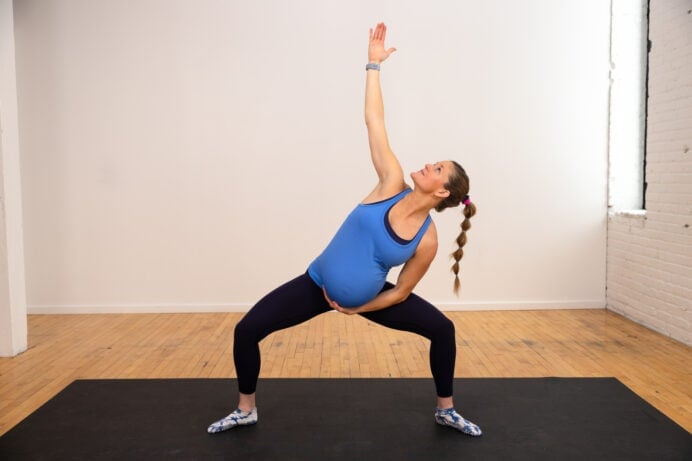
Most healthy individuals can safely practice these poses, but anyone who is pregnant, managing wrist or low-back injuries, or dealing with uncontrolled high blood pressure should consult a healthcare provider and modify as needed.
Necessary Equipment
Optional yoga mat. Otherwise, no equipment is needed to perform these bodyweight yoga exercises.
Instructions
Note that this is a list of my favorite yoga exercises. If you prefer a guided home workout video (complete with a warm-up and cool-down), try this 30-Minute Yoga Sculpt Workout.
How To Use This Yoga Workout:
Flow through these exercises at your own pace. As a general guideline:
- Beginner: Hold each pose for around 15-30 seconds.
- Intermediate: Hold each pose for around 30-60 seconds.
- Advanced: Hold each pose for around 60-90 seconds.
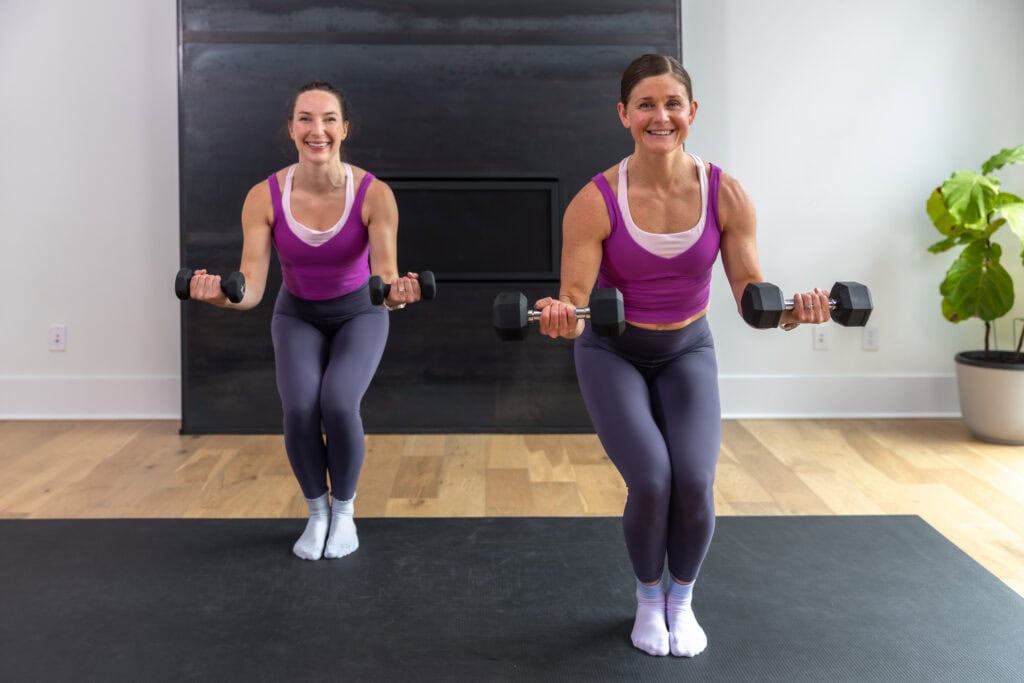
Yoga Poses Outline
1. Downward-Facing Dog to Bear Crawl
Targets: Arms, shoulders, quads, back and core.
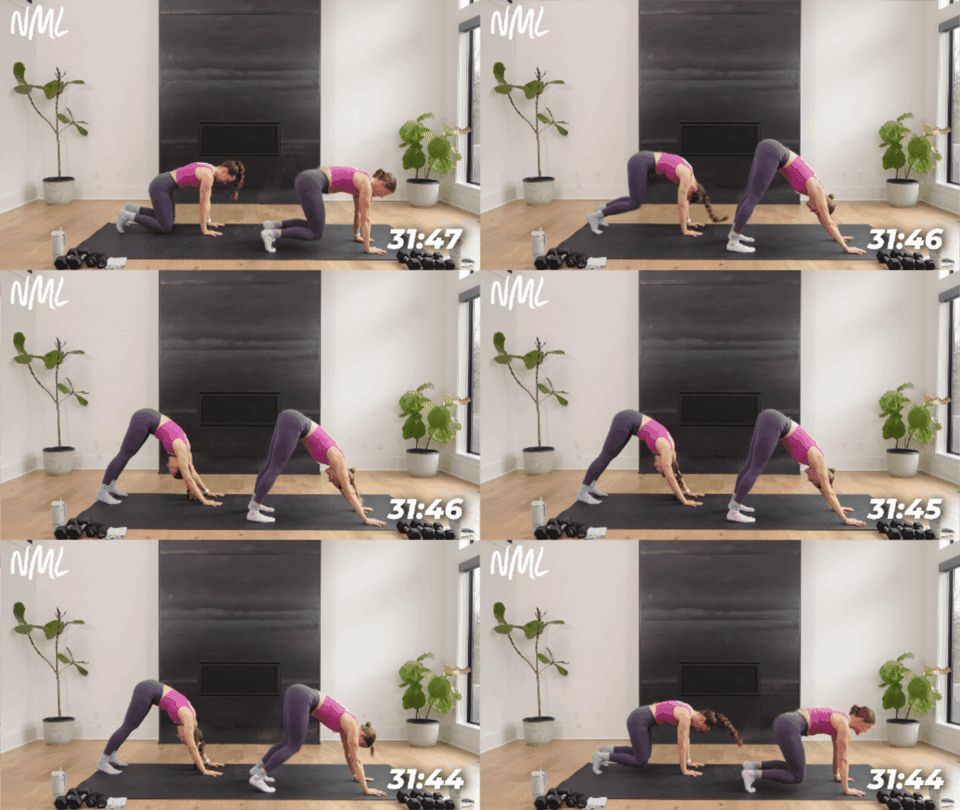
How to Do a Downward-Facing Dog to Bear Crawl
- Start in a tabletop position, quadruped on all fours, shoulders stacked over wrists and hips stacked over knees. Inhale, taking a deep breath as you let your belly slightly drop as you breathe through your midsection.
- Exhale, drawing your abs tight around your torso as you tuck your toes under and lift your knees 1 inch off the mat, finding a bear crawl. Hold for a 3-count.
- Press evenly through your fingers to press your hips back towards the wall behind you, knees straightening. Hold this down dog position, stretching through the backs of your legs.
- On an inhale, bend your knees, returning to a bear crawl hover position.
2. Warrior 2
Targets: Legs, glutes, quads, hamstrings, hip adductors, hip flexors, arms, abs and core.
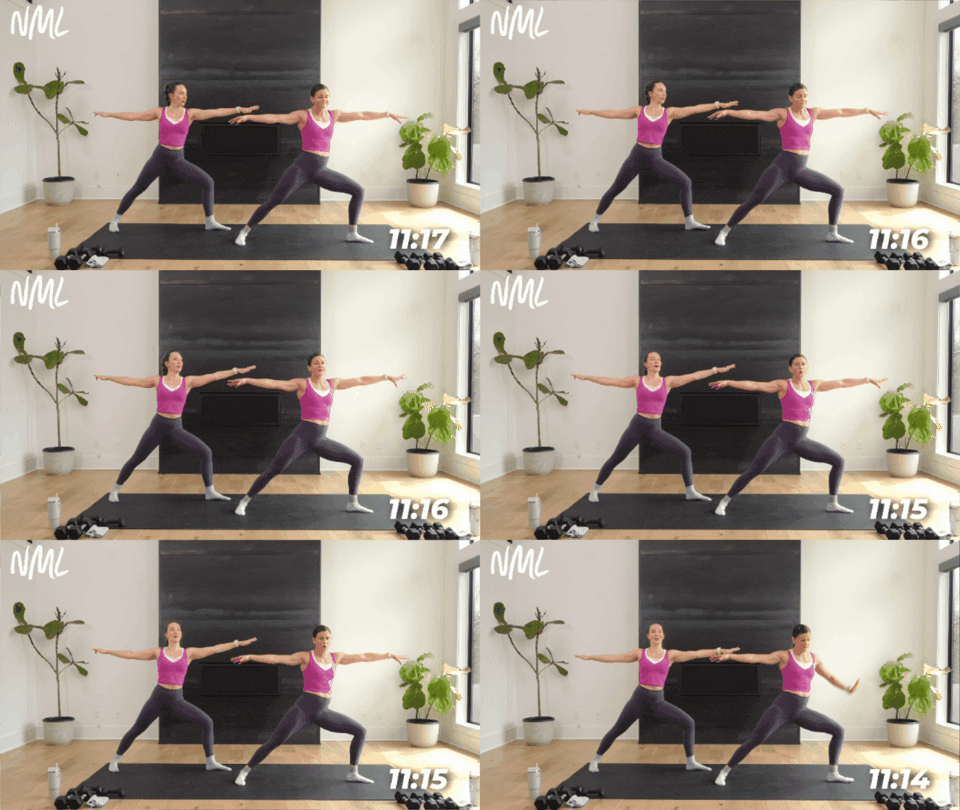
How to Do a Warrior 2 Pose
- Start standing in a wide stance position, feet wider than shoulders and toes facing forward.
- Pivot your left foot out 90 degrees, so your left toes face the front of your mat. Aim to align the heel of your left foot with the arch of your right foot.
- Extend your arms straight out to your sides, arms parallel to your shoulders. Pull your shoulder blades back and down, relaxing them away from your ears and creating length in your neck.
- Bend your left knee into a low lunge. Your left knee should be stacked over your left ankle, left toes pointing straight ahead. Your right leg remains straight. Option to perform a slight backbend to deepen the stretch through your torso.
3. Chair Pose
Targets: Legs, glutes, quads, abs and core.
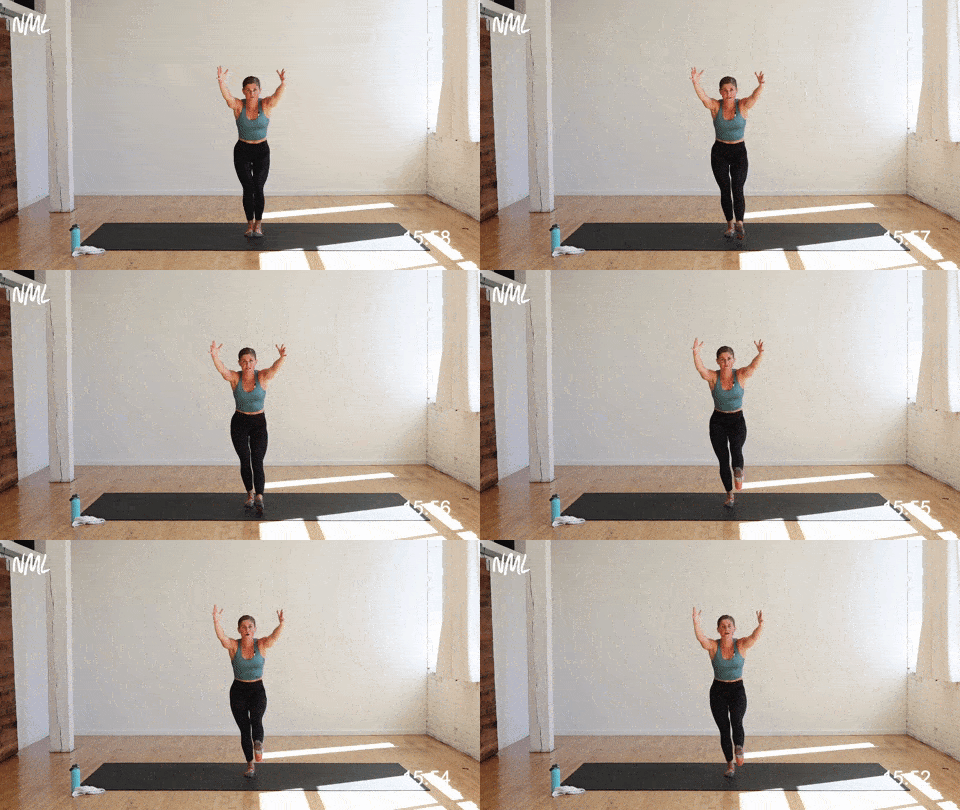
How to Do a Chair Pose (Optional Heel Float)
- Begin standing in Mountain pose, feet together with your big toes touching.
- Inhale and raise your arms above your head, perpendicular to the floor.
- Exhale as you bend your knees, bringing your thighs as parallel to the floor as they can get. Your knees will project out slightly over your feet. Bring your pelvis and hips down as low as you can. This is the chair pose.
- To increase the intensity, shift your weight into your heels. Then, slide the right heel out, toes pointing up.
4. Triangle Pose
Targets: Legs, thighs, hips, hamstrings, shoulders, back, abs and obliques.
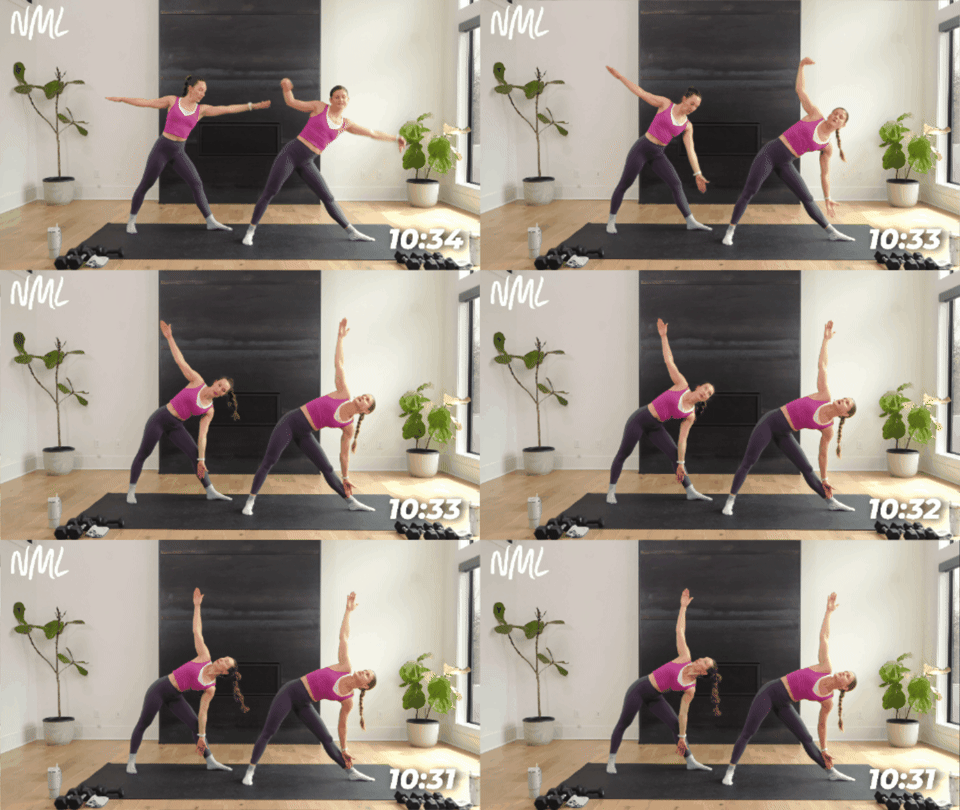
How to Do a Triangle Pose
- Start in Warrior II pose, then straighten your front (left) knee. You may need to step your right foot in slightly more narrow, depending on your range of motion.
- Extend your arms straight out to your sides, palms facing down and hands in line with your shoulders.
- Leading with your left fingertips, reach forward as far as you can, then lower your left hand to your left shin. Stretch your right arm up towards the ceiling, right hand straight overhead and shoulders stacked vertically.
5. Horse Pose
Targets: Inner thighs, outer thighs, glutes, quads and calves.
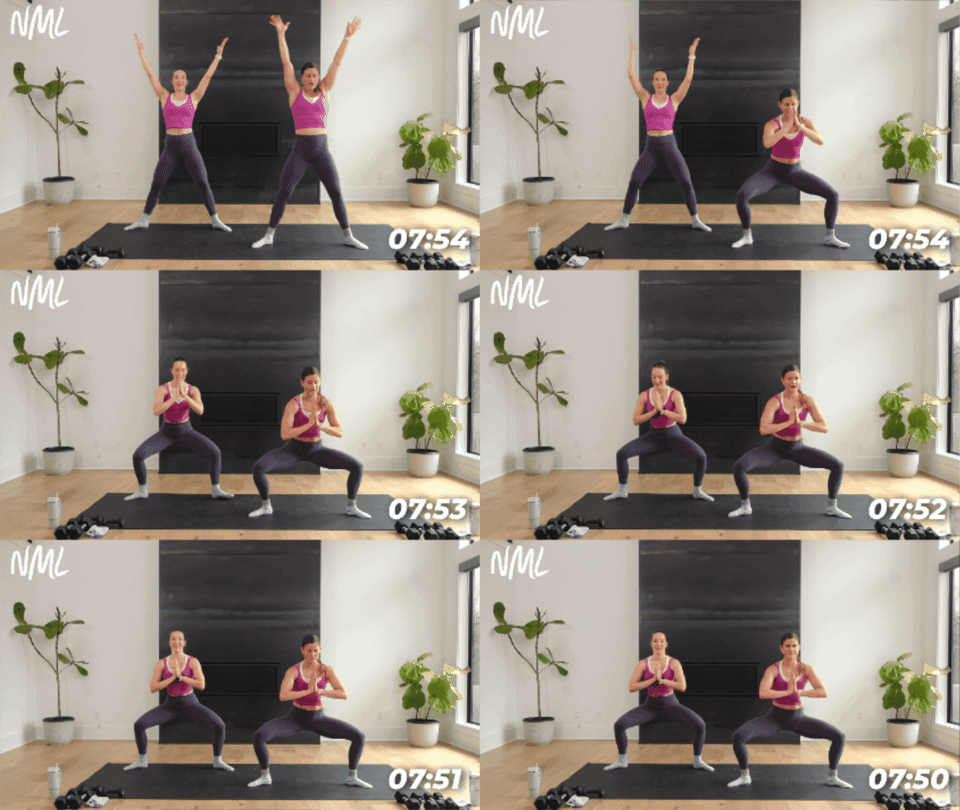
How to Do a Horse Pose
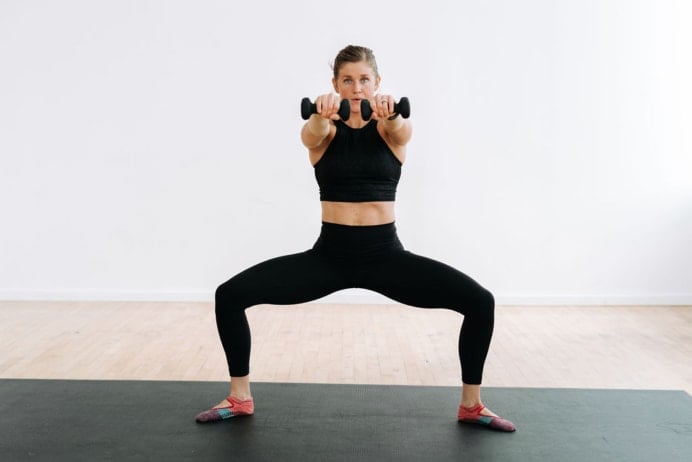
- Stand with your feet wider than your hips, heels in and toes pointed out (horse pose or sumo squat stance).
- Bend your knees to lower down into a squat, pushing your knees out towards your pinky toes as you drop your hips parallel to your knees.
6. Chaturanga Push-Up
Targets: All 3 heads of the triceps muscle, chest, shoulders, upper back, abs and core.
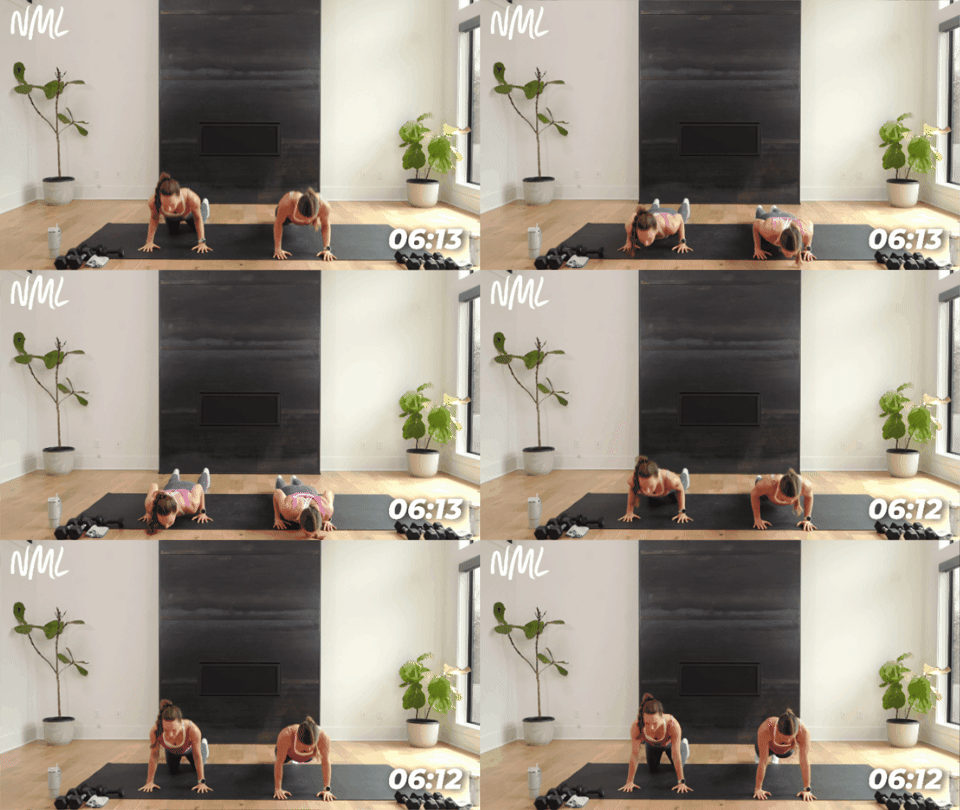
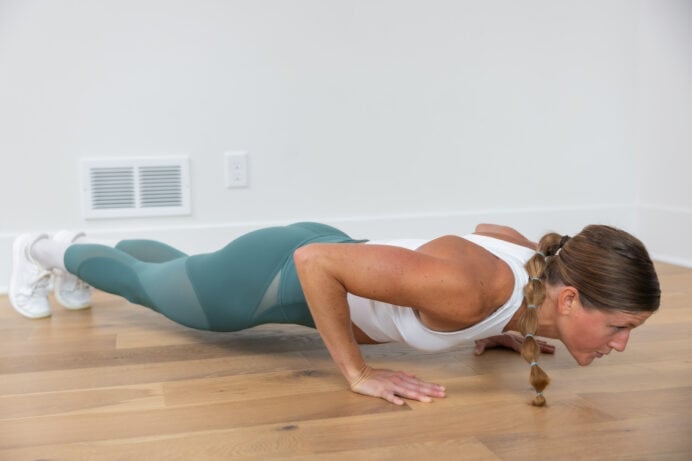
How to Do a Chaturanga Push-Up
- Start in a high plank position with your shoulders stacked over your wrists, weight evenly distributed amongst all 10 fingers. Pull your kneecaps up towards your belly.
- Hold this position, maintaining a straight line with your body, flat back, tight core and neck in line with your spine, gaze slightly in front of you.
- Slowly lower your chest down towards the ground, keeping your elbows pinned to your sides. Keeping your elbows narrow engages your triceps rather than your chest muscles, as a standard push-up would. Maintain a straight line with your body: head, chest and legs in one straight line.
- Once at the bottom of your push-up, exhale as you push back up into high plank.
Modification: Option to add an incline by placing your hands on a chair or bench. Or modify the push-ups by dropping down to your knees. You can also check out this post for more ways to modify push-ups.
7. Child’s Pose to Plank
Targets: Lower back, inner thighs, hips, shoulders, chest, triceps, lats, abs, obliques and core.
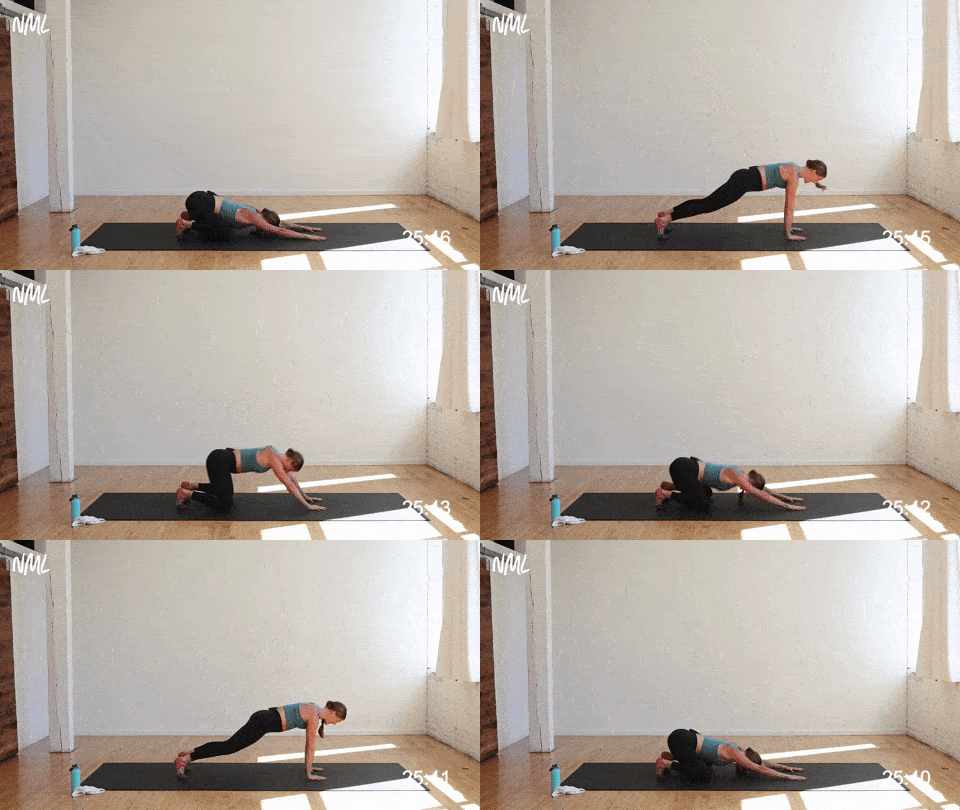
How to Do a Child’s Pose to High Plank
- Start in a high plank position, shoulders stacked over wrists, core engaged, pulling up on your kneecaps to engage your quads. Create a straight line through the torso from head to toes.
- Drop your knees to the mat and shift your weight back. Push your hips back towards your heels to sit back into child’s pose. Keeping your arms extended out away from your body, as you drop your forehead to the mat.
- Take a big inhale in child’s pose.
- On your exhale, push your body forward, returning to the starting position of high plank.
8. Puppy Dog Stretch
Targets: Shoulders, lats, chest (pectoralis major and minor), thoracic spine, neck and core.
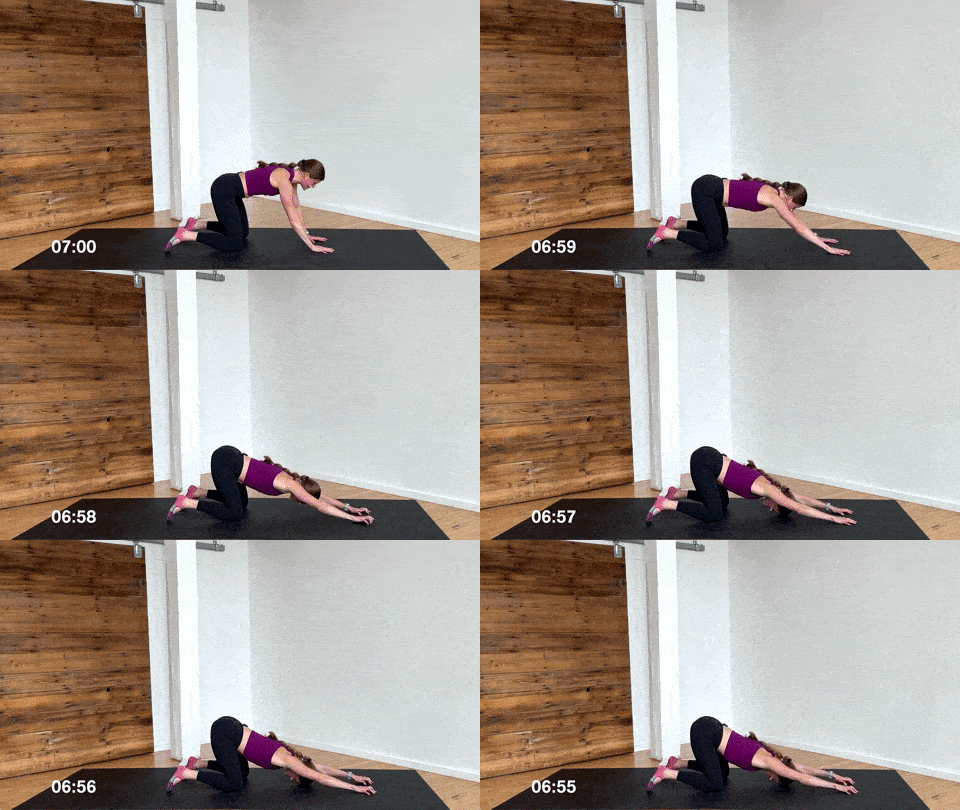
How to Do a Puppy Dog Stretch
- Start in a tabletop position (quadruped) on all fours; shoulders stacked over wrists and hips stacked over knees.
- Walk your hands away from your body, extending them as far out in front of you as possible, while keeping your hips high.
- Hold this position, lengthening from fingertips to tailbone with each exhale.
9. Crescent Lunge
Targets: Legs, thighs, hip flexors, glutes, front torso, chest, shoulders and core.
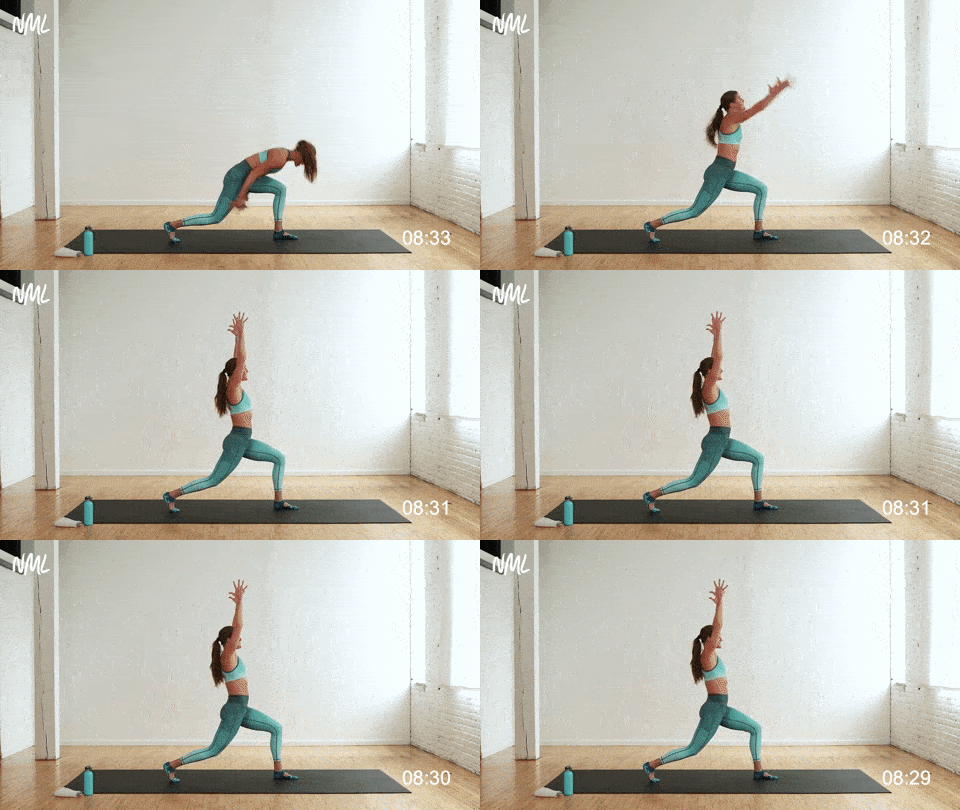
How to Do a Crescent Lunge
- Start in a lunge position, right foot forward, left foot back. Drop your back left knee towards the mat. Your right knee is directly over your right ankle and your front right thigh is parallel to the ground.
- Inhale and bring your arms above your head, keeping the arms in line with your ears.
- To deepen the lunge, press firmly into your feet as you allow your hips to shift forward.
- Exhale to release the hands down, reframe the front right foot, and release the pose.
10. Airplane
Targets: Quads, hamstrings, hips, calves, chest and core.
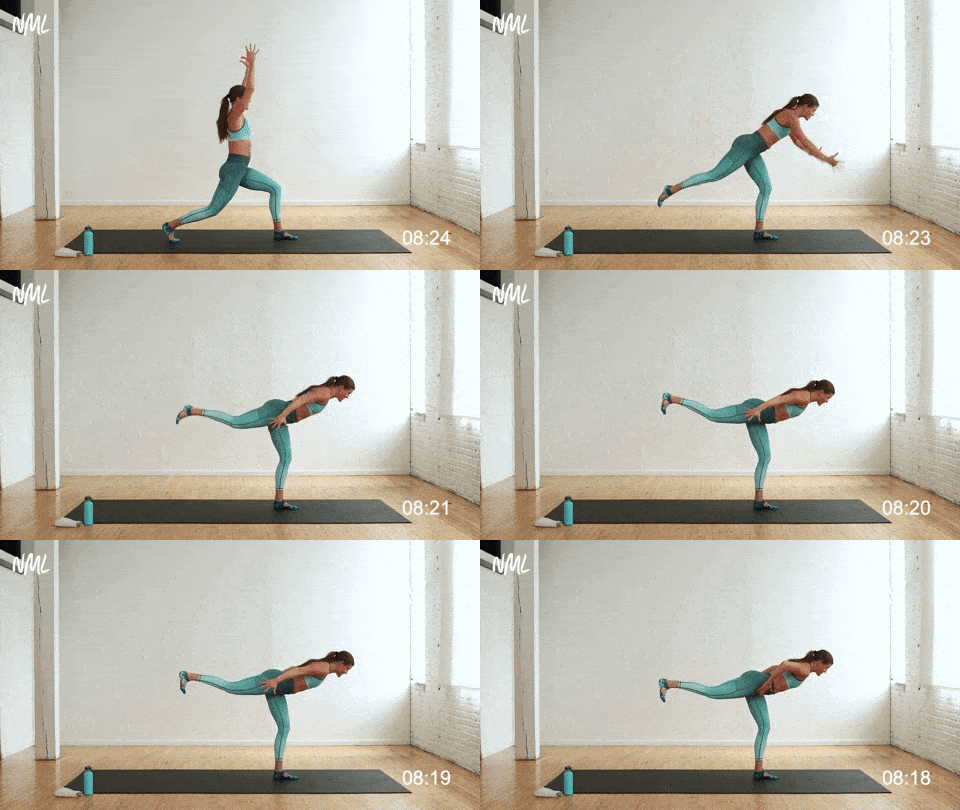
How to Do an Airplane Pose
- Start standing in Mountain pose, feet hip-distance apart, shoulders stacked over hips, arms straight overhead.
- Shift your weight into your right leg, right foot planted firmly on the mat.
- Lift your left leg straight behind you, performing a forward bend at the hips as you balance on the right leg. Your sit bones will shift up towards the ceiling.
- As your torso comes parallel to the mat, the floating left hip should stay square to the mat.
- Extend your arms to your sides or back towards your hips.
- Lengthen the back of your neck so you are looking at the ground, creating a straight line from head to left heel.
Modification: Stand next to a wall or countertop so you can reach out for balance assistance if needed.
11. Cat Cow Stretch
Targets: Spine and lower back. This pose improves blood circulation between the vertebrae of your spine, which is great for relieving lower back pain and stress.
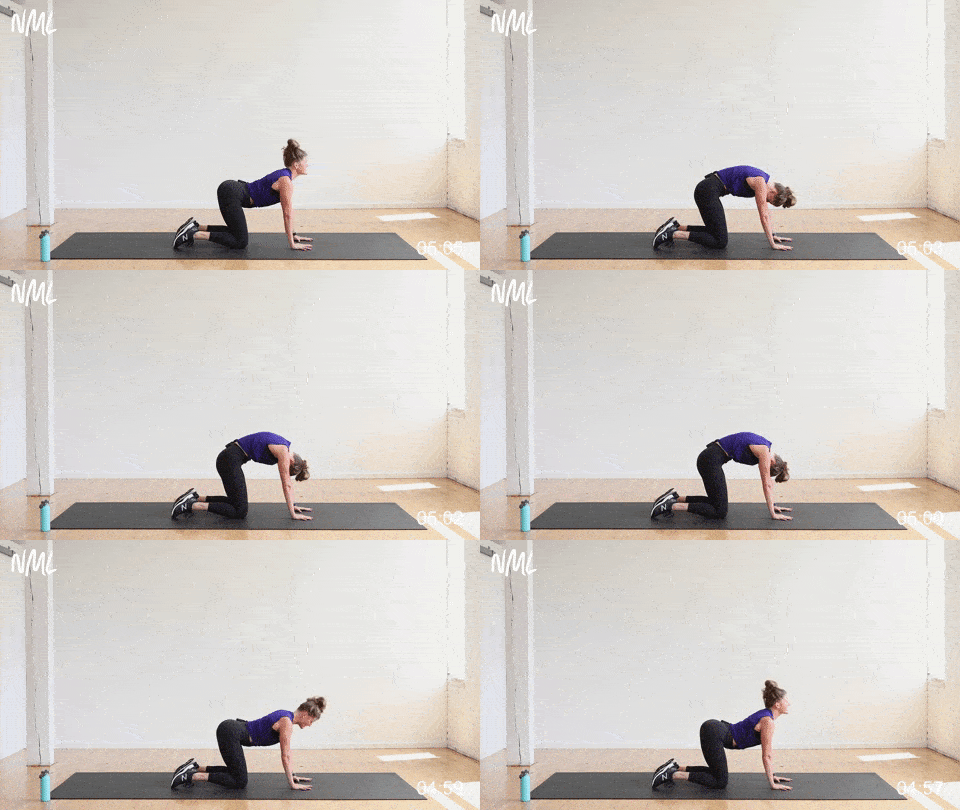
How to Do a Cat Cow Stretch
- Start in a tabletop position (quadruped) on all fours. Shoulders are stacked over wrists, and hips are stacked over knees.
- Find a neutral spine — think of the spine as a straight line connecting the shoulders to the hips. Keep the neck long by looking down and out.
- As you inhale, find an arch pose by curling your toes under and tilting your pelvis back so that your tailbone sticks up. Drop the belly down as you draw your navel in.
- Take your gaze gently up toward the ceiling. This is the cow pose.
- On your exhale, round out for the cat pose. Release the tops of your feet to the floor and tuck your tailbone.
- Draw your navel toward your spine and drop your head, gazing toward your navel.
FAQs
Is 20 minutes of yoga a day enough?
Yes, 20 minutes of yoga a day is absolutely enough, especially for beginners. A focused 20-minute yoga sequence can improve flexibility, build strength and support recovery, and consistency matters more than length when you’re just starting.
Can beginners practice yoga at home safely?
Beginners can safely practice yoga at home as long as they move slowly, focus on proper alignment and choose beginner-friendly classes or videos that offer clear cues and modifications. If you have injuries or medical conditions, it’s smart to check with a healthcare provider before starting.
How often should I practice yoga?
For most people, 2-3 times per week is a great starting point. If you’re using yoga for mobility or stress relief, shorter sessions can be done more frequently, while more intense flows may require rest days between sessions.
What are the benefits of practicing yoga regularly?
Regular yoga improves flexibility, core strength, balance and posture while also supporting muscle recovery and reducing stress. Over time, it can enhance mind-body awareness, improve breathing patterns and complement strength training or cardio workouts. Sun salutation and morning yoga routines offer a great way to start your day with energy and a clear mind.
Can yoga be considered a form of meditation?
Yes, different types of yoga can absolutely function as a form of moving meditation. By linking breath to movement and staying present in each pose, you train focus and mindfulness in a way that feels active rather than still. Many people incorporate yoga routines for its positive impact on mental health and well-being.
More Workouts
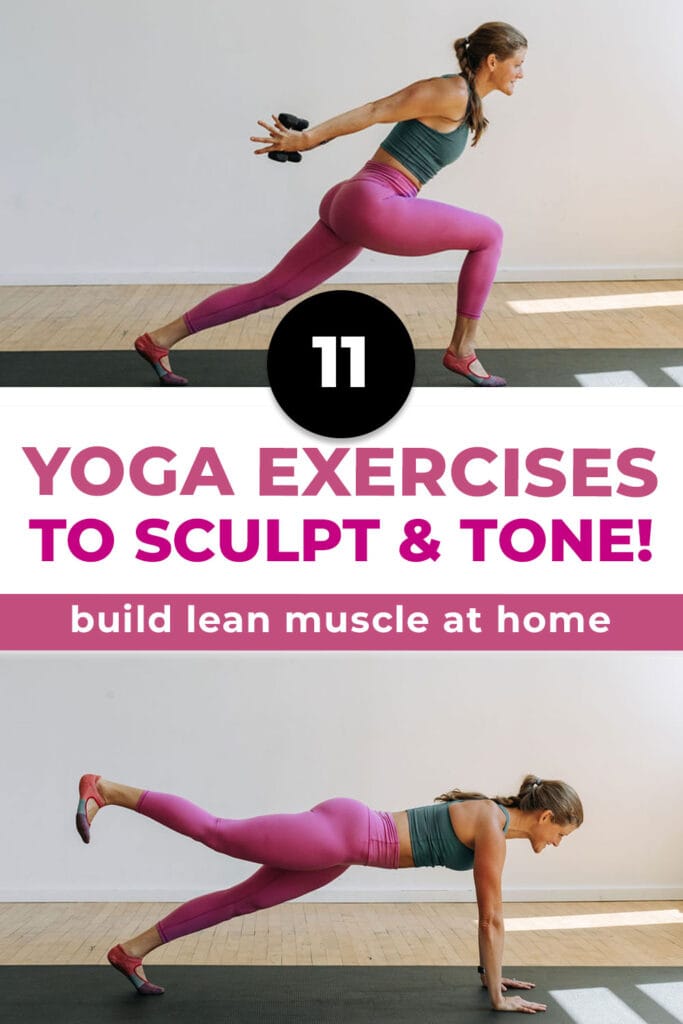
Yoga ExercisesPin This: 11 Yoga Poses to Try
no comments
Leave a Comment