





17 Plank Variations to Strengthen Your Core
As a certified personal trainer focused on functional fitness, building a strong core is at the top of my priority list. While working on your core is a great way to burn belly fat, core stability is the foundation for safe and functional movement in the rest of your body. This plank workout is great for beginners or more advanced athletes who are tired of doing sit-ups and standard planks. These plank variations will challenge multiple muscle groups throughout the whole body, ensuring you won’t get bored or burn out while working the most important muscle group you have.
Plank variations are a great way to seriously challenge your core and your perseverance! These movements can be tough, but are super beneficial. Most movements start on the ground or from a push-up position, making them low-impact on the joints. Adding these plank variations to your current exercise program is a great way to jumpstart your journey to a stronger, more stable core.
What to Know About These Exercises
Traditional planks are static holds, while these variations are a mix of isometric exercises and calisthenic movements, and they mirror some pilates movements. While not quite cardio, these movements will challenge your muscular endurance and can be used after your normal cardio routine.
I recommend adding them to the end of your strength workout 2-3 times a week.
Equipment to Have on Hand
Optional light-to-medium dumbbells for weighted exercises.
Instructions
Choose 4-6 exercises from the list below. Then perform:
- Beginners: Aim for 2-3 sets of 8-10 reps
- Intermediate: Aim for 3-4 sets of 10-12 reps
- Advanced: Aim for 4-6 sets of 12-15 reps
Rest for approximately 60 seconds between sets.
Plank Variations Outline
- Mountain Climber
- Plank Knee Drive
- Plank Sprinter
- Plank Knee Tucks
- Plank Dumbbell Drag
- Plank and Row (Renegade Row)
- Weighted Side Plank Hip Dips
- Forearm Plank Arm Extensions
- Side Plank
- Side Plank with Abduction
- Reverse Plank Walk Out
- Bird Dog
- Forearm Plank Knee Drop
- Plank Army Crawl and Crossbody Knee Drive
- Bear Crawl Shoulder Tap
- Advanced Clam and Side Plank Crunch
- Plank Jack
1. Mountain Climber
Targets: Upper abs, lower abs, obliques, shoulders, glutes and thighs.
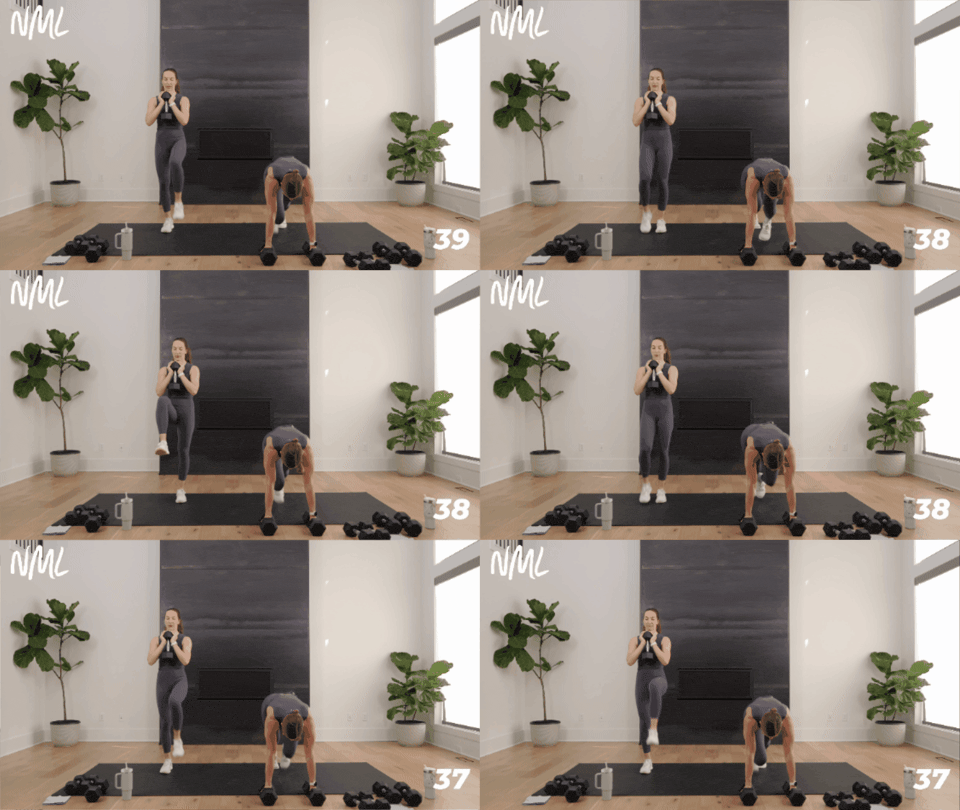
How to Do a Mountain Climber
- Start in a high plank position with your shoulders stacked over your wrists, and your weight evenly distributed among all 10 fingers. Pull your kneecaps up towards your belly.
- Hold this position, maintaining a straight line with your body, gaze slightly in front of you.
- Drive your right knee towards your left elbow before quickly driving your left knee towards your right elbow.
- Continue this pattern, alternating knee drives towards your chest at a rapid pace, as if “running” in a plank position.
Modification: Perform standing goblet marches.
2. Plank Knee Drive
Targets: Core (rectus abdominis and obliques), shoulders, chest, arms and hip flexors.
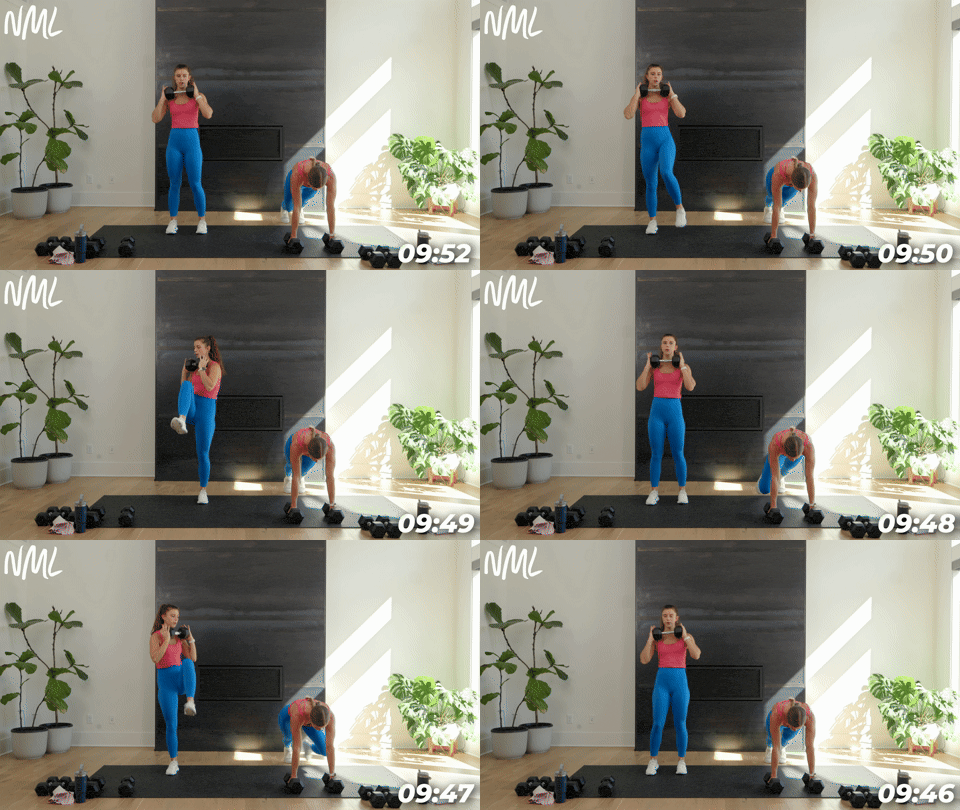
How to Do a Plank Knee Drive
- Start in a high plank position, with your hands gripping a pair of dumbbells directly under your shoulders, arms straight and body forming a straight line from head to heels.
- Engage your core, keeping your hips level and your back flat.
- Drive your right knee toward your chest, keeping your spine neutral and your shoulders steady over your wrists.
- Extend your right leg back to the starting plank position.
- Repeat with your left knee, driving it toward your chest, then returning to the plank.
- Continue alternating knee drives at a controlled pace. If you want to make this a high-intensity exercise, pick up the pace and perform mountain climbers.
Modification: If you experience wrist pain during planks, place your hands on a pair of dumbbells. For a standing option, perform alternating cross-body crunches.
3. Plank Sprinter
Targets: Lower abs, core, hip flexors, glutes, shoulders, chest and arms.
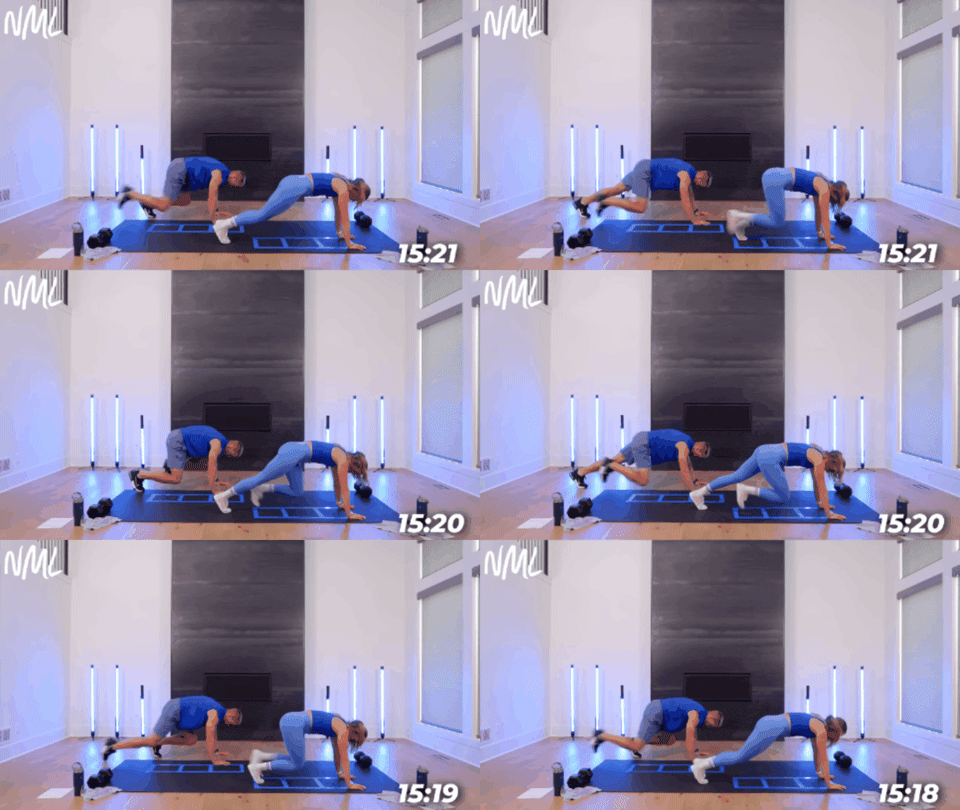
How to Do a Plank Sprinter
- Start in a high plank position with your shoulders stacked over your wrists, legs extended long and body forming a straight line from head to heels. Engage your core, keeping your hips level and back flat.
- Step your right toes in, right knee bent to 90 degrees and hovering off the ground, then drive your left knee towards your chest.
- Reverse the movement, returning to high plank position.
- Repeat, alternating lead legs on the next rep.
4. Plank Knee Tucks
Targets: Lower abs, core, hip flexors, glutes, shoulders, chest and arms.
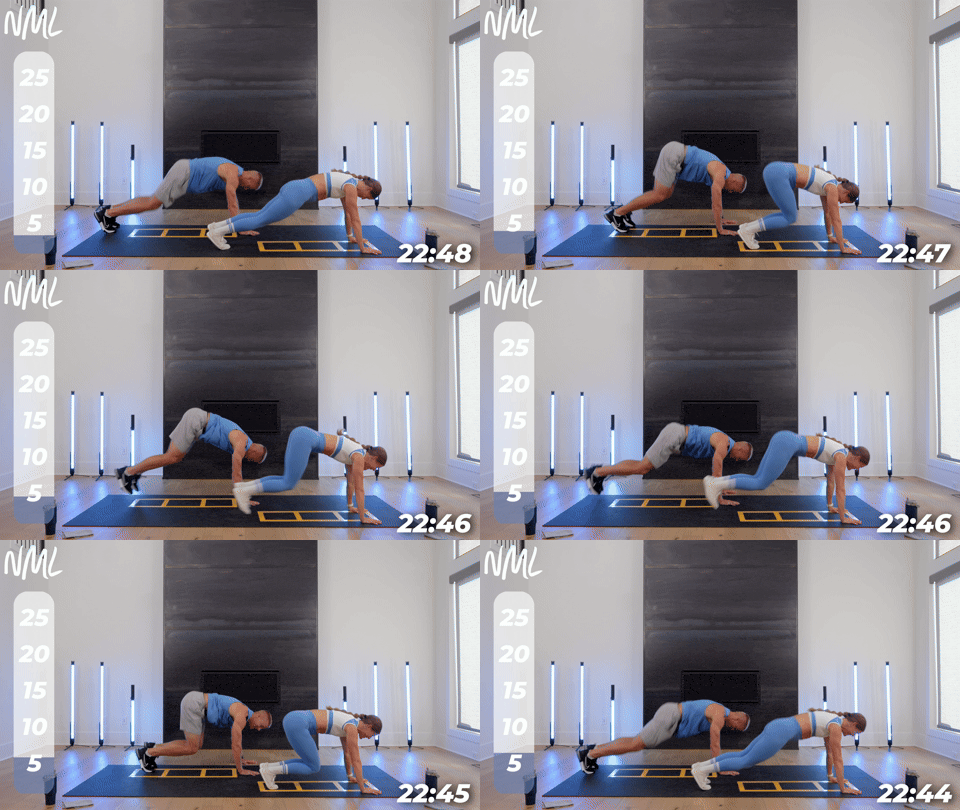
How to Do a Plank Knee Tuck
- Start in a high plank position with your shoulders stacked over your wrists, legs extended long and body forming a straight line from head to heels. Engage your core, keeping your hips level and back flat.
- From here, lightly jump both knees in toward your chest, keeping your toes off the ground and your core tight.
- Jump your feet back out to return to your high plank position.
- Maintain a steady pace and controlled movement throughout, focusing on keeping your shoulders over your wrists and avoiding sagging or piking the hips.
Modification: Option to perform a downward-facing dog to high plank or downward-facing dog to tabletop with your knees hovering off the mat.
5. Plank Dumbbell Drag
Targets: Chest, shoulders, triceps, abs and core muscles.
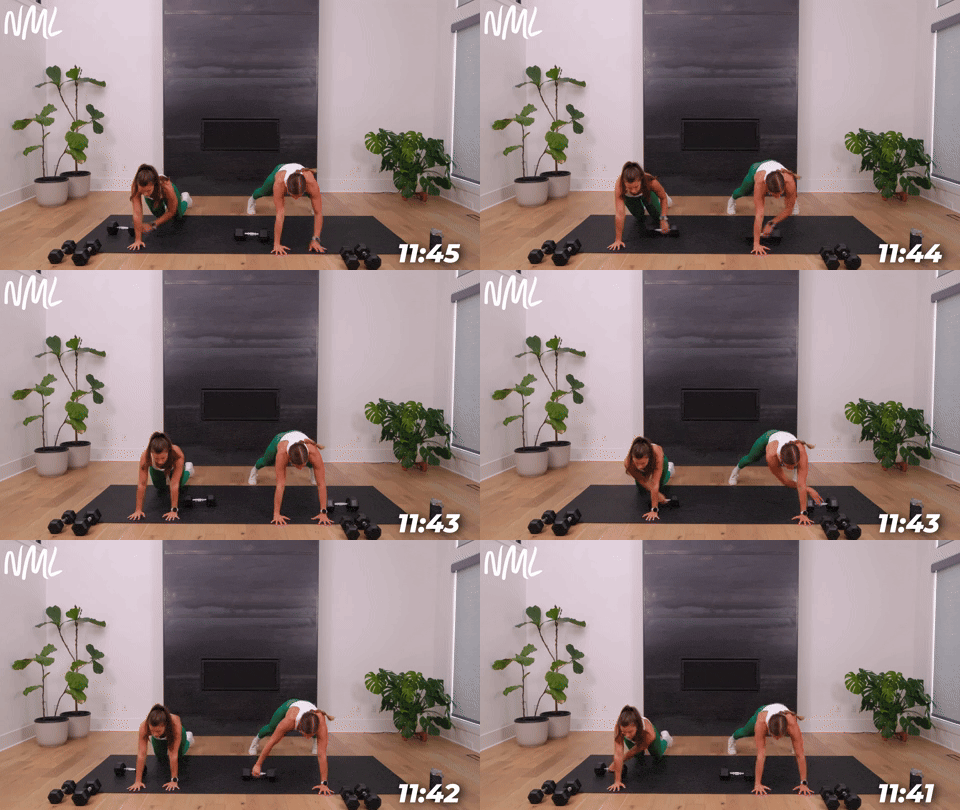
How to Do a Plank Dumbbell Drag
- Start in a high plank position with your shoulders stacked over your wrists, feet hip-width apart. Place 1 dumbbell horizontally on the floor outside your right hand.
- Reach your left arm under your body to grab the dumbbell and pull it across, ending outside your left hand. Think about keeping your shoulders and hips as stable as possible.
- Then, reach your right arm underneath your body to grab the dumbbell, pulling it back outside your right hand.
Modification: Perform the dumbbell drags from a modified plank (from your knees).
6. Plank and Row (Renegade Row)
Targets: Lats, rhomboids, trapezius, deltoids, rear deltoids, rotator cuff muscles, biceps, triceps, abdominals and obliques.
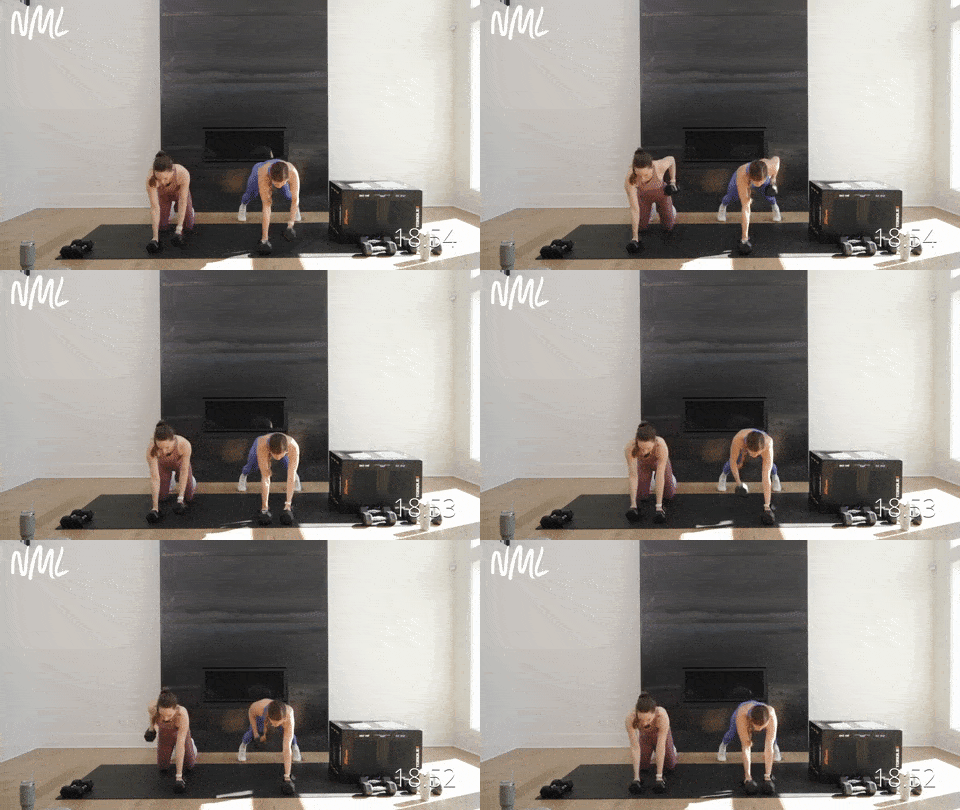
How to Do a Plank and Row (Renegade Row)
- Start in a high plank position with your hands directly under your shoulders and feet shoulder-width apart.
- Hold a dumbbell in each hand, with your palms facing each other and your arms extended. Your wrists should be in line with your shoulders.
- Engage your core and keep your back in a neutral position as you row 1 dumbbell up towards your chest, keeping your elbow close to your body. Try to keep your hips and shoulders parallel to the floor.
- Lower the dumbbell back down to the starting position, then repeat the movement with the other arm.
- Alternate rowing the dumbbells, keeping your core engaged and maintaining a stable plank position throughout the exercise.
Modification: Drop to your knees and perform a modified plank and row. Alternatively, place your dumbbells on an incline (such as a bench or box) to bring the ground closer to you.
7. Weighted Side Plank Hip Dips
Targets: Internal and external oblique muscles and transverse abdominus.
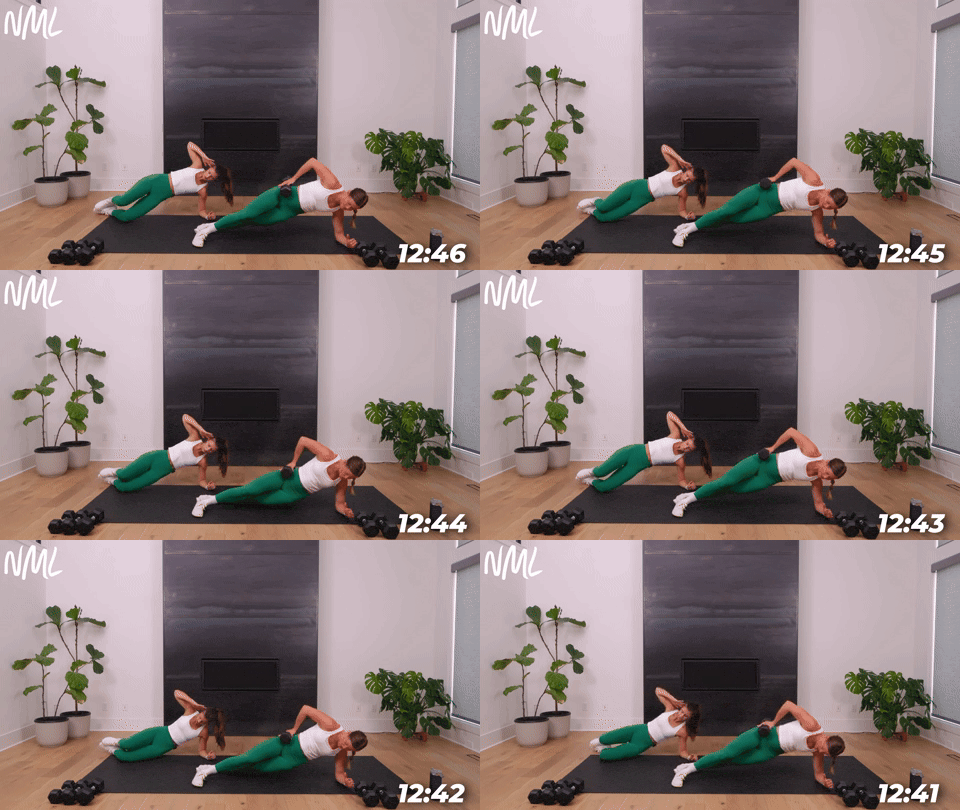
How to Do a Weighted Side Plank Hip Dip
- Start lying on your right side, with your right forearm on the mat, your right shoulder stacked over your right elbow. Option to place a dumbbell on your left hip.
- Press into your forearm and lift your hips. Balance on the outside edge of your right foot, stacking your left foot on top of your right foot. Think about forming a straight line from your head through your heels.
- With control, lower your hips 2-3 inches towards the ground.
- Squeeze through your obliques (side of your torso) to lift your hips, returning to a side plank position.
Modification: Perform side planks with the knees down. You can also omit the dumbbell.
8. Forearm Plank Arm Extensions
Targets: Transverse abdominals, upper abs, lower abs and shoulders.
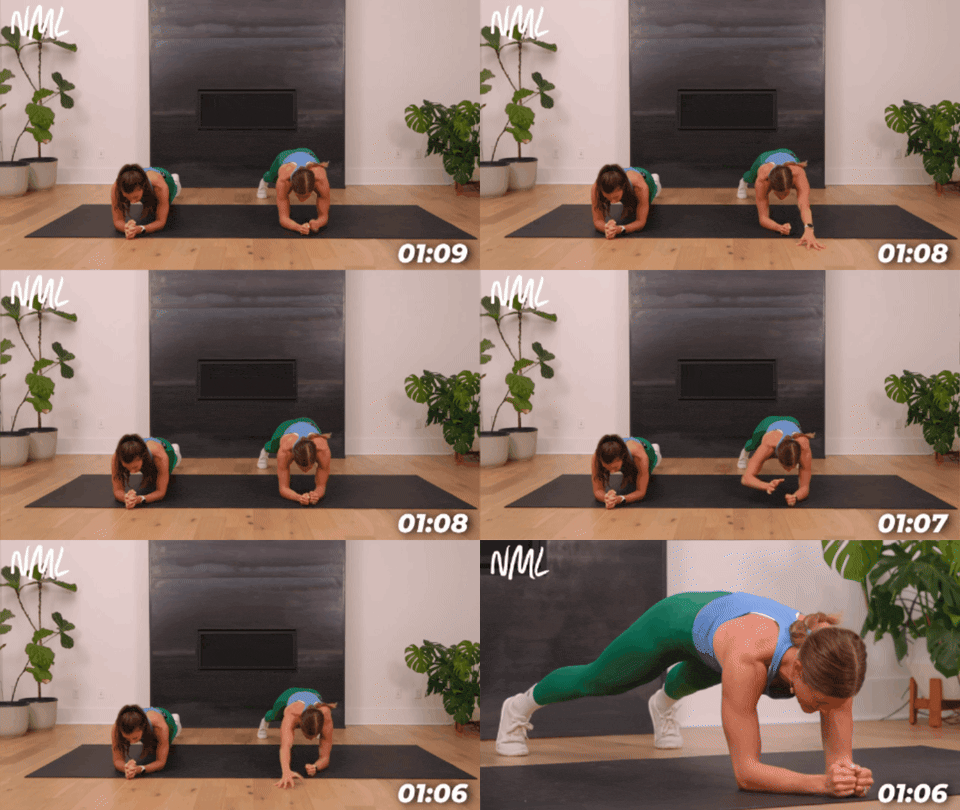
How to Do a Forearm Plank Arm Extension
- Start in a table top position with shoulders stacked over wrists (soft bend in the elbows) and hips over knees. Drop down to your forearms, shoulders stacked over elbows and hands in front of you.
- Step both feet back and extend the legs straight, balancing on your toes. Pull up on your kneecaps and push back on your heels to keep your core engaged as you find a forearm plank position. The body forms a straight line from your head through your heels.
- Keep your hips and shoulders stable as you alternate tapping first your right fingertips out in front of you, then your left fingers.
9. Side Plank
Targets: Internal and external oblique muscles (the muscles that run along the side of your core) and transverse abdominus.
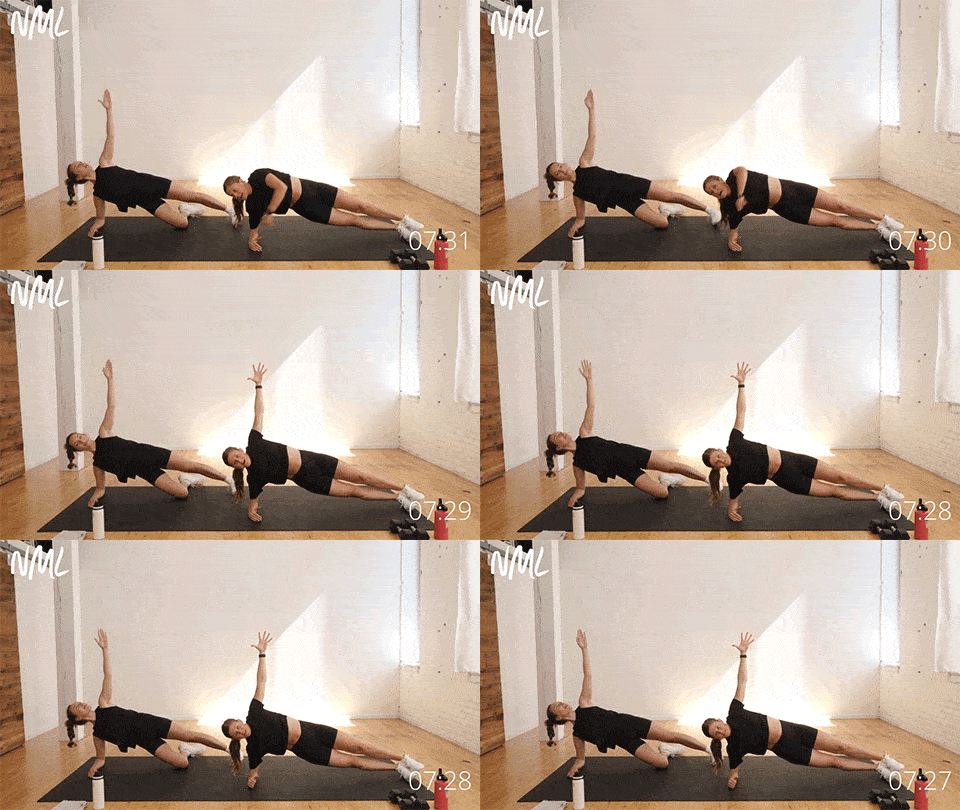
How to Do a Side Plank
- Start lying on your side, right forearm on the mat, right shoulder stacked over right elbow.
- Press into your forearm and lift your hips. Balance on the outside edge of your right foot, stacking your left foot on top of your right foot. Option to stagger your feet if stacked isn’t comfortable.
- Place your left hand behind your head or extend your left hand overhead. Focus on keeping your hips high and even (stacked over each other).
Modification: Drop the inside knee to the ground rather than extending both legs.
10. Side Plank With Abduction
Targets: Internal and external oblique muscles (the muscles that run along the side of your core) and transverse abdominus.
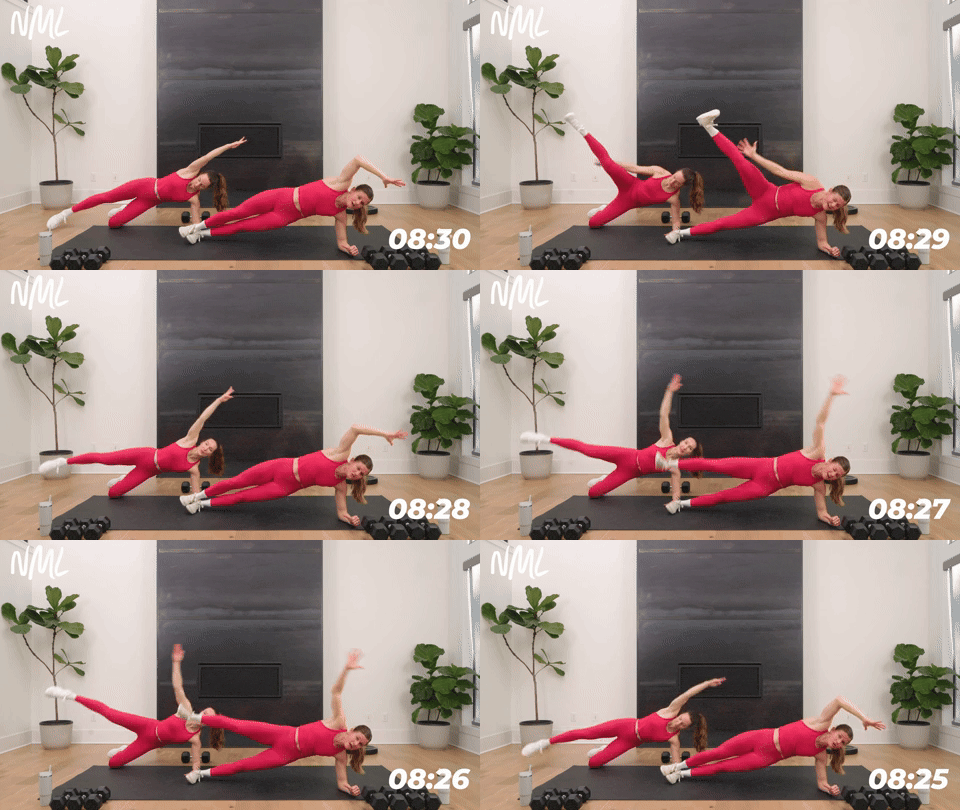
How to Do a Side Plank With Abduction
- Place your right forearm on the mat. Your right shoulder should be stacked over your right elbow.
- Engage your obliques as you balance on the outside edge of your right foot, stacking your left foot on top of your right foot. Place your left hand behind your head or extend your left hand overhead. This is a side plank.
- Add an abduction by pulling your left leg straight up, aiming to tap the left toes with the left hand. Your hand and foot should nearly meet as you squeeze your obliques (side abs).
- Lower the left leg back down with control to return to the starting position.
Modification: Perform a kneeling side plank by placing the right knee on the ground. Forearm planks are great if you experience wrist pain during planks.
11. Reverse Plank Walk Out
Targets: Legs, glutes, hamstrings, hips, calves, low back, shoulders, abs and core.
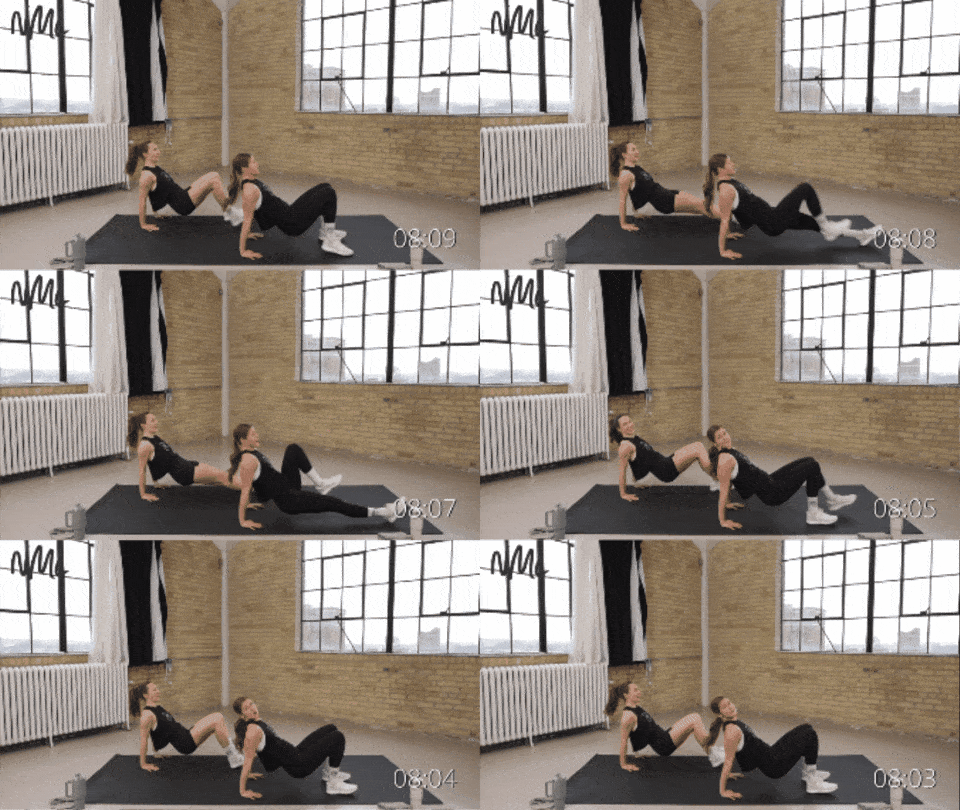
How to Do a Reverse Plank Walk Out
- Start seated on the ground, knees bent at 90 degrees and heels within reaching distance of your fingertips. Plant your hands on the ground, fingertips pointed towards your glutes.
- Press evenly through your palms and heels to lift your hips off the floor.
- Keep your elbows straight (shoulders stacked over wrists) and your hips lifted as you walk your feet away from your body, finding a reverse plank position.
- Hold this reverse plank, then perform 2 alternating knee drives, pulling first your left knee in towards your chest, then your right knee.
- Step your feet in, returning to the starting position.
Modification: Omit the knee drives, and hold a reverse plank instead.
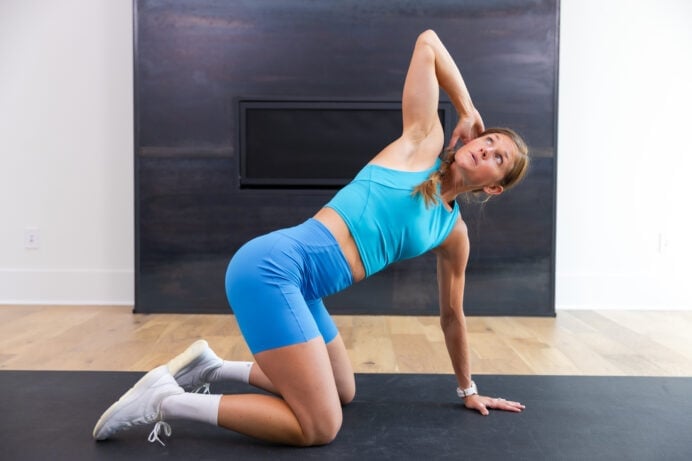
12. Bird Dog
Targets: The entire posterior chain (or backside of your body) and transverse abdominis (the deep corset muscles).
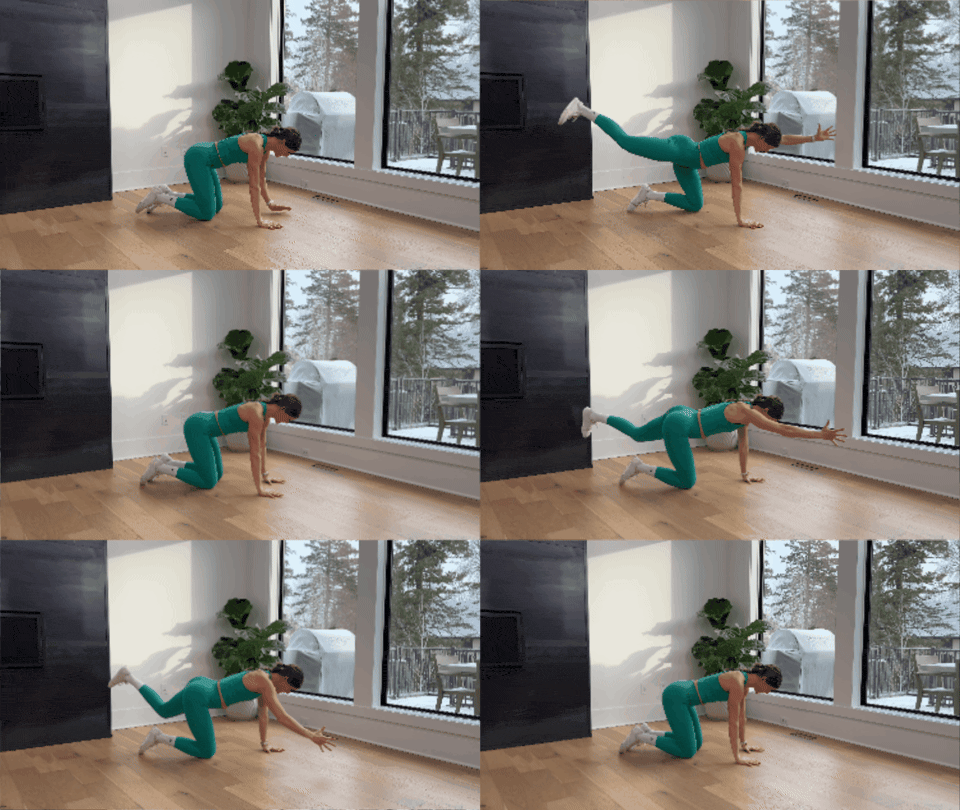
How to Do a Bird Dog
- Find a quadruped position with your knees hip-width apart and hands firmly on the ground, about shoulder-width apart. Engage your core.
- Find a bird dog position by extending your right leg back, floating it off the ground. As you extend the right leg back, extend the opposite arm, left arm, straight out in front of you.
- Hold the right leg back and left arm out for a moment, then return to the starting position on all fours.
- Repeat this movement on the other side of the body, extending the left leg long and the right arm straight out in front of you.
13. Forearm Plank Knee Drop
Targets: Transverse abdominals, upper abs, lower ab muscles and shoulders.
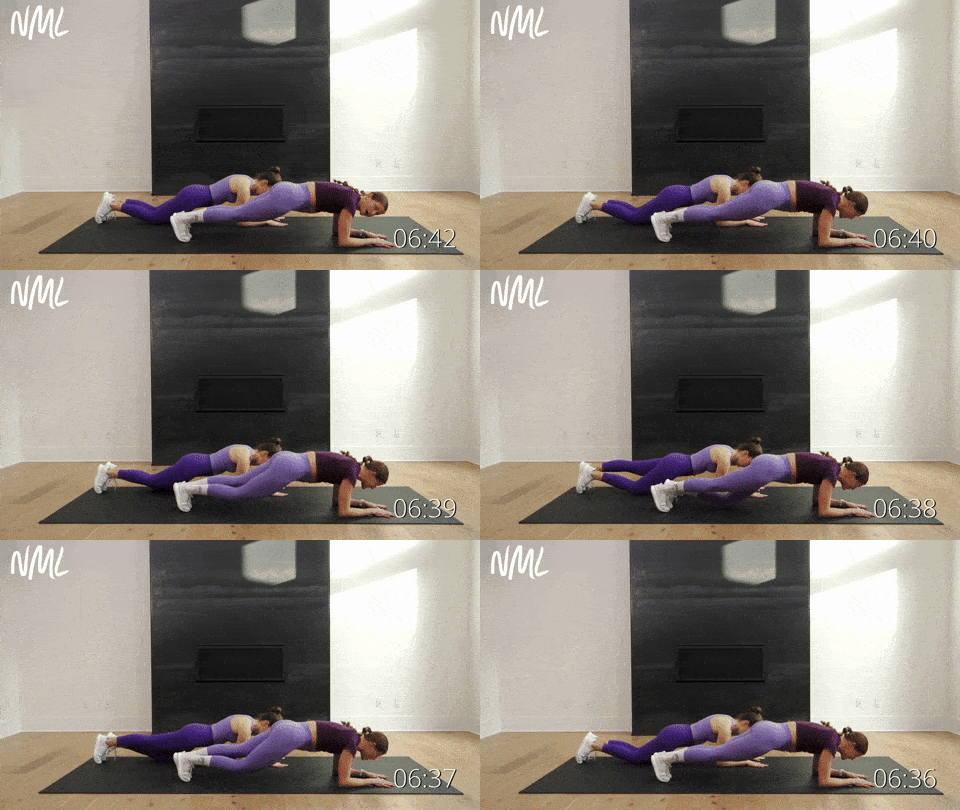
How to Do a Forearm Plank Knee Drop
- Start in a tabletop position with shoulders stacked over wrists (soft bend in the elbows) and hips over knees. Drop down to your forearms, shoulders stacked over elbows and hands in front of you.
- Step both feet back and extend the legs straight, balancing on your toes. Pull up on your kneecaps and push back on your heels to keep your core engaged as you find a forearm plank position. Your body forms a straight line from your head through your heels.
- Hold this low plank position, maintaining a straight line with your body, gaze slightly in front of you.
- Drop the right knee to the ground, aiming to touch the mat.
- Straighten the right leg before alternating the knee drop, this time dropping the left knee to the ground.
Modification: Hold a modified plank for the duration of the exercise, popping 1 knee up at a time while keeping the other knee on the ground.
14. Plank, Army Crawl and Crossbody Knee Drive
Targets: Arms, shoulders, chest, triceps, back, legs, glutes, quads, abs, obliques and core.
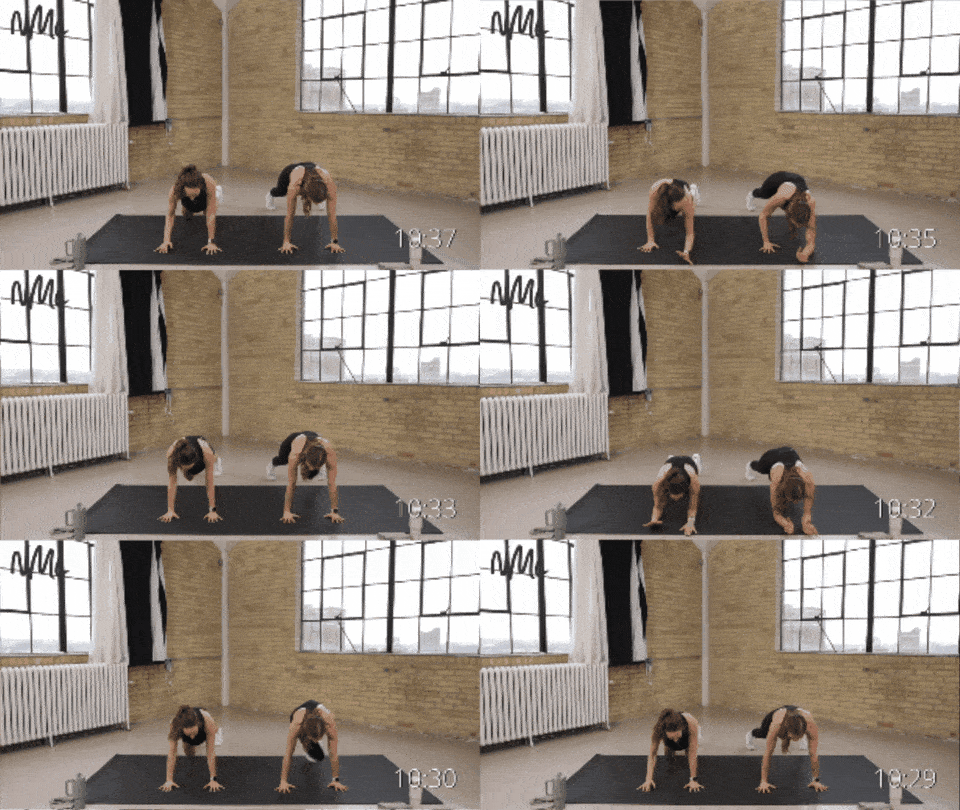
How to Do a Plank, Army Crawl and Crossbody Knee Drive
- Start in a high plank position with your shoulders stacked over your wrists, weight evenly distributed amongst all 10 fingers. Hold this high plank position, maintaining a straight line with your body, gaze slightly in front of you.
- Then perform 2 cross-body knee drives — pulling the right knee towards the left elbow, then the left knee towards the right elbow.
- Drop first your left forearm to the mat, then your right forearm to the mat, finding a low plank or forearm plank position. Shoulders are stacked over elbows.
- Exhale as you push yourself back up to the starting high plank position, starting with your left arm and following with your right arm. Try to keep your hips stable and even.
Modification: Perform a rolling plank rather than the cross-body knee drives.
15. Bear Crawl Shoulder Tap
Targets: Deep transverse abdomen muscles, rectus abdominis (six-pack ab muscles), oblique muscles, shoulders, back, legs, glutes and quads.
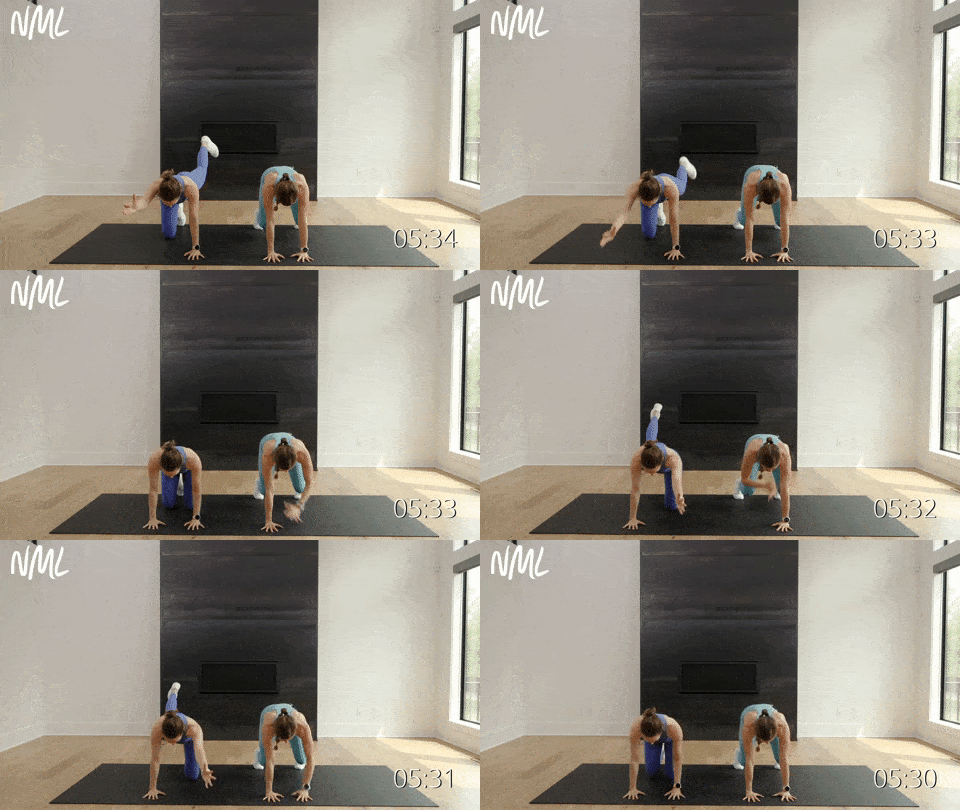
How to Do a Bear Crawl Shoulder Tap
- Start in a table top position, quadruped on all fours, shoulders stacked over wrists and hips stacked over knees, pelvis even.
- Inhale as you let your belly slightly drop, raising your gaze up as you breathe into your belly.
- Exhale, drawing your belly button towards your spine. Tuck your toes under and lift your knees one inch off the mat, finding a bear crawl.
- Hold this bear crawl position, then perform a shoulder tap, tapping the left shoulder with the right hand.
- Return your right palm to the mat and repeat on the other side. Tap the right shoulder with the left hand, then return it to the mat.
- Continue this pattern, alternating shoulder taps.
Modification: Perform bird dog by finding a quadruped position, then extending your right leg back, floating it off the ground. As you extend the right leg back, extend the opposite left arm straight out in front of you. Return to the starting position and repeat this movement on the other side of the body.
16. Advanced Clam and Side Plank Crunch
Targets: Gluteus medius (which lies on the outer edge of the buttocks and is responsible for stabilizing your pelvis), gluteus minimus (hip extension), internal and external obliques, transverse abdominus and core.
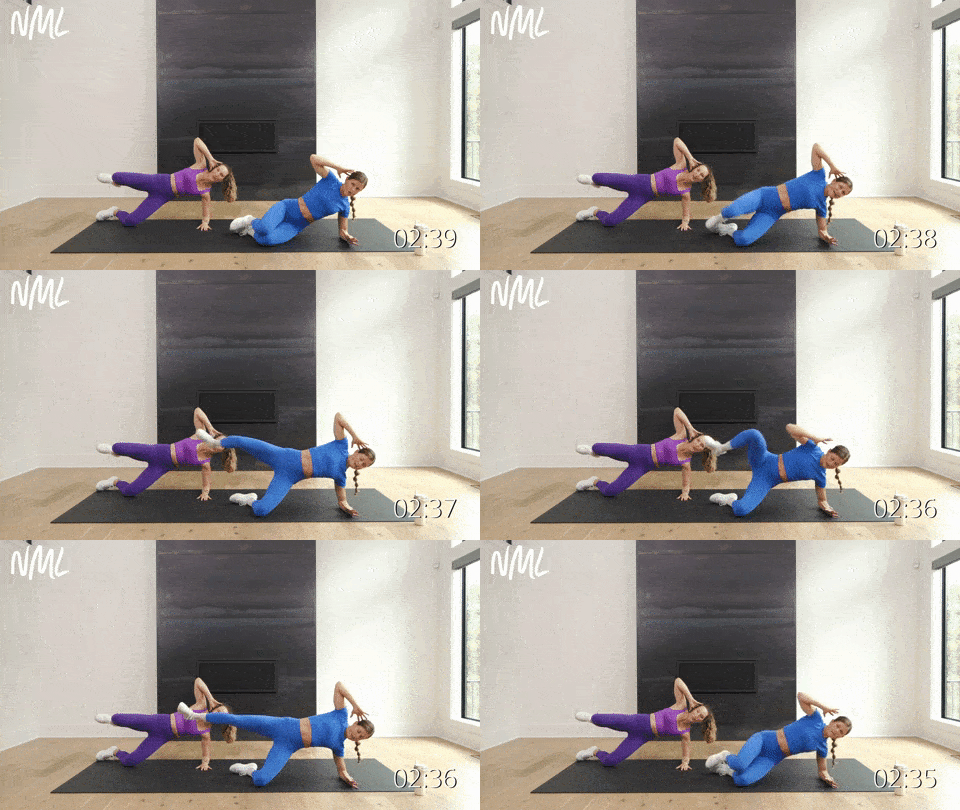
How to Do an Advanced Clam and Side Plank Crunch
- Lie on your right side, with legs stacked (right knee resting on the ground, left leg resting on right leg) and knees bent at a 45-degree angle, soles of the feet to touch.
- Rest on the forearm of the lower (right) arm, shoulder stacked over elbow.
- Exhale to engage the core and stabilize your spine and pelvic floor.
- Use your outer glutes and hips to lift your resting hip off the floor. Simultaneously, as you lift your hips off the ground, open your legs, raising your upper knee as high as you can without shifting your hips or pelvis (mimicking a clamshell opening). Bring the top leg parallel with your hip.
- Send the top (left) leg long. Then perform a side plank crunch, pulling your top, left knee up to meet your left elbow. Arm and leg meet as you squeeze your obliques (side abs).
- With control, lower the left leg and return to the starting position.
Modification: Option to omit the hip dip and side plank crunch. Lift your hips to find the top of the clamshell and hold for the timed interval.
17. Plank Jack
Targets: Shoulders, deep transverse abs, lower abs, upper abs, obliques, glutes, outer glutes, hips, calves and back.
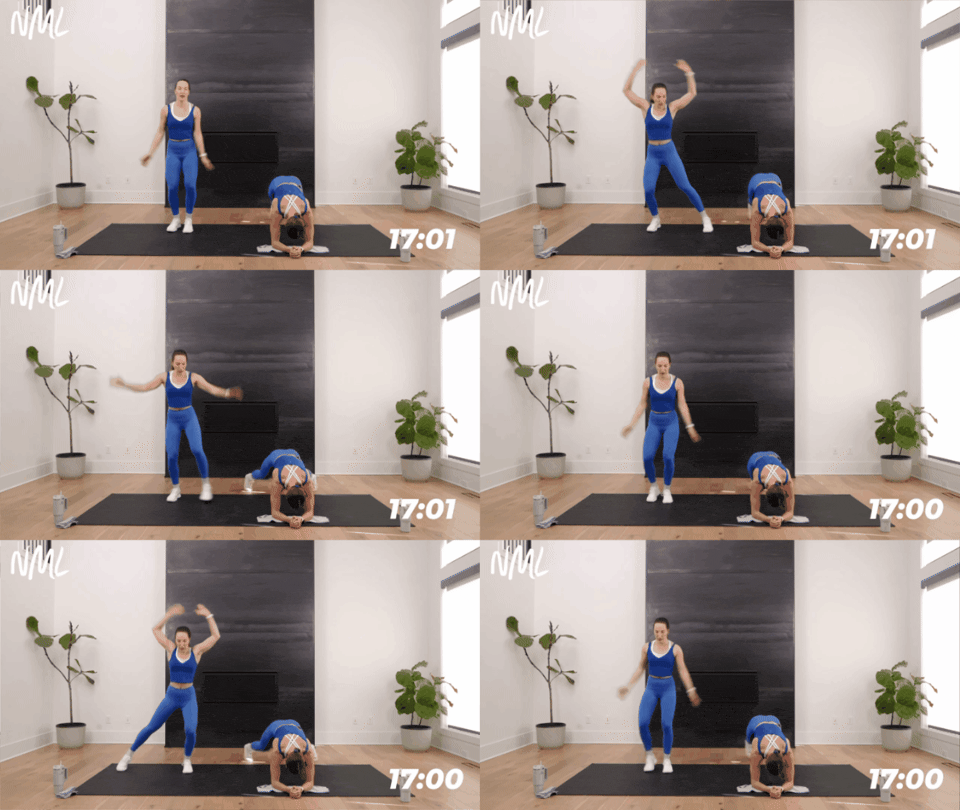
How to Do a Plank Jack
- Start in a tabletop position with shoulders stacked over wrists (soft bend in the elbows) and hips over knees. Drop down to your forearms, shoulders stacked over elbows and hands in front of you.
- Then step both feet back and extend the legs straight, balancing on your toes. Pull up on your kneecaps and push back on your heels to keep your core engaged as you find a forearm plank position. Body forms a straight line from your head through your heels.
- Hold this low plank position, maintaining a straight line with your body, gaze slightly in front of you.
- Step or jump your feet out to the sides, performing a plank “jack” with your lower body, focusing on keeping your hips stable.
- Then, step or hop your feet back to center, returning to the starting position.
Modification: If being in the plank position hurts your wrists, check out these modifications for wrist pain.
FAQs
What are common mistakes to avoid when doing planks?
Common mistakes to avoid when doing planks include letting the lower back sag (which causes back pain), lifting the hips too high, letting the chest drop, holding your breath and looking too far forward instead of down or just slightly forward.
Are planks better than crunches for core strength?
Yes, planks are generally considered superior to crunches regarding core training. Crunches isolate the superficial “six-pack” muscle, but do a poor job of building overall core strength, stability and endurance. Planks and plank variations engage the entire core, including deep abdominal muscles, back, shoulders, and glutes and even allow for the addition of dumbbells to really increase the strength aspect.
How many minutes should you plank per day?
You might think that you need to plank for several minutes a day to build core strength, but in reality, holding a plank for 30 to 60 seconds 3-5 times is sufficient. While 2-minute holds are often cited as the maximum benefit, quality and consistency are far more effective. Try working them into something like this 30-Day Ab Challenge or as an extra exercise at the end of this 30-Minute Core Workout.
Can planking help with scoliosis or osteoporosis?
Planking can be a beneficial core exercise for scoliosis and osteoporosis. Using a person’s bodyweight, planking helps build deep core strength to stabilize the spine and improve posture. Side planks and oblique variations specifically target the convex side of the curve in the spine, helping with scoliosis and may help to reduce curvature. Planking can help osteoporosis by building and strengthening muscles that surround the erector spinae without compressing the spine.
More Workouts
Abs and CorePin This: 17 Plank Exercises to Challenge Your Core
no comments
Leave a Comment