






7-Day High Protein Meal Plan (and Grocery List)
I know hitting your protein goals can feel challenging, so I created a 7-day high-protein meal plan to make it simple. In this meal plan, you’ll find high-protein, high-fiber breakfast, lunch and dinner options. Plus a complete grocery list to take the guesswork out of shopping. Eating more protein supports lean muscle, stabilizes energy, and helps you feel full and satisfied all day long.
Quick Links:
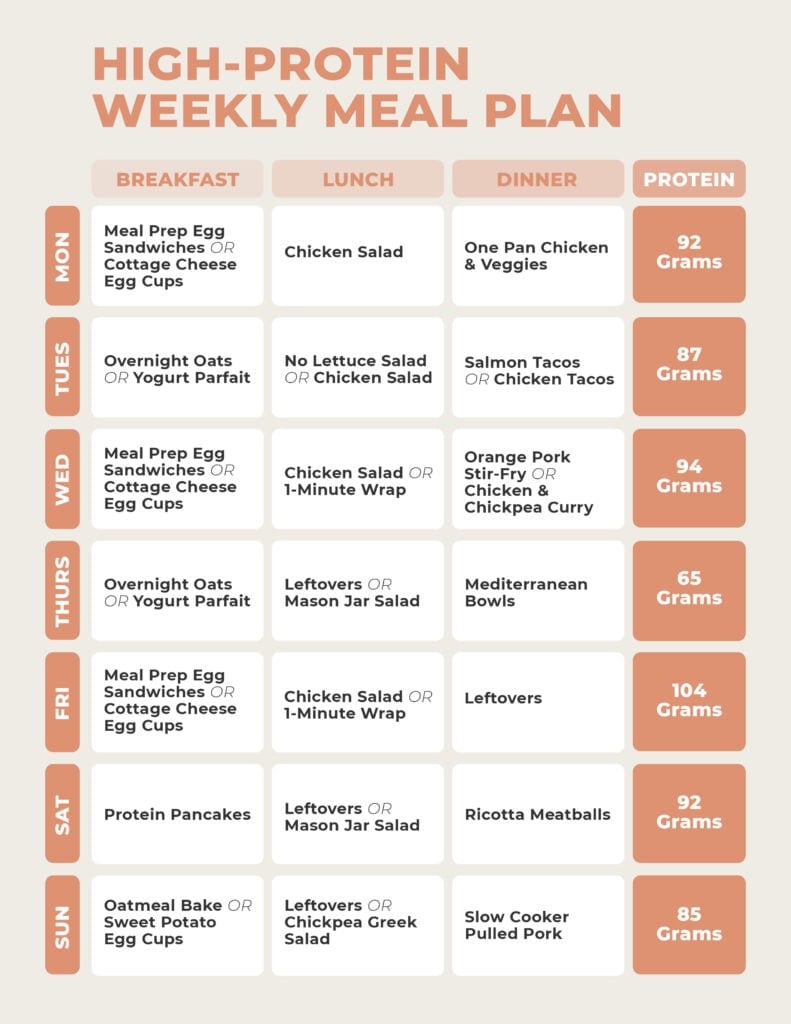
As a working mom of 3 who trains like an athlete and juggles the chaos of family life, I’ve learned firsthand how important it is to have a well-rounded, protein-rich weekly meal plan. I keep nutrition simple by focusing on protein and produce at every meal. Whether you’re looking to build muscle mass or on a weight loss journey, you’ll see the best results if you pair this high-protein and fiber meal plan with a consistent workout plan.
How Does This Meal Plan Work?
This 7-day, high-protein meal plan is intended to be a flexible guide. Feel free to add your favorite foods, snacks, coffee, fruits, protein powders or swap recipes for what you enjoy most. If you’re wondering how to actually eat 100g or even 120g of protein a day, the key is to spread your protein throughout the day so you’re not relying on a single, giant meal.
Your optimal daily protein intake depends on your age, weight, goals and level of physical activity. A good general target for active women is around 0.7-1g of protein per pound of body weight. That’s why there’s no single “best” high-protein meal plan for women; the best plan is one that helps you hit your protein goals consistently while still feeling energized and satisfied.
To reach my goals, I typically divide my protein across 3 meals. For example, if my goal is 130g of protein per day, I aim for at least 30-40g of protein per breakfast, lunch and dinner. Then add 2 high-protein snacks or desserts, around 20g each. This is one of the simplest ways to consistently reach 100-130g of protein a day without feeling overwhelmed.Personally, I don’t count calories, but I do aim for at least 2,000 calories per day. Your needs may vary; for personalized guidance, consult a nutritionist or registered dietitian.
Personally, I don’t count calories, but I do aim for at least 2,000 calories per day. Your needs may vary; for personalized guidance, consult a nutritionist or registered dietitian.
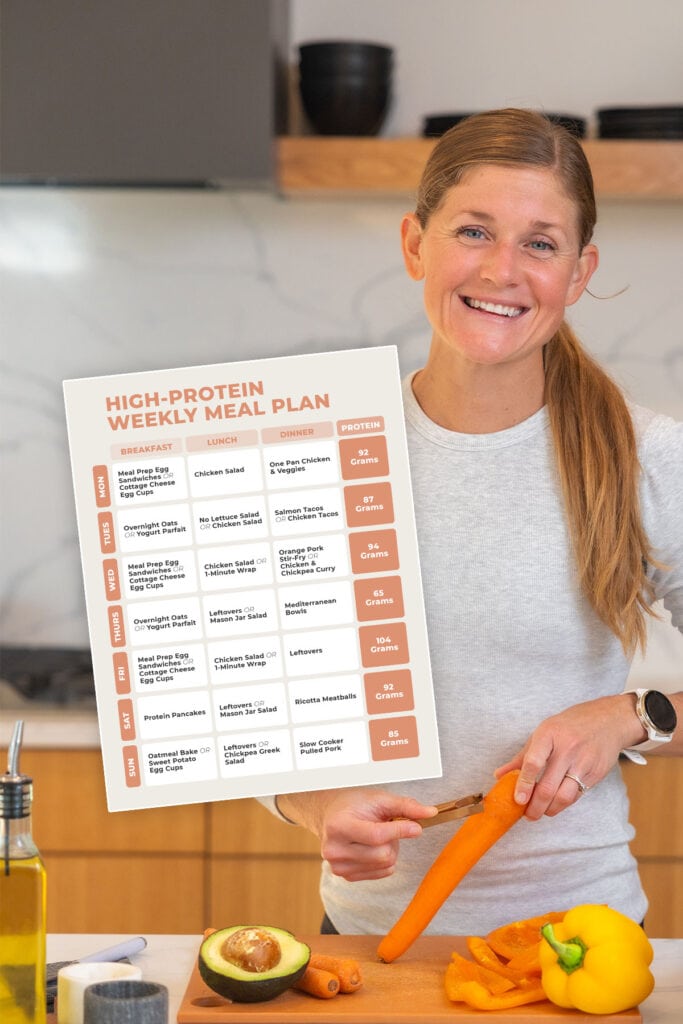
1 Week High Protein Meal Plan
Day 1
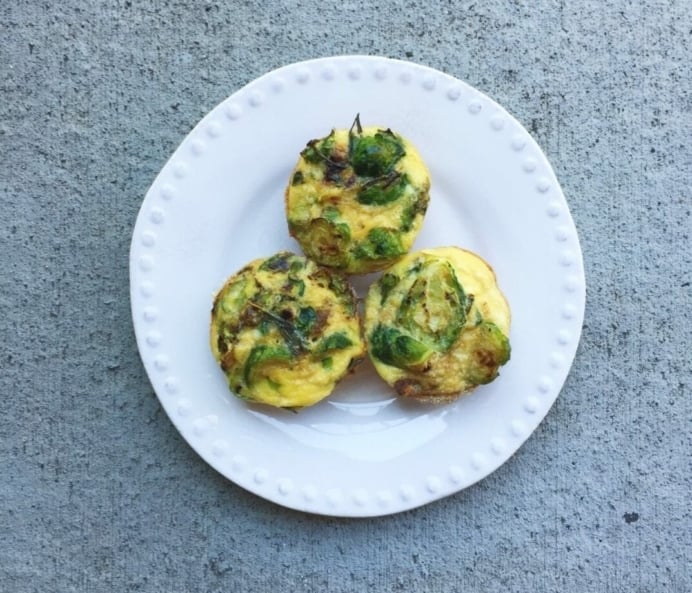
Breakfast: Meal Prep Breakfast Sandwich (39 grams protein) OR Cottage Cheese Egg Cups (12 grams protein)
Lunch: Chicken Salad (27 grams protein)
Dinner: One Pan Chicken + Veggies (26 grams protein)
Total Protein: 92 grams
Day 2
Breakfast: Protein Overnight Oats (21 grams protein) OR Yogurt Parfait (17 grams protein; option to add protein powder to your parfait to increase the grams of protein)
Lunch: No Lettuce Salad (13 grams protein) OR Chicken Salad (27 grams protein)
Dinner: Easy Salmon Tacos (38.7 grams protein) OR Chicken Tacos (34.1 grams protein)
Total Protein: 87 grams
Day 3
Breakfast: Meal Prep Breakfast Sandwich (39 grams protein) OR Cottage Cheese Egg Cups (12 grams protein)
Lunch: Chicken Salad (27 grams protein) OR 1-Minute Lunch Wrap (21 grams protein)
Dinner: Easy Orange Pork Stir Fry (38 grams protein) OR Chicken + Chickpea Curry (38 grams protein)
Total Protein: 94 grams
Day 4
Breakfast: Protein Overnight Oats (21 grams protein) OR Yogurt Parfait (17 grams protein; option to add protein powder to your parfait to increase the grams of protein)
Lunch: No Lettuce Salad (13 grams protein) OR Chicken Salad (27 grams protein)
Dinner: Mediterranean Bowls (10.9 grams protein; option to add additional lean protein sources like chicken or salmon to increase the grams of protein)
Total Protein: 65 grams
Day 5
Breakfast: Meal Prep Breakfast Sandwich (39 grams protein) OR Cottage Cheese Egg Cups (12 grams protein)
Lunch: Chicken Salad (27 grams protein) OR 1-Minute Lunch Wrap (21 grams protein)
Dinner: Leftovers From Previous Dinner Meals
Total Protein: 104 grams
Day 6
Breakfast: Protein Pancakes (19.9 grams protein)
Lunch: Leftovers OR prep a new salad recipe for the following week. I love either 4 Mason Jar Salads (42.4 grams protein) OR Chickpea Greek Salad (12.5 grams protein; again, you can add chicken or other protein sources to this as well)
Dinner: Easy Meatballs (I serve over pasta, spaghetti squash or with a side salad) (29.7 grams protein)
Total Protein: 92 grams
Day 7
Breakfast: Oatmeal Bake (14 grams protein) OR Sweet Potato Sausage Egg Cups (or Egg Bake) (12 grams protein)
Lunch: Leftovers OR prep a new salad recipe for the following week. I love either 4 Mason Jar Salads (42.4 grams protein) OR Chickpea Greek Salad (12.5 grams protein; again, you can add chicken or other protein-rich foods to this as well)
Dinner: Slow Cooker Pulled Pork (28 grams protein)
Total Protein: 84.4 grams
*This is just a guide; women should aim for around 2,000 calories per day. I’ve left plenty of wiggle room for you to add more food and beverages such as coffee, fruits, protein bars, snacks and dessert!
Meal Prep Tips:
- Prep either the Meal Prep Breakfast Sandwiches or Cottage Cheese Egg Cups in bulk over the weekend so you have them as an easy grab-n-go high-protein breakfast throughout the week.
- You can also meal prep the Chicken Salad in bulk to have on hand for a protein-packed lunch throughout the week. I personally prefer the chicken salad in a sprouted whole-grains wrap, but you can serve this over greens, too.
- Interested in more high-protein recipes? Check out my favorite high-protein vegetarian meals, high-protein cottage cheese recipes, high protein and fiber breakfast recipes, and high-protein chicken recipes.
Download FREE Meal Plan + Grocery List
A 7 day meal plan with high protein and high fiber, family-friendly meals! Plus a complete grocery list to make shopping easier.
Download Plan
Grocery List
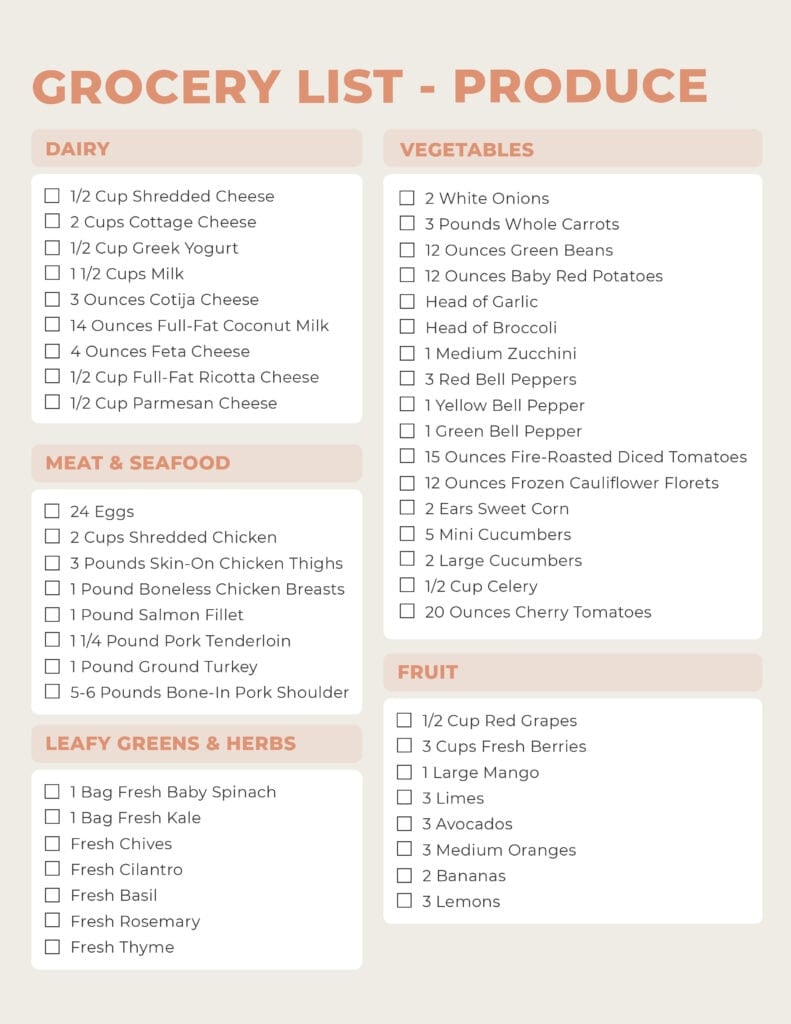
Protein and Dairy
- Shredded cheese
- Cottage cheese
- Greek yogurt
- Milk
- 3 oz Cotija cheese
- 14 oz full-fat coconut milk
- 4 oz Feta cheese
- Full-fat ricotta cheese
- Parmesan cheese
Meat and Seafood
- 24 eggs
- 2 cups shredded chicken
- 3 lbs skin-on chicken thighs
- 1 lb boneless, skinless chicken breasts
- 1 lb salmon fillet
- 1 ¼ lb pork tenderloin
- 1 lb ground turkey
- 5–6 lbs bone-in pork shoulder
Produce (Fresh and Frozen)
Leafy Greens and Herbs
- 1 bag fresh baby spinach
- 1 bag fresh kale
- Fresh chives
- Cilantro
- Fresh basil
- Rosemary
- Thyme
Vegetables
- 2 white onions
- 3 lbs whole carrots
- 12 oz green beans
- 12 oz baby red potatoes
- Head of garlic
- 1 head of broccoli
- 1 medium zucchini
- 3 red bell peppers
- 1 yellow bell pepper
- 1 green bell pepper
- 15 oz fire-roasted diced tomatoes (canned)
- 12 oz bag frozen cauliflower florets
- 2 ears sweet corn
- 5 mini cucumbers
- 2 large cucumbers
- 1 stalk celery
- 20 oz containers cherry tomatoes
Fruit
- 1 small bag of grapes
- 1 container of fresh blueberries
- 1 large mango
- 3 limes
- 3 avocados
- 3 medium oranges
- 2 bananas
- 3 lemons
Pantry Staples
Breads and Grains
- 6 whole wheat English muffins
- Rolled oats
- 1 package quinoa
- 1 8ct pack of corn tortillas
- Panko breadcrumbs
Oils, Vinegars and Sauces
- Avocado oil
- Olive oil
- Balsamic vinegar
- Soy sauce
- BBQ sauce
- Bourbon
- Worcestershire sauce
- Mayo
- Coconut aminos
- Toasted sesame oil
Nuts, Seeds and Nut Butters
- Walnuts
- Almonds
- All-natural creamy peanut butterr
Canned Goods
- (3) 15 oz cans chickpeas
- 16 oz red pepper (jarred or roasted)
- 1 jar of pitted Kalamata olives
Baking and Sweeteners
- Vanilla extract
- Maple syrup or honey
- Oat flour (or grind up oats)
- Protein powder
- Brown sugar
Seasonings
- Salt and pepper
- Everything bagel seasoning
- Taco seasoning
- Curry powder
- Ground turmeric
- Dried ginger
- Baking powder
- Cinnamon
- Dried oregano
- Garlic powder
- Italian seasoning
- Chili powder
- Garlic powder
- Smoked paprika
- Ground cumin
- Mustard powder
- Dried thyme
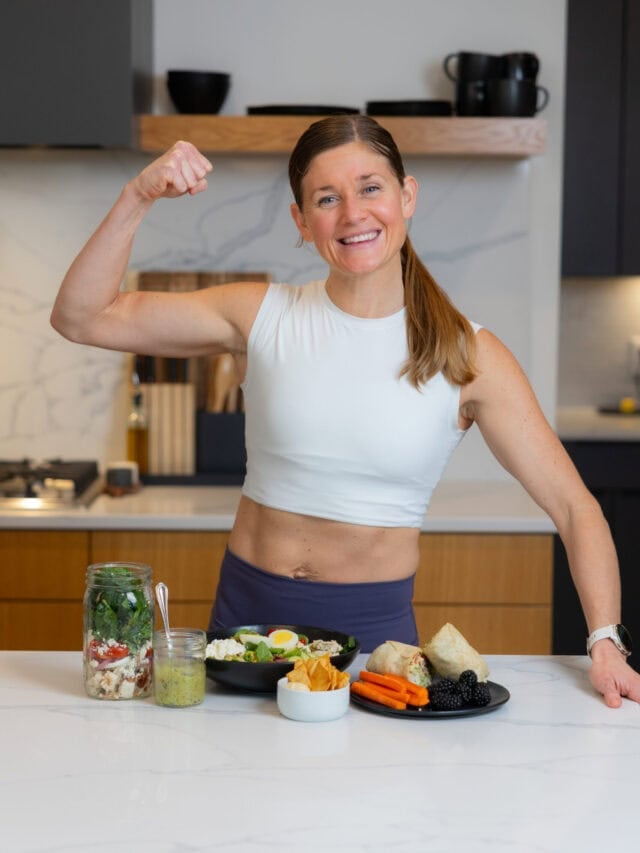
Download FREE Meal Plan + Grocery List
A 7 day meal plan with high protein and high fiber, family-friendly meals! Plus a complete grocery list to make shopping easier.
Download Plan
FAQs
How can I get 150g of protein a day?
To reach my goals, I divide my protein across 3 meals. If my goal is 150 grams of protein per day, I aim for around 40 grams of protein per meal. Then I add 2 high-protein snacks that are roughly 15-20 grams of protein each to help me hit that daily target.
How can I adjust portion sizes to hit my personal protein goal?
You can adjust portion sizes by increasing the protein source on your plate. For example, you can add an extra ounce or 2 of chicken, fish, tofu or Greek yogurt. Splitting your protein evenly across meals (plus a high-protein snack if needed) makes it easier to hit your daily goal without feeling overwhelmed. Tracking portions can also help you learn what your target visually looks like.
What are some high-protein meal ideas for vegetarians?
The best high-protein vegetarian meals I have tried are built around plant-based protein staples like lentils, quinoa, tofu, tempeh, hummus, legumes and beans. Think hearty lentil soups, tofu scrambles, chickpea bowls, black bean soup and veggie-packed quinoa salads. You can find all my favorite high-protein vegetarian meals here.
What are the easiest ways to hit your daily protein target?
One of the easiest ways to hit your daily protein target is to build every meal around a solid protein source. Some of my favorites include hard-boiled eggs at breakfast, grilled chicken or tofu at lunch and salmon or ground turkey at dinner. I also love adding quick protein boosts like Greek yogurt or cottage cheese. And don’t forget snacks! Keeping a few high-protein options on hand makes staying on track so much easier.
Should I eat protein before or after a workout?
I personally recommend that you avoid fasted exercise. Before strength training, I advise having around 15 grams of protein. This provides crucial building blocks for your muscles and helps with repair and recovery. If you’re heading into a cardio session, aim for a pre-workout snack that includes about 15 grams of protein and 30 grams of carbohydrates. This combination ensures you have both immediate energy and sustained fuel to power through your workout, helping you perform your best and feel strong. Aim to eat protein and carbs within 45-60 minutes post-workout to rebuild your muscle glycogen stores.
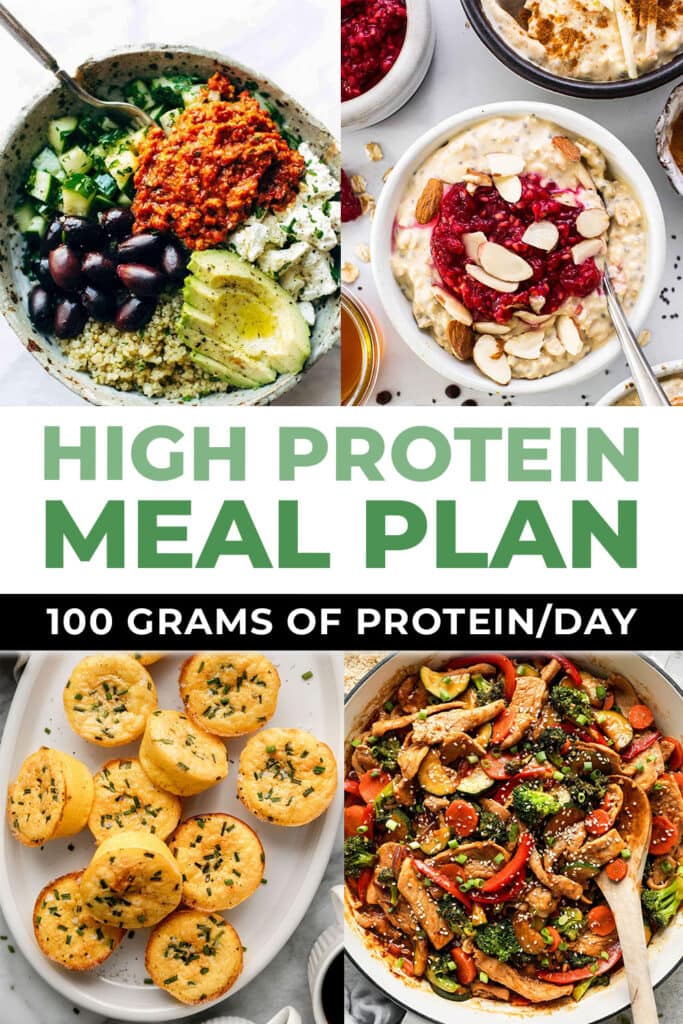
More High-Protein Recipes
Workout Plans To PairPin This FREE 7 Day High-Protein Meal Plan (With Grocery List)
12 comments
Hey, I’m assuming this meal plan is just for one person. how would you need to adapt this to feed a family? Multiply all the ingredients by the number of people?
Hi Deanna! The “total protein” listed is per serving, but the majority of these recipes actually make several servings rather than just one. If you click into the linked recipe, each explains how to prep in bulk. Hope this meal plan is helpful! -Lindsey
Hi Lindsey! I am planning to start MyFitnessPal and its saying I should be striving for 137g/protein per day but your suggestions are around 100g/day. Does this seem high to you? Thanks!
Hi Devorah! Great question – protein totals will vary based on a number of factors. The Recommended Dietary Allowance (RDA) for protein is 0.8 grams of protein per kilogram of body weight, or 0.36 grams per pound. To determine your daily protein intake, you can multiply your weight in pounds by 0.36. That gives a good minimum to strive for, but I personally aim for closer to 100 grams per day to support muscle growth! -Lindsey
Would you please break down how you get 38 grams of protein in your egg sandwich. I can’t figure it out. I’m missing something I think. TY
Hi Marian, Sorry for the confusion on this one! The recipe as written is about 29g of protein – use a higher protein english muffin (6g). With two eggs per sandwich you’re up to about 18g total. Load it up with spinach and kale for another 2-3g and add a slice of cheese (6-8g depending). I do like to add egg whites or some sausage or bacon to get this closer to 40g for the meal. You could also serve this with a side of Greek yogurt and berries for more protein. -Lindsey
Where do you get the recipes? I don’t see them
Hi Sue, All of the recipes are linked within this blog post. Please scroll through and click on the bold, purple text to be taken to the corresponding recipe. Thanks! -Lindsey
Where do you get the recipes?
Hi Sue, All of the recipes are linked within this blog post. Please scroll through and click on the bold, purple text to be taken to the corresponding recipe. Thanks! -Lindsey
I am healthy senior can you send what a day would look like you eat The exact amounts when making not just Ning ingretients
Hi Sue! Appropriate portion sizes will vary person to person based on a number of different factors. This is just meant to serve as a guide and inspiration for how you might try to get more protein in each day. Thanks! -Lindsey