





The 300 Workout
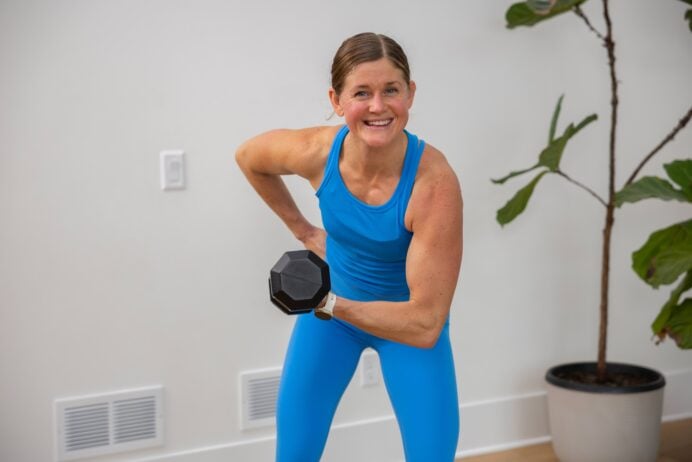
Mark Twight’s notorious “300 Workout” has been a fitness sensation since the movie 300 was released in 2007! The film inspired countless people to challenge themselves thanks to the impressive physiques on screen, and it continues to stand as a true test of strength, endurance and mental toughness. As a personal trainer, I don’t just challenge you to become your strongest self; I challenge myself too. Just like I set a goal to complete the “Murph” workout earlier this year, I’m setting my sights on conquering the “300 Workout” next!
Quick Links:
This high-intensity, high-volume workout is designed to challenge both your body and your mind. Each exercise targets multiple muscle groups to burn fat, build functional strength, endurance and cardiovascular fitness.
If you’ve been strength training consistently and are looking for a new challenge or a way to measure your progress, the 300 Workout is a fun and rewarding goal to work toward.
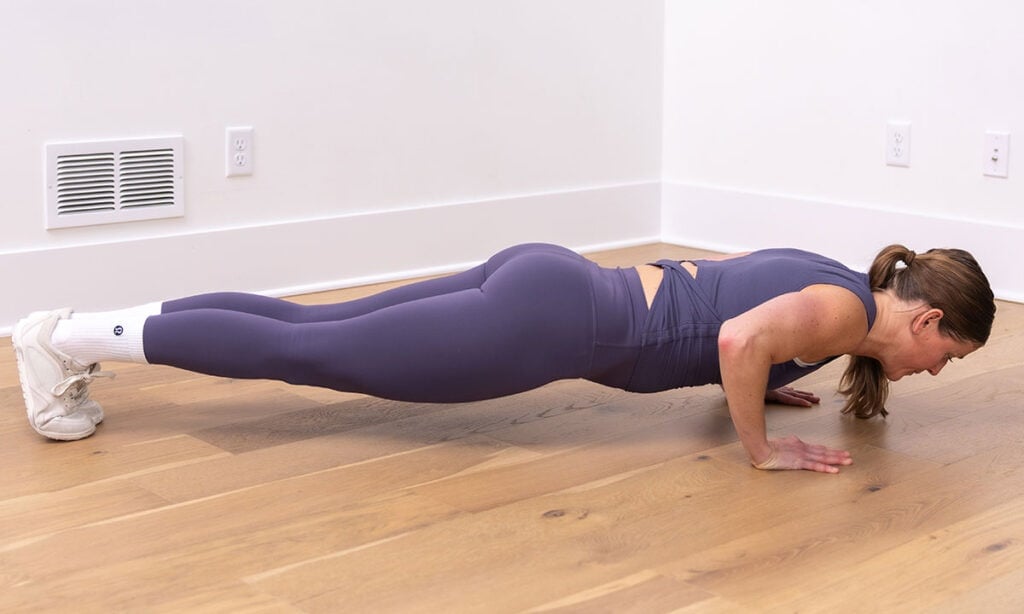
Original 300
This version is best suited for intermediate to advanced exercisers who have experience with strength training and can safely perform movements like pull-ups, deadlifts and box jumps with proper form. If you’re new to exercise, consider building a solid fitness foundation before attempting the full, original workout.
A good goal to reach before attempting the “Original 300” is to be able to complete 25 pull-ups in 2-3 sets and 50 push-ups in 1-2 sets. At this level, you should be able to finish this workout!
Complete the following exercises in order:
- Pull-ups (25 reps)
- Barbell Deadlifts at 135lbs/61 Kg (50 reps)
- Push-ups (50 reps)
- 24-inch Box Jumps (50 reps)
- Floor Wipers with a 135lbs barbell (50 reps)
- Single-Arm Kettlebell Clean and Presses at 36lbs (50 reps: 25 per arm)
- Pull-ups (25 reps)
Total Reps: 300
Intermediate 300
Intermediate 300
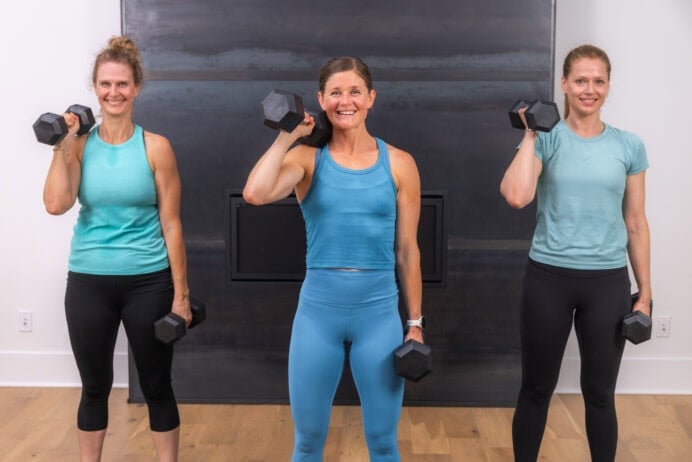
If you’re looking for a more approachable version of the classic 300 Workout, this dumbbell variation is a great place to start. It combines bodyweight exercises with dumbbell movements to build total-body strength, endurance and cardiovascular fitness while still challenging you to complete all 300 repetitions.
This workout is ideal for intermediate exercise levels, and if you are comfortable with foundational movements like pull-ups, push-ups, squats and overhead pressing. Choose a pair of dumbbells that allows you to maintain proper form from the first repetition to the last, and don’t be afraid to take short breaks (15-30 seconds) when needed.
Complete the following exercises in order:
1. Pull-Ups
Targets: Latissimus dorsi (lats), biceps, rhomboids, trapezius (traps), deltoids (shoulders), forearms and core.
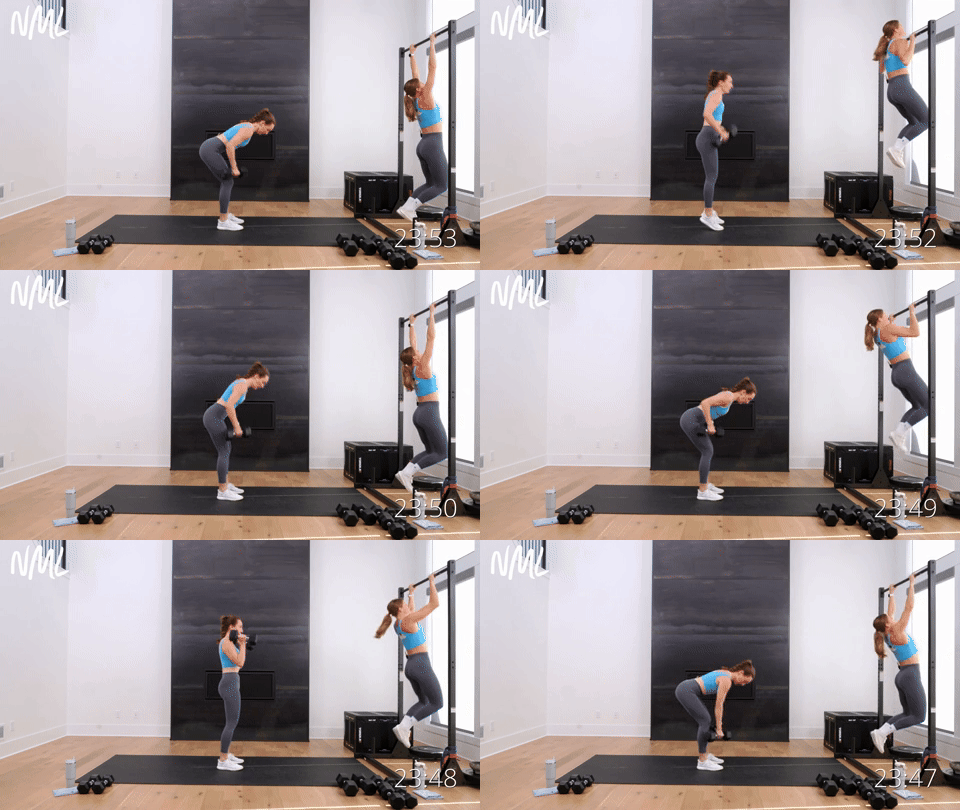
How to Do a Pull-Up
- Reach up and grip the pull-up bar with your palms facing away from your body (overhand grip), hands slightly wider than shoulder-width distance apart.
- Hang from the bar: Allow your body to hang freely with your arms fully extended.
- Perform the pull-up: Initiate the pull-up by squeezing your shoulder blades together and pulling your chest towards the bar. Keep your elbows pointed downward throughout the movement.
- Complete the pull-up: Continue to pull your body, pulling your chest up until your chin is above the bar, or as high as you can comfortably go. Keep your core engaged and your body straight throughout the movement.
- Lower yourself down: Slowly lower yourself back down to the starting position, extending your arms fully to return to the starting position.
Common Mistakes: Instead of thinking “chin over bar,” think “elbows to hips.” This encourages proper muscle engagement and prevents excess straining or swinging.
Modification(s): If you can’t do a pull-up, start by performing assisted pull-ups with a resistance band. Then, increase max pull-up reps by following a pull-up progression program. You could also substitute ring rows for pull-ups.
2. Dumbbell Deadlift
Targets: All the posterior chain muscles, including the hamstrings, glutes, core, lats and lower back.
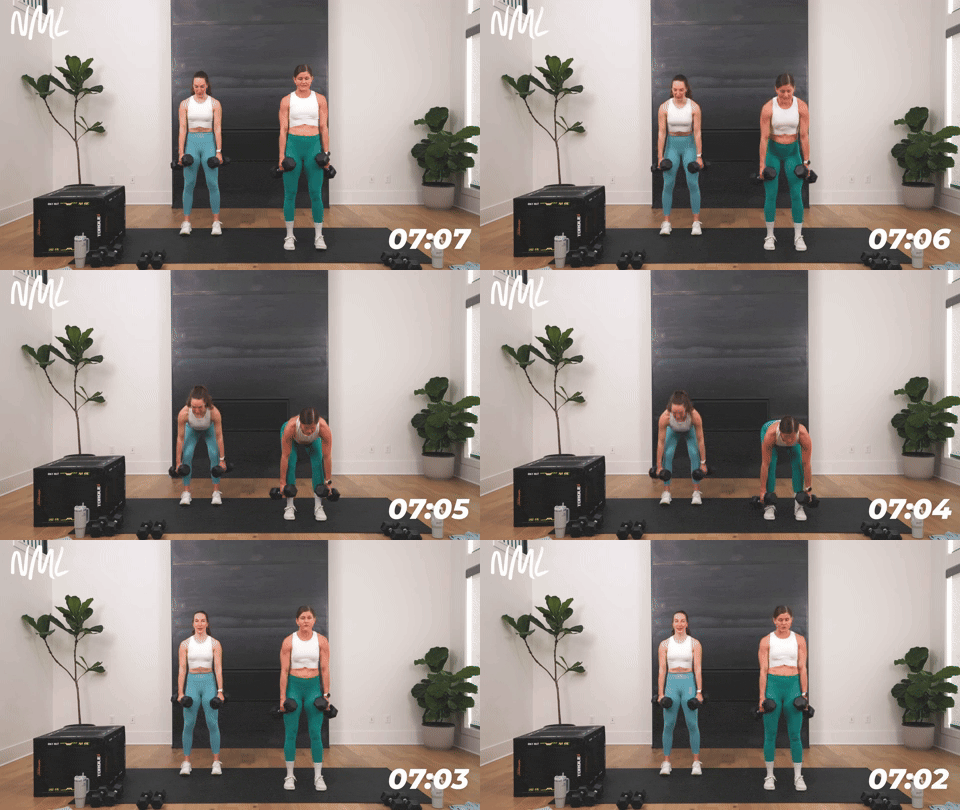
How to Do a Dumbbell Deadlift
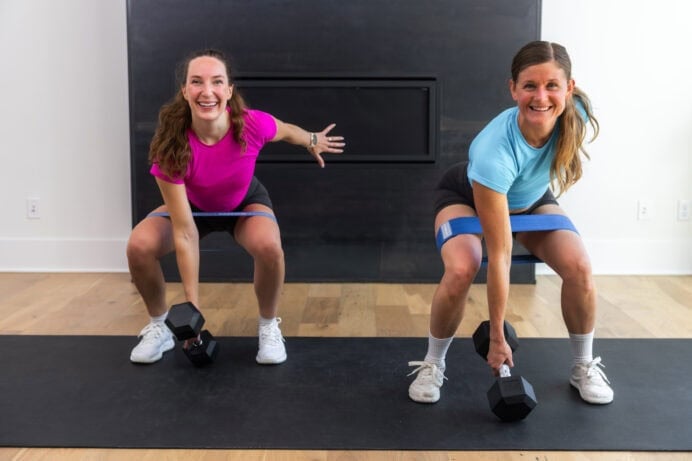
- Stand with your feet hip-width apart, holding a dumbbell in each hand in front of your hips (palms facing in towards your body).
- Hinge at the hips, pushing your hips back towards the wall behind you as you glide the dumbbells down the front of your legs, keeping your core tight, slightly bending both knees. Lower your dumbbells until you feel a stretch in the hamstrings. The range of motion will look different for everyone.
- Drive through your heels to push your hips forward, pulling the dumbbells back up towards your hips and returning to the starting position. Aim for full hip extension at the top of the movement.
3. Push-Ups
Targets: Chest, shoulders, triceps, back, abs and core muscles.
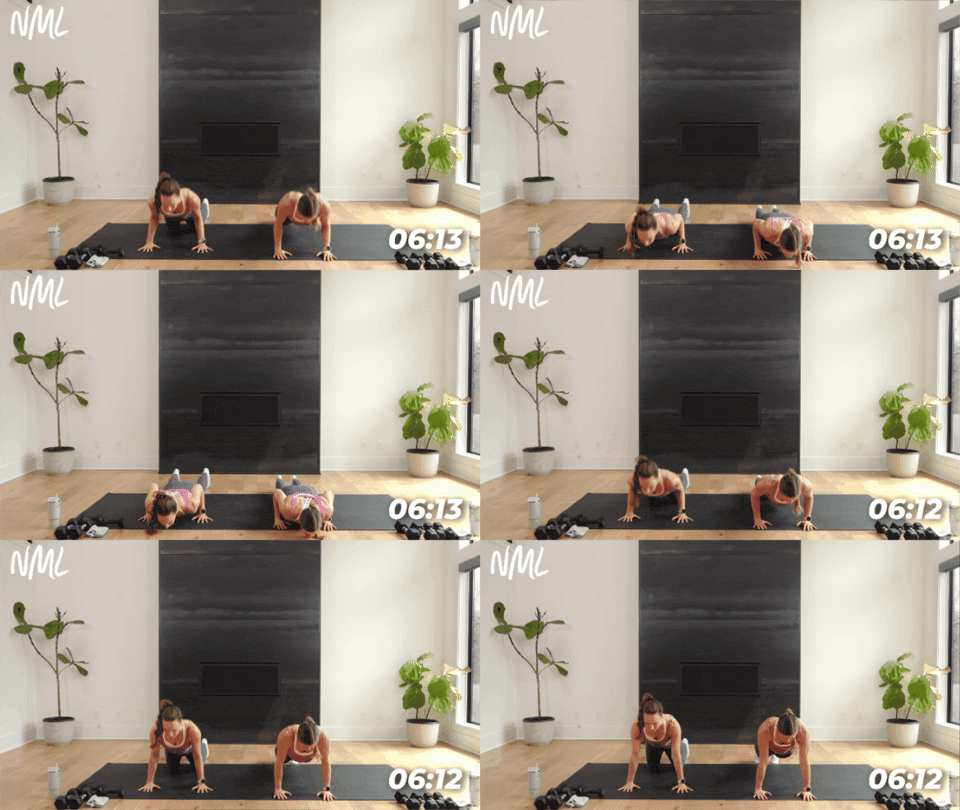
How to Do a Push-Up
- Start in a high plank position with your shoulders stacked over your wrists, weight evenly distributed amongst all 10 fingers. Pull your kneecaps up towards your belly, feet hip-width apart. Option to place your hands on weights if you have wrist pain.
- Hold this plank position, maintaining a straight line with your body, gaze slightly in front of you.
- Slowly lower your chest down towards the ground as your elbows fall back towards your hips (not out to the sides).
- Once at the bottom of your push-up, exhale as you push back up into a high plank position.
Common Mistakes: Try tucking your elbows in slightly (about a 45-degree angle) rather than straight out (90-degree angle) to protect your shoulder joint. If you look at your body from above, your elbows should form an “A” shape, not a “T” shape.
Modification(s): If you can’t do a push-up on your toes, start by placing your hands on an incline, or choose one of these push-up modifications. Then, increase max push-up reps by following a push-up progression program.
4. Jump Squat
Targets: Quadriceps, glutes, hamstrings, calves, core and hip flexors.
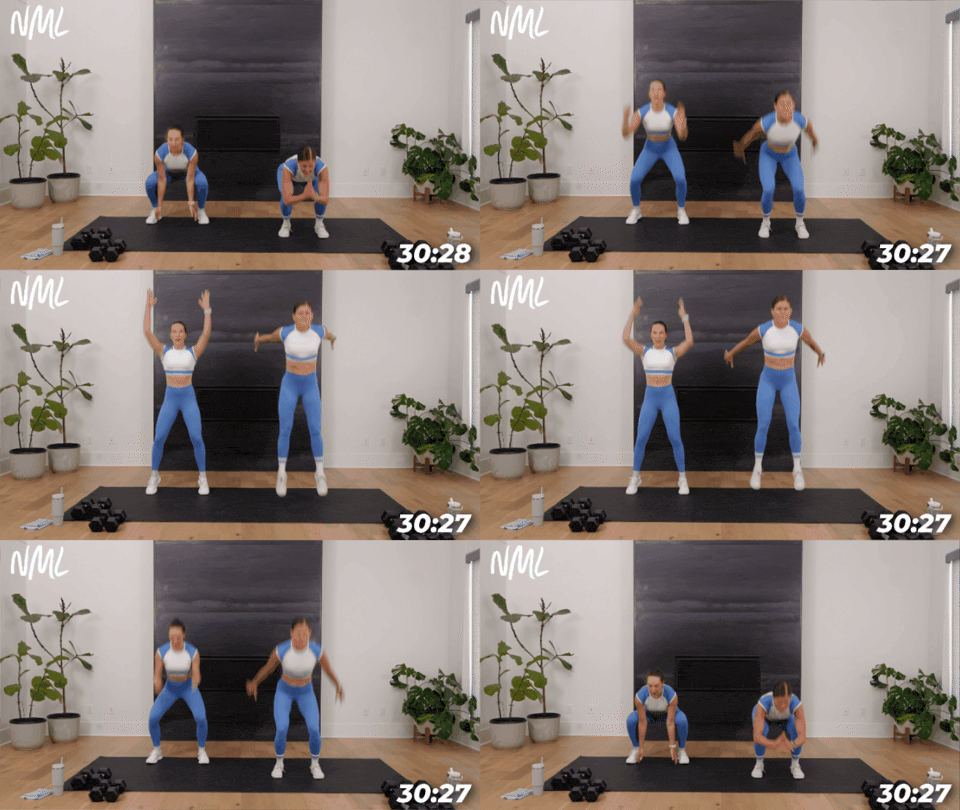
How to Do a Jump Squat
- Stand with your feet shoulder-width apart, toes pointed slightly outward and your arms at your sides or clasped in front of your chest.
- Engage your core and lower into a squat by pushing your hips back and bending your knees until your thighs are parallel to the floor, or as low as your mobility allows.
- Drive through your heels and explosively jump straight up, extending your hips, knees and ankles as you leave the ground.
- Land softly with a slight bend in your knees, absorbing the impact as you return to a squat position.
- Reset your posture and immediately continue into the next repetition while maintaining proper form and control.
Modification(s): Remove the jump and perform a bodyweight squat if you’re new to the movement or have joint discomfort. You can also decrease the depth of the squat or reduce the height of the jump until you build strength and confidence.
5. V-Up
Targets: Upper abs, lower abs, obliques, deep core, hip flexors and quadriceps.
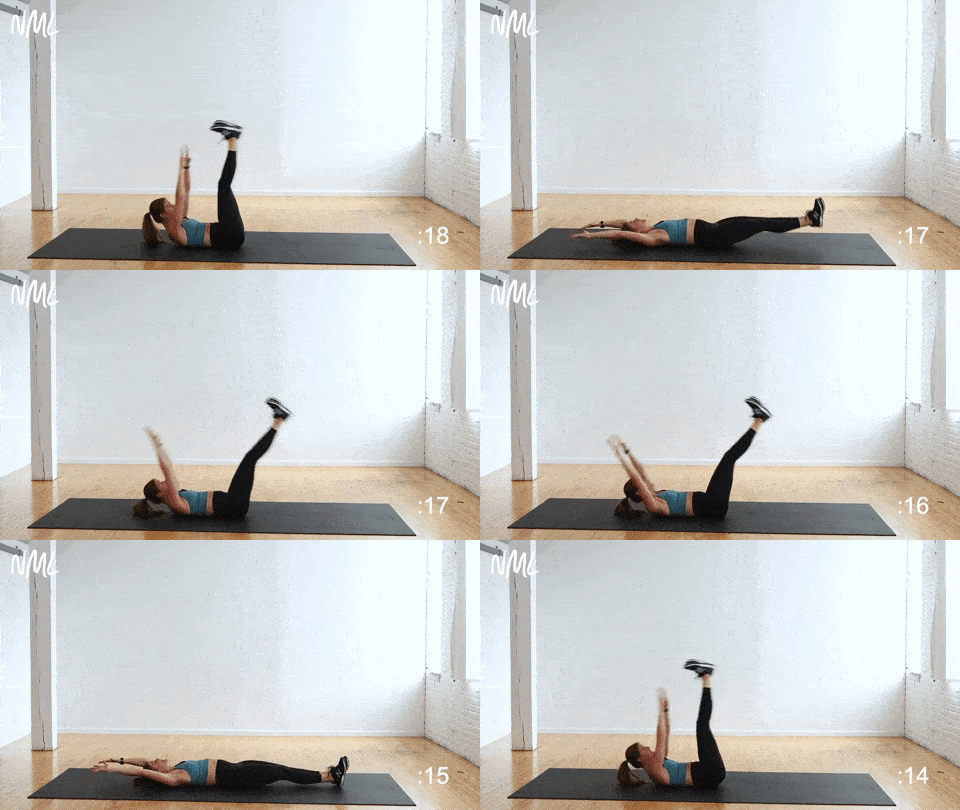
How to Do a V-Up
- Lie flat on your back with your legs extended straight and your arms reaching overhead.
- Engage your core by pressing your lower back gently into the floor and keeping your legs together.
- Simultaneously lift your upper body and legs off the floor, reaching your hands toward your toes to form a “V” shape with your body.
- Pause briefly at the top of the movement, squeezing your abdominal muscles.
- Slowly lower your arms and legs back to the starting position with control, avoiding arching your lower back.
- Repeat for the desired number of repetitions while maintaining steady breathing and proper form.
Modification(s): Bend your knees to perform a tuck-up instead of a full V-up, or lift 1 leg at a time while reaching toward the opposite foot to reduce the intensity. Focus on controlled movement and core engagement throughout the exercise.
6. Dumbbell Push Press
Targets: Shoulders, triceps, rear delts and upper back muscles (with some assistance from the lower body).
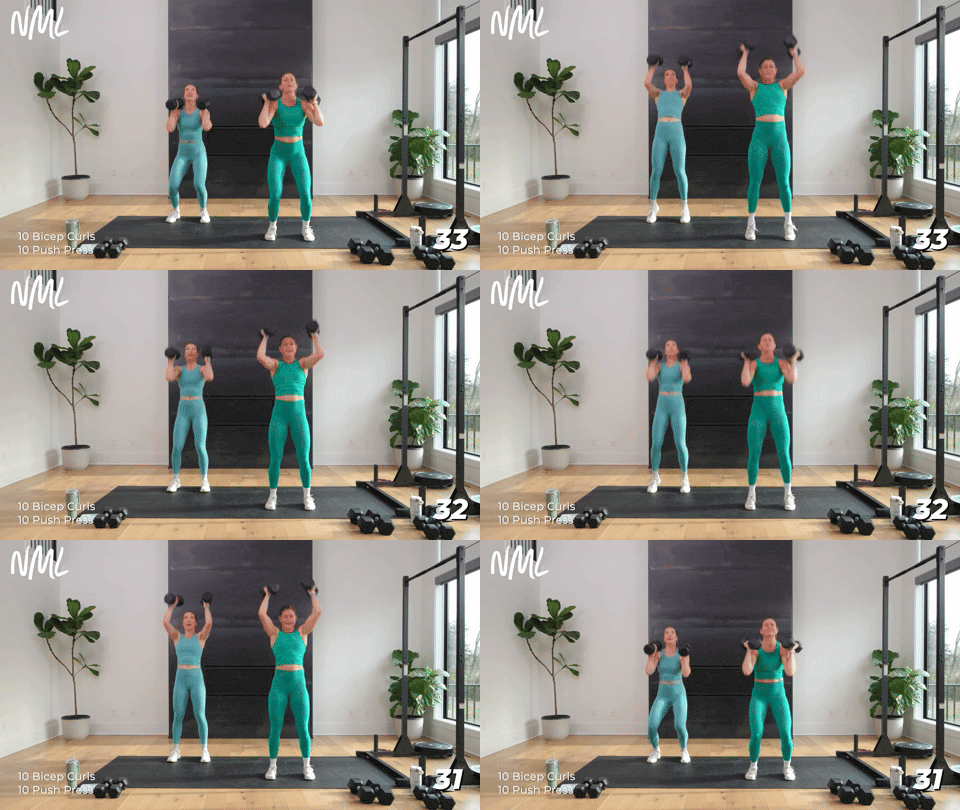
How to Do a Dumbbell Push Press
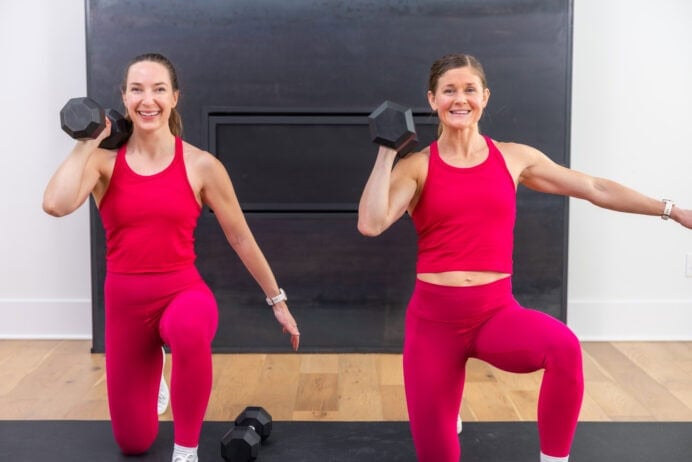
- Stand with feet shoulder-width distance apart, slight bend in your knees, holding 1 dumbbell in each hand at shoulder height. Palms facing in towards each other (neutral grip).
- Drop into a shallow squat; about a 2-inch dip. Then press through your heels, and push the dumbbells straight overhead. Think of peeking your head through your arms as you lock out the dumbbells, arms straight overhead.
- Lower the dumbbells down to the starting position at shoulder-level and repeat.
Common Mistakes: Don’t focus on moving too fast and be sure to control the dumbbells as you lower them to avoid hitting your head or shoulders. Increase your speed as you become more familiar with the movement.
7. Pull-Ups
Targets: Latissimus dorsi (lats), biceps, rhomboids, trapezius (traps), deltoids (shoulders), forearms and core.
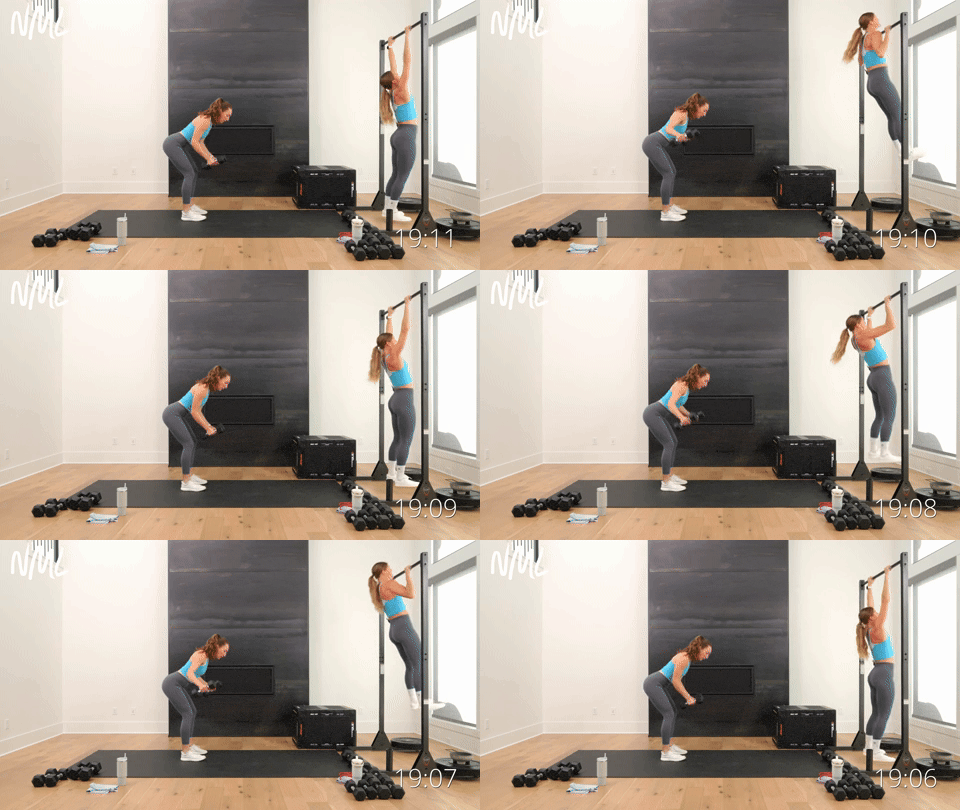
How to Do a Pull-Up
- Reach up and grip the pull-up bar with your palms facing away from your body (overhand grip), hands slightly wider than shoulder-width distance apart.
- Hang from the bar: Allow your body to hang freely with your arms fully extended.
- Perform the pull-up: Initiate the pull-up by squeezing your shoulder blades together and pulling your chest towards the bar. Keep your elbows pointed downward throughout the movement.
- Complete the pull-up: Continue to pull your body, pulling your chest up until your chin is above the bar, or as high as you can comfortably go. Keep your core engaged and your body straight throughout the movement.
- Lower yourself down: Slowly lower yourself back down to the starting position, extending your arms fully to return to the starting position.
Common Mistakes: Instead of thinking “chin over bar,” think “elbows to hips.” This encourages proper muscle engagement and prevents excess straining or swinging.
Modification(s): If you can’t do a pull-up, start by performing assisted pull-ups with a resistance band. Then, increase max pull-up reps by following a pull-up progression program. You could also substitute ring rows for pull-ups.
Beginner-Friendly 300
If you need a place to start that requires little to no equipment, this bodyweight version of the 300 Workout is a great option. It combines strength and cardio exercises to build muscular endurance, improve cardiovascular fitness and challenge your entire body using your own body weight.
Scale any exercise as needed and focus on maintaining good form throughout the workout.
Complete these exercises in order:
- Bodyweight Rows (15 reps)
- Bodyweight Squats (25 reps)
- Push-Ups (15 reps)
- Jumping Jacks (50 reps)
- Mountain Climbers (20 reps)
- Close Grip Push-Ups (10 reps)
- Bodyweight Rows (15 reps)
Repeat circuit 2 times to total 300 reps.
Important Workout Notes
Rest Periods: Challenge yourself to move from one exercise to the next with minimal rest to keep the intensity high. Remember, good form always comes first. If you need a short break to catch your breath or finish the prescribed reps; listen to your body and continue when you’re ready.
Nutrition: To get the most out of the 300 workout, pair it with a balanced nutrition plan that supports your personal fitness goals. Some of the actors from 300 experienced dramatic fitness transformations while following a structured training program and nutrition plan, but your results will depend on factors like consistency, recovery and your individual starting point.
Training Level: The 300 workout is a challenging, high-intensity workout that’s best suited for intermediate to advanced fitness levels. If you’re new to strength training, take time to master foundational movements like the deadlift and build your endurance before tackling the full workout. Starting with proper form and a solid fitness base will help you stay safe, build confidence and get the most out of every workout.
Who Should Avoid This Type of Workout? The 300 workout is designed to challenge your strength, endurance and cardiovascular fitness, making it best suited for those with a solid fitness foundation. If you’re new to exercise, recovering from an injury or surgery, pregnant or managing a chronic health condition, consider starting with a beginner-friendly workout and consult your healthcare provider before attempting this routine.
FAQs
How often can you do the 300 workout?
Because the 300 workout is a high-intensity, full-body workout, most people benefit from performing it 1-3 times per week with at least one day of recovery between sessions. Listen to your body and adjust the frequency based on your fitness level, workout intensity and recovery.
Are close-grip or wide-grip chin-ups better for the 300 workout?
Neither grip is necessarily better; it depends on your goals and experience level. A shoulder-width grip is the most balanced option for most people, while close-grip chin-ups place more emphasis on the biceps and wide-grip chin-ups increase the challenge for the upper back and lats.
Can I do a cardio warm-up before performing the 300 workout?
Yes! A 5-10 minute cardio warm-up is a great way to prepare your body for the 300 workout. Light aerobic exercise followed by dynamic stretches helps increase your heart rate, improve mobility and reduce the risk of injury before jumping into high-intensity movements.
What equipment do I need for the 300 workout?
The equipment you need depends on the version of the 300 workout you’re following. Many variations require only your body weight, while others incorporate equipment like dumbbells, kettlebells, pull-up bars or a box. Always review the workout before you begin so you have the appropriate equipment and enough space to move safely.
Build Muscle, Improve Endurance
Training to look like Gerard Butler as King Leonidas may sound intimidating, but this workout is about so much more than appearances. It’s about building strength, confidence and resilience that carry over into everyday life, whether you’re leading a team at work, raising a family or simply striving to become the healthiest version of yourself.
Remember, the goal isn’t to jump straight into the hardest workout. The goal is to build the strength, master the movements and gain the confidence to complete it safely. Every workout is an opportunity to grow stronger than you were yesterday.
Take your time, celebrate your progress and enjoy the journey. This is a challenge to work toward together.
How to Train Like an Athlete
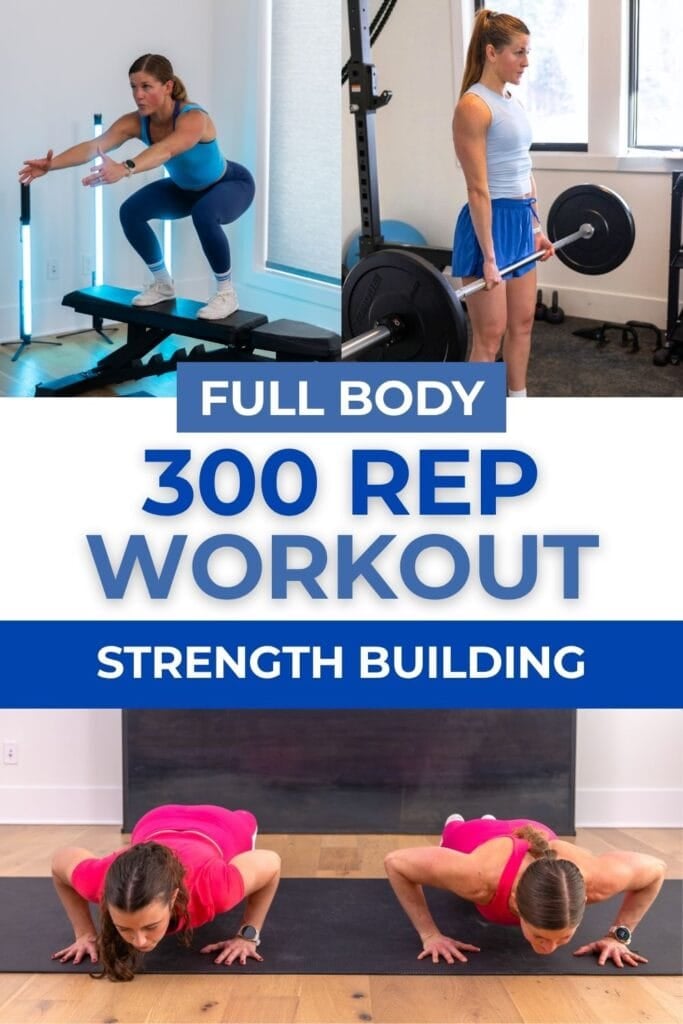
More WorkoutsPin This: The 300 Workout (Original, Intermediate, and Beginner)
This post includes affiliate links. I do earn a commission for products purchased using these links (at no additional cost to you). Thank you for supporting Nourish Move Love, making the content you see on this blog possible.
2 comments
Just completed the intermediate version of the 300! I thought my arms were going to fall off after 50 consecutive press-ups. How humbling but I’m so glad I did it!
Wow, you’re amazing Candice, this is a TOUGH challenge! WAY TO GO! -Lindsey