





8 Exercises with Resistance Bands
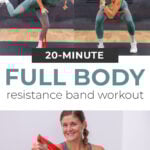
These 8 mini resistance band exercises target your arms, legs, glutes, back and core for a low-impact, full-body strength workout you can do anywhere. Using a mini loop resistance band, this 20-minute workout combines functional strength exercises with movements that challenge your muscles in different ways, with no additional equipment required.
While I am a huge advocate of dumbbell strength training workouts, especially for women, a well-rounded strength training routine includes variety. That means training in different planes of motion, challenging your muscles in new ways and using different types of equipment.
Resistance bands are one of my favorite ways to add that variety. They’re lightweight, portable and versatile, making it easy to strength train when you don’t have access to a full set of weights. I also love that banded exercises challenge you to control each movement and stabilize your body, making them a great tool for building functional strength you can use in everyday life.
Read A 5-Star Review ⭐⭐⭐⭐⭐
“Loved this one!! 11 months postpartum and I did nearly every one of those push ups from my toes!!! Never would I have imagined! You guys have done it!! THANK YOU!”
— Hannah R.
Equipment and Instructions
Equipment Needed: I’m using these mini loop bands. Use code NML for a discount.
Implementing this workout into your routine: I suggest adding full-body workouts like this one to your home workout plan 1-2 times per week to build muscle strength and increase endurance.
Your workout looks like this:
- 8 exercises: Complete each exercise for 30 seconds.
- Timed intervals: Rest for 15 seconds between exercises.
- 4 circuits: Perform each circuit for 2 sets, alternating sides as needed.
If you’re pregnant, postpartum, new to exercise or managing an injury or medical condition, consult your healthcare provider before starting a new workout routine. Modify any exercise as needed and stop if you experience pain or discomfort.
Want to follow along with me? I lead you through this 20-minute resistance band workout on YouTube, from start to finish.
Resistance Band Workout Outline
Circuit 1
Circuit 2
Circuit 3
Circuit 4
1. Banded Squat
Targets: Gluteus medius, hip abductors and quadriceps.
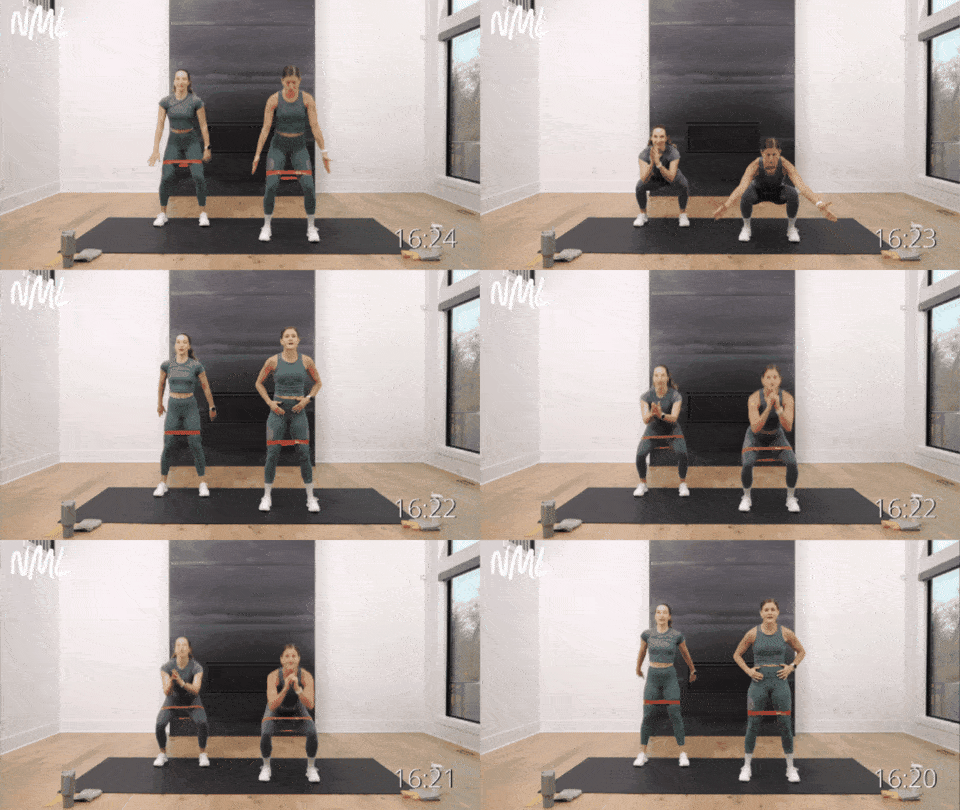
How To Do Banded Squats
- Place the resistance band on your thighs, approximately 6 inches above the knees. Stand with your feet slightly wider than your hips to create tension across the band to activate your glutes.
- Sit back into a squat, lowering your hips until they are parallel to the knees, striving for a 90-degree angle. Drop your hips down, weight in your heels, chest up.
- Then, drive through your heels to return to a standing position. Squeeze the glutes at the top.
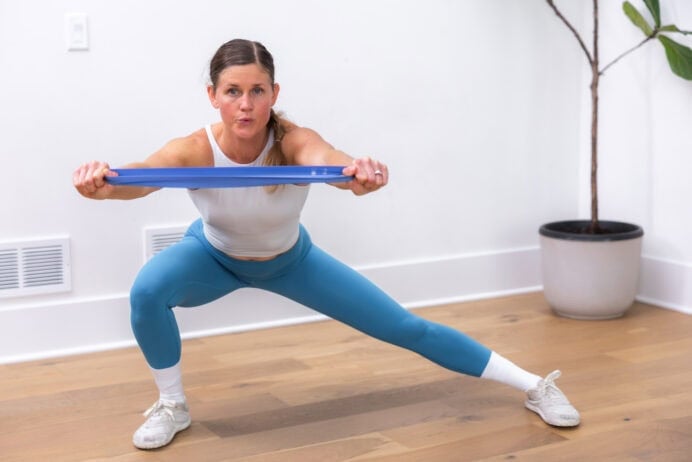
2. Banded Lateral Shuffle
Targets: Gluteus medius (outer glute that controls hip movement and side-to-side movements), quads, hamstrings, calves and core.
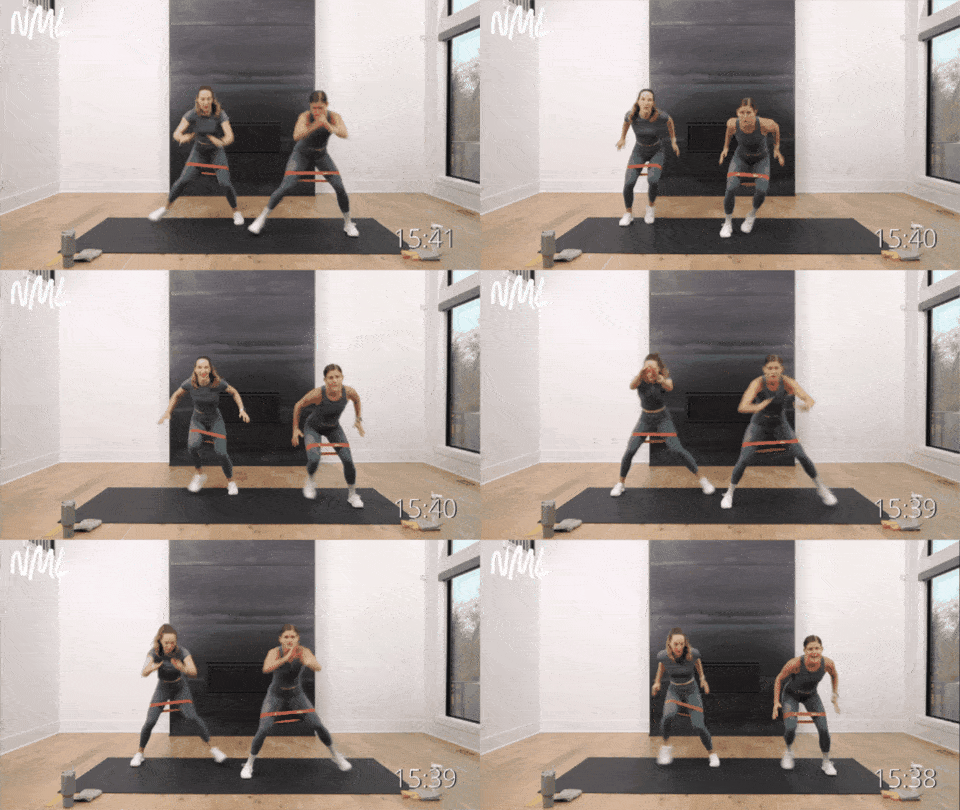
How To Do Banded Lateral Shuffles
- Stand with your feet slightly wider than shoulder-width apart, knees slightly bent. The resistance band is wrapped around your calf/shin area. Stand with your feet slightly wider than your hips to create tension across the band, activating your glutes.
- Bend your knees to lower down into a loaded athletic position.
- Hold this loaded squat position as you take a wide step to your right, stretching the band as you step out wide. Bring your left toes in to tap near your right heel, similar to a lateral band walk.
- Reverse the movement, stepping out wide to the left, leading with your left knee, before bringing your right toes to tap the floor near your left foot.
3. Lat Pulldown
Targets: Lats (or latissimus dorsi, the largest muscle in the upper body and biggest back muscle), shoulders, biceps and core.
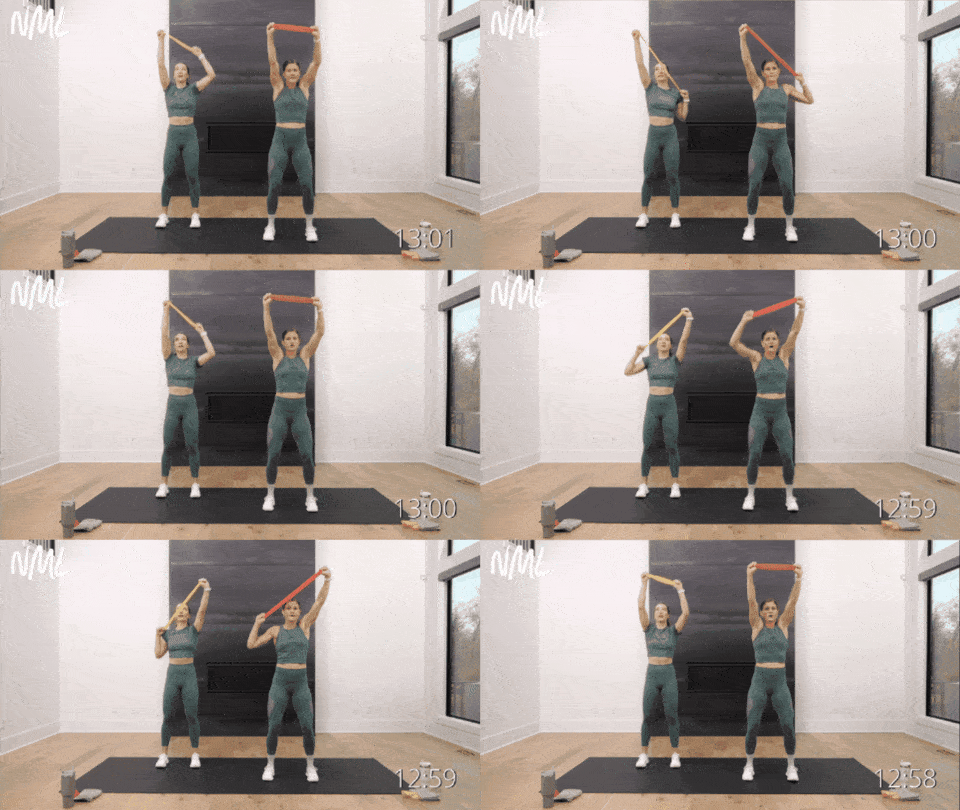
How To Do Lat Pulldowns
- Stand with feet hip-width apart. Loop the resistance band between your thumbs and hold both hands overhead, arms fully extended, palms facing away from you.
- Keeping your left hand steady, pull your right elbow down and out, engaging your back muscles and pulling your shoulder blade down. Pull the band to shoulder level.
- Slowly, release the tension, bringing your right hand back to the starting position with control.
- Repeat, this time pulling the band down to shoulder height with your left hand.
4. Tricep Kickback
Targets: All 3 heads of the tricep muscle (back of the upper arm).
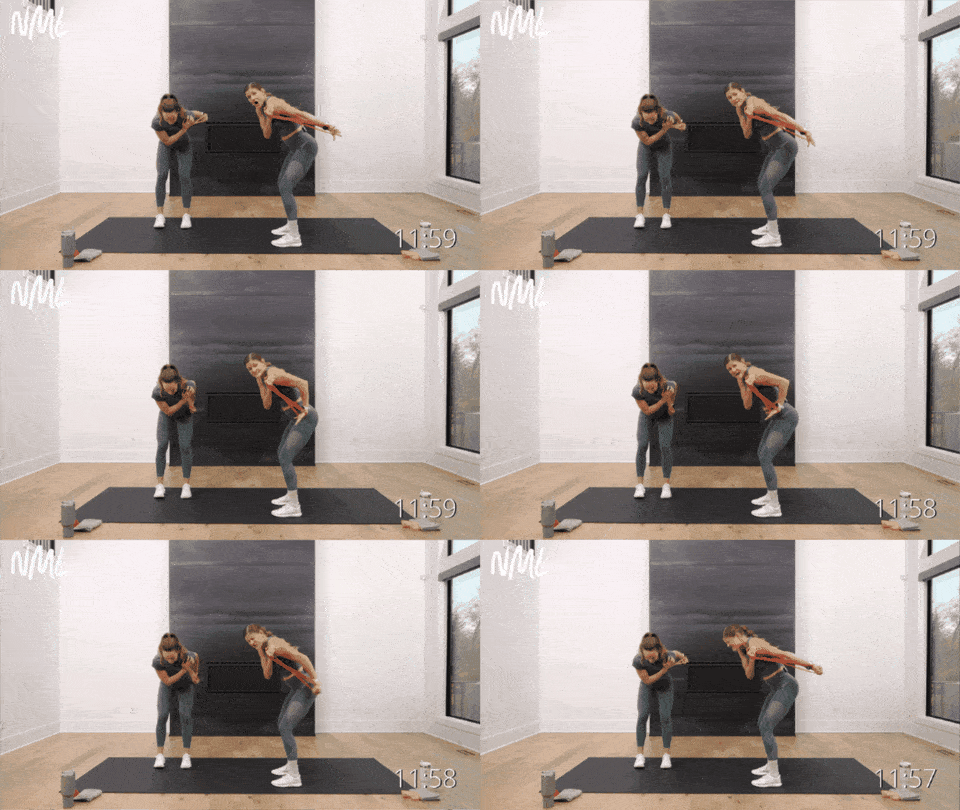
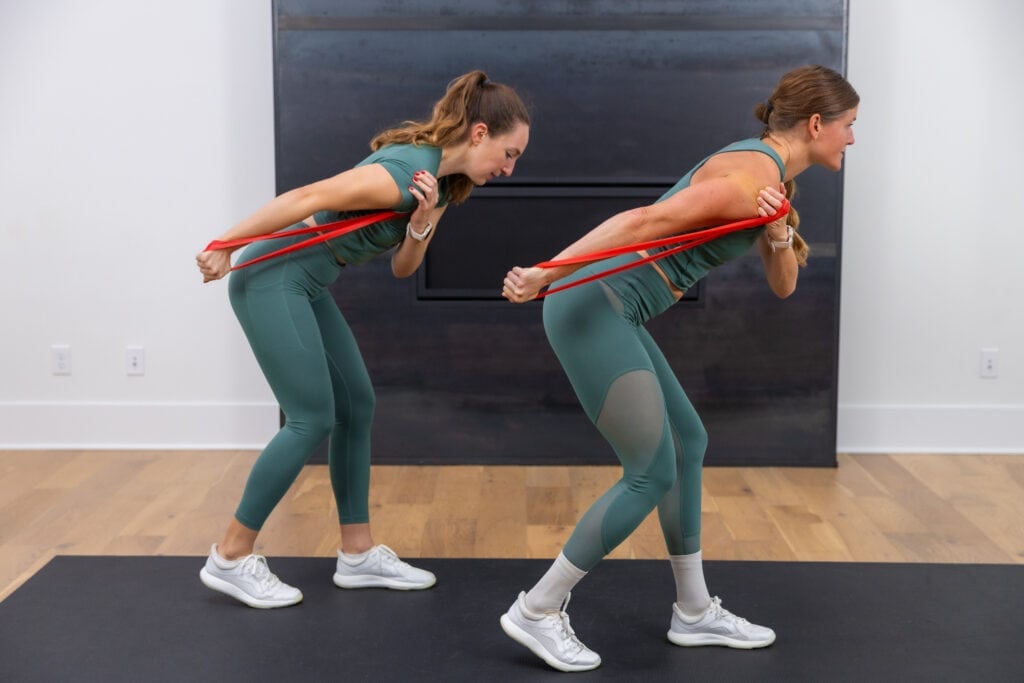
How To Do Tricep Kickbacks
- Start with feet shoulder-width apart, knees slightly bent, or slightly stagger your feet (pictured above).
- Hold the top of the band at your left shoulder with your right hand. Then loop your left hand/palm through the bottom of the resistance band.
- Slightly hinge forward at the hips and perform a triceps extension with your left arm, extending your left arm straight behind you as you pull the band toward your left hip.
- With control, slowly return your left hand to the starting position.
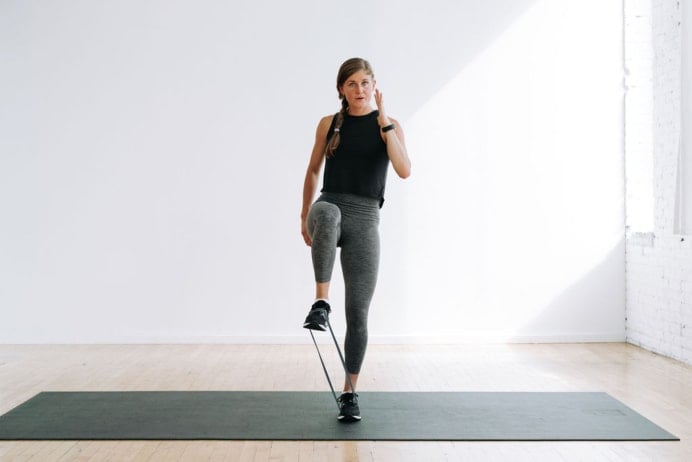
5. Single-Leg Deadlift and Back Row
Targets: Hips, glutes, hamstrings, core, back and biceps.
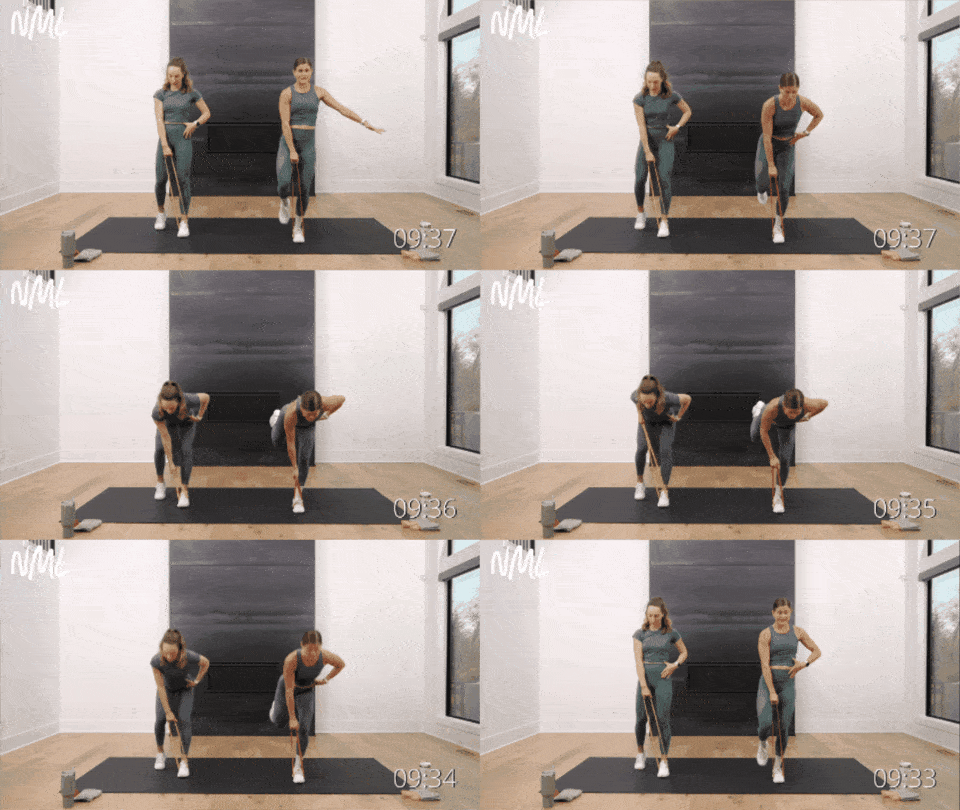
How To Do Single Leg Deadlifts and Bent Over Rows
- Loop the exercise band around the arch of your right foot. Hold on to the band with your right hand. Shift your weight to your right leg, then float your left leg off the floor, balancing on the right.
- Hinge, pushing your hips towards the wall behind you until your body is in a straight line, head to tailbone. The left leg extends behind you as you hinge, performing a single-leg deadlift on the right side.
- Hold this hinged position as you perform a single-arm back row on the right side. Pull the band back towards your right hip. (Think of pulling from your elbow versus your wrist.) Stop once your right elbow is in line with your rib cage, making a straight line from right shoulder to elbow. Hold at the top for a moment.
- Control the resistance band back down, then drive through your right heel, squeezing your butt and hamstring to return to a balanced standing position.
Modification(s): Perform staggered deadlifts with a back row rather than floating your opposite leg.
6. Push-Up and Knee Drive
Targets: Arms, chest, shoulders, triceps, back, biceps, abs and core.
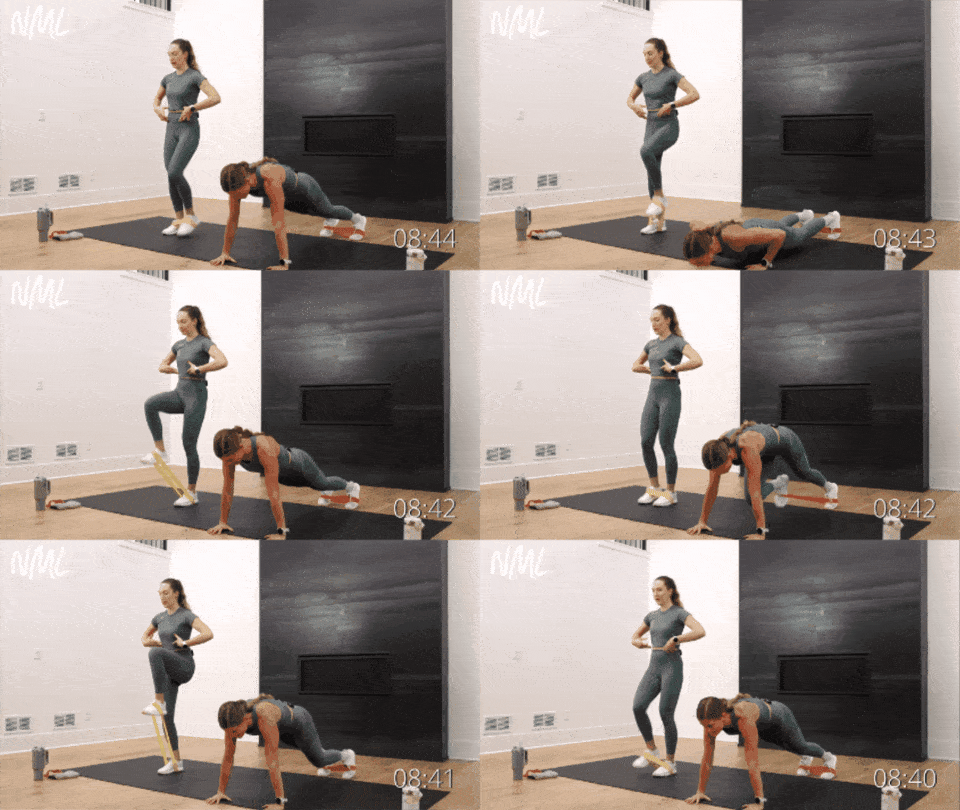
How To Do Push Ups and Knee Drives
- Start in a high plank position, shoulders over wrists, core engaged. Loop a resistance band around the arches of both your feet.
- Lower your chest down into the bottom of a push-up, letting your elbows fall back towards your body and leading with your chest.
- Then, press back into a high plank position.
- Hold a high plank as you pull your right knee towards your right elbow, then your left knee towards your left elbow.
- Repeat, alternating 1 push-up with a wide knee drive on each side of the body.
Modification(s): Perform standing banded marches, driving first your right knee, then your left knee up towards your chest. For a lower-impact push-up option, see my push-up progression guide.
7. Banded Dead Bug
Targets: Transverse abdomen (deep core muscles below your rectus abdomen or 6-pack ab muscles), lower abs and hip flexors.
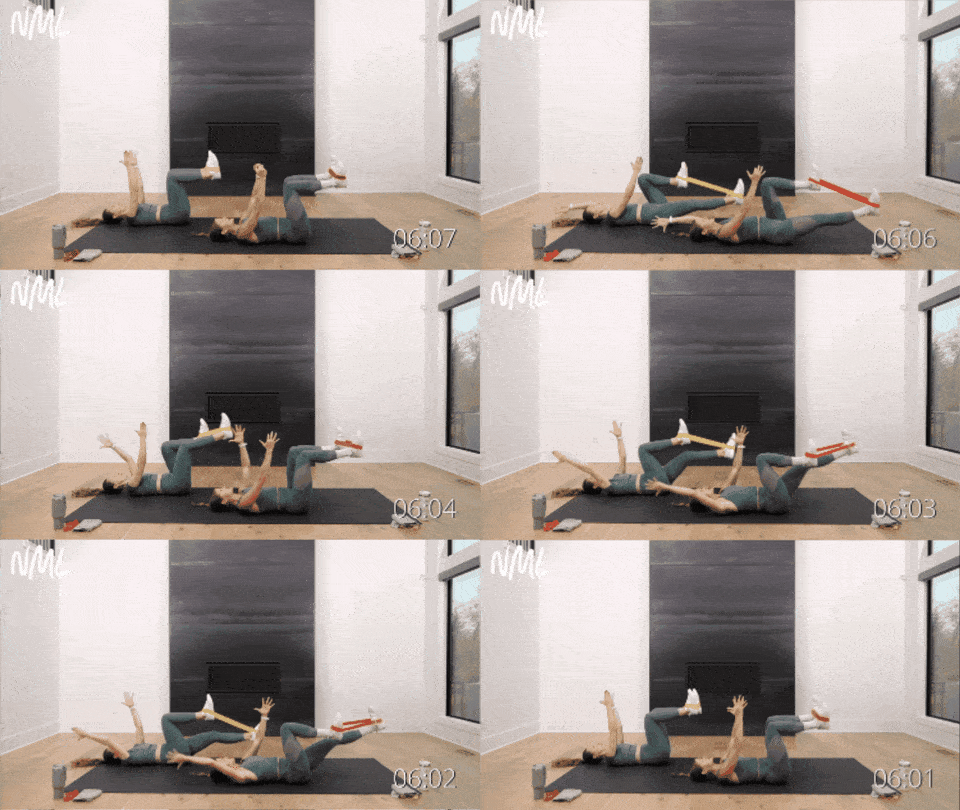
How To Do Banded Dead Bugs
- Lie flat on the floor. Loop a resistance band around both feet.
- Perform a slight pelvic tilt to press your lower back into the mat, drawing your belly button towards your spine. Think about wrapping your abdominal wall around your torso.
- Bring your legs up, knees bent at 90 degrees, shins parallel to the floor. Extend your arms straight overhead, wrists stacked over shoulders.
- Contract your ab muscles to engage your core as you extend your right arm overhead while simultaneously straightening your left leg. Return to the starting position.
- Extend your left arm overhead while simultaneously straightening your right leg. Return to the starting position and repeat.
Modification(s): Reduce your range of motion by extending your arm and leg only as far as you can while keeping your lower back pressed into the mat. For more dead bug variations and modifications, see my dead bug exercise guide.
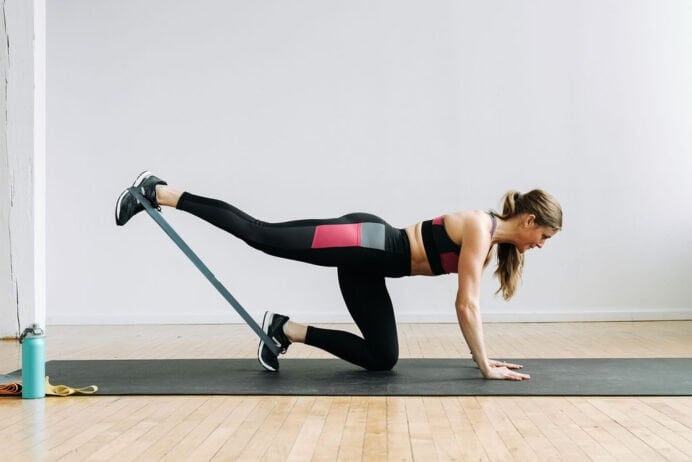
8. Bear Crawl Kick Back
Targets: Deep transverse abs, lower abs, upper abs, oblique muscles, glutes, hips, erector spinae and shoulders.
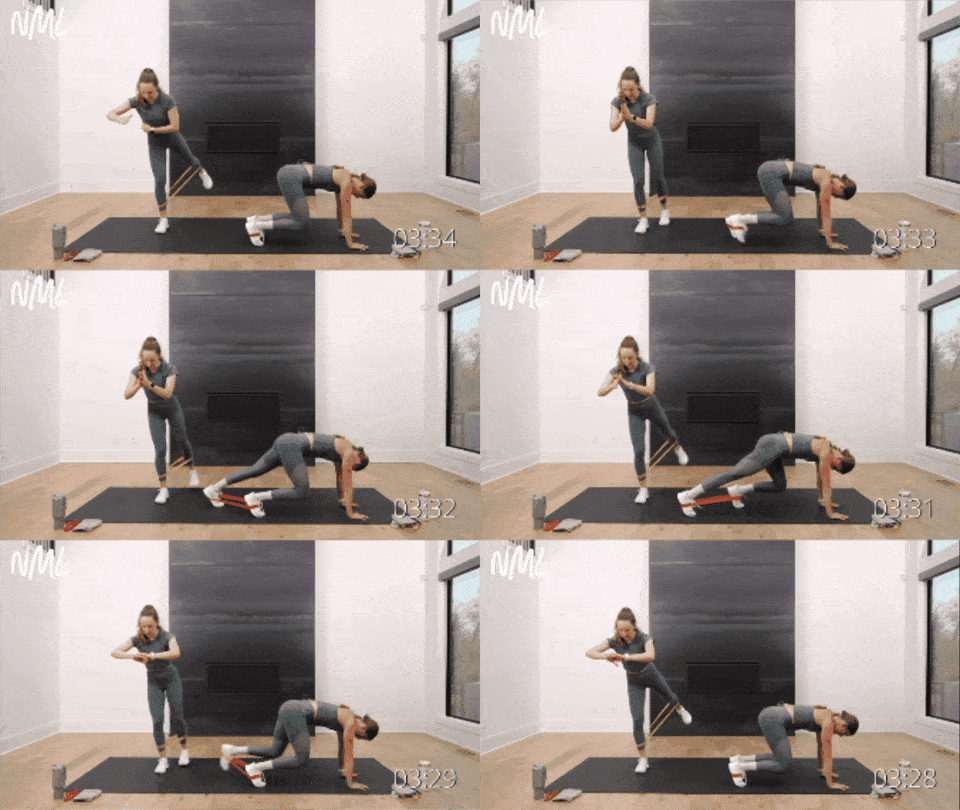
How To Do Bear Crawl Kick Backs
- Start in a tabletop position on all fours, shoulders stacked over wrists and hips stacked over knees. Place the band around the bottom of your feet or the soles of your shoes.
- Tuck your toes under and lift your knees off the mat, core tight, finding a bear crawl position. Try to keep your knees close to the mat, maintaining a neutral, flat back and spine.
- Alternate extending your legs straight behind you. Begin by extending your right leg, keeping your left knee bent in a bear crawl hold. Then, return your right leg to bear crawl position.
- Extend your left leg straight behind you, keeping your right knee bent.
Modification(s): Perform standing glute kickbacks, a simpler, standing version of the same movement pattern.
FAQs
How often should you do resistance band workouts?
I recommend adding full-body resistance band workouts like this one to your fitness routine 1-2 times per week. Resistance band training is a great way to build strength and endurance while targeting areas like your upper back, lower body muscles and core.
Regular resistance training can also support mobility and flexibility as you build strength through a variety of movements.
Do resistance band workouts actually work?
Yes! Resistance bands are an effective, affordable and accessible tool for building strength and endurance. You can also combine elastic bands with bodyweight exercises to challenge your muscles in different ways.
Resistance bands can be used to target everything from your upper body and lower body to your core and pelvic floor. As you get stronger, increase the resistance level of your band or perform more reps to continue challenging your muscles.
Can you combine resistance band workouts with traditional weightlifting?
Absolutely. I like using bands for a warm-up or a quick, standalone workout on days when I don’t want to lift heavy weights. You can also use different types of resistance bands for movements you’d typically perform with weights. That includes bicep curls, chest presses, lateral raises and overhead presses that target the shoulder muscles.
Are resistance bands as effective as free weights for building strength?
Resistance bands can be an effective tool for building strength, but they challenge your muscles differently from free weights. Bands are especially useful for targeting stabilizing muscles and providing resistance throughout a movement. I like using both resistance bands and free weights to add variety to my strength training routine.
Free 2-Week Workout Program
More Workouts
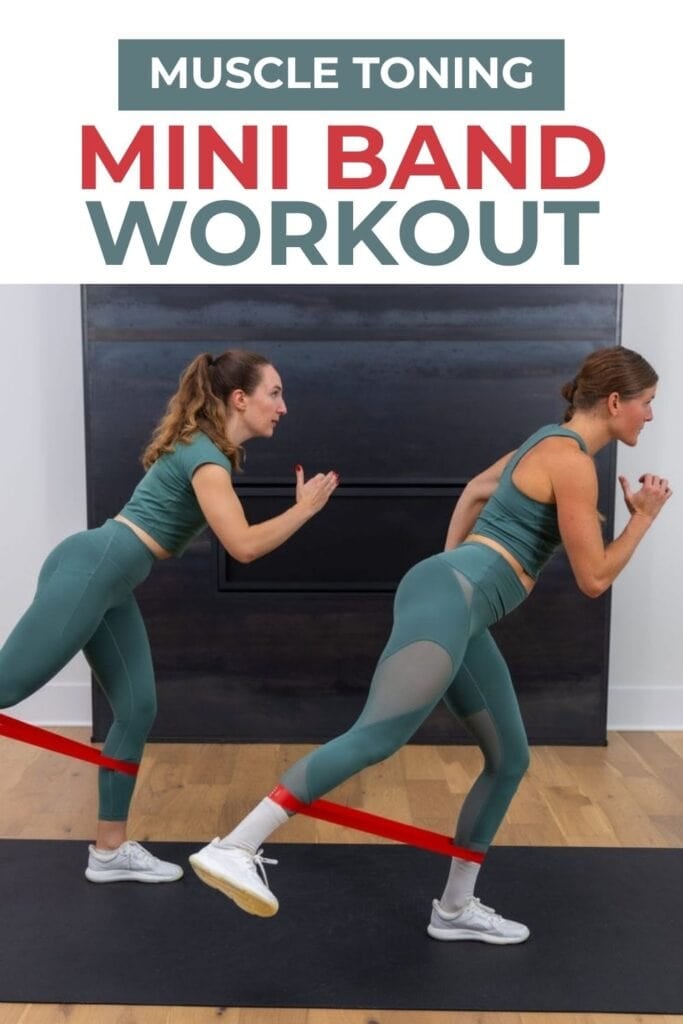
Resistance BandPin This: 8 Resistance Band Exercises (Full-Body Workout)
This post includes affiliate links. I do earn a commission for products purchased using these links (at no additional cost to you). Thank you for supporting Nourish Move Love, making the content you see on this blog possible.
Leave a Comment
2 comments
Do you have a workout plan for beginners?
Yes, we do! You can find our Free, 30-Day Beginner Workout Program here: https://www.nourishmovelove.com/fitness-beginner-workout-plan/! I hope that helps! -Lindsey