


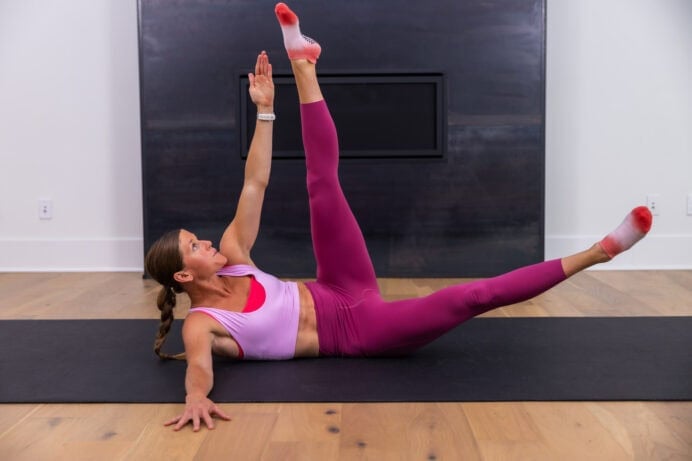
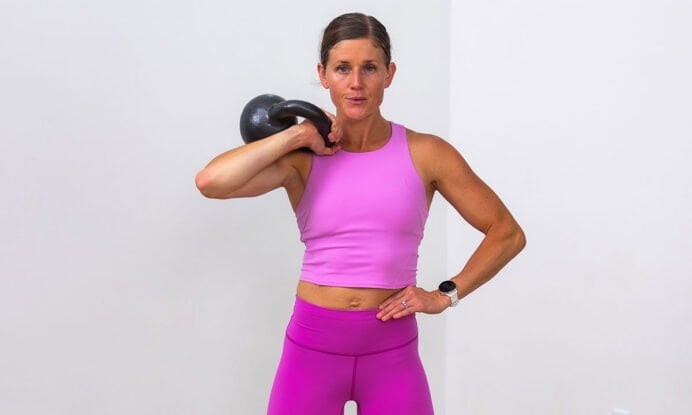
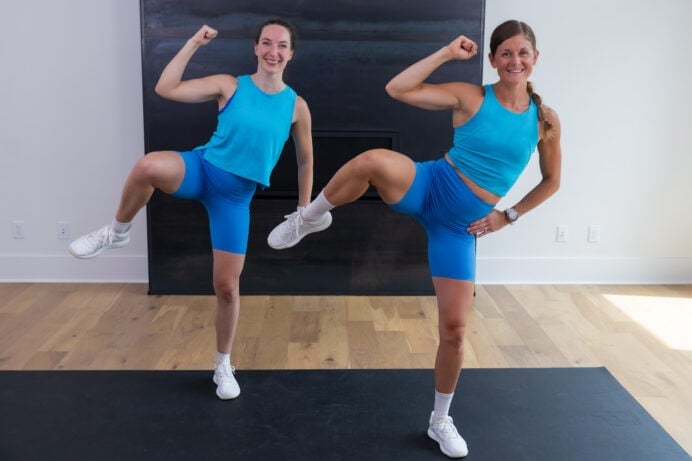



30-Minute Core Workout at Home
This 30-minute core workout at home is designed to build real core strength using functional, strength-based exercises you can do with minimal equipment. I created this workout for busy women who want a strong, supportive core that performs both in the gym and in their real life — supporting daily movements like bending, lifting, twisting and rotating. A mix of standing ab exercises and mat ab exercises targets your deep core muscles from every angle.
Your core is much more than just your “six-pack” ab muscles. As a whole, the core supports nearly every movement you do. A strong core improves your posture, protects your spine, reduces risk of injury and helps you move with more power and control in your daily life.
Whether you’re lifting weights, carrying kids, running or twisting, your core works to stabilize and support your body both inside and outside of the gym.
There isn’t a single “best” core exercise, because the core as a muscle group is so complex and includes every muscle between your shoulders and hips. The most effective core workouts at home train the entire midsection through multiple planes of motion, and include a variety of (controlled) rotation exercises, anti-rotation exercises, extension exercises and stabilization exercises.
Today’s workout targets the core in 3 different ways:
- Standing Ab Exercises: Train your core to stabilize your body against gravity, improving your balance, coordination and functional strength. These exercises most closely mimic how your core functions during your daily activities.
- Mat Ab Exercises: Focus on isolating the smaller stabilizing muscles of the core, including the obliques and deep core muscles. These support spinal alignment and reduce lower back strain.
- Power Ab Exercises: Incorporate movement and controlled explosiveness, helping your core learn to transfer force efficiently between your upper and lower body. These are also great exercises to get your heart rate up and burn more calories.
Each circuit in today’s workout focuses on one of these categories, so you get the benefit of all 3! This well-rounded approach builds functional strength, improves stability and helps you build a core that’s not just aesthetically pleasing, but also supportive and functional in your daily life.
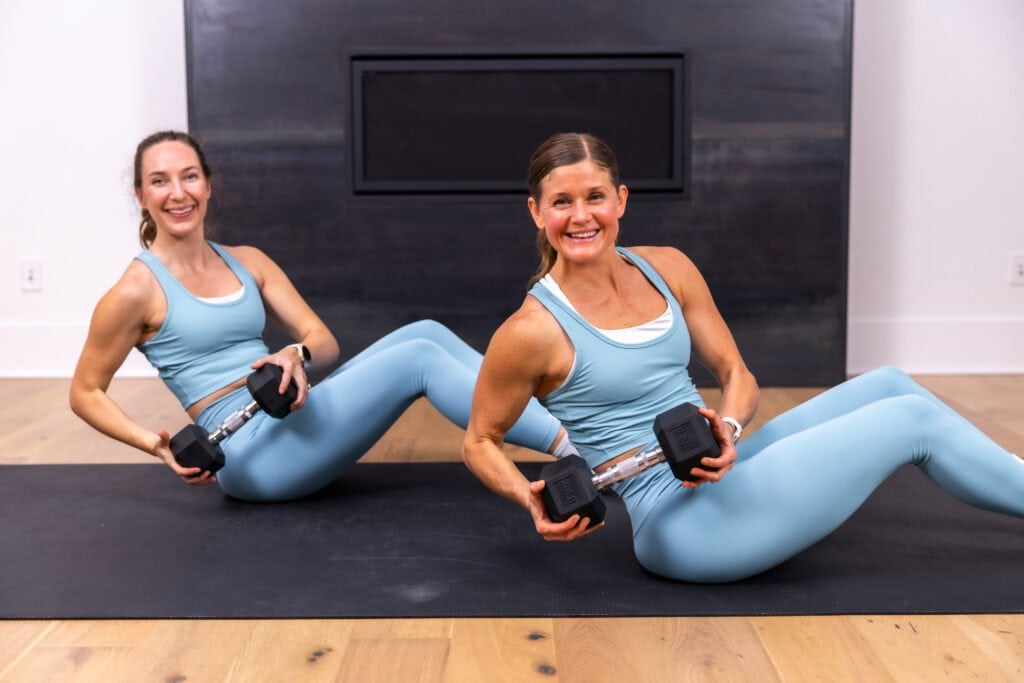
Workout Specifics
Build core strength and stability with these weighted ab exercises. This complex dumbbell workout includes a variety of exercises to target the core and pelvic floor from all angles. I’ll coach you through each exercise, providing modifications throughout the workout so you can scale this to your fitness level.
I recommend adding this dumbbell core workout to your strength training workout plan 1-2 times a week. If you’re looking for extra core engagement, check out my 30-Day Ab Challenge.
Workout Equipment
Medium to Heavy Dumbbells. I’m using 15-20 lbs. Beginners may wish to start with just their bodyweight and add weights as their strength increases.
Workout Instructions
Follow along with the guided 30-Minute Core Workout on YouTube, led by me — your certified personal trainer(CPT), Lindsey Bomgren.
Your Workout Looks Like This:
- Guided Warm-Up and Cool-Down
- 3 Circuits (standing abs, mat abs and power abs)
- Timed Intervals (perform each exercise for 45 seconds of work, followed by 15 seconds of rest. Move at your pace, performing as many reps as possible during the timed interval.)
- Repeat Each Circuit x2 Sets
Workout Outline
Standing Abs Circuit:
Mat Abs Circuit:
Power Abs Circuit:
1. Single-Leg Deadlift and Knee Drive
Targets: The posterior chain (backside of body) — glutes, hamstrings, lower back and core muscles.
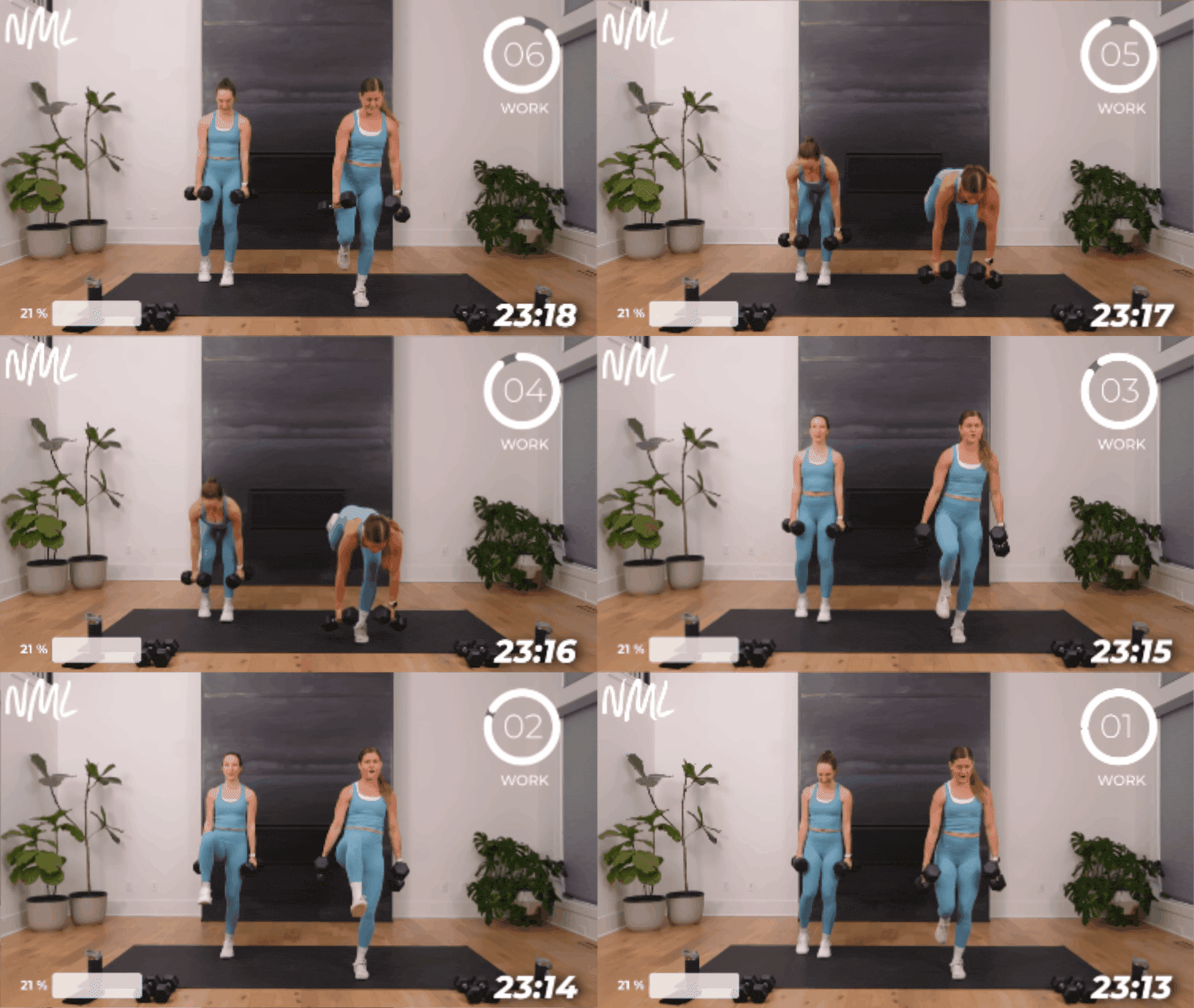
How to Do a Single-Leg Deadlift and Knee Drive
- Start standing with feet hip-width apart, knees slightly bent. Transfer your weight into your right foot and float your left foot off the ground, balancing on your right leg. Hold a dumbbell in each hand, palms facing in towards your body.
- With your right knee bent, hinge at your hips, extending your left leg long behind you as you lower the dumbbells towards the floor. Keep your hips square to the mat.
- You should feel a good stretch in your right hamstring (back of your right leg) at the bottom of this movement. Range of motion looks different for everyone.
- Then drive through your front right heel, squeezing your glutes and hamstrings to push your hips forward and return to the starting position. As you stand tall, drive your left knee up, bringing your left knee parallel to your left hip.
Modification: Stagger your feet, keeping your back foot on the ground rather than letting it float.
2. Front Rack March
Targets: Lower abs, lower back, obliques, glutes, hip flexors and shoulders.
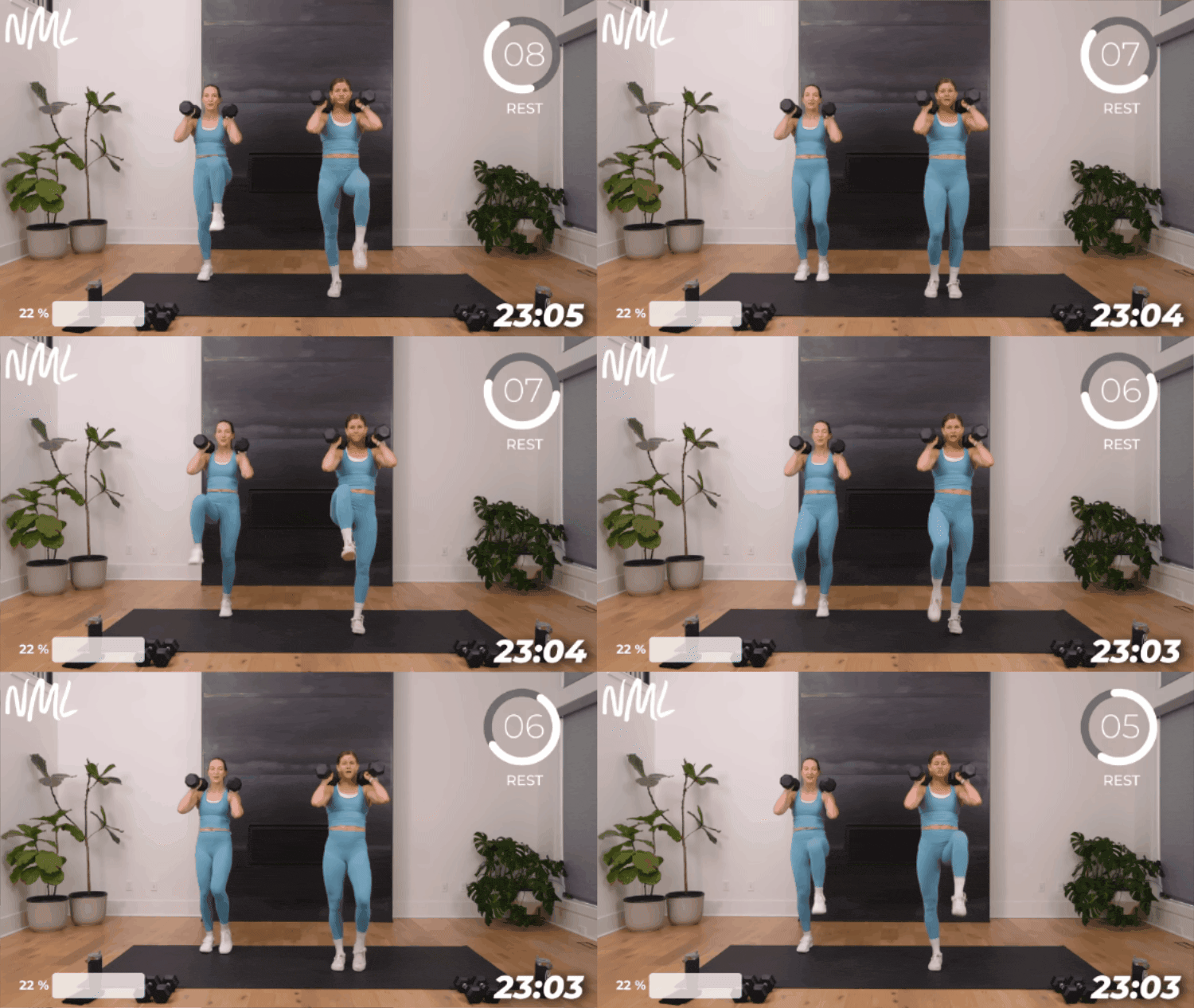
How to Do a Front Rack March
- Start in a standing position, feet hip-width apart, holding 1 dumbbell in each hand at your shoulders (front-rack position).
- Engage your core, then drive your right knee up in line with your right hip. The right knee is bent at a 90-degree angle. Ground through your standing left leg for stability, then return your right foot back to the ground.
- Switch sides, driving your left knee up in line with your left hip. Return to the starting position and repeat these alternating high knee lifts.
3. Lateral Lunge and Crunch
Targets: Glutes, quadriceps, inner thighs, abs and obliques.
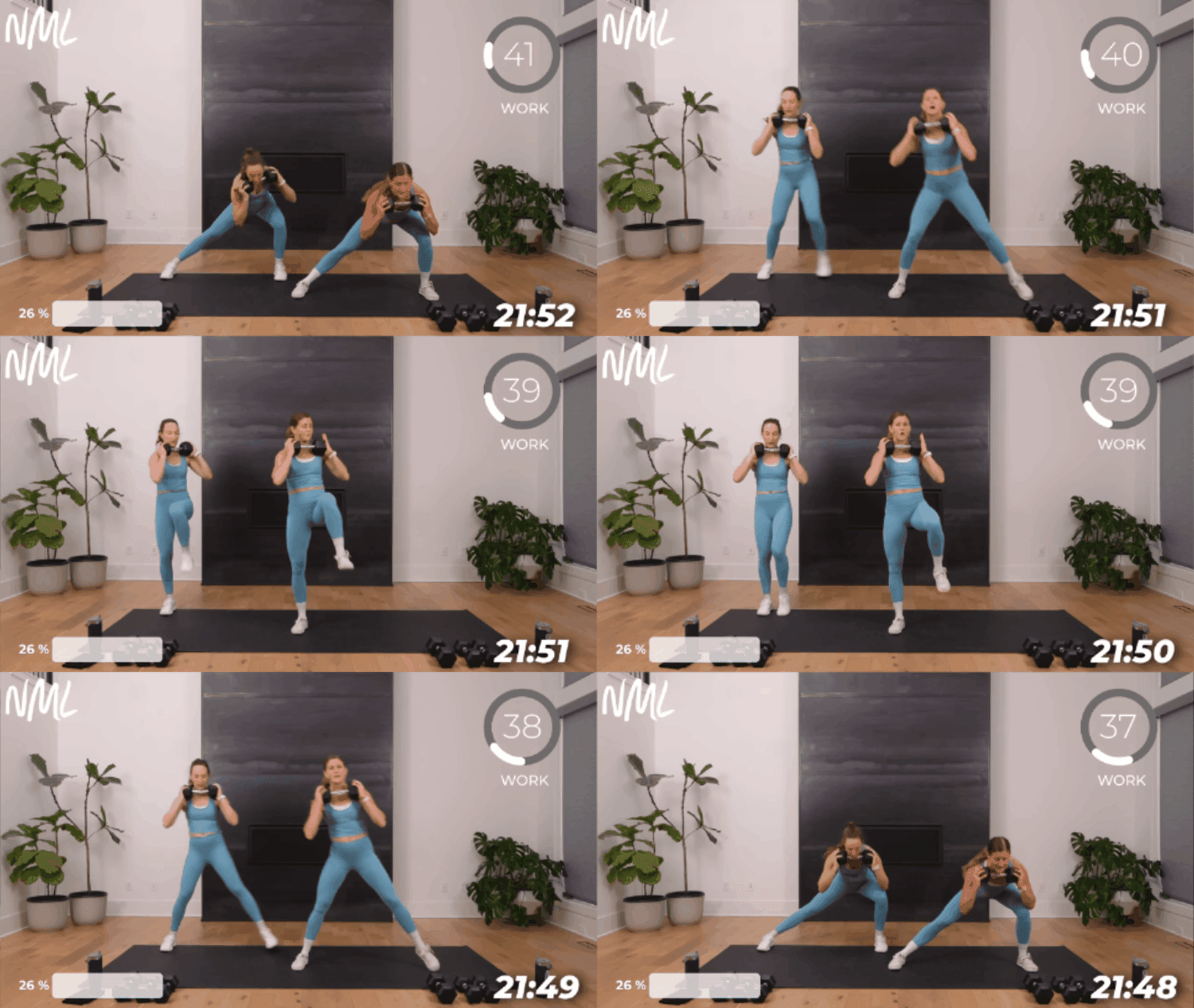
How to Do a Lateral Lunge and Crunch
- Start in an athletic stance, feet shoulder-width distance apart (or slightly wider), slight bend in the knees, chest up. Hold 1 dumbbell horizontally at your chest.
- Step your right leg out to the side as you push your hips back, bending your right knee while leaving your left leg straight. Think of performing a single-leg squat with your right leg while your left leg remains straight. Knees and toes pointing forward.
- Then, drive off your right foot to reverse the movement, exploding back up to center, driving your right knee to your chest.
- Balancing on your slightly bent left leg, bring your hands wide outside your head. Twist through your core to meet your right knee with your left elbow (performing a standing crunch).
Modification: If lunges hurt your knees, substitute one of these squat/lunge modifications.
4. Dumbbell Halo
Targets: Upper abs, lower abs, obliques and deep transverse abdominals.
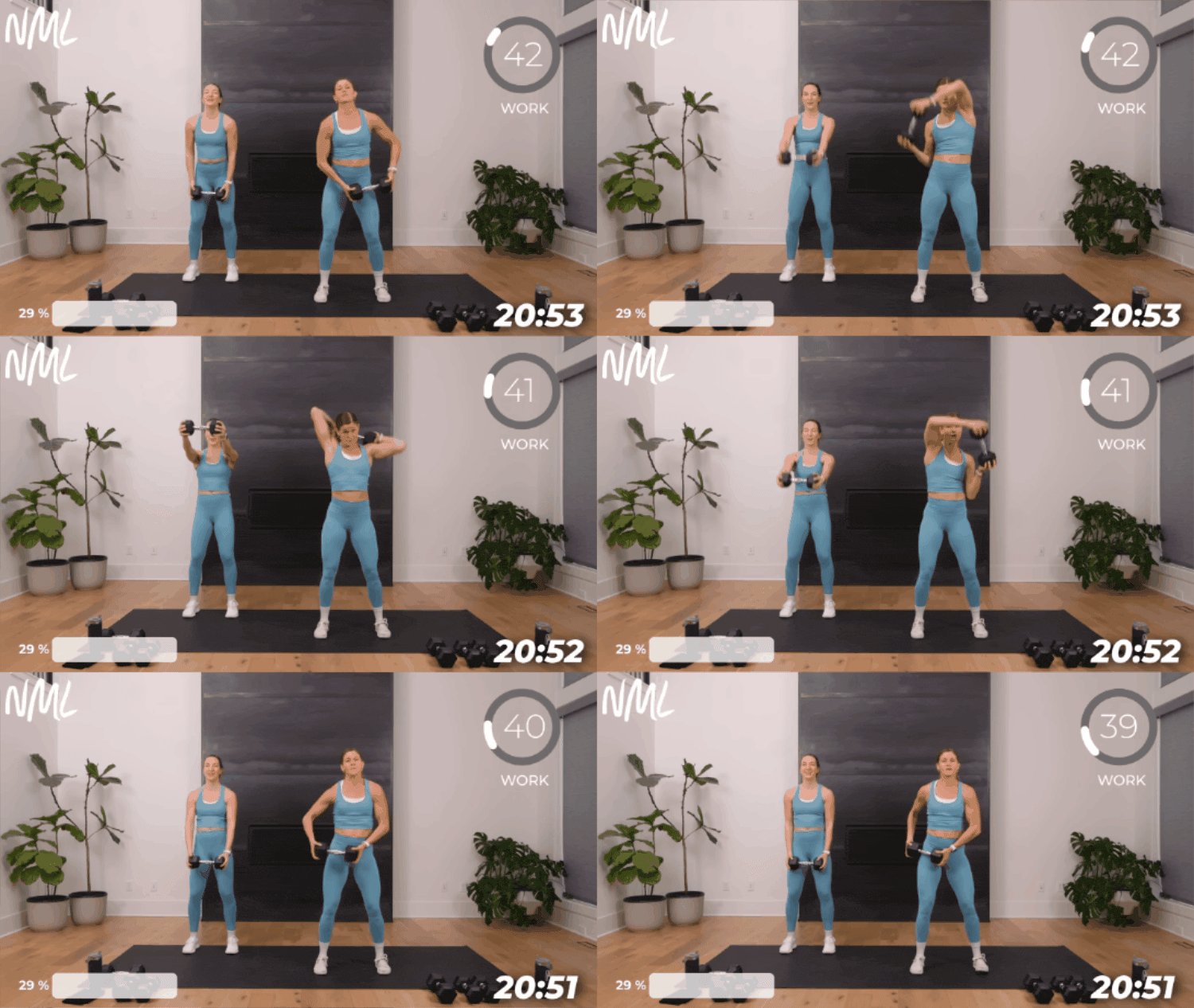
How to Do a Dumbbell Halo
- Stand with your feet hip-distance apart, core engaged and a soft bend in your knees.
- Hold 1 dumbbell horizontally between your hands at your right hip.
- Brace your core tight as you pull the dumbbell in a smooth motion from your right hip to your left shoulder and then behind and around your head, before bringing it down to your left hip.
- Repeat in the opposite direction.
Modification: Option to perform a dumbbell front raise.
5. Windmill
Targets: Obliques, abs, upper back, outer glutes, inner thighs, hamstrings, upper body and shoulders.
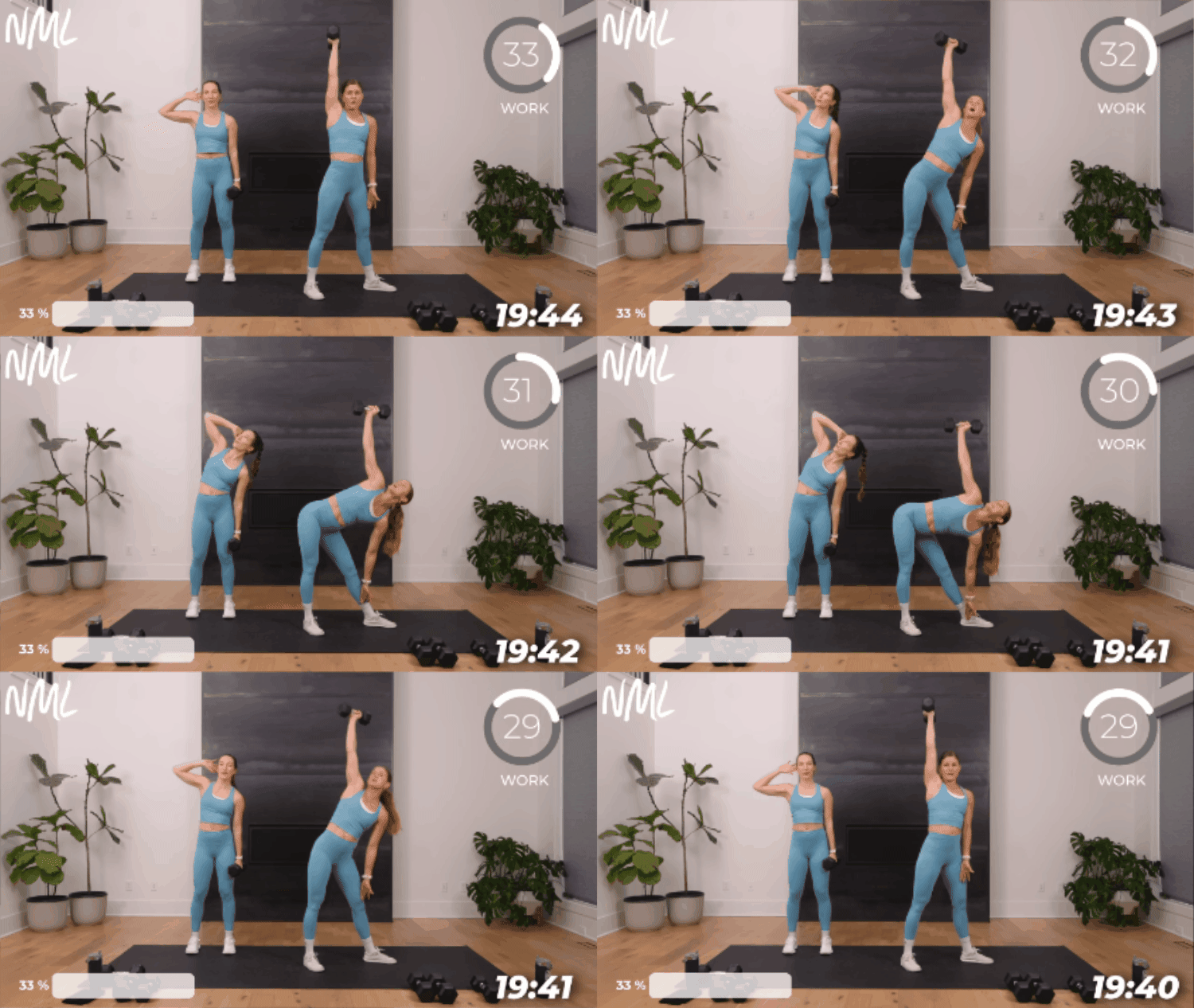
How to Do a Windmill
- Start in a wide stance, feet flat on the floor, holding a dumbbell in your left hand, directly above your shoulder.
- Rotate your right foot out 90 degrees so your right toes are pointing towards the top of your mat, then pivot your left foot slightly inward (about a 45-degree angle). Think the right heel aligns with the left arch.
- Focus on creating and maintaining length through your waist as you hinge at the hips, performing a side bend as you slide your right arm down your right leg. Try to keep your back straight. Keep your left hand directly above your left shoulder, maintaining a straight line with the dumbbell. The range of motion will look different for everyone.
- Squeeze through your obliques to pull your torso back upright, returning to the starting position.
Modification: Perform a standing oblique crunch, reducing range of motion.
6. Plank Dumbbell Drag
Targets: Chest, shoulders, triceps, abs and core muscles.
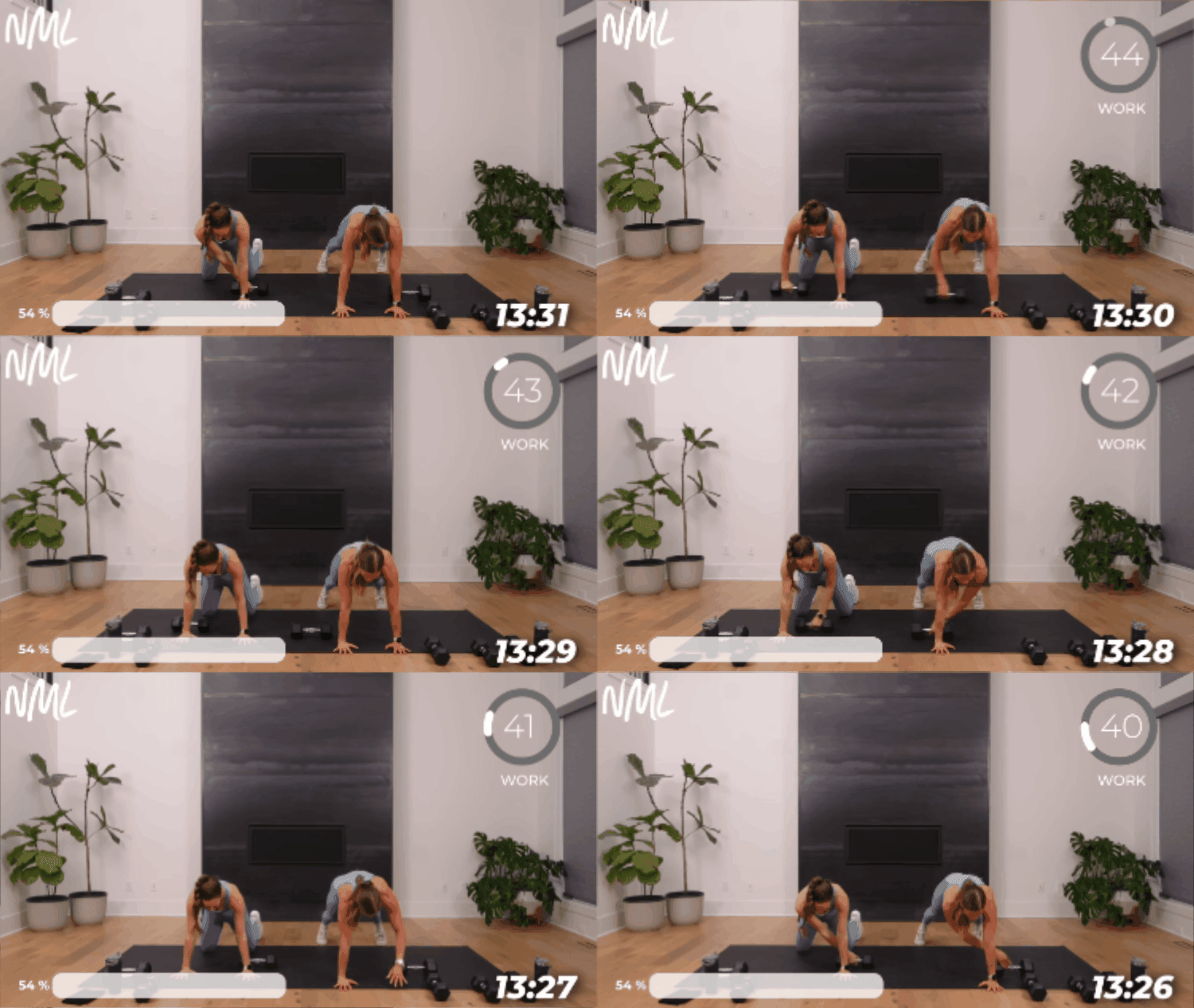
How to Do a Plank Dumbbell Drag
- Start in a high plank position with your shoulders stacked over your wrists, feet hip-width apart. Pull your shoulder blades apart, bracing through your core. Place 1 dumbbell horizontally on the floor outside your right hand.
- Reach your left arm under your body to grab the dumbbell and pull it across, ending outside your left hand. Think about keeping your shoulders and hips as stable as possible.
- Then, reach your right arm underneath your body to grab the dumbbell, pulling it back outside your right hand.
Modification: Perform the dumbbell drags from a modified plank (from your knees). If being in plank position hurts your wrists, try one of these wrist-pain modifications.
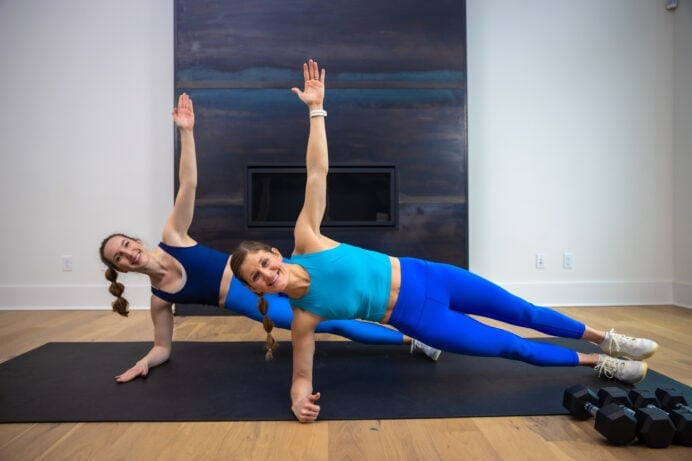
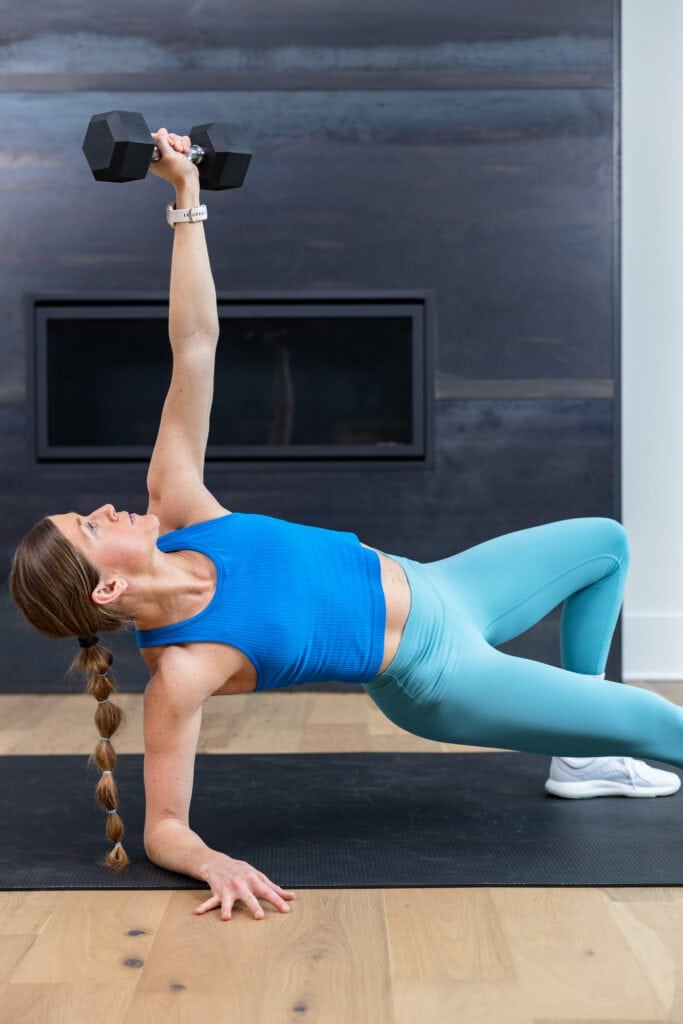
7. Side Plank T Rotations
Targets: Internal and external oblique muscles (the muscles that run along the side of your core), transverse abdominis and lower abs.
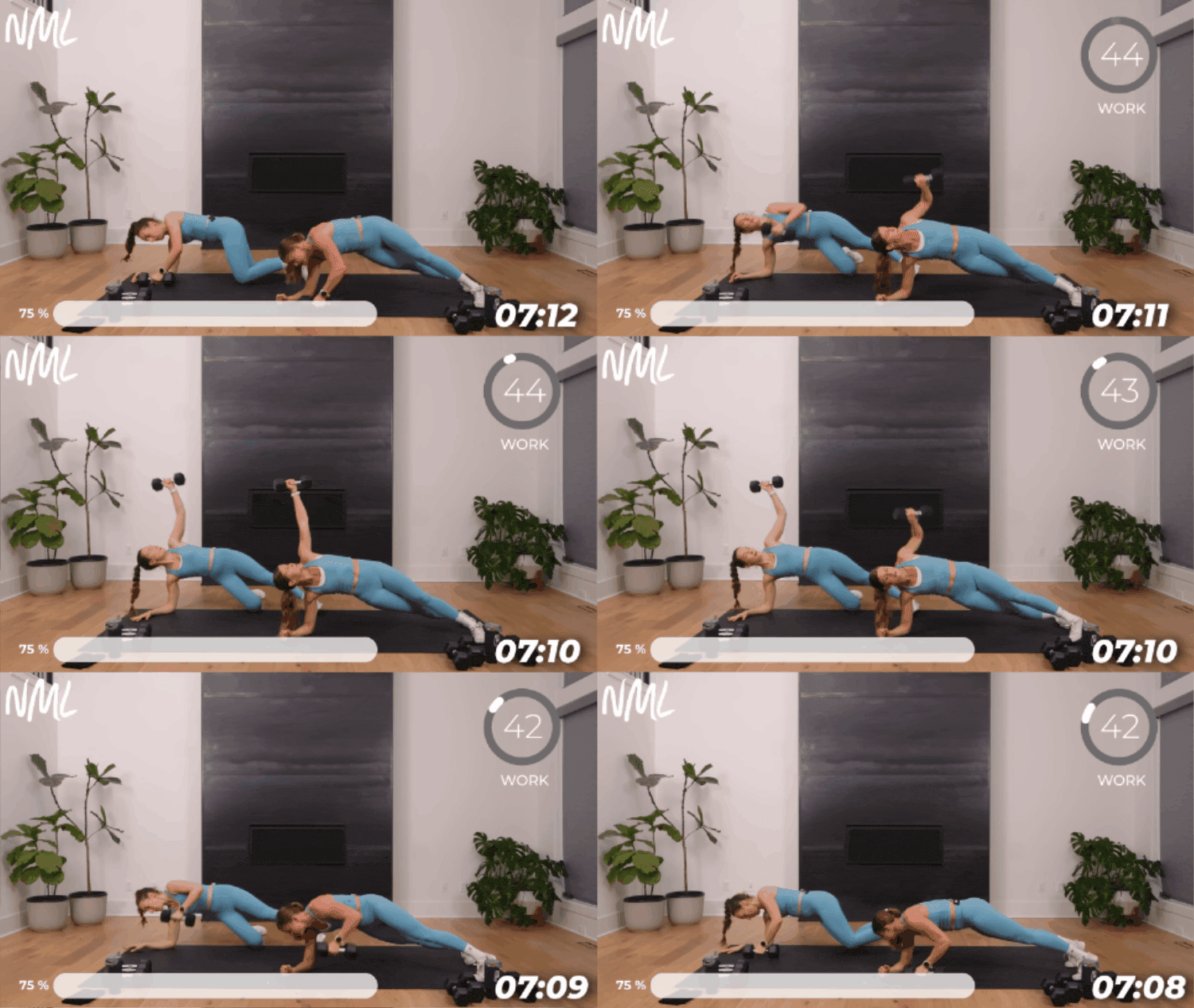
How to Do a Side Plank T Rotation
- Start in a forearm plank position, maintaining a straight line with your body, gaze slightly in front of you. Hold a dumbbell in your right hand underneath your right shoulder.
- Find a side plank position by rotating your body to the right, scissoring your feet and pulling your right arm straight overhead.
- Lower the dumbbell to the mat, returning to the starting position.
Modification: Perform side planks with the knees down. You can also omit the dumbbell.
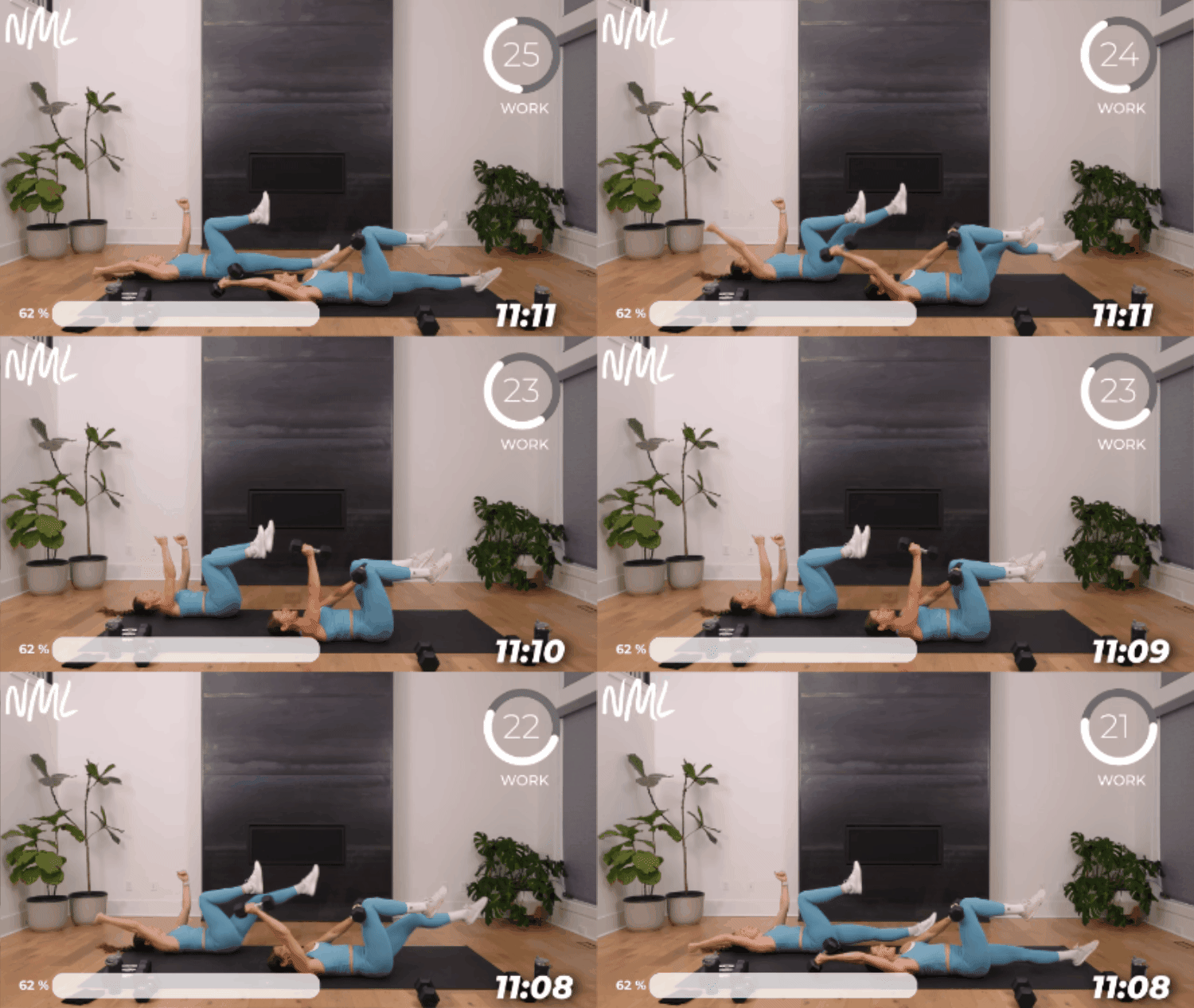
8. Dead Bug
Targets: Transverse abdomen (deep core muscles below your rectus abdominis or six-pack ab muscles), lower abs, hip flexors, shoulders and back (posterior and anterior deltoids).
How to Do a Dead Bug
- Lie on your back flat on the floor, performing a slight pelvic tilt to press your lower back into the mat. Lift your knees to form a 90-degree angle (knees stacked on top of hips).
- Hold 1 dumbbell horizontally and extend your hands straight overhead toward the ceiling. Inhale, letting your belly expand.
- Exhale, engaging your core and simultaneously extending your arms and left leg away from your body, lowering the dumbbell towards the ground with control. The right leg remains in place. With control, inhale as you return to the starting position.
- Repeat on the opposite side, exhaling as you extend your right leg and arms away from the body, lowering the dumbbell towards the ground. With control, return to the starting position.
Modification: Omit the dumbbell, performing this exercise with your bodyweight.
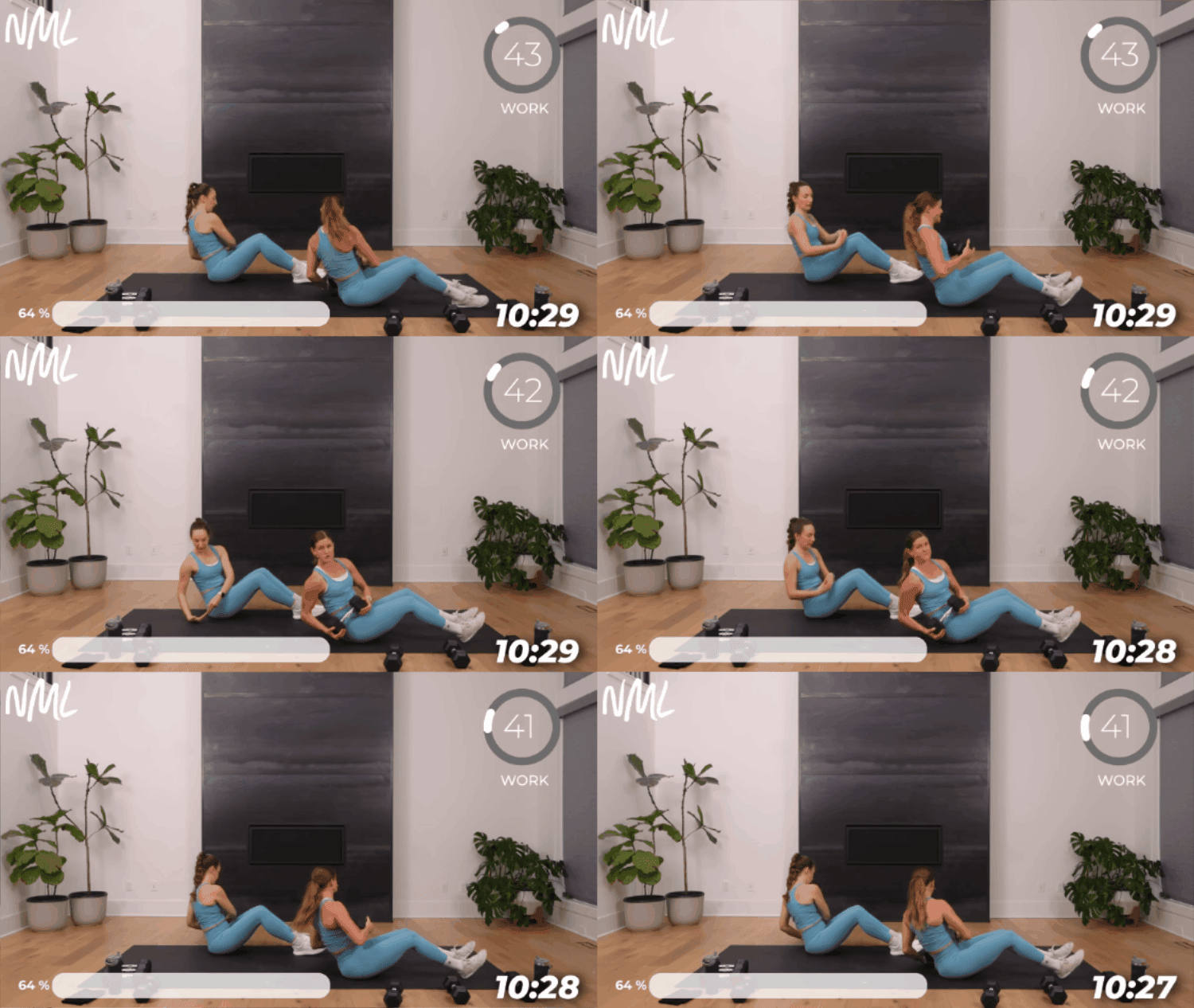
9. Russian Twist
Targets: Upper abs, lower abs, obliques, core and hips.
How to Do a Russian Twist
- Start in a seated position, sitting on your sit bones as you lean back. Hold 1 dumbbell horizontally between both hands. Float 1 or both feet off the ground to increase the intensity.
- Pull your right elbow back towards your right hip as you rotate through your torso to tap the dumbbell to the mat near your right hip.
- Use your obliques and abs to return to center.
- Reverse the movement, pulling your left elbow back towards your left hip as you rotate through your torso to tap the dumbbell to the mat near your left hip.
Modification: Keep both heels on the ground for additional support.
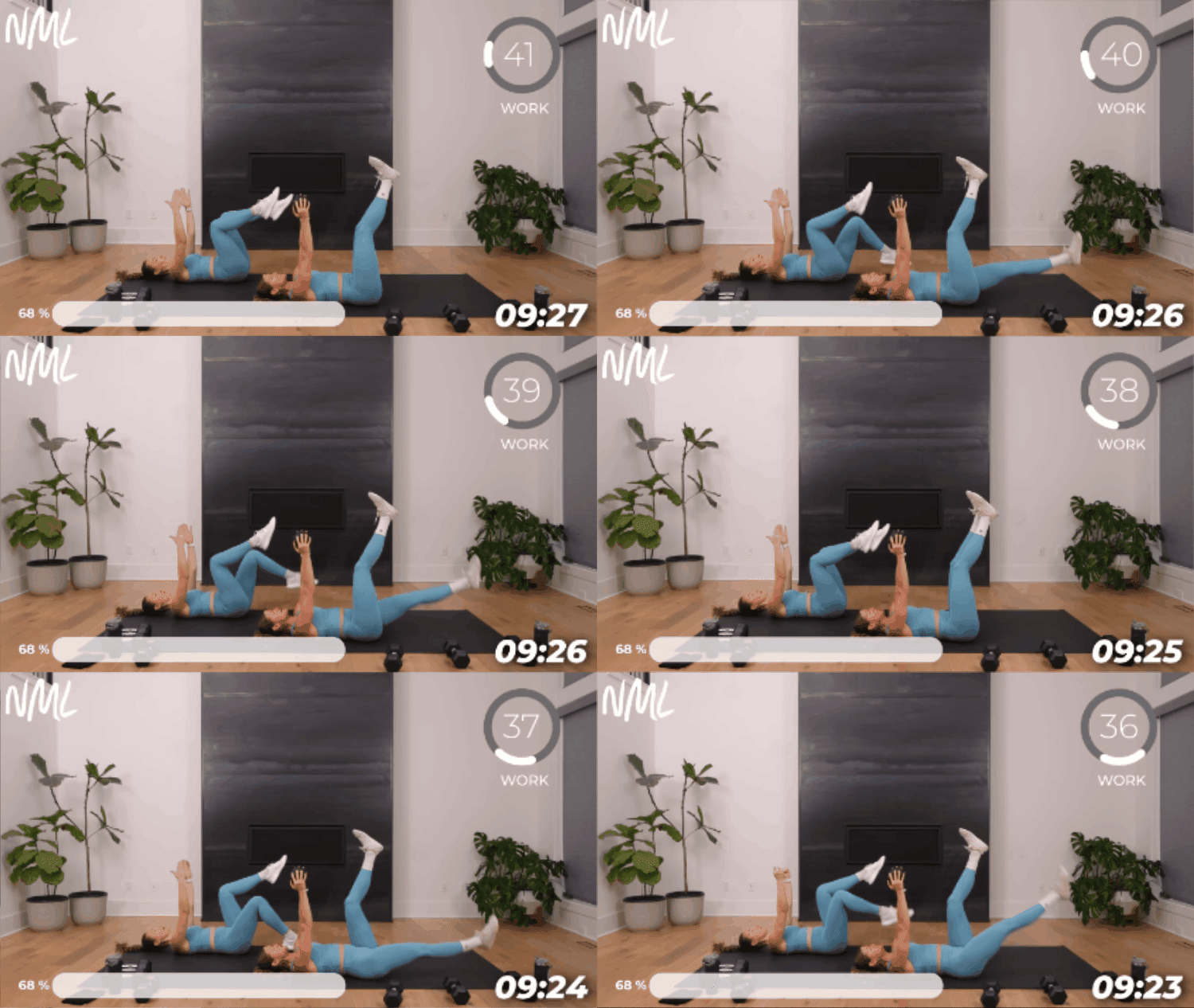
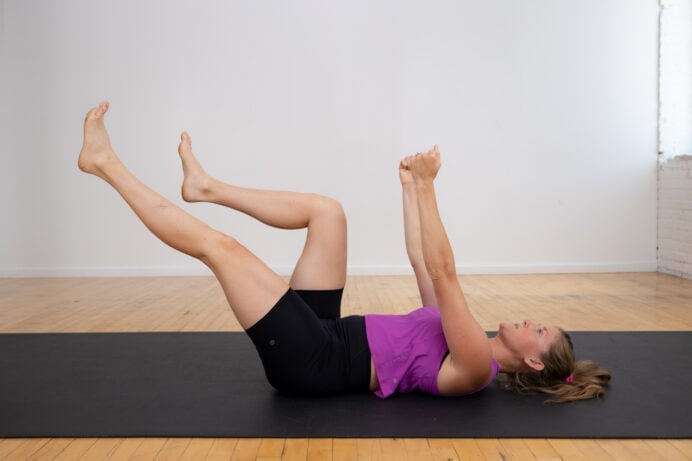
10. Alternating Leg Lowers
Targets: Rectus abdominis, transverse abs and lower abs.
How to Do Alternating Leg Lowers
- Lie on your back. Press your lower back firmly into the mat and think about “wrapping” your abdominal wall around your core.
- Straighten your legs and extend them over your hips, the bottom of your feet facing the ceiling.
- Slowly lower one leg towards the ground, keeping both legs straight. Focus on keeping your lower back pressed into the mat.
- Hover your heel above the mat, then pull it back up to starting position.
- Repeat, alternating legs.
Modification: Bend both knees, shortening the distance each leg travels during the leg raise.
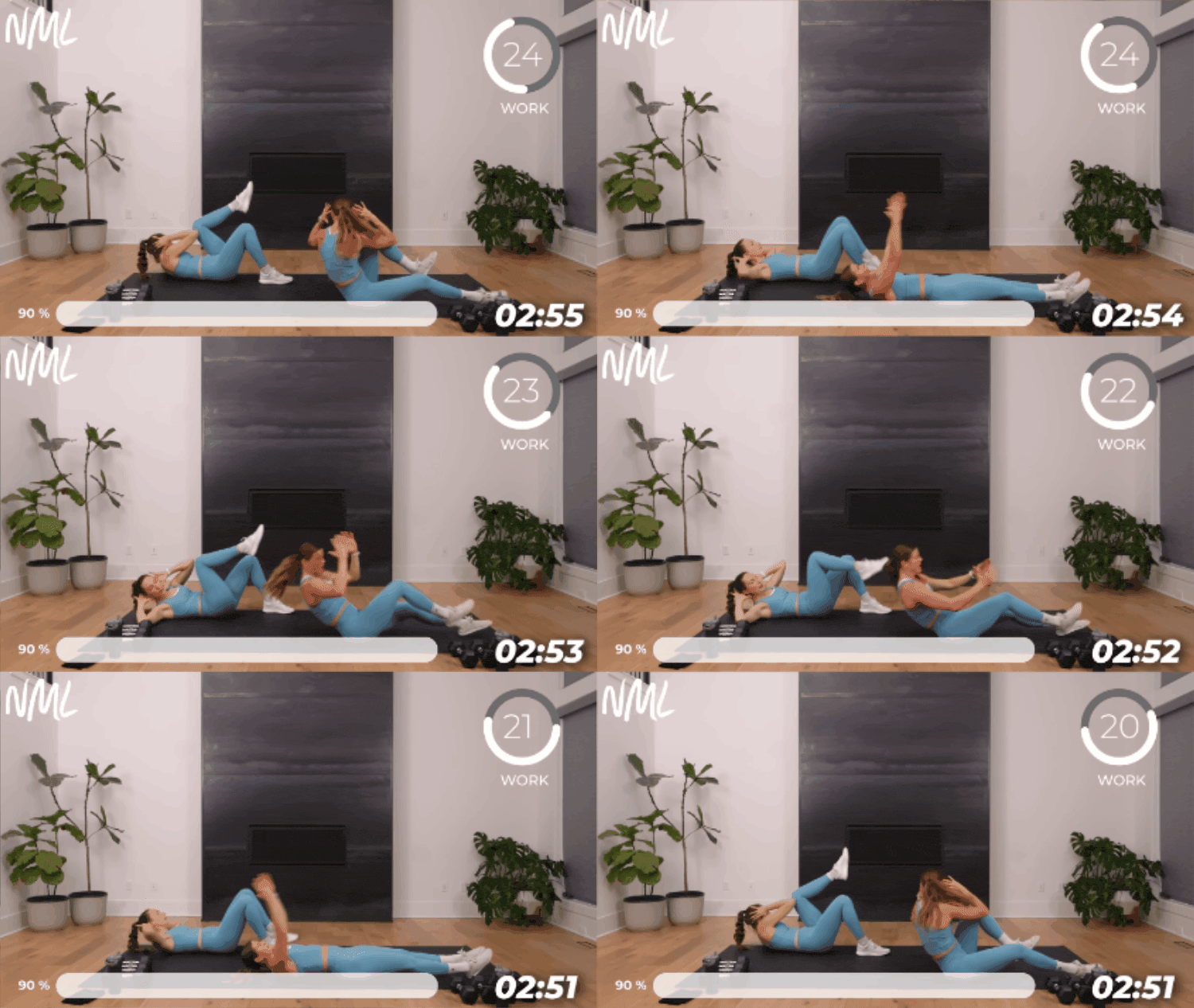
11. Bicycle Crunch
Targets: Rectus abdominis, transverse abdominal muscles, obliques and hips.
How to Do a Bicycle Crunch
- Start seated on the mat with your knees bent and feet flat on the floor.
- Keeping your core engaged, lean your torso back to lie flat on the ground. Send your arms overhead and your legs long.
- Explosively pull your torso back to an upright position to perform a sit-up while pulling your right knee toward your chest. As you pull the knee towards the chest, punch the left fist in front of you.
- With control, lower back down to the mat.
- Repeat, alternating the leg that pulls in and the arm that punches across.
Modification: Bend both knees, reducing the range of motion.
12. Mountain Climbers
Targets: Upper abs, lower abs, obliques, shoulders, glutes and thighs.
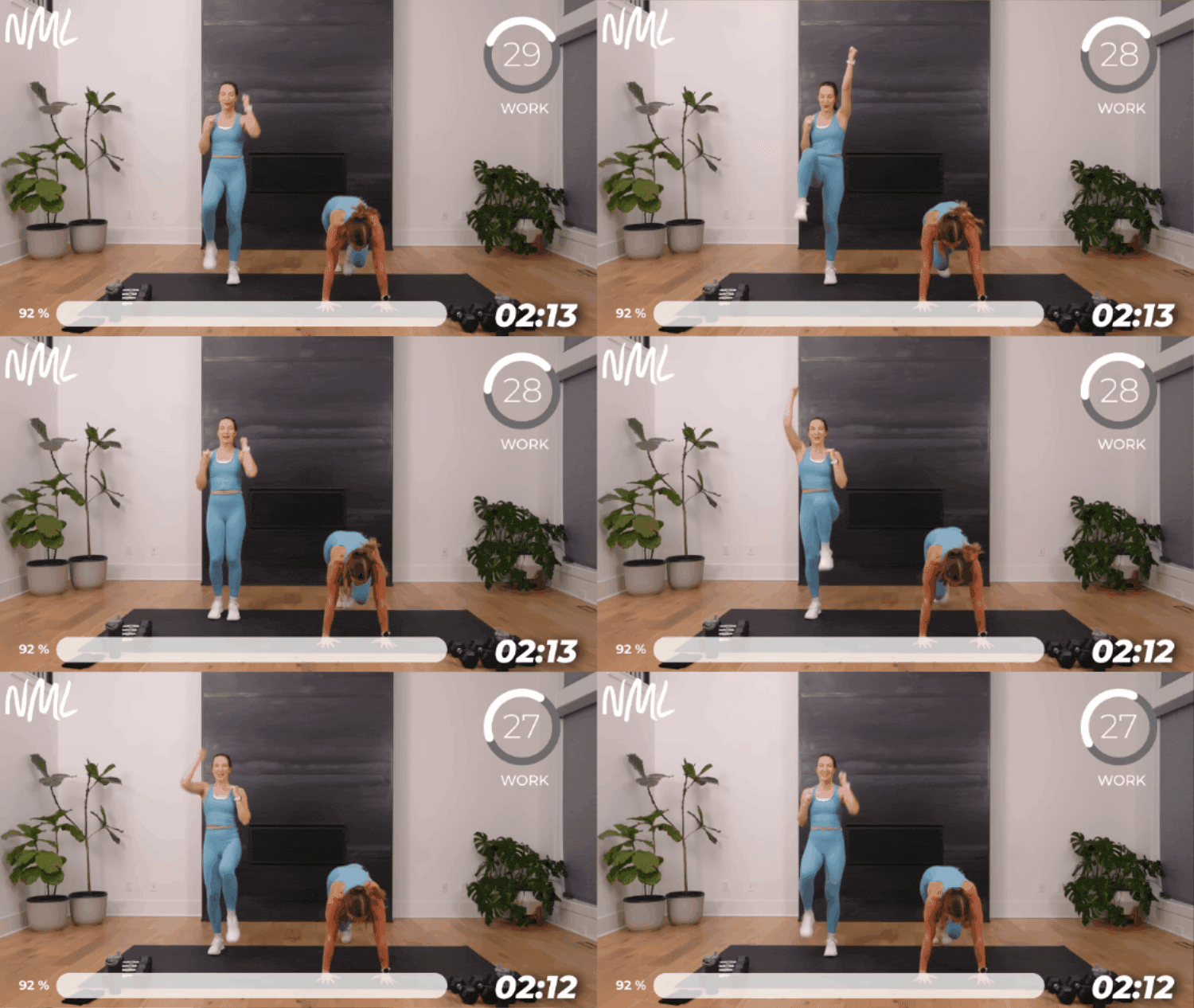
How to Do Mountain Climbers
- Start in a high plank position with your shoulders stacked over your wrists, weight evenly distributed amongst all ten fingers. Pull your kneecaps up towards your belly.
- Hold this position, maintaining a straight line with your body, gaze slightly in front of you.
- Then, drive your right knee towards your left elbow before quickly driving your left knee towards your right elbow.
- Continue this pattern, alternating knee drives towards your chest at a rapid pace, as if “running” in a plank position.
Modification: Perform a standing knee drive and alternating punch overhead.
13. Dumbbell Swings
Targets: Glutes, hamstrings, hips, core, and all the stabilizing muscles in your back and shoulders.
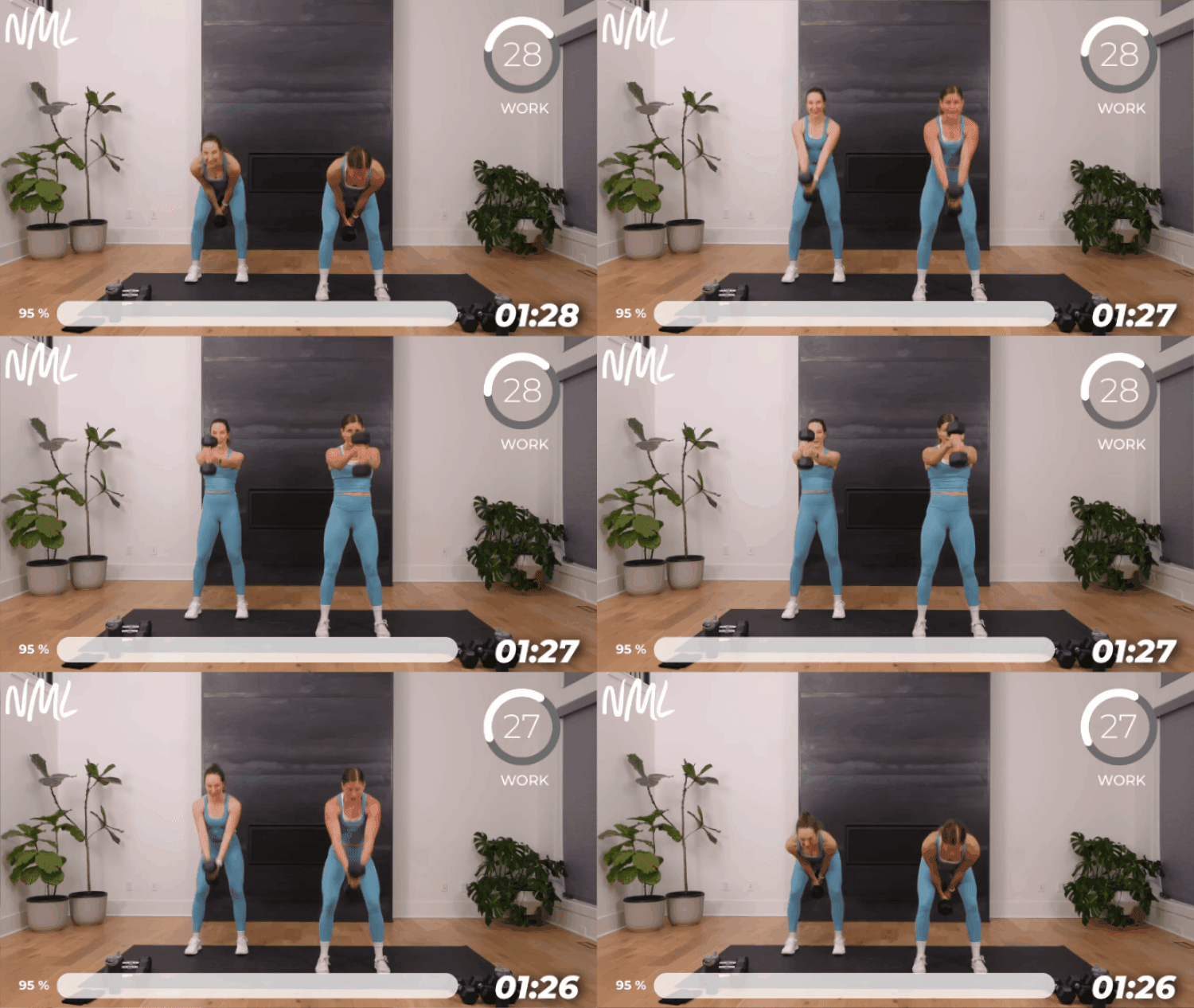
How to Do a Dumbbell Swing
- Stand with your feet wider than shoulder-width apart, holding a single dumbbell vertically between your hands.
- With a slight bend in your knees and weight in your heels, “hike” the dumbbell back between your legs to start the swing movement.
- Drive through your heels to stand tall, pushing your hips forward as you squeeze your glutes to swing the dumbbell up. Aim for shoulder height, with arms extended out away from the body. Think long, loose arms (your arms are just a vehicle for moving the weight; your hips and glutes generate the power).
- As the dumbbell begins to descend, think of catching the weight with a hip hinge, loading the glutes and hamstrings.
FAQs
Can you build a strong core at home without equipment?
You can absolutely build a strong core at home without equipment by focusing on basic core exercises for beginners like planks, dead bugs, bird dogs and hollow rock holds. Adding resistance over time encourages progressive overload, which is key for building muscle.
What are the signs of a weak core?
Symptoms like lower back pain, poor balance, difficulty maintaining good posture, feeling unstable during workouts and neck or hip flexor strain during ab exercises can all be symptoms of a weak or underactive core.
Why do ab exercises sometimes hurt my back?
Back pain during ab exercises may be caused by poor form, weak deep core muscles, overusing hip flexor and neck muscles and arching the lower back. To reduce pain, try scaling back the movement, reducing range of motion, slowing it down or choosing a modification that allows you to maintain more control.
Should you warm up before doing a core workout?
Yes, warming up helps activate your core muscles and improves workout effectiveness. For best results, add in 2-3 minutes of mobility and breathing activation exercises before your core workout.
How long does it take to build a stronger core?
Most people will begin to feel stronger and more stable within 4-6 weeks of consistent core training. 20-30 minutes of core work 2-3 times a week is more than enough to see and feel results. Factors like genetics, diet, workout frequency and intensity will influence how quickly you see visible results.
Free 7-Day Ab Challenge
More Workouts
Core StrengtheningPin This: 30-Minute Core Workout (10+ Effective At-Home Exercises)
no comments
Leave a Comment