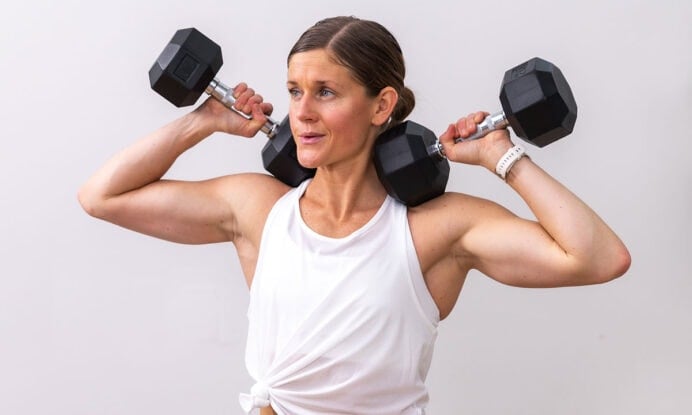



20-Minute Quick Arm Workout
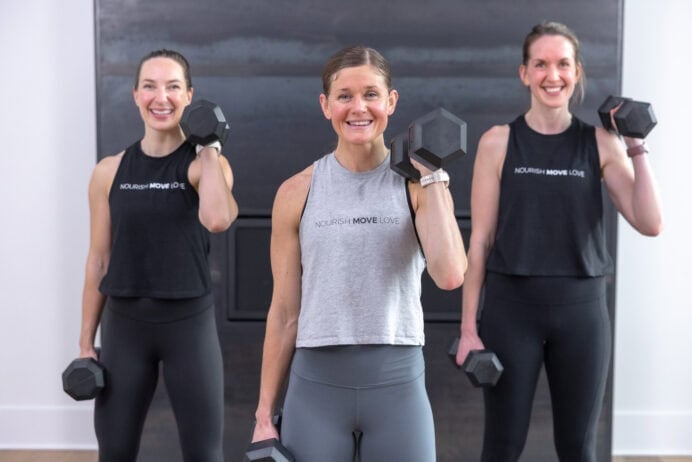
Short on time? This quick arm workout hits the biceps, triceps, shoulders, back and chest in just 20 minutes. Using a smart rep-drop format (12-10-8-6), you’ll lift heavy enough to build muscle and definition without wasting a minute. Modifications are provided for all fitness levels – just grab dumbbells and follow along!
Workout Overview
This dumbbell arm workout is designed to build defined, strong arms and shoulders in just 20 minutes. Target all of the upper-body and arm muscles with an effective rep-drop format. Today’s quick arm workout combines the best exercises for a quick arm workout at home: lateral raises, bicep curls, tricep extensions, back rows and chest presses.
Add upper-body strength training workouts like this to your home workout plan 1-2 times a week to increase muscle definition and strength in the biceps, triceps, shoulders, back and chest.
Have a few extra minutes? I recommend warming up with this shoulder mobility routine to prepare your upper body for overhead movements.
Workout Equipment:
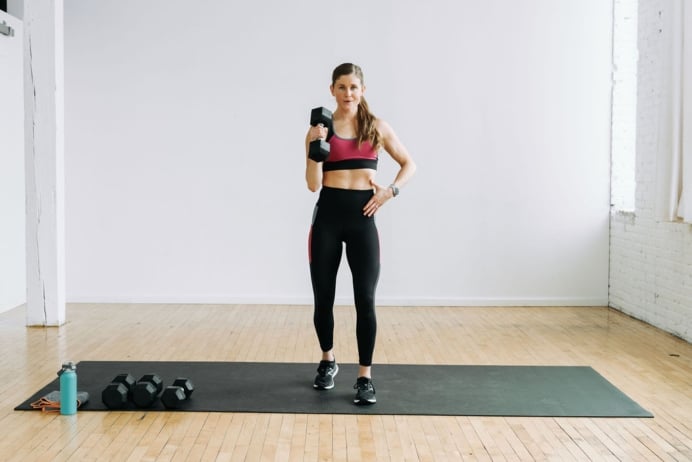
Medium to Heavy Set of Dumbbells. I recommend choosing a pair of dumbbells between 5-30 lbs, depending on your fitness level. I’m using 15-25 lb dumbbells in today’s workout.
Workout Instructions:
Follow along with the guided Quick Arm Workout on YouTube, led by me — your certified personal trainer (CPT), Lindsey Bomgren.
Your Workout Looks Like This:
- Guided Warm-Up and Cool-Down
- 5 Dumbbell Arm Exercises
- Rep Drop Format (decrease the number of reps you perform for each exercise as you move through the workout)
- Repeat x 4 Drop Sets (performing 12 reps during the first set, then decreasing to 10 reps, 8 reps, and 6 reps)
Workout Outline
1. Lateral Shoulder Raises
Targets: The lateral deltoid (also engages the anterior deltoid and posterior deltoid).
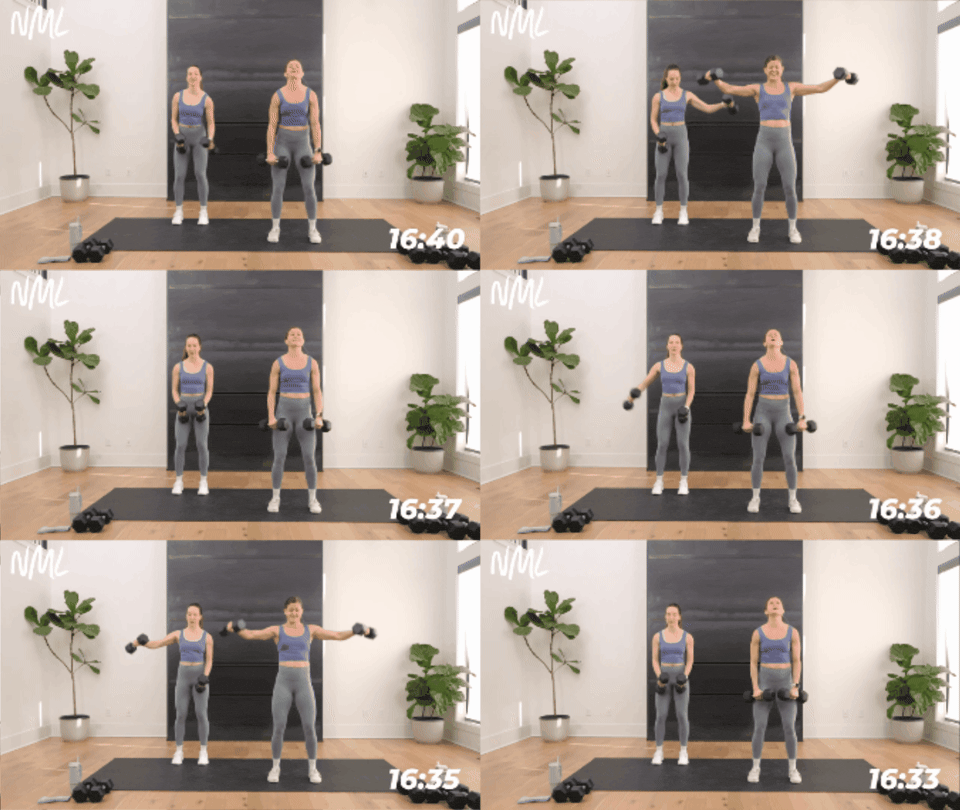
How to Do a Lateral Shoulder Raise
- Stand with feet shoulder-width apart, a slight bend in your knees, holding a dumbbell in each hand near your hips, palms facing in toward each other. Think about rolling your shoulder blades down and back.
- Engage your core, then lift both dumbbells out towards your sides, keeping a slight bend in the elbows. Aim to raise the dumbbells to shoulder height.
- With control, slowly lower the dumbbells to starting position.
Modification: To make this exercise more friendly for the shoulder joints, reduce the range of motion, lifting only as high as you feel comfortable.
2. Bicep Curls
Targets: The bicep muscles (upper arms), brachialis (mid-arm) and brachioradialis (forearm).
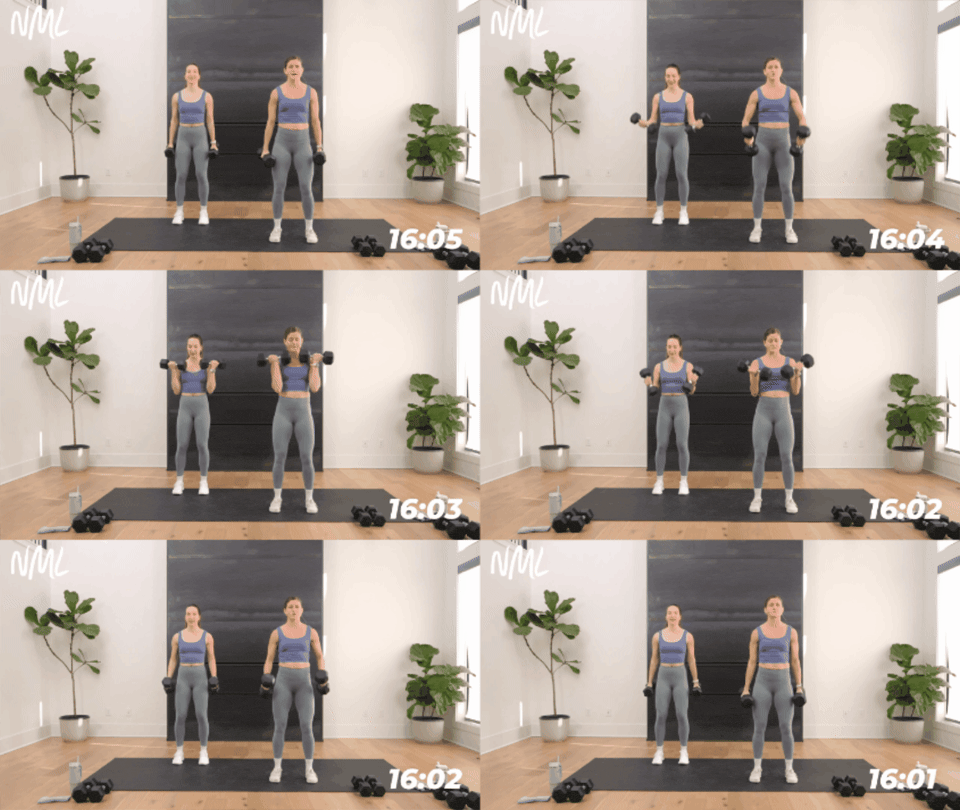
How to Do a Bicep Curl
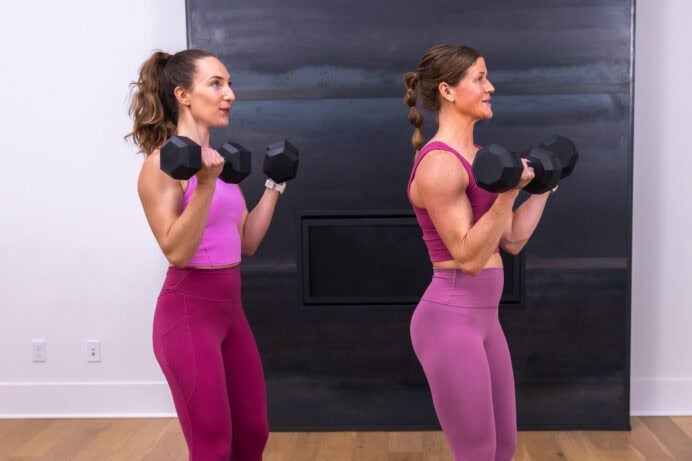
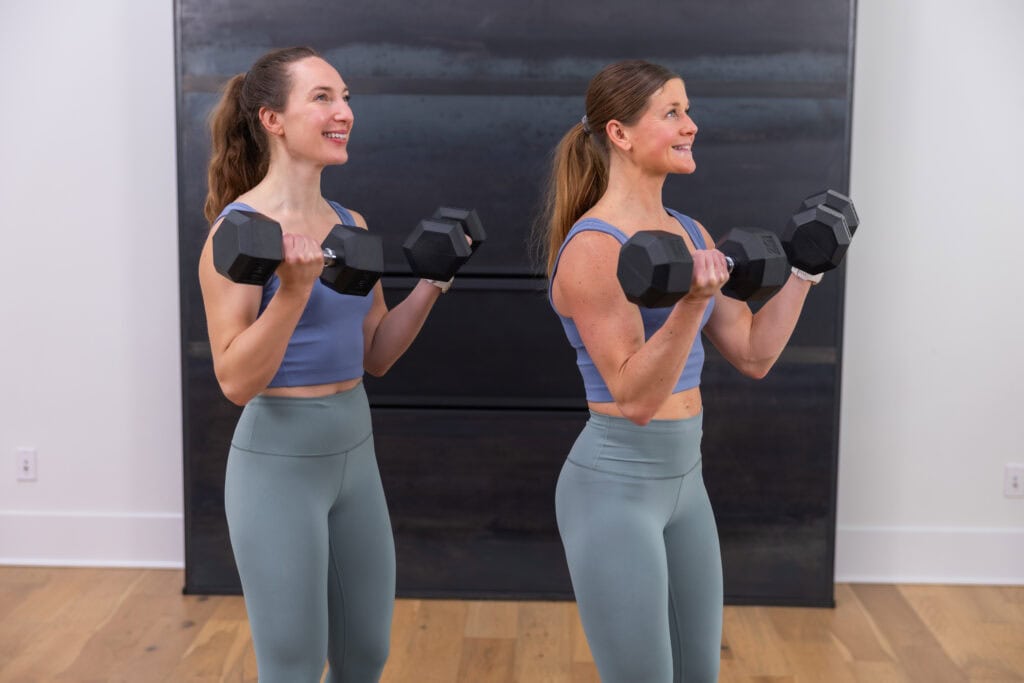
- Start standing with feet hip-width apart and core engaged. Hold a dumbbell in each hand at your sides, palms facing in toward each other (narrow grip or hammer curl grip).
- Keeping your elbows locked by your sides, squeeze your bicep muscle to curl the weights up to shoulder height. As you raise the weights, slowly rotate your hands so your palms face outward (underhand grip or supine curl). At the top of the movement, your palms face your shoulders.
- With control, slowly lower the dumbbells down to your sides, flipping your grip so your palms face in towards each other again, returning to the starting position.
3. Overhead Tricep Extensions
Targets: The long head of the triceps and all the stabilizing muscles in the shoulders, core, glutes and lower back muscles.
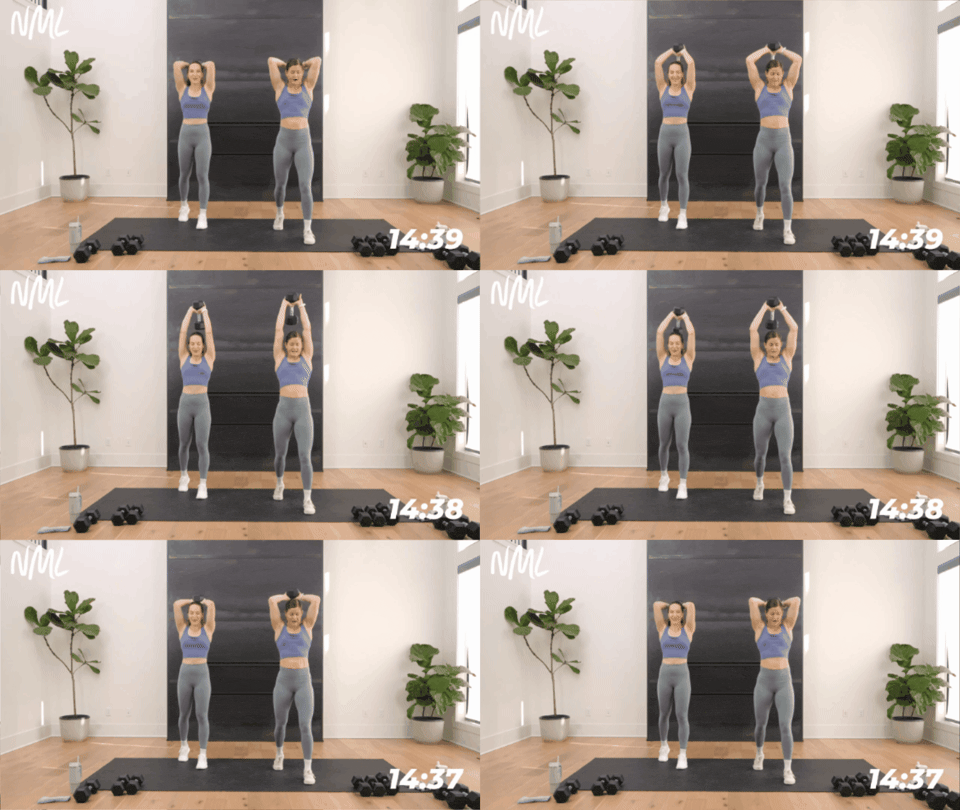
How to Do an Overhead Tricep Extension
- Stand with feet hip-distance apart, core engaged and a soft bend in your knees.
- Hold a dumbbell vertically overhead and activate your core by squeezing your glutes and abs to protect your lower back.
- Bend your elbows to a 90-degree angle, bringing the dumbbell behind your head. Think ‘hide the dumbbell, show the dumbbell’ if you were watching yourself in a mirror. Keep your elbows close to your ears throughout the entire movement (don’t let your elbows flare out as you fatigue).
Modification: If the overhead press position isn’t comfortable for your shoulders, you may substitute standing tricep kickbacks or skull crushers.
4. Kneeling Single Arm Row
Targets: Latissimus dorsi (or lats; the largest back muscle known for its large, flat “V” shape), abs and core.
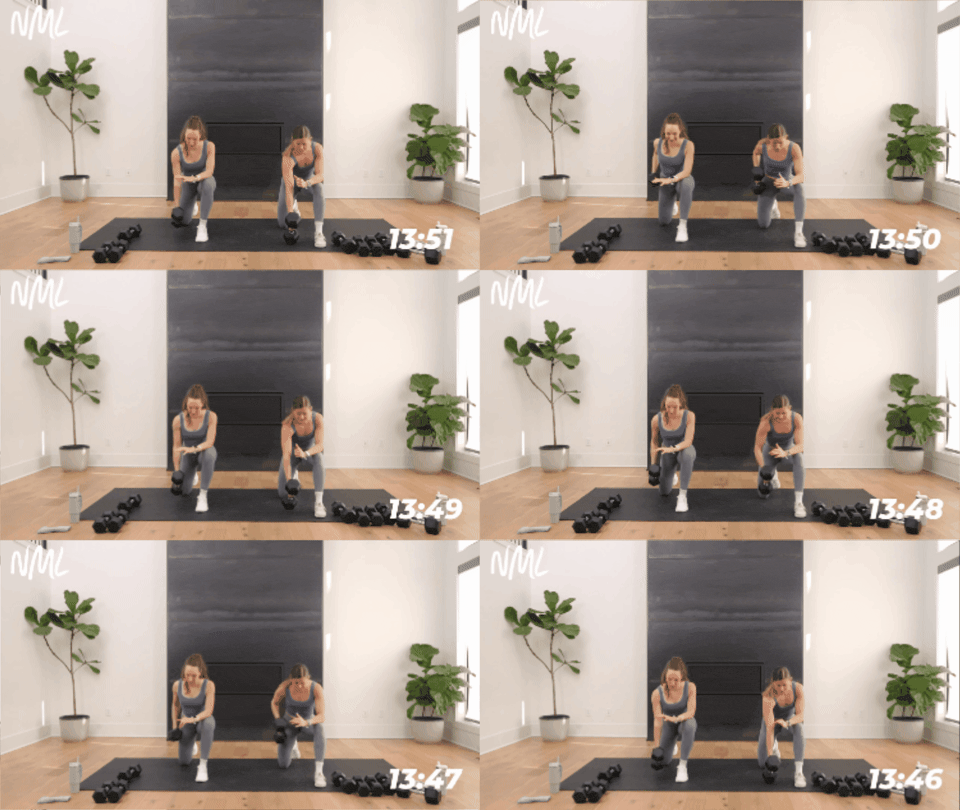
How to Do a Kneeling Single Arm Row
- Start in a kneeling position, knees under hips, core engaged. Keep your left knee on the mat and place your right foot flat on the mat, right thigh parallel to the ground (right knee in line with right hip).
- Hold the dumbbell in your left hand. Engage your core and slightly hinge forward.
- Extend your arm forward, holding the dumbbell, and aim to tap the head of the dumbbell to the ground near your right foot.
- Exhale as you pull the dumbbell back toward the lower portion of your rib cage on the left side of the body, keeping your elbow tucked in. Think about keeping your shoulders even and square to the ground.
- Inhale as you slowly extend your left arm back to the starting position, maintaining control throughout the entire movement.
5. Chest Press
Targets: Pectoralis major (pecs), triceps brachii (triceps) and anterior deltoids (front shoulders).
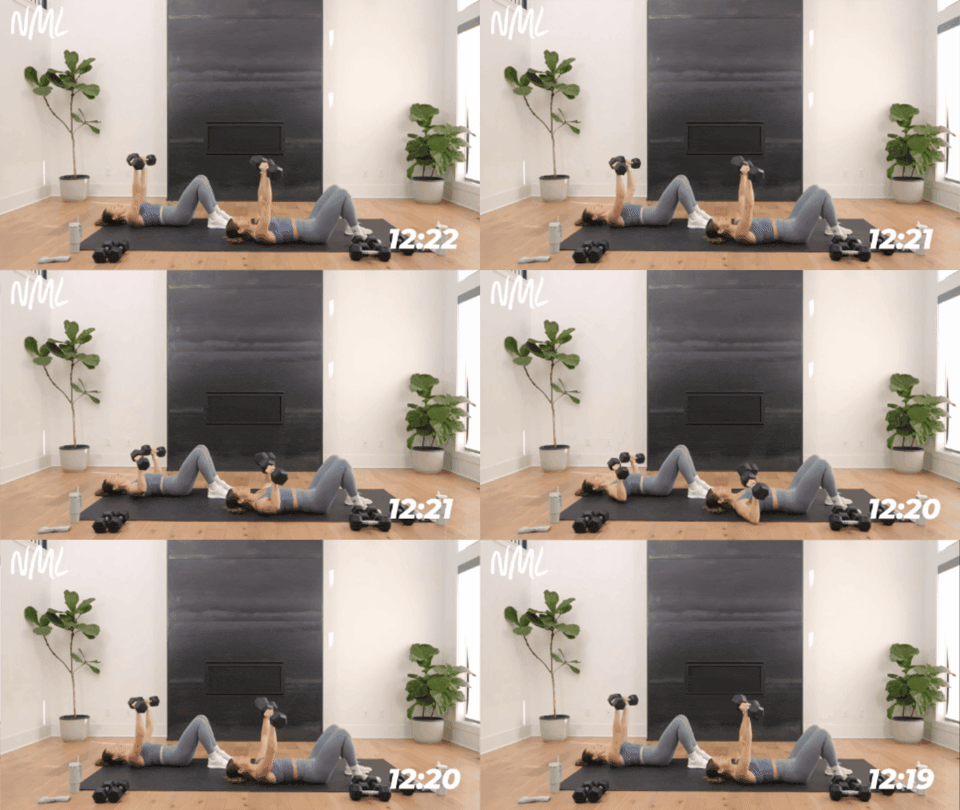
How to Do a Chest Press
- Lie flat on your back (on the ground, on a bench, incline bench, or on a stability ball) with knees bent and feet flat on the floor. Hold a dumbbell in each hand (palms facing knees), elbows bent at a 90-degree angle.
- Exhale as you push both dumbbells overhead at the same time; dumbbells stacked over your shoulders at the top of the press. Make sure your wrists are strong and in line with your shoulders.
- Lower the dumbbells back towards your chest with control, returning to the starting position.
Why I Wrote This Workout:
As a personal trainer, I believe you don’t need more than 20 minutes to see results from your arm workout.
To make the most of the time we have to sweat together, I used research-backed data to program today’s quick arm workout at home:
- Moderate Repetitions: Sets that include between 6 and 12 reps of an exercise are considered “moderate repetitions,” compared to workouts with higher or lower volumes of reps. This rep range is ideal for fatiguing muscles without compromising good form. We’ll start with 12 reps in today’s workout and decrease to 6 over the course of the workout.
- Multiple Sets: Workouts that include between 3 and 6 sets of an exercise are considered optimal for muscle growth. We’ll repeat each exercise x4 sets in today’s workout, decreasing reps with each additional set.
- Moderate Loads: A “moderate load” is defined as 60-80% of your 1-rep maximum weight. For example, if the heaviest weight I can do 1 bicep curl with is a set of 30 lb dumbbells, my goal would be to use 18-24 lb dumbbells for this workout.
- Short Rest Periods: This is key to achieving muscle failure during quick arm workouts. Rather than taking long rest periods, I’ve programmed this workout to alternate which muscle group works during each exercise, so you’re “resting” one while working another.
This style of training is one of the most time-efficient ways to promote muscle hypertrophy, which is necessary to build muscle.
I should note that in order to keep this workout beginner-friendly, it doesn’t include 2 of my favorite exercises: push-ups and pull-ups. If you’re looking for an upper-body home workout that includes both, check out this Arms and Back Workout Routine.
Read A 5-Star Review ⭐⭐⭐⭐⭐
“I love any and all of these rep drop workouts! And 20-25 minutes is great to fit into my schedule!”
— Heather E.
FAQs
What are some quick arm workouts I can do at home without equipment?
Push-ups, pull-ups and arm band workouts are all easy to do in 10 minutes or less and require no equipment. You don’t necessarily need barbell or dumbbell workouts to build strong arms. In my opinion, some of the most challenging (and most effective!) arm workouts can be performed with just your bodyweight.
What is the quickest way to tone your arms?
Toned arms are the result of a combination of building muscle (to create muscle definition) and decreasing body fat (to make the muscle more visible). If your fitness goals include increasing arm definition, I recommend adding quick arm-day workouts like this one to your workout routine 1-2 times a week to build strength in the upper body.
Can light dumbbells help tone arms?
There’s a misconception that light weights lead to “toned” arms, while heavy weights lead to “bulky” arms. To achieve defined, toned arms, you need to build upper-body muscle. For beginners, I recommend 5-9 lb dumbbells (or about 2 kg – 9 kg). For more advanced lifters, I recommend heavier weights, typically 20-25 lbs (9 kg-11 kg). The last 2-3 reps of each exercise should be challenging to complete while still allowing you to maintain proper form.
Can you train biceps and triceps in the same workout?
Yes, training biceps and triceps together is an effective way to build balanced upper-body strength. Pairing these 2 opposing muscles in a superset is also an effective workout strategy, because one muscle rests while the other works, saving you time and making your workout more efficient. The biceps and triceps also work together in exercises like push-ups: while the triceps are doing most of the work, the biceps work as stabilizers.
Free 2-Week Strength Program
More Workouts
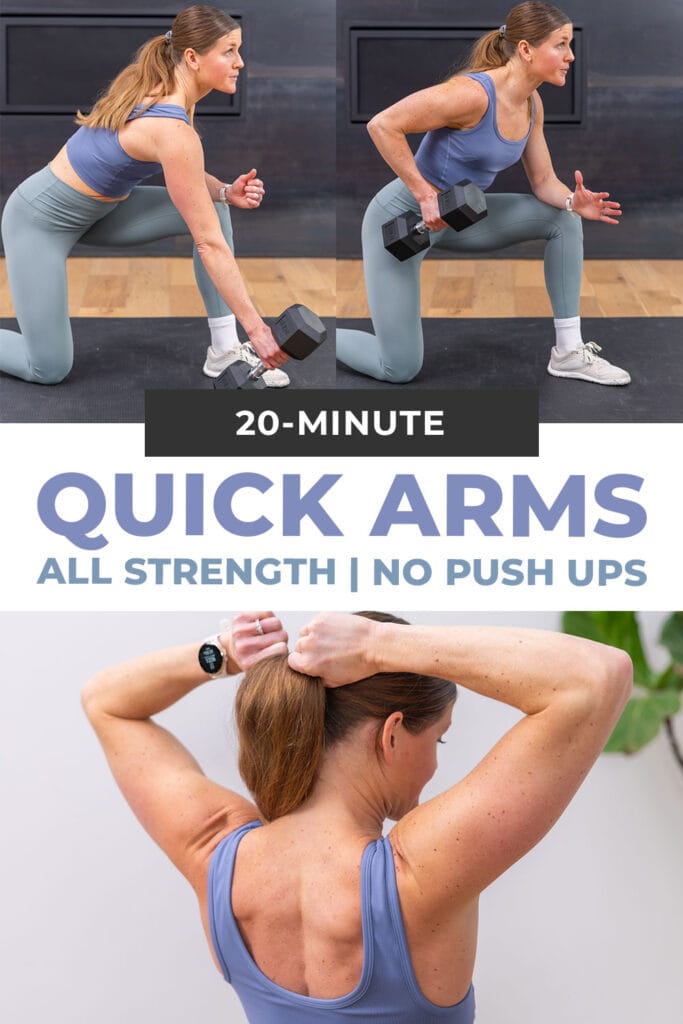
Arm WorkoutsPin This Effective 20-Minute Arm Workout
no comments