





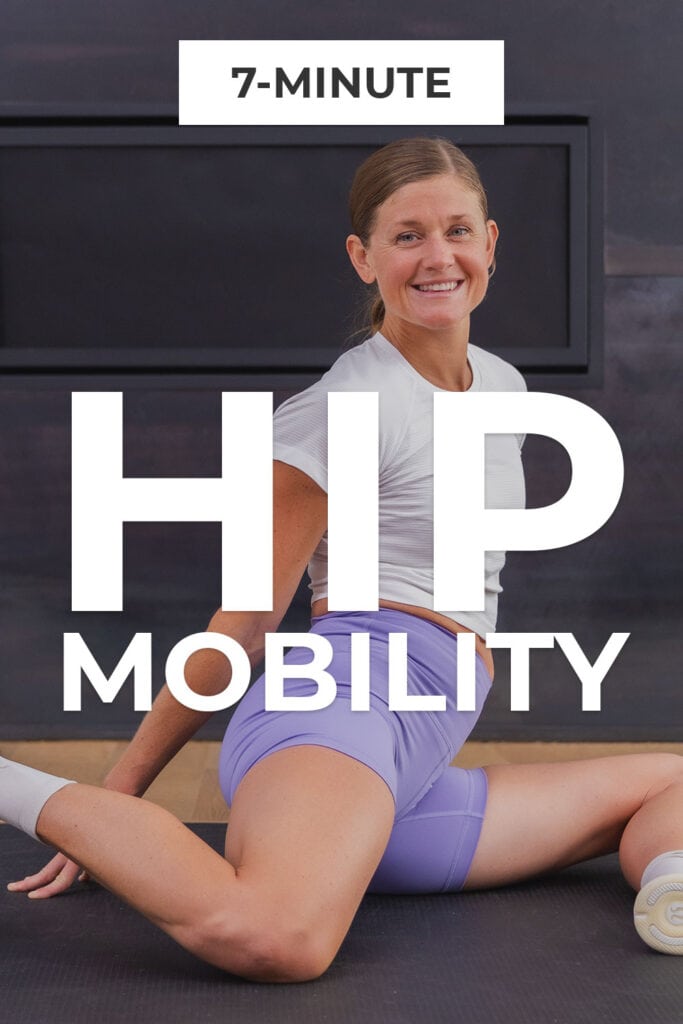
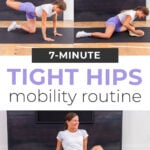
7 Best Hip Mobility Exercises
Unlock tight hips with these guided hip mobility exercises designed to improve mobility, flexibility and range of motion. This routine will help reduce pain and muscle tension while enhancing athletic performance, so you can move better and squat deeper with ease.
Tight, sticky hips? I’ve been there – especially after long days sitting at a desk. Spending hours seated can tighten up the hip flexors (those muscles that help lift your legs and stabilize your hips). When the hips and inner thighs (or adductors) get shortened and stiff, it can lead to reduced flexibility, discomfort in the lower back or cause knee pain.
Hip mobility refers to the ability of your hip joint to move freely through its full range of motion. Healthy hips are both mobile and stable, allowing you to move with control and without restriction.
You can start to lose mobility in your hips because of how much time you spend sitting, but also if you are not doing enough to strengthen your glutes. When the glutes are weak, the hip flexors tend to take over — and that’s when tightness creeps in.
To counteract that, I created this guided mobility routine that blends hip mobility exercises for beginners with hip strengthening exercises. It’s not just about stretching — it’s also about firing up those small stabilizing muscles around the hips to unlock hip mobility and support better movement overall.
I often get DMs asking, “What’s the best exercise for hip mobility?” I’ve found that there isn’t one perfect move, but a mix of things like the 90/90 stretch, world’s greatest stretch, glute bridges and even walking helps loosen up tight hips.
I am very intentional about mobility work, especially if I want to squat deeper, move better in my everyday life and avoid injuries.
That’s why I like to work mobility exercises into my warm-ups, cool-downs or recovery days. Ideally, I try to do hip and knee mobility exercises 3-5 times per week for the best results. If you’re sitting a lot, lifting regularly or just want to move better, I can’t recommend it enough.
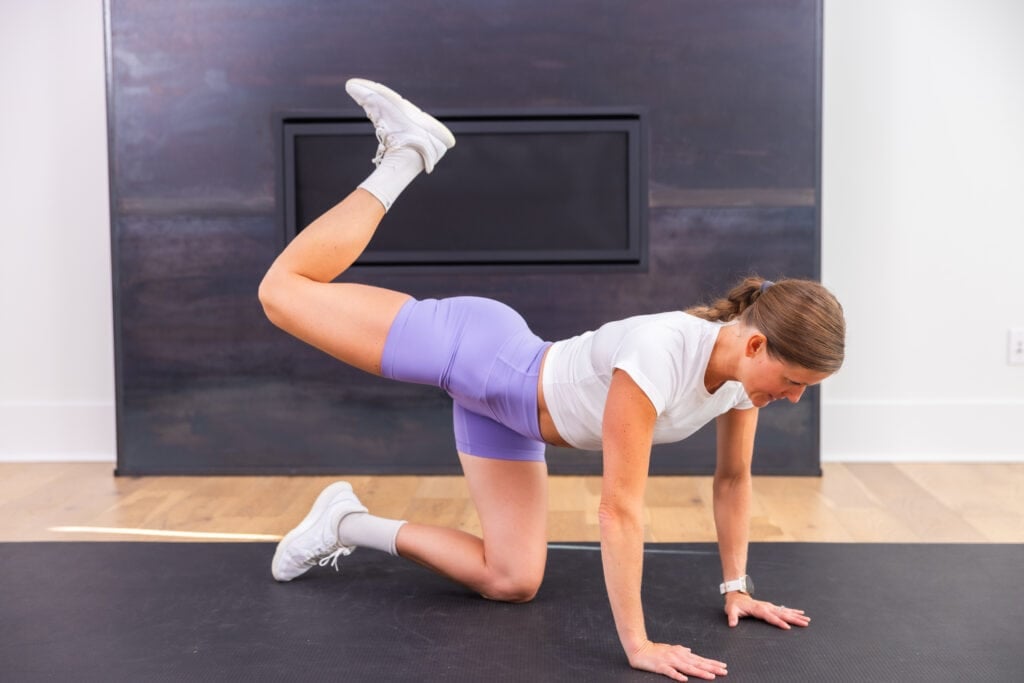
Workout Details
Improve mobility, reduce hip pain, and get better range of motion during workouts with these hip mobility exercises.
I suggest incorporating mobility workouts like this one to your home workout plan 1-2 times per week to protect and maintain healthy joints and muscles.
Workout Equipment:
No equipment, just your bodyweight.
Workout Instructions:
Follow along with these guided Hip Mobility Exercises on YouTube, led by me — your certified personal trainer, Lindsey Bomgren.
Your Workout Looks Like This:
- 7 Exercises for Hip Mobility
- Timed Intervals (perform exercise for around 40-50 seconds)
Note: I’ll cue this in the video, but it’s important to actively keep your body from tensing up as you hold each pose. Focus on breathing into each mobility exercise, and think about “releasing” the tension in each muscle group to avoid clenching up.
Workout Outline
1. Internal Hip Rotation
Targets: Outer hip, gluteus medius, gluteus minimus, and inner thigh muscles.
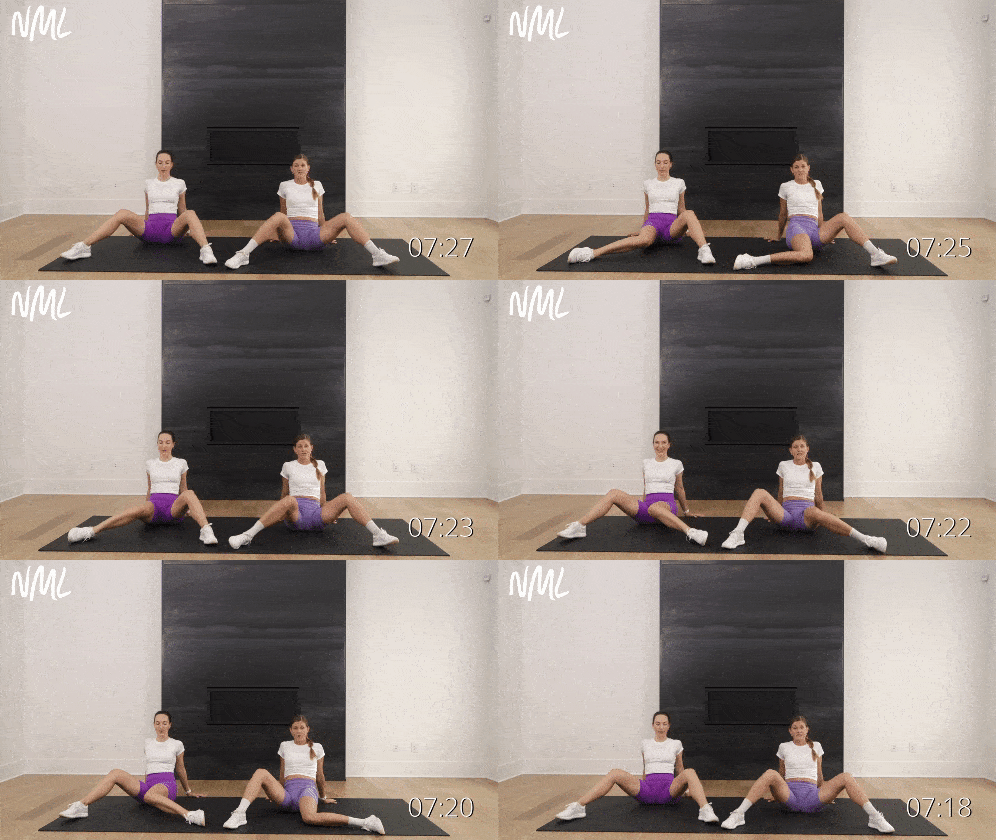
How To Do Internal Rotations
- Sit on the floor, feet out wide on the floor in front of you, toes pointing out 45 degrees (towards the corners of the room). Place your hands behind you and slightly lean back.
- Slowly internally rotate your right hip, lowering your right knee to hover above or tap the mat in front of your body. Inhale, bringing your knee back up and return to the starting position.
- Then repeat on the left hip, lowering the left knee to tap the mat at the midline of your body.
2. 90/90 Hip Stretch
Targets: The muscles around the hip joint — glutes, piriformis, psoas, hip flexors, hip abductor muscles and hip adductor muscles.
A great stretch for both internal rotators and external rotators.
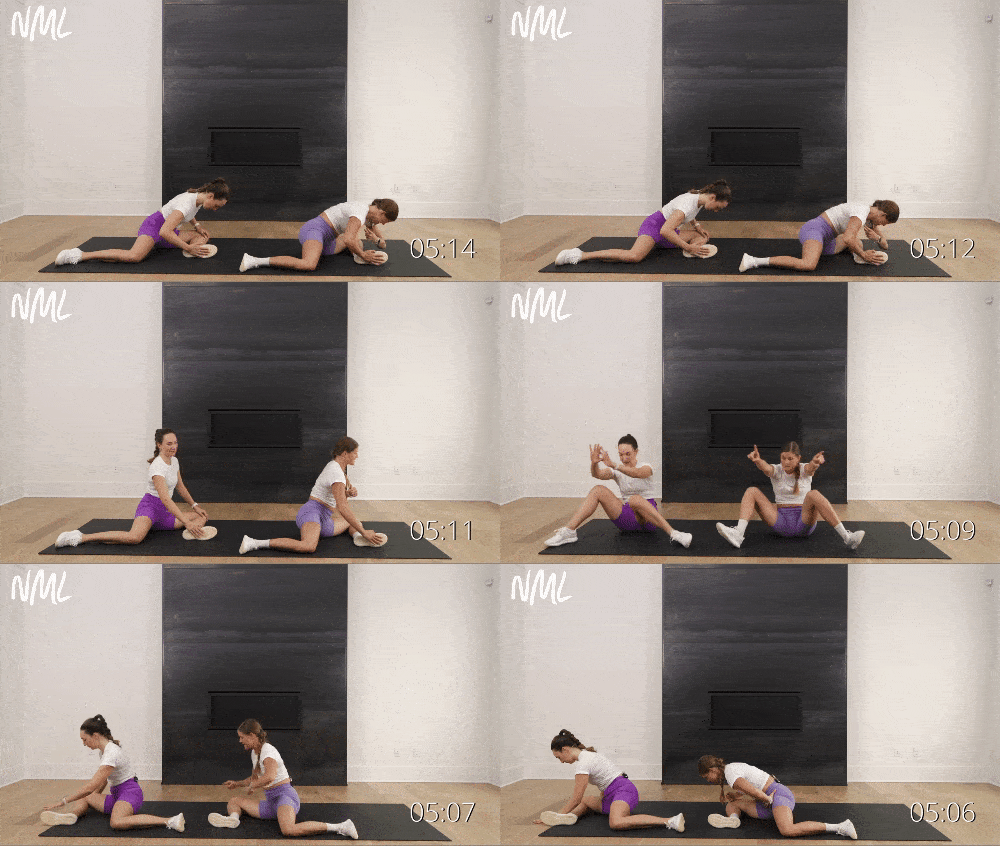
How To Do 90/90 Hip Stretches
- Start in a seated position, right leg in front of you, left leg behind you and both legs bent at 90 degrees. Create some distance between your front right heel and your back left knee.
- Right shin is parallel to left shin (flat on the floor). Slowly lean forward, directly over your right shin (avoid leaning toward your right knee, lean directly into the middle of your shin).
- Think about driving your right knee and left knee into the mat at the same time as you hold this stretch. Hold this position for a few seconds.
- With each exhale, bring your chest closer to the floor.
- Then, shift to the other side so that your left leg is parallel in front of you, right leg behind you. Slowly lean forward, directly over your left shin, stretching the left outer glute and opening the right inner hip.
3. 90/90 Rear Knee/Heel Lift
Targets: Gluteus medius and minimus, quadriceps, inner thighs, lower back, hip abductors, and hip adductors.
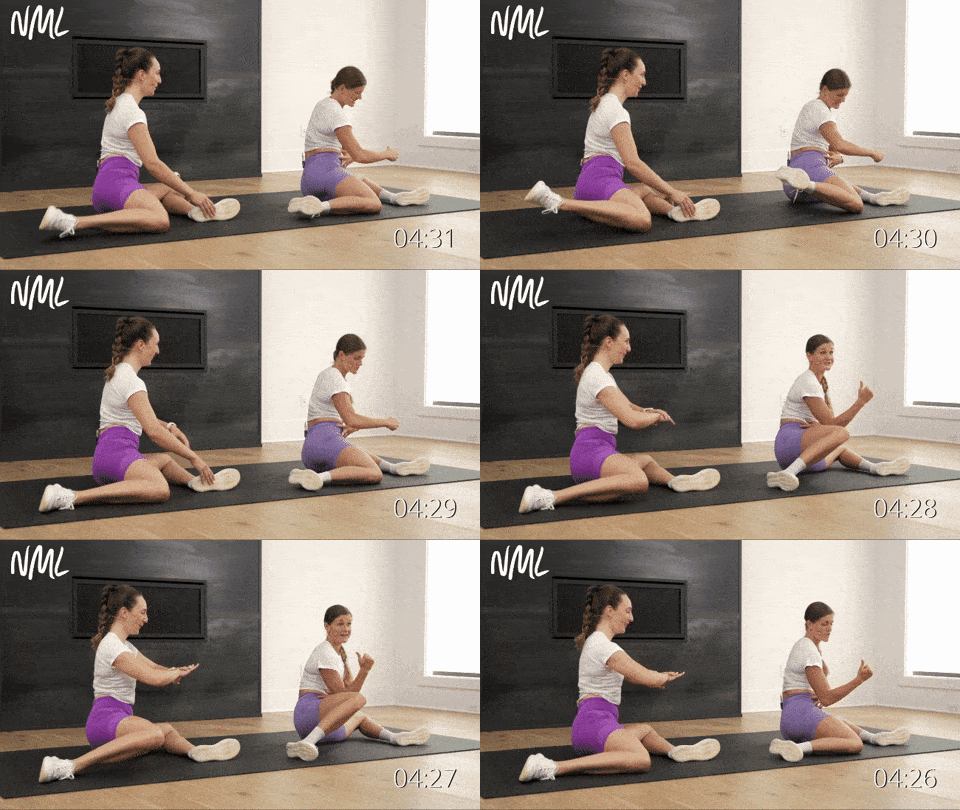
How To Do 90/90 Rear Knee/Heel Lifts
- Start in a seated position, left leg in front of you, right leg behind you and both knees bent at 90 degrees. Create some distance between your front heel and your back knee.
- With control, squeeze through your outer glutes to lift your right knee a few inches off the floor. Slowly lower the knee to the mat, returning to starting position.
- Then, keep your right knee pressed into the ground as you lift your left heel off the mat, holding for a few seconds before lowering to the mat, returning to starting position.
4. Hip CARs (Controlled Articular Rotations)
Targets: Hip flexors, hip extensors, hip abductors, and hip adductors.
Controlled articular rotations take the joint through its full range of motion with precision and control.
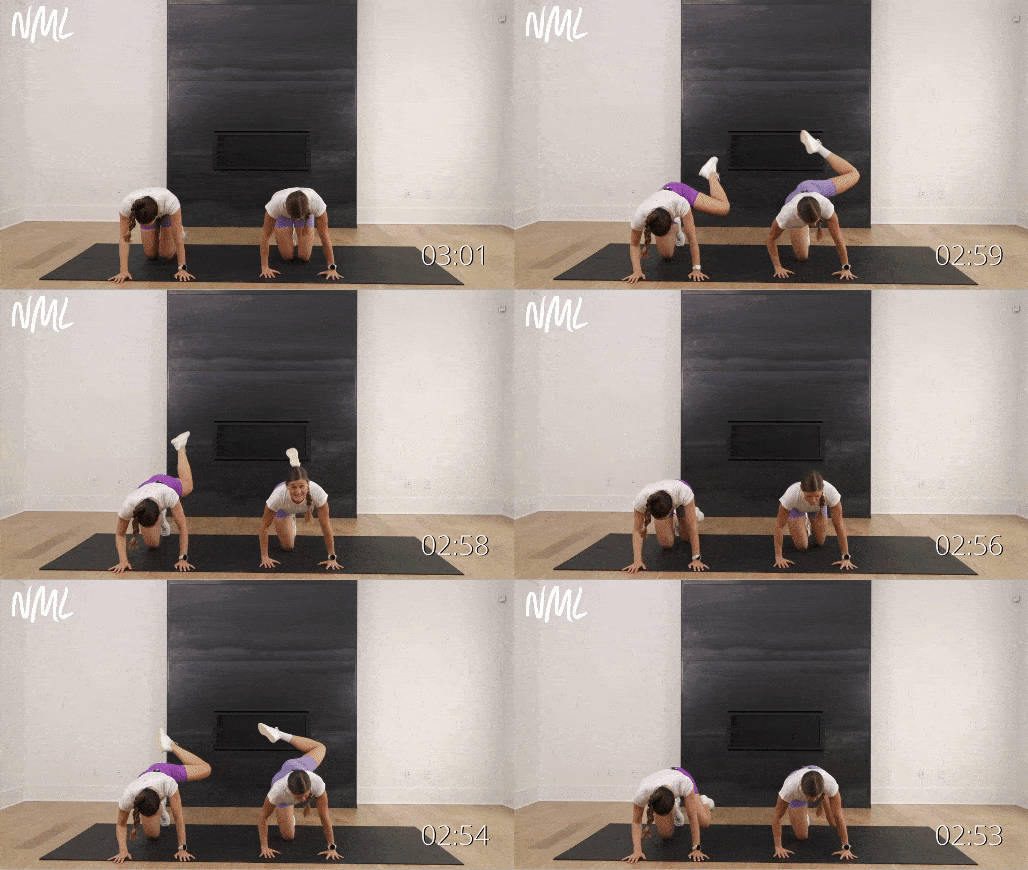
How To Do Hip CARs (Controlled Articular Rotations)
- Start in a table top position, quadruped on all fours, shoulders stacked over wrists.
- With control, lift your right knee, drawing a large circle with your knee from the front, out to the right side, then to the back, before lowering it to the mat.
- Then, reverse the motion, drawing a large circle with your right knee from back to front, before lowering it to the mat and returning to starting position.
5. Frog Rock
Targets: Inner thighs, outer hips, glutes and lower back.
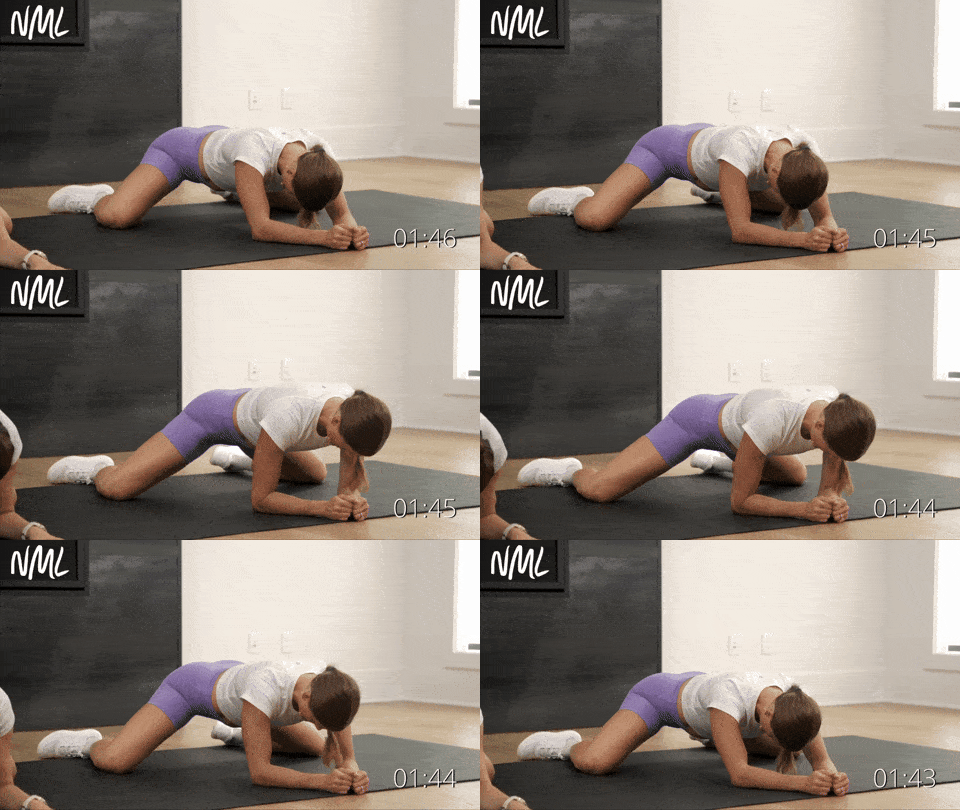
How To Do Frog Rocks
- Start in a table top position, quadruped on all fours, shoulders stacked over wrists. Spread your knees out wide, knees outside hips.
- Lower to your forearms, shoulders stacked over elbows.
- Exhale as you rock your hips back towards your heels, deepening the stretch.
- Inhale, rocking forward to stack your shoulders over elbows, returning to starting position.
6. V-Sit Leg Lift
Targets: Transverse abdomen (deep abdominal muscles below your rectus abdomen or six pack ab muscles), lower abs and hip flexors.
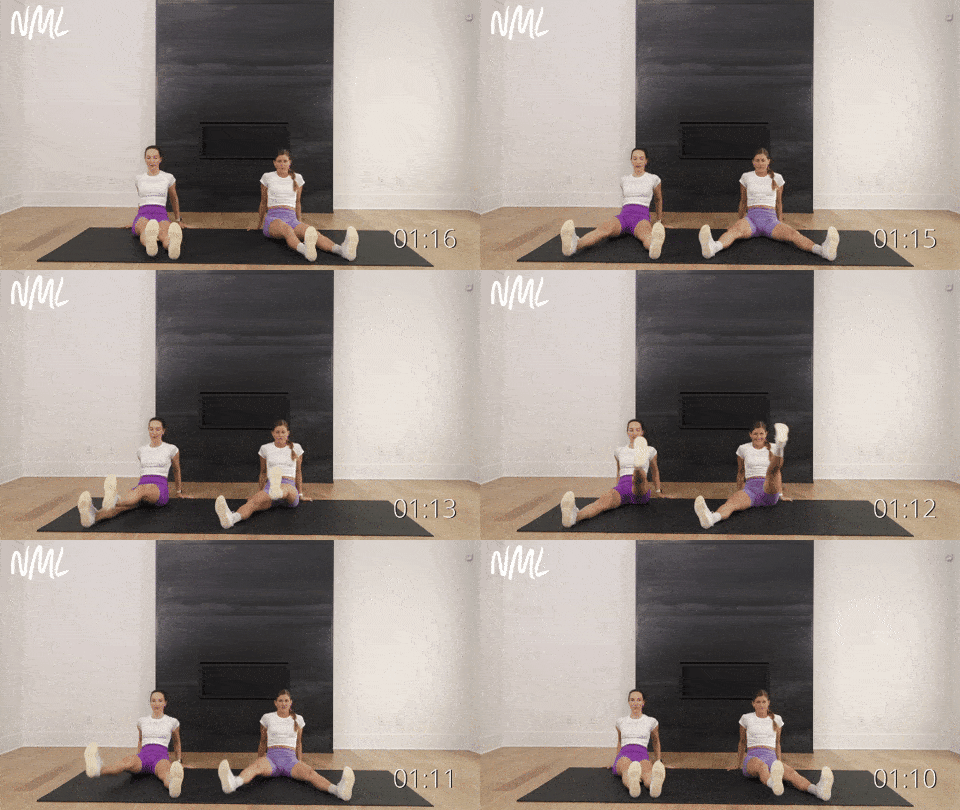
How To Do V-Sit Leg Lifts
- Start sitting on your mat on your “sit bones,” legs out long in front of you, feet wide.
- Pull your belly button towards your spine, then lean back about 45-degrees, activating your core.
- Slowly and with control, lift your right heel up in a half circle, imagining you are lifting your heel over a box between your legs. Bring the right heel to tap the mat next to your left foot.
- Then reverse the motion, returning the right foot to starting position.
- Then, repeat on the left, bringing the left heel up in a half circle before lowering it to tap the mat next to your right foot.
- Reverse the motion, lifting the left heel up and over to the left to return it to starting position.
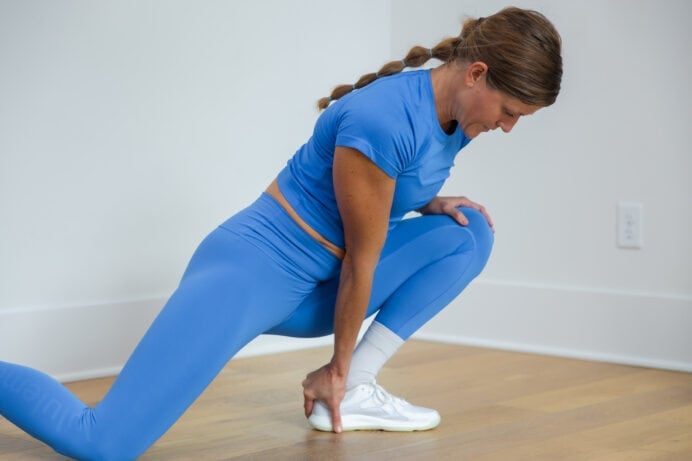
7. Cossack Squat
Targets: Hip, knee, and ankle mobility. As well as increases flexibility in the hamstrings and adductors (inner thighs).
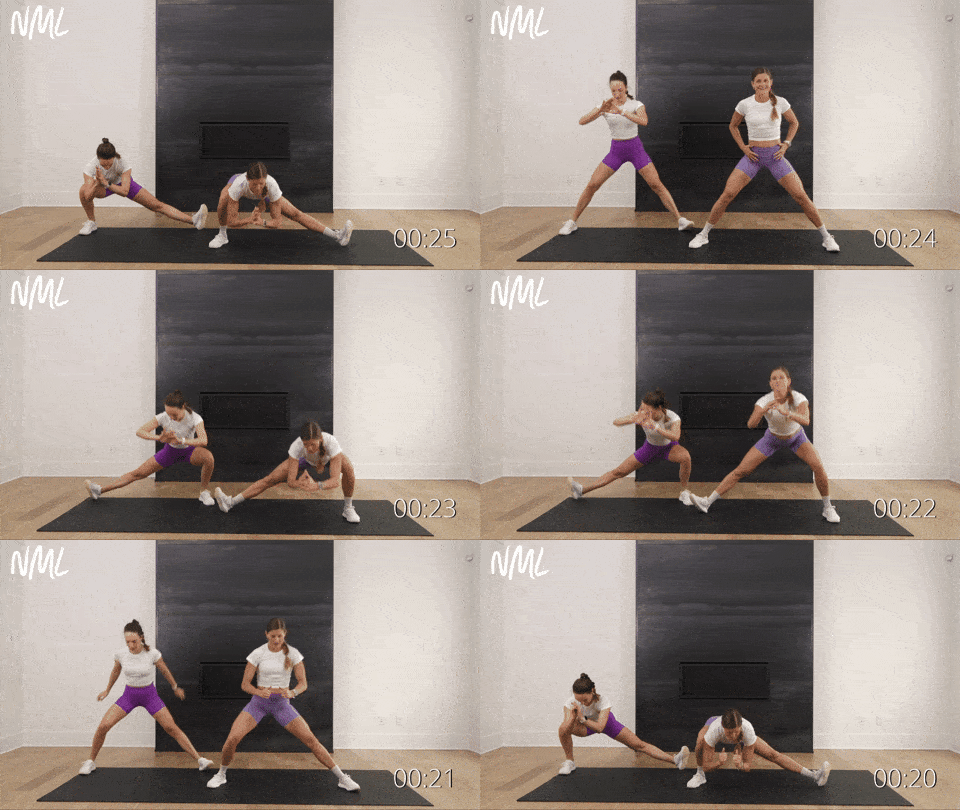
How To Do Cossack Squats
- Start in a wide forward fold, feet outside hips, toes pointing forward, fingertips touching the mat.
- Shift your hips back and to the left. Left leg creates a 90-degree angle, and the right leg is straight.
- Rotate your right leg open, so your toes point up towards the ceiling. Feel a stretch in your hips (inner thighs). Then bring your toes back to the mat.
- Shift to the opposite side, crawling your fingers over to the right as you sit back into your right hip. Right leg at a 90-degree angle, left leg straight.
- Rotate your left leg open, pointing your left toes up towards the ceiling.
FAQs
What Causes Poor Hip Mobility?
Poor hip mobility is often caused by a combination of muscle imbalances, tightness in the hip flexors or hamstrings, and prolonged periods of sitting. Weak glutes, core instability, and lack of regular stretching also contribute to restricted range of motion in the hips.
How Long Does It Take To Regain Hip Mobility?
Regaining hip mobility can take anywhere from a few weeks to several months, depending on the severity of the stiffness, consistency of mobility work, and individual factors like age and activity level. Once you regularly add stretching, strengthening, and mobility exercises into your routine several times a week, noticeable improvements often begin within 2-4 weeks.
How Can I Manage Hip Pain Better?
To manage your hip pain better, I recommend focusing on daily mobility exercises and strengthening your lower body and core. Pay attention to posture and take breaks from sitting too long. Staying consistent with these habits has made a big difference in reducing discomfort. In fact, building strength after 50 is one of the most powerful ways to protect your joints long-term. I share more about how to do that safely and effectively in my Working Out After 50: How to Build Muscle guide.
More Workouts
MobilityPink This Hip Mobility Workout
2 comments

You only show someone with advanced mobility skills. I am 66 years old and have always had ultra tight hips even though in years past in tried various hip stretches and exercises. I am trying the frog yoga pose/stretch even though it is also uncomfortable. Always showing someone who is extremely flexible and never showing a beginner whose very tight but makes progress is not encouraging and some ways unrealistic.
Eric! Thanks so much for this feedback, it’s very helpful. You might find these hip flexor stretches are a bit more your pace — https://www.nourishmovelove.com/5-best-hip-flexor-stretches/! Or check out this full body stretch with an emphasis on the hips – https://www.nourishmovelove.com/10-minute-full-body-stretch-routine/. I hope that helps! -Lindsey