





8 Best Hamstring Stretches
Relieve tight hamstrings and improve lower-body mobility with 8 of the best stretches you can do at home. This roundup targets the back of the thighs while also supporting the hips, glutes and low back, helping you move better before and after leg day workouts. These stretches are ideal for women fitting in strength training between work and family life, with a mix of static holds and dynamic movements to warm up, recover and reduce stiffness.
Before a workout, I focus on dynamic stretches to increase blood flow and prep the muscles for strength training without overstretching them. After a workout, I shift to more static stretches to improve flexibility and support recovery.
I also prioritize hamstring mobility because it directly impacts functional fitness. Strong, flexible hamstrings support better hip hinging, protect the knees and help prevent low back pain. For women squeezing in strength sessions when they can, efficient movement matters. When the hamstrings move well, every movement feels stronger and more controlled.
These stretches are simple, effective and designed to fit into real life. Whether your hamstrings feel tight from heavy lifting, long runs or hours at a desk, this routine helps restore mobility, improve performance and keep lower-body training feeling sustainable.
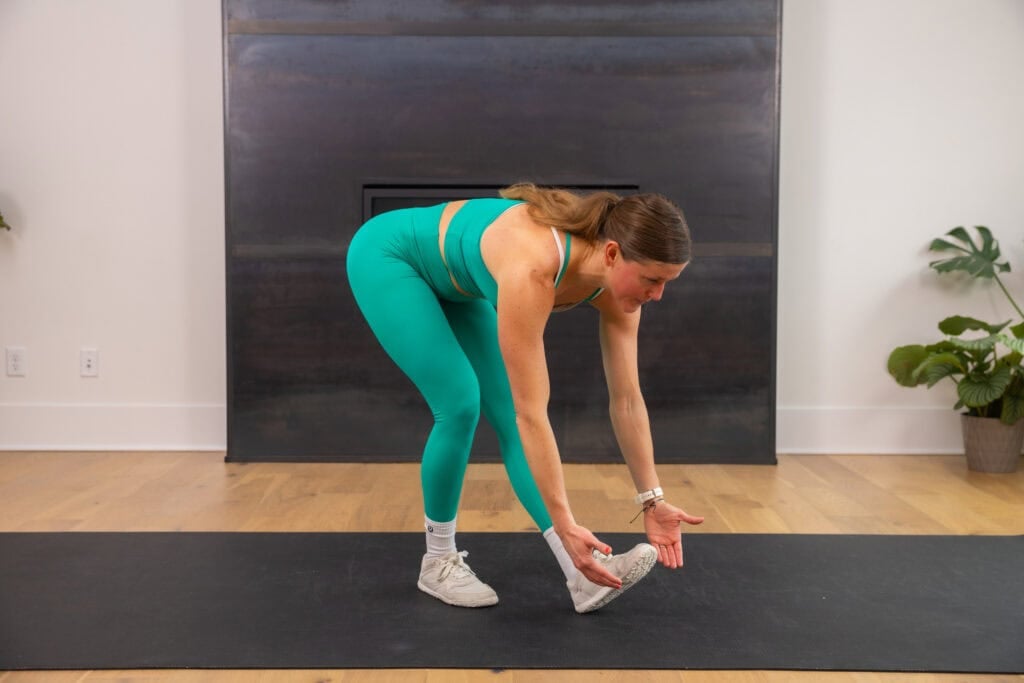
A Brief Overview of This Stretch Routine
These 8 hamstring stretches combine static and dynamic movements to improve strength, balance and flexibility throughout the posterior chain. You’ll find stretches that isolate the hamstrings alongside hip-hinge exercises that engage the glutes, lower back and core.
The goal is to move safely through your range of motion, protect the lower back and support recovery after leg day or long periods of sitting. These stretches are easy to do at home, require minimal equipment, and can be added before a workout or after training to help muscles relax.
Note: If you’ve had hamstring strains, sciatica or lower back pain, start with gentle versions of these stretches and adjust your range of motion. I include modifications for each one. Consulting your healthcare provider or physical therapist is best if you’re unsure about certain movements.
Equipment
- Optional towel for deepening seated stretches while maintaining good form.
- An optional stable surface, like a chair, wall or yoga block to help with balance during dynamic stretches.
Instructions
Choose 4-6 stretches from the list below. Then perform:
- Beginners: 1-2 sets of 20-30 seconds per stretch
- Intermediate: 2-3 sets of 30-45 seconds per stretch
- Advanced: 3-4 sets of 45-60 seconds per stretch
Focus on controlled movement, proper alignment and breathing throughout. Rest for 15-30 seconds between stretches.
This routine is flexible. You can string the stretches together in a mini circuit (30-40 seconds per movement, 15-second rest) for a quick warm-up, recovery session or morning flow at home.
Hamstring Stretches to Complete
1. Seated Hamstring Stretch
Targets: Hamstrings, calves and lower back.
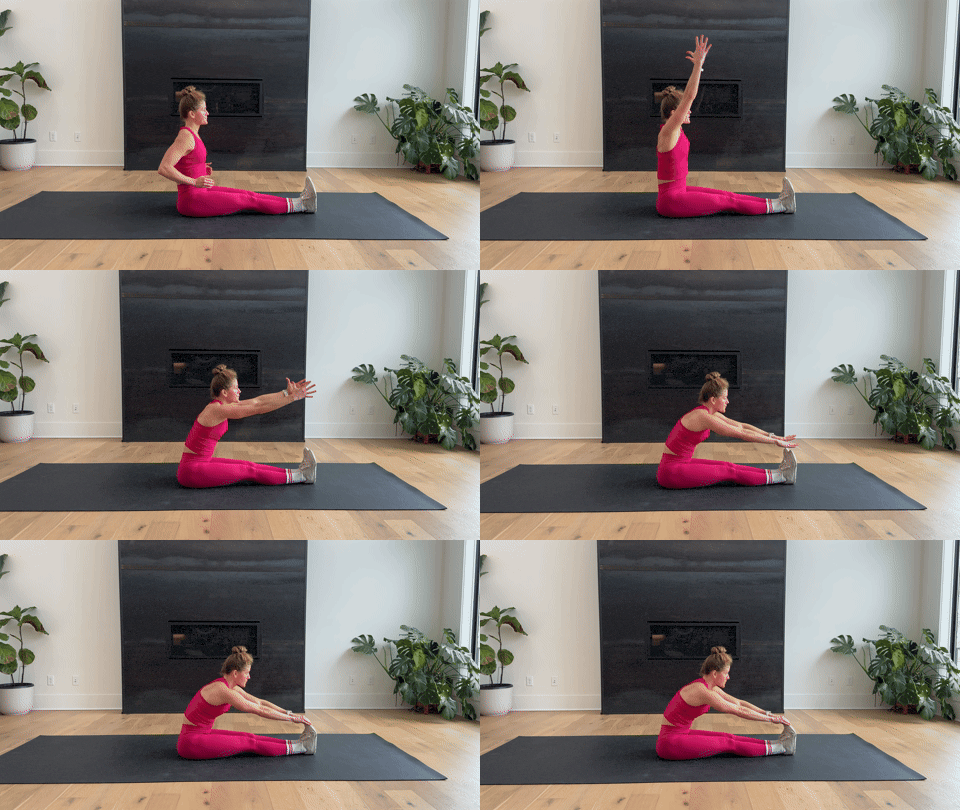
How to Do a Seated Hamstring Stretch
- Sit tall on the floor with both legs extended straight out in front of you. Flex your toes toward your face and sit up on your sit bones to avoid rounding through the lower back.
- Inhale to lengthen your spine, then hinge forward at the hips as you reach your hands toward your shins, ankles or feet. Keep your chest lifted rather than letting it collapse over your legs.
- Lower until you feel a gentle stretch along the back of your thighs. Avoid locking out your knees.
- Hold for 20 to 30 seconds, breathing deeply and allowing your hamstrings to gradually relax. Slowly return to an upright seated position.
Modification(s): Keep your knees bent slightly if your hamstrings feel very tight. You can also sit on a folded towel or yoga block to elevate your hips, making it easier to hinge forward with a flat back.
To add a glute stretch, plant your right foot on the ground outside your left thigh. Wrap your arms around your right knee and gently pull it toward your chest until you feel a stretch in the outer glutes. Repeat on the opposite side.
2. Hurdler Hamstring Stretch
Targets: Hamstrings, inner thighs and lower back.
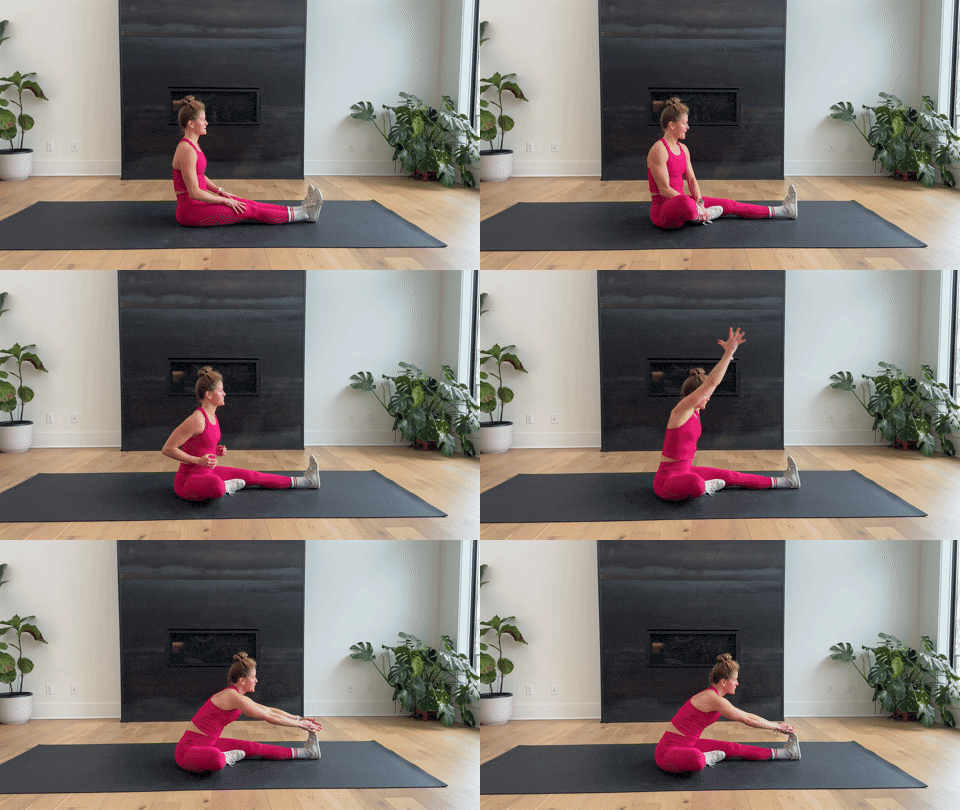
How to Do a Hurdler Hamstring Stretch
- Sit on the floor with your right leg extended straight in front of you. Bend your left knee and place the sole of your left foot against your inner right thigh.
- Sit tall, flex your right toes toward your face and square your hips toward your extended leg.
- Inhale to lengthen your spine, then hinge forward at the hips, reaching your hands toward your shin, ankle or foot. Keep your chest lifted and avoid rounding through your back.
- Lower until you feel a stretch along the back of your extended leg. Hold for 20-30 seconds, breathing deeply.
- Slowly return to an upright position and switch legs.
Modification(s): Bend your extended knee slightly if the stretch feels too intense. You can also sit on a folded towel or yoga block to help maintain a neutral spine.
3. Standing Hamstring Stretch (Forward Fold)
Targets: Hamstrings, calves, hips and lower back.
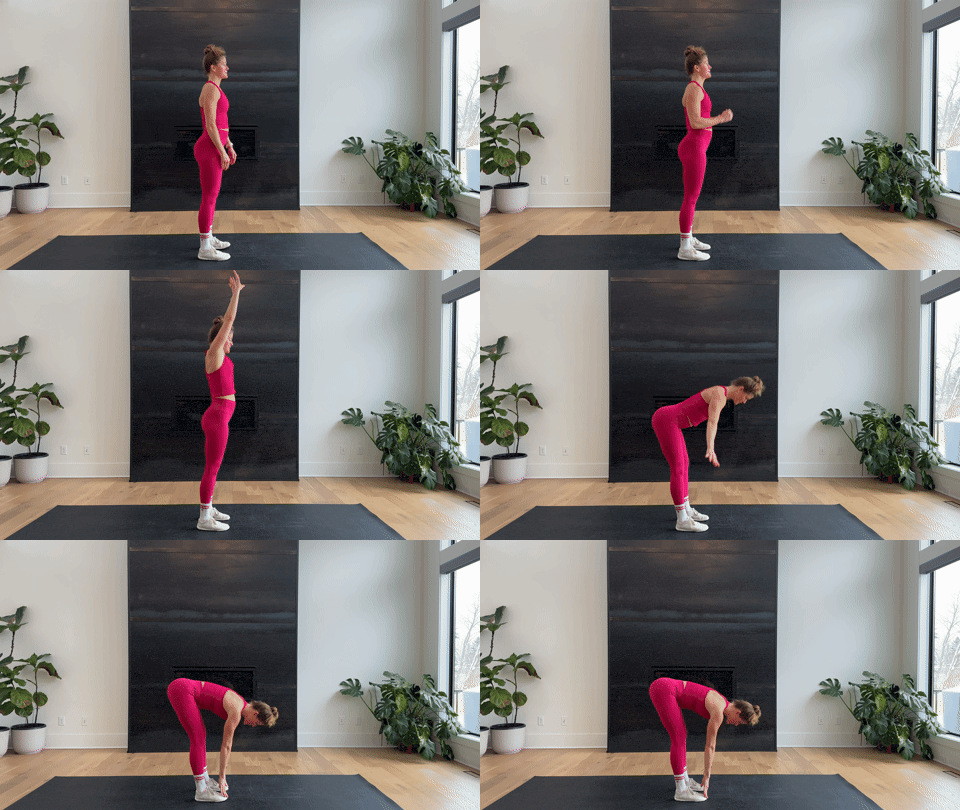
How to Do a Standing Hamstring Stretch
- Start standing in Mountain Pose, feet hip-width apart or slightly wider if needed, toes pointing forward.
- Inhale to reach your arms overhead, lengthening through your spine.
- Exhale and hinge your upper body forward at the hips, softening your knees and folding toward the floor. Push your hips back as you reach your fingertips toward the mat in a forward bend.
- Keep a gentle bend in the knees if your hamstring muscles feel tight.
- Hold each fold (or rotation) for 20-30 seconds, breathing deeply and feeling the stretch along your hamstrings and spine.
Modification(s): Bend your knees more deeply to reduce tension in the lower back. You can also rest your hands on a chair, yoga block, or shins if reaching the floor is uncomfortable.
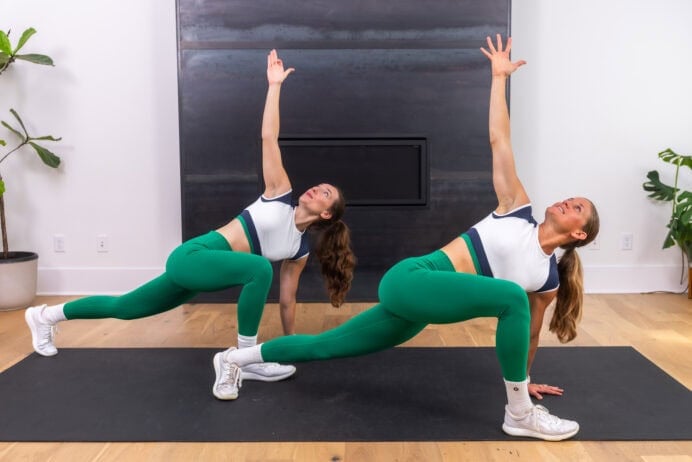
To add a thoracic spine rotation, place your left hand on the mat, extend your right arm overhead and gaze toward your fingertips. Return your right hand to the mat and repeat on the other side.
4. Towel Hamstring Stretch
Targets: Hamstrings, calves and lower back.
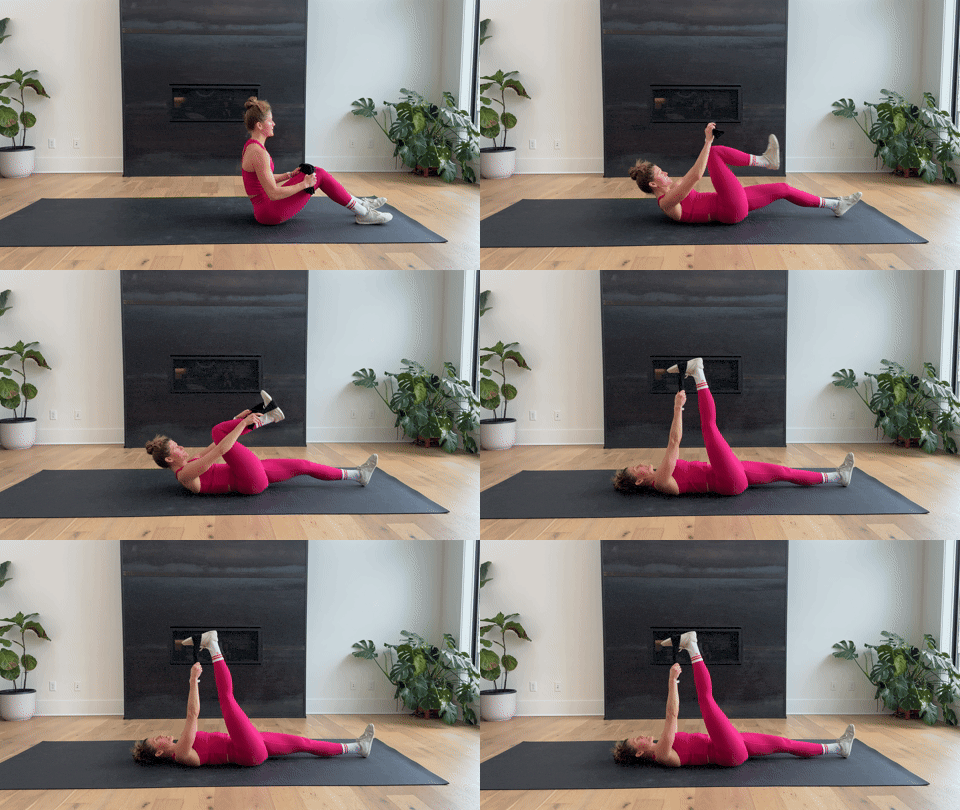
How to Do a Towel Hamstring Stretch
- Lie on your back with both legs extended. Loop a towel around the ball of your right foot.
- Keep your left leg flat on the floor and your core engaged. Gently lift your right leg up toward the ceiling, keeping it as straight as possible without locking the knee.
- Hold the towel with both hands and, if it feels comfortable, pull slightly to deepen the stretch along the back of the leg. Keep your shoulders and neck relaxed.
- Hold for 20-30 seconds, breathing deeply and allowing the hamstrings to gradually lengthen.
- Slowly lower your leg back to the floor and switch sides.
Modification(s): Bend your knee slightly if your hamstrings feel very tight or the stretch is too intense. You can also keep the lifted leg closer to your chest rather than fully vertical to reduce strain on your lower back during this supine hamstring stretch.
5. Pyramid Stretch
Targets: Hamstrings, low back, spine and hips.
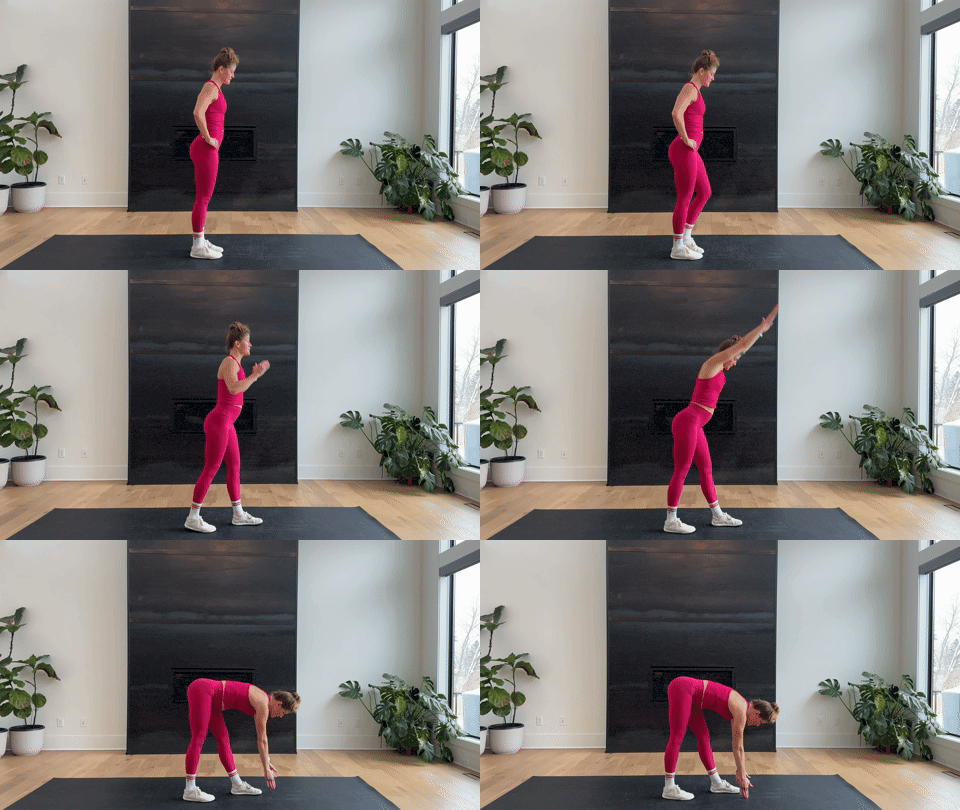
How to Do a Pyramid Stretch
- Start in a staggered stance with your right foot forward and left foot back. Keep your hips square to the front leg.
- Hinge forward at the hips, bending over your front leg and framing your front foot with your hands. Focus on pushing your hips back rather than reaching down toward the floor.
- Press through your front right heel and lengthen your spine. You should feel a stretch along the back of your front leg hamstring. Stop at mild to moderate tension. Your flexibility will improve over time!
- Hold the stretch for 30-60 seconds, breathing deeply and maintaining proper alignment.
- Return to standing, switch your staggered stance so the back leg moves forward, and repeat to stretch the opposite hamstring.
Modification(s): Bend your front knee slightly if your hamstrings feel very tight. You can also place your hands on a block, chair or your shin instead of reaching the floor. Shorten your stance to reduce tension if your hips or lower back feel uncomfortable.
6. Hamstring Sweeps
Targets: Hamstrings, glutes, hips and lower back.
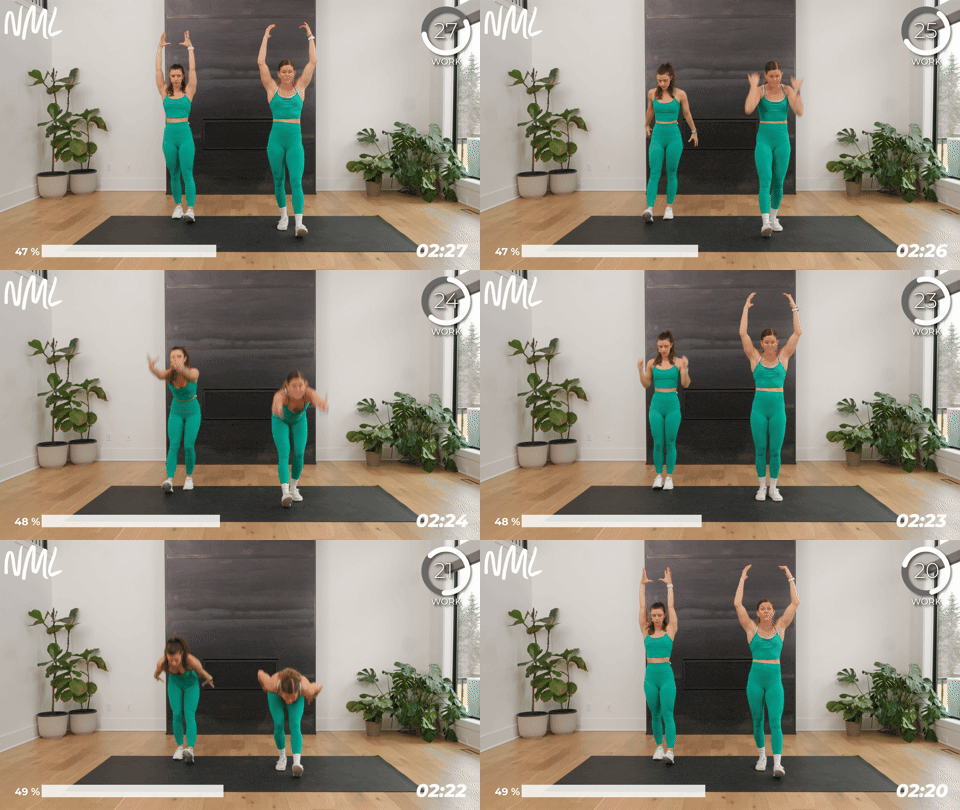
How to Do a Hamstring Sweep
- Stand tall with feet hip-width apart, knees slightly bent and core engaged.
- Shift your weight onto your right leg and extend your left leg straight in front of you, heel on the ground and toes pointing up.
- Hinge forward at the hips, reaching your hands toward your left toes while keeping your spine long and chest lifted.
- Sweep your left leg back to standing as you return to the starting position. Repeat for 8-10 controlled reps on one leg.
- Switch to the other leg and repeat the same movement.
Modification(s): Keep a soft bend in the standing knee if your hamstrings feel tight, or reach toward your shin or ankle instead of your toes to maintain proper form. Use a wall or chair for balance if needed.
7. Single-Leg Deadlift
Targets: Glutes, hamstrings, lower back and deep core muscles.
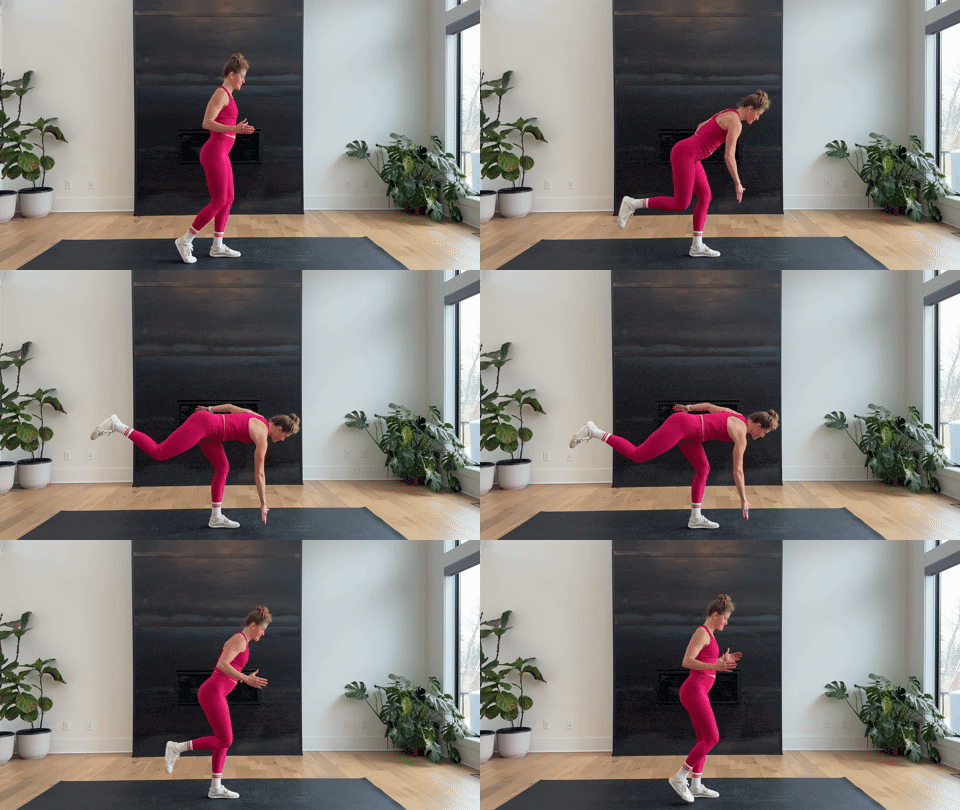
How to Do a Single-Leg Deadlift
- Stand tall with feet hip-width apart, knees slightly bent and core braced.
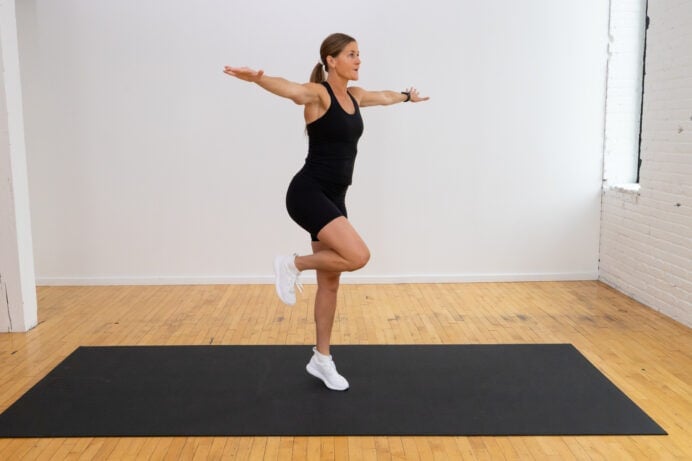
- Shift your weight into your right foot and either lightly kick your left toes behind you or float your left leg off the floor. Keep a soft bend in your standing knee.
- Hinge at your hips, sending your glutes back as you lower your left fingertips down towards the mat. Extend your left leg fully behind you as your torso tips forward, keeping your hips square and your spine neutral.
- Lower until you feel a stretch along the back of your standing leg. Your range of motion will depend on your hamstring flexibility.
- Drive through your right heel to press your hips forward, squeezing your glutes and hamstrings to return to standing. Bring your left leg back to meet your right at the top.
Modification(s): Keep your back toes on the ground in a staggered kickstand position for added balance support, maintaining about 80% of your weight in the front leg. You can also reduce the range of motion, hinging only as far as you can while maintaining a flat back.
8. Good Morning (Dynamic Hip Hinge)
Targets: Hamstrings, gluteus maximus, erector spinae and lower back muscles.
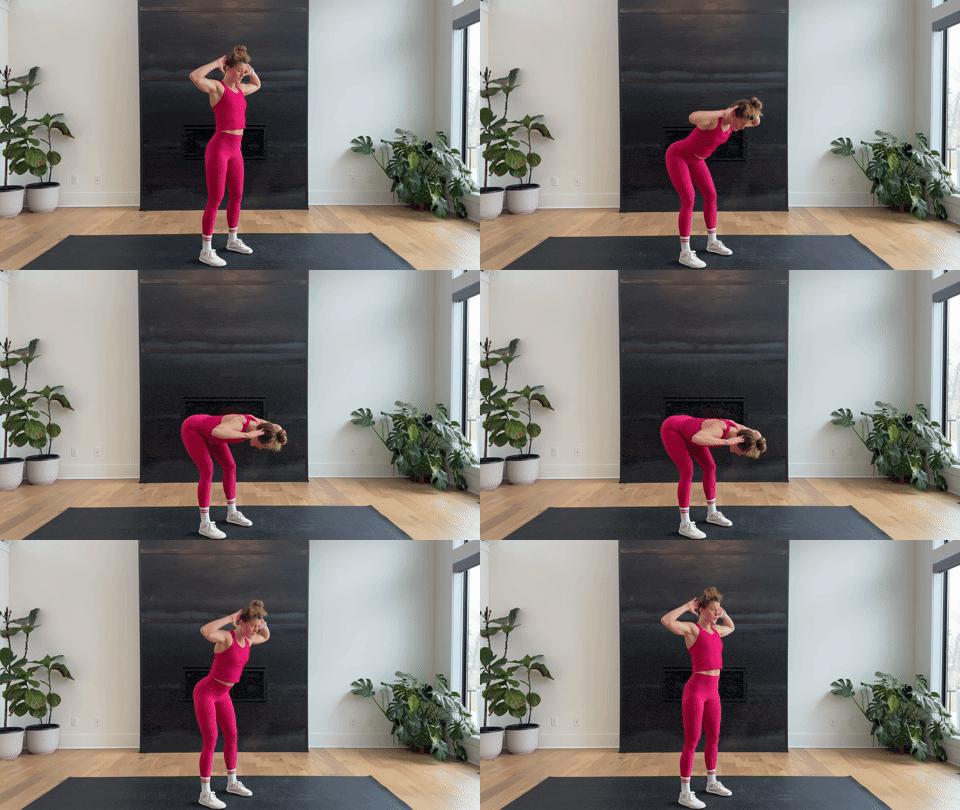
How to Do a Good Morning (Dynamic Hip Hinge)
- Stand with feet shoulder-width apart, knees softly bent and core engaged. Place your hands behind your head.
- Keeping your chest open and spine neutral, hinge at your hips by pushing your glutes back. Maintain a slight bend in your knees as your torso lowers toward parallel with the floor.
- Lower until you feel a stretch through the back of your lower legs. Keep your core braced and avoid rounding your back at the bottom of the movement.
- Drive through your heels to press your hips forward, squeezing your glutes and hamstrings as you return to a tall standing position.
Modification(s): Perform this movement without weight to focus on mastering the hip hinge. You can also limit your range of motion, lowering only as far as you can while keeping a flat back. A resistance band around your thighs can enhance glute and hamstring activation.
Additional Tips for Effective Stretching
- Breathe deeply. Inhale to lengthen your spine, exhale to relax into each stretch. Deep breathing helps your muscles release tension and improves circulation.
- Move slowly and mindfully. Avoid bouncing or forcing the stretch. Controlled movements protect muscle groups and joints.
- Hold stretches long enough. For static stretches, aim for 20-60 seconds per side, depending on your flexibility and comfort.
- Stretch consistently. Flexibility improves with regular practice. Try to stretch at least 3-5 days per week.
- Use props for support. Yoga blocks, towels or straps can help maintain proper form and deepen stretches safely.
- Listen to your body. Stretch to the point of tension, not pain. Tightness is usual, but sharp pain is not. Don’t force it!
FAQ
What causes tight hamstrings?
Tight hamstrings are often the result of prolonged sitting, repetitive movements like running or cycling and strength training without adequate mobility work. When I see persistent tightness, it’s usually a combination of overuse and under-recovery.
How often should you stretch your hamstrings to improve flexibility?
For noticeable improvements in flexibility, I recommend incorporating hamstring mobility work at least 3-5 days per week. Dynamic stretches work best before workouts to prepare the muscles for movement, while static stretches are more effective after training or on recovery days. Consistency matters more than duration, though. Even 5-10 intentional minutes several times a week can make a meaningful difference.
How long does it take to recover from a pulled hamstring?
Recovery time depends on the severity of the strain. A mild hamstring strain may improve within 1-3 weeks, while moderate to severe strains can take several weeks or even a few months. I always encourage easing back into movement gradually.
Can strengthening exercises help reduce hamstring tightness?
In many cases, tight hammies are actually weak hamstrings. I prioritize strengthening exercises because building strength through a full range of motion can improve flexibility and reduce that constant tight feeling. Stronger hamstrings also better support the hips and lower back.
More Routines
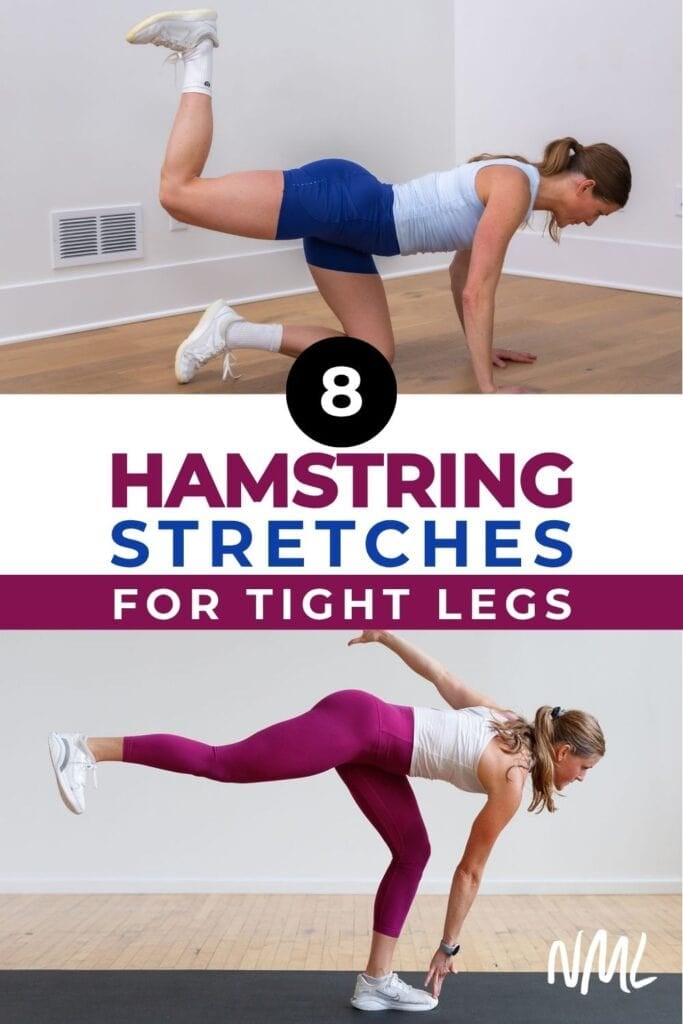
StretchingPin This: Best Hamstring Stretches for Tight Leg Muscles
no comments
Leave a Comment