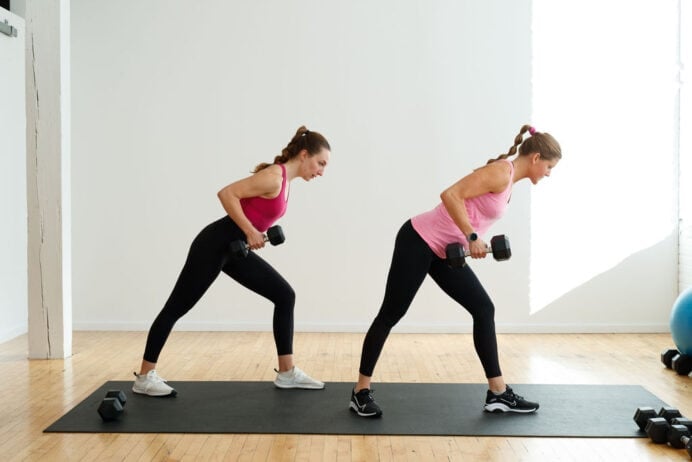



9 Dumbbell Exercises to Build Back Strength
These back exercises are designed to sculpt strength and definition using 9 of my favorite dumbbell exercises – no gym required. These movements target the upper, mid and lower back to improve posture, support everyday movement and build lean muscle while burning calories. These back exercises are ideal for anyone short on time who still wants a challenging, results-driven workout routine.
Exercise Insights
Strengthen and sculpt your back with these efficient dumbbell back exercises designed to support better posture, core strength and everyday movement.
Incorporate upper-body exercises like these 1-2 times per week to increase muscle mass, improve endurance and support long-term strength.
If you’re experiencing ongoing back pain, recovering from a spinal injury or are pregnant (particularly in later stages), consult a healthcare provider or physical therapist before starting. Certain exercises may need to be modified or avoided based on individual needs.
Note, this is a list of my favorite dumbbell back exercises. If you prefer a full guided workout video (complete with a warm-up and cool-down), try this guided back workout!
Equipment
Medium to Heavy Pair of Dumbbells. I suggest anywhere from 8-25 lbs.
If you’re a beginner, I recommend starting with 5-10% of your body weight per dumbbell. That’s about 8-15 lbs if you weigh 150 lbs. Gradually increase to a heavier weight as your form and confidence improve during home workouts.
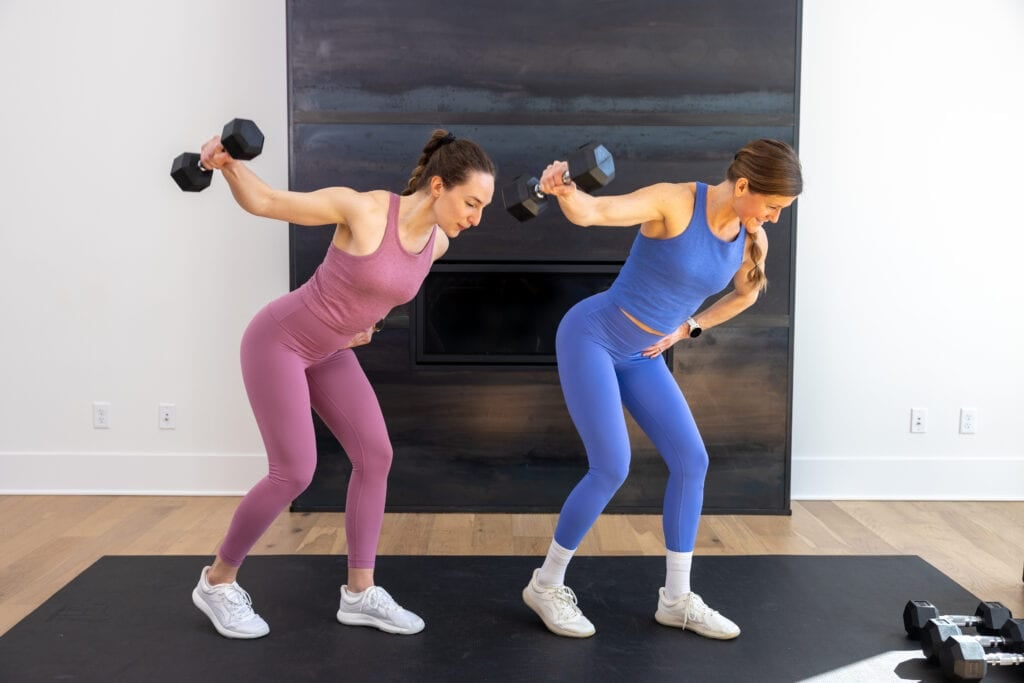
Dumbbell Back Exercises
1. Back Row
Targets: Latissimus dorsi (or lats; the largest back muscle known for its large, flat “V” shape).
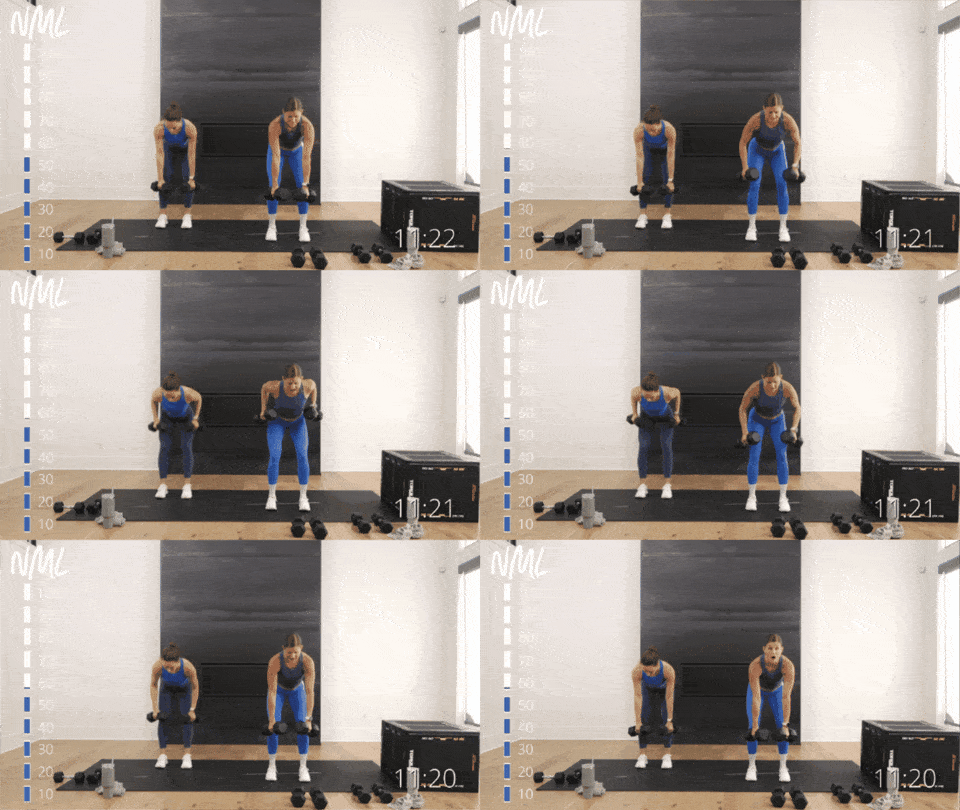
How to Do a Bent-Over Row
- Stand with your feet slightly wider than shoulder-width apart, knees slightly bent. Grip a set of dumbbells, palms facing in towards each other.
- Hinge forward at the hips until your body is in a straight line, neck in line with your spine, flat back and belly button pulled back towards your spine.
- As you pull the weights back towards your hips or glutes in a rowing movement, squeeze your shoulder blades together. Stop when your elbows are in line with your hips.
- With control, slowly lower the dumbbells back down to the starting position. Think up on a 1-count, down slow and controlled on a 2-count.
2. Reverse Grip Back Row
Targets: Mid-back, latissimus dorsi (lats), trapezius (middle and lower), rhomboids, biceps (upper arms) and forearms.
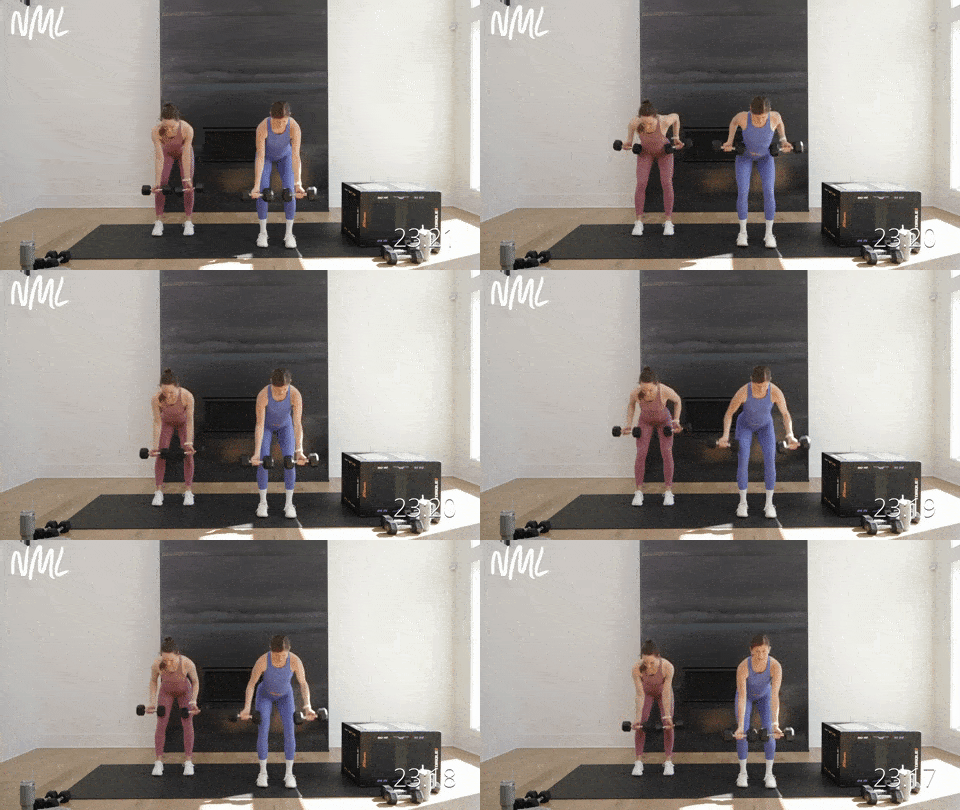
How to Do a Reverse Grip Back Row
- Stand with your feet hip-width apart and your knees slightly bent.
- Grip a set of dumbbells, palms facing out away from the body.
- Hinge at the hips until your chest is parallel to the floor (neck in line with your spine, flat back, and belly button and rib cage pulled in).
- Pull the weights back towards your hips, squeezing the shoulder blades together.
- Slowly lower the dumbbells back down to the starting position.
3. Single Arm Back Row
Targets: Latissimus dorsi (lats), trapezius, rhomboids and posterior deltoids.
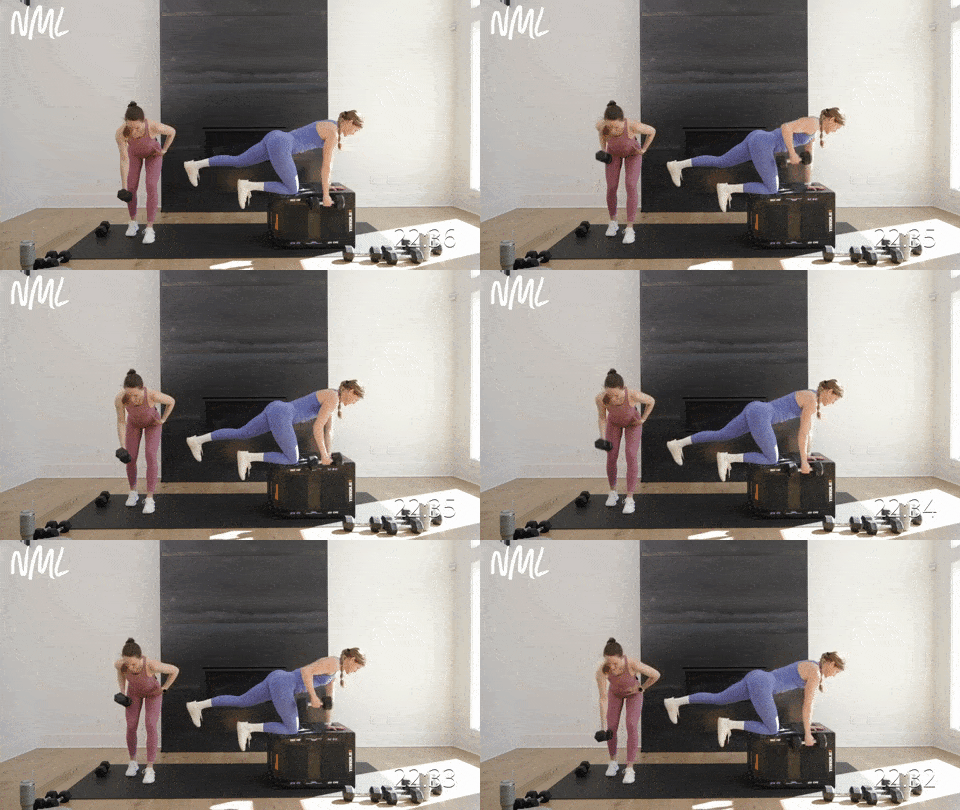
How to Do a Single Arm Row
- Stand with your feet slightly wider than shoulder-width apart, knees slightly bent.
- Hold a dumbbell in your left hand, palm facing in (narrow grip).
- Bend forward at the hips, maintaining a flat back, belly button pulled back towards your spine.
- Pull the dumbbell back towards your left hip (think of pulling from your elbow joint versus your wrist), as if you were starting a pull-start lawnmower. Stop once your elbow is in line with your rib cage, making a straight line from shoulder to elbow. Hold the row at the top for a moment, squeezing your shoulder blade in.
- Lower the dumbbell back to the starting position and repeat.
Modification: Perform a bird dog row from a box or bench to increase core engagement and get a greater range of motion.
4. Straight Arm Pull Backs
Targets: Latissimus dorsi (lats), triceps, shoulders and upper back muscles.
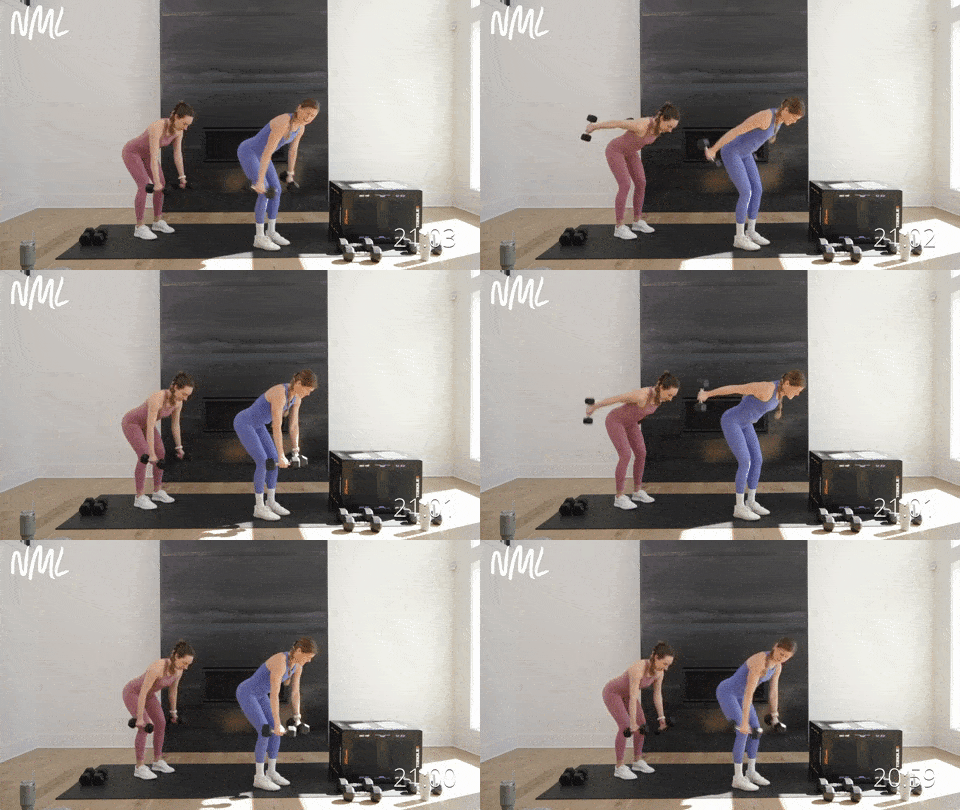
How to Do a Straight Arm Pull Back
- Stand with your feet shoulder-width apart, knees slightly bent. Grip a set of dumbbells, palms facing in towards each other.
- Hinge forward at the hips at approximately a 45-degree angle until your body is in a straight line (torso parallel to the mat).
- Keep your arms straight as you pull both dumbbells back to your hips (just past your hips).
- Control the dumbbells back down. Return to the starting position, trying not to let the dumbbells touch at the bottom.
5. Plank and Row (Renegade Row)
Targets: Lats, rhomboids, trapezius, deltoids, rear deltoids, rotator cuff muscles, biceps, triceps, abdominals and obliques.
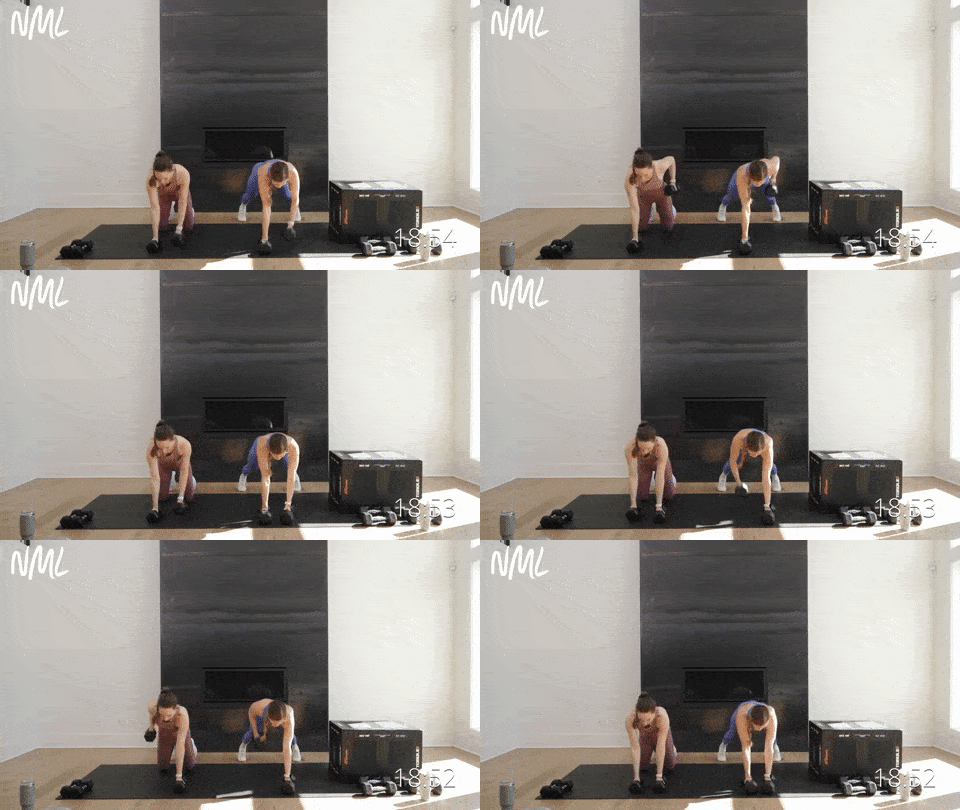
How to Do a Plank and Row (Renegade Row)
- Start in a high plank position with your hands directly under your shoulders and feet shoulder-width apart.
- Hold a dumbbell in each hand, with your palms facing each other and your arms extended. Your wrists should be in line with your shoulders.
- Engage your core and keep your back straight as you row one dumbbell up towards your chest, keeping your elbow close to your body. Try to keep your hips and shoulders parallel to the floor.
- Lower the dumbbell back down to the starting position, then repeat the movement with the other arm.
- Alternate rowing the dumbbells, keeping your core engaged and maintaining a stable plank position throughout the exercise.
Modification: Drop to your knees and perform a modified plank and row. Alternatively, place your dumbbells on an incline (such as a bench or box) to bring the ground closer to you.
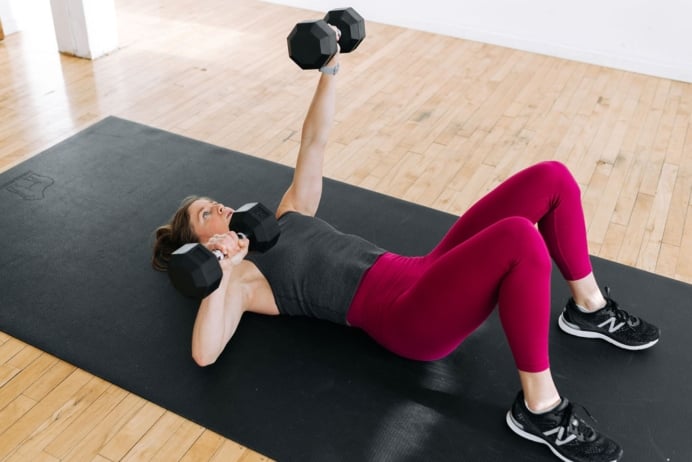
6. Dumbbell Pullover
Targets: Chest (pectorals), lats (latissimus dorsi), triceps, serratus anterior muscles and core.
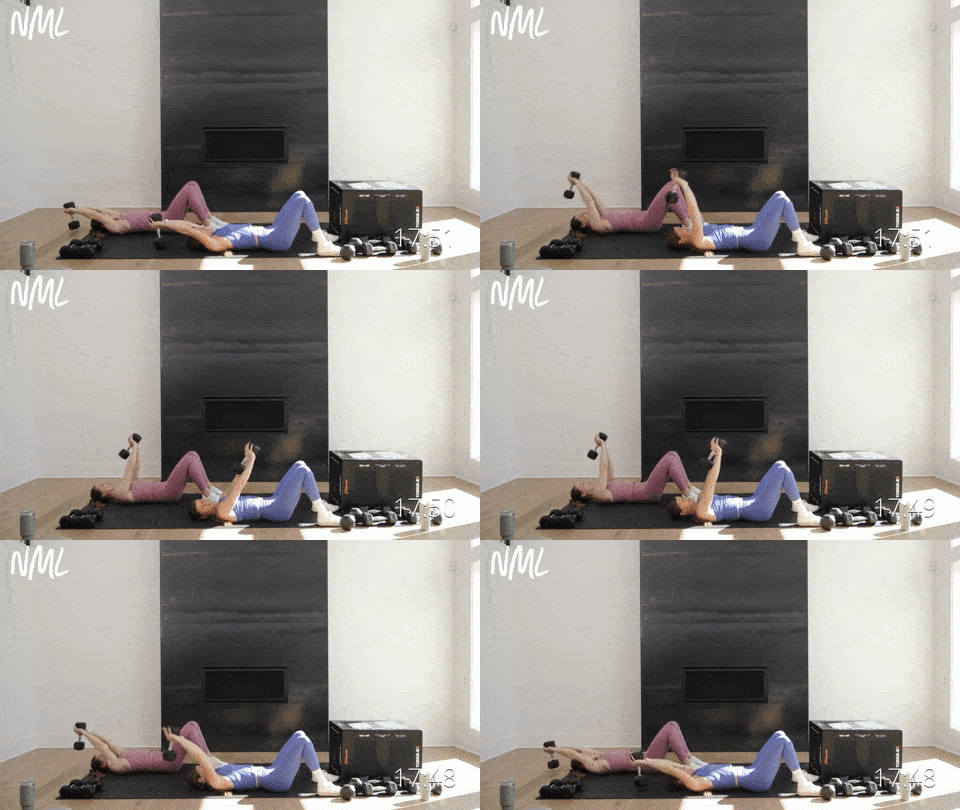
How to Do a Dumbbell Pullover
- Start lying on your back, either on the ground or on an exercise bench, knees bent and feet planted firmly on the floor. Engage your core to press your lower back into the ground.
- Hold a dumbbell with both hands, grasping the top of the weight with your palms facing up. Your arms should be extended straight above your chest.
- Keeping your arms straight with a slight bend in your elbows, slowly lower the weight behind your head until your arms are parallel to the floor.
- Exhale to slowly lift the weight back up to the starting position by squeezing your chest muscles and pulling the weight back up over your chest. Keep your arms straight as you lift the weight.
7. Dumbbell Back Fly
Targets: Posterior deltoids (rear delts), rhomboids, trapezius muscles, rotator cuff muscles and triceps.
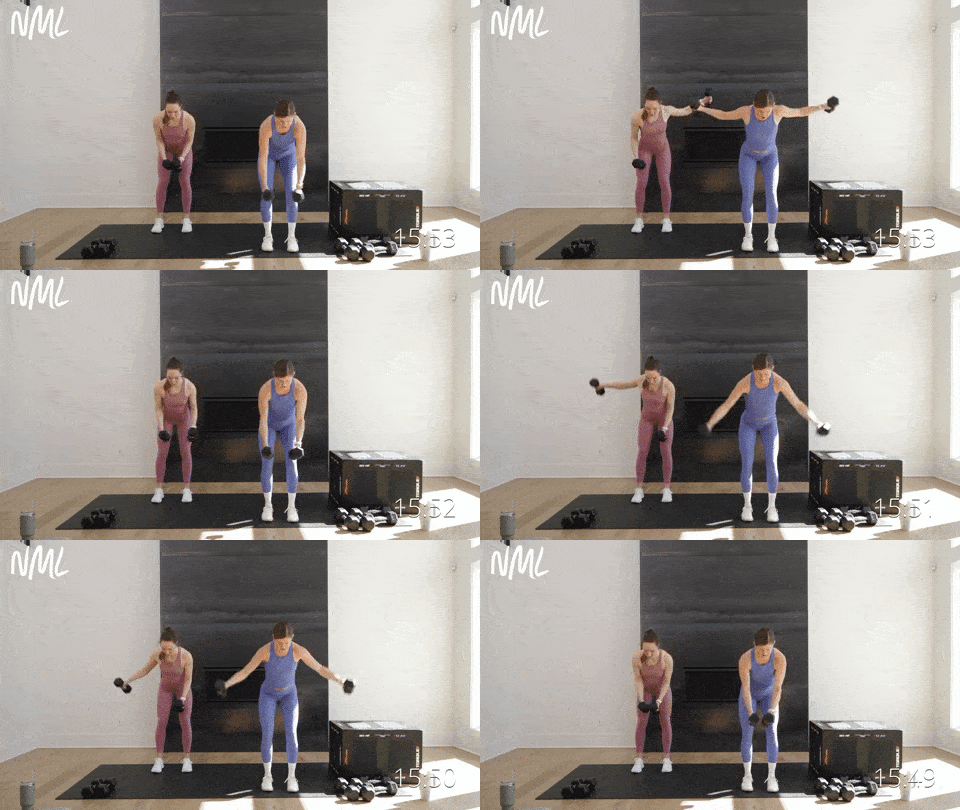
How to Do a Dumbbell Back Fly (Reverse Fly)
- Stand with your feet slightly wider than shoulder-width apart, knees slightly bent. Grip a set of dumbbells, palms facing in towards each other. Hinge forward at the hips.
- Open your arms and squeeze your shoulder blades together as you raise the dumbbells. Aim to bring the dumbbells just to shoulder height.
- With control, slowly lower the dumbbells back down, returning to the starting position.
Modification: Perform an alternating single-arm back fly.
8. Upright Row
Targets: Shoulders (trapezius) and rhomboids (upper back muscles).
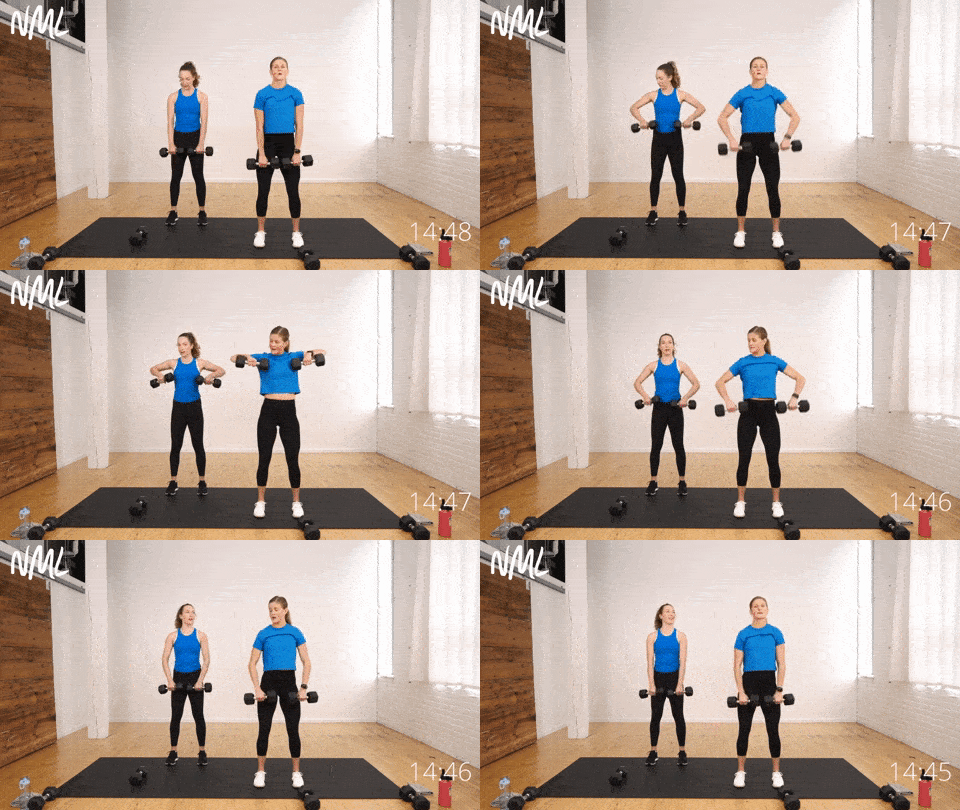
How to Do an Upright Row
- Start with feet hip-width apart, holding dumbbells in your hands. Palms are facing in towards your body.
- Leading with your elbows, pull the dumbbells up until your elbows reach shoulder height. As you pull the dumbbells up, think of pulling your shoulder blades down. Be sure to keep the dumbbells close to your body as you pull them upwards.
- With control, lower the dumbbells back down to the starting position.
9. Dumbbell Deadlift
Targets: All the posterior chain muscles, including the hamstrings, glutes, core, lats and lower back.
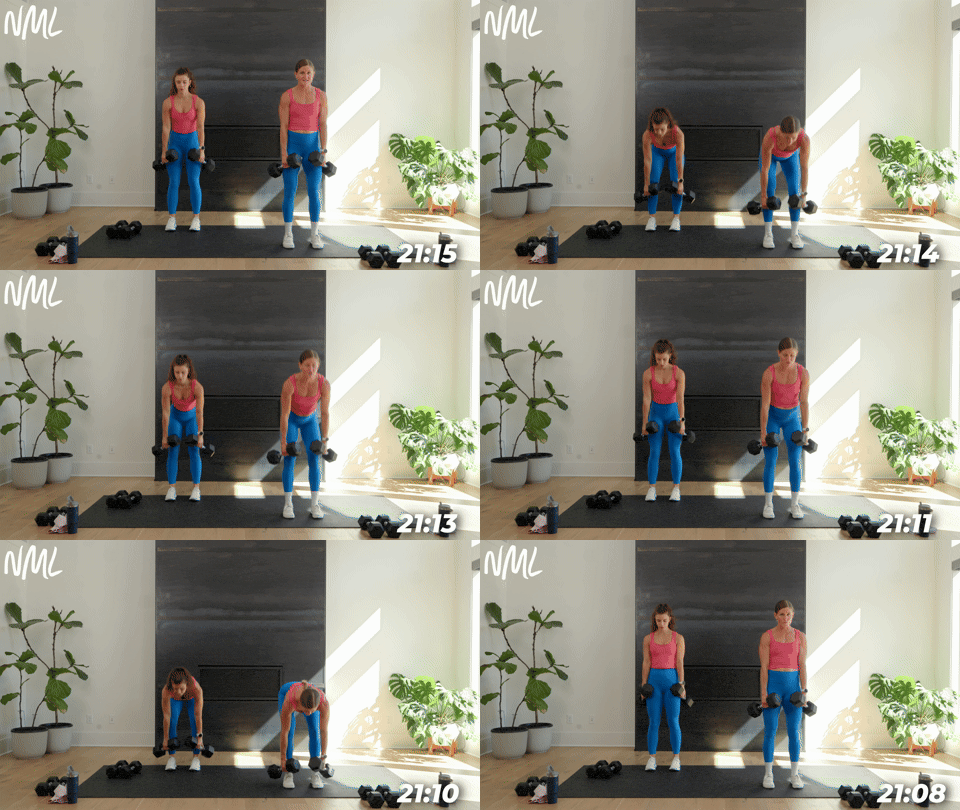
How to Do a Dumbbell Deadlift
- Stand with your feet hip-width apart, holding a dumbbell in each hand in front of your hips (palms facing in towards your body).
- Hinge at the hips, pushing your hips back towards the wall behind you as you glide the dumbbells down the front of your legs, keeping your core tight, slightly bending both knees. Lower your dumbbells until you feel a stretch in the hamstrings. The range of motion will look different for everyone.
- Drive through your heels to push your hips forward, pulling the dumbbells back up towards your hips and returning to the starting position. Aim for full hip extension at the top of the movement.
FAQs
How often should I do a dumbbell back workout?
Most people benefit from training their back 1-2 times per week, allowing at least 48 hours of recovery between sessions. This frequency supports muscle growth, strength gains and recovery without overloading the upper-body muscle groups, joints or spine.
Can you build a strong back using only dumbbells?
Yes, dumbbells are effective for building back strength and muscle when used with proper form and progressive overload. They allow for a wide range of pulling and hinging movements that target the upper, mid and lower back while also engaging the core.
How can I prevent injury while doing dumbbell back exercises?
Focus on proper technique, controlled movements and choosing weights you can manage with good form. Warm up before training, engage your core during each exercise and avoid rushing through reps. If you feel sharp pain or discomfort, stop the movement and reassess your form or reduce the load.
Can beginners build back muscle effectively with dumbbells?
Absolutely, dumbbells are beginner-friendly and allow you to start with lighter weights while developing proper movement patterns. Consistent training, gradual progression and attention to form can help beginners build strength and muscle safely and effectively.
How should I structure a dumbbell back workout?
A well-rounded dumbbell back workout should include a mix of rowing, hinging and stability-focused movements. Some of my favorite exercises include deadlifts, pull-ups and heavy barbell rows. Aim for 3-5 exercises, 2-4 sets each, with moderate reps (8-15) depending on your goals. Rest for 30-90 seconds between sets and focus on quality movement rather than speed.
More
Exercise RoundupsPin This: Dumbbell Exercises for Toning and Strengthening Your Back
no comments