





9 Cool-Down Stretches to Add to Your Workout Routine
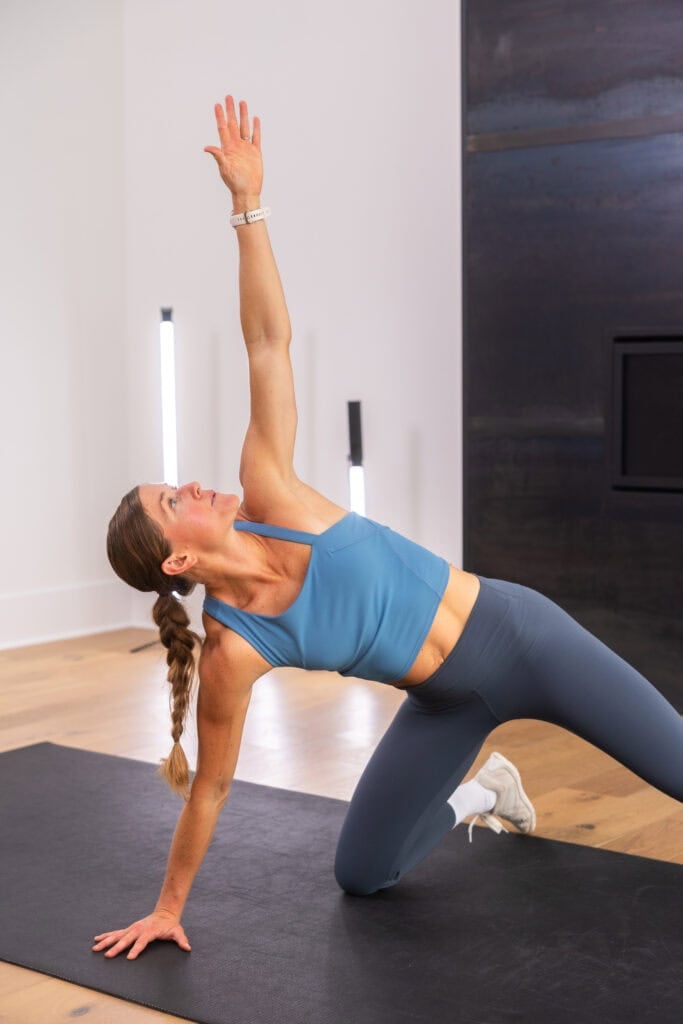
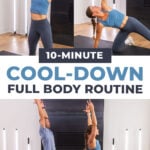
Release tight muscles, reduce soreness and recover faster with these cool-down stretches. This 10-minute full-body routine targets every major muscle group and helps lower your heart rate after a training session. No equipment needed for this guided mobility routine.
READY TO SWEAT?
FREE 2-Week Workout Plan
This extended cool-down is part of my FREE 2-Week New Year Workout Program: Athlete 25. Get the full program below!
Free 2-Week Program
Taking just a few minutes post-workout to cool down can make a significant difference in how your body feels after your workout — and how consistently you’re able to train.
I get it — when you’re short on time, it’s tempting to finish your last rep and drop your weights, immediately moving on to the next thing on your to-do list. That being said, taking just 5-10 minutes to slow down and transition your body back to pre-workout status makes a huge difference in the way your body feels and recovers.
There are so many benefits to just a few minutes of cooling down after training, including:
- Cardiovascular Benefits: During your workout, your heart and lungs are working hard to pump blood and oxygen to the muscles under load. You may experience dizziness and lightheadedness if you attempt to go from effort level 100 down to 0 without warning. A cool-down gives your cardiovascular system time to transition into rest and recovery mode.
- Muscle Recovery: Your muscles burn fuel (like fat and carbs) during your workout, which produces metabolic waste products (such as lactic acid). Gentle stretching post-workout can help increase circulation through sore muscles, clearing out lactic acid and reducing post-workout soreness.
- Mobility and Flexibility: The best time to get a deeper range of motion during your stretches and yoga poses is once your body is already warmed up, immediately following a workout. When your muscle fibers are warm, they more easily lengthen during stretches.
The stretches you do during a workout warm-up routine are different from those I recommend during a workout cool-down routine. While I recommend focusing on dynamic stretches (stretches with movement, like walking lunges) during your warm-up, cool-downs typically focus on static stretching (holding a pose, such as a hamstring stretch). Holding a static stretch while your muscles are still warm following your workout can increase flexibility and range of motion and reduce risk of injury.
Cool-downs may include a mix of low-intensity cardio and stretching exercises. This is designed to bring down your heart rate after physical activity and lengthen tight muscles.
Today’s cool-down mobility routine targets all the major muscle groups in the body, including the lower body (quads, hips, hamstrings, hip flexors, glutes, calves and ankles) and upper body (chest, shoulders, back, triceps, biceps and neck).
Workout Details
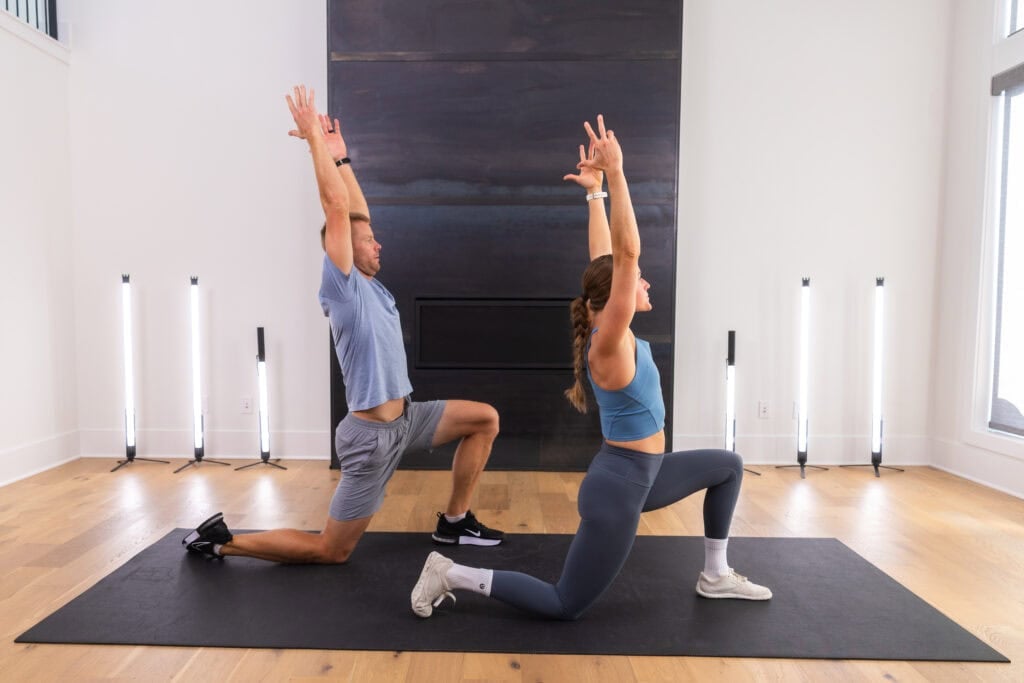
Improve flexibility, mobility and muscle recovery with this functional cool-down stretching routine. No equipment needed for this gentle full-body recovery flow.
I suggest doing this extended cool-down immediately following your pilates, cardio or strength training full-body workout. You should perform some type of cool-down after every workout, but I try to perform extended sessions like this one 1-2 times a week or anytime I’m feeling sore or tight.
Trainer Tip: Breathe into each pose, using each exhale to deepen the stretch.
Workout Equipment
None, just your body weight.
Workout Instructions
Follow along with the guided 10-Minute Post-Workout Stretch Routine on YouTube, led by me — your certified personal trainer, Lindsey Bomgren.
Your Workout Looks Like This:
- 9 Cool-Down Stretches
- Timed Intervals (Perform each stretch for 30-60 seconds, spending longer on any sticky points)
- No Repeats (Perform each stretch x1 set, alternate sides as needed)
Workout Outline
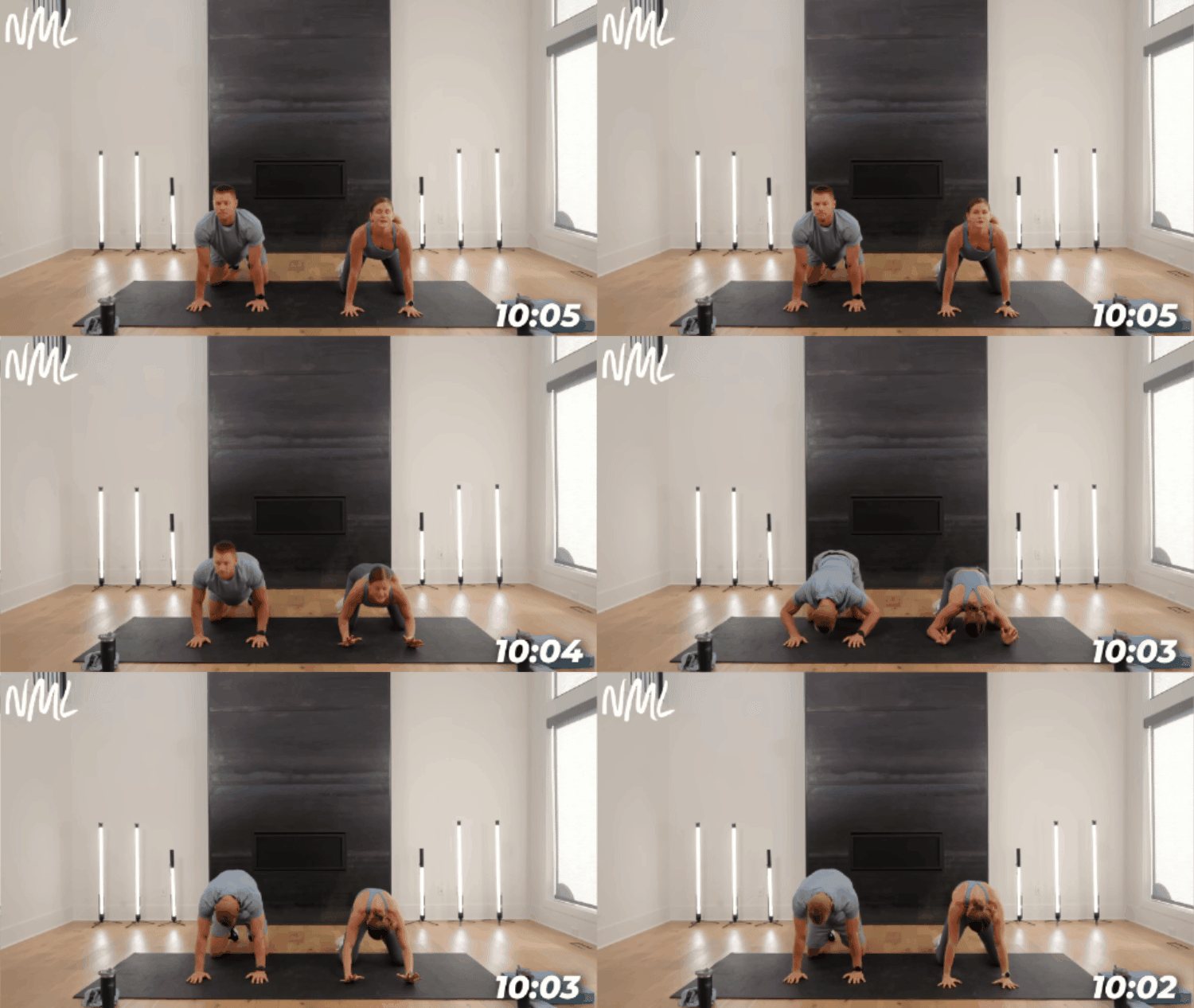
1. Cat-Cow
Targets: Erector spinae, multifidus, thoracic spine mobility; also engages abdominals and pelvic floor.
How To Do a Cat-Cow Stretch
- Start in a table top position (quadruped) on your hands and knees. Shoulders are stacked over wrists and hips are stacked over knees.
- Find a neutral spine — think of the spine as a straight line connecting the shoulders to the hips. Keep the neck long by looking down and out.
- On your exhale, arch your back to come into cat pose. Tuck your tailbone, feeling a nice stretch along your spine. Draw your navel toward your spine and drop your head, gazing toward your navel.
- Return to neutral spine on your inhale and repeat.
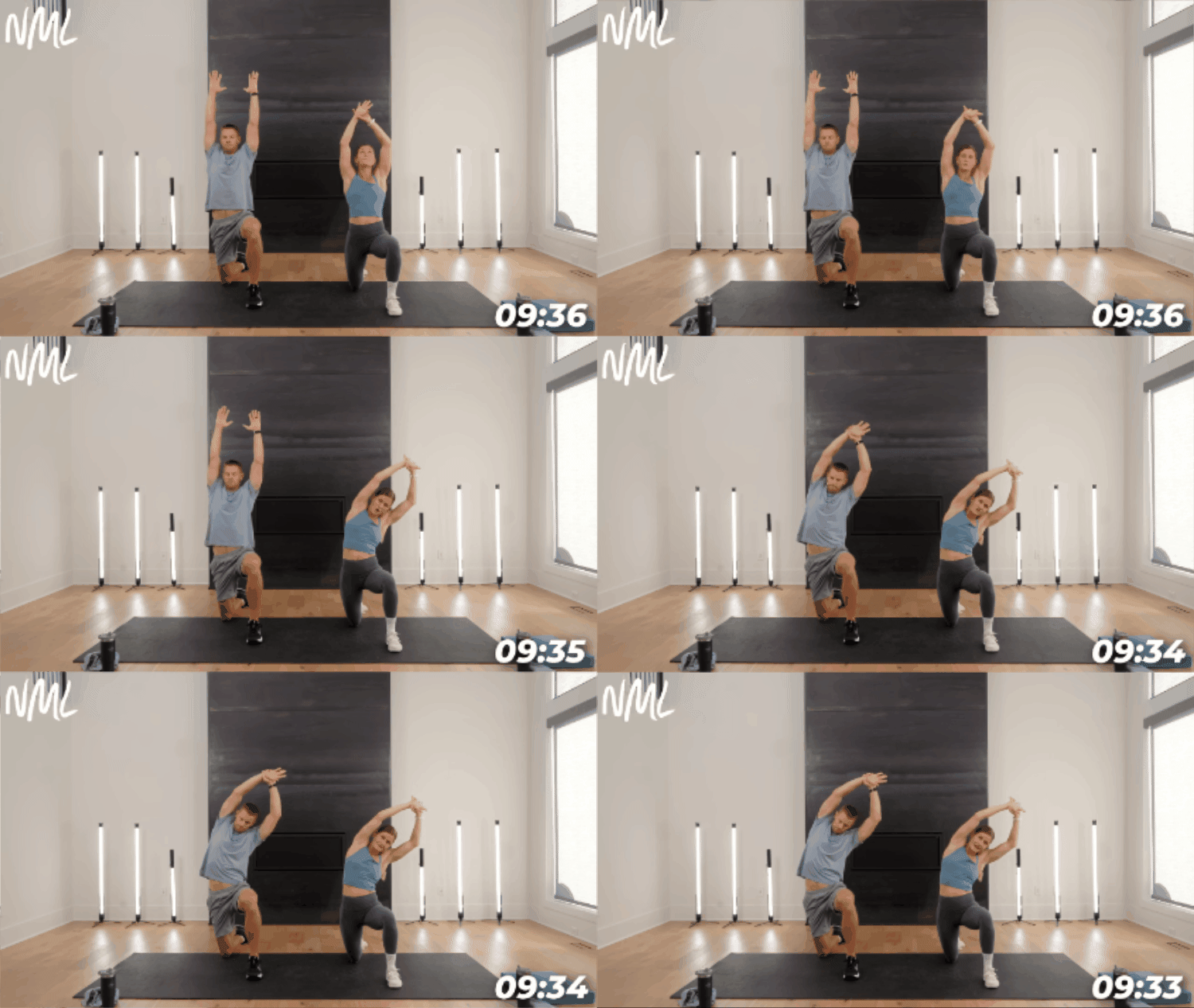
2. Kneeling Hip Flexor Stretch
Targets: Hip flexors (especially the iliopsoas muscle group, which includes the psoas major and iliacus) and quadriceps (rectus femoris).
How To Do A Kneeling Hip Flexor Stretch
- Start in a low lunge position with your right leg forward and left leg back. Both knees bent at 90 degrees. Drop your left knee to the mat for stability.
- Square your hips to the front by tucking your tailbone, performing a posterior pelvic tilt. Focus on keeping your back straight rather than leaning forward. Raise both arms directly overhead to deepen the stretch through the front of your thigh.
- Option to reach your hands to the right, stretching through your left obliques.
3. Puppy Dog Stretch
Targets: Latissimus dorsi (lats), pecs (chest muscles), triceps and thoracic spine.
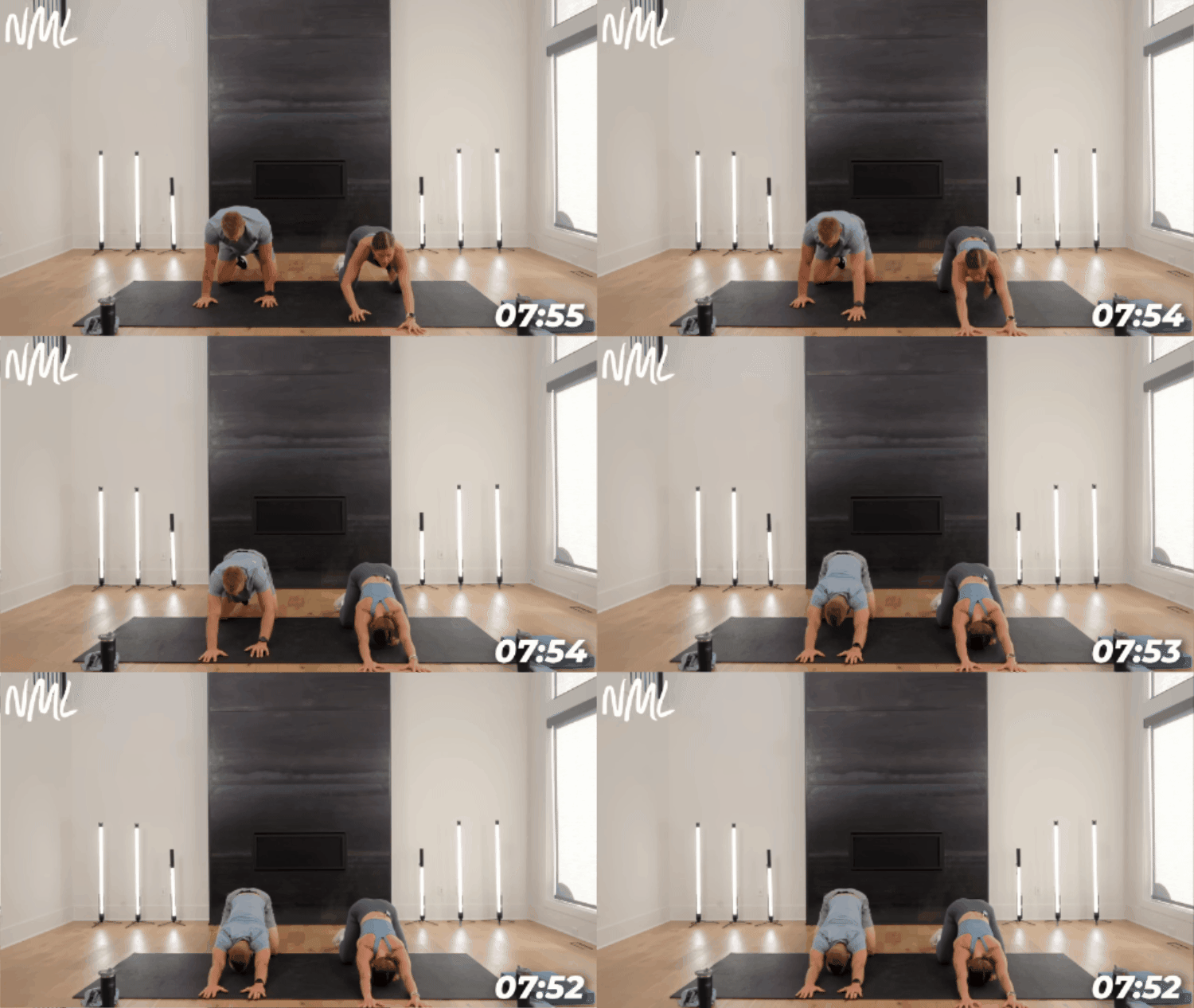
How To Do A Puppy Dog Stretch
- Start in a table top position (quadruped) on all fours; shoulders stacked over wrists and hips stacked over knees.
- Then walk your hands away from your body, extending your hands as far out in front of you as possible, while keeping your hips high.
- Hold this position, lengthening from fingertips to tailbone with each exhale.
4. Seated Hamstring and Glute Stretch
Targets: Hamstrings, calves, gluteus medius (outer glutes).
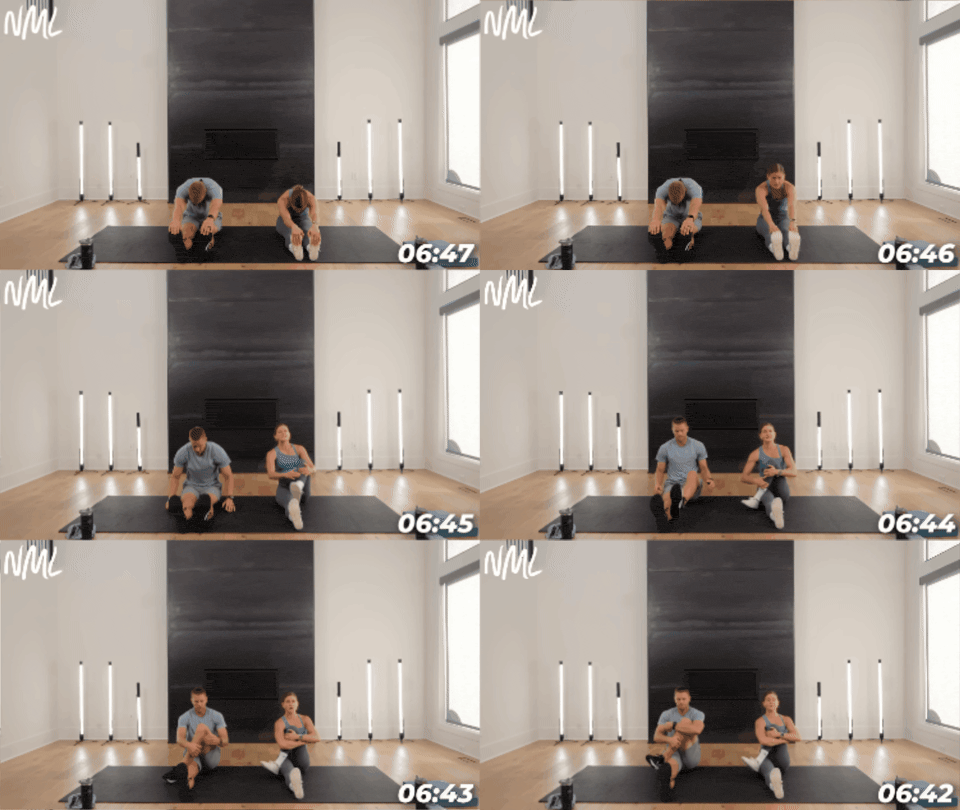
How To Do A Seated Hamstring and Glute Stretch
- Start in a seated position, legs stretched out long in front of you. Engage your core to sit up tall.
- On an exhale, collapse forward over your legs, reaching your fingertips for your calves, shins or toes. Range of motion will look different for everyone. Hold for 3-5 breaths.
- Then, straighten your upper body, returning to a seated position as you pull your right knee in towards your chest.
- Plant your right foot on the ground outside your left thigh, then wrap your arms around your right knee, pulling it in towards your chest. You should feel a stretch in your outer glutes.
- Continue this pattern, alternating a hamstring stretch with a glute stretch.
5. Seated Butterfly Stretch
Targets: Hips (abductors), hip flexors, glutes and groin.
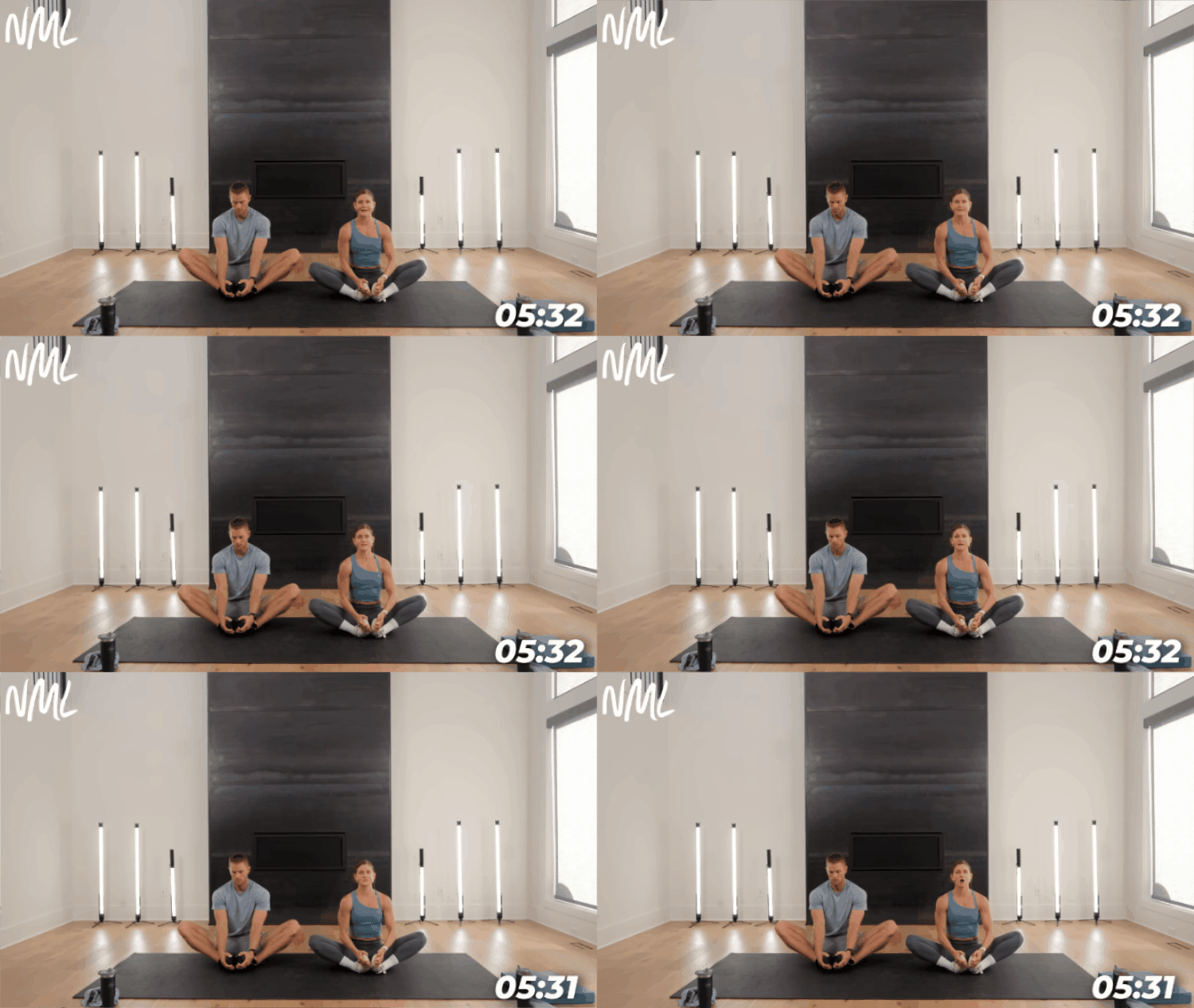
How To Do A Seated Butterfly Stretch
- Sit on the floor with the soles of your feet pressing into each other.
- Clasp your hands on your feet, holding your right toes with your right hand and left toes with your left hand.
- Focus on lowering your knees closer to the ground with each exhale, opening up through the inner thighs with each breath.
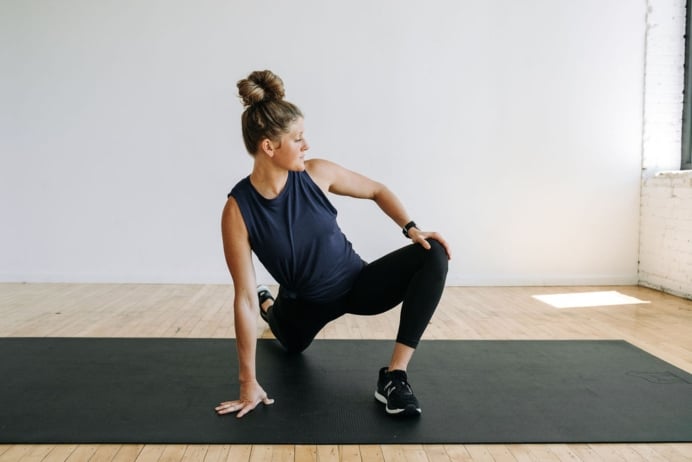
6. Reverse Table Top
Targets: The entire front side of the body, including the chest, shoulders, neck and hips.
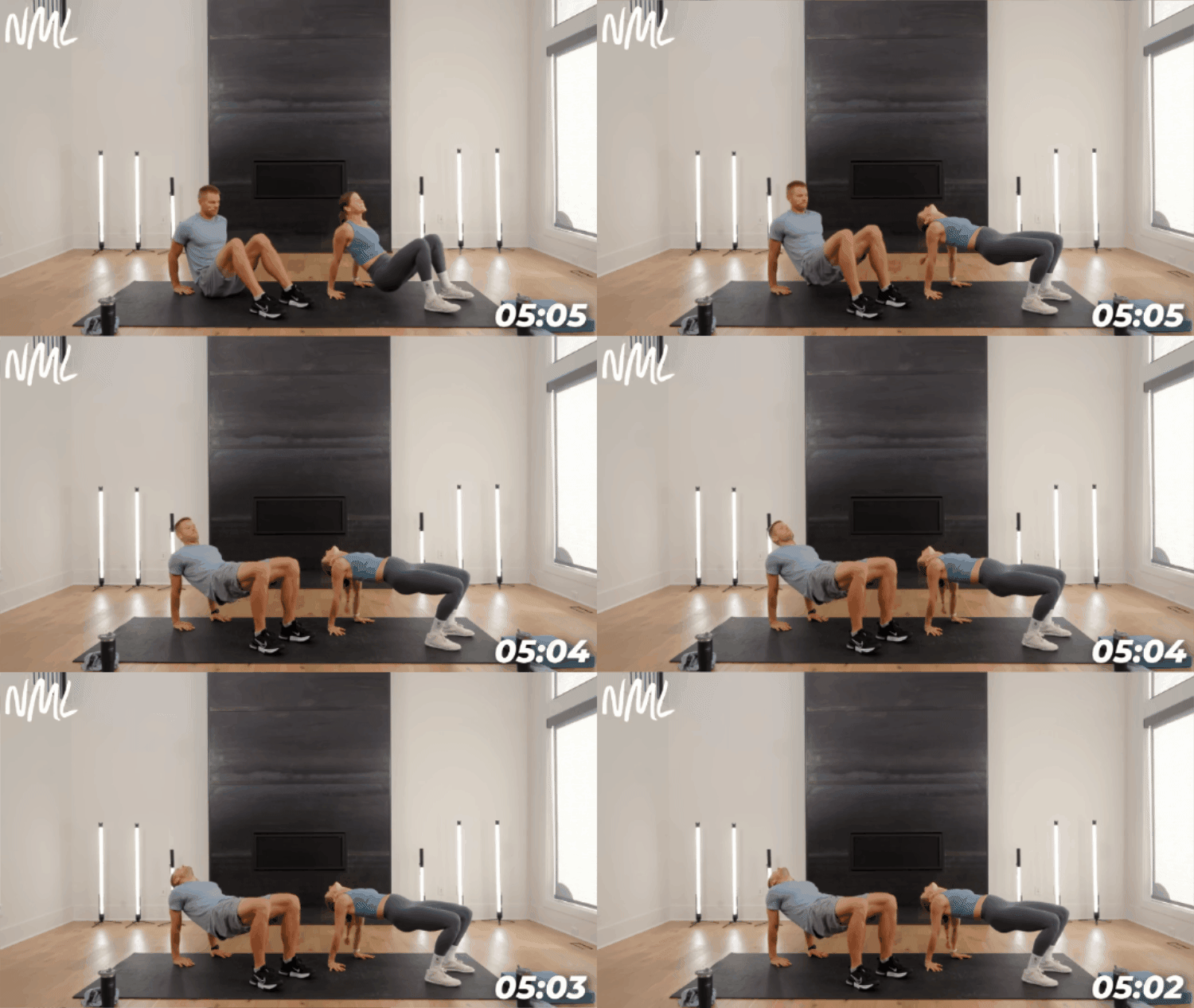
How To Do A Reverse Table Top
- Start seated on the ground.
- Place your hands behind you on the mat, shoulder-width apart, fingers pointing towards you (fingers facing your butt) and legs bent at 90 degrees in front of you.
- Lean back as you lift your hips up towards the ceiling while pressing firmly into your hands and feet. Arms straight.
- Hold at the top with knees at a 90-degree angle and thighs and torso parallel to the floor.
- Let your neck fall back as you open the front side of your body, holding this reverse tabletop pose.
7. Standing Quad Stretch
Targets: Hips (specifically the hip flexors, which are the muscles in the front of your hip) and quads.
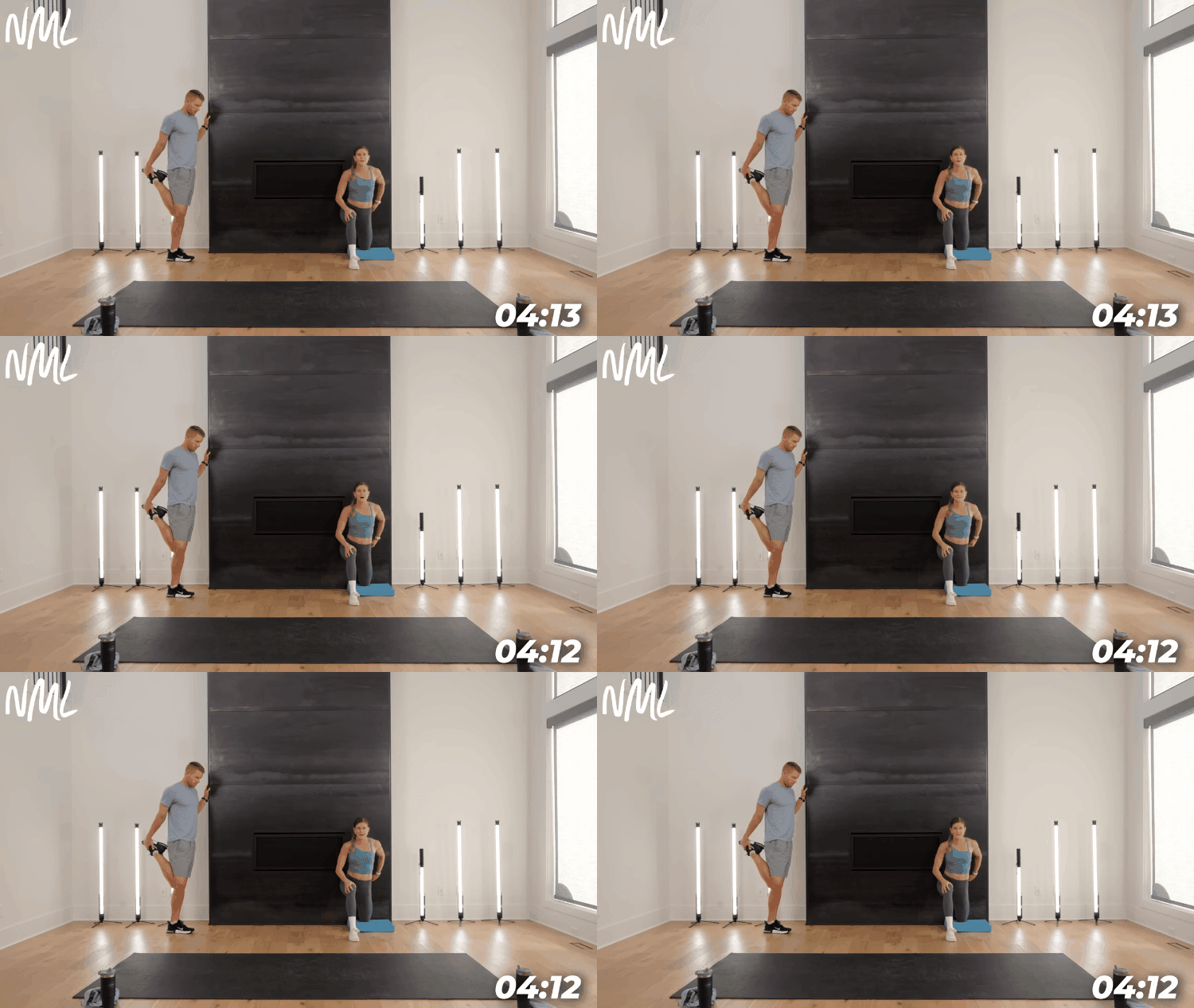
How To Do A Standing Quad Stretch
- Start standing, feet hip-width apart and shoulders stacked over hips.
- Shift your weight to your left foot, then bend your right knee, bringing your right heel towards your right glutes. Hold your right ankle with your right hand.
- Square your hips to the front by tucking your tailbone, performing a posterior pelvic tilt.
8. Calf Stretch
Targets: Gastrocnemius, soleus, Achilles tendon (ankle dorsiflexion).
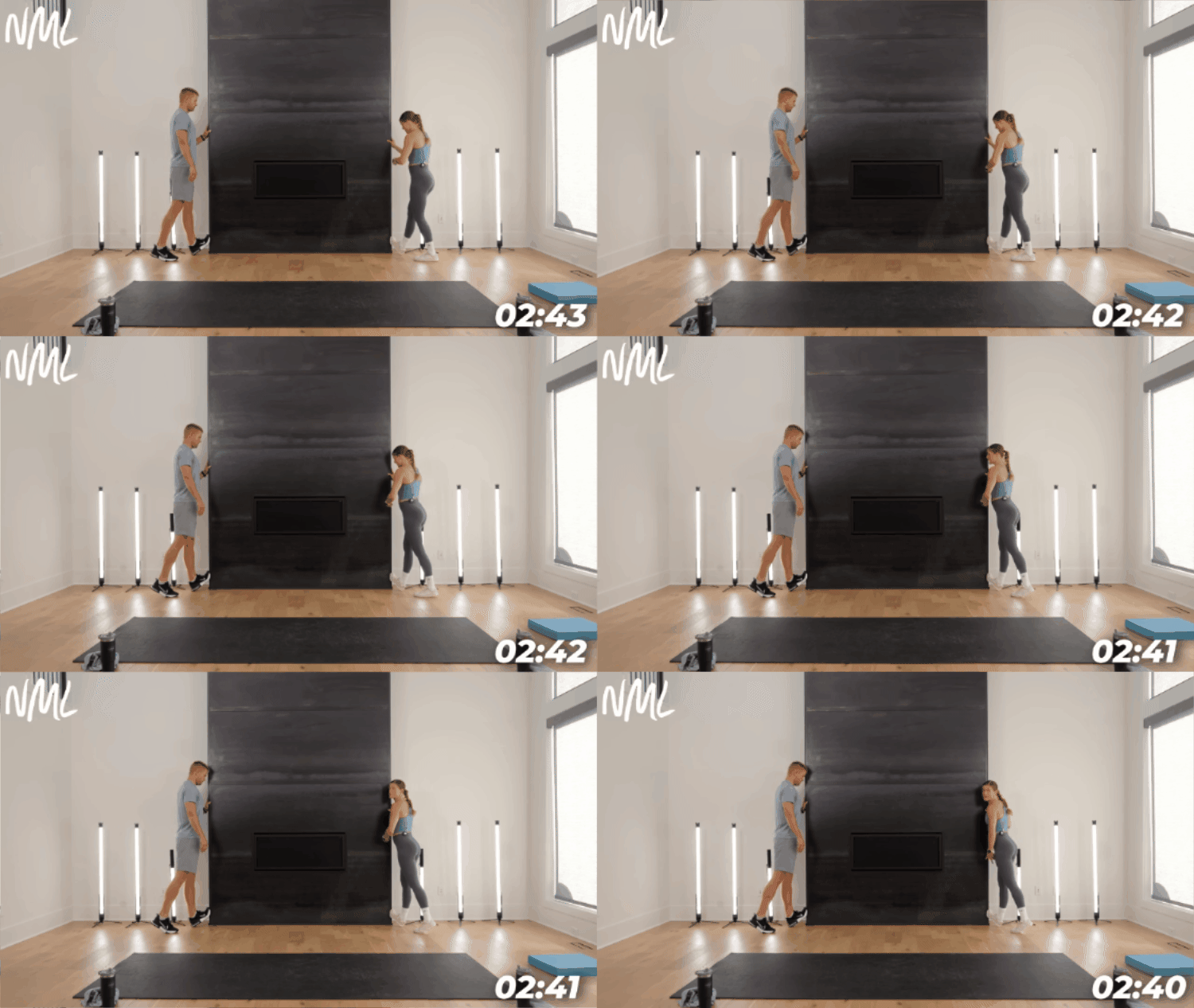
How To Do A Calf Stretch
- Start standing with feet shoulder-width apart, directly in front of a wall. Option to place your hands on the wall near shoulder-height for more stability.
- Place your left toes against the wall. The larger the angle, the more intense the stretch.
- Step your right foot back, keeping the back leg straight.
- Slowly lean into your front leg, feeling a stretch through the back of your left calf.
9. Shoulder and Tricep Stretch
Targets: Shoulders, traps, triceps, neck and upper back muscles.
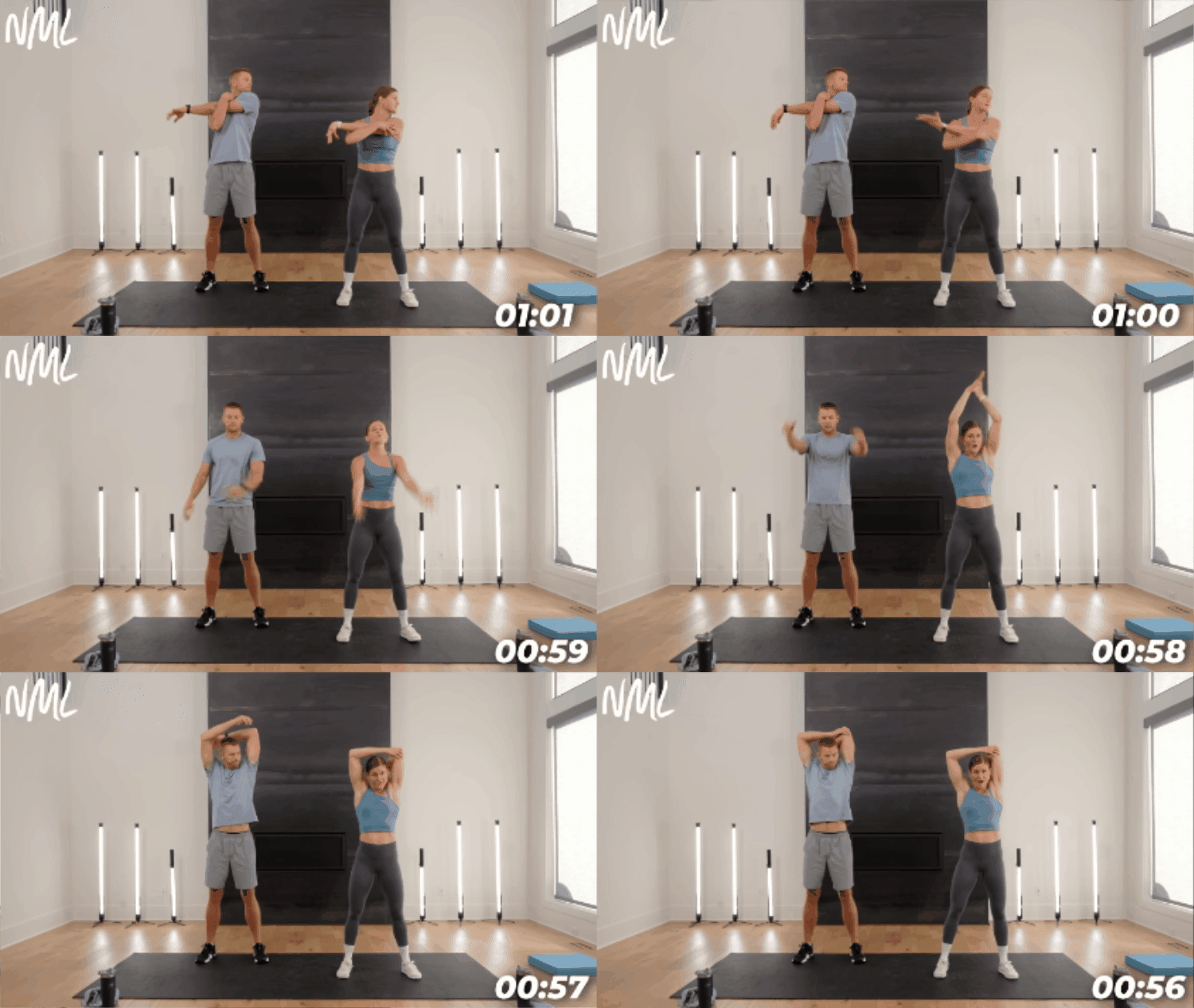
How To Do A Shoulder and Tricep Stretch
- Start standing, feet shoulder-width apart, shoulders stacked over hips, slight bend in your knees.
- Keep your right arm straight as you pull it across your body. Use your left hand to gently pull your right arm in towards your body, deepening the stretch. Focus on lowering your shoulders away from your ears to release upper neck tension.
- Then, swing both arms overhead, stretching towards the ceiling.
- Bend your right elbow, dropping your right hand to the center of your upper back. Option to use your left hand to hold your right elbow, deepening the stretch.
FAQs
Is a 5-minute warm-up and cool-down necessary?
Yes, a brief warm-up and cool-down are the best insurance policy against injuries/aches and pains and can increase athletic performance. Before your workout, properly warming up primes your nervous system, joints and muscles for movement. Stretching after your workout increases flexibility and decreases muscle soreness.
What should a proper cool-down include?
A cool-down should include 5-10 minutes of light exercise and stretching designed to bring your heart rate down closer to your resting heart rate, lengthen tight muscles and slow down your nervous system.
How long should a cool-down last?
A cool-down can last anywhere from 2-10+ minutes, depending on how much time you have, the workout intensity and your fitness goals. Beginners can start with 2-5 minutes of stretching after a workout to cool down. Longer, more intense workouts require longer cool-downs.
More Workouts
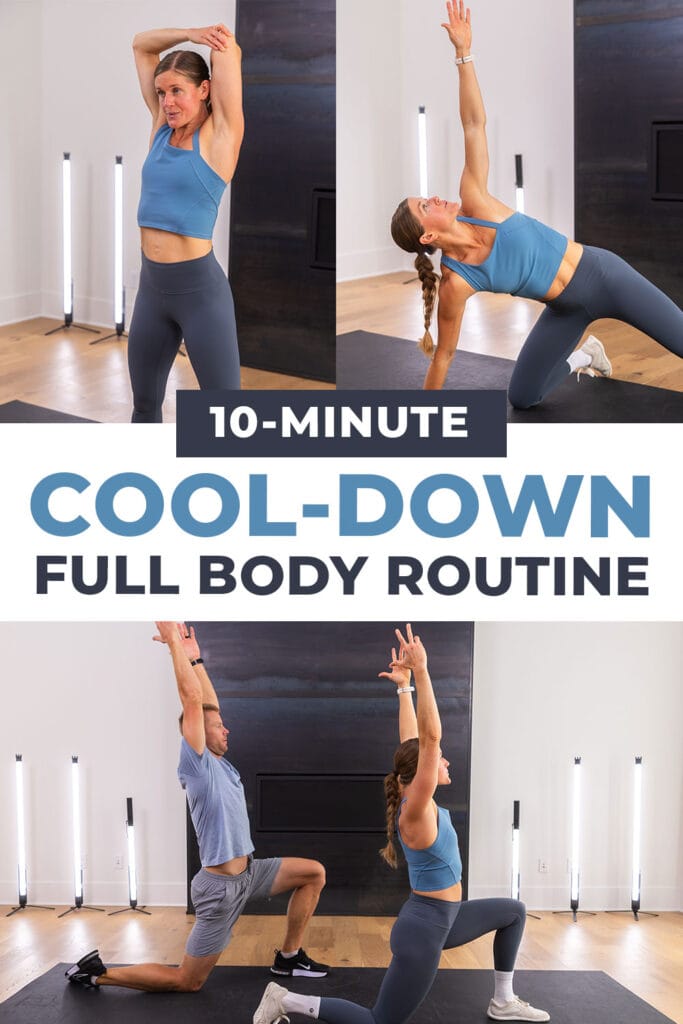
Stretching WorkoutsPin This: Best Cool Down Stretches to Add to Your Workout Routine
2 comments
I really love these stretches. Thank you
So glad to hear it, Kaye! Thanks for trying this routine! -Lindsey