





30-Minute Full-Body Weight Training for Beginners
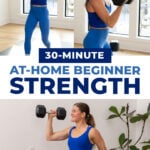
New to lifting? This full-body weight training for beginners workout uses simple, all-standing dumbbell moves to build total-body strength at home. You’ll target the legs, arms and core while improving balance, coordination and muscle tone in just 30 minutes. This workout is ideal for anyone new to strength training or returning after time off.
When I first started working out, I remember feeling intimidated by the weight room and gym machines. Learning proper form with dumbbells allowed me to build strength and confidence, without ever having to leave my home!
There are so many health benefits to weight training (also referred to as “strength training” or “resistance training”): it’s one of the best ways to build muscle strength, increase bone density and reduce risk of osteoporosis, boost metabolism, support joint health, reduce risk of heart disease and improve daily movements like bending, lifting and carrying objects.
Weight training is beneficial for everyone, but particularly great for beginners, as it lays the foundation for long-term functional fitness and helps prevent future injuries.
Today’s workout is ideal for beginners because it focuses on full-body, straightforward movements that can be scaled up or down depending on your fitness level. These are the 12 best strength-building exercises for beginners, and target every major muscle group without any high-impact movements. I also love that each exercise is performed from a standing position, which improves balance and core strength without the added stress of going up and down from the floor.
In general, beginners should perform 8-12 reps for 2-3 sets to maximize muscle building while minimizing overuse injuries. The last 2-3 repetitions of each exercise should be challenging to complete, while allowing you to maintain proper form. This is a good sign you’ve chosen an appropriately heavy weight!
Remember: Whether you’re new to fitness or have been working out for years, consistency compounds. Regular, small habits stack up over time, leading to incredible results. Start where you are and do what you can!
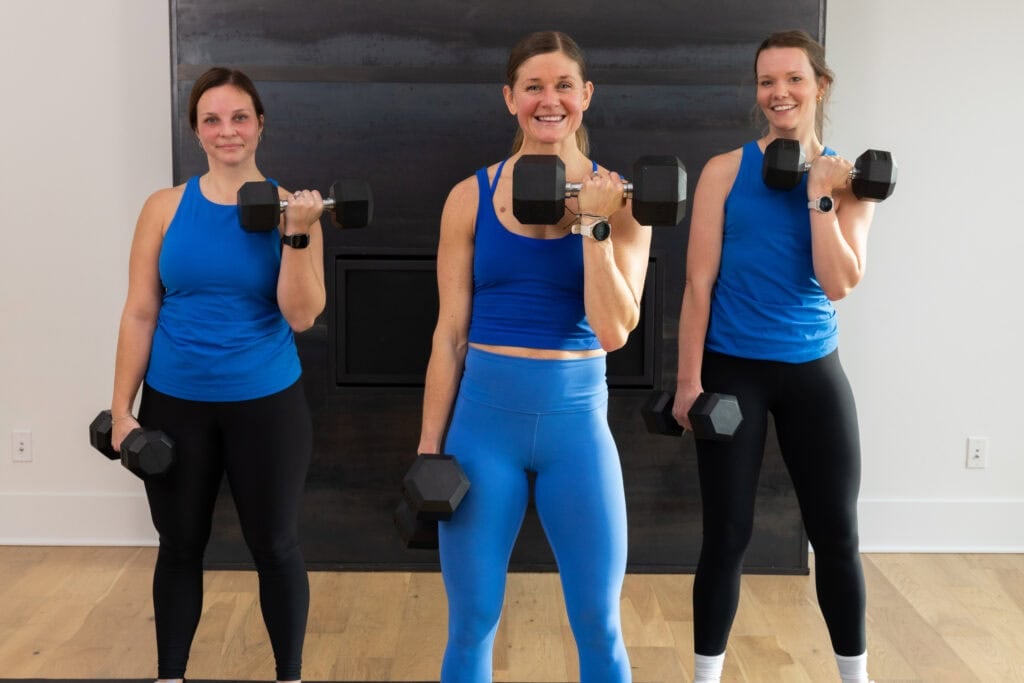
Read A 5-Star Review ⭐⭐⭐⭐⭐
“Great full body workout! Make it what you want with heavy weights 💪 Love the mash up of NML and The Pour Over! So encouraging! ❤️”
— Jen D.
Workout Details
Strengthen and tone your upper body, lower body and core in 30 minutes with this all-standing, full-body weight training for beginners workout that targets every major muscle group.
Add full-body weight training for beginners workouts like this to your beginner workout exercise routine 1-2 times a week to reach your weight loss and fitness goals. If you’re a runner, try this hybrid strength and running plan instead!
Workout Equipment
Medium to Heavy Dumbbells. I’m using 15-25 lbs.
If you’re a beginner, I recommend starting with 5-10% of your body weight per dumbbell. That’s about 8-15 lbs if you weigh 150 lbs. Increase gradually as your form and confidence improve.
Workout Instructions
Follow along with the guided All-Standing Full Body Weight Training Workout on YouTube, led by me — your certified personal trainer (CPT), Lindsey Bomgren.
Your Workout Looks Like This:
- Guided Warm-Up and Cool-Down
- 3 Circuits
- Timed Intervals (perform each exercise for 40 seconds of work, 20 seconds of rest)
- Repeat Each Circuit x 2 Sets
Workout Outline
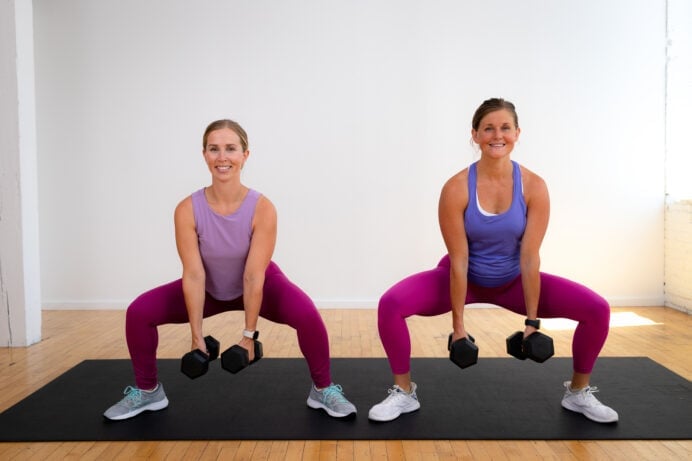
1. Goblet Squat
Targets: Legs, glutes, quads, hamstrings, hip abductors, chest and core.
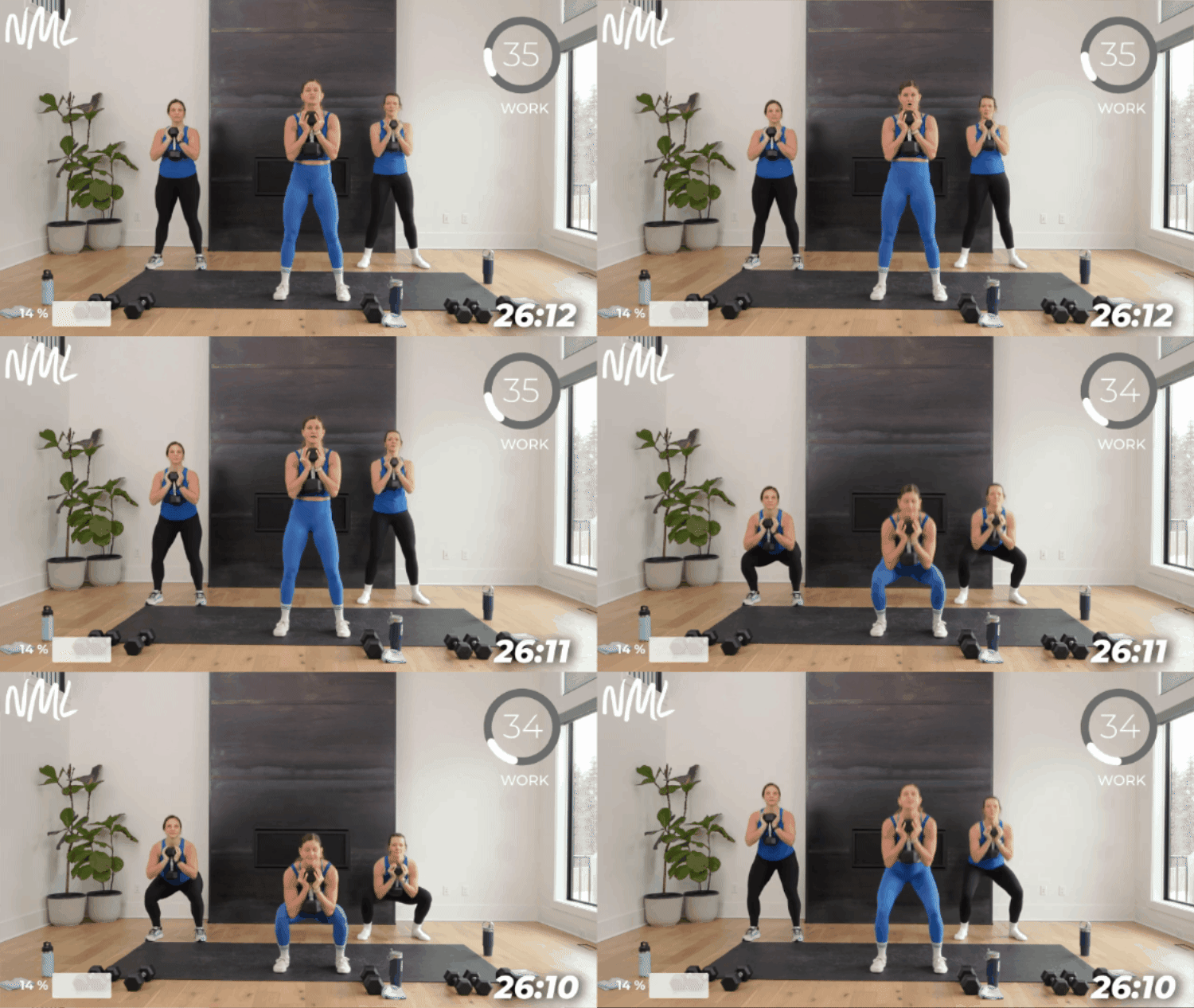
How to Do a Goblet Squat
- Stand with your feet hip-width apart. Hold 1 dumbbell vertically at your chest in a goblet hold.
- Inhale as you bend your knees and sit your hips back (as if sitting down in a chair). Aim for 90-degree bends at each knee, focusing on pushing your knees out (not letting them cave in). Keep your torso upright.
- Exhale as you press through your heels to stand tall, driving your hips forward to return to standing.
2. Deadlift
Targets: Legs, glutes, hamstrings, hips, lower back and core.
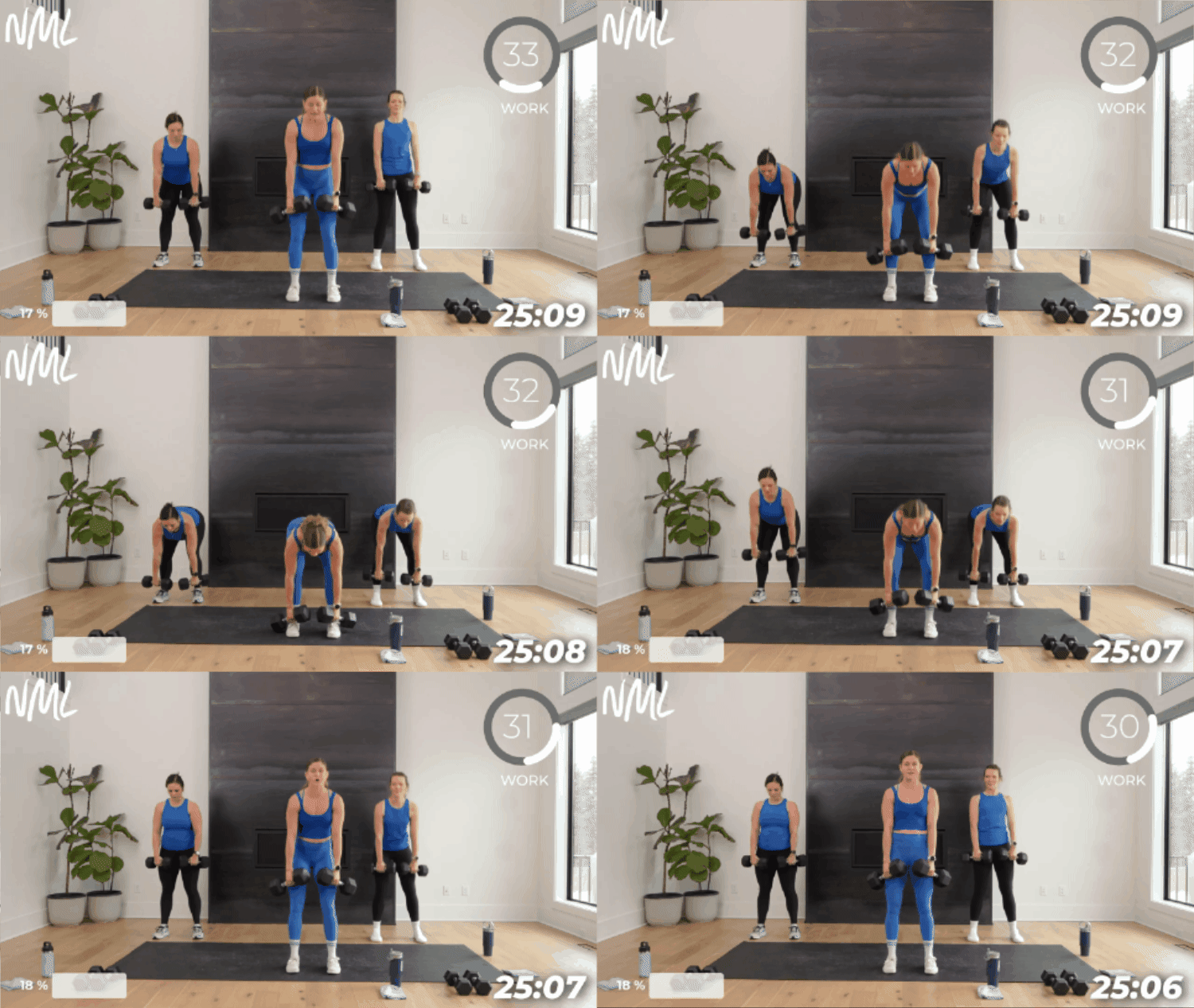
How to Do a Romanian Deadlift
- Stand with feet hip-width apart, knees slightly bent. Hold a dumbbell in each hand at your hips, palms facing in towards your body.
- Hinge at the hips, pushing your hips back towards the wall behind you as you glide the dumbbells down the front of your legs. Pull your navel in to engage your core.
- Drive through your heels to push your hips forward, pulling the dumbbells back up towards your hips as you stand tall.
3. Split Lunge
Targets: Legs, glutes, quads, hamstrings and core.
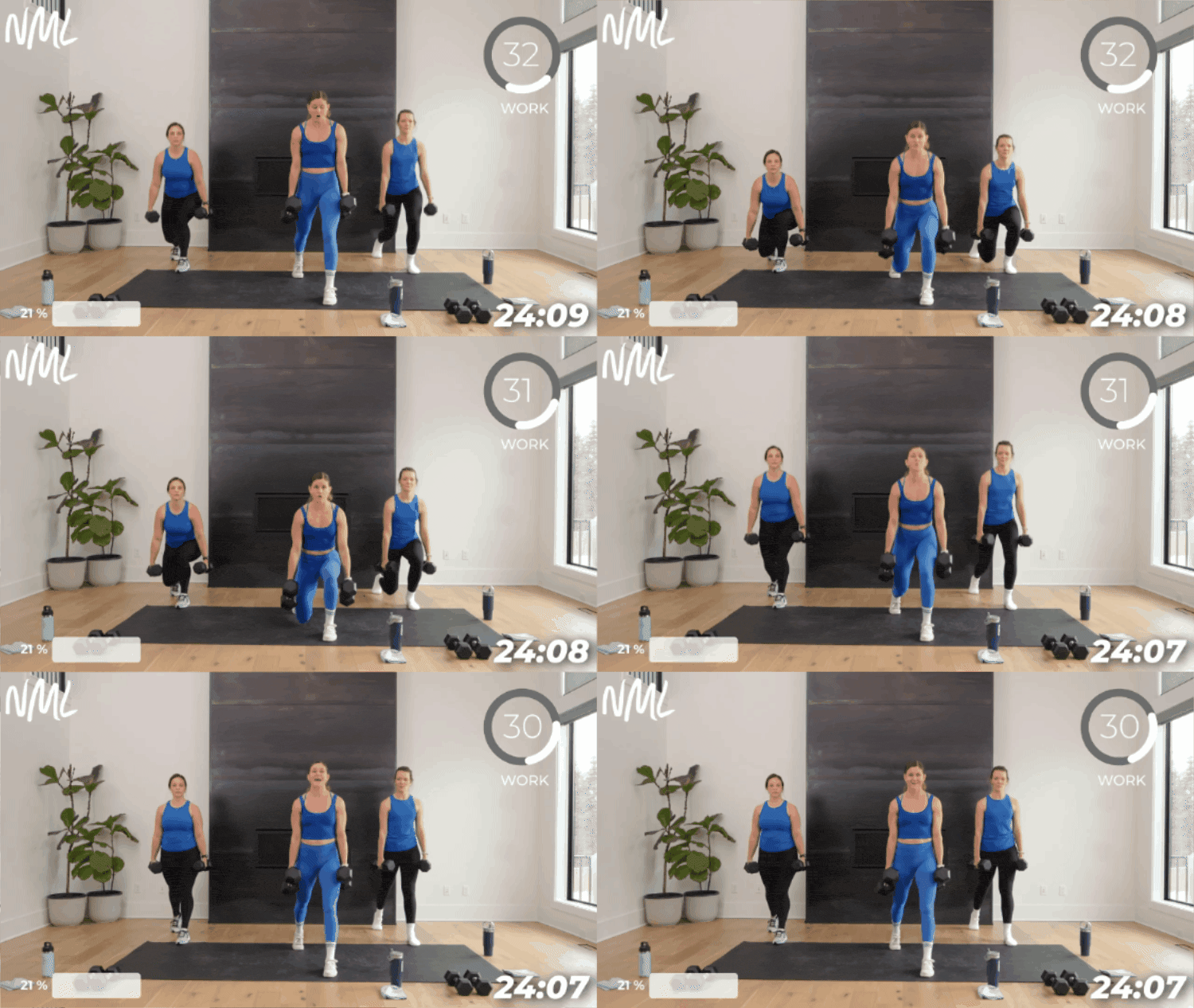
How to Do a Split Lunge
- Start standing feet hip-width apart, holding a dumbbell in each hand at your sides.
- Step your right leg back into a lunge position. Imagine your feet are on train tracks – front left foot planted on the mat and back right toes on the mat. Feet stay planted in this position throughout the entire movement.
- Lower your back right knee towards the mat until your front thigh is parallel to the mat. Both knees bent at 90 degrees. Shoulders remain stacked over hips.
- Then drive up through your front heel to stand tall, returning to the top of the movement.
Modification: If lunges hurt your knees, substitute one of these lunge/squat alternatives. I also recommend adding in these knee-strengthening exercises to prevent future pain!
4. Lateral Lunge
Targets: Gluteus medius (the outer part of your butt used for side-to-side movements), quads, hamstrings, hip adductors and abductors, hip flexors, calves
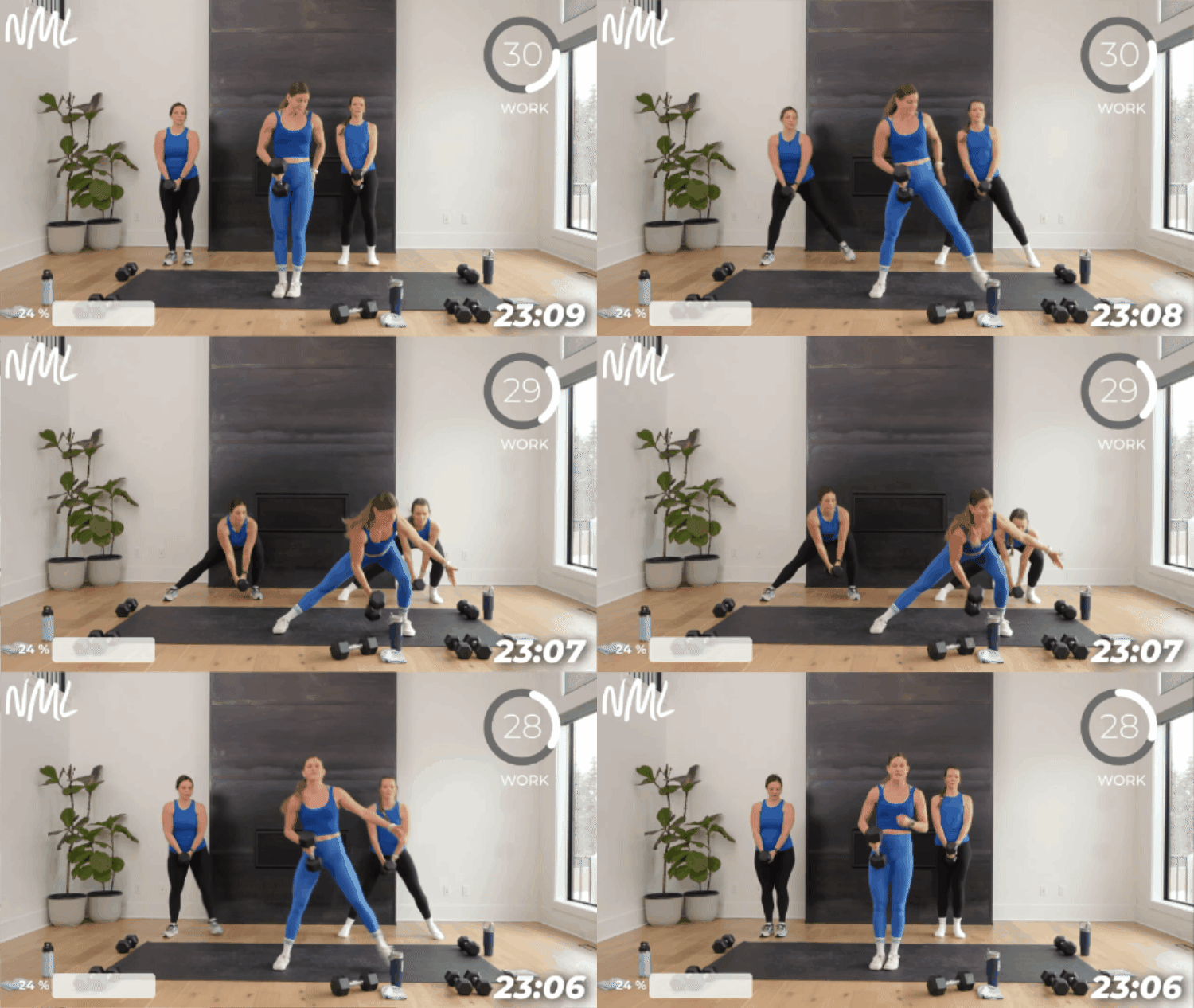
How to Do a Lateral Lunge
- Stand with your feet under your hips, holding a dumbbell in your right hand.
- Step your left leg out to the side as you push your hips back, bending your left knee while leaving your right leg straight. Think of performing a single-leg squat with your left leg. Knees and toes are pointing forward.
- Then, drive off your left foot to reverse the movement, stepping back to center.
5. Calf Raise
Targets: Calf muscles (gastrocnemius and soleus) and achilles tendon.
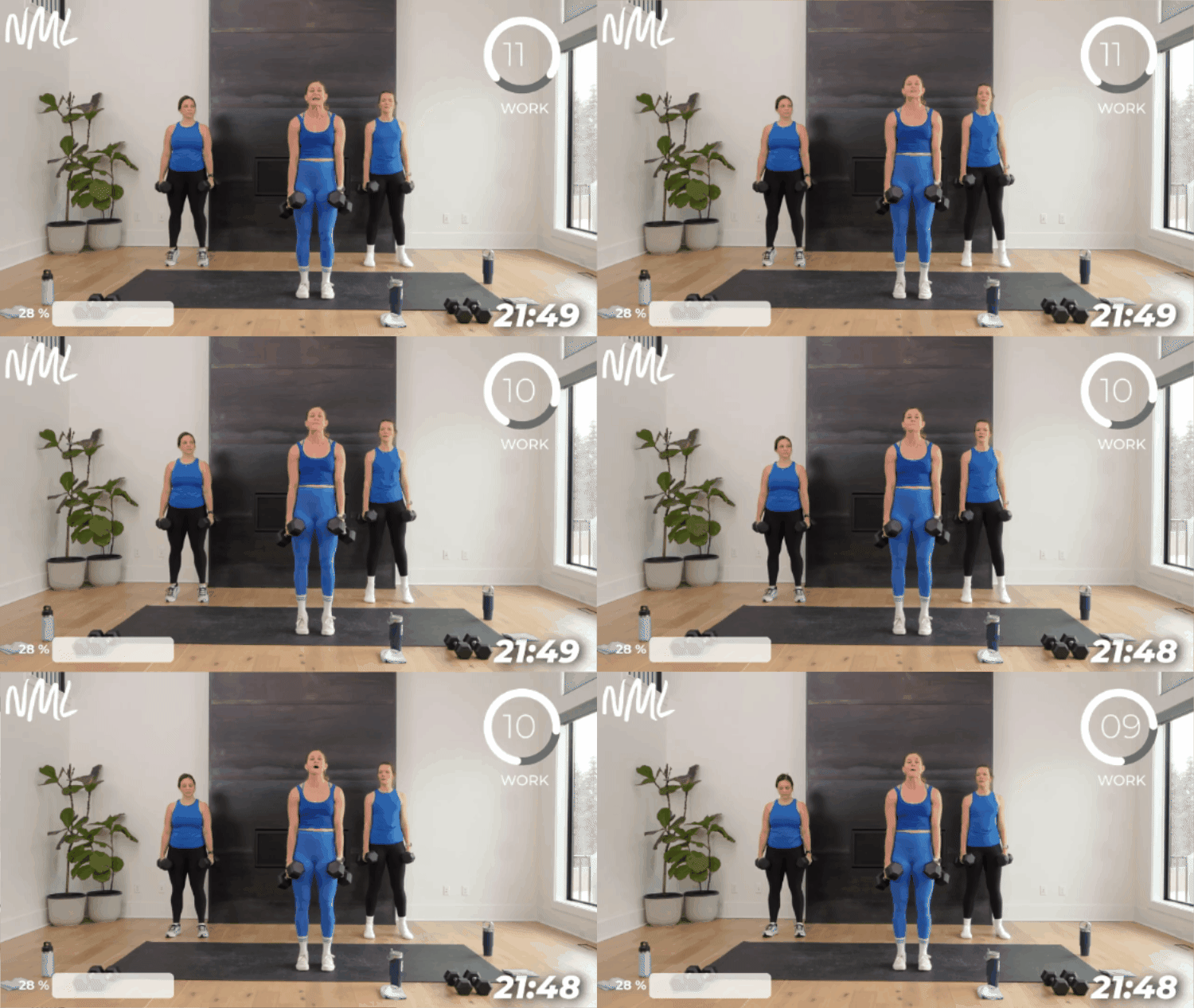
How to Do a Calf Raise
- Start standing on a flat surface, feet shoulder-width apart. Keep your back straight and core engaged to stand tall. Option to hold a dumbbell in each hand at your sides to increase the intensity.
- Slowly and with control, lift yourself up onto the balls of your feet, heels rising above the ground.
- Lift your heels until you feel a stretch along the back of your legs, balancing on your toes.
- Then, slowly lower your heels back to the ground, returning to starting position.
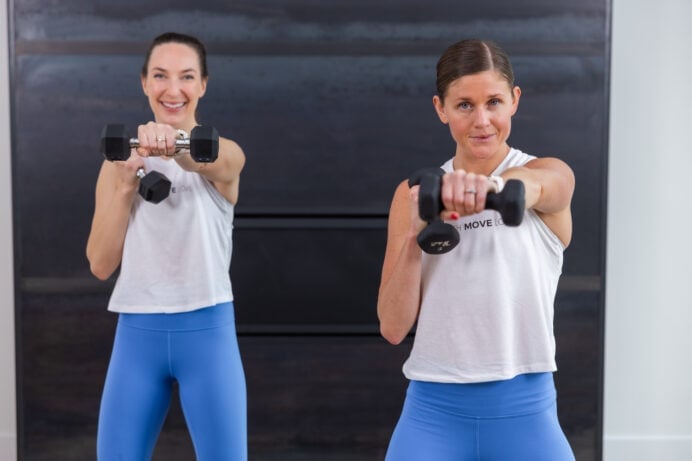
6. Dumbbell Front Raise
Targets: Anterior and lateral deltoids (shoulders), upper back (traps), arms and abs.
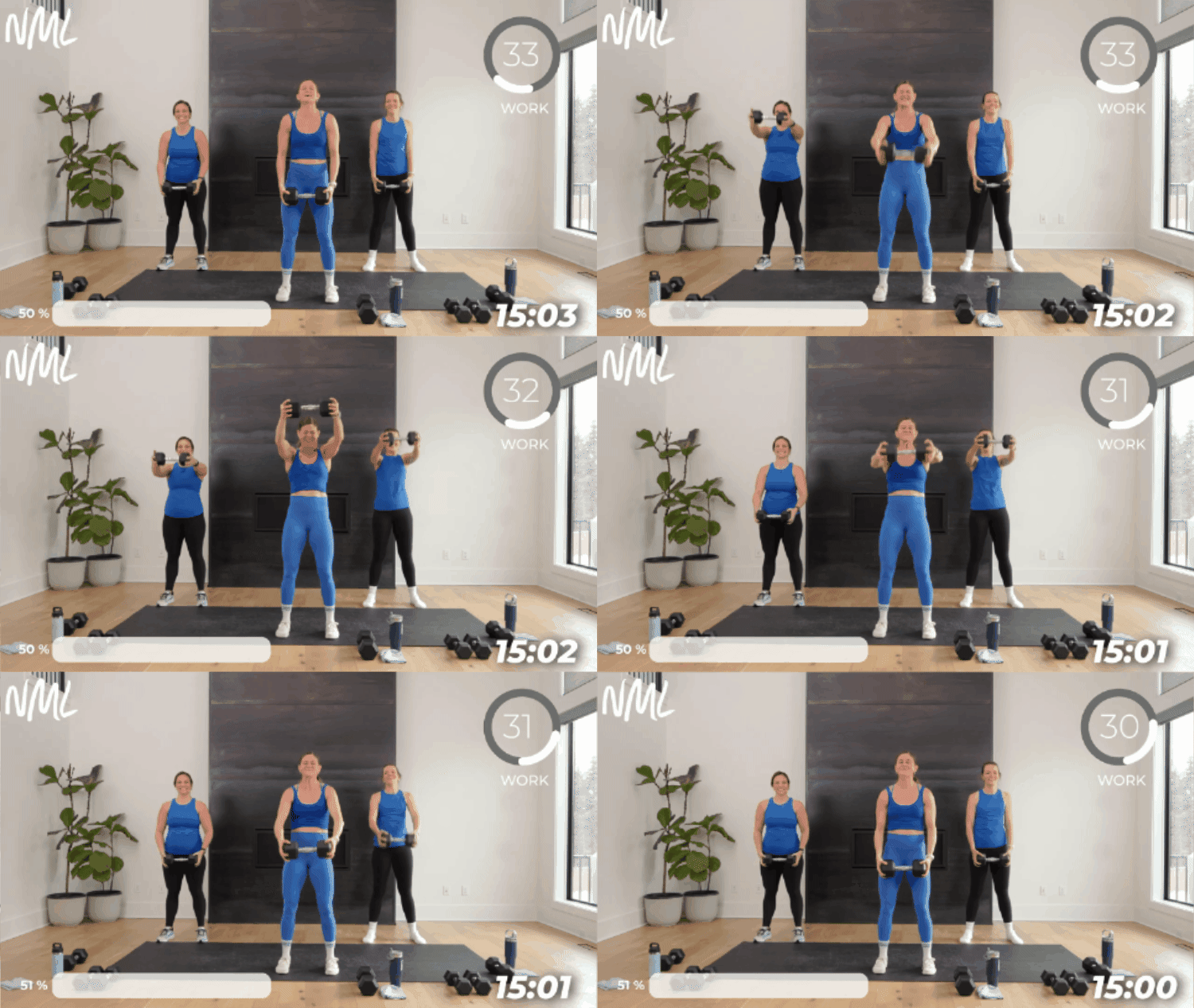
How to Do a Dumbbell Front Raise
- Start standing, feet hip-width apart, slightly bent knees. Hold a dumbbell horizontally in front of you, a head of the dumbbell in each hand.
- Perform a dumbbell front raise by lifting the dumbbell straight out in front of you, raising the dumbbell to shoulder level.
- With control, lower the dumbbell back down to the starting position.
7. Single Arm Back Row
Targets: Latissimus dorsi (lats), trapezius, rhomboids and posterior deltoids.
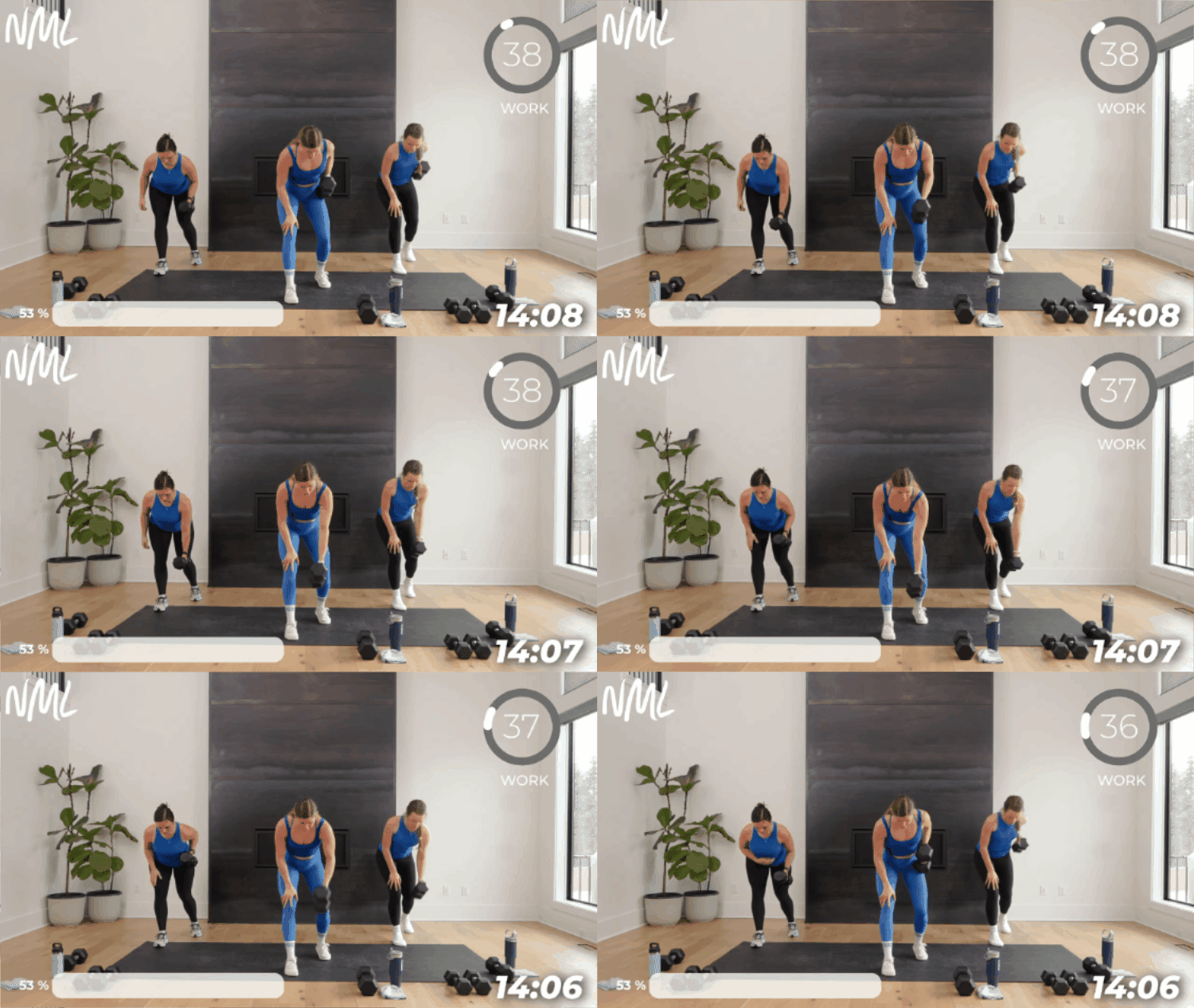
How to Do a Single Arm Back Row
- Stand with your feet slightly wider than shoulder-width apart, knees slightly bent.
- Hold a dumbbell in your left hand, palm facing in (narrow grip).
- Bend forward at the hips, maintaining a flat back, belly button pulled back towards your spine.
- Pull the dumbbell back towards your left hip (think of pulling from your elbow joint versus your wrist), as if you were starting a pull-start lawnmower. Stop once your elbow is in line with your rib cage, making a straight line from shoulder to elbow. Hold the row at the top for a moment, squeezing your shoulder blade in.
- Lower the dumbbell back to the starting position and repeat.
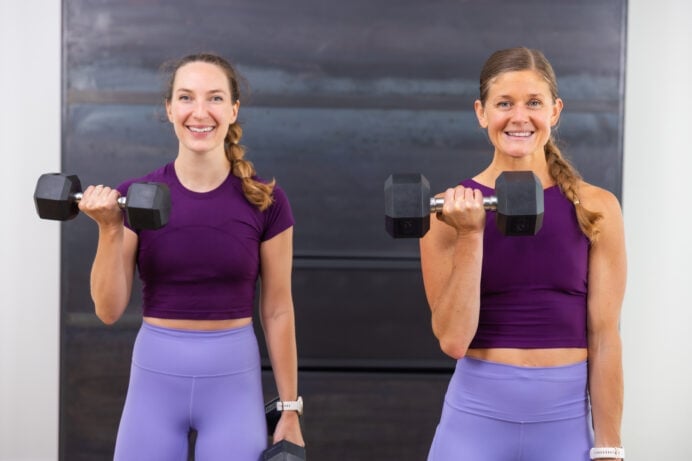
8. Bicep Curl
Targets: The bicep muscles (upper arms), the brachialis (mid-arm), brachioradialis (forearm), anterior deltoids and core.
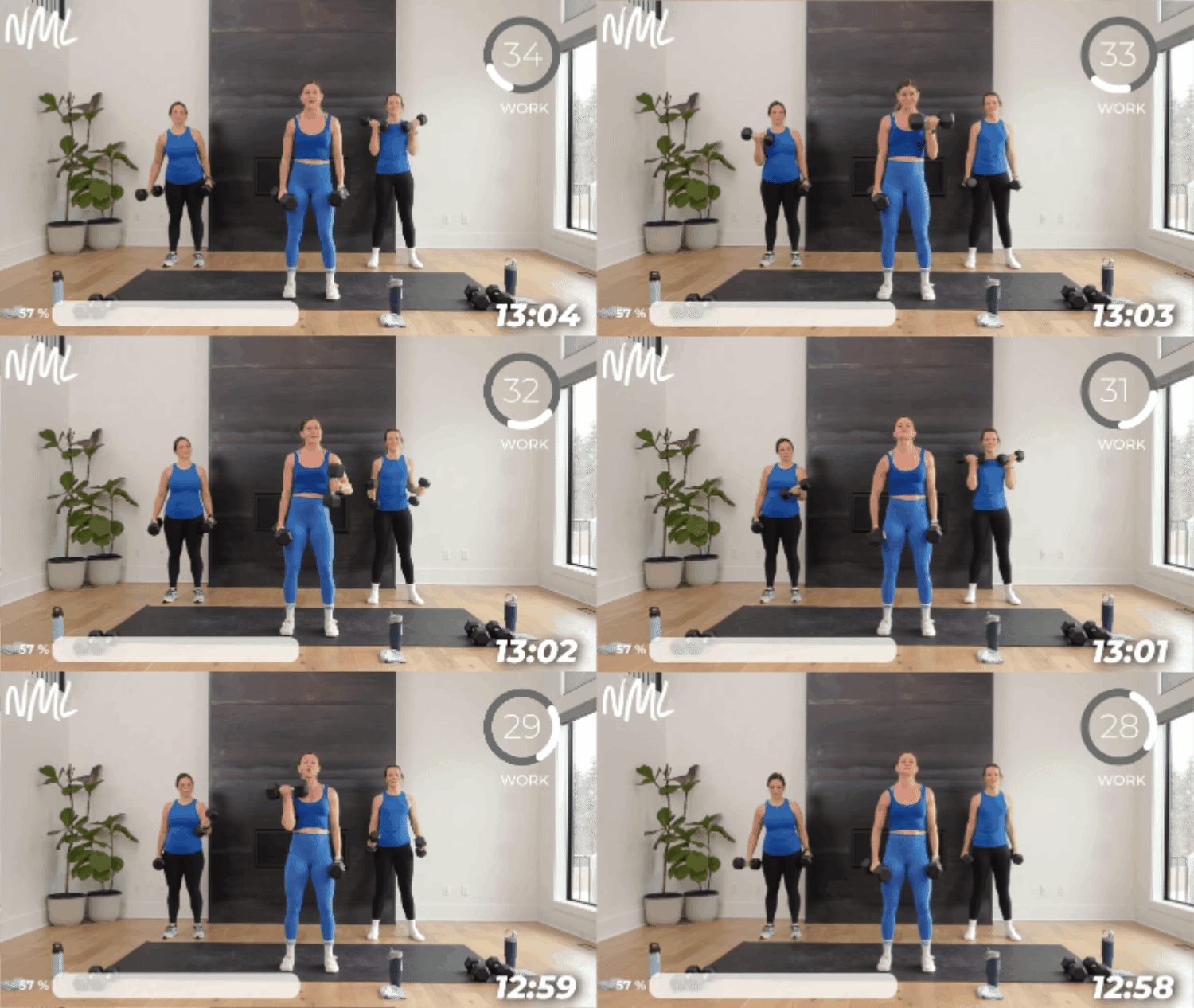
How to Do a Bicep Curl
- Start standing with feet hip-width apart and core engaged. Hold a dumbbell in each hand at your sides, palms facing out (underhand grip or supine curl).
- Keeping your elbows locked by your sides, squeeze your bicep muscle to curl the weights up to shoulder height.
- At the top of the movement, rotate your hands so palms face in towards each other (hammer curl grip). Slowly lower the dumbbells down to your sides.
- At the bottom of your movement, flip your grip so palms face out again and repeat.
Modification: Alternate sides with each rep, performing a single-arm curl on the right, then left.
9. Single-Arm Tricep Kickback
Targets: All 3 heads of the triceps muscle (the lateral head, medial head and long head).
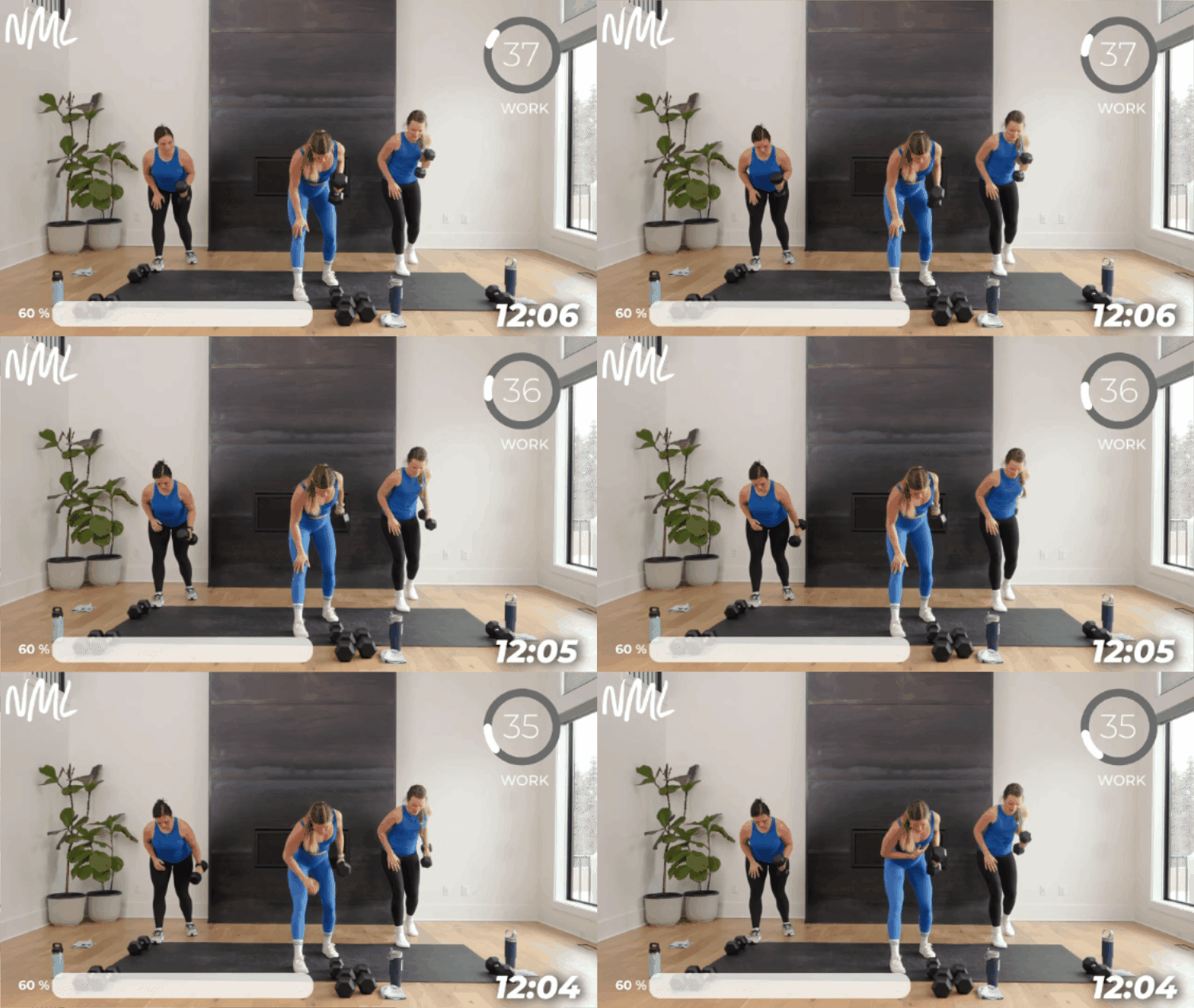
How to Do a Single-Arm Triceps Kickback
- Start with your feet hip-distance apart, with a slight bend in the knees. Hinge forward, staggering your feet to support your lower back.
- Hold a dumbbell in your left hand at your side (palm facing your body) with your left arm bent at a 90-degree angle. Think shoulders down and back away from your ears.
- Perform a kickback by extending the left elbow, so your left arm forms a straight line as you push the dumbbell back past your hips. At the top of the movement, the elbow is fully extended.
- Slowly return the dumbbell to the starting position.
10. Squat, Curl and Overhead Press
Targets: Glutes, quads, hamstrings, biceps, back and shoulders.
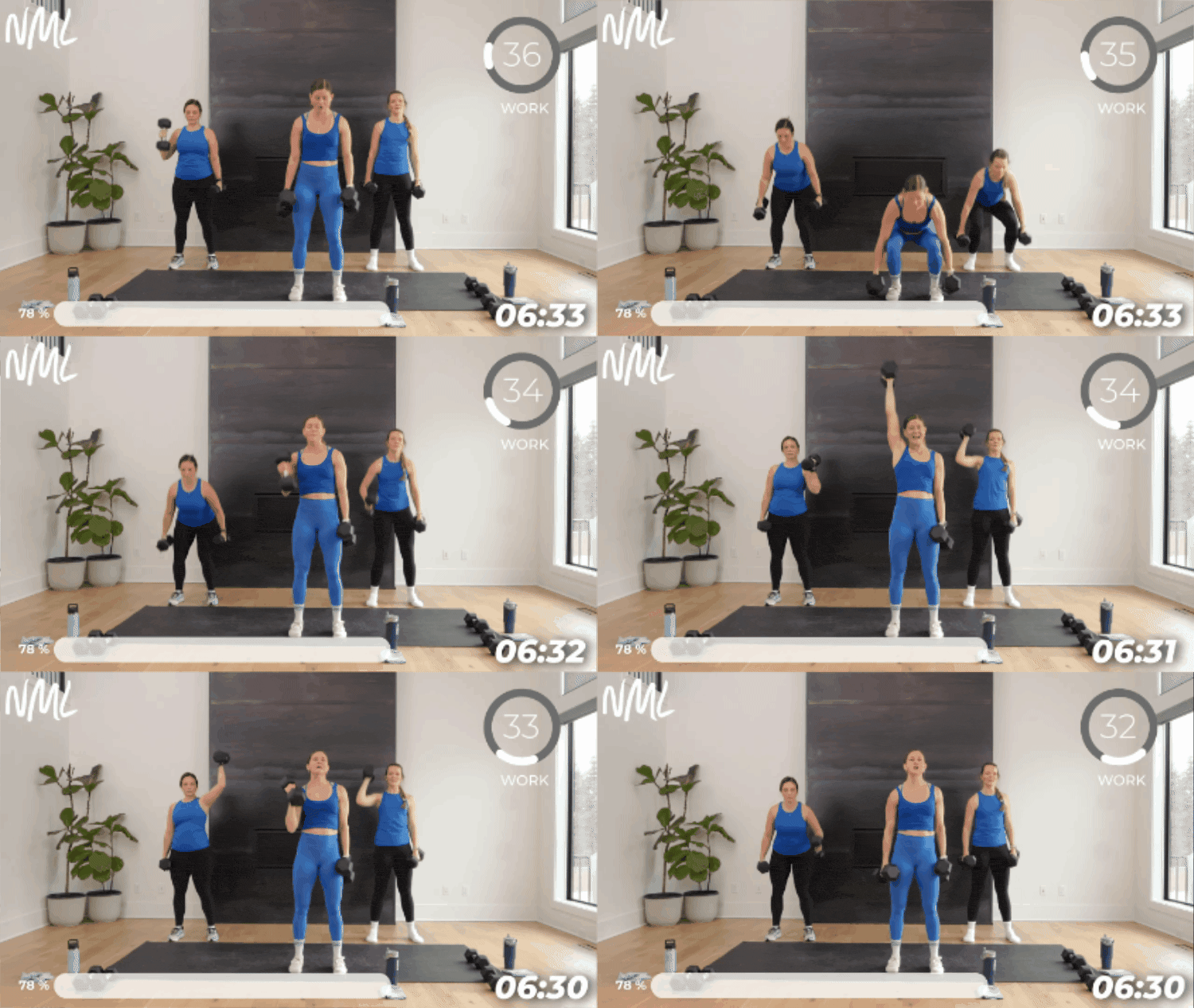
How to Do a Squat, Curl and Overhead Press
- Stand with feet hip-width apart, knees slightly bent. Hold a dumbbell in each hand by your sides.
- With your weight in your heels, sit your hips back as you lower into a squat, striving for a 90-degree angle between your hips and knees.
- Then, drive through your heels, squeezing your glutes to stand tall. As you stand, perform a single-arm bicep curl, curling the weight in your left hand up towards your left shoulder.
- Then, perform a shoulder press by pushing the weight in your left hand straight overhead, left bicep near your left ear.
- With control, bring the weight back down to your left shoulder before reversing the curl, lowering the dumbbell to your left side and returning to the starting position.
- Continue this pattern, alternating sides with each rep.
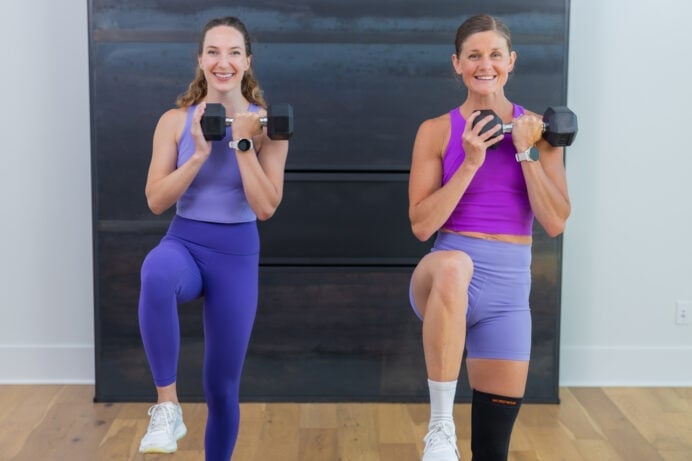
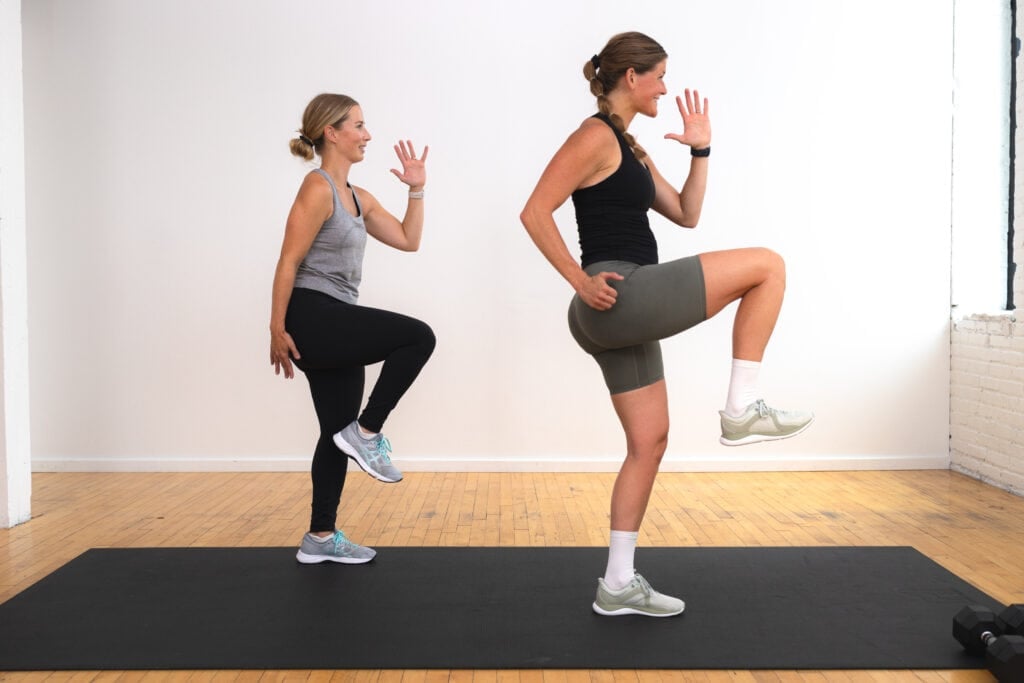
11. Farmers Carry March
Targets: Lower abs, obliques, glutes, quads and hip flexors.
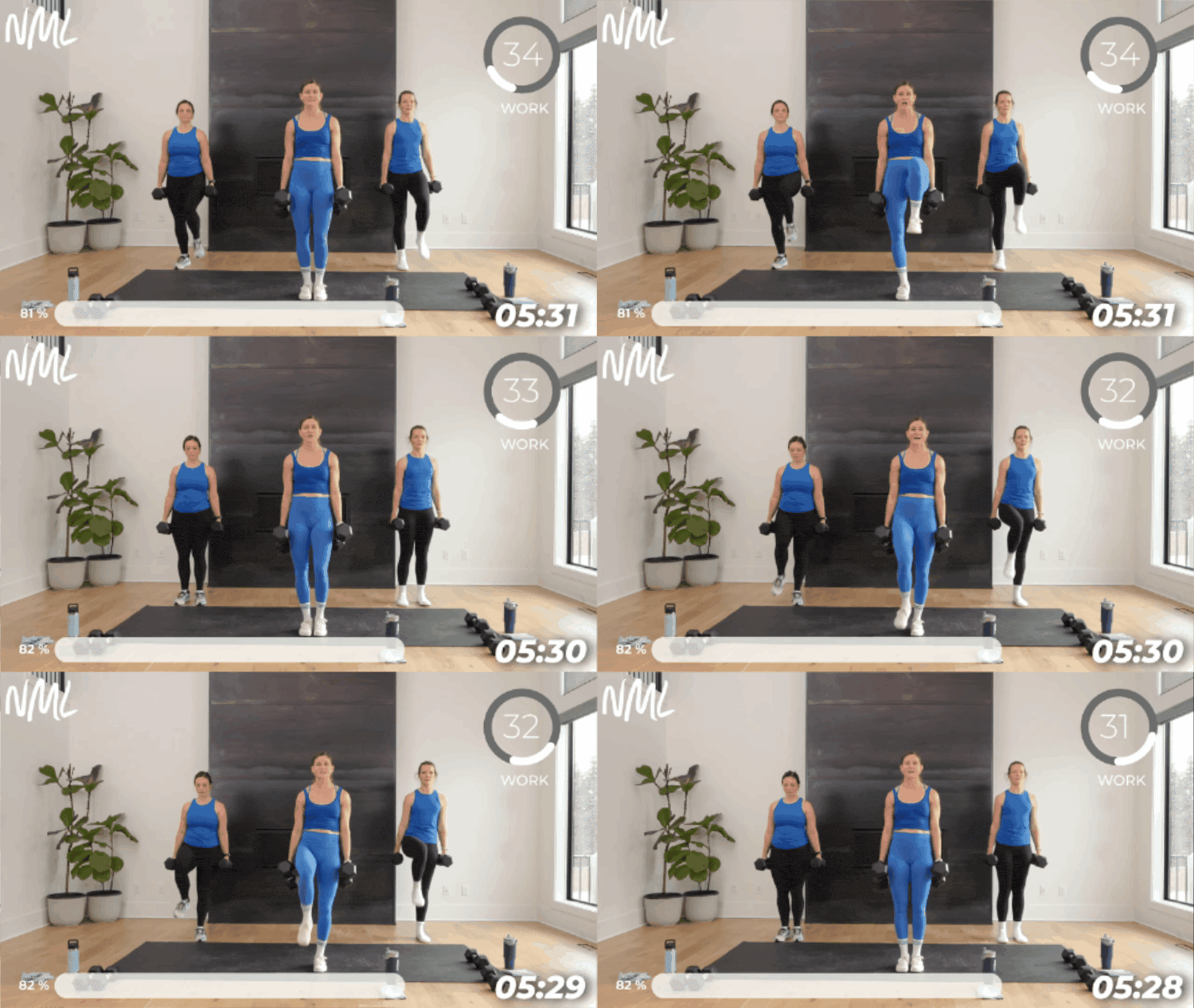
How to Do a Farmers Carry March
- Start in a standing position, feet hip-width apart, holding a dumbbell in each hand at your sides.
- Engage your core, then drive your right knee up in line with your right hip. Right knee bent at a 90-degree angle. Ground through your standing leg to remain stable.
- With control, return your right foot to the ground.
- Switch sides, driving your left knee up in line with your left hip before lowering with control.
12. Pivot and Standing Chest Press
Targets: Chest (pectoralis major), shoulders (deltoids), triceps, obliques and core.
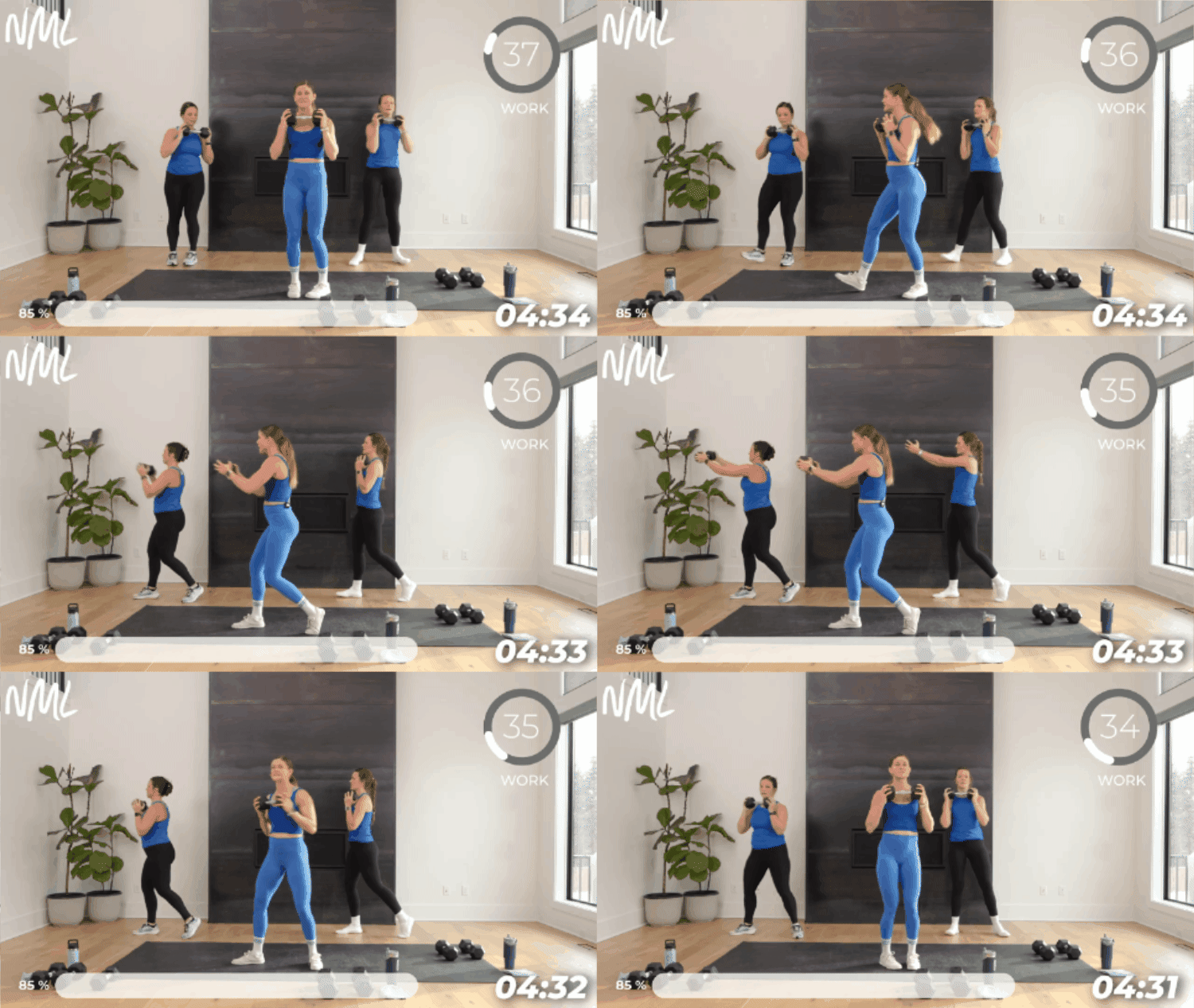
How to Do a Pivot and Standing Chest Press
- Stand with your feet shoulder-width apart, a soft bend in your knees and your core engaged.
- Hold 1 dumbbell horizontally at chest level. Your palms are facing in and your elbows are slightly tucked. This is your starting position.
- Pivot on your feet 90 degrees to the right, allowing your hips to rotate with control. Once facing right, press the dumbbell straight out in front of you, extending your arms fully while keeping your shoulders down and away from your ears.
- Retract the dumbbell back to your chest, then pivot back to center and press the dumbbell straight out in front of you. Focus on keeping your hips and core tight.
- Return the dumbbell to your chest and pivot 90 degrees to the left. Press out again, fully extending the arms.
- Retract the dumbbell back to your chest, then pivot back to the right and repeat the sequence.
FAQs
What is strength training?
Strength training is a type of workout where you use some form of resistance to build muscle and increase strength. Types of resistance include weights (like dumbbells, free weights, barbells or kettlebells), gym machines, resistance bands or your own bodyweight. The goal of strength training is to build muscle mass and improve how your body moves and functions in your daily life.
How should a beginner start weight training?
For beginners, the goal of introducing weight training should be to learn proper form, establish good habits and build confidence lifting weights. I recommend starting with 3 full-body workouts a week, alternating your training days with rest days.
How often should a beginner work out each week?
Most beginners see great results following a workout routine that includes 3-5 training sessions/week. Start with 3 full-body workouts, then add additional strength or HIIT cardio workouts as your strength and endurance improve. Keep in mind that rest and mobility work are just as important as training. They help prevent burnout and keep you consistent long-term.
What are common beginner weight training mistakes to avoid?
One of the most common beginner weight training mistakes is attempting to lift too much too soon. Lifting beyond your body’s capacity leads to poor form and potentially injury. To avoid this mistake, start with relatively light weights and focus on mastering form before reaching for heavier weights.
How long should a beginner weight training workout last?
Beginner workouts don’t have to be long to be effective. I’ve found the best results from consistently completing 20-30 minute workouts a few times a week. Although efficient, this amount of time allows for a warm-up, 2-3 sets of each exercise and a cool-down.
Free Beginner Workout Plan
More Workouts
Beginner WorkoutsPin This: Beginner-Friendly Weight Training Workout
no comments
Leave a Comment