



9 Adductor Exercises (Inner Thigh Workout)
This quick inner thigh routine specifically targets the adductors through low-impact, strength-focused moves like side-lying lifts, resistance band adductions and Copenhagen planks. It’s ideal for anyone looking to build hip and knee stability, improve balance and add functional strength to their lower-body training. This is perfect as a standalone workout or as an add-on for an extra inner thigh burn.
One of the areas I often find overlooked in fitness routines is the adductors, also known as the inner thigh muscles. The adductors are a group of 5 muscles (the gracilis, pectineus, adductor brevis, adductor longus and adductor magnus) that run along the inside of the thigh. Their main job is to pull your legs toward the midline of your body, but they also play a major role in stabilizing the hips, knees and even the pelvis during movement.
From a functional perspective, strong adductors are really important. They help me move with control in side-to-side directions, protect my knees from caving in during squats or lunges and contribute to better core and pelvic floor stability. This is so important, especially during pregnancy and postpartum.
When the adductors are weak, it can lead to imbalances, poor movement mechanics or even discomfort in the lower back, groin muscles and hip flexors. I personally dealt with both SI joint pain and pelvic pain during pregnancy – both of which can also be attributed to weak adductors. Training them has made me feel more balanced and stable – not just in my workouts, but in daily activities, whether I’m running, chasing my kids or carrying groceries.
Squats, especially in wider stances, are one of the best exercises you can do to work the adductors. That said, squats alone aren’t enough to truly strengthen these muscles. To fully target the adductors, I like incorporating specific movements such as side-lying leg lifts, resistance band hip adductions, Copenhagen planks and mobility and stability-focused exercises like lateral lunges. In my opinion, the best adductor strengthening exercise is the Copenhagen plank. This is a great exercise because it challenges the adductors in both strength and stability at the same time.
That’s why I put together this quick routine targeting the inside of your thighs. It combines 9 of the best adductor-focused exercises to really challenge and strengthen the muscle group (no adductor machine required). You can do this as a stand-alone burnout or add it to a lower-body workout for extra inner thigh work. Either way, it’s designed to target those small but mighty muscles in a way that builds both strength and functional stability.
Workout Specifics
Strengthen your inner thighs with these 9 adductor exercises. This routine is great for improving stability and supporting side-to-side movements.
Try adding this inner thigh workout to your exercise routine 1-2 times per week, either on lower-body days or as a bonus burnout at the end of a full-body workout. It’s a great option for most fitness levels, but if you have a history of groin or hip injuries, or are dealing with an adductor injury or adductor strain, check with a healthcare provider before starting.
Workout Equipment
These exercises can be done with your bodyweight. Optional Pilates ball, chair/bench, towel/glider and long loop resistance band.
Workout Instructions
Note that this is a list of my favorite adductor exercises. If you prefer a full guided workout video, try this 10-Minute Inner Thigh Workout. Be sure to warm-up and cool-down to avoid injury.
How To Use This Adductor Workout:
- Beginner: 30 seconds work, 15 seconds rest. Perform each exercise x1 set. Aim to complete as many reps as you can in the timed interval.
- Intermediate: 40 seconds work, 20 seconds rest. Perform each exercise x2 sets. Aim to complete as many reps as you can in the timed intervals.
- Advanced: 45 seconds work, 15 seconds rest. Perform each exercise x3 sets. Aim to complete as many reps as you can in the timed intervals.
Workout Outline
1. Side Lying Adductor Leg Lifts
Targets: Inner thighs (adductors), core and stabilizing glutes.
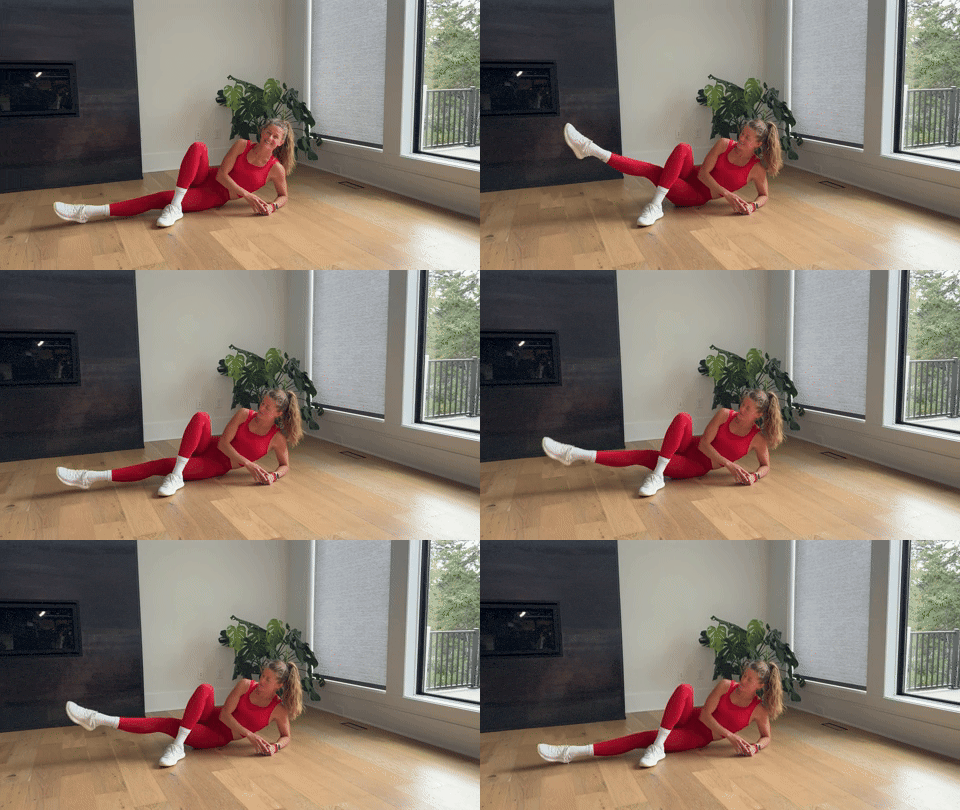
How to Do a Side Lying Adductor Leg Lift
- Start lying on your left side with your hips stacked and your body in a straight line. Bend your top (right) knee and place your right foot on the mat in front of your bottom leg for support.
- Keep your bottom (left) leg straight and engaged, toes pointing forward.
- Squeezing through your inner thigh, lift your left leg a few inches off the mat. Focus on using your adductors (inner thigh muscles) rather than momentum.
- With control, lower your left leg back to the mat, keeping tension in your core and avoiding rolling through your hips.
2. Glute Bridge With Ball Squeeze
Targets: Glutes, hamstrings, hips and pelvic floor.
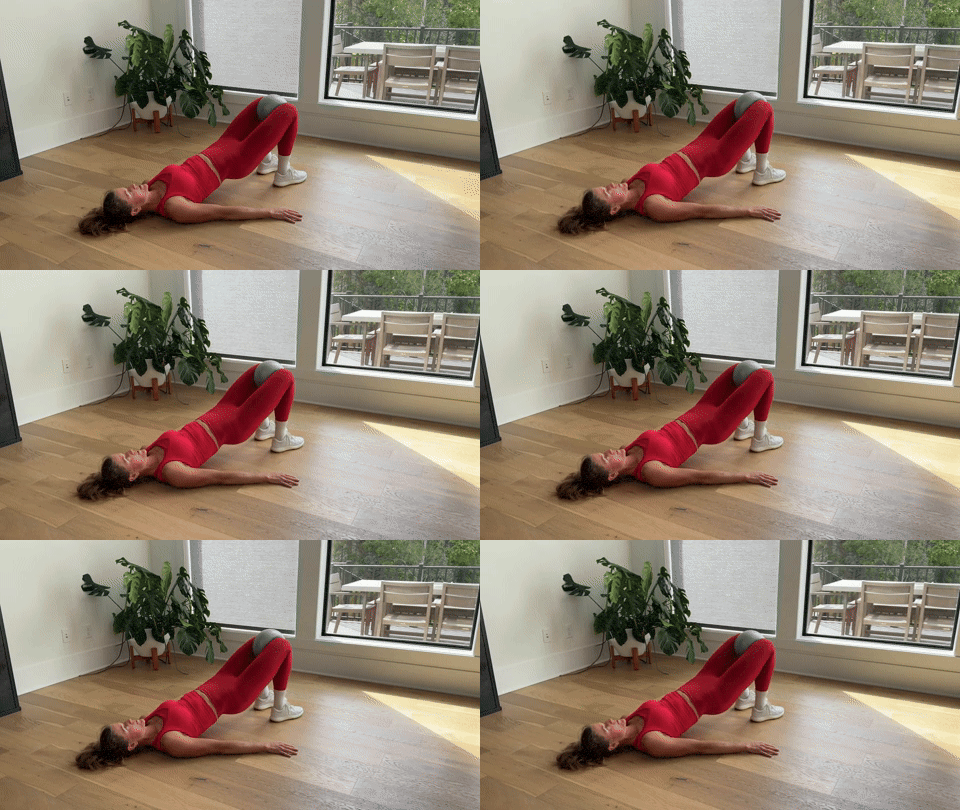
How to Do a Glute Bridge With Ball Squeeze
- Start lying on your back, feet planted under knees. Place a pilates ball between your knees.
- Press through your heels to lift your glutes off the mat, squeezing your glutes as you lift. As you lift upwards, squeeze your inner thighs together, pressing into the pilates ball.
- Exhale, slowly lowering your hips to hover an inch above the mat and releasing some of the tension on the pilates ball.
3. Copenhagen Planks
Targets: Internal and external oblique muscles (the muscles that run along the side of your core), transverse abdominus, hip abductors and hip adductors.
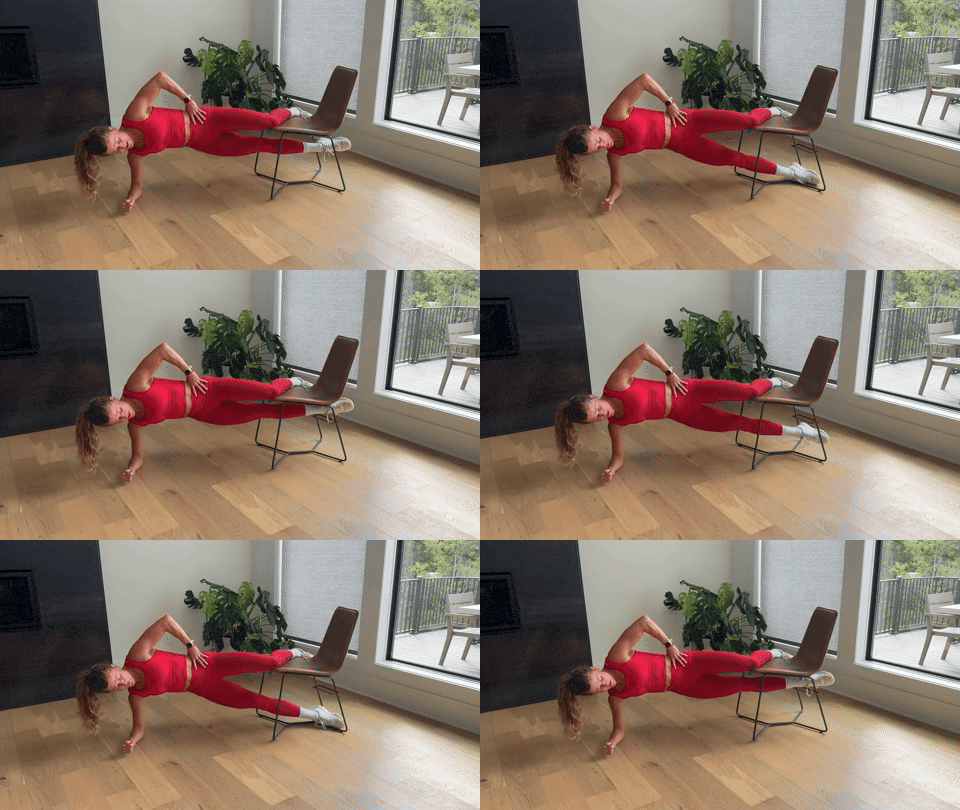
How to Do a Copenhagen Plank
- Start by lying on the left side of the body, left elbow resting on the floor directly beneath the left shoulder. Extend both legs out to the right side.
- Find a side plank position. Place the right knee/calf (top leg) on a stable chair or bench while your bottom leg hovers just beneath it.
- Pull your left leg up towards the top right leg. Your left toes will tap the bottom of the chair that your right knee/shin is resting on.
- Hold for a moment, then lower the left knee back towards the ground with control and repeat.
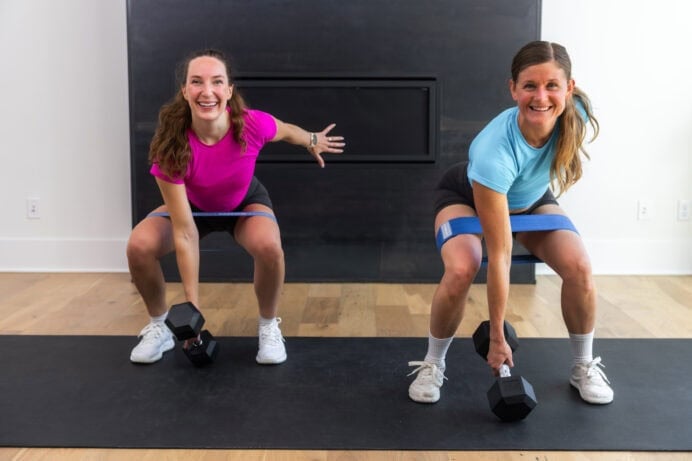
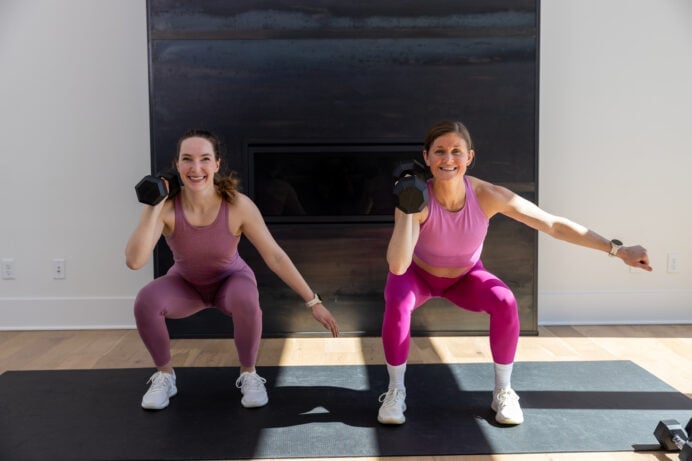
4. Sumo Squats
Targets: Quads, hamstrings, hips, glutes (gluteus medius), outer thighs (abductors) and inner thighs (adductors).
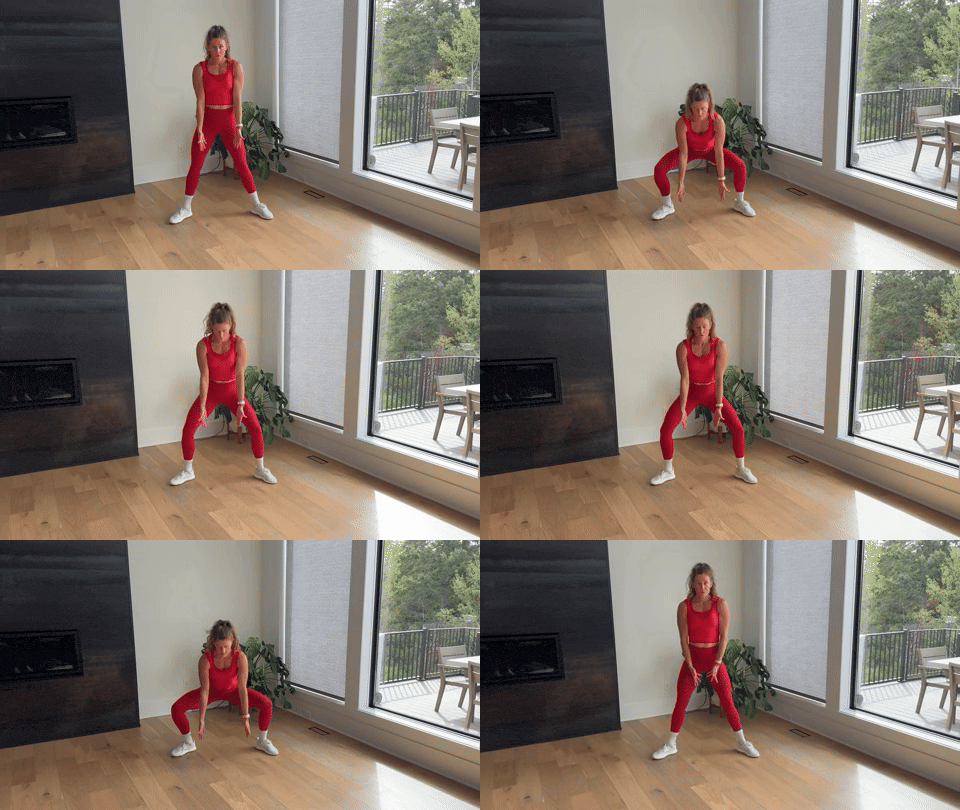
How to Do a Sumo Squat
- Stand with your feet wider than your hips, heels in and toes pointed out (wide stance or sumo squat stance).
- Bend your knees to lower down into a sumo squat, pushing your knees out towards your pinky toes as you drop your hips parallel to your knees.
- Drive through your heels, squeezing your glutes and pulling your inner thighs together to stand tall.
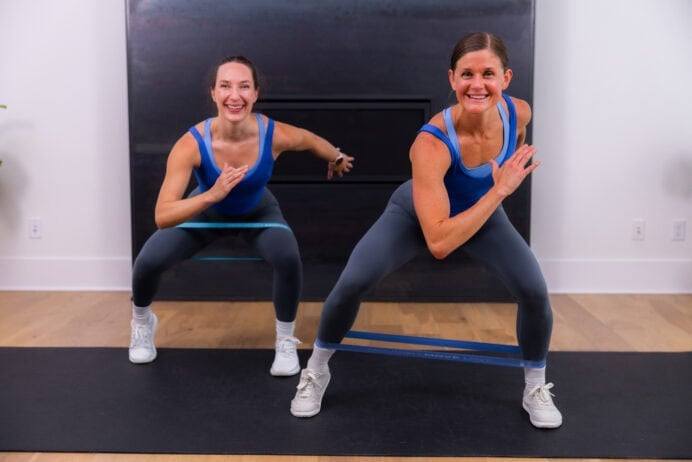
5. Lateral Squat
Targets: Gluteus medius (outer glute that controls hip movement and side-to-side movements), quads, inner thighs (or hip adductors), hamstrings and calves.
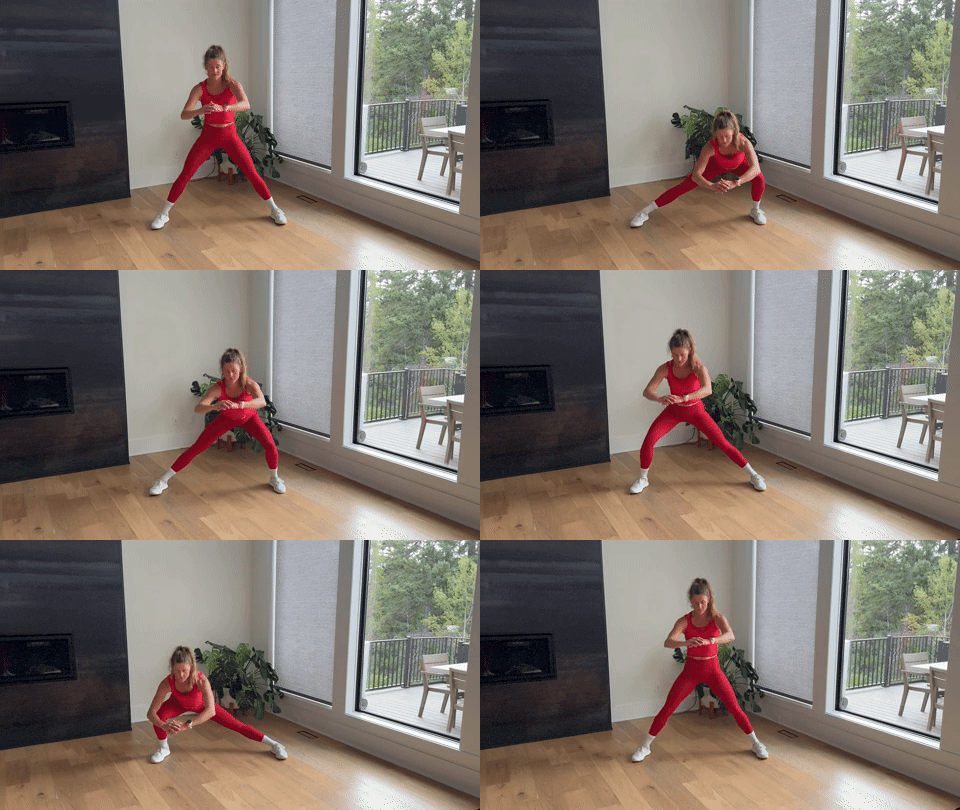
How to Do a Lateral Squat
- Start with your feet wider than your hips (think a wide squat stance). Your knees and toes are either pointing forward or your toes are just slightly turned out away from your body.
- Shift your weight into your left heel as you push your hips back, bending your left knee while leaving your right leg straight. Think of performing a single-leg squat with your left leg while your right leg remains straight.
- Drive through your left foot to reverse the movement, pushing you back to center.
- Repeat, this time shifting your weight into your right heel as you push your hips back, bending your right knee while leaving your left leg straight.
6. Lateral Lunge Slide
Targets: Glutes (gluteus medius), quads, hip adductors (inner thigh muscles), outer thighs, hamstrings and core.
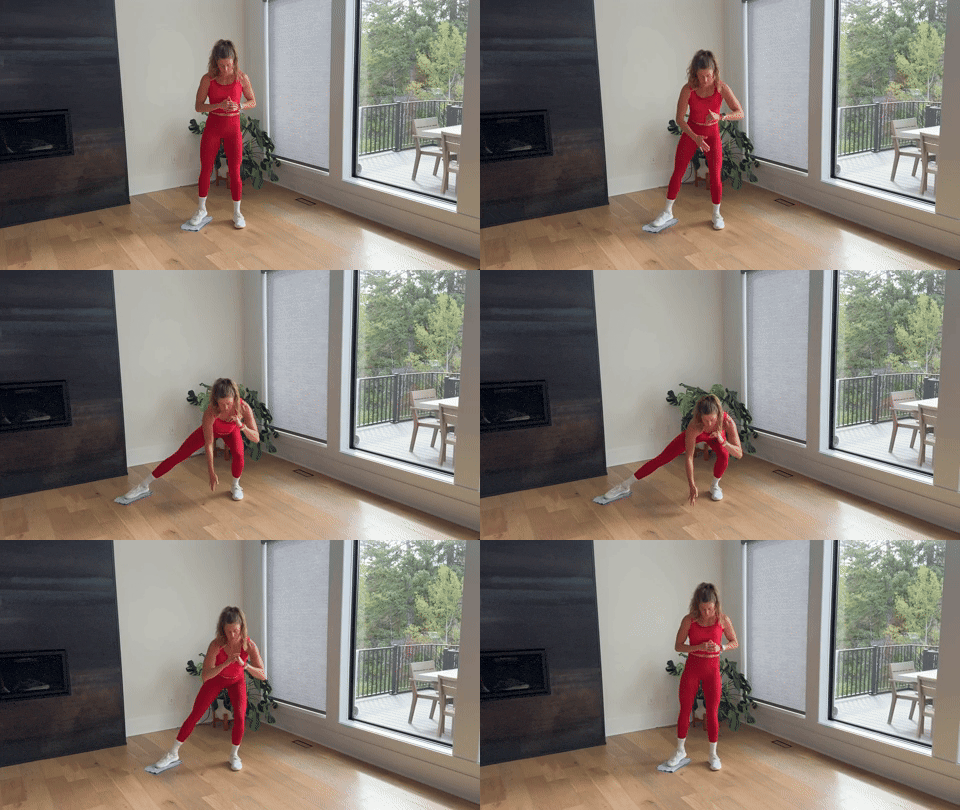
How to Do a Lateral Lunge Slide
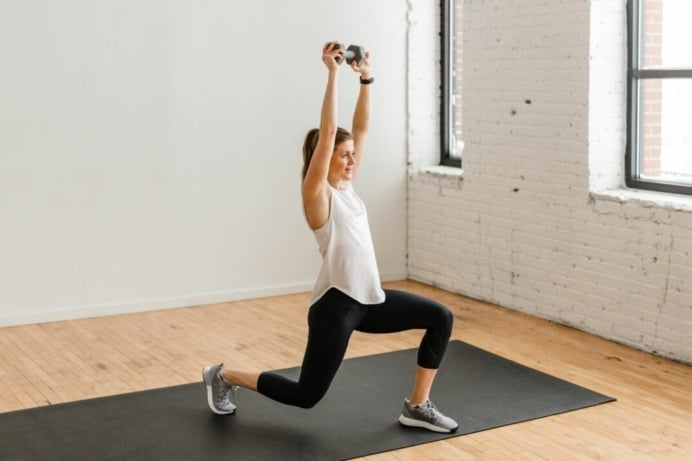
- Stand with your feet shoulder-width apart. Place your left toes on an exercise glider or towel (if you work out on hard floors) or paper plate (if you work out on carpet).
- Slide your left foot out to the side, bending your right knee while leaving your left knee straight. Think of performing a single-leg squat with your right leg while your left leg remains straight. Knees and toes are pointing forward. The range of motion will be different for everyone.
- Pull your inner thighs together to reverse the movement, standing up to return to center.
7. Banded Internal Hip Rotation (Seated)
Targets: Hip internal rotators (tensor fasciae latae, gluteus medius/minimus), inner thighs and core stabilizers.
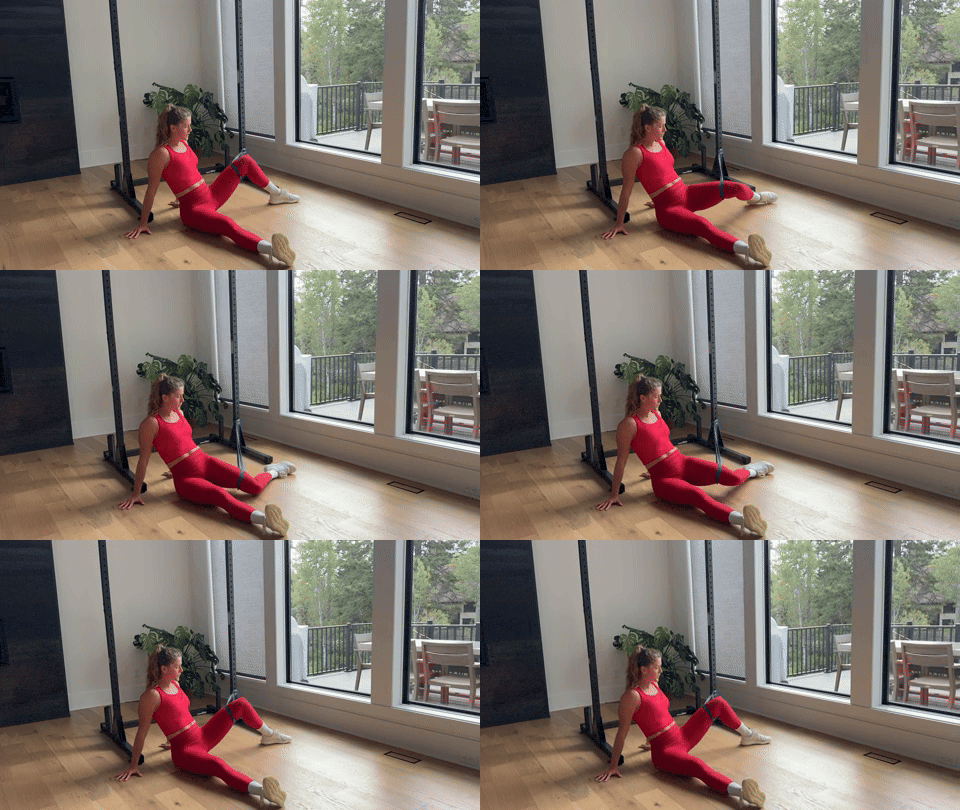
How to Do a Seated Banded Hip Internal Rotation
- Sit on the ground with your legs bent in front of you. Place one end of a long loop resistance band securely around your right thigh (just above your right knee), and anchor the other end to a sturdy object beside you.
- Keep your right knee bent at about 90 degrees with your foot flat on the floor. Adjust your position so the band has light tension.
- Engaging your hip muscles, slowly drop your right knee inward toward the ground, rotating from your hip joint.
- Pause briefly at the end range, keeping your core engaged and your upper body upright.
- With control, return your knee to the starting position.
8. Resistance Band Hip Adduction
Targets: Inner thighs (adductors), stabilizing glutes, core
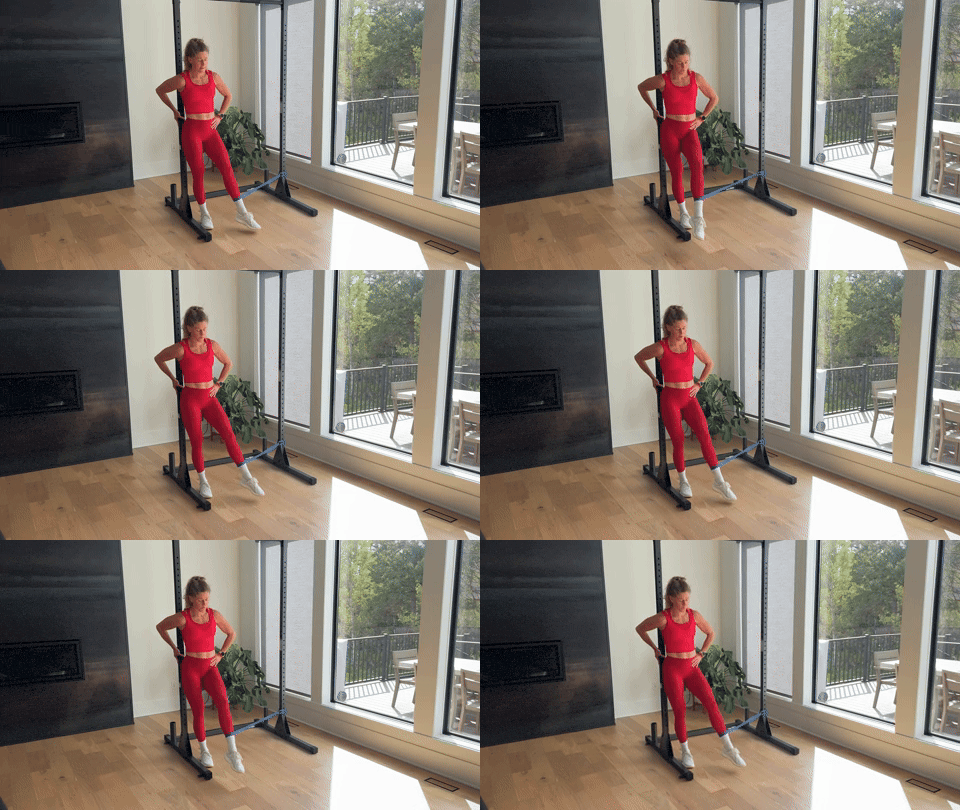
How to Do a Resistance Band Hip Adduction
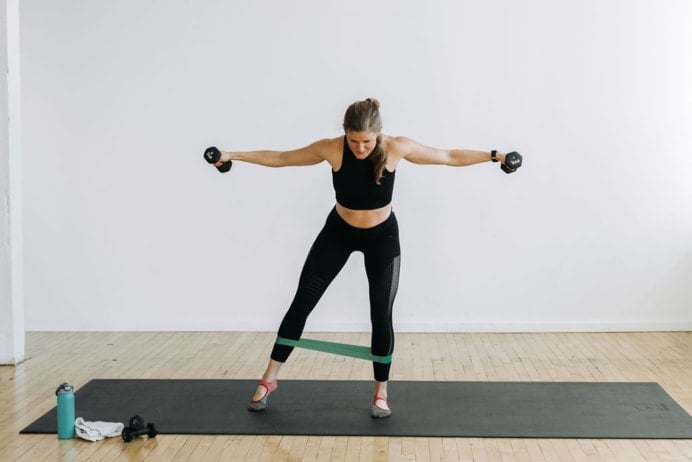
- Start standing tall with your feet hip-width apart. Anchor one end of a long loop resistance band to something sturdy at shin height, and place the other end securely around your right calf/shin.
- Step out slightly to create light tension in the band. Keep your core engaged and your torso upright.
- Pull your right leg across the front of your body as far as you comfortably can, squeezing through your inner thigh.
- Pause briefly at the end of the movement while keeping your hips square and your upper body steady.
- With control, slowly return your right leg to the starting position.
9. Split Lunge With Resistance Band Adduction
Targets: Inner thighs (adductors), quads, glutes and core stabilizers.
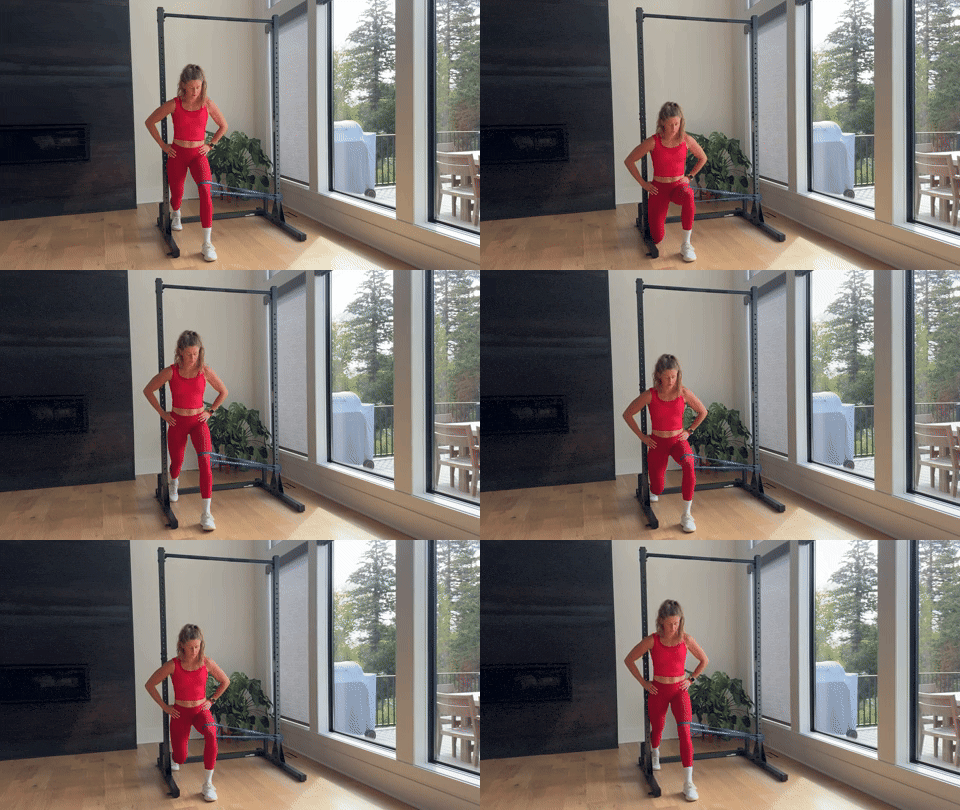
How to Do a Split Lunge With Resistance Band Adduction
- Start standing tall. Anchor one end of a long loop resistance band to something sturdy at thigh height, and place the other end securely around your right thigh.
- Step your right leg forward and your left leg back into a split lunge stance, keeping your torso upright and core engaged.
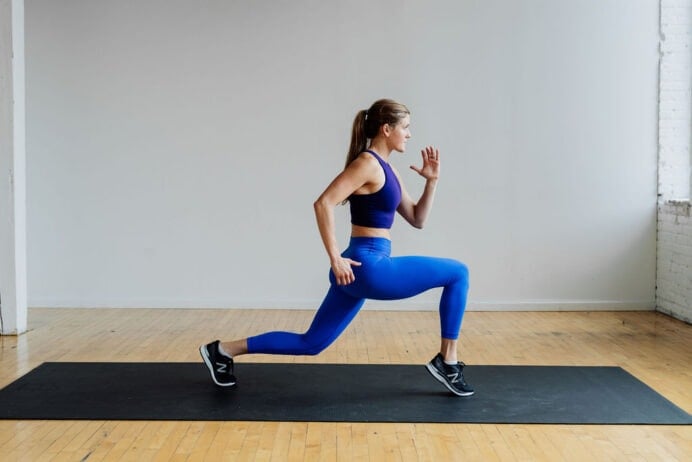
- Bend both knees to lower into a controlled lunge, squeezing through your inner thighs as the band resists your front leg from pulling outward.
- Press through your front heel to return to standing, keeping the band tension steady and your hips square.
FAQs
What are signs of weak adductors?
Weak adductors can show up in a few ways. You might notice your knees caving inward during squats or lunges, have difficulty stabilizing your hips during side-to-side movements or feel unsteady when balancing on 1 leg. Some people also experience lower back, hip or knee discomfort because the inner thighs aren’t providing enough support. A combination of strength training exercises and mobility training can help.
How can I stretch my adductor muscles effectively?
One of my favorite ways to stretch the adductors is with a seated straddle stretch: sit on the floor with your legs wide, hinge forward at the hips and gently reach toward the floor while keeping your back straight. You can also try a butterfly stretch by pressing the soles of your feet together and gently pushing your knees toward the floor. Always move into the stretch slowly and hold for 20-30 seconds, breathing deeply to help the muscles release.
How often should I do adductor exercises for optimal results?
I recommend targeting the adductors 2-3 times per week, depending on your overall lower-body routine. Consistency is key, but you also want to allow your muscles to recover between sessions. Even 10-15 minutes of focused adductor work can make a big difference in stability, balance, and functional strength over time.
Free 2-Week Strength Program
More Workouts
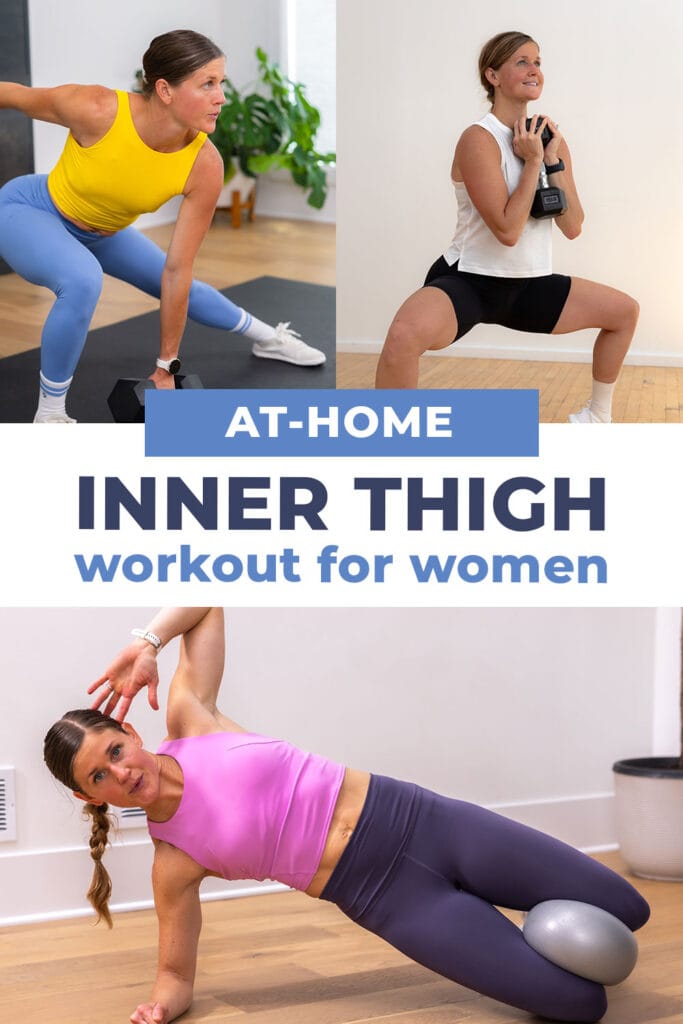
Lower-BodyPin This: Best Adductor Exercises to Build Lower-Body Strength
This post includes affiliate links. I do earn a commission for products purchased using these links (at no additional cost to you). Thank you for supporting Nourish Move Love, making the content you see on this blog possible.
no comments