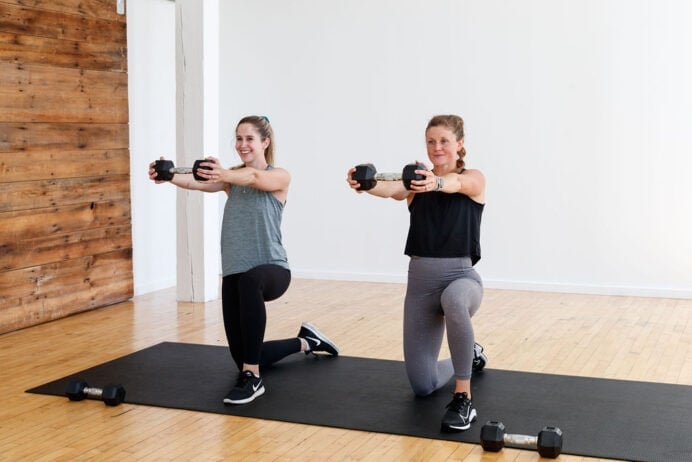



30-Minute Leg Workout for Bad Knees
This 30-minute, low-impact leg workout is designed to sculpt and strengthen the entire lower body while minimizing stress on the knees. Ideal for anyone with knee sensitivity or recovering from injury, it targets the quads, hamstrings, glutes, calves and thighs using controlled, joint-friendly movements. The routine avoids high-impact exercises like jumping and lunges, focusing instead on safe, effective strength training.
Strong, healthy knees are something I don’t take for granted, especially after going through a meniscus tear and knee surgery. That experience completely changed how I approach lower-body training. I had to shift my focus to rebuilding strength in a way that supported my joints rather than stressing them.
I hear from so many people who feel frustrated when movements like lunges cause knee pain. I’ve been there. Lunges demand a lot of strength, stability, balance and joint mobility, and if even one of those pieces is off (like tight hips, limited ankle mobility or muscle imbalances), the knee often takes the hit. During my recovery, I realized that instead of forcing those movements, it was far more effective to step back and build strength through controlled, low-impact exercises that allowed my knees to heal while still getting stronger.
The exercises I now rely on are intentionally knee-friendly, but still effective. I focus on movements that strengthen the quads, hamstrings, glutes and calves while also training the smaller stabilizing muscles around the knees, hips and ankles. That combination is key, not just for reducing pain, but for preventing it long-term. When those stabilizers are strong, the knee joint doesn’t have to absorb as much stress.
For me, strengthening my legs with bad knees meant slowing things down and prioritizing form over intensity. Exercises like glute bridges, step-ups, Romanian deadlifts, wall sits and controlled squats became staples. These movements build strength without excessive joint strain, and they help reinforce proper movement patterns. As I’ve gotten older, I’ve found that consistency with these kinds of exercises matters even more than intensity. Strong knees aren’t built overnight; they’re built through steady, intentional work.
Squats, in particular, were something I had to relearn. To do them safely, I focus on keeping my weight in my heels, engaging my glutes and only lowering to a range of motion that feels pain-free. Sometimes that means using a box or bench as a guide, or reducing depth until my strength improves. There’s no benefit to pushing into pain. Controlled, aligned movement is what actually builds resilience.
When it comes to structuring these leg workouts, I typically aim for moderate reps with good control, about 10-15 reps per exercise and 2-3 sets. That range allows me to build strength without overloading the joint, especially on days when my knees feel more sensitive. Slower tempo and proper alignment matter far more than heavier weights.
This style of training has not only been easy on my knees and helped me recover, but it’s also made my legs stronger and more stable than they were before my injury. And if lunges or high-impact movements aggravate your knees, this approach gives you a way to keep training effectively without making things worse.
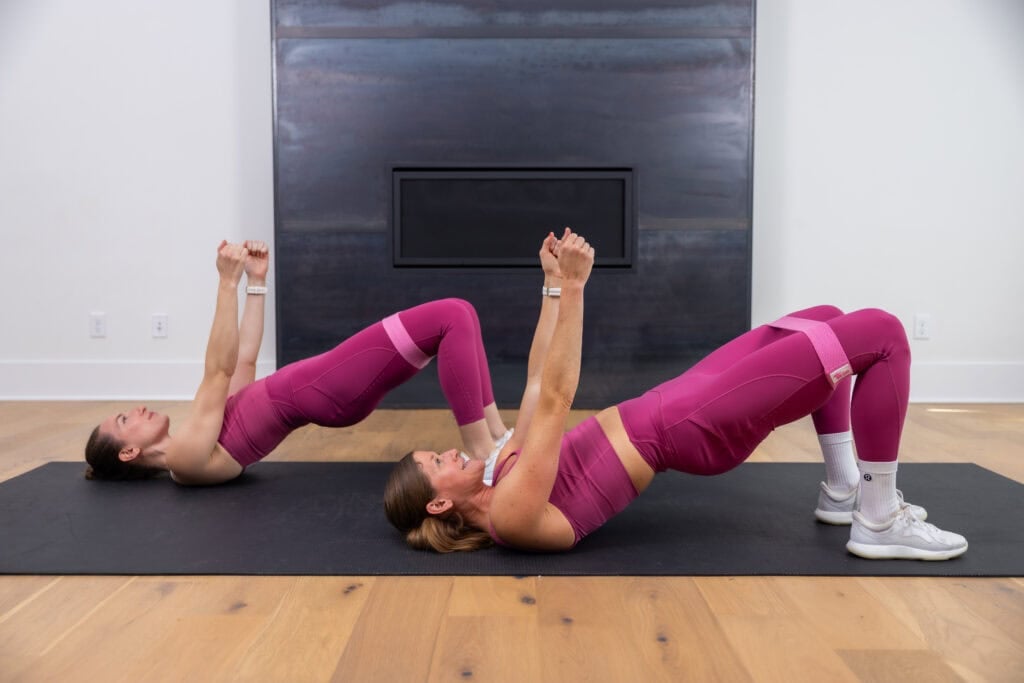
Read A 5-Star Review ⭐⭐⭐⭐⭐
“This was fantastic (always glad when we are on the other side)! Such a burner, and I’m so glad it’s knee-friendly! Thank you for the positive encouragement throughout. Leg day is my least favorite, and you help me get through it and push me past my limits!”
— Steph S.
Workout Details
This knee-friendly leg workout is designed to build lower-body strength and stability while minimizing stress on the joints through low-impact, controlled movements. It targets the glutes, quads, hamstrings and calves with exercises that prioritize proper alignment and joint support.
I recommend adding these leg exercises to a well-rounded routine 1-2 times per week, with at least 1 day of rest or upper-body training between sessions. If you’re currently dealing with acute knee pain, significant swelling or a recent injury or surgery, it’s best to consult a physical therapist or medical professional before starting, and modify or skip any movements that cause pain.
Workout Equipment
Medium dumbbells. I’m using 15-20 lbs here. Option to add a mini loop resistance band (discount code: NML). You can also perform each exercise with just your body weight.
Workout Instructions
Follow along with the guided Knee-Friendly Workout with Weights on YouTube, led by me — your certified personal trainer (CPT), Lindsey Bomgren.
Your Workout Looks Like This:
- Guided Warm-Up and Cool-Down
- 8 Knee-Friendly Leg Exercises
- Timed Intervals (45 seconds of work, 15 seconds of rest. Perform as many repetitions as possible with good form within the timed interval.)
- Strict Sets (repeat each exercise x2 sets, back-to-back)
Knee-Friendly Workout Outline
1. Good Morning and Calf Raise
Targets: Legs, glutes, quads, hamstrings, hip flexors, erector spinae, lower back, calves and core.
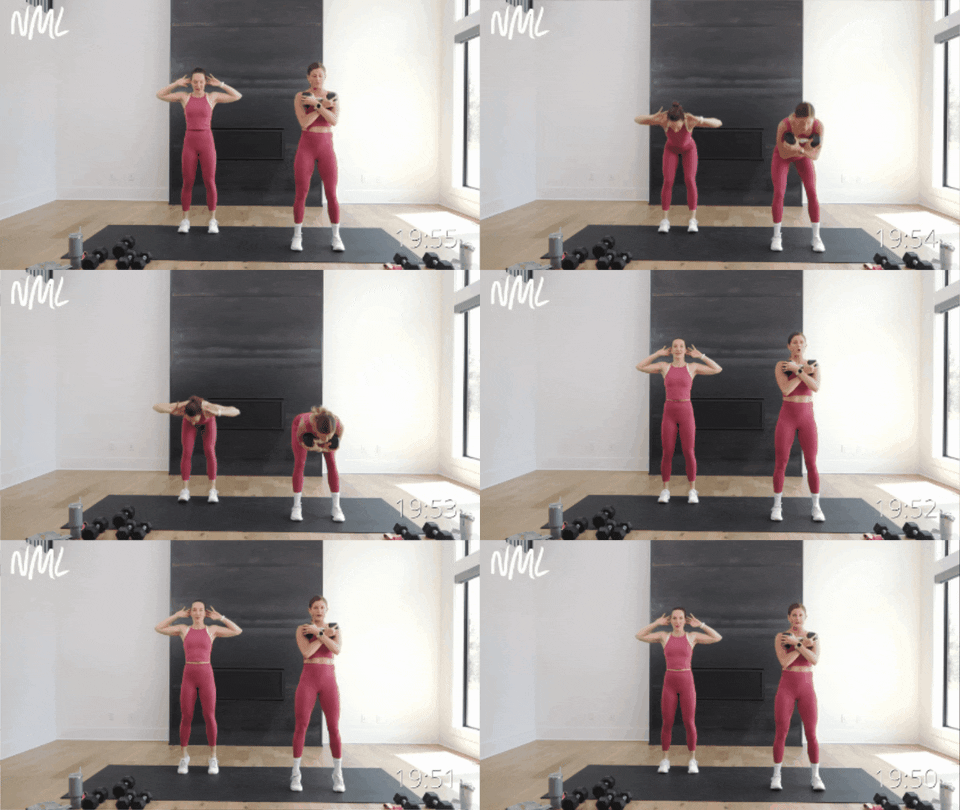
How to Do a Good Morning and Calf Raise
- Start in a standing position, feet shoulder-width apart, core engaged. Option to hold 1 dumbbell horizontally at your chest.
- With a slight bend in your knees, hinge forward at the hips until your torso is parallel to the ground. Core engaged and spine neutral (back flat). You should feel a stretch in your hamstrings (back of the legs) at the bottom of the movement.
- Reverse the movement, driving through your heels to stand tall, returning to the starting position (torso upright).
- Slowly and with control, lift yourself up onto the balls of your feet, heels rising above the ground. Lift your heels until you feel a stretch along the back of your legs, balancing on your toes.
- Slowly lower your heels back to the ground, returning to the starting position.
2. Squats
Targets: Legs, glutes, quadriceps, hamstrings, hips and core.
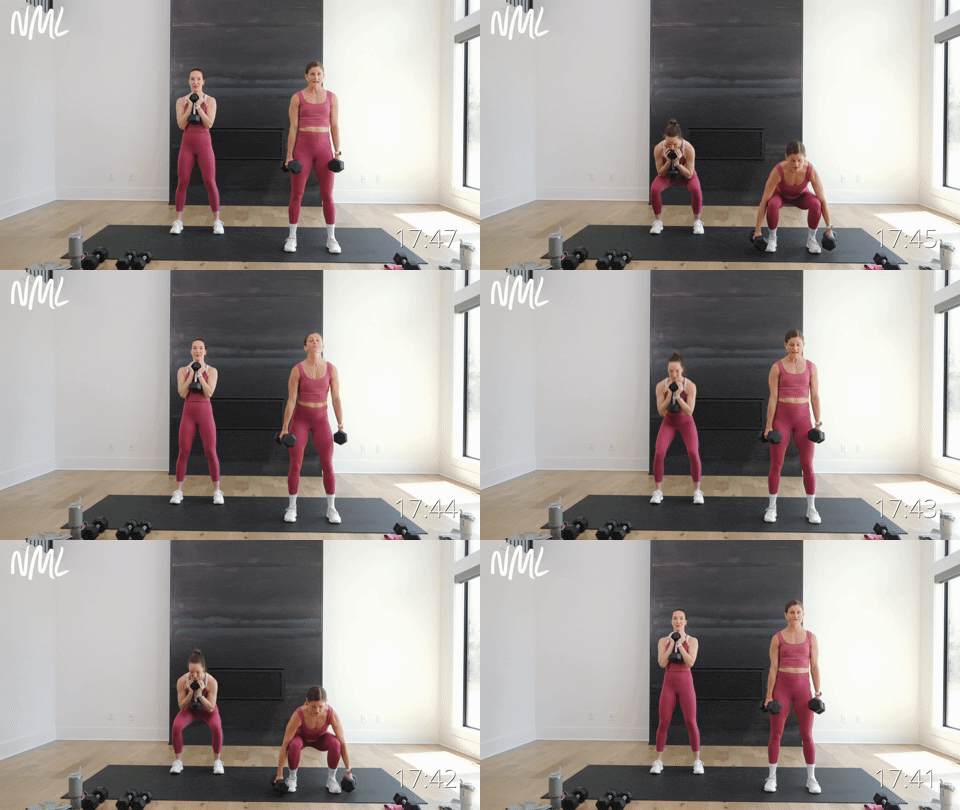
How to Do a Squat
- Start standing feet shoulder-width apart, knees slightly bent. Hold a dumbbell in each hand outside your thighs.
- Lower down into a squat position, lowering your hips to be parallel with your knees. Drive your knees out toward your outer toes.
- Drive through your heels to stand tall, returning to a standing position.
3. Staggered Deadlift
Targets: Legs, glutes, hamstrings, hips, lower back and core.
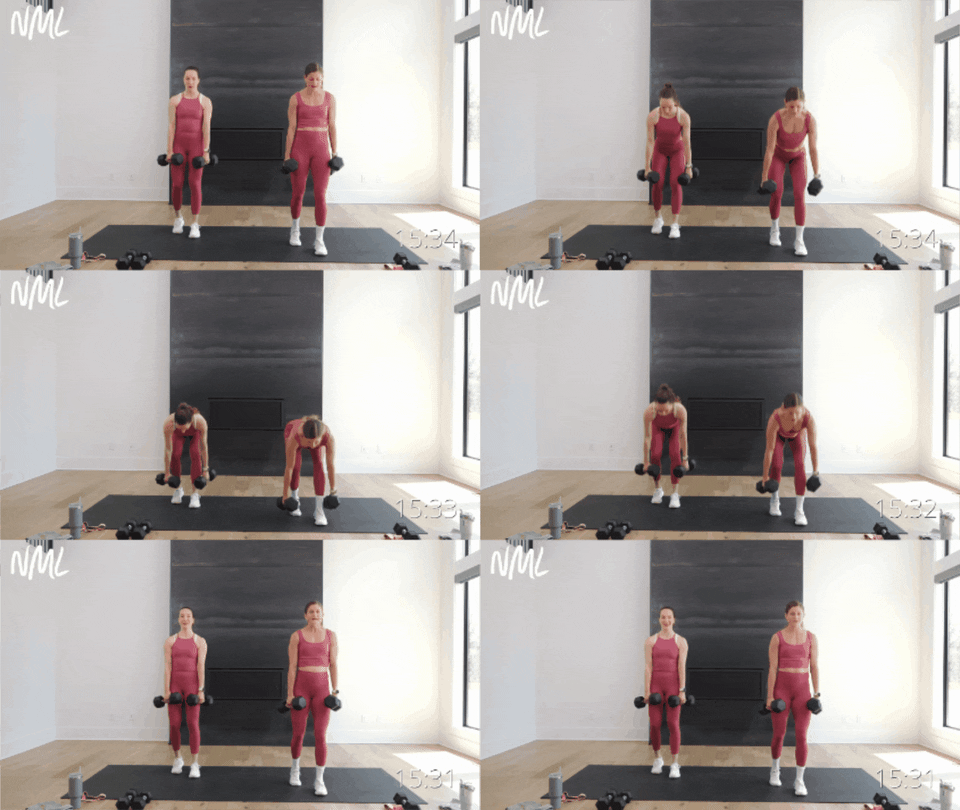
How to Do a Staggered Deadlift
- Stand with your feet hip-width apart, knees slightly bent. Hold dumbbells in each hand in front of your thighs, palms facing in towards your body.
- Stagger your feet, so your right leg is slightly in front of your left foot. Kickstand your back left foot, left heel floating off the ground. Keep 80% of your weight in your front foot, 20% in your back left toe.
- Maintain a staggered stance as you hinge at the hips. Push your hips back towards the wall behind you as you glide the dumbbells down the front of your legs. The range of motion will look different for everyone.
- Drive through your front right heel to push your hips forward, pulling the dumbbells back up towards your hip as you stand tall.
- Switch sides, performing a staggered deadlift on the opposite leg during the next set.
4. Dumbbell Swing
Targets: The posterior chain (backside of the body), including the glutes, hamstrings, hips, core and all the stabilizing muscles in your back and shoulders.
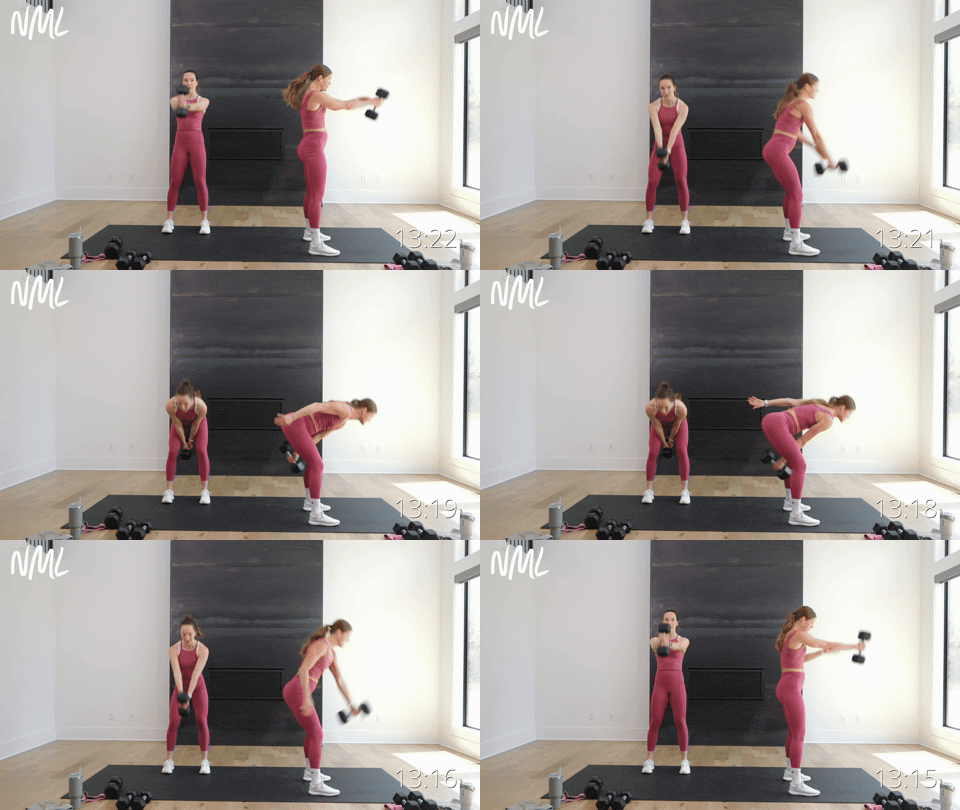
How to Do a Dumbbell Swing
- Start standing with your feet wider than shoulder-width apart; engage your core. Hold a dumbbell vertically.
- With a slight bend in your knees and weight in your heels, ‘hike’ the dumbbell back between your legs to start the swing movement.
- Drive through your heels to stand tall, pushing your hips forward as you squeeze your glutes to swing the weight up to shoulder height (full hip extension at the top). Aim for shoulder height, with arms extended out away from the body. Think long, loose arms (your arms are just a vehicle for moving the bell, your hips and glutes generate the power to move the dumbbell).
- As the weight begins to descend, think of catching it with your hip hinge movement, loading the glutes and hamstrings.
5. Banded Lateral Walk
Targets: Glutes, quads, hamstrings and hip abductors.
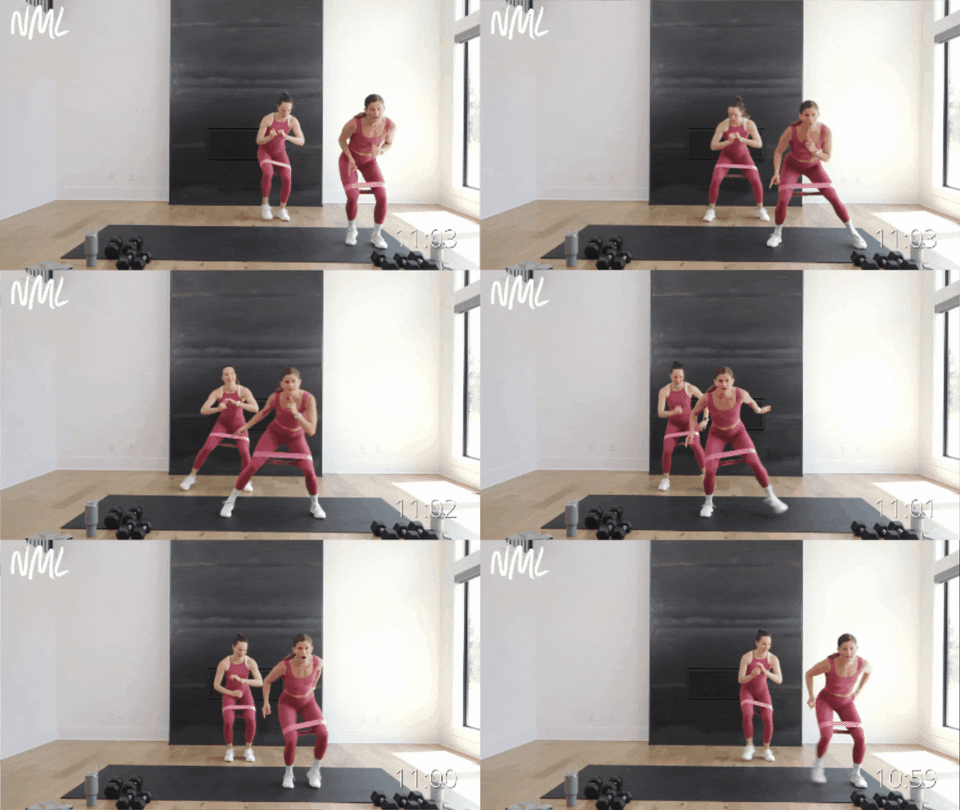
How to Do a Banded Lateral Walk
- Place a resistance around your thighs, approximately 6 inches above your knees. Stand with your feet slightly wider than your hips to create tension across the band (activating your glutes).
- Bend your knees to lower down into a loaded squat position. Keep your weight in your heels and your chest up.
- Hold this loaded squat position as you take 2 lateral steps to your right, stretching the band as far as you can.
- Tap your left foot in, bringing it towards your right foot, maintaining a low squat position.
- Then, step out with your left leg, maintaining tension across the band before bringing your right leg to the left to meet your outside foot.
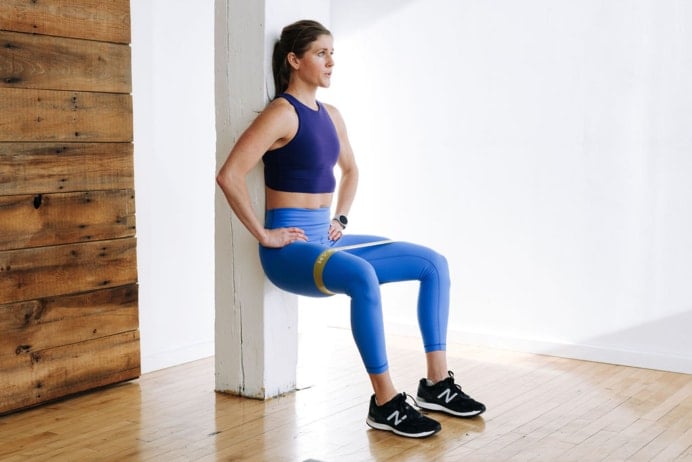
6. Wall Sit With Band
Targets: Legs, glutes, quads, hamstrings, hips and core.
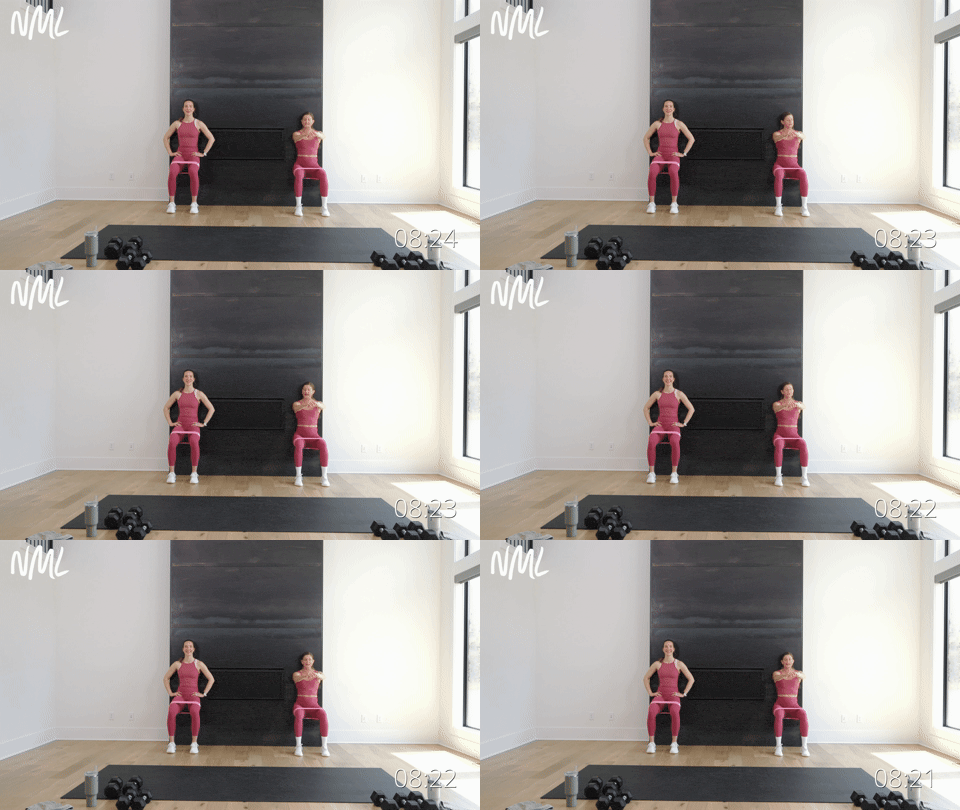
How to Do a Wall Sit With Band
- Place a resistance band 6 inches above your knees, then place your back flat against a wall. Plant your feet firmly on the ground, hip-width apart, generating tension across the band.
- Slide your back down the wall until your legs make a 90-degree angle, thighs are parallel to the ground and hips are in line with knees.
- Hold this position with your back straight and firmly connected to the wall.
- With control, stand up, return to the starting position and repeat.
7. Fire Hydrant Lift and Kick
Targets: Gluteus maximus, hip abductors and core.
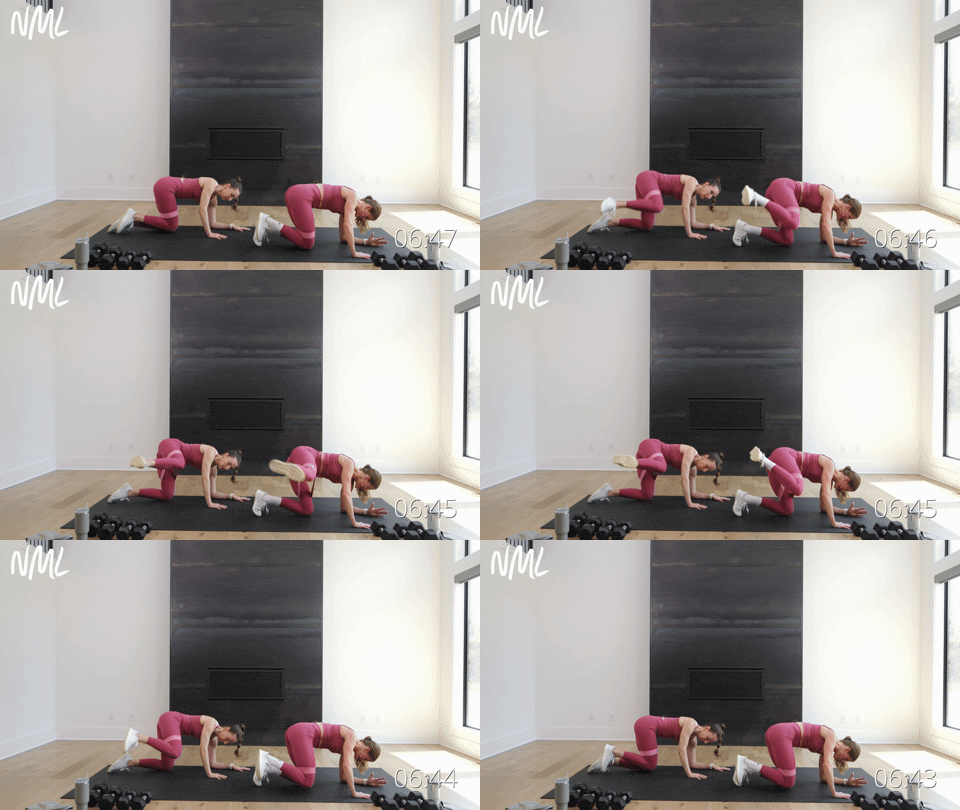
How to Do a Fire Hydrant Lift and Kick
- Place a resistance band 6 inches above your knees.
- Start in a table top position, quadruped on all fours, shoulders stacked over wrists and hips stacked over knees. Option to place your forearms on the mat for more stability.
- Lift your right leg up and to the side so you create a straight line from glute to knee, stretching the resistance band but keeping a 90-degree bend in your right knee.
- Hold at the top and straighten your right leg, kicking through your right heel.
- Pull your right foot back in to bend at the knee and create a 90-degree angle again, then bring your right knee back down to the mat, returning to the starting position.
8. Glute Bridge and Abduction
Targets: Hip abductors (outer glutes and thigh muscles), gluteus medius and gluteus minimus (upper and side glutes).
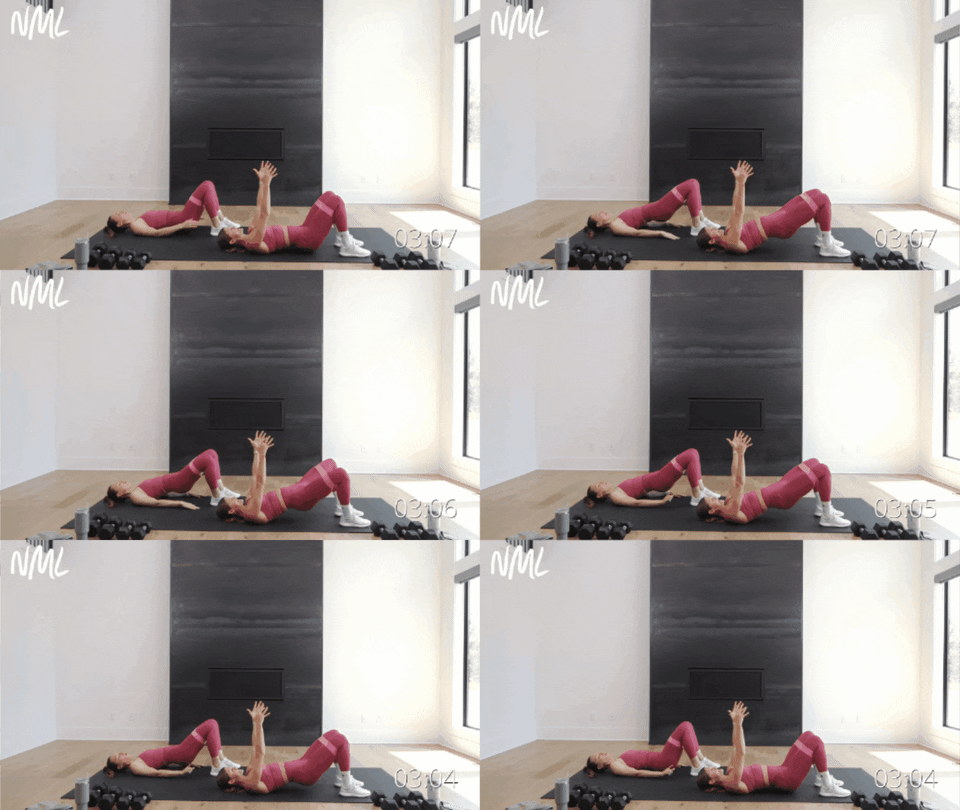
How to Do a Glute Bridge and Abduction
- Lie flat on the floor on your back with your knees bent and feet flat on the ground, feet hip-width apart. Place a resistance band 6 inches above your knees.
- Press through the heels to lift your hips off the ground until your knees, hips and shoulders form a straight line. This is a glute bridge. Keep your abs drawn in, belly button pulled towards the spine, so you don’t overextend your back.
- Hold your hips high at the top and press your knees away from each other, stretching the band open.
- With control, pull your knees back in, stacking them over your ankles. Then lower your hips back to the ground, returning to the starting position.
Free Beginner Workout Plan
FAQs
What exercises should you avoid with bad knees?
I recommend avoiding high-impact exercises and movements that place excessive stress on the knee joint, especially when they cause pain. This often includes jumping, running on hard surfaces, deep or poorly controlled lunges and heavy squats with improper form. Any exercise that creates sharp pain, instability or discomfort in the knee is one I modify or skip altogether.
Should you train your legs if you have knee pain?
Yes, but how you train matters. I’ve found that avoiding leg workouts completely can actually make joint pain worse over time due to weakness and lack of support around the joint. Focusing on low-impact, controlled strength exercises helps build the muscle groups that stabilize and protect the knees without aggravating them.
What is the most common mistake when exercising with bad knees?
The biggest mistake I see is pushing through pain or jumping back into high-impact movements too quickly. It’s easy to think that more intensity equals better results, but with knee pain, that usually backfires. Prioritizing proper form, single-leg exercises, controlled tempo and pain-free range of motion is far more effective.
How long does it take to strengthen your knees?
In my experience, you can start to feel a difference in stability and strength within a few weeks of consistent training, but noticeable, lasting improvements typically take 6-8 weeks or more. It really depends on your starting point, consistency and how well you’re supporting your body with recovery and mobility work.
Are lunges bad for your knees?
Not necessarily, but they can be if your knees aren’t ready for them. Lunges require strength, balance and joint stability, and if any of those are lacking, the knee can take on too much strain. I personally avoided weighted lunges during recovery and focused on building strength through isometric holds first, then gradually reintroduced them with proper form and control once my knees could handle it without pain.
More Workouts
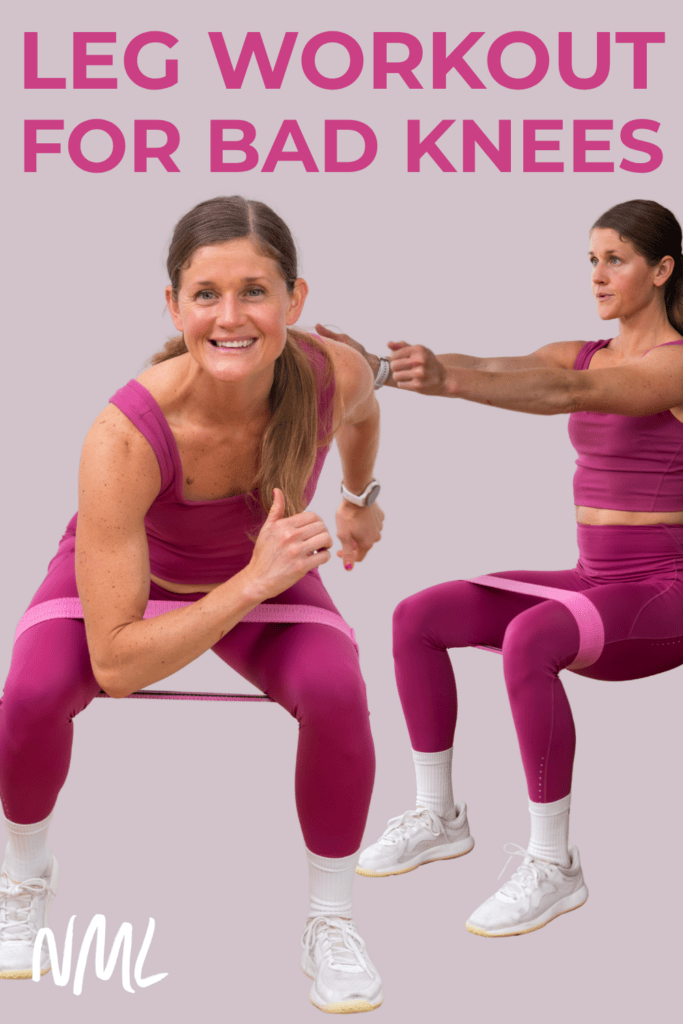
Lower-BodyPin This: 8 Best Leg Exercises for Bad Knees
This post includes affiliate links. I do earn a commission for products purchased using these links (at no additional cost to you). Thank you for supporting Nourish Move Love, making the content you see on this blog possible.
no comments