




The Best Workout Splits for Different Goals
I’ve coached enough women to know that there’s no one-size-fits-all approach to strength training. The best workout split for you depends on your goals, schedule and season of life. In this guide, I break down common workout splits, who they’re best suited for and how to choose the approach that will help you build strength, stay consistent and feel your best.
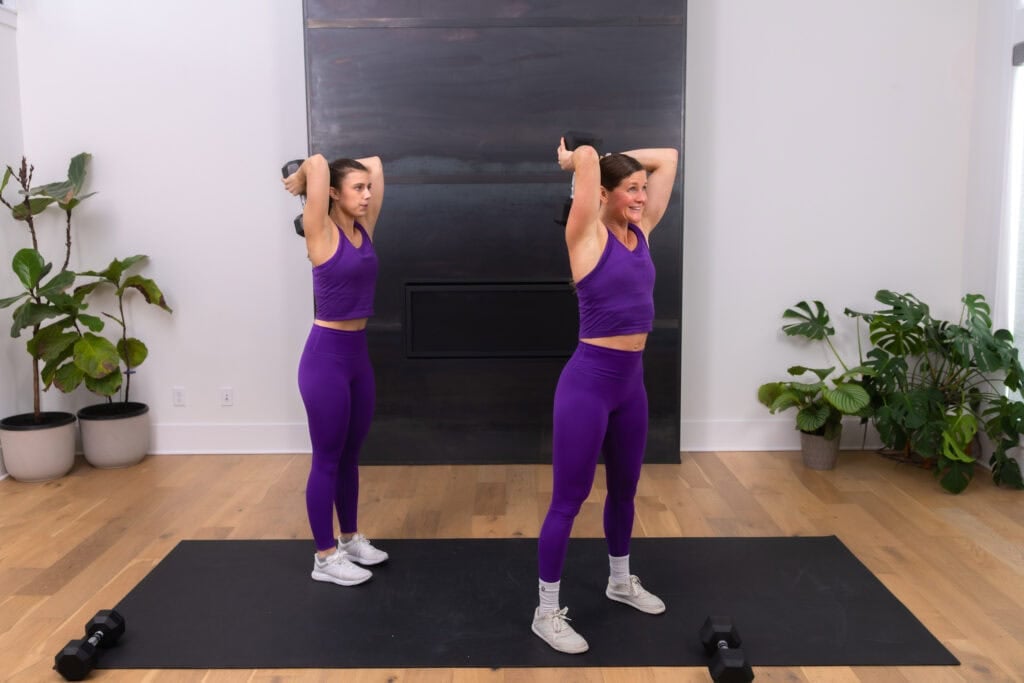
A workout split defines how you organize your workouts throughout the week. Some workout splits prioritize compound exercises that train multiple muscle groups at once, while others include more isolation exercises that focus on a single muscle. The structure you choose can affect everything from your recovery and strength gains to how easy it feels to stay consistent.
Whether you’re fitting workouts into early mornings before the kids wake up or balancing training with a busy work schedule, the best workout split is the one you can stick with. Consistency will always outperform the “perfect” plan, which is why I encourage women to choose a workout split that supports their goals and everyday life.
Full-Body Split
A full-body split trains your upper body, lower body and core during the same workout. Full-body workouts often include compound movements like split squats, Romanian deadlifts, push-ups and the overhead press, allowing you to train more muscles more efficiently.
This is one of my favorite workout splits for beginners, busy moms and anyone who can realistically commit to a training frequency of 3 workouts per week. Because every major muscle group is trained in each session, you can make progress without spending hours in the gym.
Pros
- Trains all major muscle groups in every workout
- Ideal for beginners learning movement patterns
- Efficient for busy schedules
- Works well for general fitness, fat loss and strength-building
Cons
- Workouts may feel longer since you’re training the entire body
- Less opportunity for highly specialized muscle-building work
- Can feel physically demanding if every workout is high intensity
- Recovery may become challenging if volume is too high
Example Schedule
- Monday: Full-Body Strength Workout
- Tuesday: Walking, Mobility or Active Recovery
- Wednesday: Full-Body Strength Workout
- Thursday: Walking or Mobility
- Friday: Full-Body Strength Workout
- Saturday: Optional Cardio or Recovery
- Sunday: Rest
Upper/Lower Split
An upper/lower training split separates training into upper-body and lower-body workout days. Upper-body workouts commonly include exercises like the incline bench press, hammer curls and pull-ups. Lower-body days may feature moves like deadlifts, squats and calf raises.
I often recommend an upper/lower split for intermediate exercisers who are ready for a little more training volume. It’s a great option for women who can consistently commit to a weekly 4-day split and want to build strength without spending 5-6 days training.
Pros
- Each muscle group is typically trained twice per week
- Allows more training volume than full-body workouts
- Great for strength-building goals
- Flexible enough to adapt to different fitness levels
Cons
- Requires more training days than a full-body split
- Missing workouts can create an imbalance throughout the week
- Less ideal for people with unpredictable schedules
- Upper-body days and lower-body days can sometimes feel lengthy
Example Schedule
- Monday: Upper-Body Workout
- Tuesday: Lower-Body Workout
- Wednesday: Recovery or Mobility
- Thursday: Upper-Body Workout
- Friday: Lower-Body Workout
- Saturday: Walking or Optional Cardio
- Sunday: Rest
Push/Pull/Legs Split (PPL)
A push/pull/legs split organizes workouts based on movement patterns and the muscles involved in those movements.
Push days focus on exercises for the chest, shoulders and triceps, like push-ups and the overhead press. Pull days target the back and biceps with exercises like pull-ups, lat pulldowns, rows and bicep curls. Leg days are dedicated to the lower body, including the glutes, quads, hamstrings and calves with exercises like leg extensions and squats.
I typically recommend a push/pull/legs split for intermediate to advanced exercisers who want to dedicate more time to strength-building or growing muscle mass. This split can also work well for women who enjoy strength training, have experience with resistance training and can consistently commit to at least a 3-day split per week.
Pros
- Allows for focused workouts with more attention on specific muscle groups
- Supports progressive overload and muscle-building goals
- Workouts are often shorter than full-body training sessions
- Easy to scale from 3 workout days per week to a 6-day split
Cons
- Requires consistency to ensure all muscle groups are trained evenly
- May not be ideal for beginners learning foundational movement patterns
- Can be difficult to fit into busy or unpredictable schedules
- Some muscle groups may only be trained once per week on a 3-day schedule
Example Schedule
3-Day PPL Split
- Monday: Push Workout
- Tuesday: Recovery, Walking or Mobility
- Wednesday: Pull Workout
- Thursday: Recovery, Walking or Mobility
- Friday: Leg Workout
- Saturday: Optional Cardio or Active Recovery
- Sunday: Rest
6-Day PPL Split
- Monday: Push Workout
- Tuesday: Pull Workout
- Wednesday: Leg Workout
- Thursday: Push Workout
- Friday: Pull Workout
- Saturday: Leg Workout
- Sunday: Rest
Body Part Split
A body part split, often called a “bro split,” assigns a different muscle group to each workout day. Instead of training multiple muscle groups in a single session, each workout focuses primarily on one area of the body. For example, you might dedicate one day to chest exercises, another to back exercises and another to shoulders or arms.
This style of training is popular in bodybuilding and among advanced lifters. While it can be effective for muscle growth, I don’t usually recommend it for beginners or anyone focused on functional strength. A body part split tends to work best for experienced lifters with physique-focused goals who can consistently commit to a regular 5-day split.
Pros
- Allows you to focus on individual muscle groups
- Can support muscle-building and physique-focused goals
- Provides several days of recovery before training the same muscle group again
- Easy to organize and follow
Cons
- Missing a workout may mean a muscle group goes untrained for the entire week
- Often less efficient for general fitness and functional strength goals
- Typically trains each muscle group less frequently than other splits
- Can be harder for beginners to balance effectively
Example Schedule
- Monday: Chest
- Tuesday: Back
- Wednesday: Shoulders
- Thursday: Legs
- Friday: Arms and Core
- Saturday: Active Recovery, Walking or Mobility
- Sunday: Rest
Choosing the Right Split for You
The best workout split is the one that fits your goals, schedule and lifestyle well enough that you can stay consistent with it over time. When helping women choose a training plan, these are the factors I encourage them to consider first:
- If you’re new to strength training: Start with a full-body split. Training your entire body 2-3 times per week allows you to practice foundational movement patterns while building strength and confidence. It also keeps your schedule simple and manageable.
- If you can commit to 4 workouts per week: Consider an upper/lower split. I like this as a middle-ground option because it provides more training volume than a full-body split while still allowing adequate recovery. It’s a great fit for women who want to build strength and muscle without spending 5-6 days per week training.
- If your goal is building muscle: A push/pull/legs split or upper/lower split may be a good fit. Both options allow you to increase training volume and focus on specific muscle groups. The best choice depends on how many days you can commit to training weekly.
- If you only have 2-3 days per week: Choose a full-body split. When your training time is limited, full-body workouts help you get the most out of each session by ensuring every major muscle group is trained multiple times throughout the week.
- If you have a busy schedule: Stick with a full-body split or upper/lower split. These are a little more forgiving when life gets busy. Missing one workout won’t completely disrupt your training plan or leave an entire muscle group untrained for the week.
- If your goal is general fitness and functional strength: Focus on full-body or upper/lower training. These workout splits often align best with everyday strength and mobility. They emphasize balanced training patterns that support real-life movement and consistency.
- If your goal is physique-focused muscle development: A body part split may be worth considering. This approach allows for a high amount of training volume for specific muscle groups, but it typically requires more gym time and a bigger training commitment.
FAQs
How many times per week should a muscle be trained to maximize muscle hypertrophy?
Training each muscle group at least 2-3 times per week is generally effective for adding muscle growth. This allows you to accumulate enough training volume while also providing adequate recovery between sessions.
That’s one reason why I often favor full-body and upper/lower splits for most women. These workout splits make it easier to train major muscle groups multiple times throughout the week without overtraining or requiring 5-6 days of exercise.
Should I combine cardio with my split workouts?
I recommend including both strength training and cardiovascular exercise as part of a well-rounded weekly fitness routine. For most women, that might look like following a strength-training split 3-4 days per week while incorporating walking, cycling, running or other forms of cardio on rest days or after workouts.
What is the most effective workout split?
The most effective workout split is the one that matches your goals, fits your schedule and allows you to train consistently. The same is true for weight loss. While many people assume they need to train more often to lose weight, consistency matters far more than the specific workout split you choose.
If you’re new to strength training or only have a few days each week to exercise, a full-body split is often most effective. If you’re looking to build more strength and muscle and can commit to 4 workouts per week, an upper/lower split may be a better fit. More advanced exercisers with specific muscle-building goals may benefit from a push/pull/legs split or body part split.
I always encourage women to focus on finding a workout program they can realistically maintain. Consistency, progressive overload and recovery will have a far greater impact on your results than the specific split you choose.
Progress Over Perfection
Remember, strength isn’t built in a single workout. It’s built through showing up consistently, challenging yourself over time and giving your body the recovery it needs to grow stronger. Don’t worry about finding the “perfect” workout split, or even the perfect workout. Instead, focus on finding a plan that feels sustainable, enjoyable and realistic for where you are right now.
Keep showing up, trust the process and celebrate the progress you’re making along the way. Small, consistent efforts add up, and it’s those efforts that create lasting results.
More Posts
Fitness EducationPin This: Best Workout Splits for Every Fitness Goal

This post includes affiliate links. I do earn a commission for products purchased using these links (at no additional cost to you). Thank you for supporting Nourish Move Love, making the content you see on this blog possible.
no comments