


20-Minute Core Workout (Max 20 Day 9)
This core workout is designed to develop real strength, control and stability. Using a mix of dynamic exercises like dead bugs, hip flexor crunches, bird dog back rows, Copenhagen planks and seated twists, you’ll train your core to resist rotation, support your spine and coordinate efficiently with the rest of your body. The result is improved posture, better balance and a stronger, more resilient midsection that carries over to everything from lifting to everyday movement.
This is DAY 9 of my Max 20 Program.
LET’S GET STARTED
Download Your FREE Workout Plan & Workout Tracker Here
Download the PDF calendar for this workout plan with a daily workout tracker so you can measure your progress.
Download Plan
Day 9 of my Max 20 Program shifts the focus to building a stronger, more coordinated core through controlled, functional movement patterns. Instead of isolating muscles with traditional crunches, this session emphasizes how your core actually works in real life — stabilizing your spine, resisting unwanted motion and connecting your upper and lower body through every rep.
Your core is responsible for much more than just abdominal strength. It plays a key role in posture, balance and force transfer, especially when your body is moving or under load. That’s why this core workout includes exercises like dead bugs, hip flexor crunches, bird dog back rows, Copenhagen planks and seated twists. Each ab exercise is designed to challenge your ability to maintain alignment while your limbs are moving.
Dead bugs and hip flexor crunches focus on controlled core engagement and anti-extension strength. Bird dog back rows layer in upper-body pulling with opposite-side lower body stability, reinforcing coordination and balance. Copenhagen planks build deep adductor and lateral core strength, while seated twists train rotational control in a grounded position.
The goal isn’t just to feel the burn; it’s to develop a core that can stabilize, resist rotation and move efficiently under tension. When these patterns are trained consistently, your body becomes more resilient, more balanced and better equipped for both training and everyday movement.
Workout Details
Build core strength and stability with this quick abs and core workout at home.
I suggest doing this deep core workout once a week as part of a well-rounded workout routine.
Workout Equipment
Medium-to-Heavy Dumbbells. I’m using 15-25 lbs. Optional bench/box and Pilates ball.
Workout Instructions
Follow along with the guided 20-Minute Core Workout on YouTube, led by me — your certified personal trainer, Lindsey Bomgren.
Your Workout Looks Like This:
- 20 Rep Buy In
- 4 Core Exercises
- Timed Intervals (Complete each exercise for 45 seconds of work, followed by 15 seconds of rest.)
- Repeat All 4 Exercises x 4 Sets
Workout Outline
1. Dead Bug
Targets: Deep core muscles (transverse abdominis), lower abs, hips, shoulders and back (posterior and anterior deltoids).
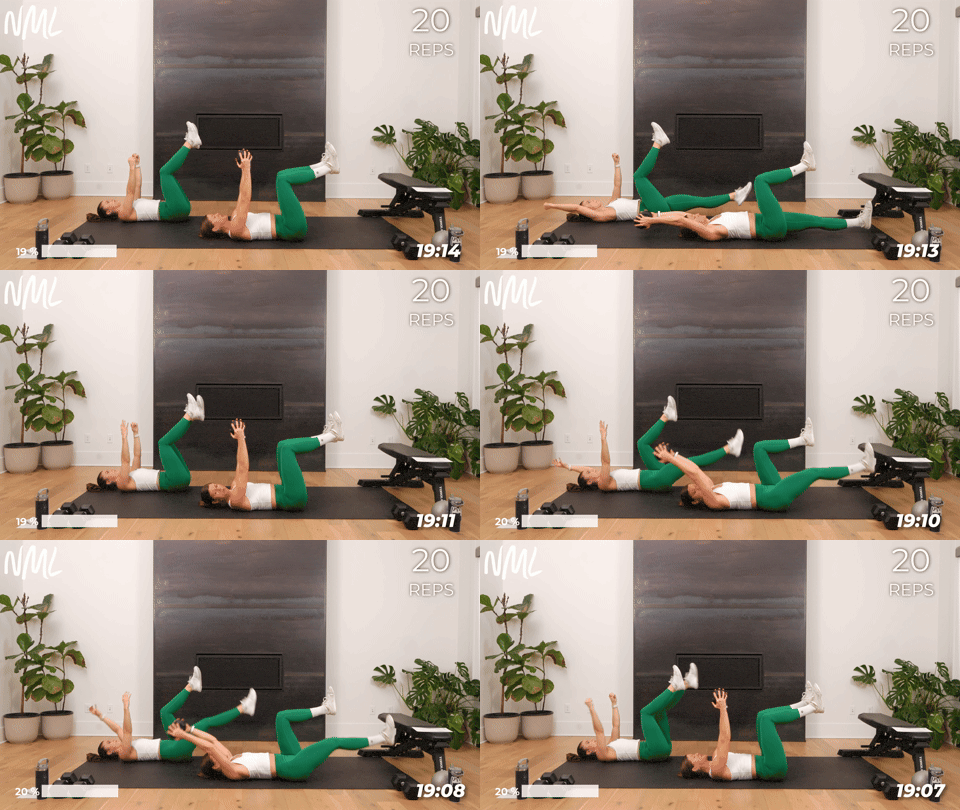
How to Do a Dead Bug
- Lie on your back flat on the floor, performing a slight pelvic tilt to press your lower back into the mat. Lift your knees to form a 90-degree angle (knees stacked on top of hips).
- Hold a dumbbell horizontally and extend your arms straight overhead toward the ceiling. Inhale, letting your belly expand.
- Exhale, engaging your core and simultaneously extending your left leg and arms away from your body, lowering the dumbbell towards the ground with control. Your right leg remains in place. With control, inhale as you return to the starting position, pulling the left leg back to tabletop as you pull the dumbbell overhead.
- Repeat on the opposite leg, exhaling as you extend your right leg and arms away from the body, lowering the dumbbell towards the ground again. With control, return to the starting position.
Modification: Reduce the range of motion of your legs, performing bent leg dead bugs instead of straight leg dead bugs to reduce the intensity of this exercise. Use your bodyweight if the dumbbell variation is too intense. You can also try adding a resistance band rather than dumbbells.
2. Hip Flexor Crunch
Targets: Hip flexors, lower abs, deep core stabilizers and quads.
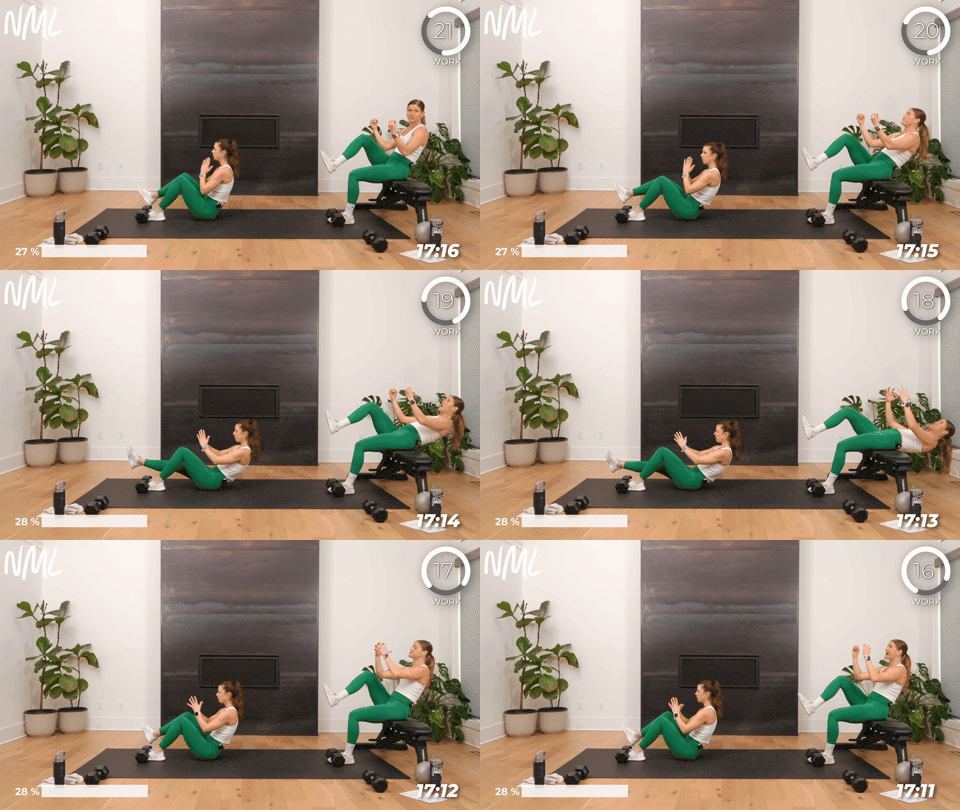
How to Do a Hip Flexor Crunch
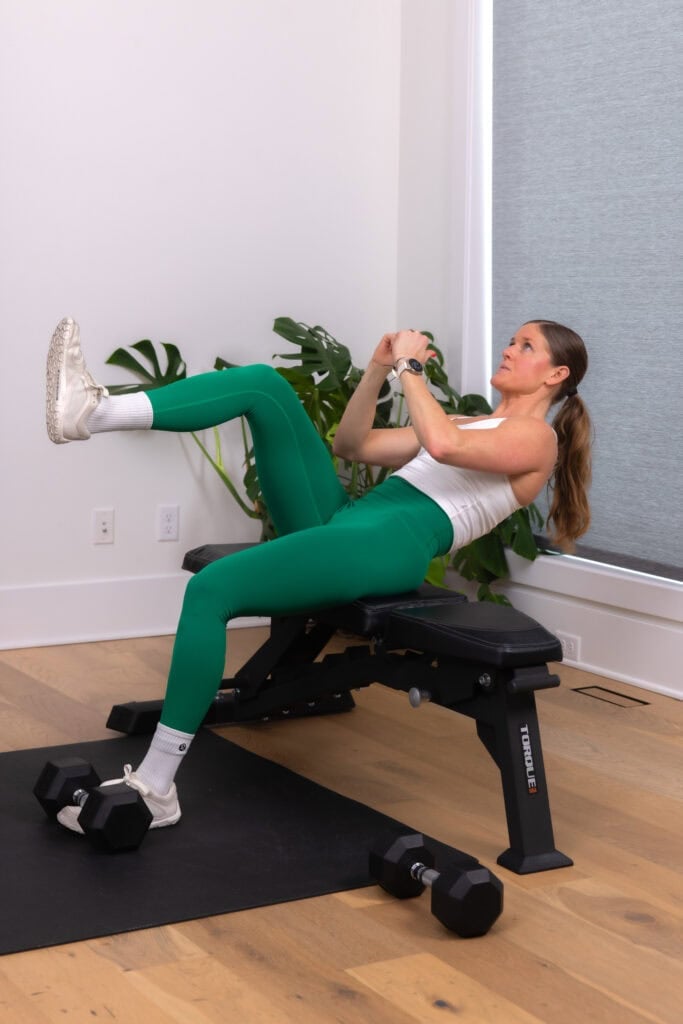
- Sit on a bench with your left foot planted firmly on the ground, then anchor it by placing a heavy dumbbell over your foot for stability. Your right leg should be lifted off the ground with your knee bent at about 90 degrees.
- Lean your torso all the way back with control until you form a straight line from your shoulders through your hips and down to your left knee. Keep your core braced and avoid arching your lower back.
- From this extended position, crunch your torso back up while keeping your right leg lifted and stable, maintaining that 90-degree bend.
- Move slowly and with control, focusing on using your hip flexors and core to drive the motion rather than momentum.
Modification: Perform this exercise from the ground to reduce the range of motion. Anchor your left foot under a dumbbell, and keep your right leg floating. As you lean back, extend (kick out) your right leg. As you crunch back up, pull your right knee back in toward your chest.
3. Bird Dog Back Row
Targets: Upper, mid and lower back, lats, glutes, hamstrings, abs and core.
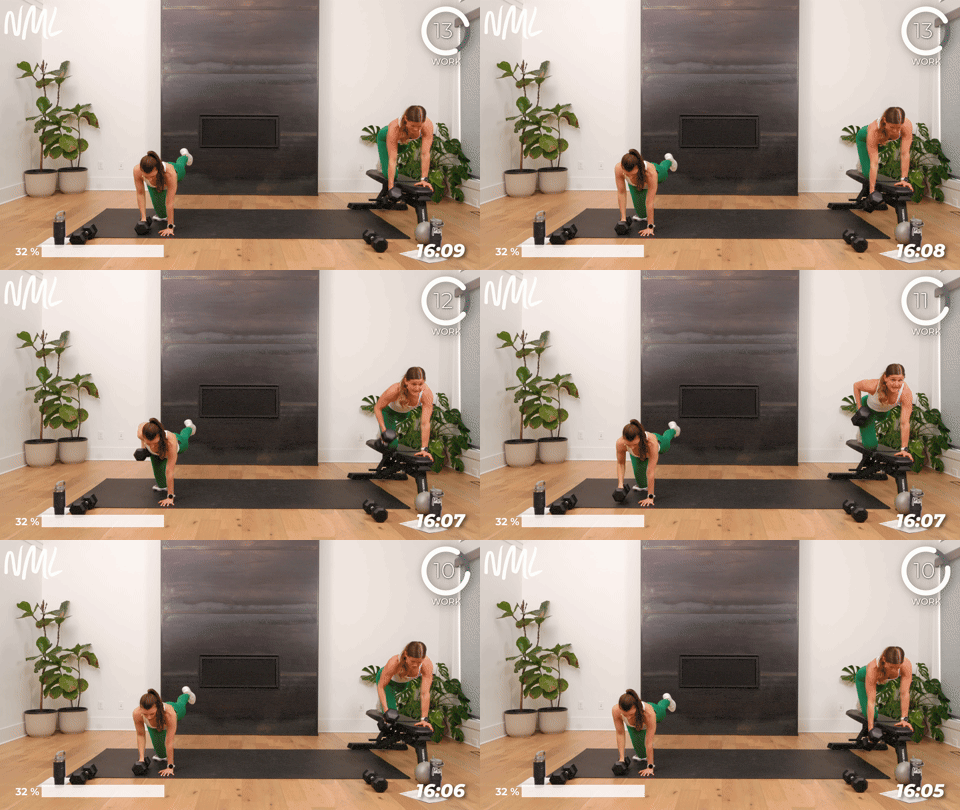
How to Do a Bird Dog Back Row
- Find a quadruped position on a bench or box, with your knees hip-width apart and hands firmly on the bench, about shoulder-width apart. Engage your core. Have 1 dumbbell on the bench in front of your left hand. Note that performing a bird dog row from a bench or box increases core engagement and gets a greater range of motion.
- Find a bird dog position by sending your opposite (right) leg back, floating it off the bench.
- Perform a single-arm row with your left arm, pulling the dumbbell back toward your left hip.
Modification: Perform this exercise from the ground if you don’t have a bench available.
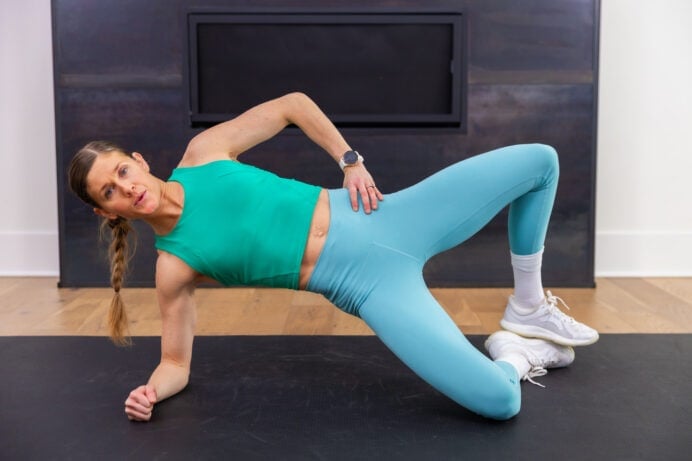
4. Copenhagen Plank
Targets: Internal and external oblique muscles (the muscles that run along the side of your core), transverse abdominus, hip abductors and hip adductors.
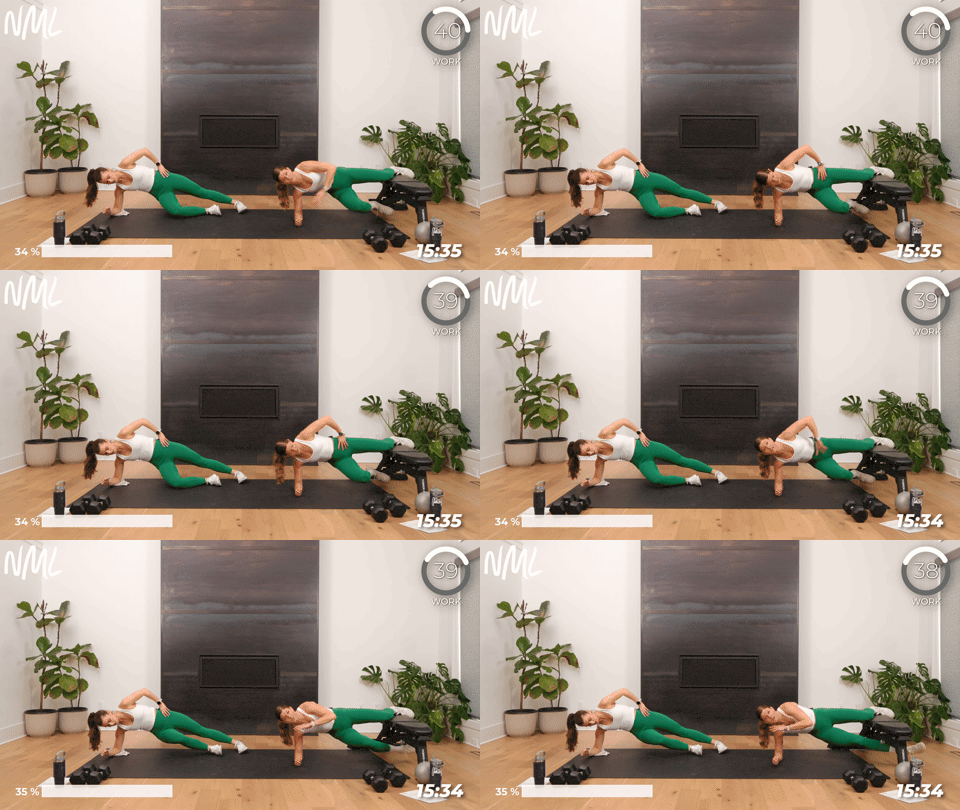
How to Do a Copenhagen Plank
- Start by lying on the left side of the body, left elbow resting on the floor directly beneath the left shoulder. Extend both legs out to the right side.
- Find a side plank position. Place the right knee/calf (top leg) on a stable bench while your bottom leg hovers just beneath it.
- Pull your left leg up towards the top right leg. Your left toes will tap the bottom of the bench that your right knee/shin is resting on.
- Hold for a moment, then lower the left knee back towards the ground with control and repeat.
Modification: Perform a modified side plank from the ground. Option to keep your bottom (left) knee on the ground for support. You can also float the bottom (left) knee off the ground, but keep the left foot on the ground for support.
5. Seated Twist
Targets: Upper abs, lower abs, obliques, core and hips.
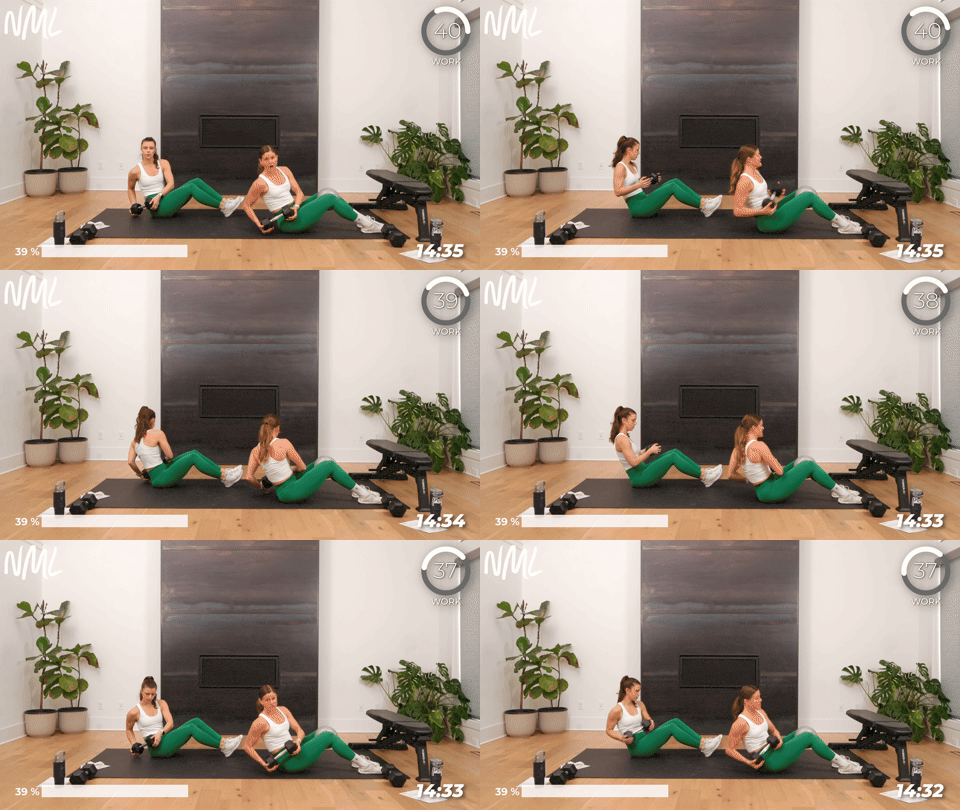
How to Do a Seated Twist (Russian Twist)
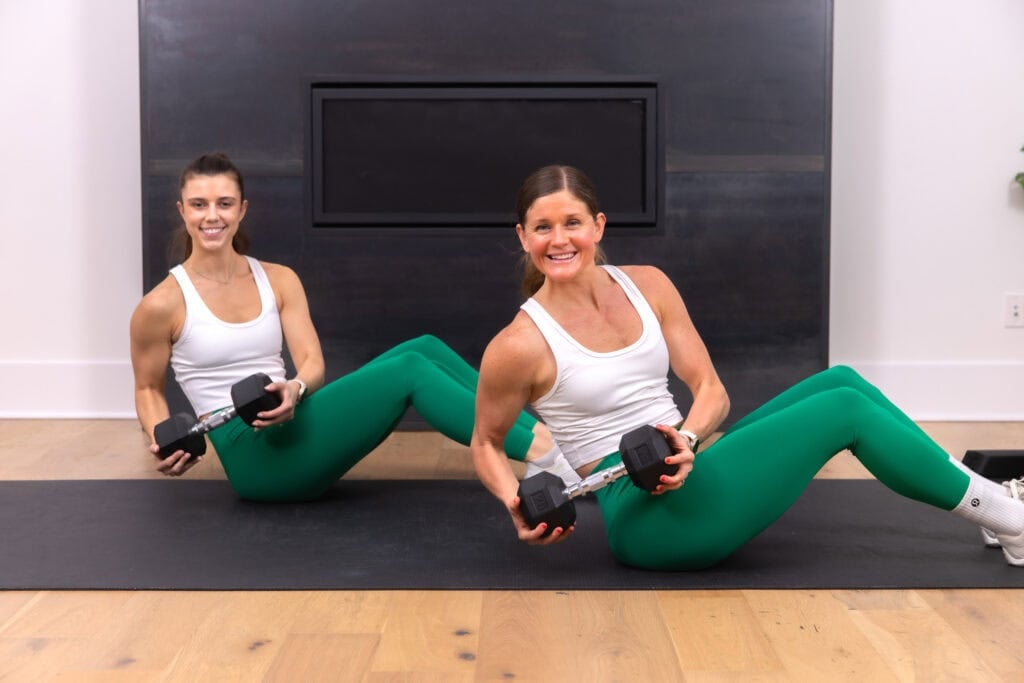
- Start in a seated position, sitting on your sit bones as you lean back; heels resting on the ground (option to float 1 or both feet to increase the intensity). Hold 1 dumbbell horizontally just in front of you. Option to place a Pilates ball between your knees to increase the intensity of the exercise (squeeze the ball between your knees).
- Pull your right elbow back towards your right hip as you rotate through your torso to tap the dumbbell to the mat near your right hip.
- Use your obliques and abs to return to center.
- Reverse the movement, pulling your left elbow back towards your left hip as you rotate through your torso to tap the dumbbell to the mat near your left hip.
Modification: Omit the dumbbell, making this a bodyweight exercise. Keep both heels on the ground to reduce the intensity.
FAQs
How often should I train the core?
This workout can be performed 1-2 times per week, depending on your overall program split and recovery. Because these exercises emphasize control and stability rather than maximal fatigue, they can also be integrated alongside strength or conditioning days.
I feel my hip flexors more than my abs – what should I do?
This is common, especially in movements like dead bugs and hip flexor crunches. Focus on slowing down the tempo, keeping your lower back gently pressed into the ground or bench, and reducing your range of motion if needed. Prioritizing control and proper positioning will help shift the emphasis back to your core over time.
Max 20: FREE 2-Week Functional Training Program
A 2-week at-home workout program, designed to make strength training simple and get results in the time you actually have.
If you liked this abs and core workout, download the FREE 2-Week Workout Plan.
Up Next:
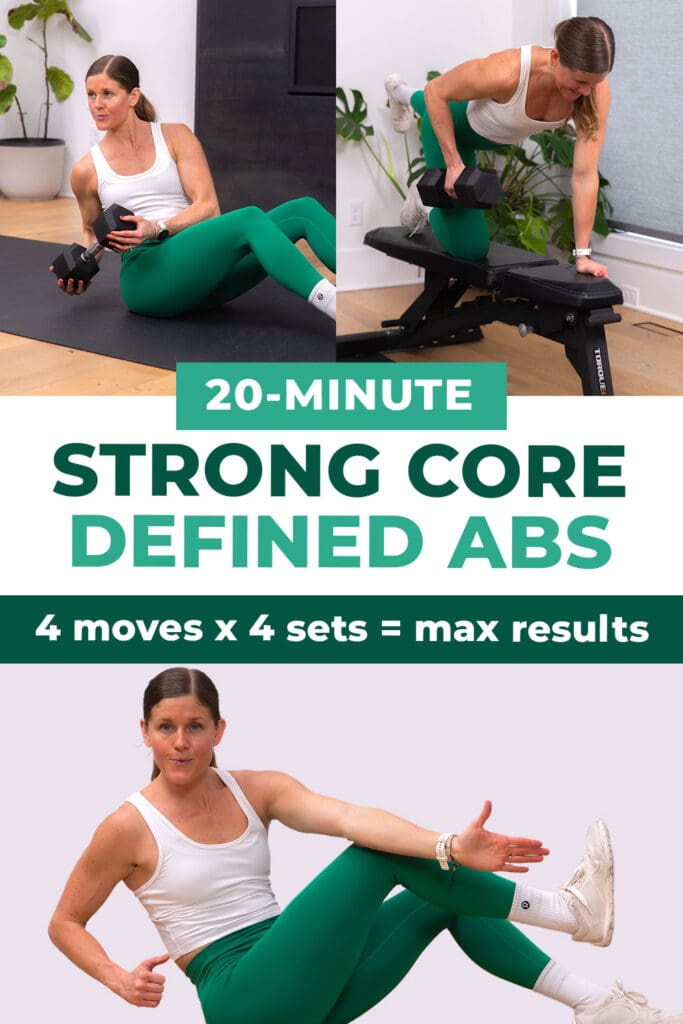
See AllPin This 20-Minute Core Workout
no comments