


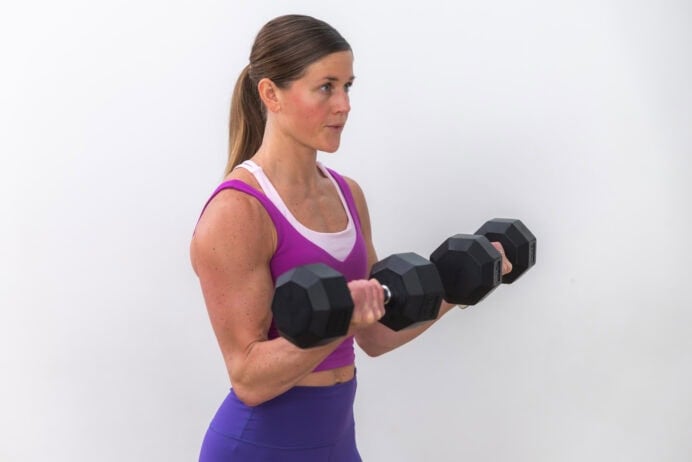






Workout Motivation: Tips to Boost Your Motivation
Motivation is tricky, and when it comes to working out, discipline is key. This post is meant to encourage and support busy women who want to stay consistent with their workouts even when motivation feels low. If you’re juggling family life, work and limited time but value strength, functional fitness and long-term health over quick fixes, this is for you. I’m sharing mindset shifts, practical motivation strategies and realistic workout guidance to help make progress sustainable in real-life seasons.
Quick Links:
- Identify Your Why
- Make Workouts Fit Your Life
- Motivation Boosters That Actually Work
- When Motivation Is Low
- FAQs
“How do I motivate myself to work out?” This is a question that lands in my inbox and DMs daily. If you’re a mom juggling kids, work, home life and everything in between, staying motivated to work out can feel like just another thing on your already full plate. As a mom of 3 and a personal trainer, I get it; there are seasons when motivation feels strong and tough times when it feels completely drained.
Workout motivation can feel especially hard as a mom or busy woman because energy, time and mental bandwidth are often stretched thin. Between interrupted sleep, fluctuating hormones, work demands and caring for others, it’s not a lack of willpower or discipline. Your body and nervous system are already carrying a lot. When you’re doing a lot for other people, there’s a good chance that your own priorities will start to take a backseat. I’ve been there myself, and there are seasons when simply showing up feels heavier than it used to.
This is why the advice to “just get motivated” doesn’t work. Motivation isn’t created in a vacuum… it’s not something you either have or don’t have – it takes hard work to show up every day. Sleep quality, stress levels, recovery, nutrition and emotional load impact motivation. On days when those things are off, forcing intensity usually backfires and leads to burnout. When it comes to fitness, you’re more successful when you can rely on discipline over motivation.
You’ve heard me say that “consistency compounds,” and part of that is showing up because you’ve created the habit. Motivation is something you build and reconnect with, especially when life gets busy. Learning how to support motivation instead of demanding it can help. That means choosing workouts that fit your current season, making them enjoyable and prioritizing strength and consistency over perfection.
Identify Your “Why”
Before we talk about workout plans, schedules or discipline, we have to start with your why. When you forget your reason for working out (or never fully define it), it becomes hard to stay consistent.
Your “why” isn’t about weight loss, shrinking your body or chasing a certain aesthetic. For most of us, it’s more meaningful. Your why might include:
- Gaining strength for daily life: Lifting kids, carrying groceries, moving furniture and preventing injury.
- Mental health and stress relief: Workouts as a reset button, not another source of pressure.
- More energy for parenting and work: Showing up with patience and focus.
- Long-term health and independence: Staying strong, mobile and capable as you age.
- Being a role model: Showing your kids that caring for your body matters.
When motivation feels low, and you simply don’t feel like working out, come back to this list. Write your why down and put it somewhere visible. Your workouts are meant to serve your life, not punish your body.
Make Workouts Fit Your Life
If your fitness plan requires perfect conditions, it’s not realistic for life or motherhood. Set yourself up for success by making your workouts fit your life. A few ways to do that might be:
- Early morning strength sessions before the house wakes up.
- Nap-time workouts you can finish in 20-30 minutes.
- Home workouts that don’t require travel or childcare.
Keep in mind that what works for your best friend might not work for you; that’s okay! And the schedule that works for you today might not work for you in a year. Again, that’s completely okay. Seasons change, and we have to be able to adapt to them. Functional, efficient training keeps motivation higher because it feels achievable. When you can consistently achieve goals, you’ll keep moving to the next level.
Time-Efficient Workouts
When I’m short on time and not feeling motivated, these are some of the best workouts to knock out. I can get these done in 10-20 minutes with minimal equipment. They’re great for naptime, a quick lunch break or whenever I can sneak in just a bit of time to myself. You can find more 10-minute, 15-minute, 20-minute and 30-minute workouts on my site!
- 10-Minute Morning Workout Routine
- 15-Minute All Standing At Home Cardio Workout (2,000 Steps)
- 15-Minute Workout: Full Body Strength (One Dumbbell)
- 20-Minute Workout At Home (No Repeats)
- 20-Minute Quick Full-Body Workout (All Standing)
- 20-Minute Quick Arm Workout
- 20-Minute Quick Leg Workout
- 20-Minute HIIT Workout
- 20-Minute Upper Body Dumbbell Workout (All Standing)
- 20-Minute Superset Leg Workout
Use Workout Programs Strategically
If you’re committing to a plan, it’s important to choose something that fits your goals. I would generally recommend looking for workout plans that are strength-focused, designed for busy schedules and built around real-life movement. These types of plans will get you the most bang for your buck. I’d personally recommend the following:
- 30-Day Beginner Workout Plan: If you’re new to lifting weights or are easing back into movement after time off, this is a great option.
- 3-Day Workout Split: If your schedule only allows you to train 3 days per week, this is the most effective combination of workouts you can do.
- 7-Day Weekly Workout Plan: If you’re looking for a simple, effective weekly workout schedule that combines strength training and HIIT, this is a great option.
- 2-Week Functional Strength Training Program: If you’re looking for time-efficient, functional workouts that will help you build strength, this is your plan. Each of the workouts can be done at home in just 20 minutes per day.
- 2-Week Progressive Overload Workout Plan: If your goal is to build serious strength and muscle definition, this 2-week plan will help you achieve those goals in just 30 minutes a day.

Motivation Boosters That Actually Work
Being specific about your goals is really helpful when you’re struggling with motivation. If your only goal is to “work out more,” motivation will fade quickly. Instead, I’d encourage you to set progress-based goals like:
- Getting your first unassisted pull-up.
- Completing push-ups from your toes.
- Completing all scheduled workouts for the week or month.
- Feeling stronger carrying your kids or laundry baskets.
Performance-based and habit-based goals keep motivation high because they’re empowering.
When I need the extra push or a motivation “booster,” I lean on the following:
- Habit Stacking: Attach your workout to an existing habit (for example, have your coffee, then workout, then take the kids to school drop-off). This removes decision-making and makes workouts feel automatic.
- Track Strength: Logging weights, reps or first-time achievements shows real progress and builds confidence (even when body changes are slow).
- Track Energy, Mood and Stress Levels: Noticing how workouts improve your day reinforces why you train beyond physical results.
- Consistency Streaks: Tracking how many weeks you’ve shown up builds momentum and motivation through small wins.
- Music, Podcasts or Audiobooks as Incentives: Save favorite content for workout time – this turns training into something you look forward to. Music can act as a distraction! Have specific gym music or workout songs that increase dopamine and give you energy.
- Lower the Entry Point: Commit to just the warm-up or first circuit. Starting is often enough to carry you through.
- Train for Performance (Not Punishment!): Focusing on what your body can do keeps motivation rooted in empowerment rather than guilt.
- Follow a Program (Don’t Wing It): Clear structure eliminates decision fatigue and keeps workouts from feeling overwhelming.
- Plan Workouts Like Appointments: Scheduling training time increases follow-through and reinforces that your health matters. Put it on your calendar.
- Celebrate Non-Scale Wins: Better sleep, less back pain, improved posture and more patience are powerful motivators.
- Train in Seasons: Allow intensity to ebb and flow with life demands. This keeps fitness sustainable long-term.
When Motivation Is Low
There will be times when motivation is low. You won’t be able to avoid it. On hard days, don’t ask, “Do I feel motivated?” Ask, “What’s the smallest step I can take right now?” Set goals you can stick to. That might be putting on workout clothes, doing a 5-minute warm-up, or completing just the first circuit. Most of the time, starting is the hardest part. Momentum follows action (not the other way around).
When you’re tired or really struggling to get started, lean into the movement that feels good for you. Consider:
- Micro-Workouts: Short, 5-10-minute workouts that can be incorporated into your day when you have a burst of energy or just have a few minutes to move. Remember, 10 minutes is better than none!
- Low-Energy Options: Walking and mobility work are great forms of movement! If a longer strength or HIIT workout feels out of the question, try taking a walk around the block or stretching for a few minutes.
- Permission to Modify: Adjust the weights you’re using or the number of sets or reps you complete.
- Avoid the “All-Or-Nothing” Mindset: You don’t have to show up perfectly every single time. Adjust your workout days to fit your schedule, but don’t let one bad day throw you completely off course!
- Find a Workout Buddy: Motivation thrives in community. Having someone to give you a pep talk and keep you accountable and encouraged is a great option when fitness motivation is low. Join a fitness community where progress is celebrated, or train alongside someone in a similar season who understands your schedule.
FAQs
How do I avoid workout burnout?
Workout burnout usually happens when you’re doing too much, too intensely, for too long. To avoid burnout: train with intention, follow a structured plan, build in rest and deload weeks and adjust your schedule with your season of life. More is not always better. Focus on quality strength sessions instead of trying to do everything. Having a clear program removes guesswork and prevents you from overtraining. Keep in mind that there will be weeks when bodyweight, lighter weights, fewer workouts or shorter sessions are exactly what your body needs – lean into that. Staying consistent long-term requires respecting your energy, stress levels and recovery.
How do you find motivation to finish a workout and not give up halfway through?
When motivation dips halfway through your workout, try breaking the workout into smaller chunks. Focus on finishing just the next set or circuit. You can also permit yourself to modify. Lighter weights, fewer reps or longer rest can help you keep going without quitting. Remind yourself of your why and celebrate showing up. Completing a workout imperfectly is still a win. Remember that finishing doesn’t have to mean giving 100%; it means not giving up on yourself.
Should you train to failure or leave reps in reserve?
For most women, leaving reps in reserve is the better and more sustainable approach. Training to absolute failure every workout can increase fatigue and soreness, slow recovery, increase injury risk and make workouts mentally draining. I recommend that you aim to stop most sets with 1-3 reps left in the tank. This allows you to build strength effectively, recover better between sessions and stay consistent week after week. Training smarter (not harder) helps you stay motivated, injury-free and strong for the long haul.
A Word of Encouragement
You won’t feel motivated every week, and that’s normal. What matters most is having systems in place that support you when motivation dips.
Strong habits, flexible expectations and a meaningful “why” will carry you through busy seasons and help you get to the finish line.
You’re not failing if motivation feels low – you’re human. Keep showing up, even imperfectly. You’re already doing a lot. Your workouts should support you, not drain you.
More Posts
Educational FitnessPin This: Tips to Boost Your Workout Motivation

no comments
More from
Fitness Education




Leave a Comment