



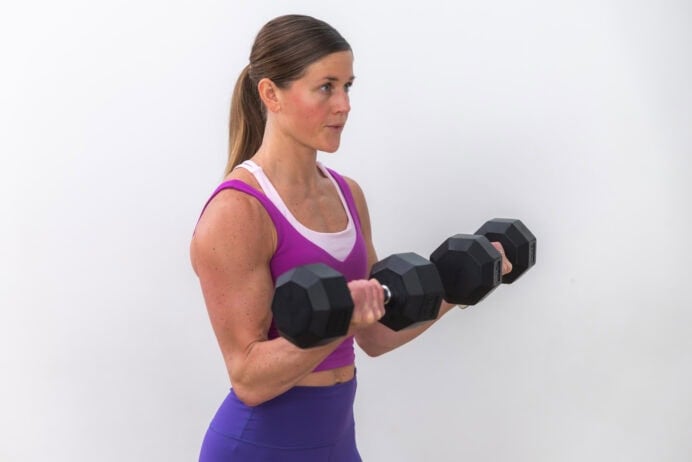





Training to Failure
As a personal trainer, I’m constantly seeing new fitness trends and training methods gain popularity. One approach you may have heard about is training to failure, which consists of performing an exercise or movement until you reach muscle failure. But is training to failure necessary for making progress, and should it be part of your workout routine? Let’s take a closer look at the potential benefits and drawbacks, and whether it’s right for you.
Training to failure is used for several reasons; the most common is the perceived time required to increase muscle mass and strength when used as a regular training tool. Training to failure gained widespread attention through Arthur Jones and his High-Intensity Training philosophy. It was later popularized by bodybuilders like Mike Mentzer and 6-time Mr. Olympia, Dorian Yates.
It’s tempting to see the results of a successful athlete and assume the same training plan will produce the same results. The question is whether the research supports the claim that training to muscular failure is the only, or even the most effective, way to reach your personal fitness goals.

What Does Training to Failure Mean?
Simply put, training to failure means performing repetitions until you can’t complete another one. Sounds pretty straightforward, right? Not all “failure” is the same, though. You can train more effectively and reduce unnecessary fatigue by understanding the different types of failure:
- Technical failure: This is where proper form begins to break down, and you are unable to complete another quality repetition. Often, this is the safest place to end a set. Continuing can create a prime opportunity for compensation or poor movement patterns.
- Muscular failure: Or “true muscular failure” occurs when the target muscle can no longer complete another repetition with proper form, even when you’re giving maximum effort.
- Absolute failure: The point where another repetition simply isn’t possible. In other words, even with momentum, cheating or assistance from a spotter, you cannot complete another repetition. This creates the greatest amount of fatigue and is rarely necessary for most recreational lifters.
One of the easiest ways to measure how close you are to failure is by using reps in reserve (RIR). Rather than focusing on the number of completed repetitions, RIR estimates how many quality reps can be performed before reaching muscular failure.
- 3 RIR: You could complete about three more repetitions.
- 2 RIR: You could complete about two more repetitions.
- 1 RIR: You could complete one more quality repetition.
- 0 RIR: You have reached muscular failure.
If all of this sounds complicated, don’t worry. With a little practice, you’ll get surprisingly good at estimating how many reps you have left in the tank.
A big misconception in strength training is that training to failure is a must for building muscle. Fortunately, that’s not the case. Research shows you don’t have to reach muscular failure to stimulate muscle growth, hypertrophy and strength gains. This is typically achieved by leaving 1-3 RIR and allows for better recovery between workouts.
It’s also important to remember that training to failure depends on the exercise and the individual. Taking a set of bicep curls to failure is very different than pushing a heavy bench press or pull-ups to absolute failure. Your experience level, exercise selection, training volume and overall fitness should all influence frequency and necessity for how often you choose to train to failure.
The Benefits
When used strategically, training to failure can be a valuable tool in your strength training program. Like any training tool, the benefits come from using it intentionally and not from taking every exercise to failure. Some of the biggest benefits include:
- Can promote muscle growth: Training close to or at muscular failure creates a strong stimulus for hypertrophy and muscle growth by recruiting more muscle fibers.
- Especially useful with lighter weights: Taking lighter weights closer to failure can still provide an effective strength-training stimulus by requiring your muscles to work harder as fatigue builds. This is especially useful when heavier weights aren’t available or aren’t appropriate for the exercise or your current fitness level.
- Helps gauge workout intensity: Occasionally reaching failure can help you better understand what true effort feels like. Many people stop a set because of discomfort and not because of actually reaching their limit.
- Builds mental toughness: Knowing the difference between discomfort and true muscle fatigue comes from pushing through challenging repetitions. Occasionally pushing through challenging repetitions can help build confidence and teach you what a hard-working set actually feels like.
- Can improve training efficiency: Sometimes life only gives you 30 minutes to work out. Strategically taking a few sets close to failure can help you maximize that time without adding more exercises or more total training volume.
- Provides a benchmark for future progress: If you are struggling to find your RIR, occasionally training to failure can help. Understanding your true RIR will make it easier to choose appropriate weights and monitor improvements over time.
Potential Drawbacks
As with any training method, training to failure has potential drawbacks. Most of these drawbacks come from training to failure too often or without a clear purpose. Before making it a regular part of your strength training routine, consider the following:
- Increased fatigue and recovery demands: Training to failure creates more stress on your muscles and nervous system, making recovery even more important. Without enough rest, sleep, hydration and proper nutrition, your performance may begin to decline.
- Form can break down: Maintaining proper form becomes more difficult as fatigue builds. Poor technique reduces the effectiveness of an exercise and increases unnecessary stress on your joints and connective tissue.
- Can reduce overall training volume: Taking every set to failure may leave you too fatigued to complete additional quality sets or exercises. Implementing a well-established RIR can help maintain a higher overall training volume throughout your workout.
- May increase the risk of overtraining: Constantly pushing every workout to the limit without enough rest and recovery can contribute to excessive fatigue, stalled progress and symptoms of overtraining over time.
- Not ideal for every exercise: Taking isolation exercises like bicep curls to failure is generally much different than reaching failure on heavy compound lifts like the bench press. Exercises involving heavier loads or greater technical skill often carry higher risks when fatigue causes your form to break down.
- May not be appropriate for everyone: If you are a beginner, returning from an injury or still learning proper form, then training to failure may not be for you. You’ll likely benefit more from mastering proper form, building consistency and using progressive overload before regularly incorporating training to failure.
How to Determine Training Intensity
Determining your training intensity should focus on choosing a level of effort that matches your fitness level, goals and ability to recover rather than training to failure. While training to failure has its place, it is by no means the standard for every workout.
One of the easiest and most common ways to monitor your training intensity is through RIR. Staying within your target RIR helps keep your training close enough to failure to promote muscle growth while managing fatigue. Reaching 0 RIR, or true muscular failure, may be appropriate on select exercises, but it isn’t necessary for every set.
It’s also important to remember that training intensity is only a single piece of the puzzle. Progressive overload, appropriate training volume and consistency are what drive long-term progress. Making adjustments such as adding weight and repetitions or improving your technique will likely be more effective in the long term.
For many people, training close to failure is a more sustainable approach. Leaving 1-3 reps in reserve allows you to challenge your muscles while maintaining proper form, recovering more effectively and showing up ready for your next workout.
Ultimately, the best training intensity is the one that helps you make consistent progress while fitting your goals, recovery and lifestyle.
Best Safety Practices
When training to failure, safety must be a priority. If you’ve spent enough time in a gym, you’ve probably seen someone push a little too far. Fortunately, many of those accidents are completely avoidable.
Be sure to choose exercises that allow you to safely push your limits. Machine exercises and isolation movements like bicep curls generally allow you to train closer to muscular failure with less risk than complex compound lifts.
Make sure to have a reliable spotter when training to failure on complex compound lifts like bench presses and squats. Remember to use safety bars when training alone or whenever a spotter isn’t available.
Proper form should always come first, no matter which exercise you choose. When your technique begins to break down, end the set! Remember, training to failure is a tool and not the goal. Training strategically, listening to your body and allowing adequate recovery will help you make steady progress while reducing your risk of injury.
Is Training to Failure Right for You?
The decision to implement training to failure in your workout routine depends on your experience level, fitness goals, exercise selection and ability to recover. Because it is not a requirement for building muscle or getting stronger, take these considerations into account.
Training to failure may make sense for:
- Experienced lifters who are comfortable and confident in their ability.
- Those focused on hypertrophy or building muscle.
- Machine-based or isolation exercises.
- Individuals with limited workout time.
Training to failure may not be the best choice for:
- Beginners developing form and routines.
- Anyone struggling with recovery, poor sleep or excessive fatigue.
- Those recovering from an injury or living with a medical condition.
- People performing technically demanding compound lifts.
- Anyone who feels pressured to reach failure on every set.
Ultimately, the best training program is one that matches your goals, supports your recovery and keeps you progressing safely over time.
FAQs
Can beginners train to failure safely?
Beginners generally don’t need to train to failure to build strength or muscle. Instead, focus on learning proper form, developing consistent strength training habits and leaving a few reps in reserve before ending each set.
How often should you train to failure?
Training to failure can be an effective tool, but it shouldn’t be used on every exercise or every workout. Most people benefit from using it strategically on select exercises while balancing recovery, training volume and overall workout intensity.
Should you train to failure on every set?
No. Taking every set to muscular failure can increase fatigue, reduce training volume and make recovery more difficult. Most strength training programs produce excellent results by stopping one to three repetitions short of failure on most sets and saving true failure for specific exercises or occasions.
Getting Stronger, One Rep at a Time
Training to failure has been debated in the fitness community for decades, but it’s simply another tool in your training toolbox. Whether you choose to train to failure or stop with a few reps in reserve, long-term progress will always come down to consistency, progressive overload and proper recovery.
Never let your ambition make the decision that your technique should be making. Focus on moving well, training with purpose and choosing an approach that fits your fitness goals, recovery and lifestyle.
Keep showing up, keep putting in the work and keep getting stronger – one rep at a time.
More Educational Fitness Posts
Functional Strength Training
This post includes affiliate links. I do earn a commission for products purchased using these links (at no additional cost to you). Thank you for supporting Nourish Move Love, making the content you see on this blog possible.
no comments





Leave a Comment