









Signs of Overtraining
Overtraining, or Overtraining Syndrome (OTS), results from excessive or cumulative exercise stress without adequate rest and recovery, particularly when sleep, nutrition and rest are inadequate. Let’s take a more in-depth look at what causes it, how to avoid it and how to bounce back if you have already found yourself pushing beyond what your body can handle.

What Causes Overtraining?
Overtraining or OTS happens when you don’t give your body enough time to recover after repeated and consistent stress that accumulates from exercise. Some of the main causes of overtraining include:
- Training too hard or too often: Frequent exercise at high intensities or increasing your training load too quickly can leave your body without enough recovery time.
- Not getting enough recovery: Rest days allow your body to repair and adapt to training. Consistently skipping rest days or training the same muscle groups without adequate recovery can increase fatigue and stress.
- Poor sleep: Sleep plays an important role in physical and mental recovery. Consistent poor sleep can make it harder for your body to recover from demanding workouts.
- Not eating enough: Under-fueling your body can make it harder to recover and may contribute to excessive fatigue. Your body needs adequate calories and nutrients to support both physical activity and recovery.
- Dehydration: Fluid loss without replacement can impair performance and recovery.
- Too much stress outside the gym: Exercise isn’t the only source of stress your body has to manage. Work, family responsibilities, poor sleep and other sources of physical or emotional stress can add to your overall recovery demands.
- Ignoring warning signs: Continuing to increase your training load despite persistent muscle soreness, excessive fatigue, poor sleep, declining performance or lack of motivation can allow a manageable recovery problem to become more serious.
Normal Fatigue Versus Overtraining
The post-workout slump after a challenging workout is normal. Muscle soreness, temporary fatigue and even a short-term dip in performance can be signs that your body is responding to a new or demanding training stimulus.
The key difference to watch out for is the length of time and duration of those symptoms, as well as whether your body is recovering between workouts. Normal fatigue should improve with adequate rest and recovery, allowing you to return to your usual activities and performance. Overtraining is more persistent and occurs when training stress repeatedly exceeds your body’s ability to recover.
Pay attention if fatigue, muscle soreness, poor sleep or declining performance continue despite taking rest days. Another sign to watch for is when workouts that once felt manageable start to feel unusually difficult. You may also notice changes in your mood, motivation or overall well-being.
Signs and Symptoms of Overtraining
Recognizing the signs of overtraining can help you identify when your body needs more recovery. One symptom by itself doesn’t mean you’re overtraining or in danger of developing OTS, but a combination of persistent physical, performance-related and mental or emotional changes may indicate that your current training load is too much for your ability to recover.
Symptoms vary widely from exercise-related physical difficulties to draining mental and emotional challenges. These symptoms can be easy to dismiss as the normal aches and frustrations that come with working hard, which is why recognizing the difference between normal training fatigue and OTS matters.
Physical Signs
Some of the physical signs to be aware of can mask themselves as a direct result of heavy and consistent exercise, which by themselves are not inherently bad; however, when these signs and symptoms become persistent or unmanageable, that’s when you really need to start paying attention. Some physical signs you might be overtraining include:
- Persistent muscle soreness: Normal muscle soreness should gradually improve with recovery. Soreness that doesn’t seem to resolve or continually returns, such as joint pain and stress fractures, may be a sign that you’re not allowing your body enough time to recover.
- Excessive fatigue: Feeling unusually tired throughout the day, even outside of your workouts, can indicate that your body isn’t adequately recovering from your training load.
- Poor sleep: Overtraining can be associated with difficulty falling asleep, disrupted sleep or even short-term insomnia, which can leave you feeling unrefreshed despite getting enough time in bed.
- Frequent illness: Increased training stress combined with inadequate recovery can affect the immune system and leave you feeling run-down and more susceptible to getting sick or catching colds.
- Changes in appetite: An increase or loss of appetite can sometimes accompany excessive training stress.
- Hormonal imbalances: Prolonged periods of excessive training combined with inadequate recovery can affect hormonal function, which may contribute to irregular menstrual cycles, libido, mood or energy levels.
- Digestive health: excessive training without proper recovery can affect your digestive health as well, resulting in constipation, diarrhea, nausea and stomach cramps.
- Unexplained weight loss: Significant or unintentional weight loss can occur when training demands consistently exceed the body’s available energy and recovery resources. If weight loss occurs alongside persistent fatigue, declining performance or other symptoms, it may be a sign that your training load or nutrition needs to be reassessed.
Performance-Related Symptoms
As a personal trainer, I see performance dips differently. It can feel like a logical step to increase your effort and workload when you feel that you have plateaued in your fitness journey. While this can be a good motivator to kickstart a new performance level, it might also be a sign that you pushed things a little too far.
- Declining performance: One bad workout isn’t necessarily concerning, but consistently struggling to maintain your usual strength, endurance, pace or workout intensity may be a warning sign.
- Longer recovery times: If you find you need significantly more time to recover between workouts than you normally do, your current training load may be exceeding your recovery capacity.
- Workouts feel harder than usual: Exercises that once felt manageable may suddenly feel much more difficult, even when your workout hasn’t changed.
- Loss of progress: Consistently training harder without seeing improvement, or beginning to move backward, can indicate that your body needs additional recovery rather than more training.
Mental and Emotional Signs
Overtraining isn’t only physical. Excessive training stress can also affect your mental and emotional well-being and may show up in the forms of:
- Agitation or mood swings: Moodiness and confusion can be associated with overtraining as well as becoming easily frustrated, irritable or more emotionally drained than usual. Sudden unexplained mood changes can be a warning sign of overtraining.
- Loss of motivation: A workout routine that you normally enjoy may begin to feel like a chore, or you may find yourself consistently avoiding exercise.
- Inability to concentrate: Persistent fatigue can make it harder to focus on work, school, family responsibilities or other daily activities.
- Feeling burned out: When physical and mental fatigue continue to build, exercise can stop feeling rewarding and begin to feel overwhelming.
The important thing is to look for patterns, not a singular bad day. If several of these symptoms persist despite adequate rest and recovery, it may be time to reduce your training load and consider talking with a healthcare professional about what could be going on.
How to Recover
If you recognize signs that you may be pushing your body beyond its ability to recover, the answer isn’t to simply work harder. Recovery begins with reducing your training load and giving your body the time and resources it needs to adapt.
This gives your parasympathetic nervous system, often referred to as the “rest and digest” system, an opportunity to support recovery. The parasympathetic nervous system plays an important role in functions such as digestion, heart rate regulation and relaxation, which are important when your body is recovering from physical stress.
Depending on the severity of your symptoms, this may mean taking additional rest days, reducing workout intensity or temporarily stepping away from exercise altogether.
Prioritize the basics first:
- Take rest days: Give your body time to recover from demanding workouts, especially if fatigue, soreness or declining performance persist.
- Prioritize sleep: Quality sleep supports physical and mental recovery. Aim for a consistent sleep schedule and enough sleep to wake feeling rested.
- Fuel your body: Adequate calories, protein and other nutrients provide the energy and building blocks needed for recovery.
- Stay hydrated: Replace fluids lost through exercise and maintain hydration throughout the day.
- Manage stress: Remember that workouts aren’t your only source of stress. Work, family responsibilities and other demands can all affect your ability to recover.
- Reduce your training load: When returning to exercise, decrease your workout intensity, volume or frequency rather than immediately returning to your previous routine.
- Return gradually: As your symptoms improve, slowly rebuild your exercise routine and pay attention to how your body responds.
Most importantly, don’t treat rest as a setback. Recovery is part of training! Your body needs time to repair and adapt to exercise, and taking that time can help you return to your fitness routine stronger and more prepared for your next workout.
If symptoms are persistent, severe or interfering with your daily life, talk with a healthcare professional rather than assuming exercise is the cause. Persistent fatigue, declining performance or other unexplained symptoms may have causes unrelated to your training.
FAQs
How can I prevent overtraining?
Start by balancing your training load with enough rest and recovery days and then gradually increase workout intensity or volume. Prioritize your sleep, nutrition and hydration, and pay attention to signs like excessive fatigue, poor sleep or declining performance. These steps can help prevent training stress from consistently exceeding your ability to recover.
What is the difference between overreaching and overtraining?
Overreaching is a short-term period of increased training stress that can cause temporary fatigue or a dip in performance, while overtraining involves a more persistent inability to recover and a decline in performance. Overreaching can occur intentionally as part of a training program, but insufficient recovery can allow excessive training stress to progress into a more serious problem.
How is overtraining syndrome treated?
The first step in addressing suspected overtraining is to reduce or temporarily stop the training that is contributing to the problem and allow the body to recover. Sleep, adequate nutrition, hydration and stress management are important during recovery, with a gradual return to exercise once symptoms improve. A healthcare professional should evaluate persistent or concerning symptoms.
Listen to Your Body
Many of the problems associated with excessive training can be avoided through planning, but your body can be one of your best indicators that it is time to shift your focus toward recovery. Focus on what matters most: rest, recovery and forward momentum. You don’t have to have a perfect training plan to keep making progress, stay healthy and keep crushing your goals.
More Posts
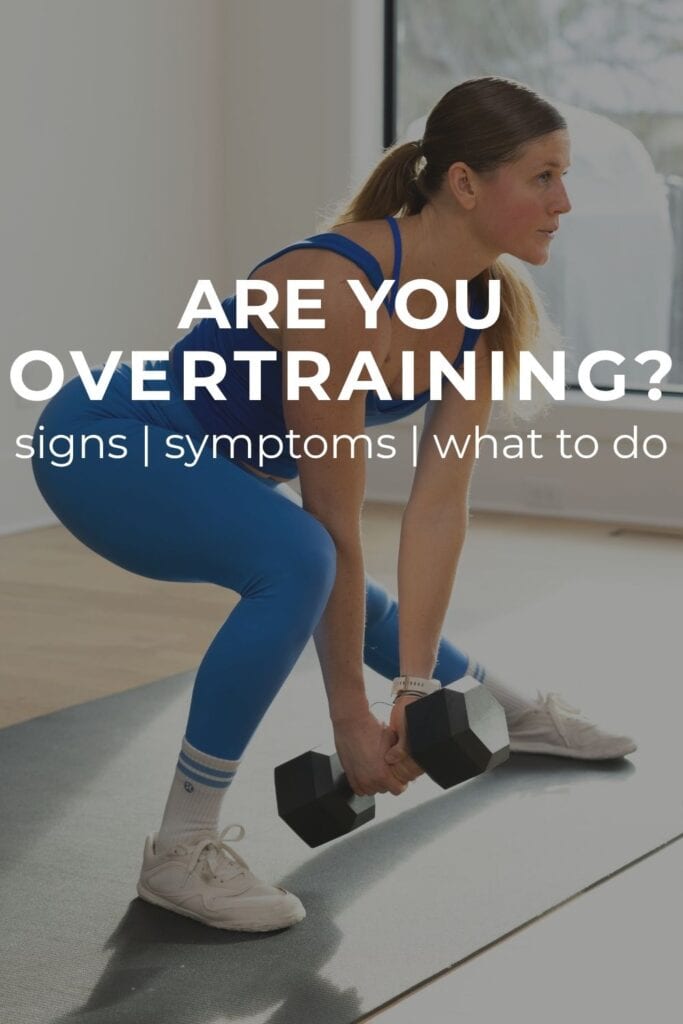
Educational FitnessPin This: Signs You’re Overtraining
This post includes affiliate links. I do earn a commission for products purchased using these links (at no additional cost to you). Thank you for supporting Nourish Move Love, making the content you see on this blog possible.
no comments





Leave a Comment