


12 Effective Thigh Exercises
Struggling with balance or knee pain? Looking to strengthen and tone your thighs at home? These 12 exercises use abduction and adduction through lunges, squats and strength movements to target the whole lower-body muscle group. The abductors, adductors, quadriceps, hamstrings and glutes all get put to work with this quick and effective workout. Grab some floor space and let’s get to work!
A Brief Overview
As a personal trainer, I often see lower-body routines that prioritize thigh and glute aesthetics while overlooking critical components of women’s health, such as pelvic stability, mobility and functional strength.
These exercises are a great way to get a lot of work done in a short amount of time. Adding them into a High-Intensity Interval Training (HIIT) workout or using them to warm up your lower body before a heavy strength session is an excellent way to ensure you are targeting an important group of muscles.
Also, consider adding these exercises to your daily routine as a standalone workout by using different combinations of all 12 movements. Rotating through the exercises can help train the lower body more evenly while reducing the risk of overtraining any single area.
All 12 exercises can be scaled by adjusting weight, reps and sets to accommodate different fitness and difficulty levels. Be sure to consult a healthcare professional before beginning exercise if you are recovering from an injury or surgery.
Equipment to Have on Hand
Dumbbells. Optional resistance band, glider and chair.
Instructions
Choose 3-5 exercises from the list below and follow these rep and set ranges:
- Beginners: Aim for 2-3 sets of 8-10 reps
- Intermediate: Aim for 3-4 sets of 10-12 reps
- Advanced: Aim for 4-6 sets of 12-15 reps
Thigh Exercises Outline
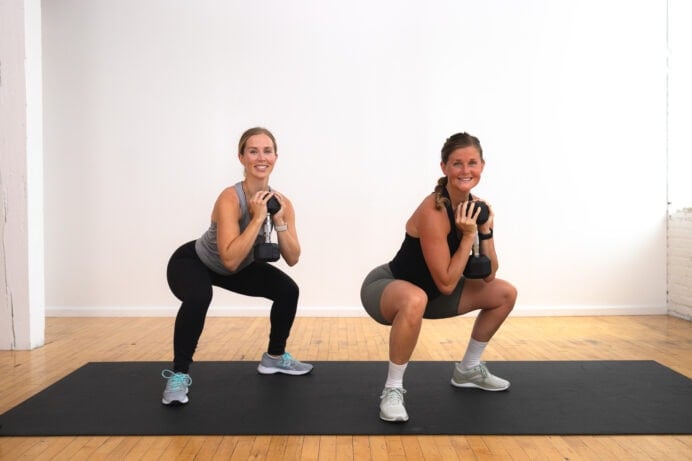
1. Goblet Squat
Targets: Legs, glutes, quads, hip adductors and hip abductors. Holding a weight at the chest also increases core activation.
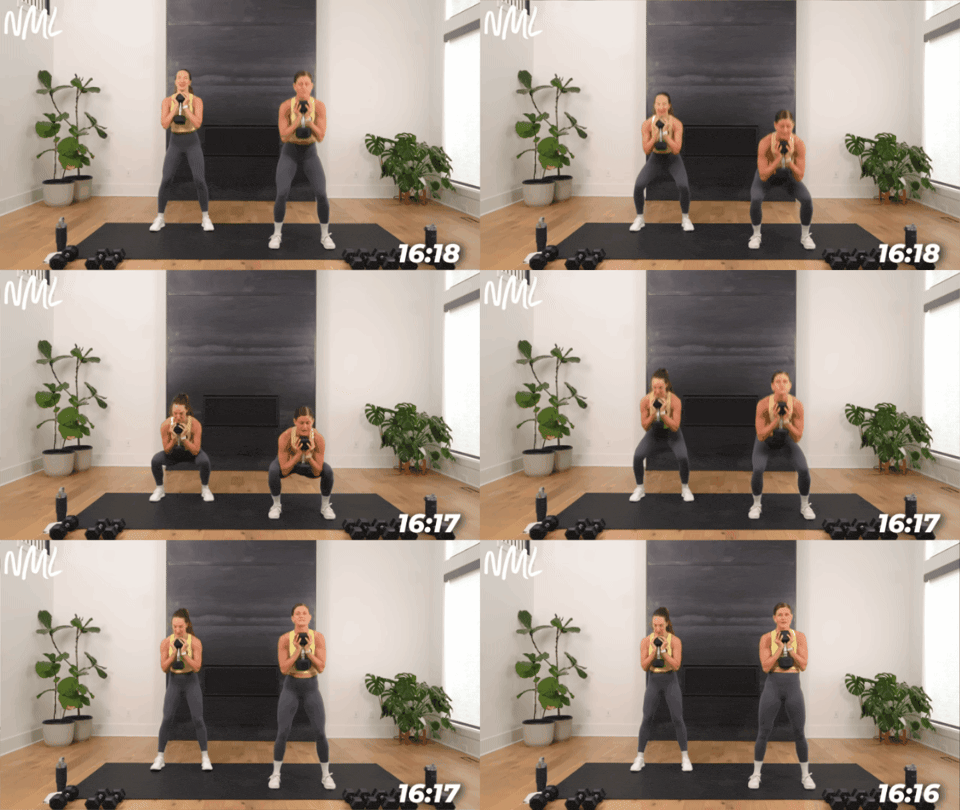
How to Do a Goblet Squat
- Start standing, feet shoulder-width apart or slightly wider. Hold a single dumbbell at chest level.
- Lower down into a squat position, keeping your hips down parallel to your knees. Drive your knees out toward your pinky toes.
- Then drive through your heels to stand all the way back up, reaching full hip extension at the top, returning to the starting position.
2. Sumo Squat
Targets: Legs, glutes, quads, hamstrings, hips, outer thighs and glutes (gluteus medius and abductors) and inner thighs (adductors).
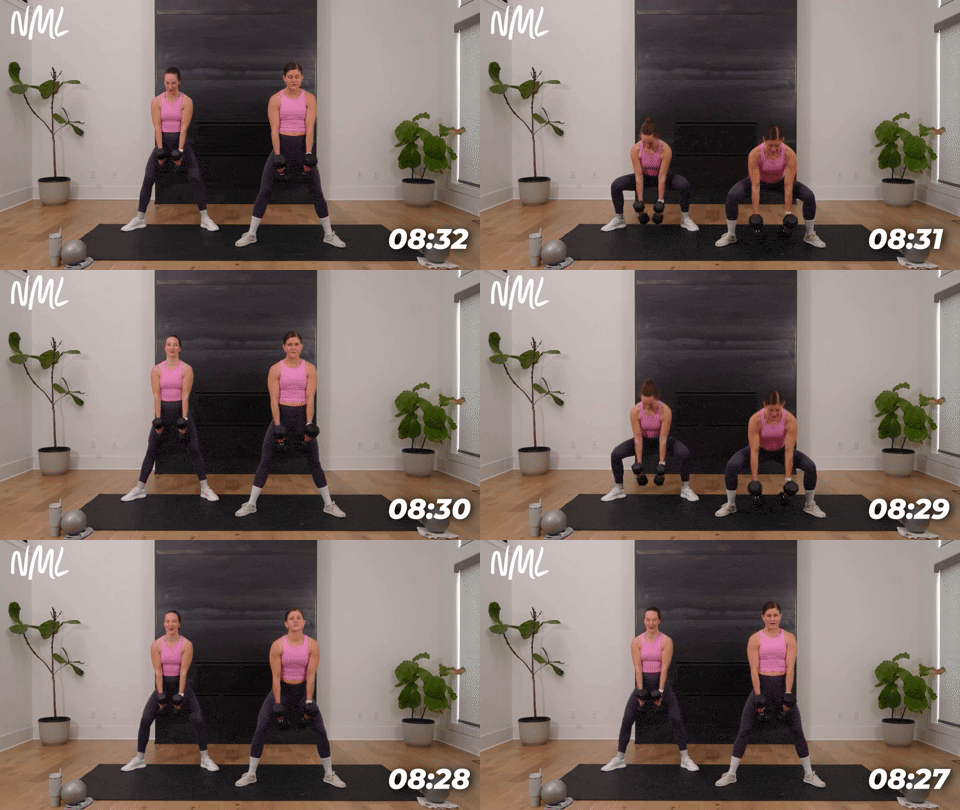
How to Do a Sumo Squat
- Stand with feet wider than hips, heels in and toes pointed out (sumo squat stance). Hold a pair of dumbbells between your legs.
- Bend your knees to lower down into a sumo or plie squat, pushing your knees out towards your pinky toes as you drop your hips parallel to your knees.
- Drive through your heels, squeezing your glutes and pulling your inner thighs together to stand tall.
3. Romanian Deadlift
Targets: Gluteus maximus, hamstrings, erector spinae and your core, also known as the posterior chain. Additionally, the Romanian Deadlift can challenge the lats, upper back, forearms and grip strength.
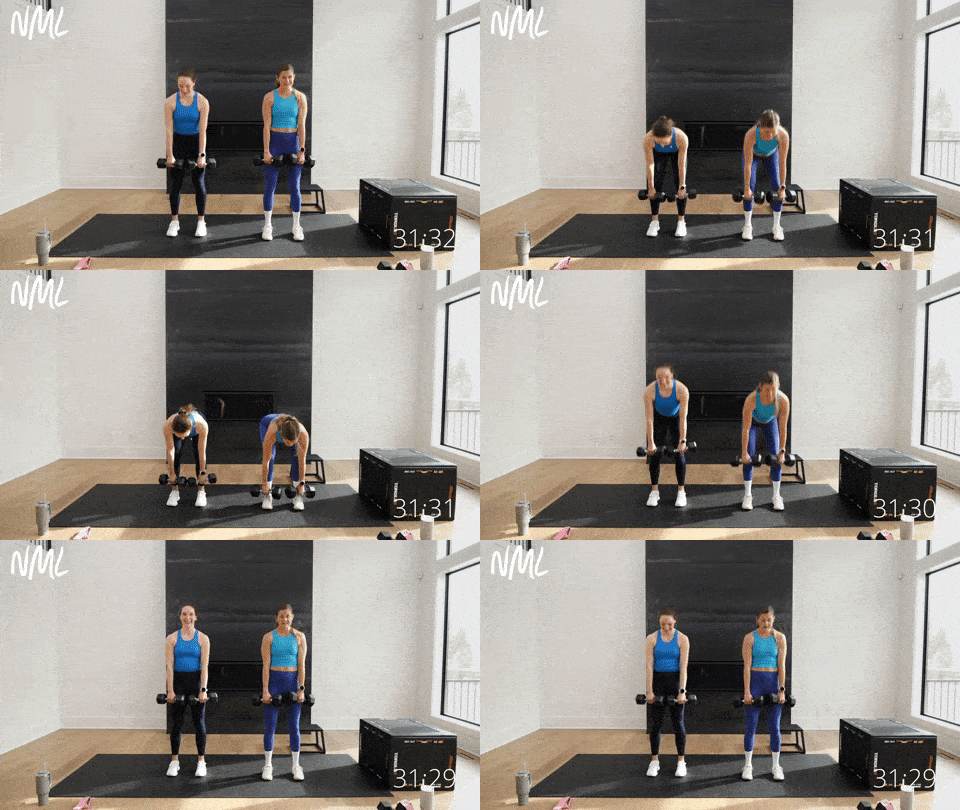
How to Do a Romanian Deadlift
- Start with your feet about hip-width apart while holding your dumbbells. Hold your dumbbells in an overhand grip at or around hip level.
- From the start position, be sure to set your posture by pulling your shoulders back, keeping your chest proud and your spine neutral.
- Begin the movement by hinging at the waist and moving your hips back, keeping a slight bend in your knees.
- Lower the weight slowly and with control along your legs until you feel a strong stretch in your hamstrings. A good point of reference is about mid-shin.
- Be sure to keep the dumbbells close to your body throughout the movement.
- Maintain this position by driving your hips forward and returning to the standing position. Squeeze your glutes at the top of each rep for full engagement of the posterior chain.
4. Sumo Deadlift
Targets: Legs, glutes, hamstrings back (posterior chain) and inner thighs.
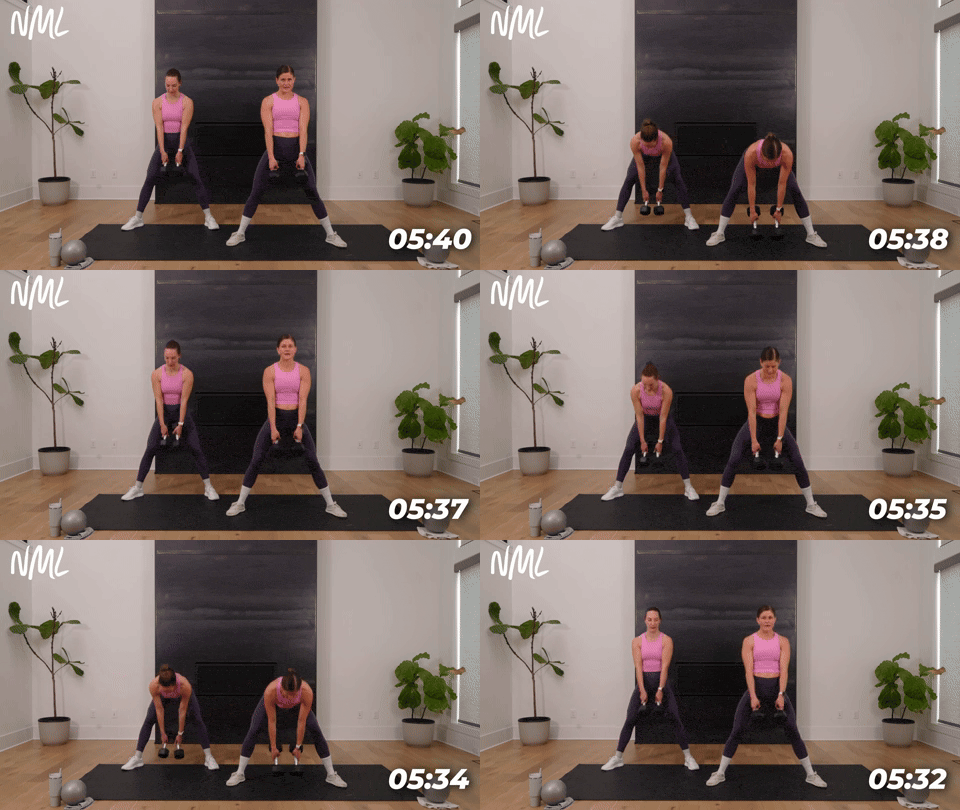
How to Do a Sumo Deadlift
- Stand with feet wider than hips (sumo squat stance, heels slightly in, toes slightly out).
- Hold one dumbbell in each hand between your legs; palms facing in toward each other.
- Hinge your hips back as you lower the dumbbells in a straight line towards the ground. Think about pushing your hips and butt back towards the wall behind you as you glide the dumbbells down towards the mat.
- Then drive through your heels to push your hips forward, pulling the dumbbells back up towards your hips as you stand tall to return to the start of the movement.
5. Curtsy Lunge
Targets: Legs, quads (thighs) and gluteus maximus (butt), hip flexors and core.
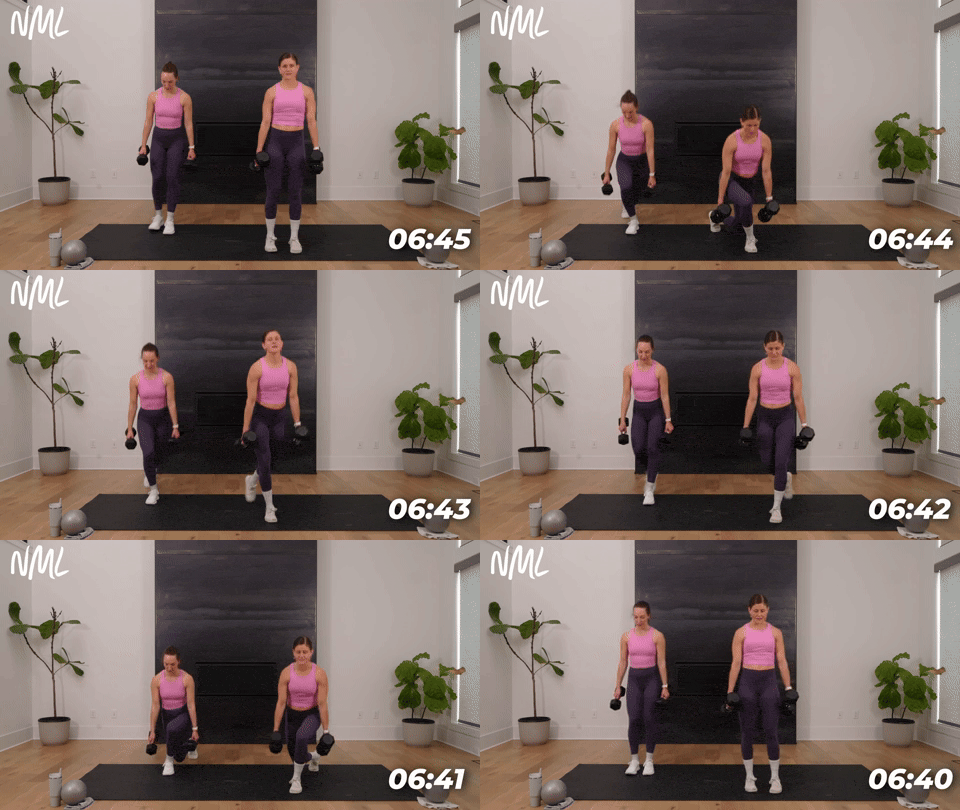
How to Do a Curtsy Lunge
- Stand with feet hip-distance apart, holding a pair of dumbbells at your sides.
- Step your left leg back into a curtsy lunge (left knee should meet right calf as your left knee lowers towards the mat). Lower your hips until both knees reach a 90-degree angle, front thigh parallel to the floor.
- Squeeze your right glute to reverse the movement, stepping your left foot back to center and standing tall.
6. Lateral Lunge
Targets: Legs, quads, outer glutes (gluteus medius), inner thighs (adductors), hips and core.
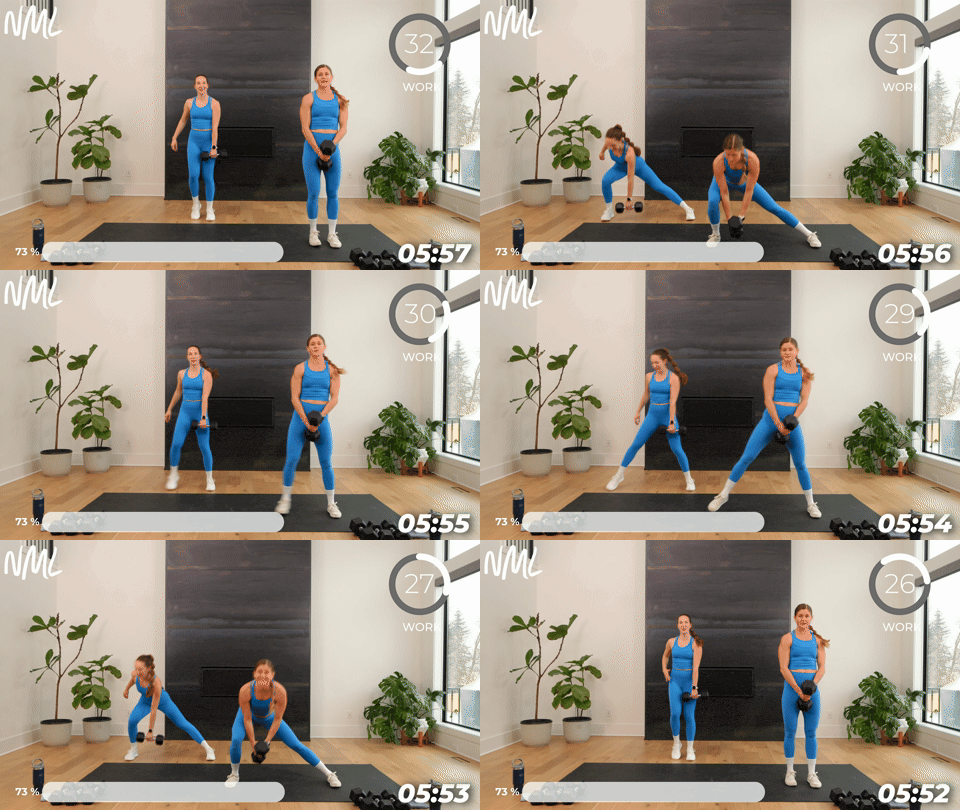
How to Do a Lateral Lunge
- Start standing, feet hip-width apart, slightly bent knees.
- Step your right leg out to the side as you push your hips back, bending your right knee while leaving your left leg straight. Think of performing a single-leg squat with your right leg while your left leg remains straight.
- Then, drive off your right foot to reverse the movement, pushing back to center.
7. Lateral Lunge Slide
Targets: Glutes (gluteus medius), quads, hip adductors (inner thigh muscles), outer thighs, hamstrings and core.
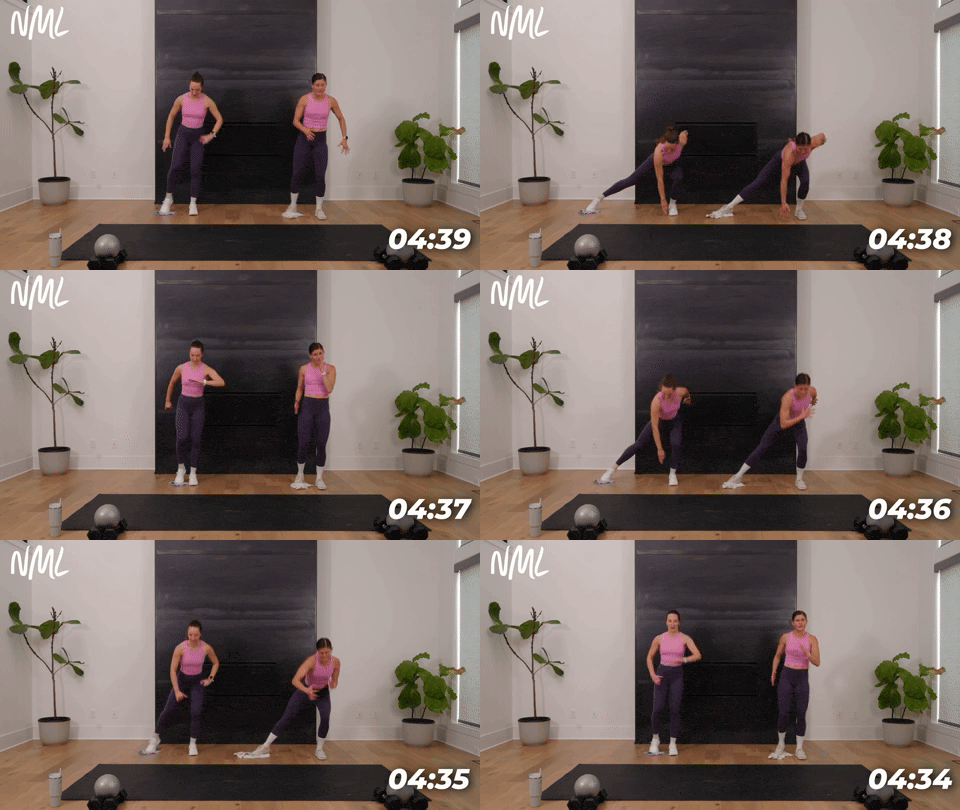
How to Do a Lateral Lunge Slide
- Stand with your feet shoulder-width apart. Place your left toes on an exercise glider or towel (if you work out on hard floors) or paper plate (if you work out on carpet).
- Slide your left foot out to the side, bending your right knee while leaving your left knee straight. Think of performing a single-leg squat with your right leg while your left leg remains straight. Knees and toes are pointing forward. Range of motion will be different for everyone.
- Pull your inner thighs together to reverse the movement, standing up to return to center.
Modification: If you don’t have a slider, take a large step out to the side, performing a standard lateral or side lunge.
8. Lateral Squat
Targets: Gluteus medius (outer glute that controls hip movement and side-to-side movements), quads, inner thighs (or hip adductors), hamstrings and calves.
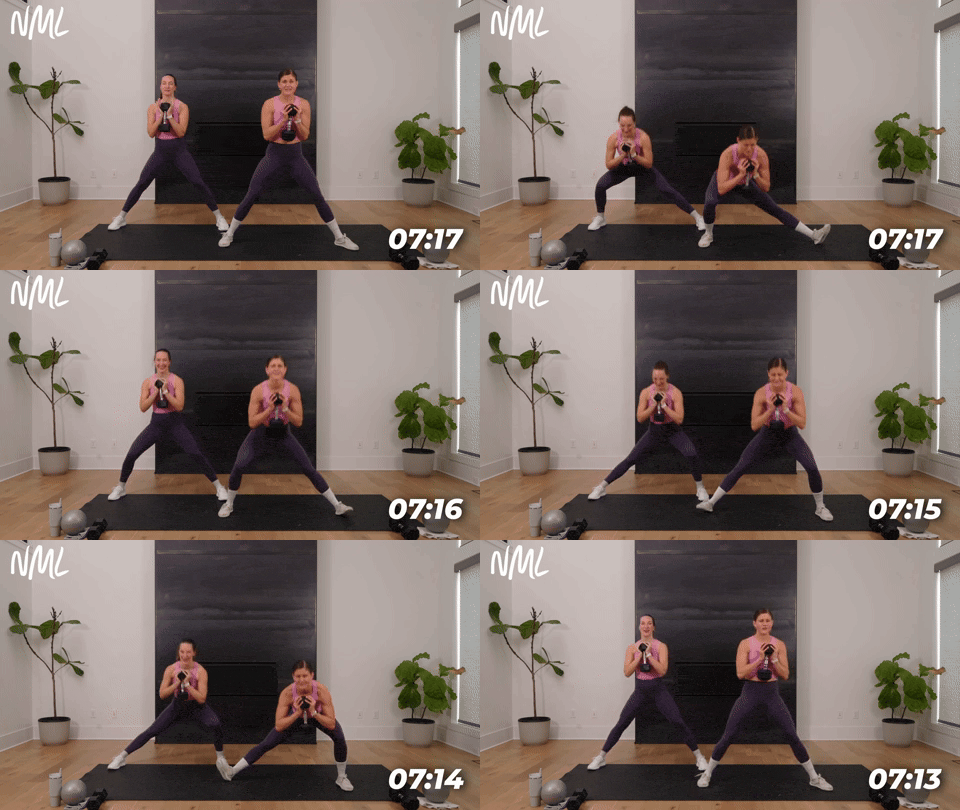
How to Do a Lateral Squat
- Start with your feet wider than your hips (think a wide squat stance), with your knees and toes pointing forward. Or toes just slightly turned out away from your body.
- Hold one dumbbell at your chest like you would during a goblet squat (vertically so the dumbbell is touching your collarbone and sternum), elbows tucked in.
- Shift your weight into your right heel as you push your hips back, bending your right knee while leaving your left leg straight. Think of performing a single-leg squat with your right leg while your left leg remains straight.
- Then, drive through your right foot to reverse the movement, pushing you back up to center.
- Then shift your weight into your left heel as you push your hips back, bending your left knee while leaving your right leg straight.
- Repeat for the timed interval, alternating legs on each lateral squat.
9. Clamshell
Targets: Gluteus medius (which lies on the outer edge of the buttocks and is responsible for stabilizing your pelvis), gluteus minimus (hip extension), obliques and core.
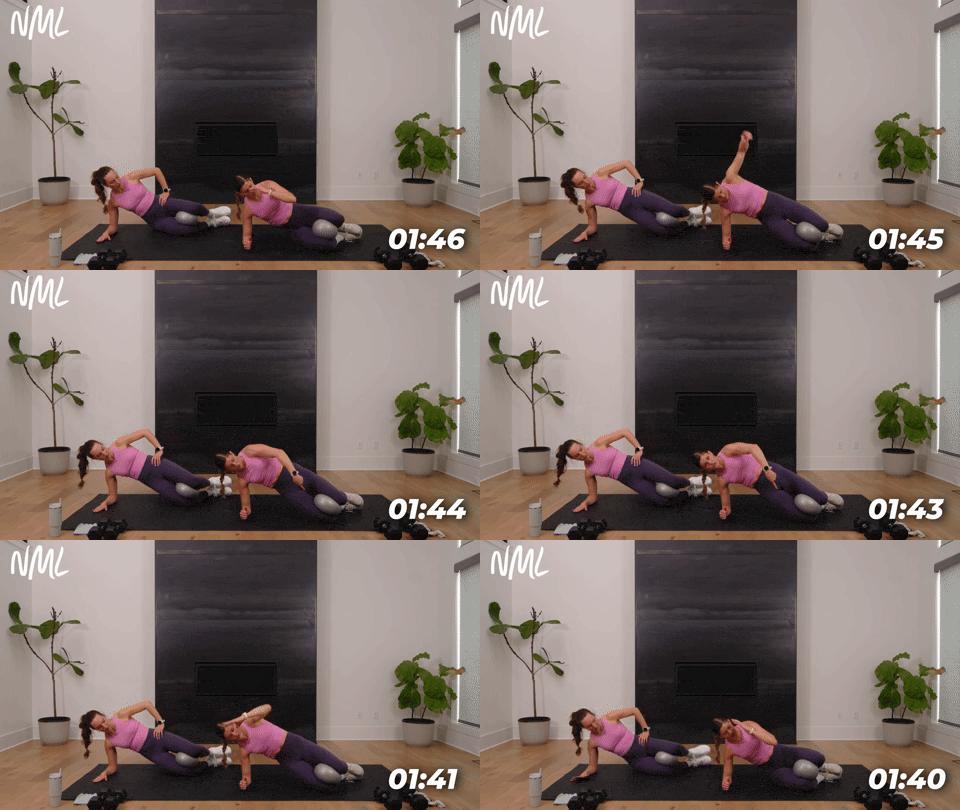
How to Do a Clamshell
- Lie on one side with your legs stacked, knees bent at a 45-degree angle, and feet together.
- Rest your head on your lower arm or forearm while keeping your shoulders and hips stacked.
- Exhale to engage your core and stabilize your spine and pelvic floor.
- Keeping your feet touching, use your outer glutes and hips to raise your upper knee as high as you can without shifting your hips or pelvis (mimicking a clamshell opening).
- Pause and hold briefly at the top of the movement. Then slowly return to the starting position.
10. Glute Bridge Hip Abduction
Targets: Hip abductors (outer glutes and thighs), gluteus medius and gluteus minimus (upper and side glutes).
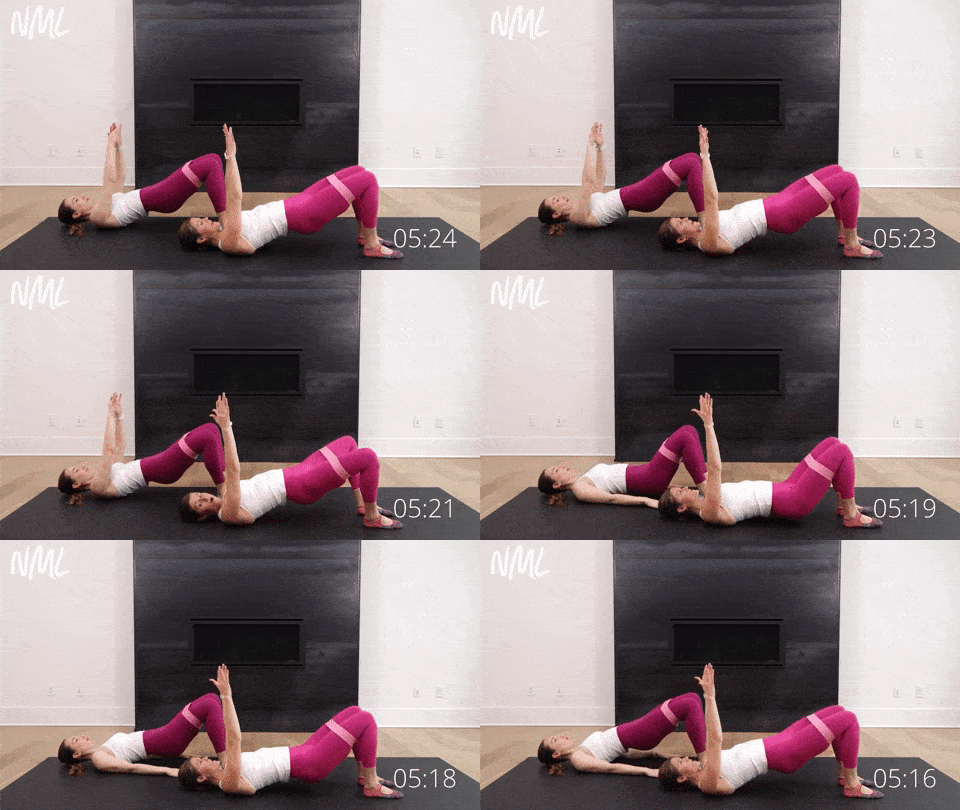
How to Do a Glute Bridge Hip Abduction
- Lie flat on the floor on your back with your knees bent and feet flat on the ground, feet hip-width apart. Option to place a resistance band 6 inches above your knees.
- Press through the heels to lift your hips off the ground until your knees, hips and shoulders form a straight line. This is a glute bridge. Keep your abs drawn in and your belly button pulled towards your spine so you don’t overextend your back.
- Hold your hips high at the top and press your knees apart, stretching the band.
- With control, pull your knees back in, stacking them over your ankles. Then lower your hips back to the ground and return to the starting position.
11. Side Lying Leg Lifts
Targets: Outer glutes, quads (top of legs) and core.
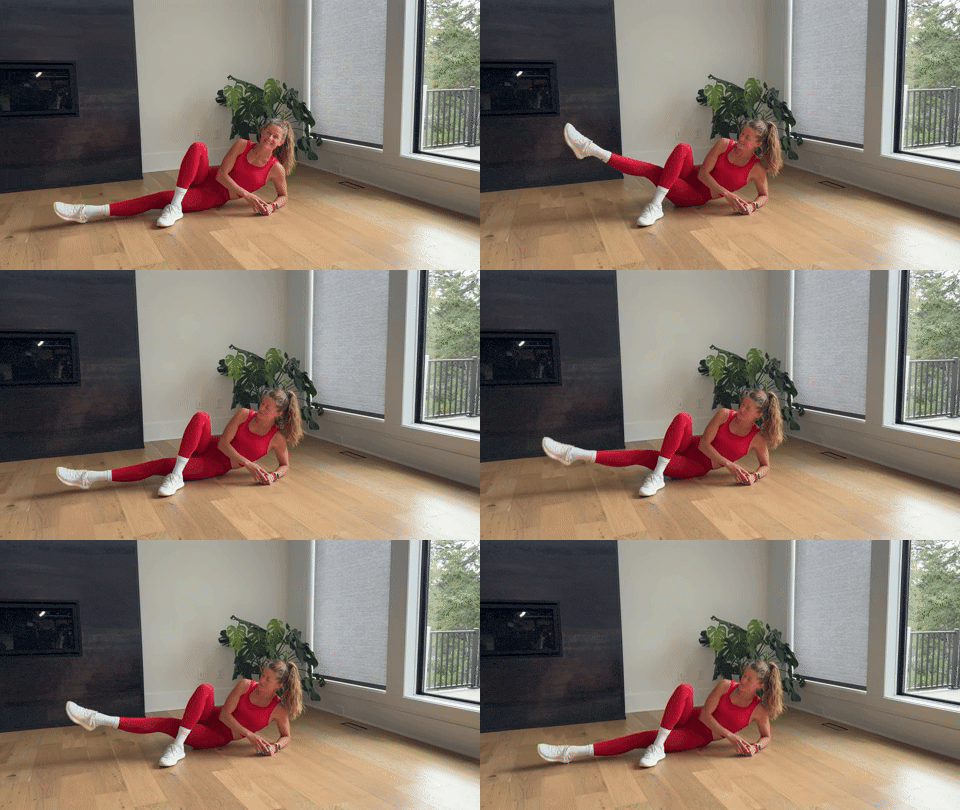
How to Do a Side Lying Leg Lift
- Start lying on your left side, hips and ankles stacked over each other.
- Keep your left leg on the mat and hover your right leg 2-3 inches above it.
- Squeezing through your outer glute, lift your right heel up a few inches, focusing on making the movement come from your muscle rather than momentum.
- With control, lower your right leg, returning to the starting position.
12. Copenhagen Plank
Targets: Every muscle in the upper body (chest, shoulders, triceps, back and biceps), core and transverse abdominus, hip abductors and hip adductors.
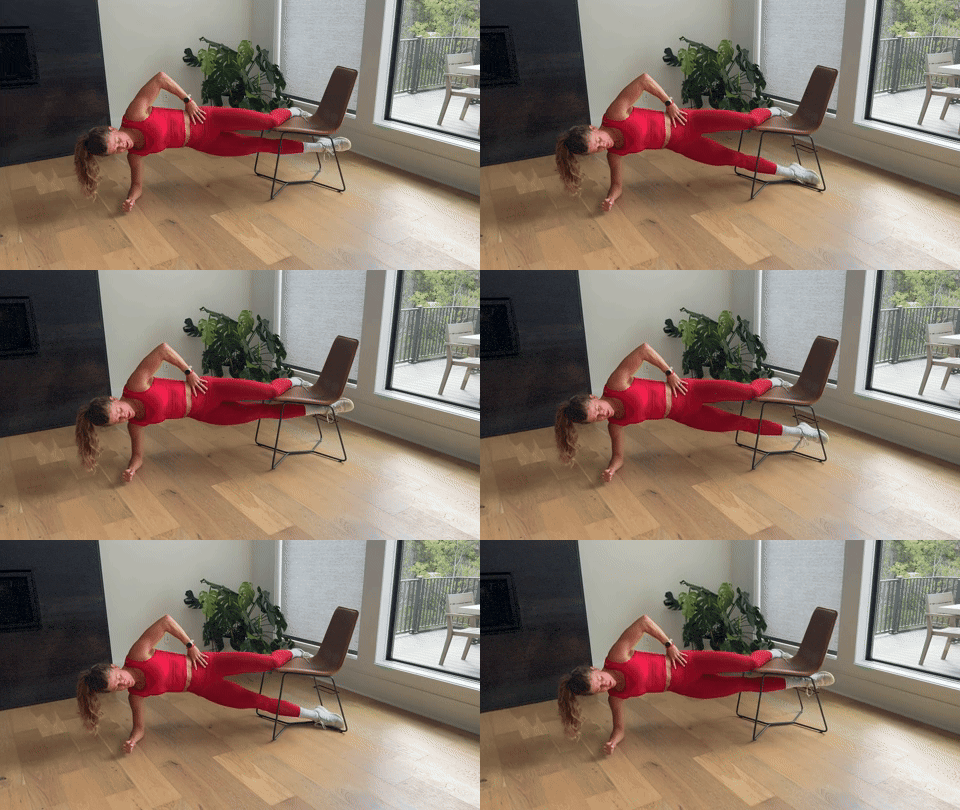
How to Do a Copenhagen Plank
- Start in a high plank position with your shoulders stacked over your wrists and your feet hip-width apart.
- Hold this plank position, maintaining a straight line with your body, gaze slightly in front of you.
- Rotate your body into a side plank position, turning to one side so your weight shifts onto your forearm, which should be directly under your shoulder. Extend your right leg straight out and place the inside edge of your foot on the mat, while your bottom leg hovers just beneath it, fully off the floor.
- Then, pull your left knee and right elbow to meet in a crunch position.
Hold for three seconds, then return to a high plank position with your shoulders stacked over your wrists; feet hip-width apart.
FAQs
Can you slim your thighs without building muscle?
Genetics, activity level and diet all play a major role in how your thighs change shape. Light resistance training can help create a leaner appearance without causing significant muscle bulk, but muscle growth is inevitable and healthy.
How do I know if my inner thigh muscles are weak?
Weak inner thigh muscles, including the hip adductors, can show up as poor balance, knee instability or difficulty controlling side-to-side movement. Groin tightness, reduced athletic performance or fatigue during a lower-body workout can also be a sign.
What leg exercises are safe for bad knees?
Low-impact exercises are often safer for people with knee pain because they strengthen the legs without placing excessive stress on the joints. Strengthening muscles that support the knee – such as the quadriceps and glutes – can improve stability and reduce discomfort. Proper form, controlled movement and avoiding painful ranges of motion are key.
Will strength training make my thighs bigger?
Yes, but not as easily as you’d expected. Significant muscle growth usually requires heavy training, high volume, and a calorie surplus. For many people, strength training paired with consistent cardio actually helps create a firmer, leaner appearance by building muscle while reducing body fat. Genetics, nutrition and workout routine all influence how much your thighs change in size.
Can thigh exercises help reduce cellulite?
Thigh exercises can help improve the appearance of cellulite by strengthening the muscles beneath the skin and enhancing overall muscle tone. While exercise cannot eliminate cellulite, reducing body fat and building muscle in areas like the quadriceps and glutes may make the skin look smoother and firmer. Hydration, nutrition and genetics also play a major role.
Build the Perfect Leg Day
For women, lower-body health goes way beyond aesthetics. Strong lower-body function is especially important for postpartum mamas and women throughout every stage of life.
This workout helps build strength through both abduction and adduction movements to reinforce critical areas of the lower body, including the pelvic floor. It also promotes leg muscle growth while helping address underlying balance and stability issues.
Try out these exercises and then build them into the perfect leg routine to fit your goals. Whether as a warm-up or as a full-on leg day, let’s get consistent! Let’s make this a priority in order to stay functional and moving, no matter what season of life we find ourselves in!
More Workouts
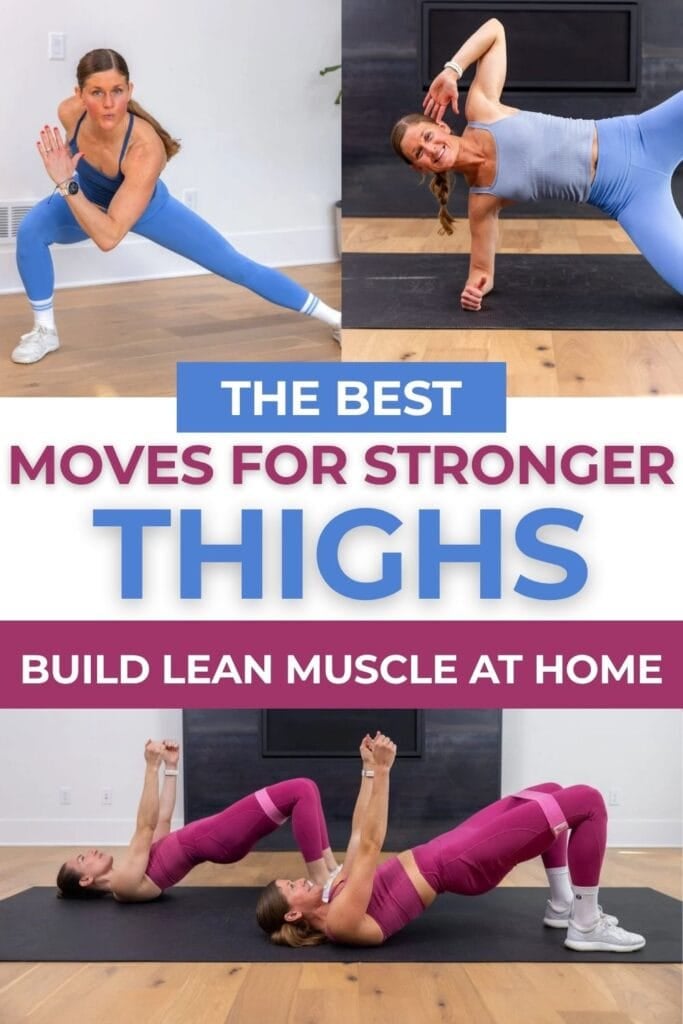
Lower BodyPin This: 12 Effective Thigh Exercises
This post includes affiliate links. I do earn a commission for products purchased using these links (at no additional cost to you). Thank you for supporting Nourish Move Love, making the content you see on this blog possible.
no comments