





8 Best Diastasis Recti Exercises (10-Minute Postnatal Ab Workout)
Rebuild core and pelvic floor strength with this 10-minute workout featuring 8 targeted diastasis recti-safe exercises. Designed to engage the transverse abdominals and pelvic floor – muscles commonly weakened during pregnancy – this routine helps support healing of diastasis recti, a separation of the rectus abdominis muscle (six-pack ab muscles) and linea alba (connective tissue). It’s ideal for postpartum individuals or anyone looking to restore deep core stability safely and effectively.
This is WORKOUT 7 of my Diastasis Recti Program.
Workout Details
This postnatal ab routine is designed to support diastasis recti healing by strengthening the deep core muscles and pelvic floor muscles safely after pregnancy. The workout uses gentle, controlled pelvic floor exercises for diastasis recti that help rebuild foundational core stability.
Start by adding this core workout to your weekly routine 1-2 times per week, increasing to 3-4 sessions as your core strength and confidence improve. For balanced progress (and to prevent burnout), alternate this routine with the other workouts in my 28-day diastasis recti plan.
Workout Equipment
No equipment needed, just your bodyweight.
Workout Instructions
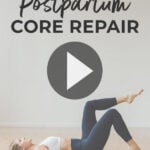
Follow along with the guided 10-Minute Postnatal Ab Workout Video on YouTube, led by me — your certified personal trainer (CPT), Lindsey Bomgren.
Your Workout Looks Like This:
- 8 Diastasis Recti Exercises
- Timed Intervals (perform each exercise for 30 seconds of work, completing as many reps as you can in the timed interval)
- Repeat all 8 Exercises x2 Sets
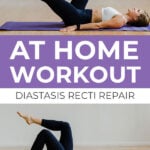
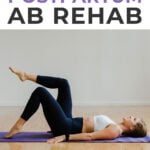
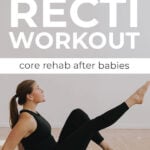
10-Minute Postnatal Ab Workout
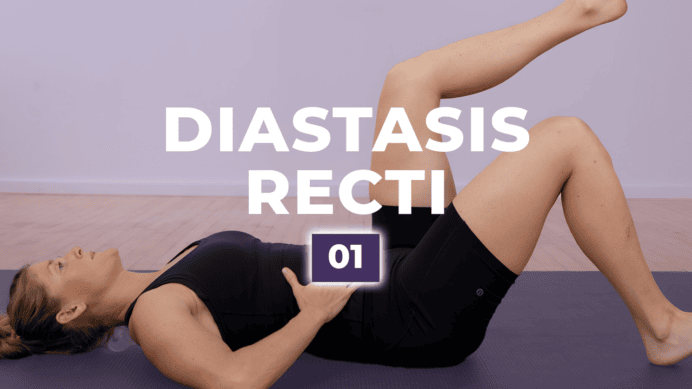
1. Transverse Abdominal Breathing (Core Connection)
Targets: The deep transverse abdominal muscles (TVA) and pelvic floor muscles. These muscles support your internal organs, your inter-abdominal pressure system and provide stability and mobility of your lower spine.
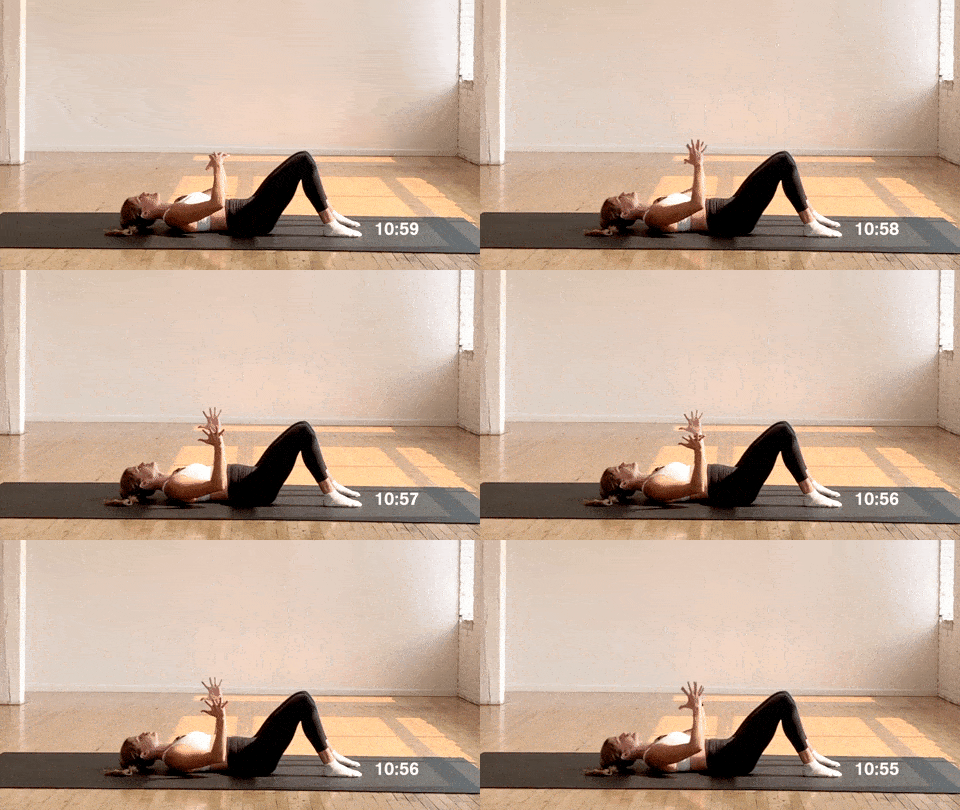
How to Do Transverse Abdominal Breathing or Abdominal Bracing
- First, activate your transverse abdominis muscles. Lie flat on your back, straight line from head to tailbone. Your knees should be bent at 90 degrees, and your feet should be flat on the floor. Place your hands under your rib cage, finding your hip bones. Move your fingers 1 inch inwards towards your belly button.
- To find your transverse abdominis muscles, fake cough. The muscles you feel ‘pop’ when you cough are your transverse abdominis muscles.
- To engage them, take a deep breath and allow your core and pelvic floor to relax. Imagine there is a string between your hip bones, and as you exhale, that string (or your TA muscles) is pulling your hip bones together.
- As you inhale, let the belly expand (let your back pop off the ground).
- As you exhale, pull the belly in tight and think about tucking the tailbone underneath you to press your back into the mat or wall.
2. Alternating Heel Slides and Leg Lift
Targets: Deep transverse abdominal muscles (TVA), lower abs and hips.
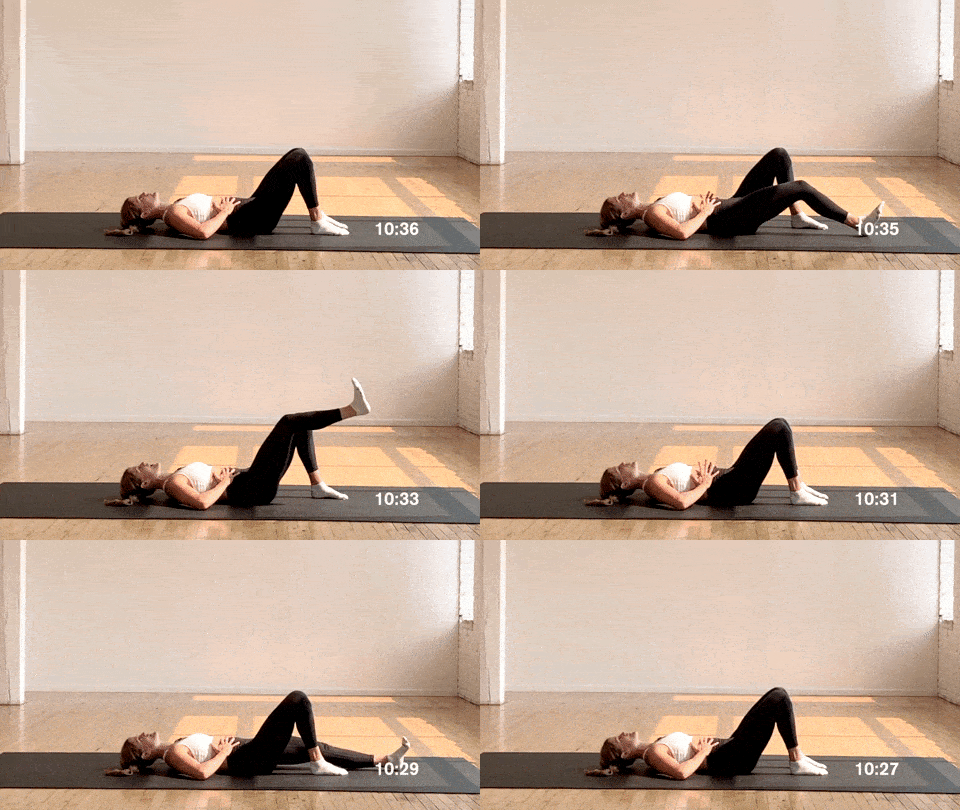
How to Do an Alternating Heel Slides and Leg Lift
- Start lying on your back, knees bent and feet planted in front of your glutes. Inhale, letting your belly expand.
- Exhale, pulling your core together and pressing your low back firmly into the mat as you slide your right heel away from your body. Keep your left heel planted on the mat.
- Trying to keep your extended leg as straight as possible, raise your leg off the ground to lift it back to the starting position.
- Repeat, this time sliding your left heel away from your body and keeping your right heel planted.
Modification: Omit the leg raise, performing only the heel slides.
3. Lying Bent Knee Pulls
Targets: Deep transverse abdominal muscles (TVA), lower abs and hips.
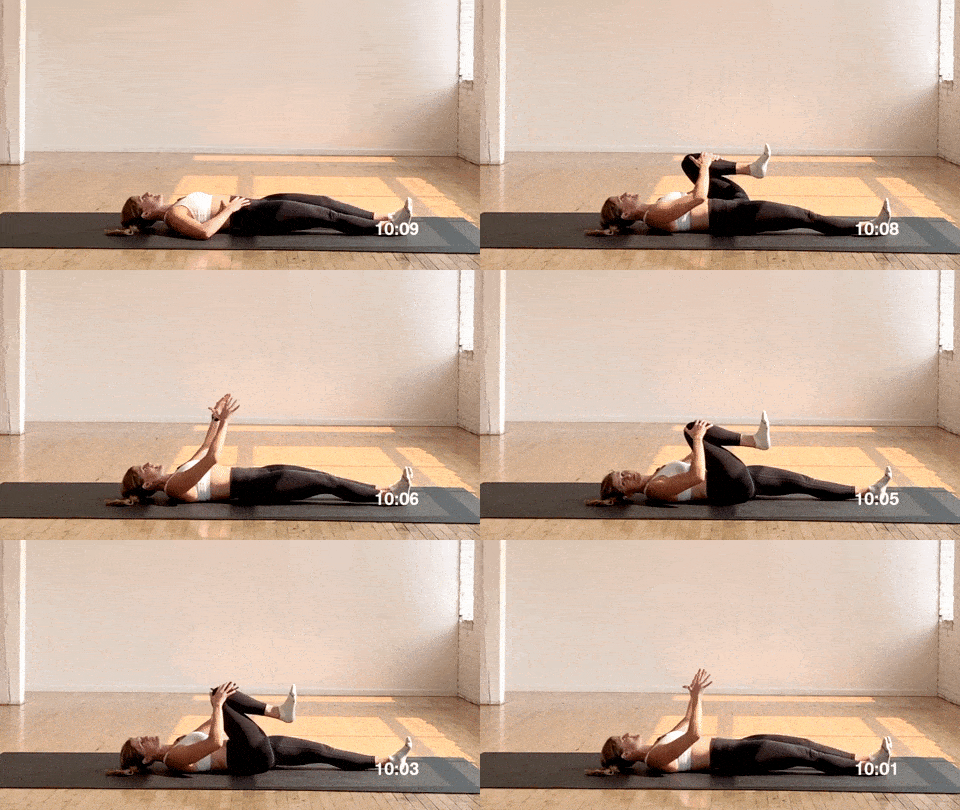
How to Do a Lying Bent Knee Pull
- Start lying flat on the floor, lower back pressed into the mat with your feet together and your legs extended long. Inhale, letting your belly expand.
- Exhale, pulling your core together and pressing your low back firmly into the mat. Option to raise the heels off the mat to intensify this movement.
- Pull your right knee in to meet your chest, bending the right leg as you do so. Feet are flexed, and the left leg remains straight out.
- Hold the right knee to the chest for a moment, then kick the right leg back out so both legs are kicked straight out again.
- Alternate the knee that pulls in throughout this movement.
Modification: Option to keep both legs on the ground and alternate the knee pull in this core stability exercise.
4. Elevated Bent Knee March
Targets: Deep transverse abdominal muscles (TVA), lower abs and hips.
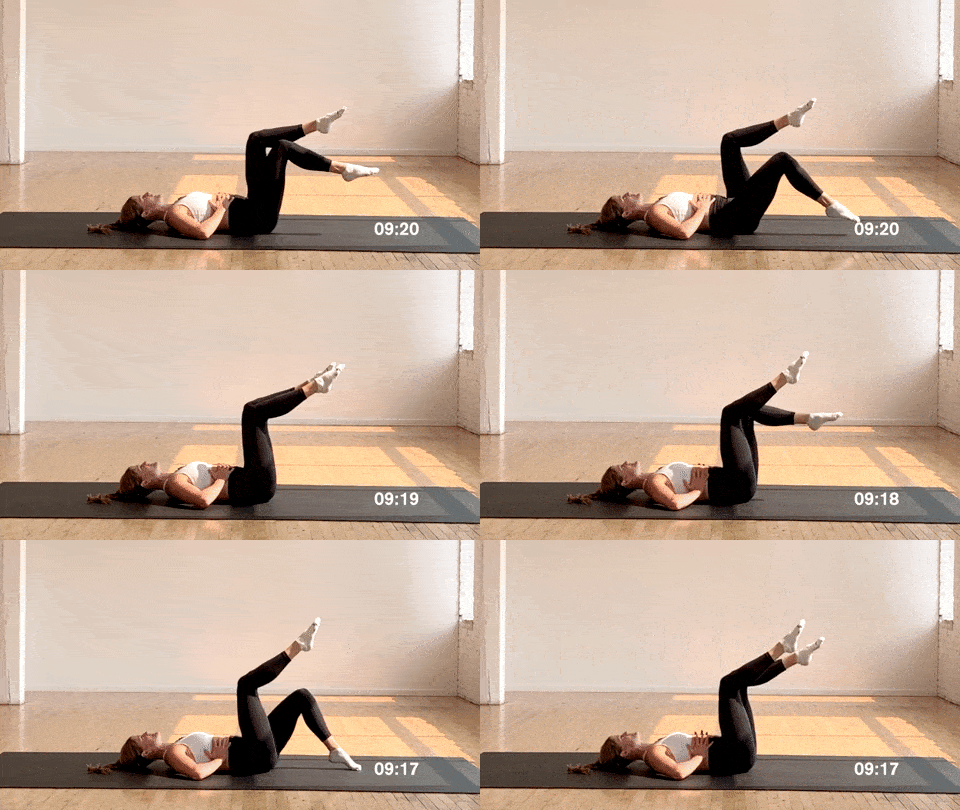
How to Do an Elevated Bent Knee March
- With your low back pressing firmly into the mat and your abdominal wall wrapped as tightly as possible around your core, bring your legs to a 90-degree bend (in tabletop position).
- Inhale as you lower your right heel to tap the mat, keeping bends in both knees.
- Exhale as you pull your right leg back to the starting position. This movement is slow and controlled.
- Repeat with your left heel, tapping the mat and returning to the starting position.
Modification: Option to keep both toes on the ground and alternate lifting 1 knee towards your chest. The closer your knees are to your chest, the easier this ab exercise will be. The farther your knees are from your chest, the more intense this will be.
5. Alternating Leg Extension and Leg Drop
Targets: Deep transverse abs, rectus abdominis muscle, lower abs and obliques.
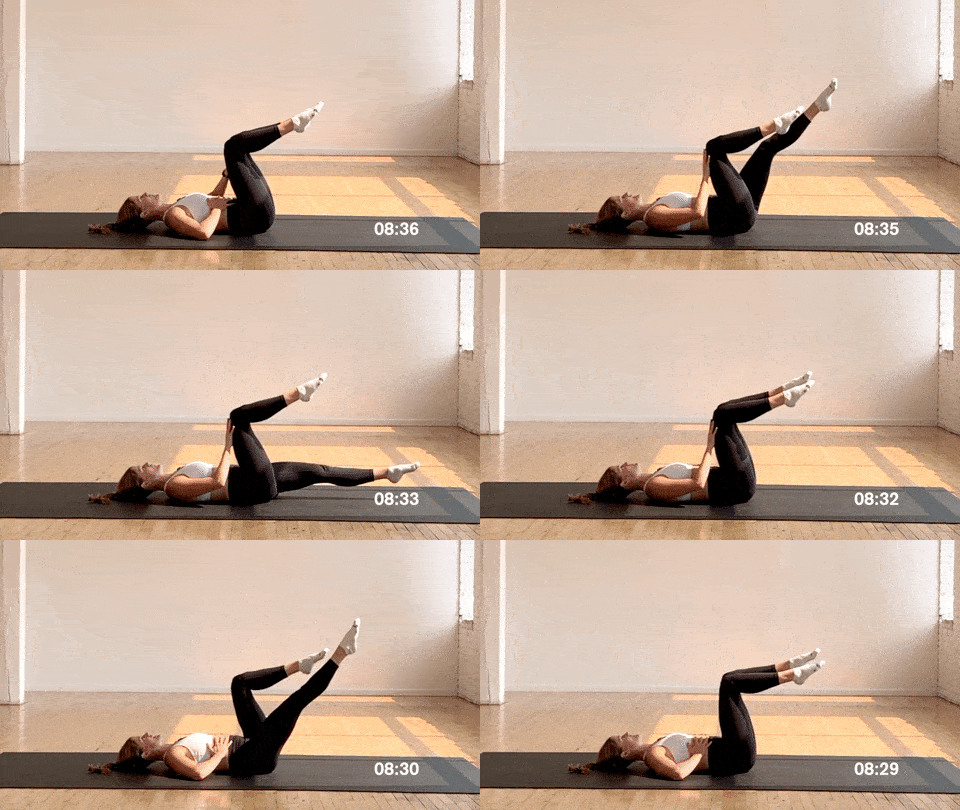
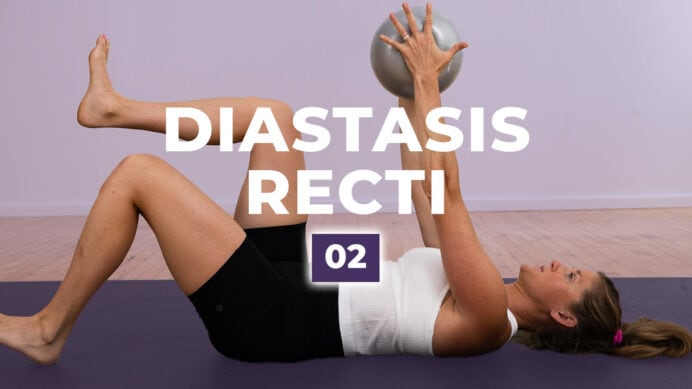
How to Do an Alternating Leg Extension and Leg Drop
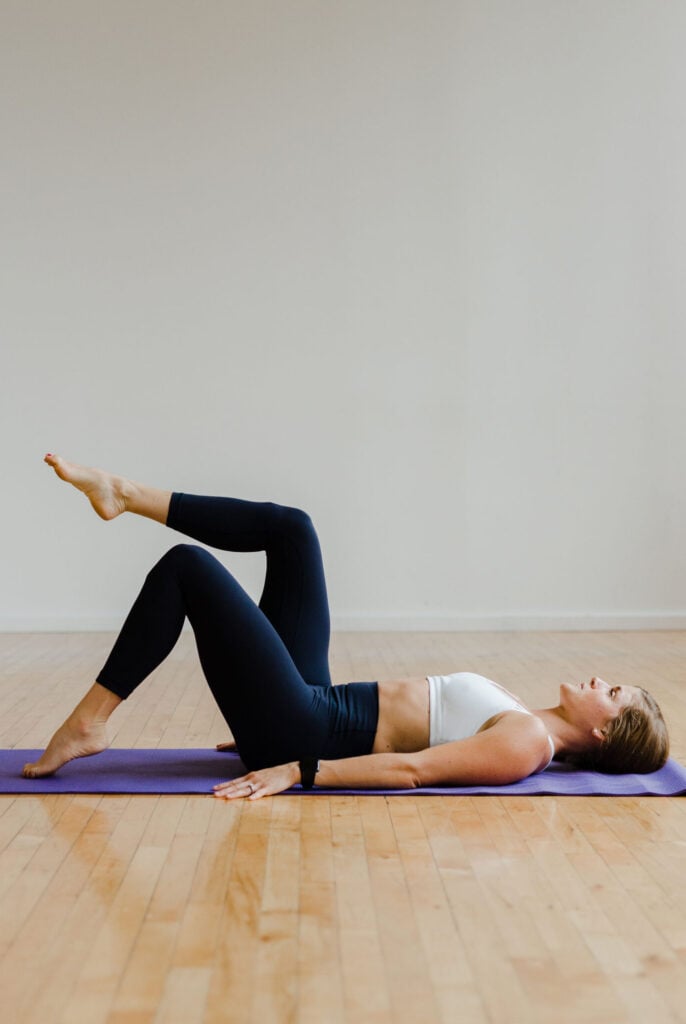
- With your low back pressing firmly into the mat and your abdominal wall wrapped as tightly as possible around your core, bring your legs to a 90-degree bend (in tabletop position).
- Extend the right leg straight out, then slowly lower the right leg towards the ground.
- With control, pull the right leg back to the starting position and alternate by extending the left leg straight out, then slowly lowering the left leg towards the ground.
- Return to the starting position and repeat, keeping your low back pressed into the mat throughout. This movement is slow and controlled.
Modification: Omit the leg lower and only perform the alternating leg extensions. The closer your knees are to your chest, the easier this ab exercise will be. The farther your knees are from your chest, the more intensity you’ll feel.
6. Alternating Leg Kick Out and 2 Circles
Targets: Transverse abdomen, upper abs, lower abs and hips.
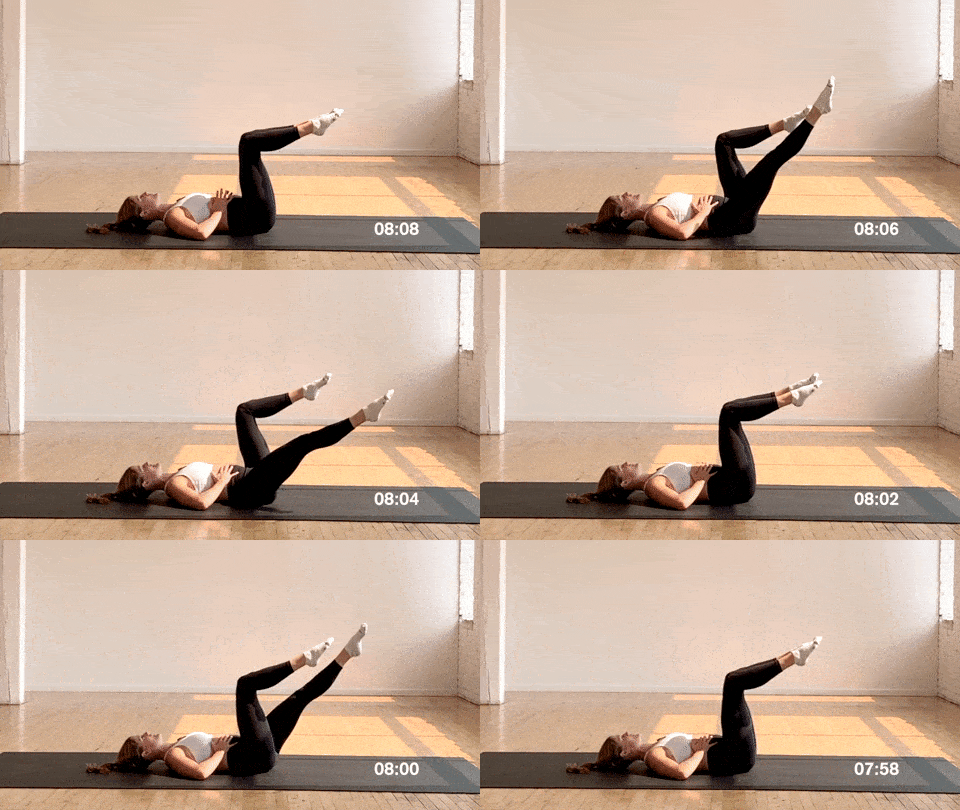
How to Do an Alternating Leg Kick Out and 2 Circles
- Start with your low back pressing firmly into the mat and your abdominal wall wrapped as tightly as possible around your core. Bring your legs to a 90-degree bend.
- Alternate extending one leg straight out, then slowly draw 2 donut-sized circles with the big toe of your extended leg.
- Return to the starting position, and repeat on the other side. This movement is slow and controlled.
Modification: Option to omit the circles and just perform alternating leg extensions. The closer your knees are to your chest, the easier this ab exercise will be. The farther your knees are from your chest, the more intensity you’ll feel.
7. Elevated Bent Knee V-Taps
Targets: Deep transverse abdominal muscles (TVA), lower abs, upper abs, hips and pelvic floor.
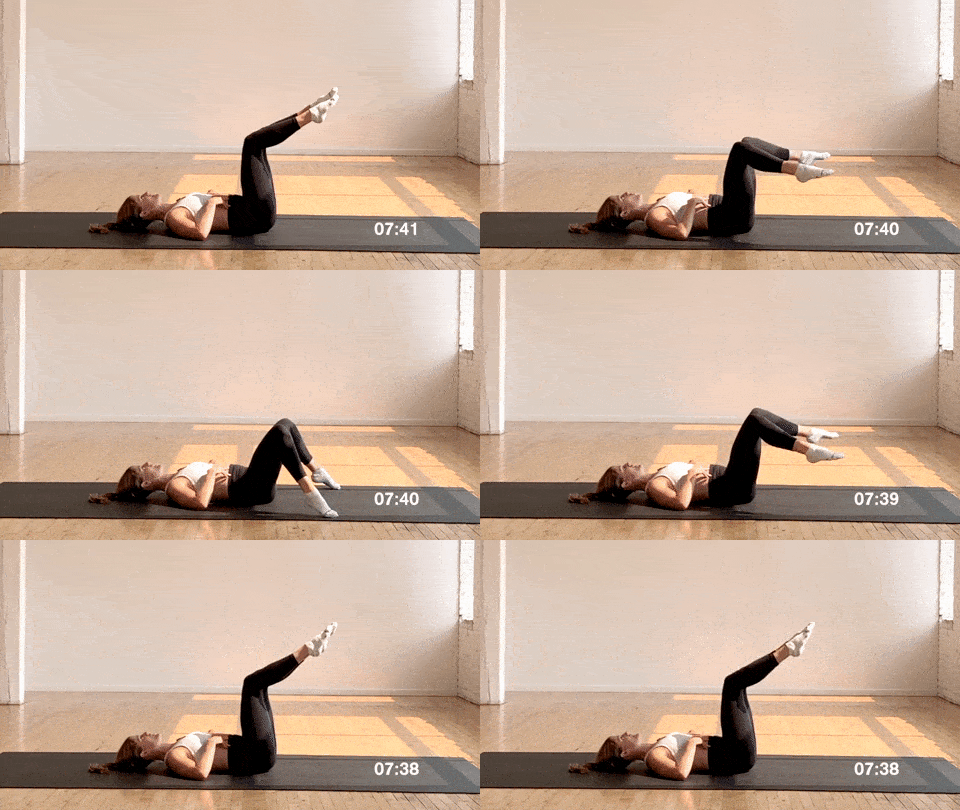
How to Do an Elevated Bent Knee V-Tap
- With your low back pressing firmly into the mat and your abdominal wall wrapped as tightly as possible around your core, bring your legs to a 90-degree bend.
- Maintaining the 90-degree bend in your legs, inhale as you lower both feet towards the outside of your mat on a 2-count.
- Tap your toes on the outsides of your mat, then return to the starting position on a two-count, squeezing your knees and inner thighs to touch as you return. These toe taps are slow and controlled.
Modification: Drop only 1 leg to the outside of the mat and return to the starting position, then alternate by dropping the other leg. The closer your knees are to your chest, the easier this ab exercise will be. The farther your knees are from your chest, the more intensity you’ll feel.
8. Elevated First Position Kick Outs
Targets: Deep transverse abdominal muscles (TVA), lower abs, upper abs, hips and pelvic floor.
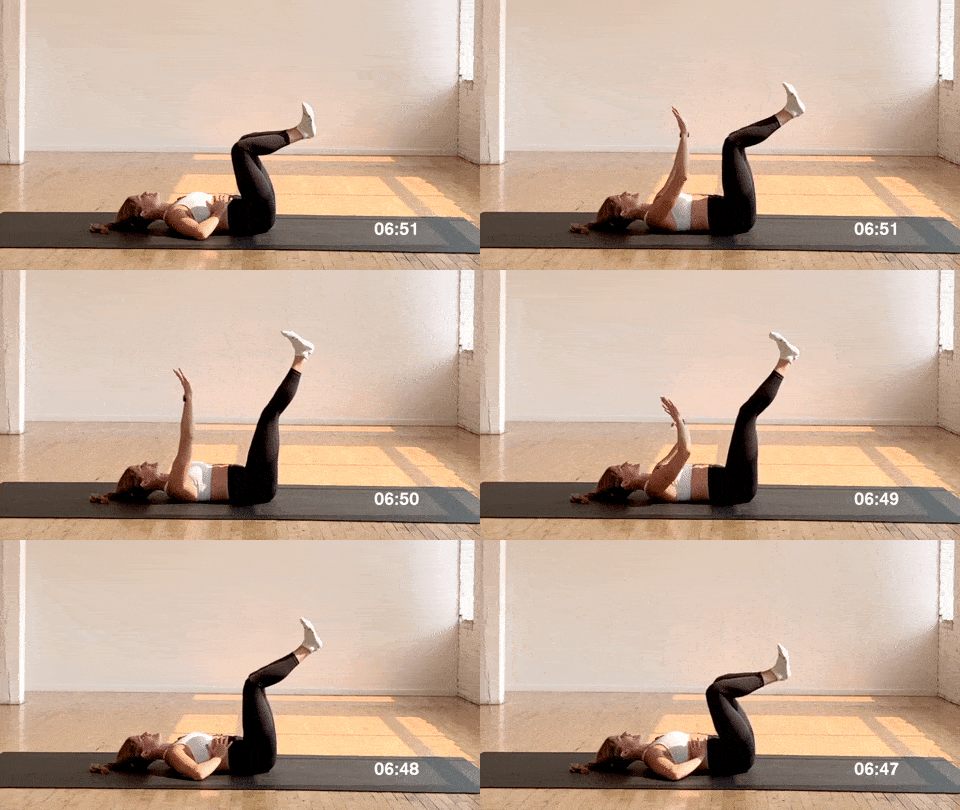
How to Do an Elevated First Position Kick Out
- With your low back pressing firmly into the mat and your abdominal wall wrapped as tightly as possible around your core, bring your legs to a 90-degree bend.
- Bring your feet to first position by bringing the heels together. Toes are pointed out, making a ‘V’ with your feet.
- Slowly kick both heels out, away from your body on a 2-count. Squeeze your inner thighs to touch as you reach full extension.
- Then return to the starting position on a 2-count, pulling your knees back towards your chest at a 90-degree bend. This movement is slow and controlled.
Modification: Kick 1 leg out at a time, alternating the leg that extends. The closer your knees are to your chest, the easier this ab exercise will be. The farther your knees are from your chest, the more intensity you’ll feel.
Read A 5-Star Review ⭐⭐⭐⭐⭐
“I’ve been doing this every night for 4 weeks and have gone from a 3-finger gap to a 1-finger gap! Thank you for doing this for us and keeping us ‘company!’ ❤️”
— Elle M.
LET’S GET STARTED
Download a Free 28-Day Diastasis Recti Workout Plan
Download the PDF calendar for my 28-day diastasis recti exercise program so you can easily access your daily workouts.
Download Plan
FAQs
When should you start core exercises for diastasis recti?
Since every postpartum healing experience is different, I recommend that you talk to your doctor or midwife and get medical clearance before returning to exercise after giving birth, especially if you had any complications. That said, many people can begin gentle core activation (such as diaphragmatic breathing and pelvic floor engagement) shortly after childbirth, as long as they feel comfortable and have medical clearance for movement. I personally started using these core exercises for diastasis recti around 2 weeks postpartum. More targeted diastasis-recti-specific exercises should typically start once a healthcare professional has cleared you for postpartum exercise, often around 6 weeks after a vaginal birth and 8-12 weeks after a C-section. Deep core exercises postpartum are extremely beneficial and should be incorporated at some point.
Should you see a physical therapist for diastasis recti?
Yes, working with a pelvic floor physical therapist can be extremely helpful, and I recommend it if you have access to one. Diastasis recti is often linked to low back pain, poor posture, pelvic pain or dysfunction and urinary incontinence or leaking. In physical therapy, they can assess your degree of ab separation and provide a personalized plan for healing, especially if you’re experiencing pain, pelvic floor symptoms or persistent abdominal doming.
How long does it take to heal diastasis recti?
Healing timelines vary widely. Many people notice improvement within 8-12 weeks of consistent core strengthening exercises, but full recovery can take several months depending on factors like severity, connective tissue health, posture and exercise consistency.
Are planks safe if you have diastasis recti?
Traditional full planks and high-pressure core moves (like sit-ups, crunches, Russian twists or heavy twisting/extension) can worsen abdominal separation if they’re performed too early. These abdominal exercises increase intra-abdominal pressure and may cause hard doming. The key to knowing whether you’re ready to progress to more difficult core exercises is assessing for hard versus soft doming. This helps you determine how your body is managing pressure. Soft doming occurs when you can press your tissue inward; hard doming occurs when the dome is firm to the touch. You want to avoid hard doming as it’s a sign that your tissue is working to its max capacity. That said, it’s best to avoid full planks until you can maintain deep core engagement without hard coning or doming. Modified planks and side planks are safer options during early healing.
Can diastasis recti cause indigestion?
Diastasis recti itself doesn’t directly cause indigestion, but a weakened core can affect posture and abdominal pressure, which may contribute to symptoms like bloating or discomfort for some people. If digestive issues are persistent, it’s best to consult a healthcare provider.
Can men develop diastasis recti, and what exercises can help?
Yes, men can also develop diastasis recti, often from improper lifting, weight gain, abdominal strain or chronic coughing. Helpful exercises include diaphragmatic breathing, pelvic floor activation, heel slides, dead bug progressions and core bracing drills that build tension in the deep abdominal wall without causing hard doming.
More Workouts
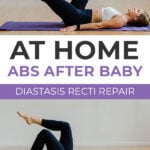
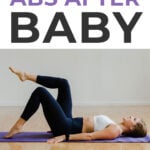
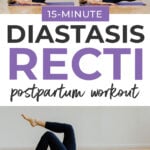
Postpartum WorkoutsPin This: 8 Best Diastasis Recti Exercises (Postnatal Ab Workout)
7 comments


Hi Lindsey! Just wondering how soon after giving birth is it safe to do these exercises?
Hi Emily! Great question, I have to say check with your doctor/midwife on this one as I’m not qualified to give advice. I personally started transverse abdominal breathing around 2-3 weeks PP, and started with the first three exercises outlined here around 4 weeks PP and progressed up to all seven exercises around 12 weeks PP. I hope that helps. Thank you! -Lindsey
Hi Lindsey—I am a pelvic PT working in the Twin Cities. I have been following you on IG and your blog for some time and love it. I am so happy to see the addition of diastisis Recti and pelvic floor recovery exercise. I would love to connect with you as I am trying to find a resource to refer my patients once they “graduate” from my program.
Hi Charet! Thanks so much for this message + reaching out on IG! I’m so glad we were able to connect on IG and I look forward to chatting more soon! Thank you! Lindsey
I am glad for this post and to hear your recommendations! I am a personal trainer and work with postpartum women. Much of the information out there is not helpful but your moves are great. Just remember the breathing techniques to go along with them to decrease pressure on the pelvic floor and the abdominal wall. And if anyone is ever concerned about diastasis recti or pelvic organ prolapse to see a PT specializing in pelvic floor work. Thanks for all you do and your awesome workouts!
Hi Tracy!
Thanks so much for checking out this post! And yes, I feel like I put the cart before the horse a bit with the breathing, but I did a whole series on my IG stories today on TVA breathing to accompany these exercises! It’s all so important as it all works together! Thanks so much for checking out this post! -Lindsey