






Why Am I Not Sore After a Workout?
Ever woken up after crushing a workout and not been sore? Soreness has become an expected part of fitness culture, but is it really the indicator of progress we once thought it was? In this article, I’ll break down the science behind post-workout soreness, what causes it, why it happens and the reasons you may not feel sore after every workout. We’ll also look at whether soreness really means you had an effective workout and when the absence of soreness may (or may not) be a reason to change your routine.
Muscle soreness is a common part of life, whether it comes from a challenging full-body workout or simply working hard day in and day out. While soreness has become an expected badge of honor in the fitness community, it isn’t a reliable measure of workout effectiveness or muscle growth. More often, it simply means your body was exposed to a new or demanding training stimulus.
While muscle soreness can be uncomfortable, there is no need for concern. It doesn’t mean you did anything wrong or injured yourself and usually fades within a few days. The question is: If soreness is normal and expected, should we aim for it? What about if I never feel sore? Let’s get into it!
Is It Bad If You’re Not Sore After a Workout?
In short, no! While feeling sore after a workout is common, the age-old fitness myth of “No pain, no gain!” has largely been debunked. Delayed onset muscle soreness (DOMS) is one of your body’s normal responses to unfamiliar or intense exercise, but it isn’t a reliable measure of muscle growth or strength gains.
As your fitness level improves, your body naturally adapts to activities like strength training and high-intensity interval training (HIIT). Over time, your muscles, connective tissue and nervous system become more efficient at handling the same training stimulus, often resulting in less soreness even as you continue getting stronger.
Causes of Muscle Soreness
Whether muscle soreness comes from a workout or a long day on your feet, it’s a normal response to challenging your body. While soreness may be more noticeable when you’re beginning your fitness journey, it isn’t necessarily a sign of injury. Most post-workout soreness is caused by DOMS, which typically develops 12-24 hours after exercise and peaks within 24-72 hours.
Intense exercise, like resistance training, causes tiny microscopic tears in your muscle fibers. Don’t worry, though! This is completely normal and part of the repair and adaptation process that builds strength over time. Think of it as your body’s signal to repair and strengthen the affected muscle tissue.
As your body begins repairing those muscle fibers, it also triggers a natural inflammatory response. This temporary inflammation contributes to the stiffness and tenderness you may feel after a workout while helping deliver nutrients and repair cells to the muscles that were challenged.
Exercises that are new to you, emphasize the lowering (eccentric) phase of a movement or significantly increase your training volume or intensity are all more likely to cause muscle soreness. As your body adjusts to these new challenges, temporary soreness is a normal part of the process.
What is DOMS?
Delayed-onset muscle soreness (DOMS) is the stiffness and tenderness that develops several hours after exercise. You have probably “Felt the burn!” during a workout. While these are indicators of the muscles you are working during a specific exercise, they are not DOMS.
The “burn” you experience while lifting weights is caused by temporary metabolic stress and quickly fades when the workout is finished. DOMS, however, develops later and can last for days. Have you ever crushed leg day and then tried to walk down the stairs? I always feel like one of my kids learning to walk! That is DOMS.
So, does DOMS mean you had an incredibly effective workout? Not necessarily. DOMS simply indicates that your muscles were exposed to a new or demanding stimulus. It isn’t proof that you had a better workout or built more muscle. Many people experience DOMS after starting a new workout routine, like going from endurance or cardio-focused training to weightlifting and vice versa. Still, soreness alone shouldn’t be used to measure progress.
One final note: Mild to moderate soreness is completely normal. However, severe pain, significant swelling, dark-colored urine or extreme muscle weakness could be signs of a rare but serious condition called rhabdomyolysis (rhabdo). If you experience these symptoms, seek medical attention right away.
Potential Reasons You’re Not Sore After Working Out
Now that we know why we get sore, what about when we aren’t? Waking up without sore muscles doesn’t automatically mean your workout wasn’t effective. In many cases, it’s actually a sign that your body is adapting to your training and recovering well. Here are some of the most common reasons you may not feel sore after a workout.
You’re Recovering Better
Recovery is just as important as your workout. In fact, recovery is where much of the real progress happens, and neglecting it is one of the biggest mistakes I see as a personal trainer. Adequate sleep, proper hydration, good nutrition and stress management all influence how your body responds after exercise.
Sleep, hydration and nutrition are some of the simplest ways to support recovery, yet they often have the biggest impact. Eating enough protein provides the building blocks your body needs to repair muscle tissue, while staying hydrated supports circulation, nutrient delivery and normal muscle function.
Physical training isn’t the only stress your body experiences. Work deadlines, parenting, poor sleep and everyday responsibilities all contribute to your overall stress load, making recovery even more important. If you’re anything like me, exercise is one of my favorite ways to manage stress. While it doesn’t eliminate every challenge, it certainly helps me handle them better.
If you’re consistently prioritizing recovery, there’s a good chance your body is simply recovering more efficiently. That means you may experience less post-workout soreness while continuing to build strength and make excellent progress.
Your Workout Challenged You Effectively
A good workout is measured by how consistently you’re improving over time, not how sore you are the next day. Steady progress is one of the biggest signs of an effective workout. The foundation of muscle growth and strength gains is progressive overload. Whether you’re lifting slightly heavier weights, completing an extra repetition or improving your exercise technique, you’re continuing to challenge your muscles.
Using proper form ensures the right muscles are doing the work, making your workouts more effective while reducing your risk of injury. Remember, the goal isn’t to leave every workout exhausted, it’s to train consistently, recover well and come back stronger the next time.
You’re Becoming Stronger and More Efficient
One of the coolest things about the human body is its ability to adapt. As you continue strength training or perform the same exercises regularly, your muscles, connective tissue and nervous system become more efficient at handling the workload. This natural adaptation is known as the repeated bout effect, meaning your body learns to perform familiar movements with less muscle damage and a reduced inflammatory response over time.
That doesn’t mean your workouts have become less effective. It actually means your body has become stronger and better prepared for the demands you’re placing on it. As your fitness level improves, you’ll often notice less post-workout soreness while continuing to build muscle, increase strength and improve endurance. Instead of judging your progress by how sore you feel, pay attention to your performance, consistency and the improvements you’re making from one workout to the next.
Your Workout Didn’t Emphasize Soreness-Producing Movements
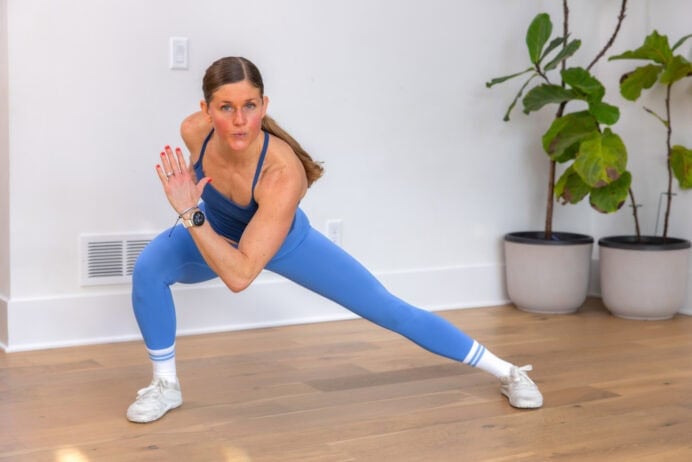
Not every workout is designed to produce the same amount of muscle soreness. In fact, the type of exercise you perform can have a significant impact on how you feel the next day. Workouts that emphasize the eccentric phase of a movement, such as slow squats, lunges, Romanian deadlifts or running downhill, typically produce more post-workout soreness than exercises that primarily focus on the lifting (concentric) phase.
Your training style matters, too. Strength training and resistance training often create more muscle soreness than steady-state cardio. On the other hand, lighter training days, mobility work and active recovery sessions are intentionally designed to improve movement and promote recovery rather than leave you feeling exhausted. If your workout matched its intended purpose and you completed it with good effort, don’t assume it was ineffective simply because you aren’t sore afterward.
The Workout May Not Have Challenged You Enough
Sometimes, the reason you’re not sore is simply that your workout is no longer challenging your body. It may be time to make a few adjustments if you’ve stopped seeing improvements in strength, endurance or muscle growth over several weeks:
- Increase the weight or resistance. Gradually lifting heavier weights challenges your muscles and supports progressive overload.
- Increase sets or repetitions. Increasing your training volume is an effective way to continue building strength and endurance.
- Eccentric focus. Controlling the descent of each repetition increases time under tension and may create a greater training stimulus.
- Try something new. Changing exercise selection or training angles can challenge your muscles in different ways and help prevent plateaus.
- Reduce rest periods. Shorter rest intervals can increase workout intensity and improve muscular endurance without changing the exercises themselves.
- Evaluate consistency. Before changing your program, make sure you’re following it consistently enough to accurately judge your progress.
Just remember: Don’t overhaul your program after a single workout. Look for consistent patterns before making changes.
How to Tell if Your Workout Is Effective
If soreness isn’t the best way to measure your progress, what should you look for instead? A successful workout is one that helps you become stronger, healthier and more capable over time. Here are some of the best indicators that your fitness routine is working:
- You’re lifting heavier weights. Gradually increasing the amount of weight you can lift is a clear sign that you’re building strength.
- You’re completing more repetitions or sets. Performing more reps with good form shows improved muscular strength and endurance.
- Improved endurance. Whether you’re running farther, walking longer or recovering more quickly between sets, increased endurance is a sign of progress.
- Better technique and range of motion. Better exercise form and greater mobility often lead to safer, more effective workouts.
- Faster recovery. Feeling refreshed and ready for your next workout is a sign your body is adapting well to training.
- Every day activities feel easier. Carrying groceries, climbing stairs, lifting your kids or completing household chores with less effort are all signs of improved functional fitness.
- More energy throughout the day. Regular exercise should leave you feeling stronger and more energized over time, not constantly exhausted.
- You’re staying consistent. The best workout program is one you can stick with. Consistently showing up and making gradual progress will always outperform chasing soreness.
FAQs
Do I still build muscle if I’m not sore?
Yes! While delayed onset muscle soreness (DOMS) can happen after a challenging workout, it doesn’t mean as much as people think. Your body adapts to strength training as your workout routine becomes more consistent. This means you’ll often experience less post-workout soreness.
Can you prevent DOMS?
Unfortunately, no. DOMS can be reduced, but it is unlikely you can completely prevent it. You can reduce its severity by gradually increasing your training volume, warming up before exercise, staying hydrated and allowing enough time for recovery between workouts. A consistent and proper cool-down routine paired with light movement and massage can help relieve post-workout soreness as well.
Do muscles grow on rest days?
Yes! Recovery is actually the mechanism for muscle repair and growth, not exercise itself. Rest days, proper hydration, quality sleep and good nutrition all play an important role in repairing muscle fibers and supporting long-term muscle growth.
The Bottom Line
Overall, feeling sore is completely normal, but it should never be the goal of your fitness routine and it is definitely not a requirement for progress. Focus on the things that truly matter – getting stronger, improving your endurance, moving with better form and staying consistent. Remember, the best workout isn’t the one that leaves you the most sore; it’s the one that helps you show up stronger for the next one.
More Posts
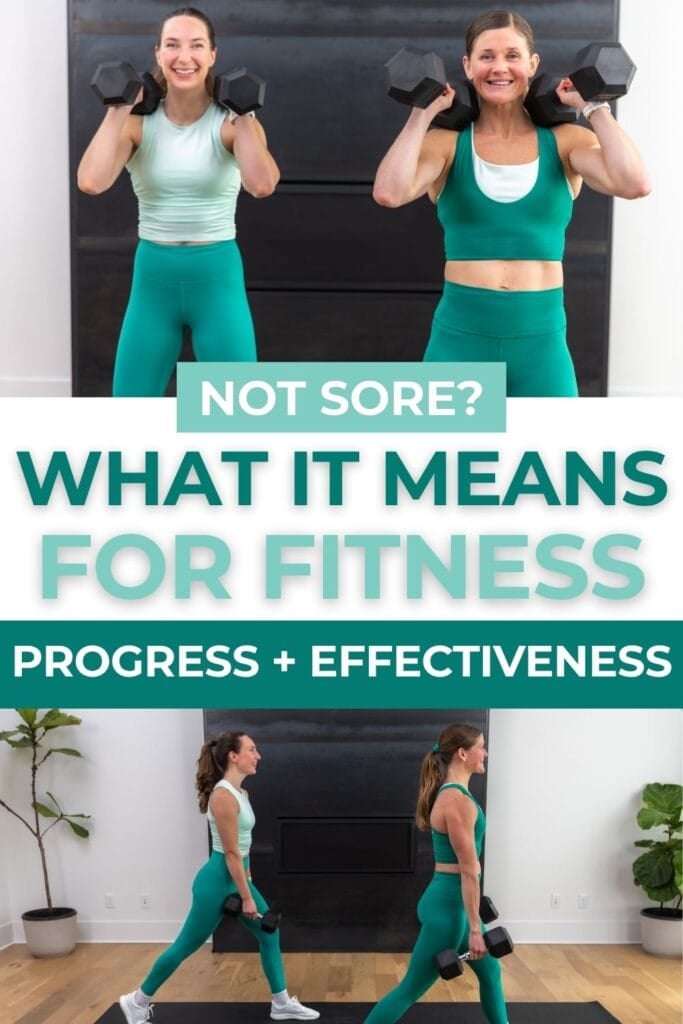
Fitness EducationPin This: Should I Be Sore After a Workout?
This post includes affiliate links. I do earn a commission for products purchased using these links (at no additional cost to you). Thank you for supporting Nourish Move Love, making the content you see on this blog possible.
no comments




Leave a Comment