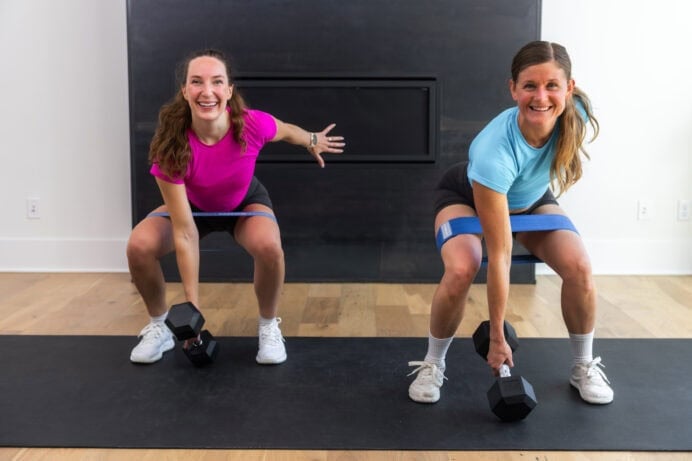




7 Lower Body Strength Exercises With Weights
This lower-body workout is designed to build strength in your quads, glutes, hamstrings and hip flexors using simple, effective movements you can do at home with just a pair of dumbbells. It’s ideal for anyone who wants to get stronger, feel more stable and move with more power in everyday life. Commit to this routine at least once a week, and you’ll improve lower-body strength, muscle tone and overall functional fitness.
You might think that an effective leg day requires a long list of exercises, but as a certified personal trainer, I’ve learned that the strongest lower-body results come from doing fewer exercises (just the right ones) with intention. The foundation of a powerful lower-body workout is built on the basics: big, compound lifts that challenge multiple muscle groups at once. Movements like squats and deadlifts are some of the best for overall leg strength because they load the body through large ranges of motion and recruit the glutes, quads, hamstrings and hips more effectively than anything else.
A well-rounded leg workout doesn’t need more than 3-5 exercises as long as each one represents a key movement pattern. I always return to these essentials: a hip-dominant lift (like a deadlift variation or hip thrust), a knee-dominant movement (such as squats, lunges or bulgarian split squats) and at least 1 multi-planar exercise to improve stability and functional strength. With this combination, you hit every major muscle group in the lower body and build balanced strength that carries over into everyday life – walking, lifting, climbing stairs and staying injury-free.
Most people only need these fundamental patterns to see real progress. Perform 2-4 sets of 8-12 reps per movement, adjusting based on your goals: lower reps for strength, higher for muscle endurance. When structured this way, a focused lower-body home workout can be completed in about 20 minutes while still delivering the benefits people train for: better power, stronger legs, increased mobility and improved overall fitness. Keeping it simple doesn’t just save time; it helps you stay consistent, build confidence under load and train with better form. Whether you’re at home or at the gym, sticking to these essentials creates an effective leg day every time.
Read A 5-Star Review ⭐⭐⭐⭐⭐
“Such a quick and effective workout!! I was able to crush this during nap time and I am feeling accomplished to start the day. Thank you ladies!!!”
— Megan S.
Workout Specifics
These leg exercises are designed to build muscle in around 20 minutes.
Add lower-body strength training like this to your workout split 1-2 times a week to achieve your fitness goals. If squats and lunges bother your knees, you can try these exercise modifications. I’d also recommend these knee-strengthening exercises.
Workout Equipment:
Medium to Heavy Pair of Dumbbells. We used 15 and 20 lb dumbbells in today’s workout. Option to add a mini loop resistance band.
Workout Instructions:
Follow along with the guided Leg Workout on YouTube, led by me — your certified personal trainer (CPT), Lindsey Bomgren.
Your Workout Looks Like This:
- Guided Warm-Up and Cool-Down
- 7 Lower Body Strength Training Exercises
- Timed Intervals (40 seconds work, 20 seconds rest)
- Perform Each Exercise x1 Set (no repeats)
Workout Outline
1. Goblet Squat
Targets: Legs, glutes, quadriceps, hamstrings, hips and core.
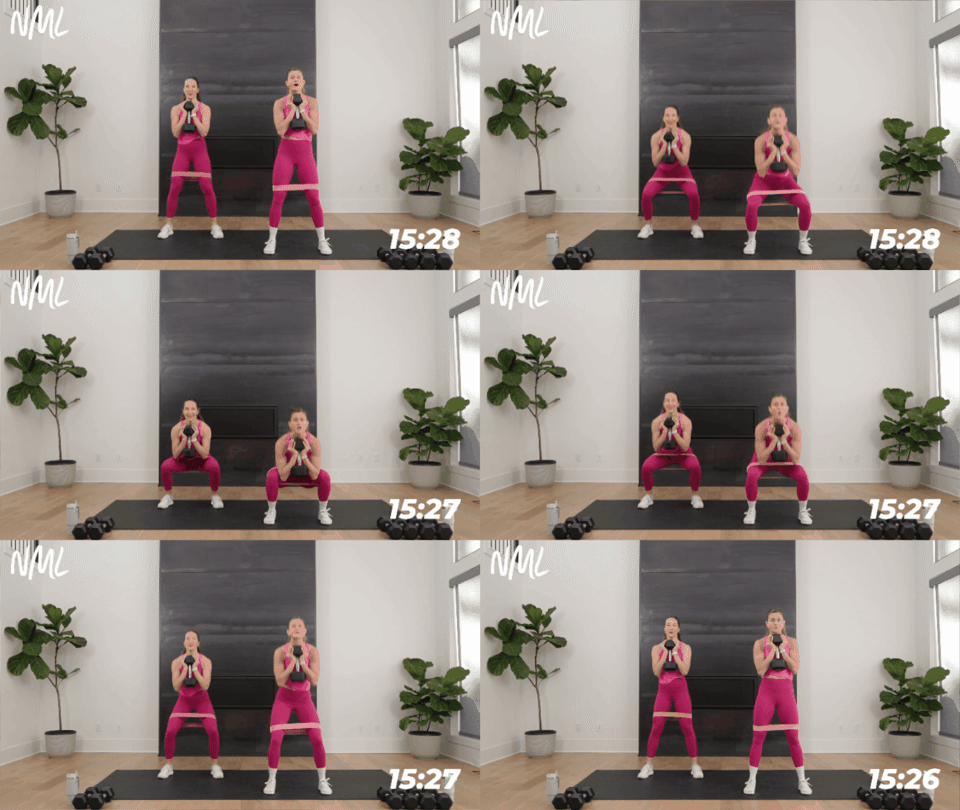
How to Do a Goblet Squat
- Start standing with your feet shoulder-width apart, knees slightly bent, holding a single dumbbell at your chest (vertically so the dumbbell is touching your collarbone and sternum).
- Lower down into a squat position, lowering your hips down parallel with your knees. Drive your knees out toward your outer toes.
- Drive through your heels to stand tall, returning to a standing position.
2. Split Lunges
Targets: Legs, glutes, quads, hamstrings and core.
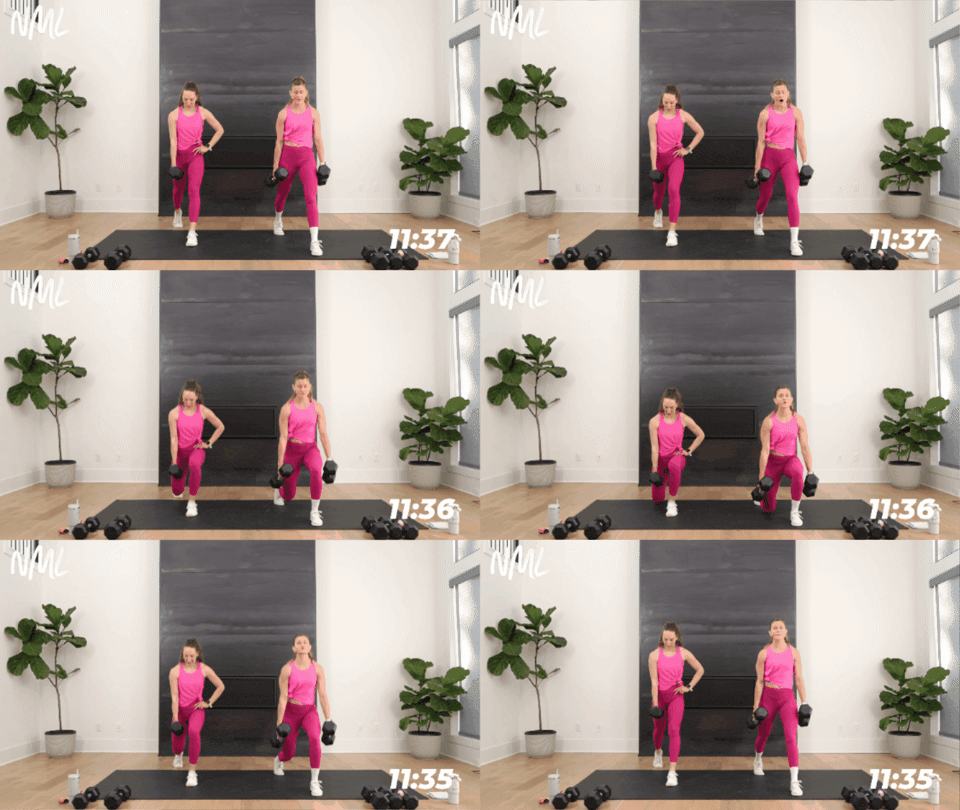
How to Do a Split Lunge
- Start standing with your feet hip-width apart, holding 1 dumbbell in each hand at your sides.
- Step your right leg back into a lunge position. Imagine your feet are on train tracks – front left foot planted on the mat and back right toes on the mat. Feet stay planted in this position throughout the entire movement.
- Lower your right back knee towards the mat until your front thigh is parallel to the mat. Both knees bent at 90-degree angles. Shoulders remain stacked over hips.
- Drive up through your front heel to stand tall, returning to the top of the movement.
3. Romanian Deadlift (RDLs)
Targets: All the posterior chain muscles, including the hamstrings, glutes, core, lats and lower back.
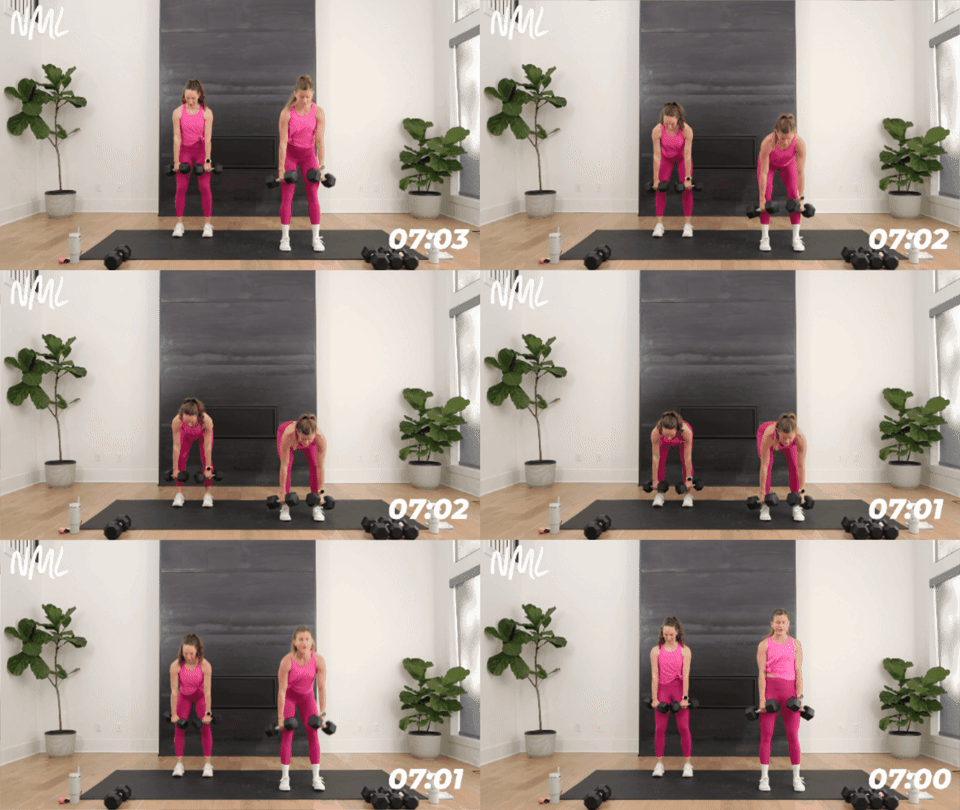
How to Do a Romanian Deadlift
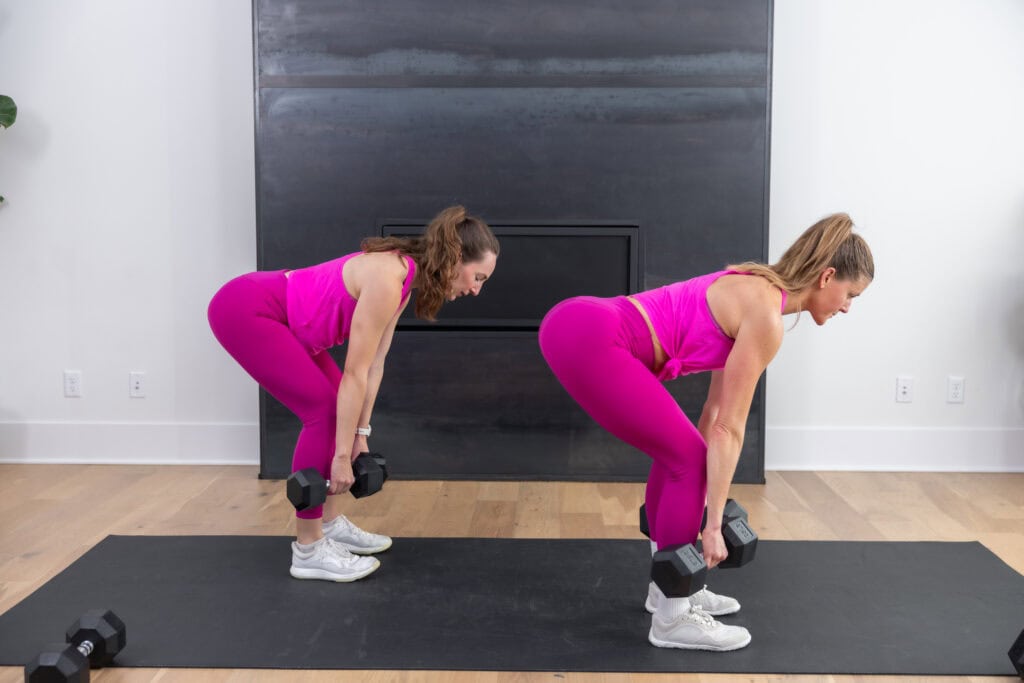
- Stand with your feet hip-width apart, holding a dumbbell in each hand in front of your hips (palms facing in towards your body).
- Hinge at the hips, pushing your hips back towards the wall behind you as you glide the dumbbells down the front of your legs, keeping your core tight, slightly bending both knees. Lower the dumbbells until you feel a stretch in your hamstrings. The range of motion will look different for everyone.
- Drive through your heels to push your hips forward, pulling the dumbbells back up towards your hips and returning to the starting position. Aim for full hip extension at the top of the movement.
4. Dumbbell Swings
Targets: Glutes, hamstrings, hips, core, and all the stabilizing muscles in your back and shoulders.
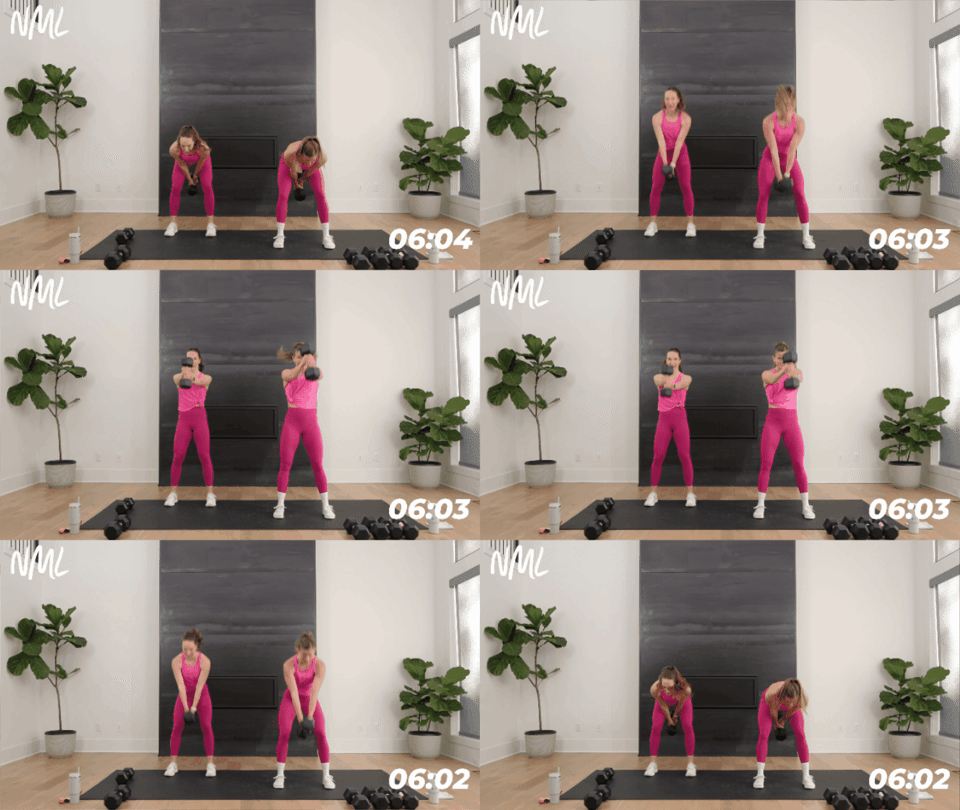
How to Do a Dumbbell Swing
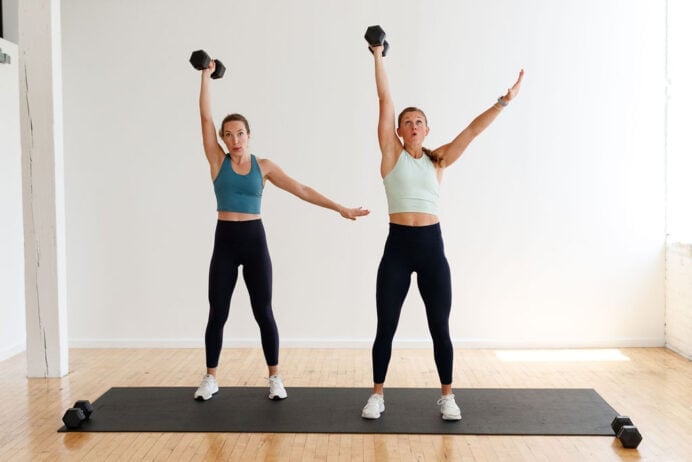
- Stand with your feet wider than shoulder-width apart, holding a single dumbbell vertically between your hands.
- With a slight bend in your knees and weight in your heels, ‘hike’ the dumbbell back between your legs to start the swing movement.
- Drive through your heels to stand tall, pushing your hips forward as you squeeze your glutes to swing the dumbbell up. Aim for shoulder height, with arms extended out away from the body. Think long, loose arms (your arms are just a vehicle for moving the weight; your hips and glutes generate the power).
- As the dumbbell begins to descend, think of catching the weight with a hip hinge, loading the glutes and hamstrings.
5. Calf Raises
Targets: Calf muscles (gastrocnemius and soleus) and Achilles tendon.
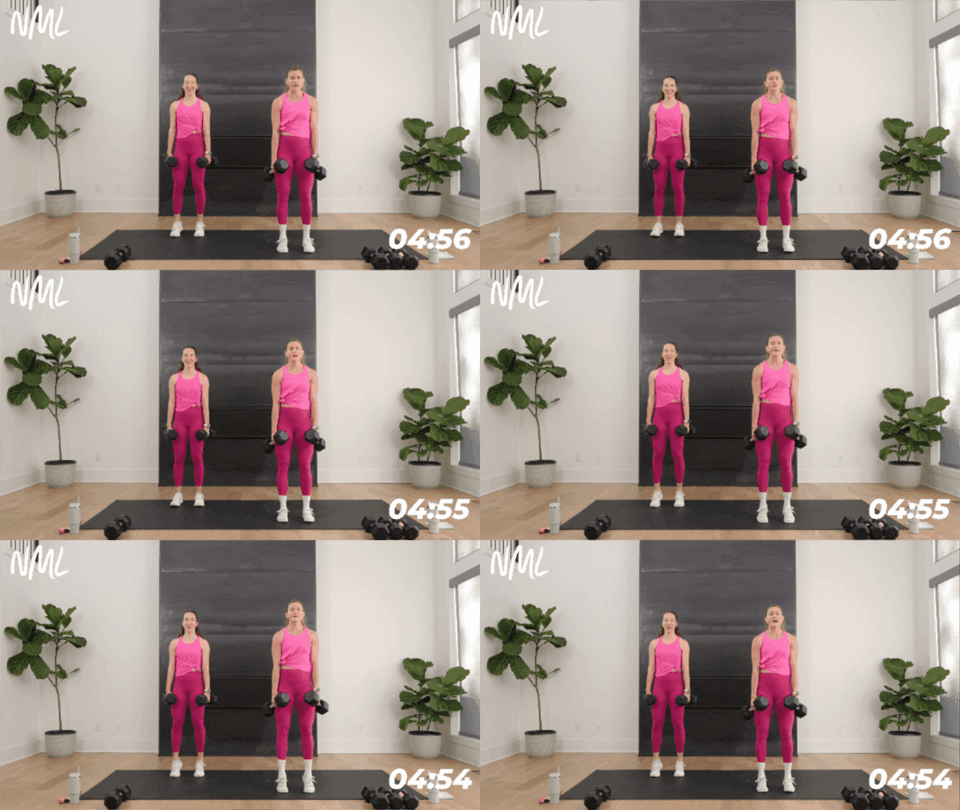
How to Do a Calf Raise
- Start standing on a flat surface, feet shoulder-width apart. Keep your back straight and core engaged to stand tall. Hold a pair of dumbbells in your hands.
- Slowly and with control, lift yourself onto the balls of your feet, heels rising above the ground.
- Lift your heels until you feel a stretch along the back of your legs, balancing on your toes.
- Slowly lower your heels back to the ground, returning to the starting position.
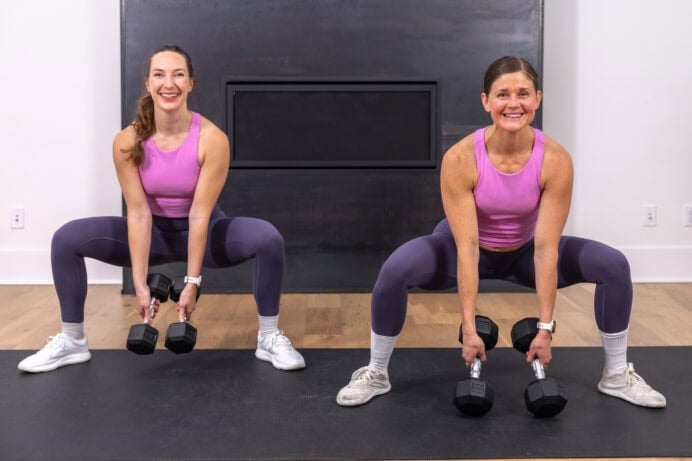
6. Lateral Squats
Targets: Glutes (gluteus medius), quads, hip adductors (inner thighs), hamstrings and core.
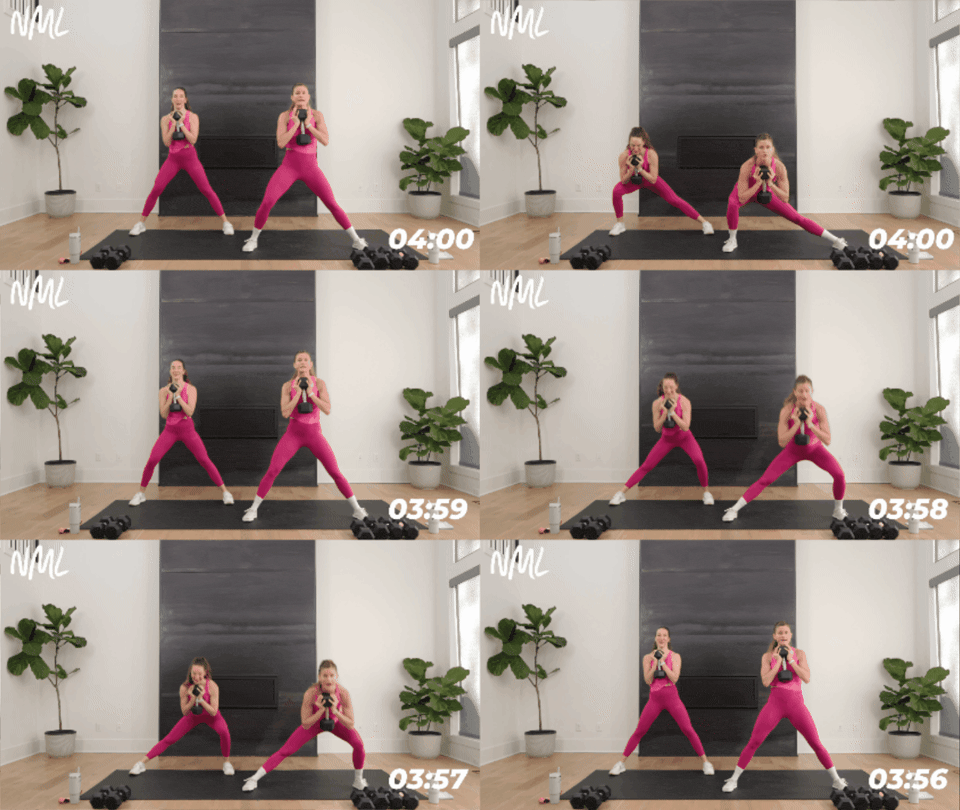
How to Do a Lateral Squat
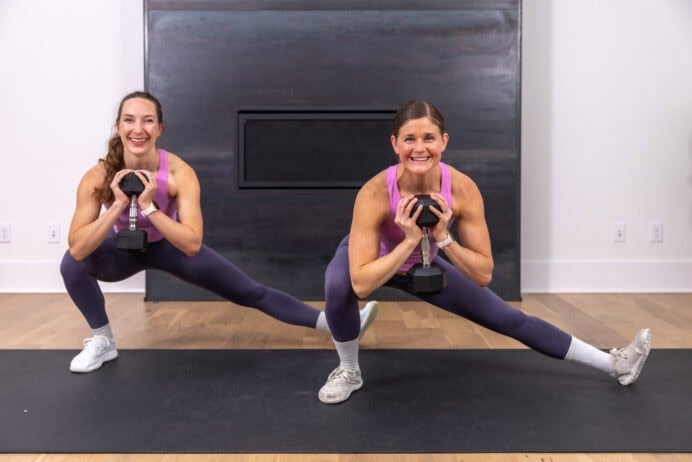
- Start standing, feet wider than shoulder-width (lateral squat stance), with toes facing forward or slightly turned out. Hold 1 dumbbell vertically at your chest in a goblet hold.
- Sit your hips back, bending your right knee while leaving your left leg straight. Think of performing a single-leg squat with your right leg while your left leg remains straight.
- Drive off your right foot to reverse the movement, pushing back to the center.
- Immediately push to the left side, bending your left knee while leaving your right leg straight. This time, think of performing a single-leg squat with your left leg while your right leg remains straight.
7. Glute Bridges
Targets: Glutes, hamstrings and hip abductor muscles.
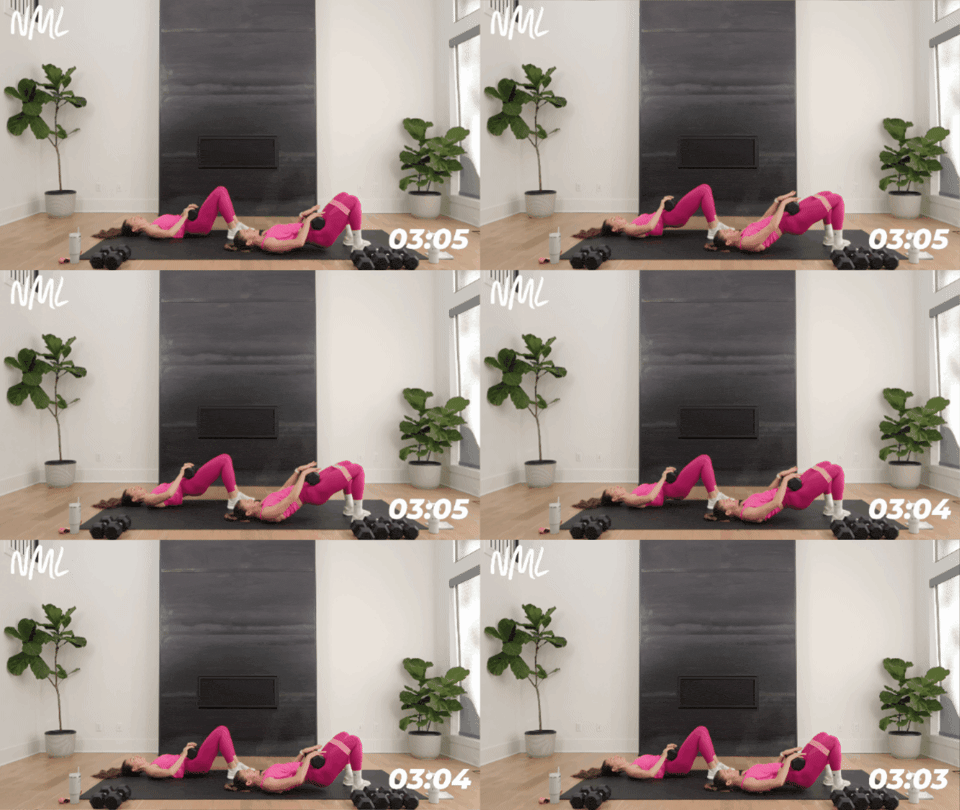
How to Do a Glute Bridge
- Lie on your back with your knees bent at 90 degrees and your feet flat on the ground. Hold a dumbbell across your hips, resting the dumbbell on your hip bones.
- Press through your heels to raise your hips off the ground until your knees, hips and shoulders form a straight line. Squeeze your glutes hard and keep your abs drawn in so you don’t overextend your back during the exercise.
- Lower your hips back down to a hovering position and repeat.
FAQs
What are 3 movement patterns that are necessary in any complete leg workout?
A well-rounded leg workout should include 3 key movement patterns: hip-dominant movements (like deadlifts, hip thrusts or good mornings) to target glutes and hamstrings, knee-dominant movements (such as squats and reverse lunges) for quads and overall leg strength and multi-planar movements that train the body in multiple directions.
How many leg days should I do per week?
Most people benefit from 1-2 focused lower-body sessions per week, depending on their goals, overall training schedule and recovery. 1 well-structured leg day is enough to maintain strength and muscle growth if the session is focused and includes all major muscle groups.
Should lower body workouts focus more on strength, hypertrophy, or mobility?
The best approach is a balance of all 3. Strength-focused exercises help you move heavier and improve power, hypertrophy-focused work builds muscle tone and mobility exercises maintain joint health and help you prevent injury. All are important in keeping your legs strong.
How can I improve lower-body strength at home without equipment?
No-equipment exercises are a great addition to your leg day workout routine. Bodyweight squats, lunges, glute bridges, single-leg Romanian deadlifts, step-ups on and lateral lunges all target the major lower-body muscles. Focus on slow, controlled movements and higher repetitions to build strength and endurance. Adding variations like pulses or holds increases the challenge without needing weights.
Is bodyweight training effective for lower-body strength as you get older?
Bodyweight exercises are effective for maintaining and improving leg strength, balance and mobility at any age. As you age, strong legs support functional movement (like standing from a chair or climbing stairs), reduce the risk of injury and keep muscles strong without heavy loading. You can adjust the intensity of bodyweight exercises through higher repetitions, tempo and range of motion.
Free 2-Week Strength Program
More Workouts
Lower Body WorkoutsPin This: Best 7 Lower Body Strength Exercises (With Weights)
This post includes affiliate links. I do earn a commission for products purchased using these links (at no additional cost to you). Thank you for supporting Nourish Move Love, making the content you see on this blog possible.
no comments