






Hypertrophy Training vs. Strength Training (And Which Is Right for You)
In this post, I break down the differences between hypertrophy training and strength training so women can better understand how each approach supports different fitness goals. This matters because choosing the right training style can make workouts more effective, sustainable and aligned with real life. This post is ideal for women who want clarity, confidence and a training approach that fits their goals, schedule and season of life.
Quick Links:
Hypertrophy
Hypertrophy training is a style of resistance training designed to increase muscle size. The word hypertrophy literally means “to grow,” and in the fitness world, it refers to growing the size of your muscle fibers.
At its core, hypertrophy training focuses on placing controlled stress on the muscles, then allowing them to recover and rebuild slightly bigger and stronger than before. Muscle growth is driven by 3 main factors:
- Mechanical Tension: This comes from lifting weights with proper form through a full range of motion. Moderate to heavier loads challenge the muscle and signal it to grow.
- Muscle Damage: Tiny micro-tears occur in the muscle fibers during training (this is normal and safe). During recovery, the muscles repair themselves and grow back stronger.
- Metabolic Stress: The muscle “burn” you feel during a set is metabolic stress. Higher rep range, shorter rest periods and time under tension all contribute to this feeling.
Hypertrophy training doesn’t mean you’re training to get “bulky,” which is a common fear and misconception among women. This style of training aims to:
- Increase muscle mass and shape
- Improve muscle definition and tone
- Support fat loss by boosting metabolism
- Build a strong, balanced physique
This type of training is less about how much weight you can lift 1 time and more about how the muscles feel and respond during a workout.
Benefits of hypertrophy training include:
- Improved body composition (more muscle, less fat)
- A toned, sculpted appearance
- Increased metabolism, even at rest
- Better joint support and injury prevention
- Improved confidence and body image
- Stronger bones, which are critical as we age
If you want to look more toned or if you have a goal of maintaining muscle during a fat loss phase, hypertrophy training is a great option.
What Hypertrophy Training Looks Like
Hypertrophy workouts typically include:
- Moderate weights (challenging, but not maximal)
- 8-12 reps per set (sometimes up to 15)
- 3-4 sets per exercise
- Shorter rest periods (30-90 seconds)
- A strong focus on the mind-muscle connection
Workouts should feel pretty challenging. Your hypertrophy workouts will likely include a combination of compound exercises that recruit several muscle groups (back squats, deadlifts, rows, bench presses and overhead presses), as well as isolation exercises (bicep curls, overhead tricep extensions, glute bridges and calf raises).
Hypertrophy workouts are a great way to try different formats, such as supersets and drop sets. Variety can enhance the training stimulus, signaling your muscles to grow larger.
You typically want to follow an intentional workout split that alternates full-body days with upper-body and lower-body days. Your split will include muscle-specific exercises that allow you to really focus on building that muscle group on that particular day. The split will also allow for proper rest and recovery in between training specific muscle groups.
Strength
“Strength training” is often used as a more general term referring to strength-focused workouts and programs (like the ones you see on my site). However, in the strictest sense, “true” strength training focuses on how much force your muscles can produce. For this post, we’re talking about “true” or “absolute” strength training. At the most basic level, your strength is measured by the heaviest thing your body can push or pull.
The primary goal of “true” strength training is to increase maximal strength, or how much weight you can safely move for fewer reps. Strength training trains your nervous system to communicate better with your muscles. While muscle growth can still happen with strength training, it’s not the main focus. True strength training emphasizes:
- Heavier weights
- Lower repetitions
- Longer rest periods
- Big, compound movements like squats, deadlifts, presses and pulls
Strength training is more about ability and skill. It offers great health benefits:
- Increased functional strength for everyday life
- Improved bone density, reducing osteoporosis risk
- Enhanced joint stability and injury prevention
- Greater confidence and mental toughness
- Better posture and movement mechanics
- Long-term independence and longevity
For moms, this means lifting kids, moving furniture and handling life’s physical demands with more ease and less fear of injury.
Strength training workouts can be your focus if you want to increase your ability to lift heavier during a particular exercise. If you enjoy tracking measurable progress, have performance-based (rather than appearance-based) goals and want to build a foundation that supports long-term health, you’ll reap the benefits of strength training.
Keep in mind that while strength training typically means you’re focused on heavier weights and low reps, it doesn’t mean exclusively training in your one-rep max. Effective strength training usually involves weightlifting 60-90% of your maximum for multiple reps so you can safely increase strength over time. A “one-rep max” is the heaviest weight you can lift once. I don’t think training here is safe or beneficial for most people, as it can increase your risk of injury.
What Strength Training Looks Like
Strength training typically includes:
- Heavier weights (challenging but safe)
- 1-5 reps per set
- 3-6 sets per exercise
- Longer rest periods (2-5 minutes)
- A strong focus on proper technique and recovery
Workouts may feel slower and more intentional because you’re aiming for measurable strength gains. Strength training workouts typically include specific, compound exercises like heavy barbell squats or deadlifts.
Differences and Similarities
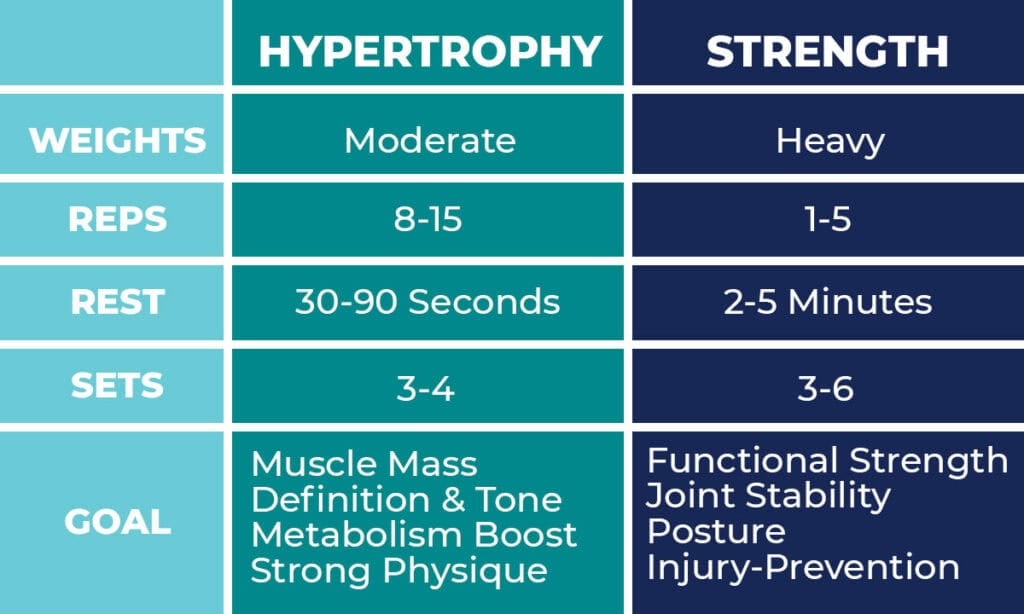
If the differences between hypertrophy training and strength training seem confusing – I hear you. Both are forms of resistance training that will help you build a stronger, healthier body, but they have different goals, approaches and benefits. Understanding both the similarities and key differences can help you choose (or combine) the method that best fits your fitness goals.
Differences:
- Primary Goal: Hypertrophy focuses on building bigger muscles, while strength training focuses on increasing the amount of force your muscles can produce.
- Reps and Sets: Hypertrophy typically uses moderate weights with 8-12 reps per set, while strength training uses heavier weights with 1-5 reps per set.
- Rest Periods: Hypertrophy workouts have shorter rest periods (usually 30-90 seconds), whereas strength training requires longer rest (2-5 minutes) to allow full recovery.
- Muscle vs. Neurological Adaptation: Hypertrophy emphasizes muscle growth and metabolic stress, while strength training emphasizes neurological adaptations and efficient muscle recruitment.
- Workout Feel: Muscle hypertrophy often produces a “burn,” whereas strength training feels slower, heavier and focused on max effort.
Similarities:
- Both rely on progressive overload or gradually increasing weight, number of reps or intensity to keep improving.
- Both improve overall strength, functional movement and bone health.
- Both can be adapted for full-body workouts or split routines depending on your time, goals and lifestyle.
- Both require consistency, proper form and recovery to see results safely and effectively.
To compare, a powerlifter would train for strength (to squat as heavy as possible), and a bodybuilder would train for hypertrophy (to grow their muscles as big as possible). The average person working out at home or in the gym is probably going to combine these methods!
Which Training Method Is Right for You?
Ultimately, the “best” training method is the one that supports your goals, lifestyle and season of life. Understanding what you want from your workouts will help you decide which training style to focus on.
If your main goal is to look more toned, improve muscle definition, support weight loss or feel stronger without lifting absolute maximal weights, hypertrophy training is likely the best fit. It’s ideal for women who want visible changes in their physique, enjoy moderate-to-high effort workouts and need a flexible approach that works with busy schedules.
The benefits of “true” strength training may be better aligned if your primary goal is to increase how strong you feel in daily life, improve bone density or build long-term physical resilience. If you enjoy lifting heavy weights, tracking progress with numbers and focusing on performance rather than appearance, strict strength training can be effective.
For many women – especially moms – the most realistic and sustainable option is a blend of both. Combining strength-focused compound lifts with hypertrophy-style accessory work allows you to build muscle, increase muscular strength and support overall health without overtraining or burnout. This balanced approach adapts well to changing schedules, energy levels and goals.
A combination is generally what you’ll find in my workout plans. I’ll always encourage you to reach for heavy weights, but I understand that your time is limited and you might not have the time to dedicate to strict strength training sets where you’re taking a 2-minute rest between exercises. You can efficiently lift heavy, improve your endurance and see noticeable change with a combination of training styles.
Ultimately, the right training method is the one you can stay consistent with and enjoy. When your workouts align with your goals and your life, progress becomes sustainable.
FAQs
Should beginners focus on hypertrophy or strength training?
For most beginners, a hypertrophy training program is the best starting point because it helps build a solid foundation of muscle while allowing time to learn the fundamentals of proper form and movement patterns. This approach builds confidence, supports fat loss and delivers results without the pressure of lifting very heavy weights right away. As muscle strength and experience increase, elements of strict strength training can be gradually layered in for continued progress.
How effective is full-body training for hypertrophy?
Full-body training can be very effective for hypertrophy, especially for women with busy schedules. Training the entire body multiple times per week allows muscles to be stimulated frequently while still recovering properly, which supports muscle growth. When total volume, intensity and progressive overload are in place, full-body workouts can be just as effective as split routines for building muscle.
How can I balance hypertrophy and strength training in the same workout routine?
Hypertrophy and strength training can be balanced in the same workout by prioritizing strength-focused lifts first, followed by hypertrophy-focused exercises. Heavier compound movements performed for lower reps build strength, while moderate-weight accessory exercises performed for higher reps support muscle growth. This structure allows you to develop strength and muscle efficiently within a single session.
What is the 3-3-3 rule in strength training?
The 3-3-3 rule in strength training refers to performing 3 exercises for 3 sets of 3 reps using a challenging amount of weight. This rule focuses on building maximal strength while maintaining good form and adequate rest between sets. This method keeps workouts efficient and effective without excessive volume or fatigue.
Let’s Get Stronger, Together!
Hypertrophy training and strength training are forms of resistance training that can support different goals, bodies and seasons of life. Whether you’re focused on building muscle, getting stronger or finding a balanced approach that fits a busy schedule, the most important thing is choosing a method you can stay consistent with. If you’re ready to get stronger, check out my free home workouts and training plans. When it comes to building strength and confidence, consistency always matters more than perfection.
More Posts
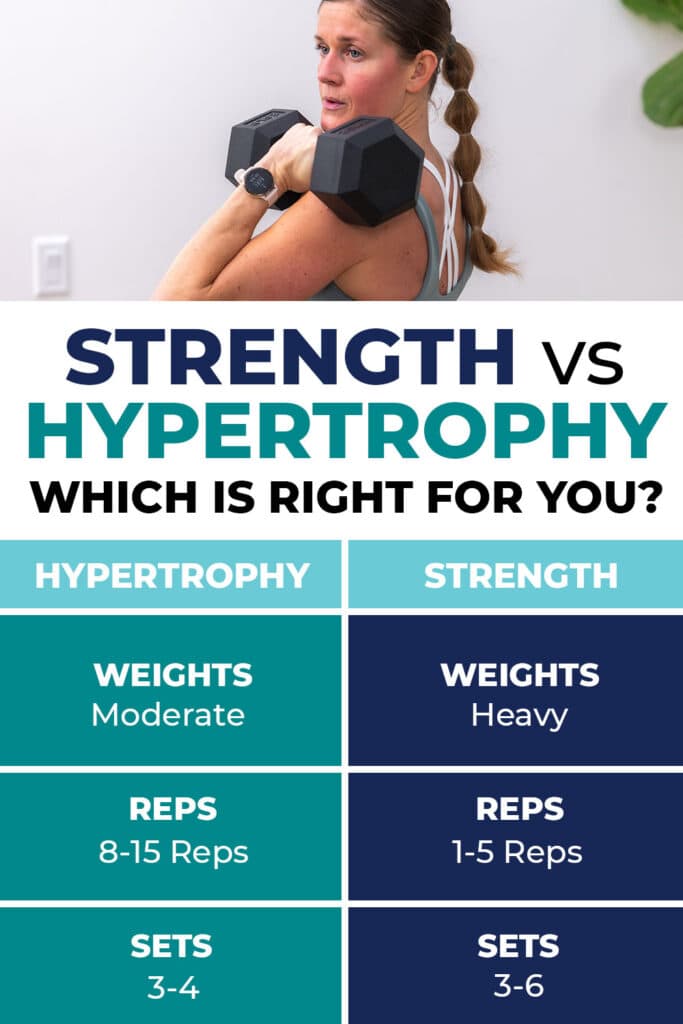
Fitness EducationPin This: Hypertrophy Training vs. Strength Training (Which Is Right for You?)
no comments

Leave a Comment