






How to Get Back Into Working Out
Trying to get back into the gym after a long break can feel more daunting than the decision to begin your fitness journey in the first place. If you’ve been on your fitness journey for any amount of time, chances are you have taken a break, whether accidentally or on purpose. Sometimes we lose motivation, injuries happen – and so does life! Let’s talk about how to get back into your workout plan gradually to rebuild strength, endurance, mobility and consistency – all while avoiding burnout.
As a personal trainer, I’ve seen just about every reason there is to take a break. Whether your break was due to an injury, having a baby, travel, a busy season of life or simply a loss of motivation, why you stopped matters when deciding how to start exercising again.
A break in your exercise routine doesn’t mean you’re starting from ground zero, but it does mean you might need to come up with a strategy. Your plan for getting back into the gym should focus on taking it slow, avoiding burnout, improving your health and wellness and making it a priority to listen to your body.
The temptation is to jump right back in where you left off, but don’t fall for it! While it might be easy to go right back to your normal routine, your body may not respond very well if your break has been for an extended period of time.
The goal here isn’t to immediately return to your previous fitness level. It’s about meeting your body where it is today and gradually rebuilding through consistent progress over time.
Why You Took a Break Matters
It’s important to know that not every break from an exercise routine is the same. Naturally, getting back into working out won’t and shouldn’t look the same for everyone. The reason for an extended break can influence your starting fitness level, workout frequency, intensity and which types of physical activity make sense for you and support your specific fitness goals.
Injury and illness are both common causes for taking an extended break. (As they should be!) Returning to your old routine after recovering from an injury could reaggravate it or create compensatory patterns. It is a good idea to get medical clearance from your healthcare provider prior to returning to strength training, running or other demanding activities like sports and high-intensity interval training.
Illness can be a little trickier because feeling better doesn’t always mean you’re ready to jump back into your previous fitness routine. Be sure to consider the severity and duration of the illness and not just whether you’re feeling better. I recommend starting with lower-intensity exercise and gradually rebuilding your workout duration and frequency.
Pregnancy and postpartum recovery also require an individualized approach. Your timeline for returning to exercise can depend on pregnancy, delivery and recovery, so work with your healthcare provider to determine when and how to safely resume physical activity.
If your break was due to travel, a busy schedule or burnout, you may not need the same precautions, but your old workout frequency may no longer align with your current lifestyle. Adjusting your fitness routine to your current schedule can make it easier to rebuild consistency without falling back into burnout.
No matter the cause for the break, build your new routine around your current fitness level, schedule and needs, not on your previous performance. Once your starting point is established, you can gradually work toward your fitness goals.
Start Slower Than You Think You Need To
Getting back to working out can feel like you’re battling yourself sometimes, especially when you feel like you should be able to run a certain distance or lift a certain weight. The temptation may be to rush back into your old routine after only a day or 2 of ramping up. However, your previous weights, mileage or workout schedule may no longer match your current fitness level. Starting with lower intensity and training volume gives your body time to readjust to regular exercise and can help reduce excessive fatigue, muscle soreness and burnout.
As you rebuild your fitness routine, consider scaling back several parts of your previous workouts:
- Shorten your workouts: Start with shorter sessions and gradually increase your workout duration.
- Take more rest days: Begin with fewer training days each week to leave room for rest and recovery.
- Use lighter weights: Reduce the weight of your dumbbells, kettlebells or other resistance to rebuild strength while focusing on proper form.
- Reduce reps or sets: Lower your overall training volume to allow your muscles to gradually readapt to resistance training.
- Lower your intensity: Start with brisk walking, bodyweight exercises or other lower-intensity activities before returning to demanding workouts like heavy lifting, longer runs or HIIT.
Gradually increase the challenge as your body adjusts by changing a single aspect of your workout at a time. You might add 5 minutes to your cardio workout, increase the dumbbell weight, perform another set, or add an additional training day, but avoid doing all of these at once. Gradual progression gives your body time to adapt while allowing you to monitor how you feel as your fitness level improves.
Remember, getting back into working out is about improving your strength, health and wellness. Give your body time to catch up with your motivation and focus on building an exercise routine you can consistently maintain.
Focus on Proper Form
When jumping back into a workout plan, muscle memory can make familiar movements feel comfortable, but how you move is just as important as how much you move. Weight and reps can easily become the markers you use to measure progress, but after an extended break, familiar exercises may not feel exactly like you remember them.
Strength, mobility, flexibility and coordination can change during time away. That is why ensuring proper form is especially important as you rebuild your fitness routine.
Don’t be afraid to start with lighter weights, resistance bands or bodyweight exercises. This makes it easier to focus on movement quality before increasing intensity. Bodyweight exercises like squats, lunges and push-ups are great opportunities to practice proper form and work through a comfortable range of motion.
If your technique begins to break down, reduce the weight, modify the exercise or stop the set to avoid building bad habits.
Choose the Best Workout Plan for You
Exercise is never one-size-fits-all, and that remains true when you’re returning after a long break. The best fitness routine should meet you at your current fitness level, fitness goals, schedule and stage of life. The plan you used five years ago may not fit your life today. Focus on finding a routine that challenges you enough to make progress but is realistic enough to maintain.
Depending on your goals, consider starting with one of these workout plans:
- Beginner Workout Plan: Ideal if you’ve taken an extended break or want a structured way to start exercising again. A beginner plan can combine low-impact cardio, bodyweight exercises and rest days while gradually rebuilding overall fitness.
- Strength Training Plan: Great for rebuilding strength and muscle using dumbbells, kettlebells, resistance bands or bodyweight exercises. Start with full-body workouts and gradually increase resistance as your strength and proper form improve.
- Running Plan: If your goal is to return to running or improve cardiovascular endurance, start with shorter distances or walk-run intervals before increasing mileage, pace or frequency.
- Low-Impact Workout Plan: Walking, cycling, swimming, yoga and Pilates are great options for gradually rebuilding endurance, mobility and flexibility while placing less stress on your joints.
- Short Workout Plan: If a busy schedule contributed to your break, shorter workouts (or micro workouts) may be more sustainable than trying to squeeze in hour-long sessions. Even 15-30 minutes of intentional physical activity can help rebuild consistency.
The best workout plan is one that propels you toward your goals while still fitting into your life. Your workout plan doesn’t have to be permanent either. Track your progress and adjust your routine as your strength, endurance and confidence return.
Recovery Is Key
Rest and recovery are often used in tandem or completely ignored. Once you get motivated to start working out again, rest days can feel like time you are losing when you could be making progress. However, rest and recovery are a vital part of rebuilding your fitness routine. Your body needs time between workouts to recover from the increased physical activity so it can adapt to training and be prepared for your next workout.
Start by scheduling appropriate recovery time between challenging workouts, such as strength training sessions, especially if the session targets the same muscle groups. Understanding that rest days don’t necessarily mean doing nothing, instead consider lower-intensity activities like a brisk walk, dynamic stretching, yoga or mobility work as a fantastic way to keep moving without adding another demanding workout to your workout schedule.
Lastly, prioritize the basics! It can be easy to forget things like quality sleep, proper hydration and a balanced diet. These habits are simple and essential to support physical recovery. A warm-up before exercise and a cool-down afterward can also help with the transition into and out of your workouts.
Above all, listen to your body! If fatigue, performance decline or soreness persist, they may be signs that you need more recovery time built into your workout schedule.
FAQs
How long does it take to get back into shape after a break?
It depends. Factors like the length of the break, your previous fitness level and how consistent your return is all play into your “comeback.” The good news is your body often regains strength and endurance faster than someone starting from scratch, thanks to muscle memory.
Should I expect muscle soreness when getting back into working out?
Yes, mild muscle soreness is normal as your body adapts to exercise, whether it’s your first time or you’re coming back from a long break. Be sure to prioritize rest and recovery as well as hydration, quality sleep and light movement. These all help to reduce soreness, but stop exercising and consult your healthcare provider if your pain is sharp or persistent.
What type of cardio is best when getting back into exercise?
Start with lower-intensity cardio! Exercises like brisk walking, cycling, swimming or hiking are ideal for rebuilding your endurance and getting your body used to moving again, without overloading your muscles and joints. Slowly increase your workout duration as your fitness improves before trying to progress to higher-intensity exercise like HIIT.
What are some low-impact exercises for getting back into working out?
Activities like walking, swimming, cycling, yoga, pilates and bodyweight exercises are excellent low-impact options for rebuilding strength, mobility and endurance. Make it a priority to focus on proper form and a full range of motion before increasing the intensity or weight of your workouts.
Don’t Give Up – You’ve Got This!
A comeback after a long break can feel intimidating, but you don’t have to do it all at once. The main goal is to just start where you are and choose a workout plan that fits your current fitness goals and schedule. Give yourself grace and focus on things like proper form, rest and recovery.
Remember, progress doesn’t require a perfect workout schedule. Life inevitably happens no matter how much you try to control it and some weeks you might crush every workout you planned, while others you might not. What matters is continuing to come back!
Stay consistent, celebrate progress and give yourself the time to rebuild properly. Every workout is another opportunity to get stronger, build confidence and move one step closer to your goals. You’ve got this!
More Posts
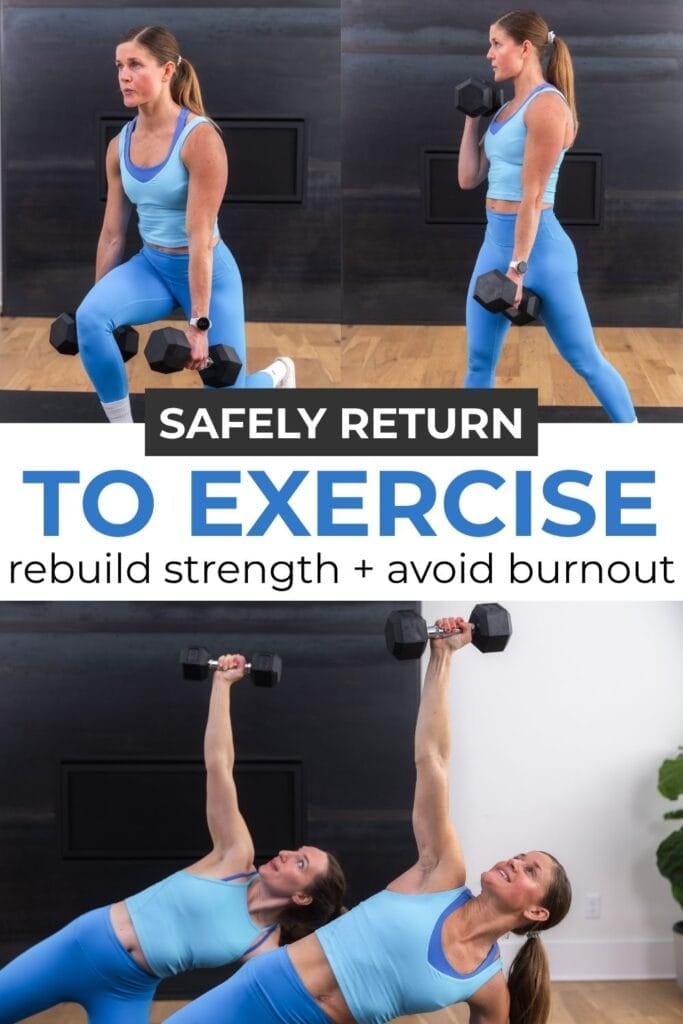
Fitness EducationPin This: How to Start Working Out Again After a Long Break
This post includes affiliate links. I do earn a commission for products purchased using these links (at no additional cost to you). Thank you for supporting Nourish Move Love, making the content you see on this blog possible.
no comments




Leave a Comment