





25-Minute Cardio and Core Workout (Athlete 25 Day 4)
This cardio and core workout is designed to strengthen the stabilizing muscles that support balance and movement while improving heart health, agility and endurance. It targets functional fitness, helping you maintain speed, coordination and reaction time, which often fade after age 30.
This is DAY 4 of my Athlete 25 Program.
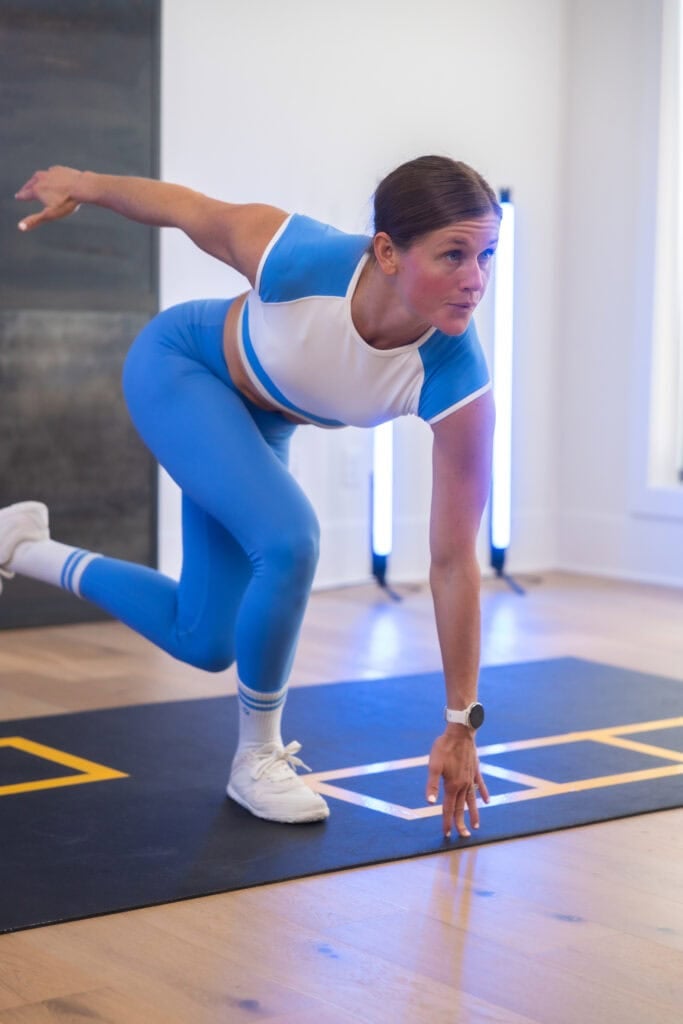
LET’S GET STARTED
Download Your FREE Workout Plan Here
Download the PDF calendar and tracking sheets here! Easily access your daily workouts and keep track of your progress over time.
Download Plan
Day 4 of my Athlete 25 Program is all about moving with purpose. I’ve designed it to blend cardio and agility drills with core-focused strength work – a combination that keeps the body strong, nimble and resilient.
Lifting heavy 5 days in a row is tough, so I love a workout format like this one to break things up. Not only do these exercises get blood flowing to muscles that might feel tight or sore, but they also improve mobility, enhance range of motion and build the core strength that will support everyday movement – whether I’m lifting, running after my kids or just bending down safely.
I decided to combine cardio, agility and core for a few reasons. First, I’m a big believer in keeping the heart strong. Cardio doesn’t just burn calories – it improves cardiovascular function, sharpens reaction time and boosts endurance. This is especially important as we age. After 30, agility, speed and overall stamina start to decline, but consistent cardio helps slow that process. When I do agility drills, I’m training my body to react faster and move confidently. This has real-world benefits, like reducing the risk of falls, which is the number 1 cause of injury after 65.
I also love to include functional core training in my weekly routine. Your core is the stabilizing powerhouse between the hips and pelvis that affects nearly every movement. A strong core improves posture, supports daily activities and protects the lower back from injury. When I train my core, I’m training for real life – twisting, bending, reaching and staying stable under load.
Combining cardio and core in 1 session creates a dynamic, functional workout. I love that this approach strengthens muscles while also challenging coordination, balance and endurance. Every move serves a purpose and will bring you closer to staying nimble and resilient.
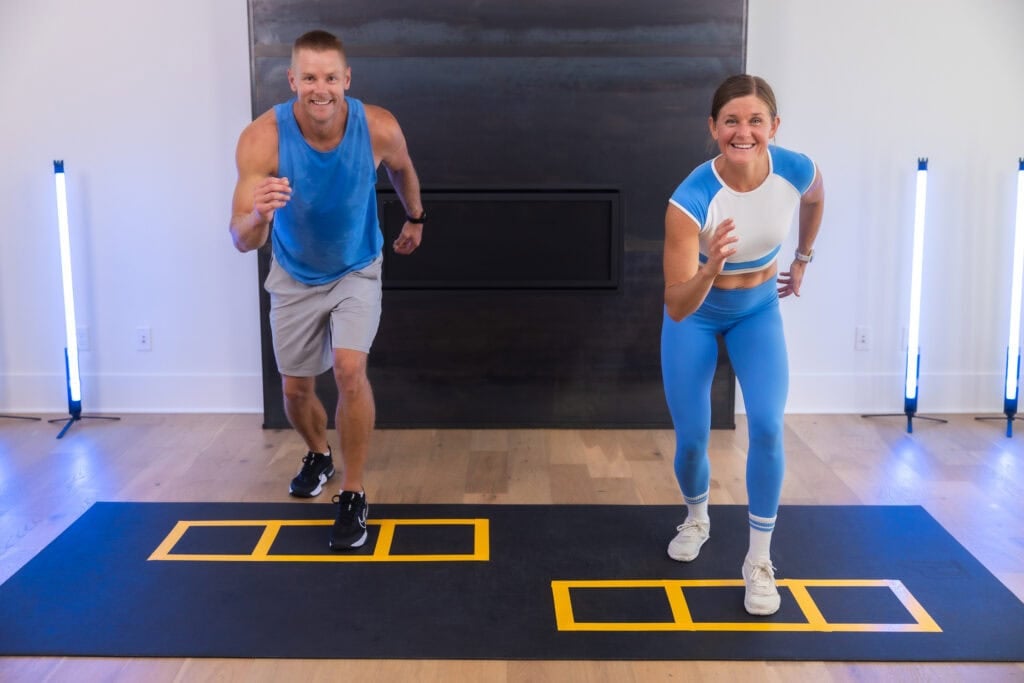
Workout Details
Build core strength, increase cardiovascular conditioning and improve your athleticism with this agility and abs workout at home.
I suggest doing this cardio and abs workout once a week as part of a well-rounded workout routine.
Workout Equipment
None. Option to tape 3 boxes on the floor, creating an agility ladder.
Workout Instructions
Follow along with the guided 25-Minute Cardio and Core Workout on YouTube, led by me — your certified personal trainer, Lindsey Bomgren.
Your Workout Looks Like This:
- 2 Circuits (4 exercises per circuit, 2 agility exercises and 2 core exercises)
- Timed Intervals (Perform each exercise for 30 seconds of work, followed by 15 seconds of rest.)
- Strict Set Trisets (Repeat each exercise back to back x3 sets before moving onto the next exercise.)
Workout Outline
1. Plank Double Knee Tucks
Targets: Lower abs, core, hip flexors, glutes, shoulders, chest and arms.
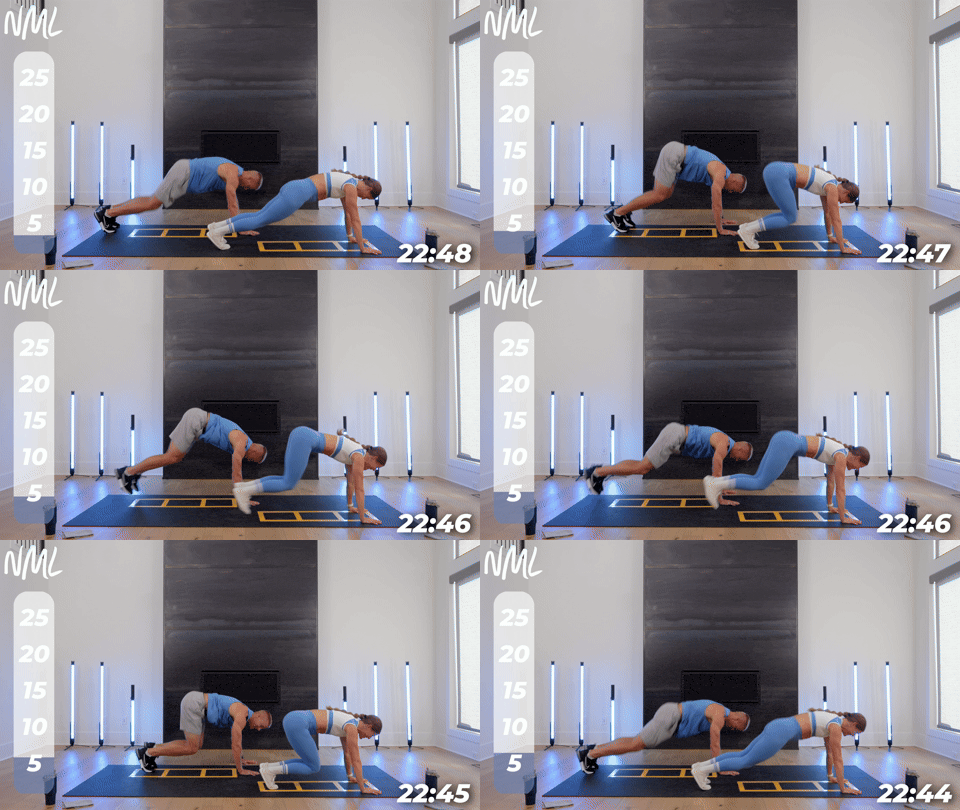
How To Do a Plank Double Knee Tuck
- Start in a high plank position with your shoulders stacked over your wrists, legs extended long and body forming a straight line from head to heels. Engage your core, keeping your hips level and back flat.
- From here, lightly jump both knees in toward your chest, keeping your toes off the ground and your core tight.
- Jump your feet back out to return to your high plank position.
- Maintain a steady pace and controlled movement throughout, focusing on keeping your shoulders over your wrists and avoiding sagging or piking the hips.
Modification: Option to perform a downward-facing dog to high plank or downward-facing dog to tabletop with your knees hovering off the mat.
2. In/Out Runs
Targets: Hip flexors, glutes, calves, quads, hamstrings and core.
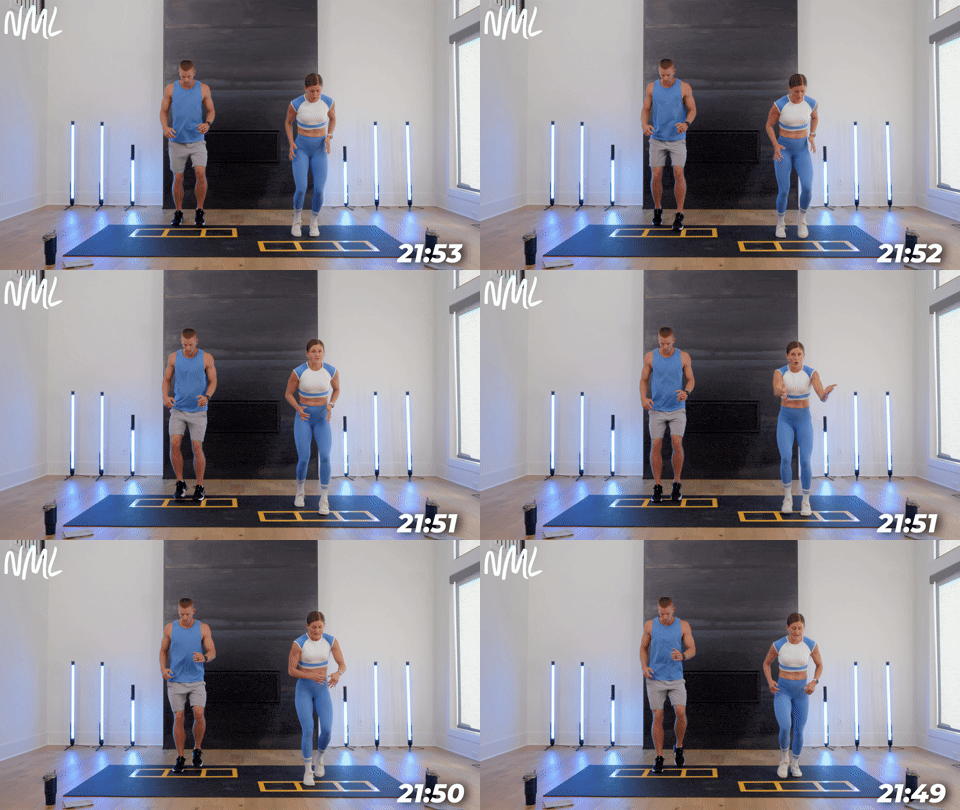
How To Do An In/Out Run
- Stand facing the middle of the 3 boxes in your taped agility ladder, feet hip-width apart and knees slightly bent. Engage your core and keep your chest lifted.
- Quickly run your feet in toward the middle box, one foot at a time, then out again to your starting position, moving in a fast front-to-back motion. Stay light on the balls of your feet and maintain a steady rhythm.
- Keep your arms pumping naturally at your sides to help drive speed and coordination. Continue the quick in-and-out foot pattern, focusing on control and precision with each step.
3. Push-Up T Lateral Walk
Targets: Chest, shoulders, triceps, core, obliques and back.
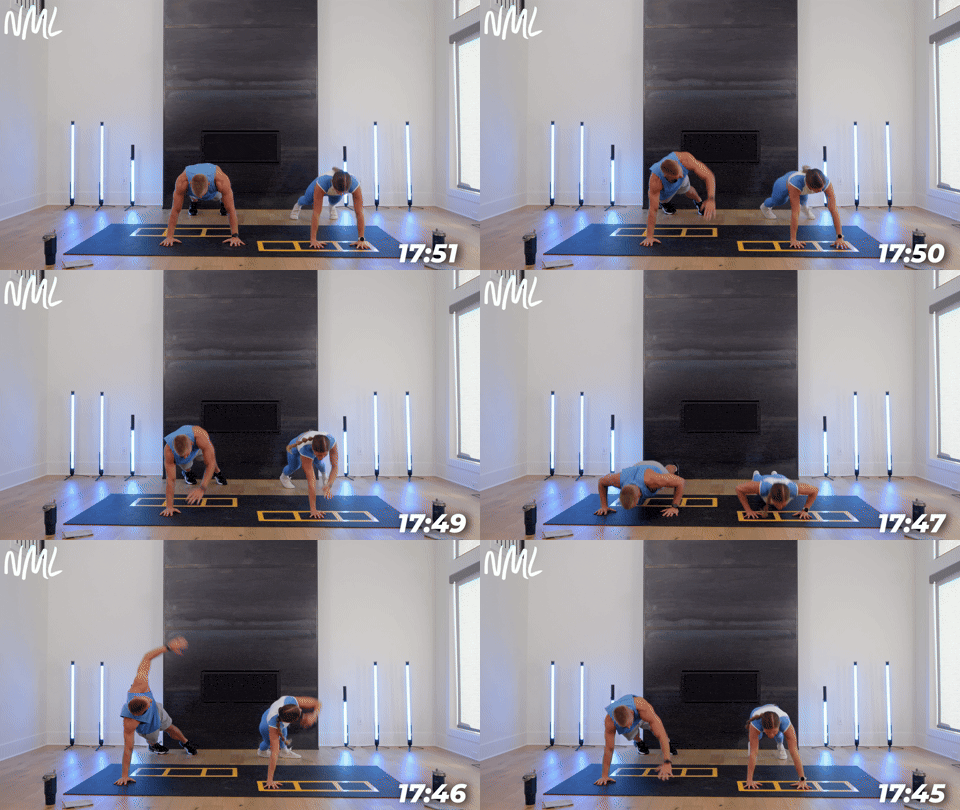
How To Do A Push-Up T Lateral Walk
- Start in a high plank position, shoulders stacked over wrists, body forming a straight line from head to heels and core engaged.
- Lower your chest toward the mat, bending your elbows at a 45-degree angle to perform a push-up. As you press back up, rotate your body to the right, opening your chest and extending your right arm overhead so your body forms a “T” shape. Keep your hips lifted and core tight.
- Return your right hand to the mat and come back to high plank. Then, take small steps to the left, moving 1 hand and foot at a time, to perform a lateral plank walk.
- Once in position, complete another push-up and repeat the T rotation on the opposite side. Continue alternating sides, moving laterally after each push-up.
Modification: Perform modified push-ups from your knees.
4. Double Leg Hops and High Knees
Targets: Quads, hamstrings, calves, glutes and core.
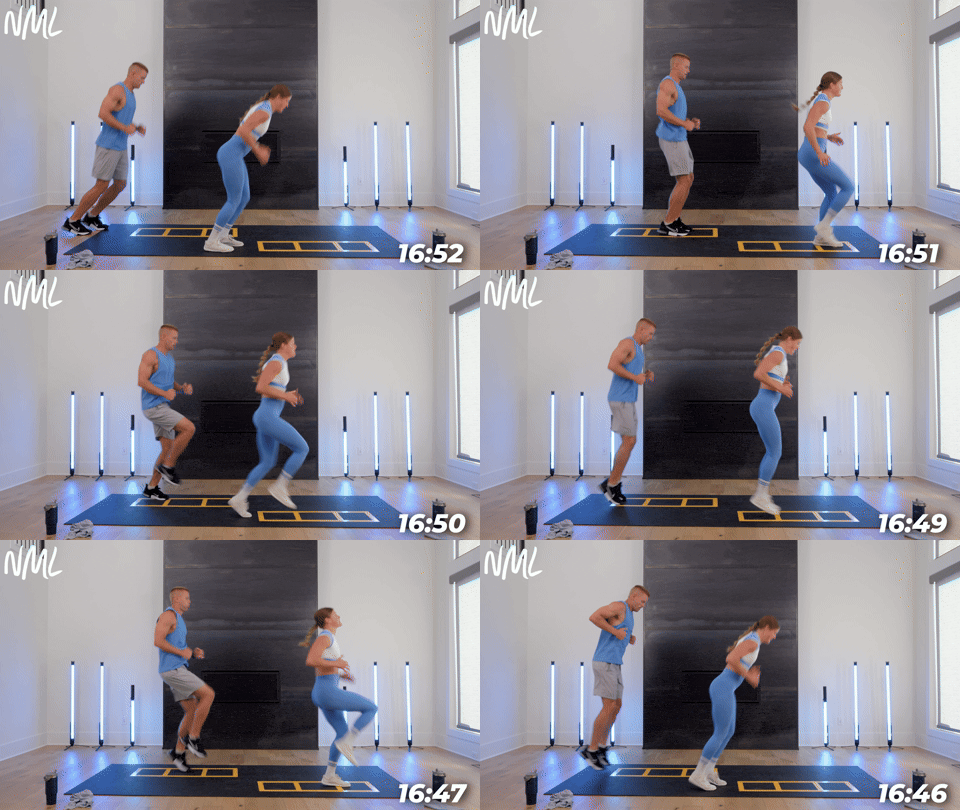
How To Do A Double Leg Hop and High Knees
- Stand tall at the end of your taped agility ladder, feet hip-width apart and core engaged.
- Bend your knees slightly and hop both feet together into the first box, then the middle box and finally the far box – landing softly each time with your knees slightly bent to absorb impact. Keep your chest lifted and arms swinging naturally for balance and momentum.
- After completing your third hop, immediately run backward to your starting position, driving your knees high toward your chest as you move. Stay light on your feet and maintain a quick, controlled pace.
- Repeat this pattern of 3 double-leg hops forward, then high knees backward.
5. Bear Crawl
Targets: Core, shoulders, chest, glutes, quads and hip flexors.
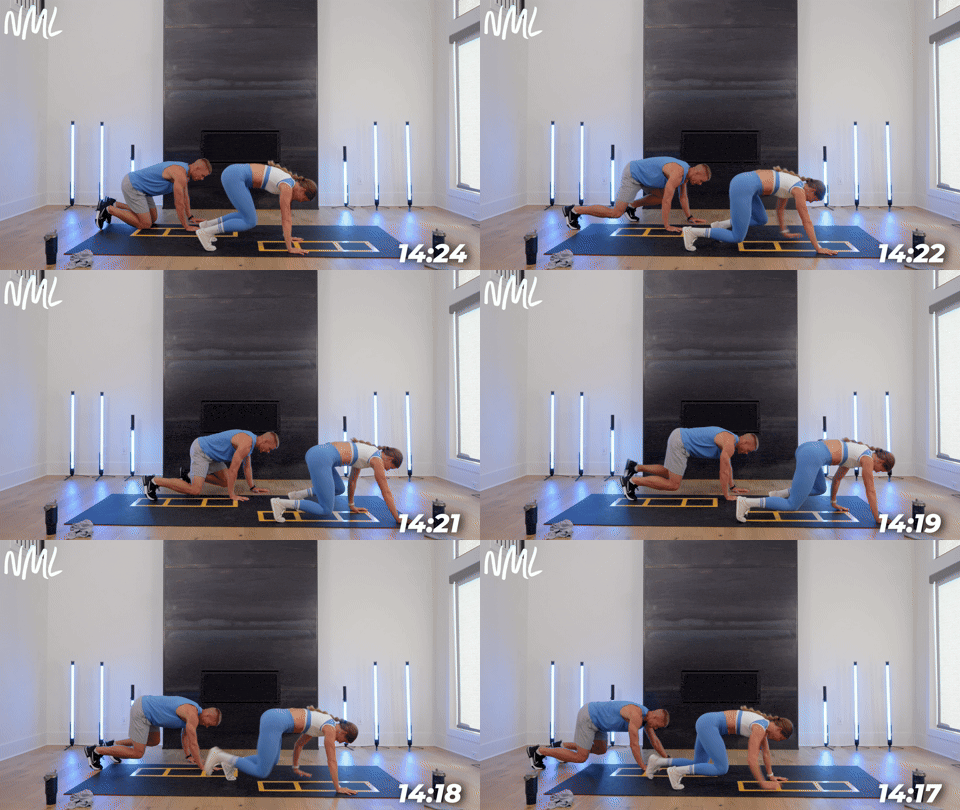
How To Do A Bear Crawl
- Start in a tabletop position on all fours with shoulders stacked over wrists and hips over knees. Tuck your toes under and lift your knees an inch or 2 off the mat, keeping your back flat and core engaged. This is your bear crawl position.
- From here, crawl forward 4 paces, moving your opposite hand and foot at the same time (right hand with left foot, then left hand with right foot). Keep your hips low and your movements controlled.
- After 4 paces, reverse the motion and crawl backward 4 paces to return to your starting position.
- Continue this forward-and-back pattern, maintaining a tight core and steady breathing throughout.
6. Lateral Heisman Touch Down and Sprint
Targets: Glutes, quads, hamstrings, calves, core and hip flexors.
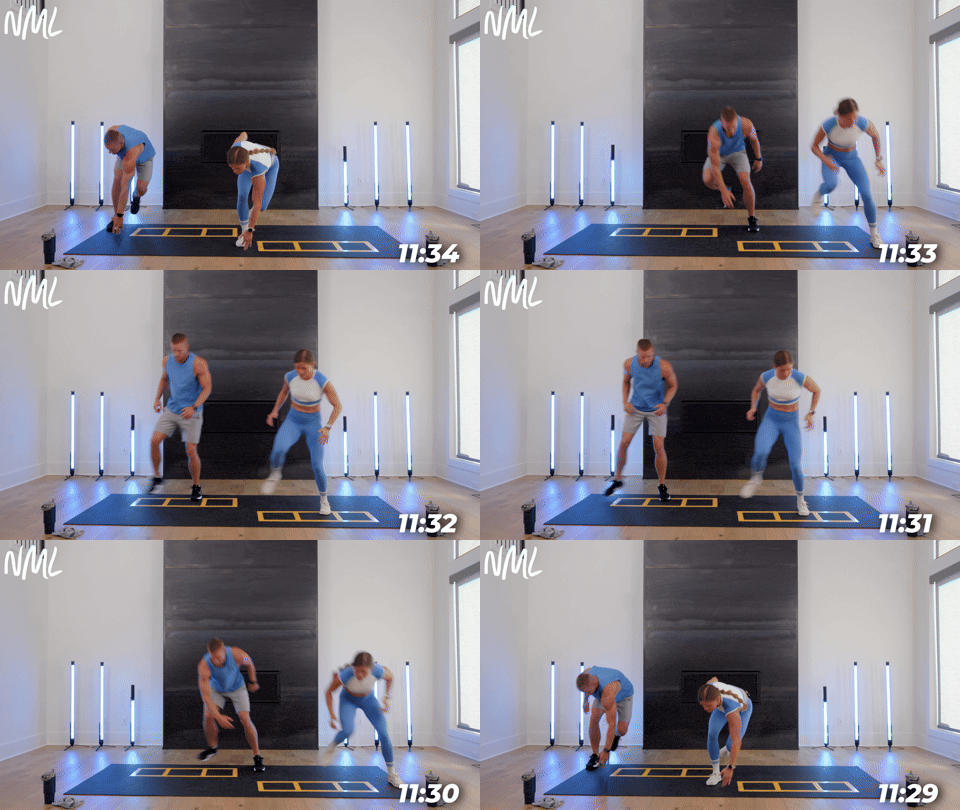
How To Do A Lateral Heisman Touch Down and Sprint
- Start at the far left end of your taped agility ladder, knees slightly bent and core engaged.
- Begin performing lateral Heisman runs to your right. Drive your right knee up and across your body while tapping your right foot into the middle box. Then switch quickly, driving your left knee up and tapping your left foot into the middle box as you continue moving laterally to the right. Stay light on your feet and maintain a quick, athletic rhythm.
- When you reach the right side of the ladder, lower your body slightly and tap the mat with your left hand. Your left foot should lift off the ground and extend slightly behind you, balancing on your right foot as you tap.
- Then, reverse direction and perform the same lateral Heisman run back to the left side of the ladder, finishing with a tap down on your right hand.
- Continue alternating sides, keeping your movements sharp, controlled and powered from your core.
Modification: Omit the tap down, performing lateral Heisman runs.
7. Plank Star Taps
Targets: Core, shoulders, glutes, hip flexors, inner and outer thighs.
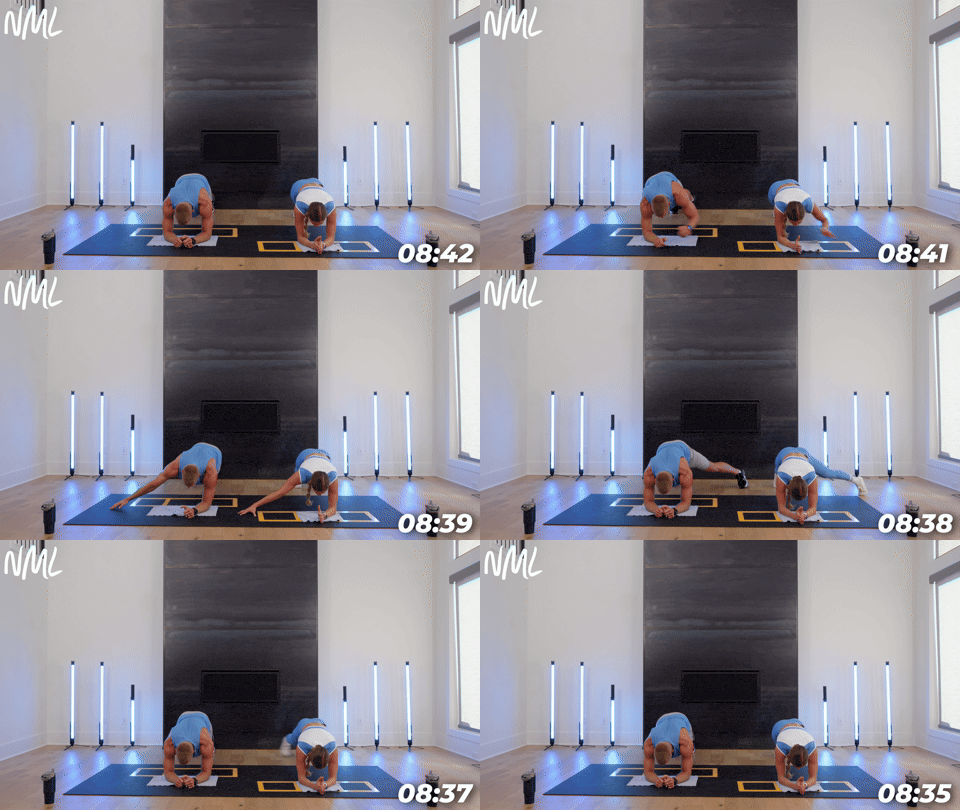
How To Do A Plank Star Tap
- Start in a forearm plank position, elbows under shoulders, forearms flat on the mat and body forming a straight line from head to heels. Engage your core, glutes and legs to keep your hips steady.
- From here, reach your right hand forward and to the right, as far as you can without rocking your hips or shifting your weight. Return it to center, finding your stable forearm plank.
- Next, reach your left hand forward and to the left as far as you can, then pull it back to center.
- Now, tap your right foot out to the side as far as you can while keeping your hips level, then bring it back to center.
- Finally, tap your left foot out to the side and return to your starting plank position.
- That full sequence – right hand, left hand, right foot, left foot – equals 1 rep. Continue repeating, maintaining control and core tension throughout.
Modification: Perform a modified plank from your knees.
8. Double Leg Hops In/Out
Targets: Quads, hamstrings, calves, glutes and core.
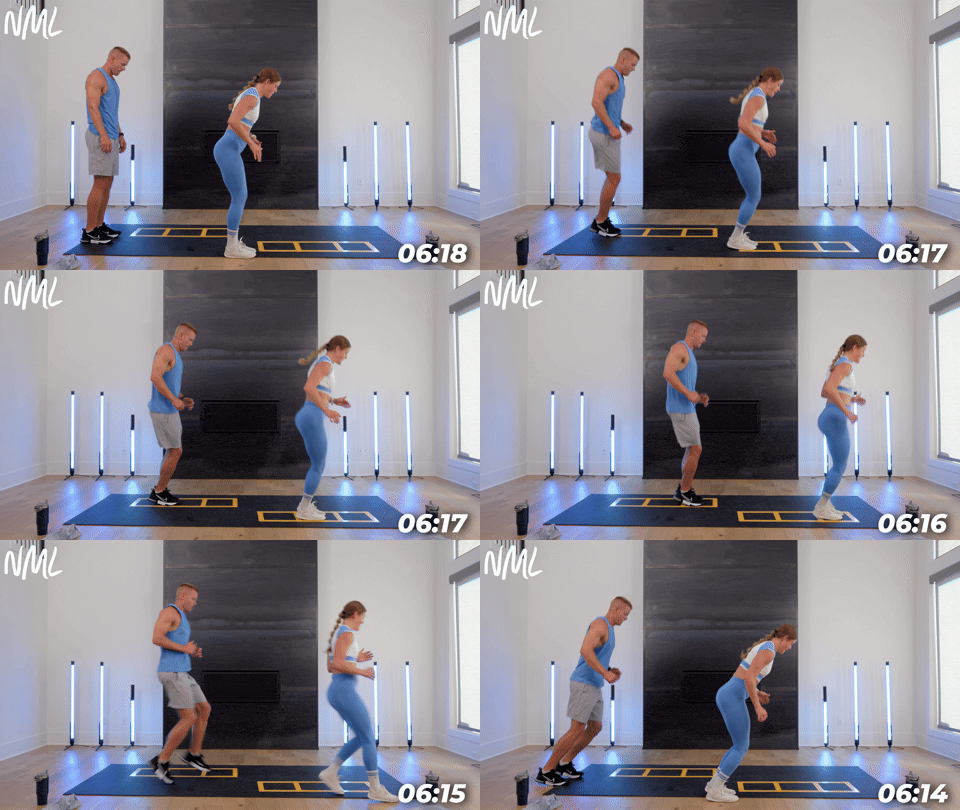
How To Do A Double Leg Hop In/Out
- Stand at the back of your taped agility ladder, positioned just to the right side of it. Engage your core, keep your chest lifted and bend your knees slightly to prepare for movement.
- Jump both feet into the first box, landing softly on the balls of your feet. Then immediately jump both feet out to the right side of the ladder.
- Next, jump both feet into the middle box, then back out again. Continue this pattern – in, out, in, out – as you move forward up the ladder, finishing by hopping both feet into the far (last) box and then out of the ladder.
- Once you reach the top, run backward to your starting position, staying light on your feet and maintaining balance.
- Repeat this in/out hopping pattern, focusing on quick, controlled footwork and steady breathing.
Modification: Slow this down, running one foot in and out at a time.
9. Hollow Rock Bicycles
Targets: Lower abs, upper abs, obliques, hip flexors and core stabilizers.
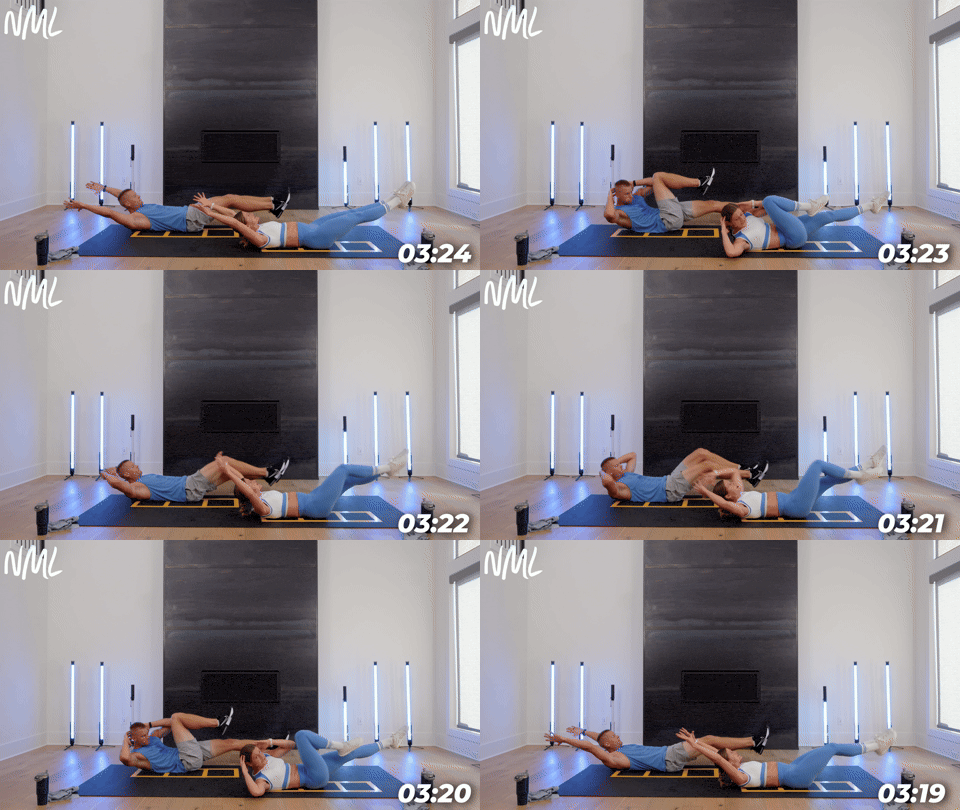
How To Do A Hollow Rock Bicycle Crunch
- Lie flat on your back and engage your core, pressing your lower back firmly into the mat. Extend your arms overhead and legs long, then lift your shoulders, head and legs a few inches off the ground to find your hollow rock hold position. Your body should form a gentle curve, with core tension keeping you stable.
- Hold for a moment, maintaining a tight, controlled core.
- Then, place your hands behind your head as you bring your right elbow to your left knee, bending the left leg as you perform a bicycle crunch while keeping the opposite leg extended. Focus on rotating through your torso, not just your elbow.
- Return to your hollow rock hold position, keeping your core engaged and spine pressed down.
Modification: Reduce the range of motion by bending the knees and placing the feet flat on the floor. Perform a single-sided bicycle crunch by lifting the bent left leg off the mat, bringing it to meet the right elbow.
FAQs
What are the benefits of combining cardio and core workouts?
Combining cardio and core training strengthens the heart and stabilizing muscles at the same time, improving endurance, balance and overall coordination. This combination boosts calorie burn, enhances agility and supports better posture and movement in everyday life.
How often should I do cardio and core workouts?
For the best results, I recommend incorporating cardio and core training 1-2 times per week. This balance allows enough recovery time while keeping the heart, core and stabilizing muscles consistently challenged to build strength and stamina.
Who is this cardio and core workout best for?
This workout is ideal for anyone looking to improve functional strength, agility and reaction time – especially adults over 30 who want to stay nimble and prevent injuries as they age. It’s also great for busy moms who want efficient, full-body results that translate to real-life movement.
Athlete 25: FREE 2-Week Strength Training Workout Plan
A 2-week strength training workout program, designed to help you build muscle and train like an athlete at home.
If you liked these cardio and core exercises, download the FREE 2-Week Workout Plan.
Up Next:
See AllPin This Cardio and Core Workout
10 comments
One of your earlier workouts you talked about becoming your 70 year old self. Well I am! Started a couple months ago, got 15 lbs dumb bells for a Christmas present, the 10’s got too easy. Success is doing what you can.
Love this, Sue! Success is absolutely doing what you can. Thank you for putting the workouts to such good use! -Lindsey
I am loving Athlete 25! 30 minutes is my preferred workout length though.
I am so glad you’re enjoying this program! Thank you for the feedback, Jennifer! -Lindsey
I love lifting, but adding this to the program felt like I found the missing link to my weekly workouts. I do your workouts just about everyday and run, but the mind body connection that forced me to think in this one is something I’m clearly needing to add to my week! Thank you, I am loving this program!
Hi Jessica! This made my day – thank you! So happy you’re feeling that mind–body connection and finding value in adding this to your week. That balance is everything! -Lindsey
Love the agility focus! This one challenged me mentally – my brain and body don’t fire together as naturally as I wish they did, and it felt so good to build that connection! I’m stronger than I’ve ever been following NML’s strength training workouts, but I loved focusing on being quick and sharp, too. Definitely feeling the athletic aspect of the program today!! This workout will defintely be one I come back to even when I’ve completed the whole Athlete 25 program.
Love this so much, Sarah! That brain–body connection is exactly what we’re building, and it only gets sharper with practice. So glad you felt both strong and athletic – huge win. Appreciate you coming back to this one! Keep up the great work! -Lindsey
In day 4 of Athlete 25, how do we count reps for the worksheet?
Hi Cyan, For cardio-based exercises, focus on completing the full time or interval with good effort rather than exact rep numbers. Core/ab movements can be counted if that feels helpful, but it’s optional. If counting feels distracting, simply jot down notes on the worksheet about how you felt (energy level, difficulty, what challenged you most). That info is just as valuable for tracking progress. -Lindsey