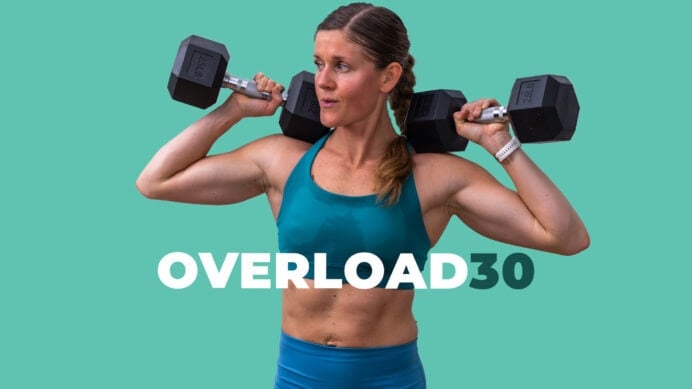
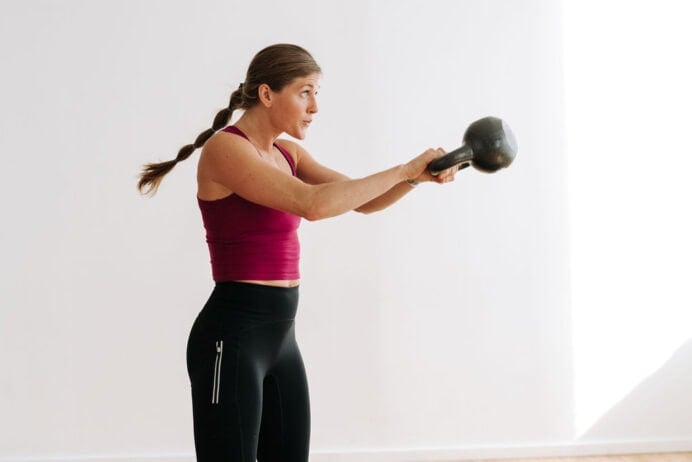
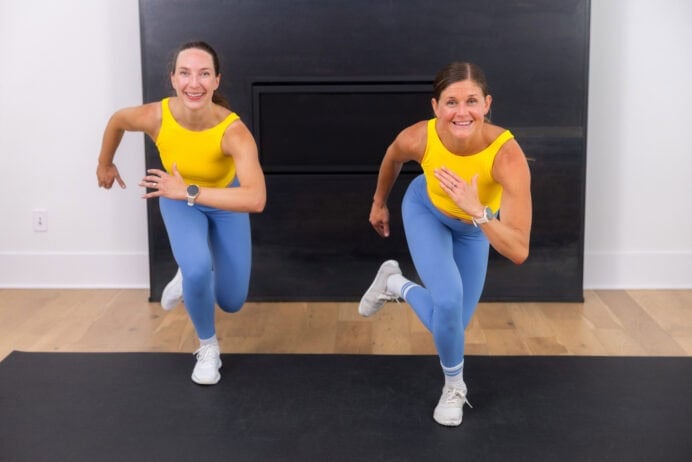



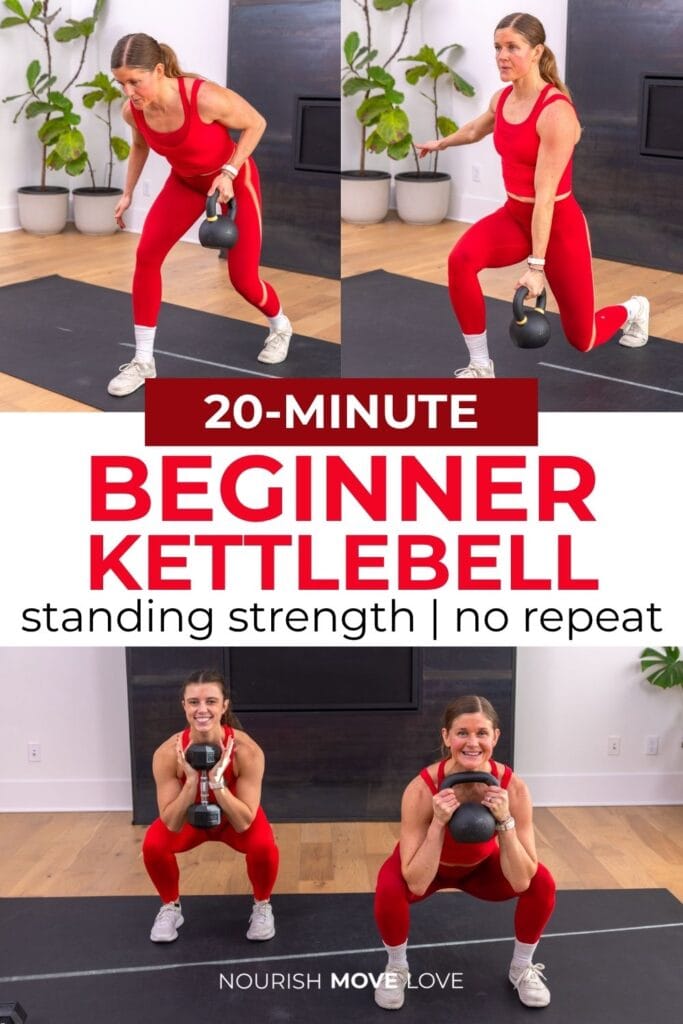
20-Minute Beginner Kettlebell Workout
This beginner-friendly kettlebell workout will build strength in the upper-body, lower-body and core. These 12 kettlebell exercises are perfect for someone picking up a kettlebell for the first time or for someone well-versed in kettlebell use. This full-body kettlebell workout is strength-based, with all standing and no repeat exercises. Give this a try if you are looking for a simple and effective kettlebell workout that can be done anywhe
As a busy mom of 3 and a fitness trainer, I know workouts need to be effective, efficient and doable for real life. That’s exactly what this full-body kettlebell session delivers.
We’re sticking to the fundamentals – kettlebell swings, deadlifts, squats, rows and presses – because they work. This workout is designed for all fitness levels by focusing on your personal output, not just chasing reps. Whether you’re just starting out or you’ve been training for years, you’ll be able to meet yourself where you are and still get a powerful workout in.
If you loved the all-standing, no-repeat style from this Kettlebell Workout for Beginners, you’re going to love this upgraded version. It’s a little longer, giving you the chance to push your limits, boost your anaerobic capacity, burn fat and build real, functional strength.
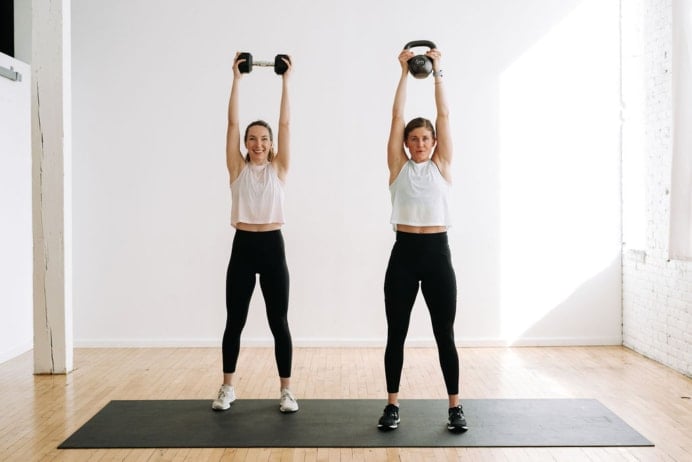
No kettlebell? No problem. You can easily swap in a single dumbbell – no barbell required. The off-center, alternating movements are intentional, helping you engage more muscles at once while improving balance, coordination, and core strength.
This is full-body training that fits into your life – and actually gets results.
Read A 5-Star Review ⭐⭐⭐⭐⭐
“I had no motivation to work out this morning. This was perfect to get my butt in gear and ready for the day! Thank you!!”
— Krystal H.
Kettlebell Workout Specifics
Expect to sweat during this self-driven strength workout as you push through each interval with the goal of getting solid, safe reps for a sustained period of time. Use this workout by adding it to your beginner training program 1-2 times per week. If you want to work on your kettlebell movements, pair a few of these exercises with some bodyweight exercises to make your workout routine more fun and diverse.
Adding 1-2 strength training workouts, like this 35-Minute Full Body Kettlebell Workout or this 30 Minute MetCon Workout, to your weekly plan will help you build muscle and improve your overall fitness and endurance.
Workout Equipment
One Medium-to-Heavy Kettlebell. I’m using a 20-30 lb kettlebell. Option to use a single medium-to-heavy dumbbell.
Workout Instructions
Follow along with the guided 20-Minute Beginner Kettlebell Workout on YouTube, led by me – your certified personal trainer, Lindsey Bomgren.
Your Workout Looks Like This:
- Guided Warm-Up and Cool-Down
- 12 Kettlebell Exercises
- Timed Intervals (perform each exercise for 40 seconds of work, followed by 20 seconds rest)
- Perform all 12 Exercises x1 Set (No Repeats)
Note: Exercises completed one side at a time (like the Split Stance Single-Arm Row) are done back to back for the full interval.
Beginner Kettlebell Workout Outline
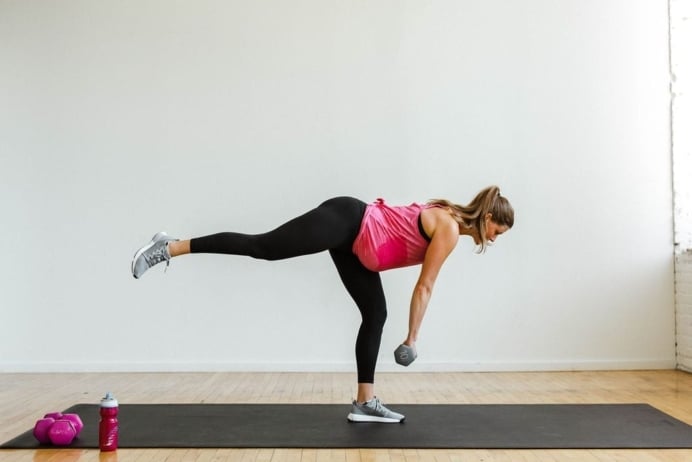
1. Kettlebell Deadlift
Targets: The posterior chain or backside of the body. Specifically targeting the hamstrings, glutes, hips and calves.
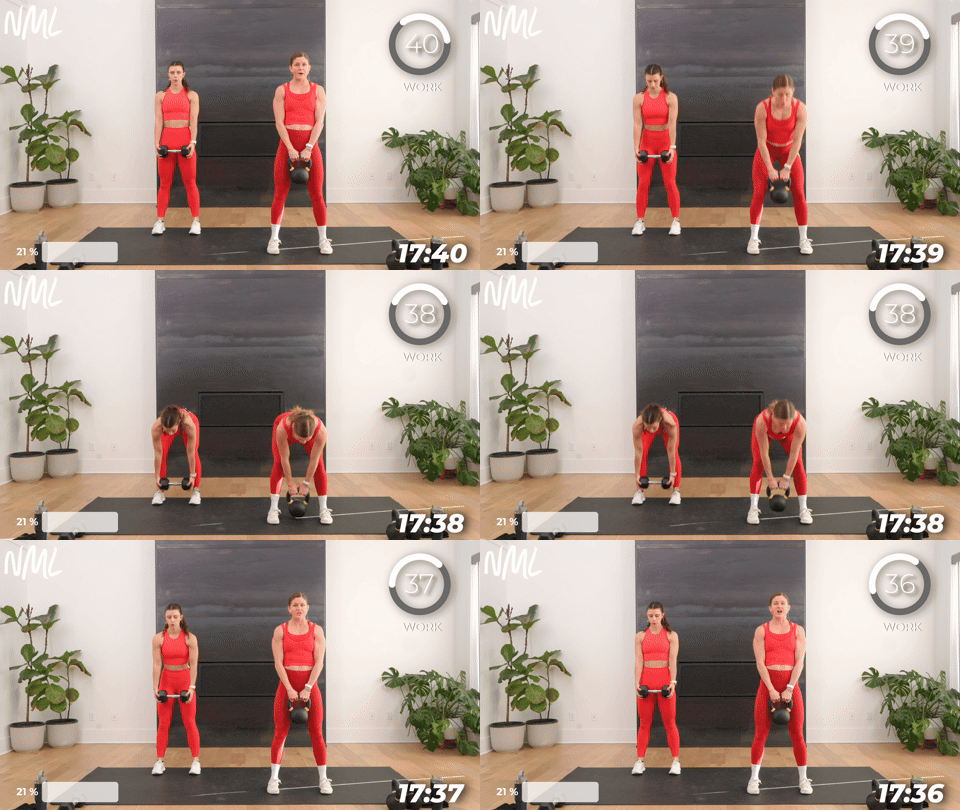
How to Do a Kettlebell Deadlift
- Start standing with your feet hip-width apart and knees slightly bent. Grasp the handle of the kettlebell with both hands, palms facing in towards your body.
- Hinge forward at the hips, pushing your hips back as you lower the kettlebell down along the front of your body. You should feel a stretch in the back of your legs (hamstrings). Focus on keeping your back in neutral alignment with your neck and shoulders throughout the entire movement. Keep a slight bend in your knees to avoid ‘locking out’ the joint.
- Drive through your heels to push your hips forward, squeezing your glutes as you return to a standing position.
2. Kettlebell Goblet Squat
Targets: Quads, glutes, hamstrings, hip adductors and core.
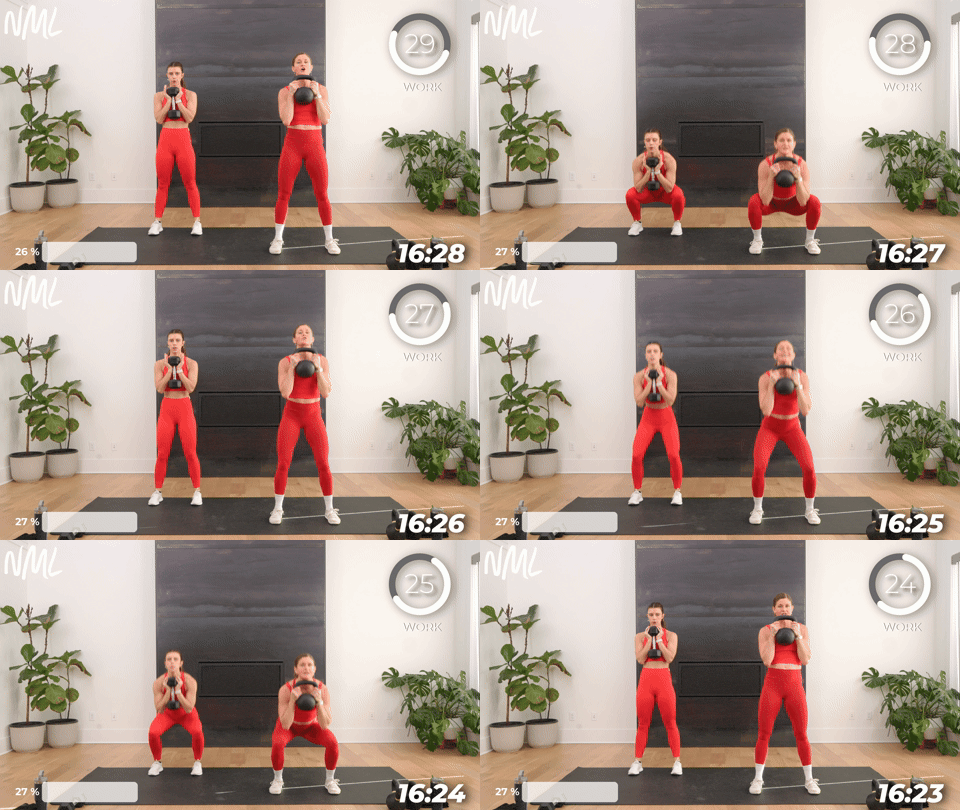
How to Do a Kettlebell Goblet Squat
- Stand with your feet shoulder-width apart. Hold the kettlebell by the horns (where the handle meets the body of the kettlebell). Hold the kettlebell at chest height, tucking your elbows in close.
- Inhale as you bend your knees and sit your hips back (as if sitting down in a chair). Aim for 90-degree bends at each knee, focusing on pushing your knees out (not letting them cave in). Keep your torso upright.
- Exhale as you press through your heels to stand tall, driving your hips forward to return to standing.
3. Split Stance Single-Arm Row
Targets: Quads, thighs, hamstrings, glutes, calves, lower back, mid-back, arms, biceps, shoulders, abs and core.
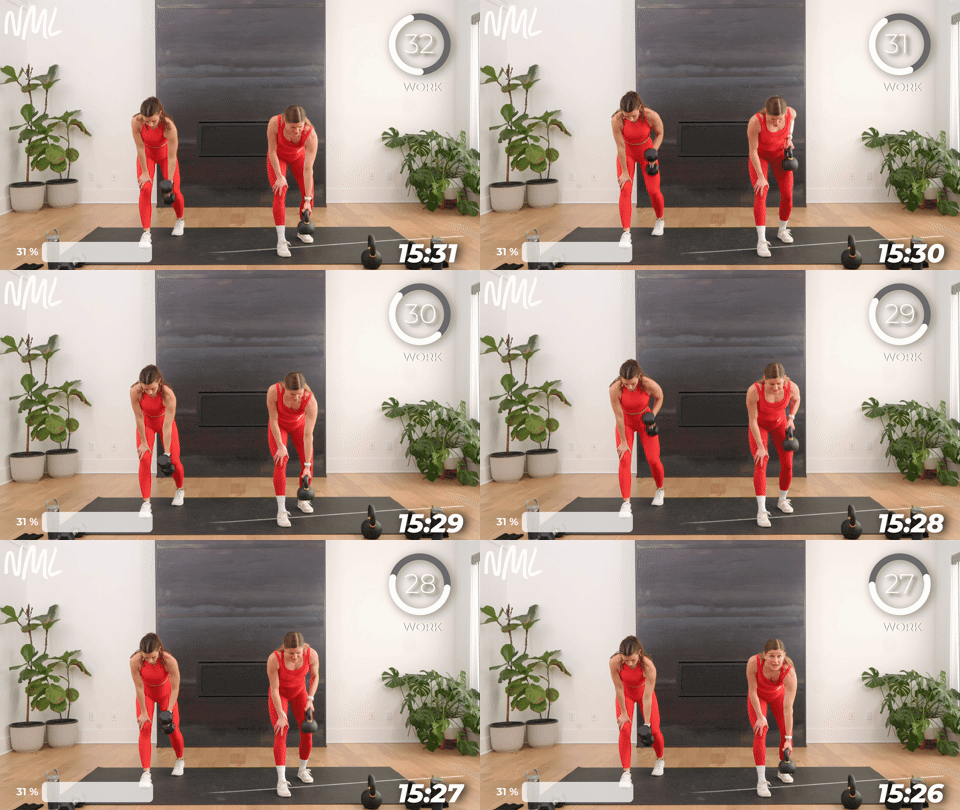
How to Do a Split Stance Single-Arm Row
- Stand with your feet hip-distance apart. Hold a kettlebell in your left hand at your side.
- Step your left leg back slightly and bend your left knee into an athletic stance similar to a reverse lunge, but with less depth. Your front thigh will bend slightly as well for stability.
- Maintain this athletic stance as you hinge forward at the hips into a bent-over row position, keeping the neutral spine and a flat back from head to tailbone.
- Perform a single-arm back row on the left arm by pulling the kettlebell back towards your left hip.
- Lower the kettlebell with control, then repeat, maintaining the isometric split lunge hold throughout.
- Once you finish the first interval, switch sides and repeat for another interval.
4. Reverse Lunge
Targets: Glutes, hamstrings, hips, quads, calves, abs and core.
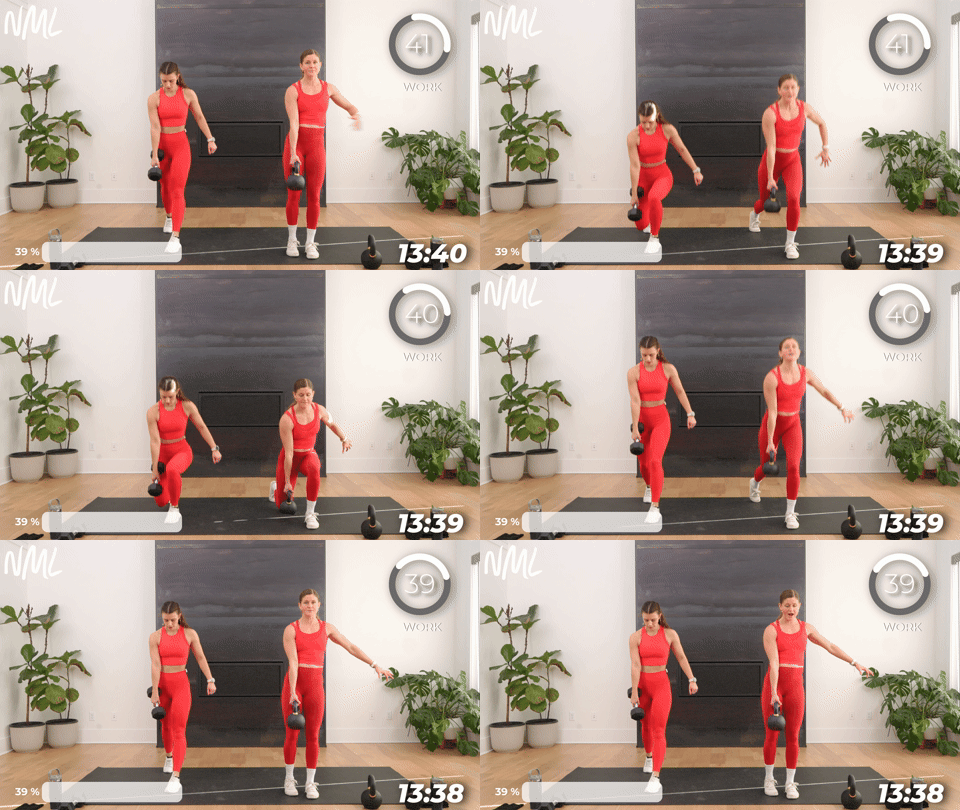
How to Do a Reverse Lunge
- Start standing, feet hip-distance apart and knees slightly bent. Hold a kettlebell in your left hand.
- Step your left leg back into a reverse lunge, lowering your hips until both knees reach a 90-degree angle, with the front thigh parallel to the ground.
- Squeeze your right leg glute, driving your back, left leg forward to stand tall and repeat.
- Once you finish the first interval, switch sides and repeat for another interval.
Modification: Perform a split lunge rather than a reverse lunge. If you struggle with completing lunges, check out these modifications.
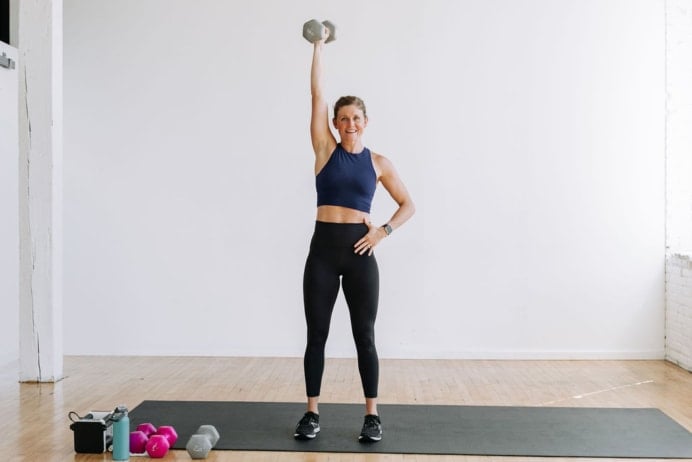
5. Single-Arm Press
Targets: Triceps, deltoids, lats, pectorals and core.
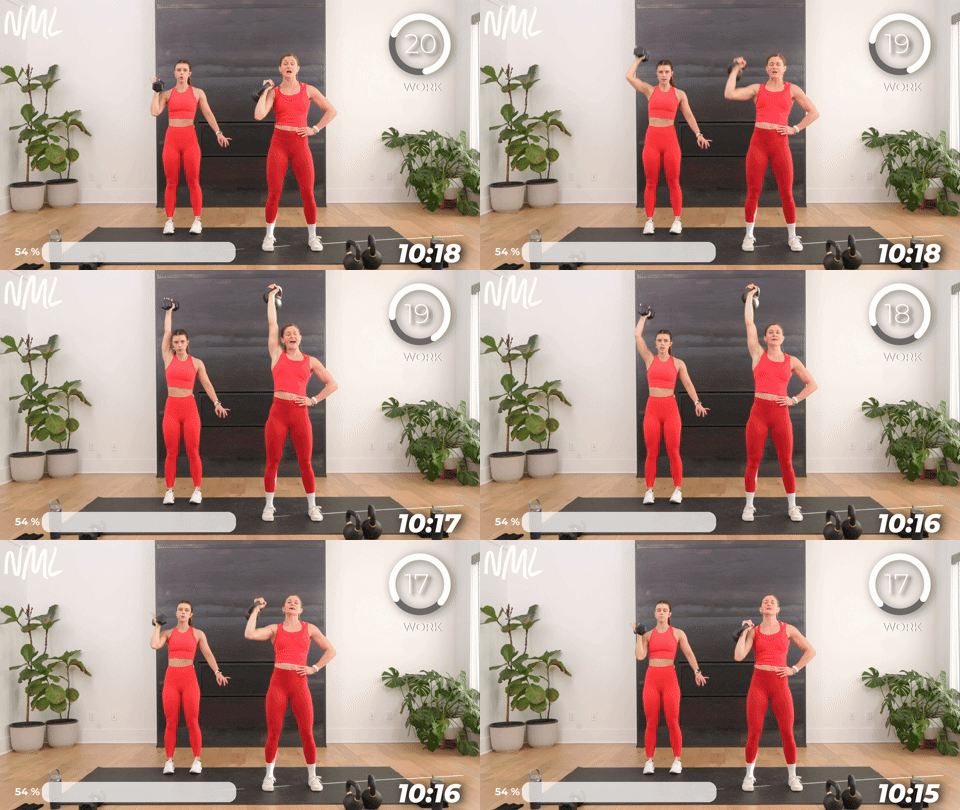
How to Do a Single-Arm Press
- Start standing with your feet slightly wider than shoulder-width apart. Hold a kettlebell in your right hand, front-racked at shoulder height.
- Keeping your core engaged, drive through your heels, squeezing your glutes, making sure to keep your feet flat and not to roll onto your toes
- From your solid base, press the right arm overhead to perform a single arm shoulder press.
- Once you finish the first interval, switch sides and repeat for another interval.
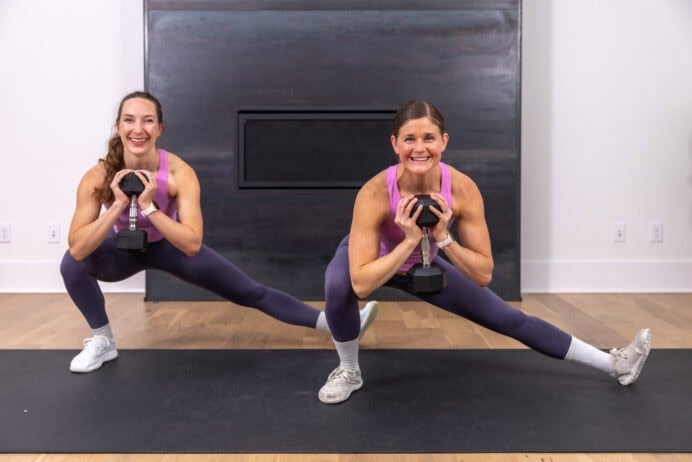
6. Lateral Lunge
Targets: Legs, quads, outer glutes (gluteus medius), inner thighs (adductors) and hips.
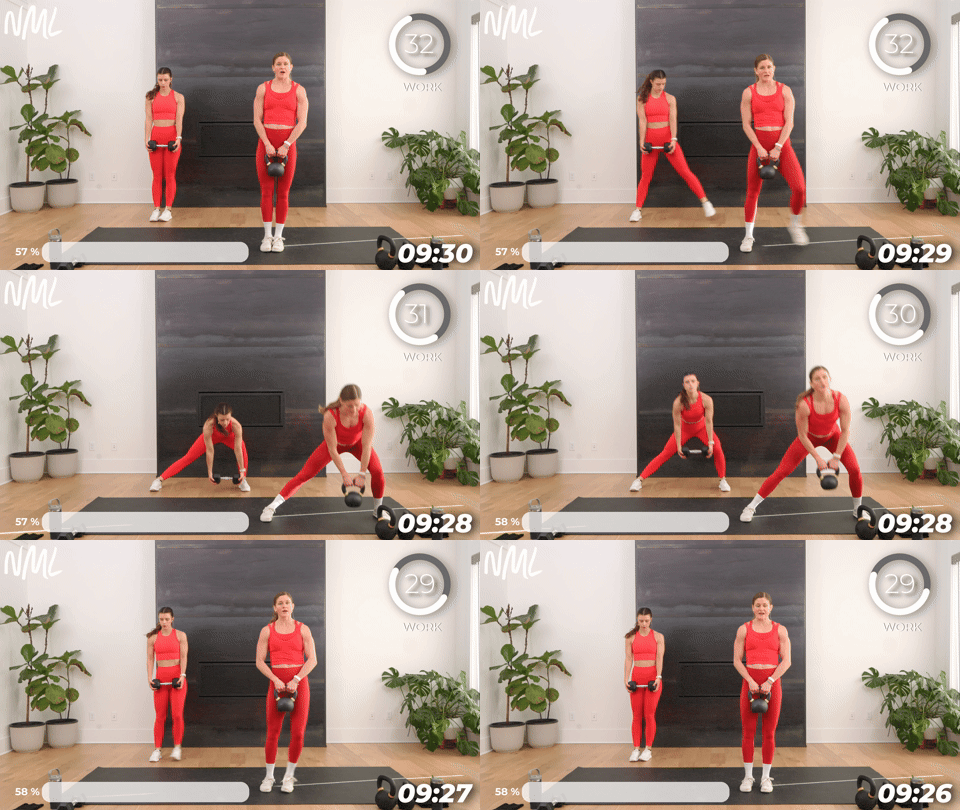
How to Do a Lateral Lunge
- Start standing, feet hip-width apart, knees slightly bent. Hold the kettlebell with both hands, just in front of your hips.
- Step your left leg out to the side as you push your hips back, bending your left knee while leaving your right leg straight. Think of performing a single-leg squat with your left leg while your right leg remains straight. The kettlebell will fall just inside your left foot.
- Drive off your left foot to reverse the movement, pushing back to the center and returning to a standing position.
- Once you finish the first interval, switch sides by stepping to the right instead and repeat for another interval.
7. Bicep Curl
Targets: The biceps brachii for elbow flexion, brachialis and brachioradialis.
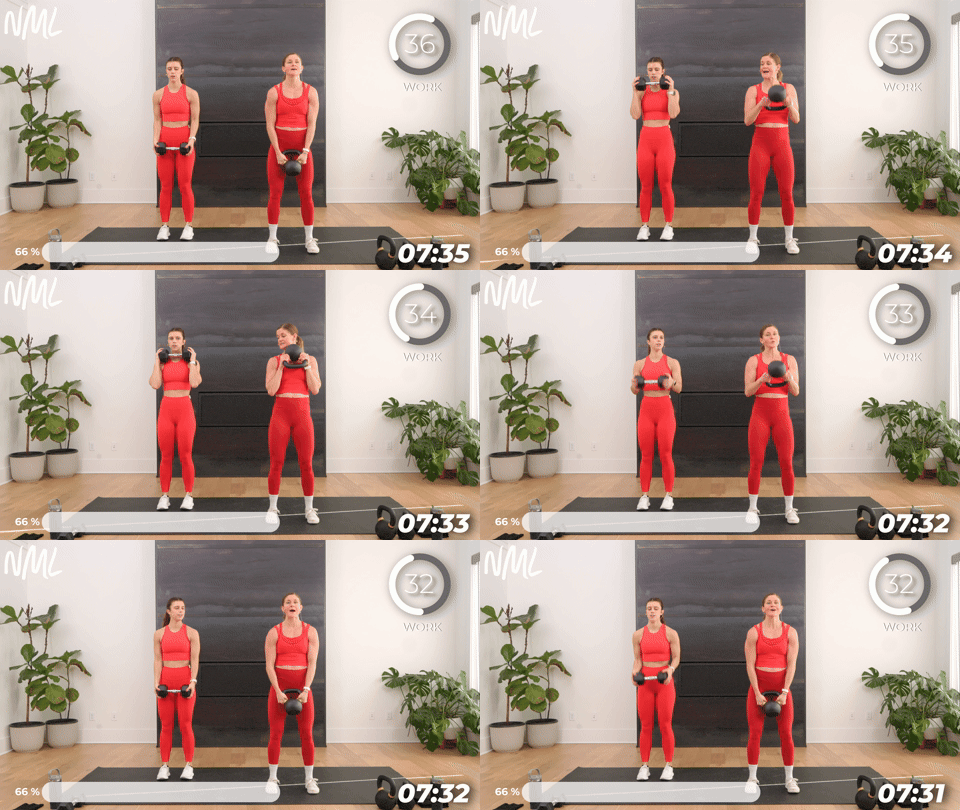
How to Do a Bicep Curl
- Start standing feet hip-width apart and core engaged. Hold a kettlebell by the horns in front of you, below your hips.
- Exhale, squeezing the biceps muscle to curl the weight up towards your chest. Think about keeping your elbows tucked into your sides and your shoulder blades pulled down. Keep your torso upright and shoulders relaxed.
- Slowly lower the kettlebell down, returning to the starting position.
8. Kettlebell Halo
Targets: The abs and core from every angle – upper abs, lower abs, obliques and deep transverse abdominals.
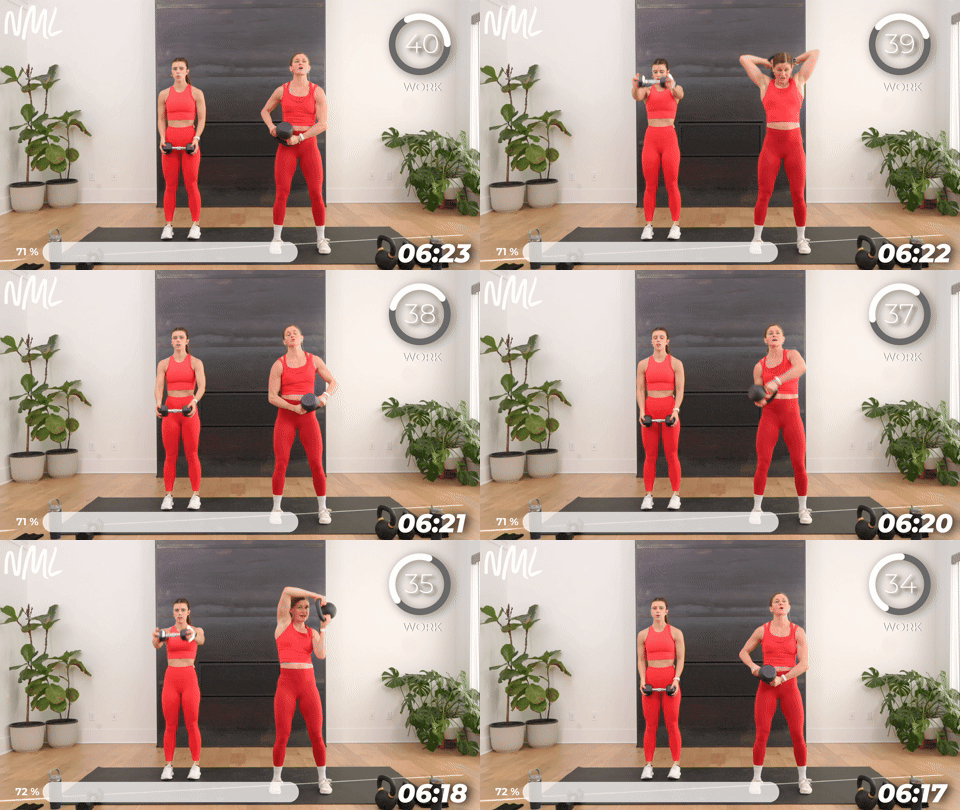
How to Do a Kettlebell Halo
- Start standing with feet slightly wider than shoulder-width apart, core engaged.
- Hold the kettlebell by the horns in both hands at your right hip.
- Engage your core as you pull the kettlebell in a smooth motion from your right hip to your left shoulder and then behind and around your head, before bringing it down to your left hip.
- Repeat in the opposite direction.
Modification: Perform front raises, lifting the weight straight out in front of you.
9. Alternating Kettlebell Cleans
Targets: Glutes, hamstrings, erector spinae, deltoids and upper back.
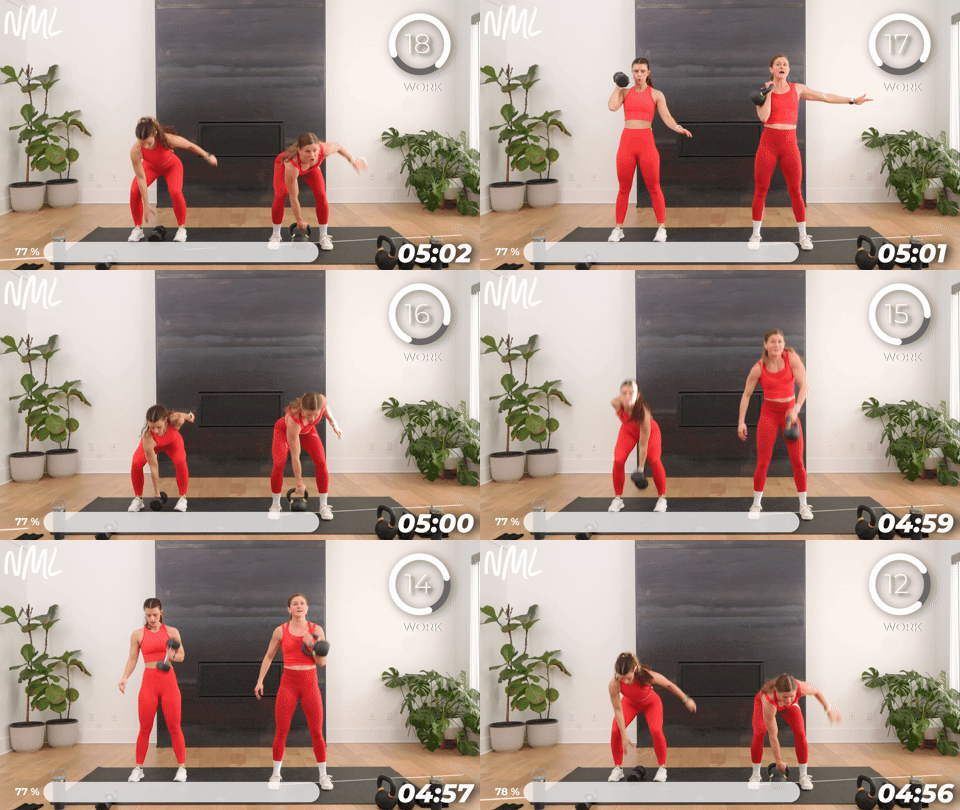
How to Do Alternating Kettlebell Cleans
- Start with your feet shoulder-width apart and the kettlebell slightly in front of you. Hinge at the hips with a neutral spine and your chest up (like a deadlift). Then grab the handle with one hand.
- With one hand on the kettlebell, pull back between your legs, keeping the weight high and tight (close to the groin).
- Maintaining a strong hinge, extend your hips forward explosively.
- With your elbows tight to the body, guide the bell upward, past the ribcage, keeping the kettlebell close to your body. Then punch your hand through the handle, letting the bell rotate around your wrist (not flip over your hand or slam it ) and stand tall.
- Let the kettlebell down slowly and safely, then switch hands and repeat on the other side.
10. Kettlebell Swings
Targets: Glutes, hamstrings, hips, core, and all the stabilizing muscles in your back and shoulders.
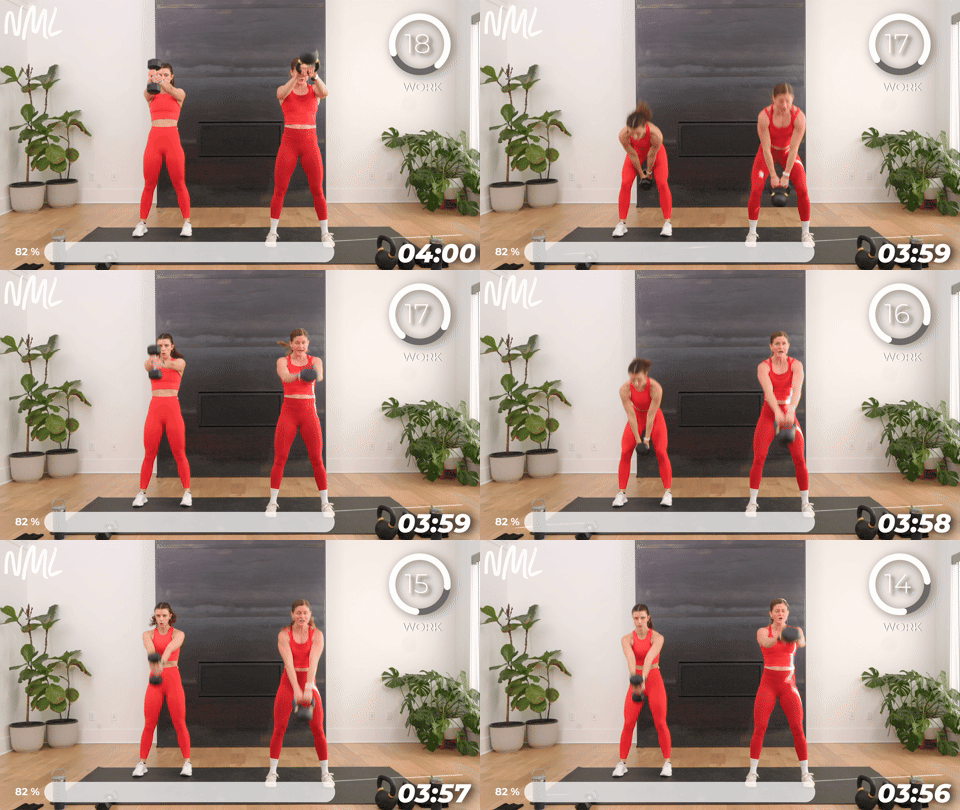
How to Do a Kettlebell Swing
- Start standing with your feet wider than shoulder-width apart; engage your core.
- Hinge forward at the hips to reach for the kettlebell handle with both hands. Place your hands on the horns of the bell, palms facing your body.
- Then, with a slight bend in your knees and weight in your heels, ‘hike’ the kettlebell back between your legs to start the swing movement.
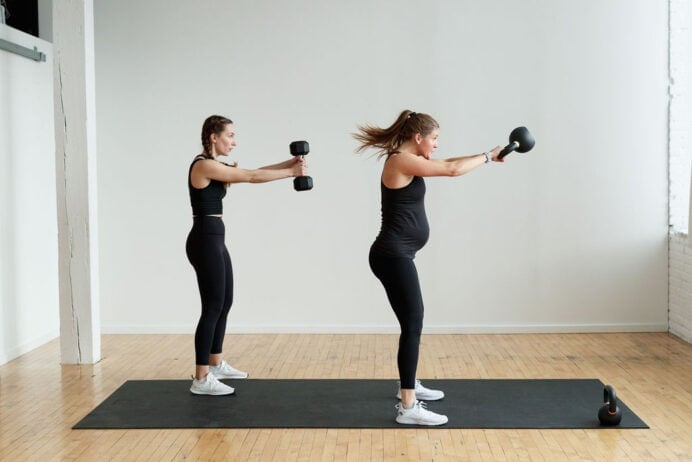
- Drive through your heels to stand tall, pushing your hips forward as you squeeze your glutes to swing the kettlebell up to shoulder height. Aim for shoulder height, with arms extended out away from the body. Think long, loose arms (your arms are just a vehicle for moving the bell; your hips and glutes generate the power to move it).
- As the kettlebell begins to descend, think of catching the weight with your hip hinge, loading the glutes and hamstrings.
11. Kettlebell Deadlift, Clean and Press
Targets: Lower body (glutes, hamstrings, hips, quads, calves), upper body (trapezius, deltoids, lower back), abs and core.
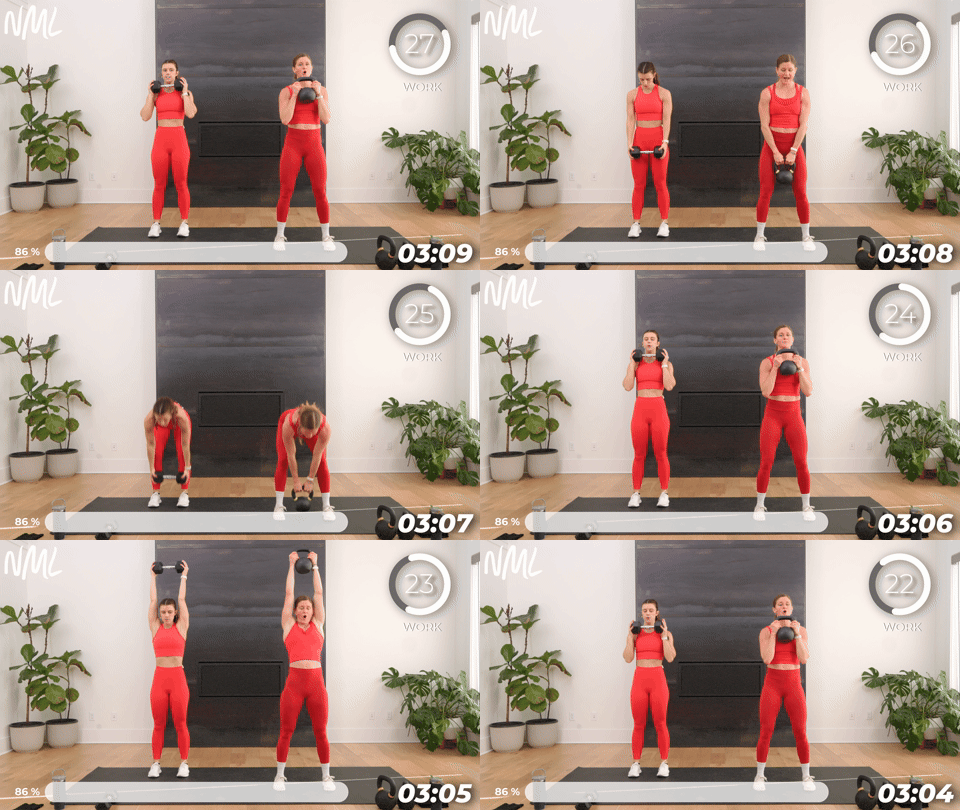
How to Do a Kettlebell Deadlift, Clean and Press
- Start standing, feet hip-distance apart and knees slightly bent. Hold a kettlebell in front of your thighs.
- Hinge forward at the hips to perform a deadlift, pushing your hips back as you lower the weights down along the front of your body. Focus on keeping your back in neutral alignment with your neck and shoulders throughout the entire movement. Keep a slight bend in your knees.
- Then, drive through your heels to push your hips forward, squeezing your glutes as you return to a standing position.
- As you press your hips forward to stand up, “clean” the weight up towards your shoulders. Catch the weight at your chest in a front rack position.
- Then, perform an overhead press by pressing the kettlebell overhead until your arms are fully extended.
- Slowly and with control, lower the kettlebell down to the starting position and repeat.
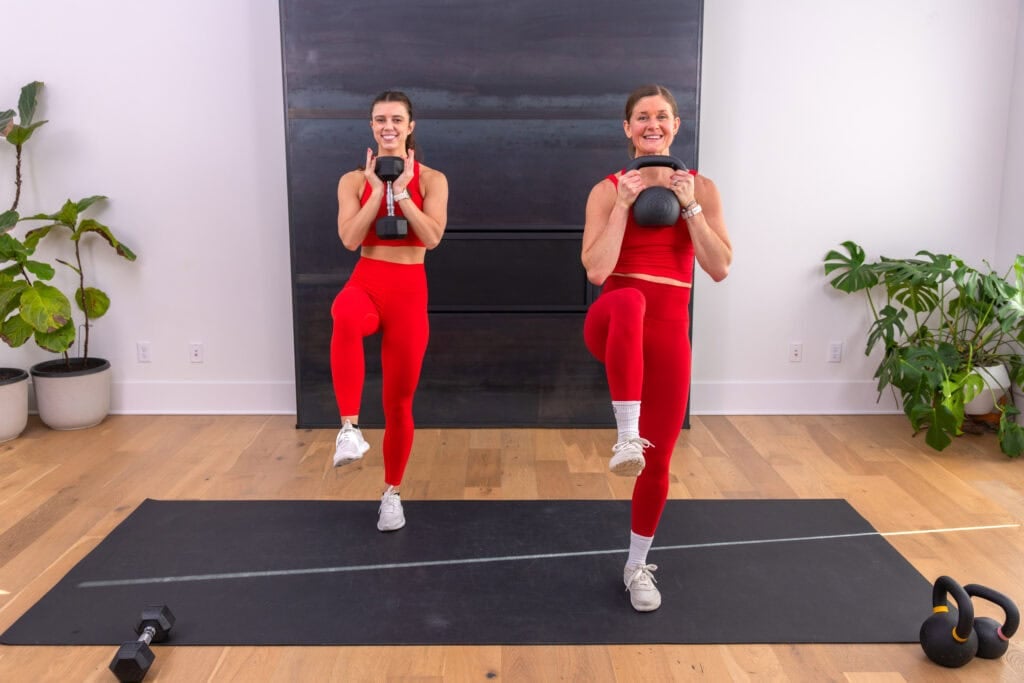
12. Kettlebell Goblet March
Targets: Low abs, obliques, glutes, hip flexors, chest and shoulders.
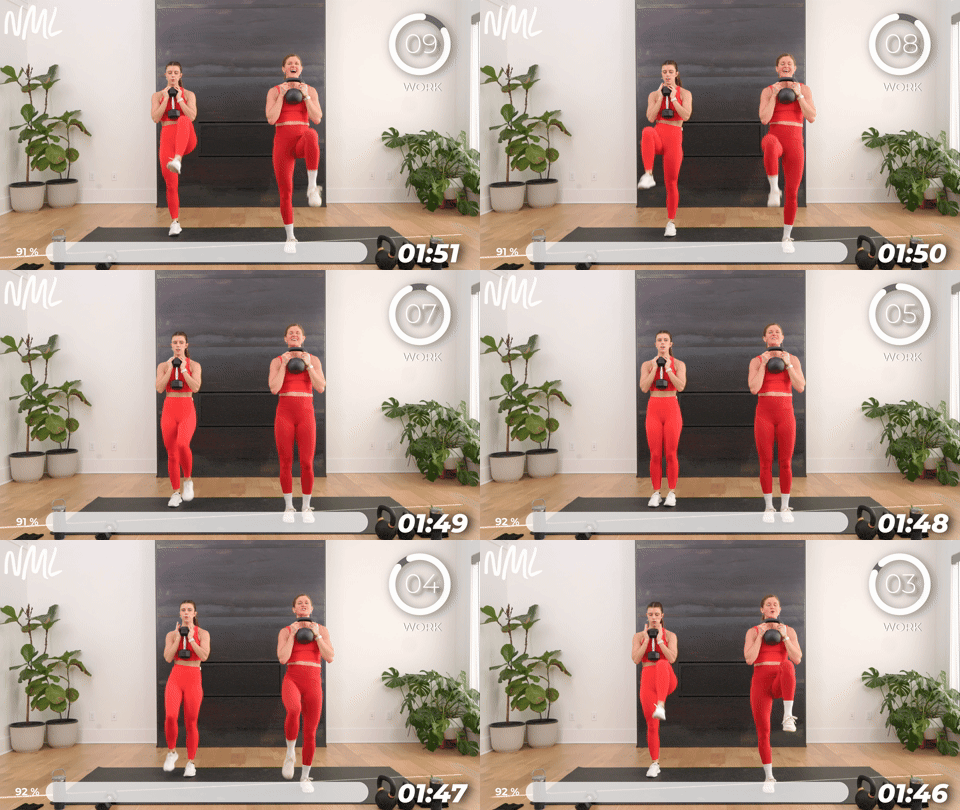
How to Do a Kettlebell Goblet March
- Start in a standing position, feet hip-width apart, holding a kettlebell by the horns at chest level, elbows tucked in.
- Engage your core, then drive your right knee up in line with your right hip. Right knee bent at a 90-degree angle.
- Ground through your standing left leg for stability, then return your right foot to the ground.
- Switch sides, driving your left knee up in line with your left hip. Return to the starting position and repeat these alternating high knee lifts.
FAQs
What are some common mistakes to avoid in a beginner kettlebell workout?
Common kettlebell mistakes among beginners and seasoned athletes alike include using too heavy a weight, squatting instead of hinging, and relying on your arms rather than your hips to generate and drive the movement.
How can beginners learn proper kettlebell form and technique?
Learn good form and focus on hip hinge and explosive drive, as well as using lighter weights. Also, keep a flat back and engage your core throughout every movement.
Is a 20-minute kettlebell workout enough?
Yes, a 20-minute kettlebell workout builds strength, improves cardiovascular health and facilitates fat loss. The high-intensity nature of combined strength and cardio makes this an efficient total-body, muscle-toning workout if done consistently 3-4 times a week.
How often should you do full-body kettlebell training?
I suggest beginners start implementing a full-body workout 1-2 times per week and scale up from there. This should allow for enough rest and recovery in the beginning. As you get better and become accustomed to this style of workout, you could work it into your established routine 3-4 times a week to really increase your full-body strength.
Free Beginner Workout Plan
More Workouts
Kettlebell WorkoutsPin This: Beginner Kettlebell Workout (20 Minutes)
no comments