





What Are Isolation Exercises & 11 to Try
In this roundup, I’m sharing 11 isolation exercises for the arms, shoulders, chest, back, legs and calves that can help beginners and experienced fitness enthusiasts strengthen individual muscles, improve muscular endurance and build a more balanced workout routine. These exercises are ideal for anyone looking to add targeted strength training to their routine, whether you’re working out at home or in the gym.
What Are Isolation Exercises?
Isolation exercises are strength-training movements designed to place a majority of the work on a specific muscle group, typically by limiting movement to a single joint. Also called single-joint exercises, isolation exercises differ from compound exercises, or multi-joint exercises, which involve several joints and muscle groups working together.
As a personal trainer, I use isolation exercises to target specific muscle groups, add focused work to a well-rounded fitness routine, and strengthen weaker or underdeveloped muscles to support balanced movement and injury prevention.
Isolation exercises have several benefits and are useful for both beginners and experienced exercisers alike:
- Target specific muscles: Isolation exercises allow you to focus on a particular muscle group you want to strengthen or develop.
- Support muscle growth: Directly training a specific muscle can contribute to muscle growth, especially when isolation exercises are combined with an effective strength-training program designed to promote hypertrophy.
- Increase muscle activation: Focusing on a single primary muscle group can help you concentrate on the movement and the muscles doing the work.
- Address muscle imbalances: Isolation exercises can give additional attention to weaker muscles or help address muscular imbalances when one side or muscle group needs more focused training.
- Add targeted training volume: Isolation movements can increase the amount of work performed by a specific muscle without requiring the same level of involvement from multiple muscle groups.
- Complement compound exercises: Adding isolation exercises to compound movements such as the bench press, squat or deadlift can create a more complete strength-training routine.
An important note to remember is that isolation doesn’t mean only one muscle is working. Other muscles may assist or stabilize during the movement, but the exercise places greater emphasis on a specific target muscle or muscle group.
Isolation vs. Compound Movements
The major difference between isolation and compound exercises is the number of joints and muscle groups involved. Isolation exercises are designed to place most of the work on a single muscle or muscle group. Compound exercises involve movement at multiple joints and require several muscles and muscle groups to work together.
For example, a preacher curl or incline dumbbell curl primarily targets the biceps by moving through the elbow joint, whereas a bench press targets the chest, shoulders and triceps and moves through multiple joints. A leg extension focuses primarily on the quadriceps or quads, while exercises like the front squat, back squat, deadlift and Romanian deadlift require several muscle groups to work together to complete the movement. Other compound exercises, such as the overhead press and push-up, similarly involve multiple muscles working together.
Neither is inherently better than the other, but they have different end goals. Compound exercises can efficiently train multiple muscle groups at once and are often useful for building overall strength, while isolation exercises allow you to focus on a specific muscle group and are great for bodybuilding. A common use for compound movements is to build a foundation of a workout and then add isolation exercises such as leg curls, tricep extensions or lateral raises for more targeted work.
Understanding the difference allows you to choose exercises that better align with your fitness goals. Isolation exercises and compound exercises can complement each other, giving you the flexibility to build a workout routine that develops overall strength while still allowing you to focus on individual muscles when needed.

A Brief Rundown
These 11 isolation exercises provide targeted strength-training options for the chest, back, arms, shoulders and lower-body. They can be used to add focused work to a workout routine, whether your goal is muscle gain, muscle growth, improved muscular endurance or addressing a specific muscle group.
For most people, isolation exercises can be included 2-3 times per week, depending on the exercise, training volume and how well you recover. They can be performed after compound exercises or used as part of a full-body or split routine.
If you are recovering from an injury, experiencing pain during exercise or have a medical condition that affects your ability to exercise safely, talk with your healthcare provider or qualified fitness professional before adding these movements to your routine.
Equipment to Have on Hand
Medium set of dumbbells, mini loop resistance band and box/chair/bench. I suggest anywhere from 5-20 lbs.
Instructions
Choose 3-5 exercises from the list below and follow these rep and set ranges:
- Beginners: Aim for 2-3 sets of 8-10 reps
- Intermediate: Aim for 3-4 sets of 10-12 reps
- Advanced: Aim for 4-6 sets of 12-15 reps
Isolation Exercises Outline
1. Dumbbell Chest Fly
Targets: Chest muscles, both the larger pectoralis major (upper chest and lower chest) and the smaller pectoralis minor, upper arms, shoulders, abs and core.

How to Do a Dumbbell Chest Fly
- Stand with your feet hip-width apart, knees slightly bent. Hold 1 dumbbell in each hand at your sides; palms face out away from the body (underhand grip). Shoulder blades pulled down towards your hips.
- Squeeze your chest as you lift your right hand across your body, bringing the dumbbell in your right hand parallel to your left shoulder. Think “right pinky finger to left shoulder.” Palm faces up towards the ceiling.
- Keep a soft bend in your elbow as you lower the dumbbell back to the starting position with control.
- Repeat on the left arm, alternating arms with each rep.
2. Dumbbell Pullover
Targets: Lats (latissimus dorsi), chest (pectorals), shoulders (deltoids) and core.
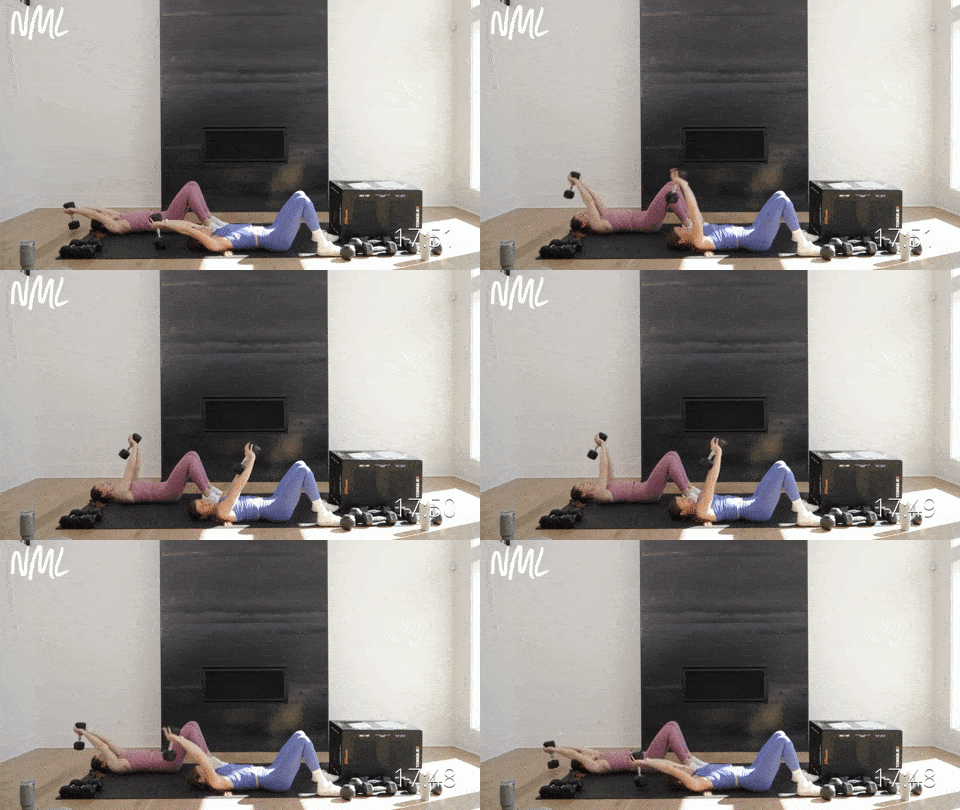
How to Do a Dumbbell Pullover
- Lie flat on your back with your knees bent and feet flat on the floor. Hold 1 dumbbell above your chest with both hands, keeping your arms straight and your elbows slightly bent.
- Keep your arms extended and slowly lower the dumbbell behind your head until your arms are approximately parallel to the floor.
- Exhale as you slowly pull the dumbbell back over your chest, squeezing your chest muscles as you return to the starting position.
- Keep your arms relatively straight throughout the movement, maintaining a slight bend in your elbows rather than locking them out.
- Repeat for your desired number of repetitions, controlling the weight throughout the entire movement.
Note(s): Keep your lower back pressed into the floor and avoid letting your ribs flare as you lower the dumbbell behind your head. Use a lighter weight if you have difficulty maintaining control or proper form throughout the movement.
3. Bicep Curl
Targets: The biceps brachii (the front of your arms or the long head of the biceps muscle).

How to Do a Bicep Curl
- Start standing with feet hip-width apart and core engaged. Hold a dumbbell in each hand at your sides, palms facing outward (underhand grip or supine curl).
- Keeping your elbows locked by your sides, squeeze your bicep muscle to curl the weights up to shoulder height.
- At the top of the movement, rotate your hands so palms face in towards each other (hammer curl). With control, slowly lower the dumbbells down to your sides.
- At the bottom of your movement, flip your grip so palms face out again and repeat.
4. Hammer Curl
Targets: The long head of the bicep as well as the brachialis (another muscle in the upper arm located at the elbow joint) and the brachioradialis (a forearm muscle).

How to Do a Hammer Curl
- Stand with your feet shoulder-width apart, core engaged. Hold a dumbbell in each hand at your sides, palms facing in towards each other (hammer curl grip or neutral grip).
- Squeeze your bicep muscle to curl the weights up to your shoulders. Keep the upper arms stationary as you curl.
- With control, slowly lower the dumbbells back down, returning to starting position.
5. Tricep Kickback
Targets: Triceps brachii, including the long head, lateral head and medial head. This move also challenges the rear delts and core stabilizers as you hinge and hold position.

How to Do a Tricep Kickback
- Start with feet hip-distance apart, knees slightly bent. Hold 1 dumbbell in each hand at your sides, palms facing in.
- Roll your shoulders down and back, hinge forward at the hips (bent over position) and lock your arms in at a 90-degree angle. Upper arms are in line with ribcage, elbows bent at 90 degrees, weights near hips.
- With control, squeeze the back of your arms to straighten your arms, pressing the dumbbells back towards your hips.
- With control, slowly return the dumbbells to the starting position.
Modification(s): Reduce the weight and perform the movement with your chest supported on a bench or chair to take pressure off the lower back. You can also shorten your range of motion if fully extending the elbow causes discomfort.
6. Overhead Tricep Extension
Targets: The long head of the triceps and all the stabilizing muscles in the shoulders, core, glutes and lower back muscles.

How to Do an Overhead Tricep Extension
- Start standing with feet shoulder-width apart, back straight, core engaged and knees slightly bent. Hold 1 dumbbell vertically between your palms overhead.
- Slowly bend your elbows to a 90-degree angle, bringing the dumbbell behind your head. Think ‘hide the dumbbell, show the dumbbell,’ if you were watching yourself in a mirror. Keep your elbows close to your ears throughout the entire movement (don’t let your elbows flare out as you fatigue).
- Squeeze through the back of your arm as you exhale, pressing the dumbbell overhead, arms fully extended.
7. Skull Crusher
Targets: Triceps (back of the arms) and core.

How to Do a Skull Crusher
- Lie flat on the ground or on a bench, legs bent at 90 degrees. Feet flat on the floor.
- Hold 1 dumbbell in each hand and extend your arms so the dumbbells are directly overhead (palms facing each other).
- Bending at the elbows, slowly lower the dumbbells towards your head (just bending at the elbows, lowering the dumbbells towards your temples).
- Then press the dumbbells back overhead to return to the starting position.
8. Front Raise
Targets: Front and middle deltoids, trapezius and rhomboids
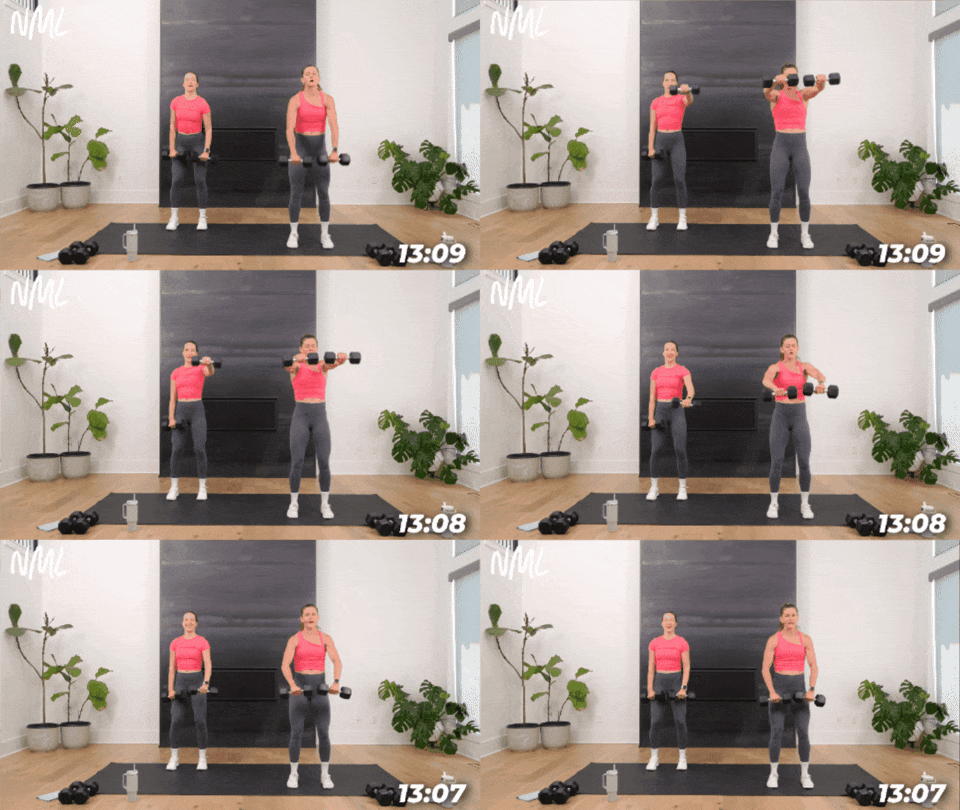
How to Do a Front Raise
- Stand with your feet hip-width apart, slight bend in your knees. Hold a dumbbell in each hand in front of your hips, palms facing in towards your body.
- Maintain a soft bend in your elbows, then lift the dumbbells straight out in front of your body, raising the weights until they reach shoulder height.
- Slowly and with control, lower the dumbbells to your hips, returning to the starting position.
Modification(s): Alternate arms, performing a single arm front raise.
9. Lateral Raise
Targets: The lateral deltoid (also engages the anterior deltoid and posterior deltoid).

How to Do a Lateral Raise
- Stand with your feet shoulder-width apart, with a slight bend in your knees. Hold a dumbbell in each hand at hip level, palms facing in towards each other.
- Engage your core as you lift the dumbbell in your right hand out towards your right side, keeping a slight bend in the elbow. Lift the dumbbell just to shoulder height.
- Slowly lower the dumbbell to the starting position.
- Repeat, this time performing a lateral raise with the dumbbell in your left hand.
10. Hamstring Curl
Targets: Glutes (gluteus medius) and hamstrings.

How to Do a Hamstring Curl
- Lie flat on your back, placing the backs of your calves and heels on the top of a foam roller or stability ball, toes pointing up towards the ceiling. Inhale to brace your core, then squeeze your glutes to lift your hips off the ground.
- Exhale as you slowly pull your heels in towards your hips, bending your knees and contracting your hamstrings to move the exercise ball towards your glutes. Toes move from pointing towards the ceiling to facing the opposite wall (heels flat on the exercise ball). Focus on keeping your hips even.
- With control, reverse the movement to roll the ball away from your body, lengthening through the backs of your legs. Keep your hips elevated through the entire movement.
Modification(s): Perform a hamstring walkout from the floor. Start lying on your back in a glute bridge position, heels planted, knees bent at 90 degrees, hips lifted off the mat. Slowly “walk” your heels out away from your body, feeling a stretch in the backs of your legs. Then walk them back in, returning to starting position.
11. Standing Calf Raise
Targets: Calves (gastrocnemius and soleus) and ankles
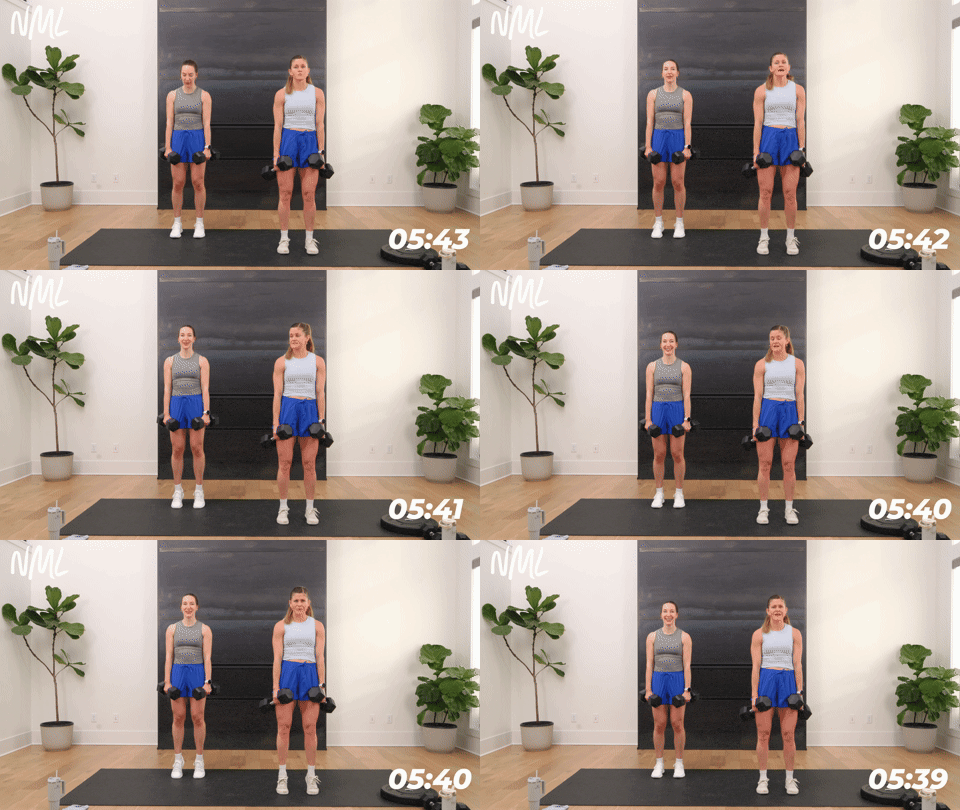
How to Do a Standing Calf Raise
- Start standing on a flat surface, feet shoulder-width apart. Keep your back straight and your core engaged to stand tall. Option to hold a pair of dumbbells at your sides.
- Slowly and with control, lift yourself up onto the balls of your feet, heels rising above the ground.
- Lift your heels until you feel a stretch along the back of your legs, balancing on your toes.
- Then, slowly lower your heels back to the ground, returning to starting position.
Modification(s): Use a wall, chair or other stable surface for balance if needed. For a lower-impact option that requires less balance, perform a seated calf raise with your feet flat on the floor and lift your heels toward the ceiling. For an added challenge, perform the exercise 1 leg at a time or hold dumbbells for additional resistance.
FAQs
Are isolation exercises necessary for muscle growth?
No, isolation exercises aren’t required for muscle growth. Where isolation exercises shine is by targeting a specific muscle or muscle group for growth; however, compound exercises can effectively build muscle by training multiple muscle groups at once.
How often should you include isolation exercises in your workout routine?
This widely depends on your personal fitness goals, overall workout routine, training volume and ability to recover. You should incorporate isolation exercises into your routine as they relate to those specific movements, without overwhelming your overall training plan.
Can beginners benefit from isolation exercises?
Yes, beginners can benefit from isolation exercises when they are used appropriately. Isolation exercises can help beginners learn to engage and strengthen specific muscle groups and improve the mind-body connection to those muscles, all while complementing compound movements and a well-rounded workout routine.
More Workouts
RoundupsPin This: 11 Isolation Exercises

This post includes affiliate links. I do earn a commission for products purchased using these links (at no additional cost to you). Thank you for supporting Nourish Move Love, making the content you see on this blog possible.
no comments


Leave a Comment