






8 Best Agility Exercises to Improve Performance
These are the 8 best agility exercises designed to strengthen the stabilizing muscles that support balance, speed and efficient movement while improving heart health and endurance. Using no equipment, these quick-feet drills target functional fitness – boosting coordination, reaction time and agility to help counter the natural decline that often begins after age 30. Ideal for anyone looking to stay athletic, mobile and resilient, these exercises support long-term performance and everyday movement as you age.
I talk a lot about age-related muscle loss, but as a mom of 3 (and a trainer), I’ve learned that strength isn’t the only thing that starts to shift as we get older. Reaction time and coordination can begin to decline as early as our mid-20s, but the good news is this isn’t permanent. Research shows that agility training can improve reaction time, cognitive processing speed and even memory well into midlife and beyond, making it a powerful tool for long-term brain and body health.
Agility training often gets labeled as “for athletes only,” but in real life, we use agility every single day. It’s what helps you catch yourself on a slippery sidewalk, pivot quickly when a kid darts in front of you, or react fast during the chaos of a busy household. Agility is simply your ability to respond to the unexpected… and just like strength or balance, it’s a skill you have to keep using if you want to keep it.
Good agility exercises train your body to move, stop and change direction quickly while staying balanced and in control. That means training more than just speed: agility workouts challenge strength, explosive power, endurance, balance and coordination all at once, which is why they’re so effective for functional fitness.
While athletes use agility drills to improve sports performance, these same movements build joint stability, core strength and neuromuscular control. These are key foundations for women in every season of life. There’s no single “best” agility exercise, but simple, effective bodyweight moves like quick-feet drills, lateral shuffles, skater jumps, box jumps and shuttle runs work great for beginners and experienced exercisers alike. They help you train plyometrics, stay athletic and resilient, and build a body that keeps up with both your workout routines and your life.
Agility Training Exercises
1. In/Out Runs
Targets: Hip flexors, glutes, calves, quads, hamstrings and core.
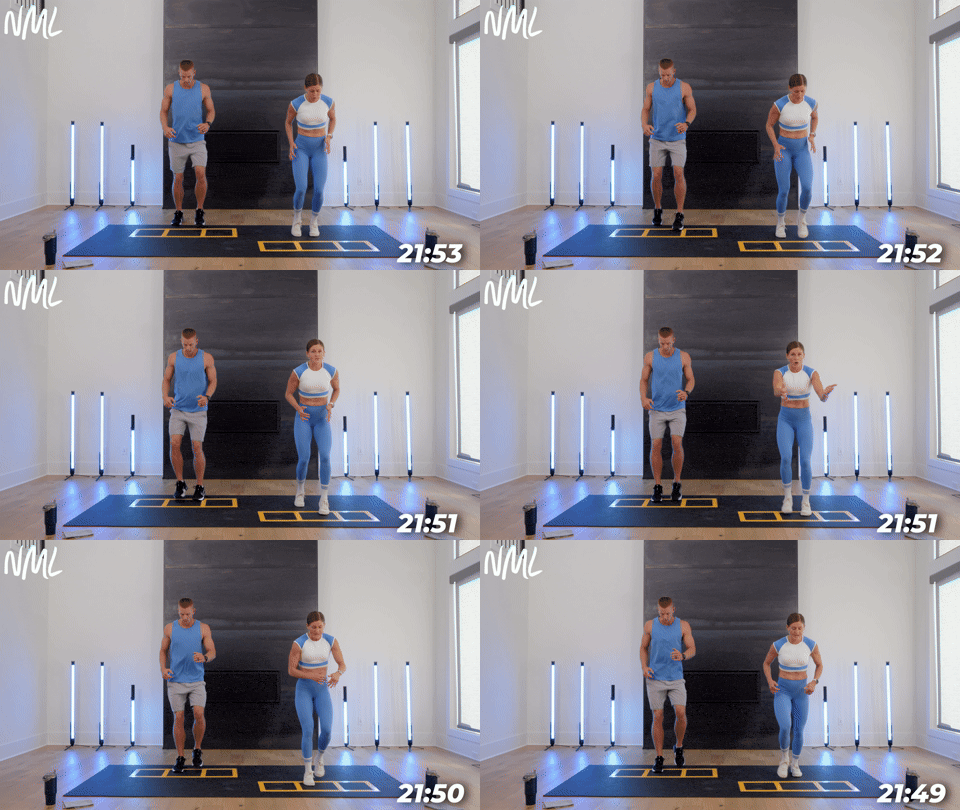
How to Do In/Out Runs
- Stand facing the middle of the 3 boxes in your taped agility ladder, feet hip-width apart and knees slightly bent. Engage your core and keep your chest lifted.
- Quickly run your feet in toward the middle box, one foot at a time, then out again to your starting position, moving in a fast front-to-back motion. Stay light on the balls of your feet and maintain a steady rhythm.
- Keep your arms pumping naturally at your sides to help drive speed and coordination. Continue the quick in-and-out foot pattern, focusing on control and precision with each step.
2. Double Leg Hops and High Knees
Targets: Quads, hamstrings, calves, glutes and core.
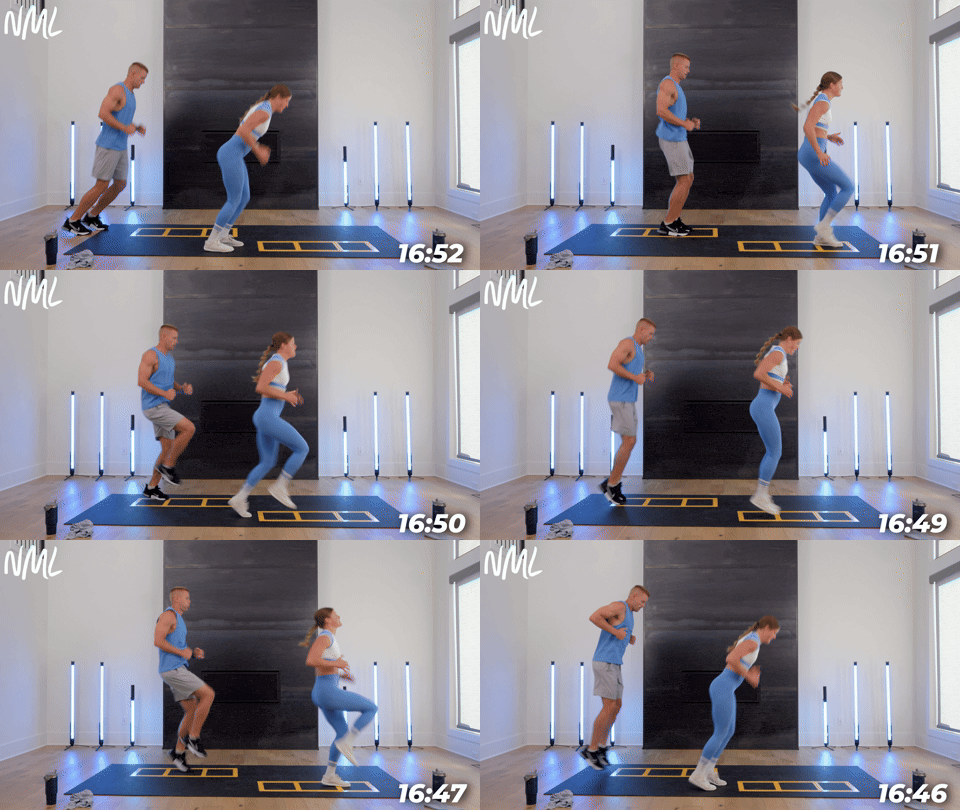
How to Do Double Leg Hops and High Knees
- Stand tall at the end of your taped agility ladder, feet hip-width apart and core engaged.
- Bend your knees slightly and hop both feet together into the first box, then the middle box and finally the far box – landing softly each time with your knees slightly bent to absorb impact. Keep your chest lifted and arms swinging naturally for balance and momentum.
- After completing your third hop, immediately run backward to your starting position, driving your knees high toward your chest as you move. Stay light on your feet and maintain a quick, controlled pace.
- Repeat this pattern of 3 double-leg hops forward, then high knees backward.
3. Lateral Heisman Touchdown and Sprint
Targets: Glutes, quads, hamstrings, calves, core and hip flexors.
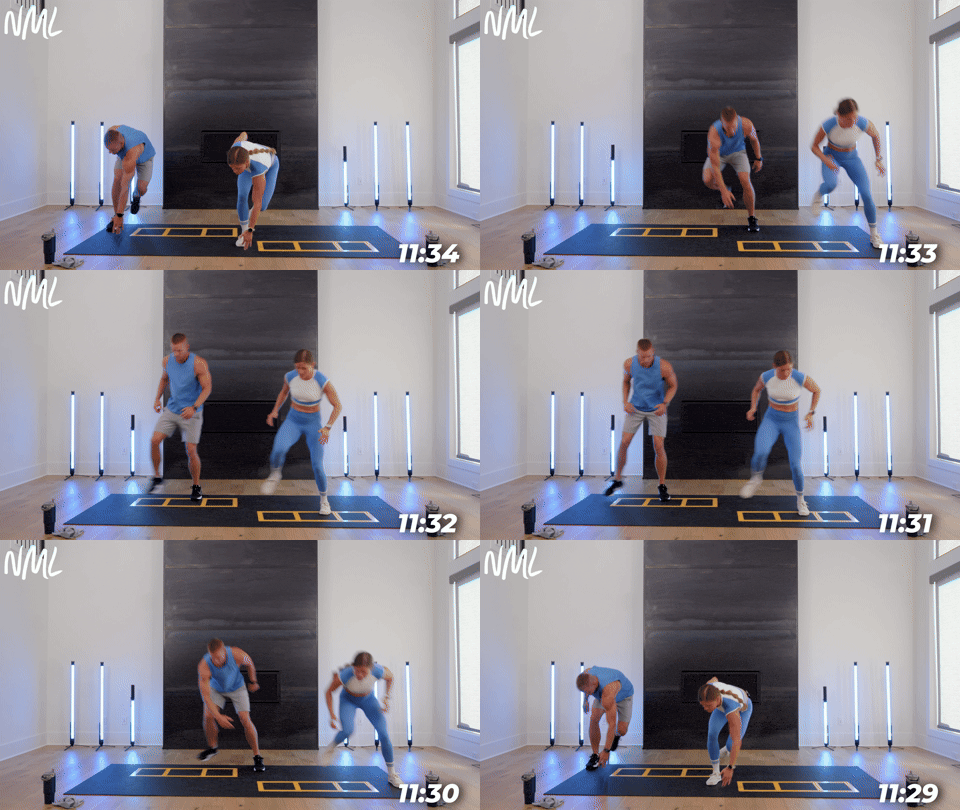
How to Do a Lateral Heisman Touchdown and Sprint
- Start at the far left end of your taped agility ladder, knees slightly bent and core engaged.
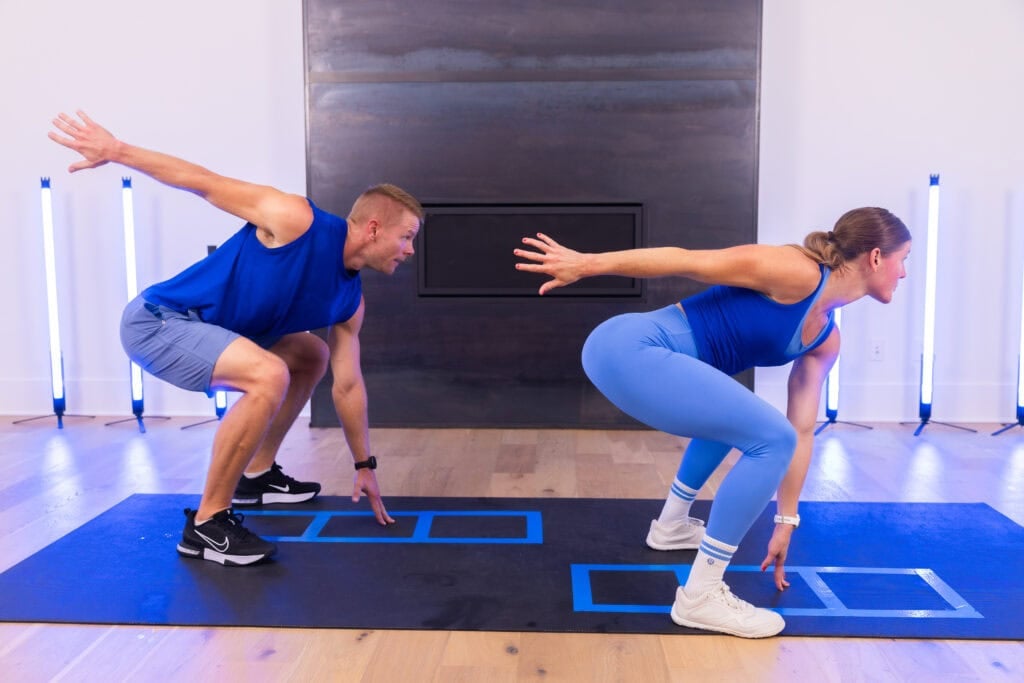
- Begin performing lateral Heisman runs to your right. Drive your right knee up and across your body while tapping your right foot into the middle box. Then switch quickly, driving your left knee up and tapping your left foot into the middle box as you continue moving laterally to the right. Stay light on your feet and maintain a quick, athletic rhythm.
- When you reach the right side of the ladder, lower your body slightly and tap the mat with your left hand. Your left foot should lift off the ground and extend slightly behind you, balancing on your right foot as you tap.
- Then, reverse direction and perform the same lateral Heisman run back to the left side of the ladder, finishing with a tap down on your right hand.
- Continue alternating sides, keeping your movements sharp, controlled and powered from your core.
Modification: Omit the tap down, performing lateral Heisman runs.
4. In/Out Double Leg Hops
Targets: Quads, hamstrings, calves, glutes and core.
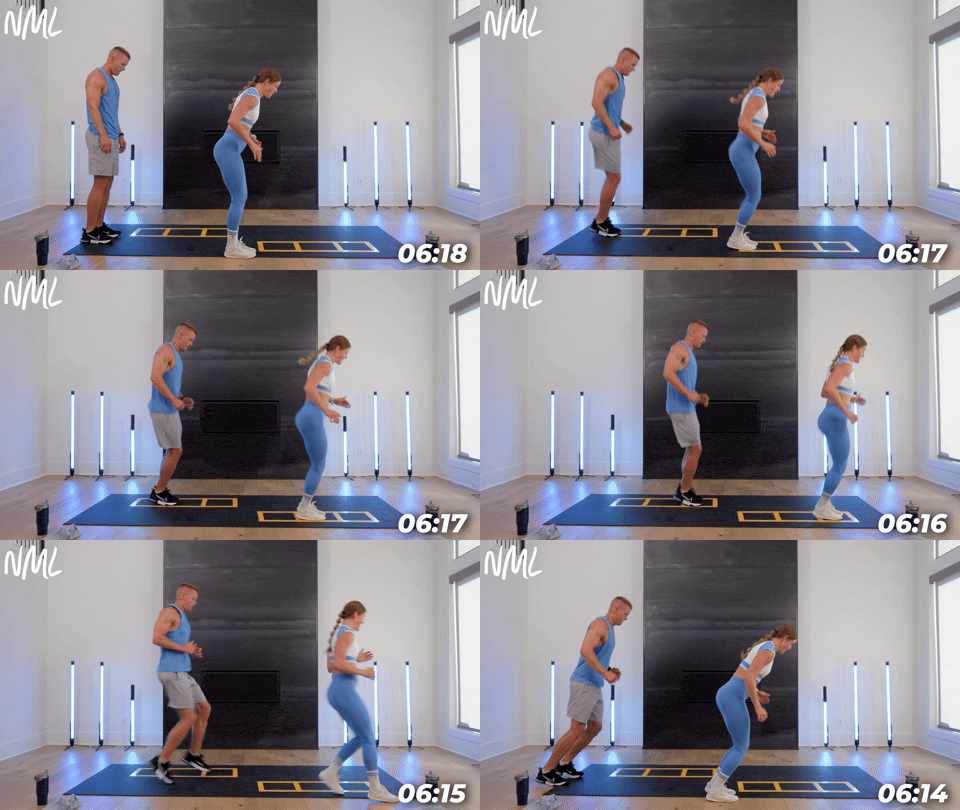
How to Do In/Out Double Leg Hops
- Stand at the back of your taped agility ladder, positioned just to the right side of it. Engage your core, keep your chest lifted and bend your knees slightly to prepare for movement.
- Jump both feet into the first box, landing softly on the balls of your feet. Then immediately jump both feet out to the right side of the ladder.
- Next, jump both feet into the middle box, then back out again. Continue this pattern – in, out, in, out – as you move forward up the ladder, finishing by hopping both feet into the far (last) box and then out of the ladder.
- Once you reach the top, run backward to your starting position, staying light on your feet and maintaining balance.
- Repeat this in/out hopping pattern, focusing on quick, controlled footwork and steady breathing.
Modification: Slow this down, running one foot in and out at a time.
5. Double Hop to Single Leg Lateral Bound
Targets: Hip flexors, glutes, calves, quads, hamstrings and core.
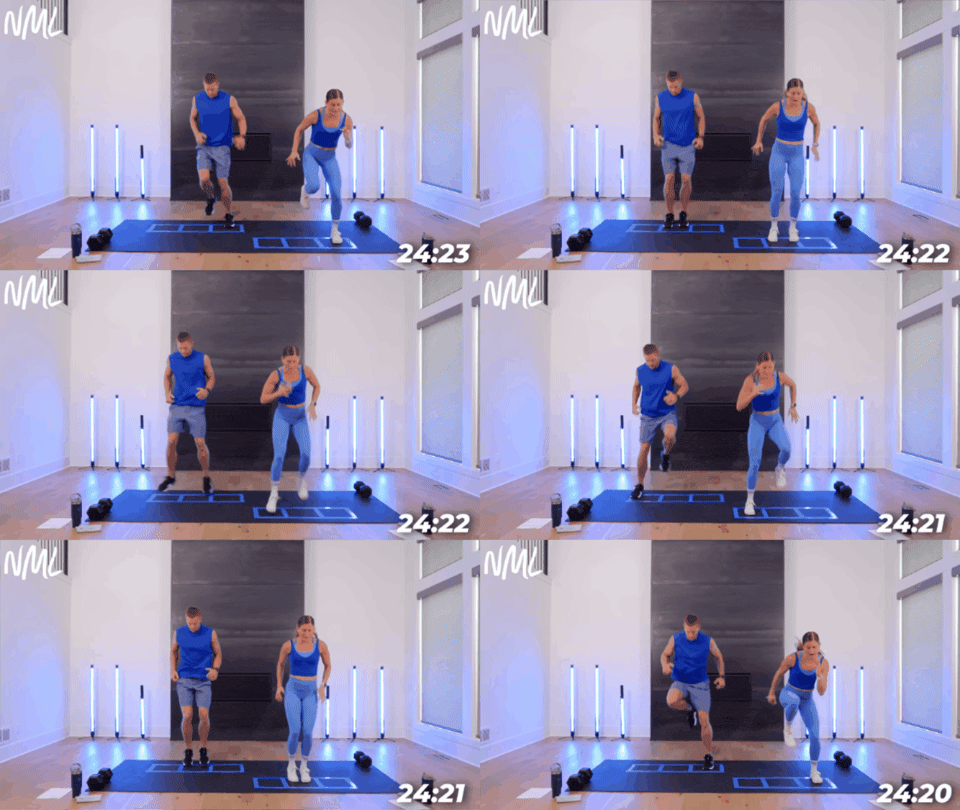
How to Do a Double Hop to Single Leg Lateral Bound
- Stand in the center box of your taped agility ladder, feet hip-width apart and knees slightly bent. Engage your core and keep your chest lifted.
- Perform 2 quick hops in the middle box, staying light on the balls of your feet.
- Then, hop to the left box, landing lightly on your left foot, right knee driving towards your chest.
- Reverse the motion, jumping both feet into the middle box.
- Repeat, performing 2 more hops in the middle box before hopping to the right box, landing lightly on your right foot and driving your left knee towards your chest.
- Keep your arms pumping naturally at your sides to help drive speed and coordination. Focus on control and precision with each step.
6. Wide/Narrow Runs
Targets: Hip flexors, glutes, calves, quads, hamstrings and core.
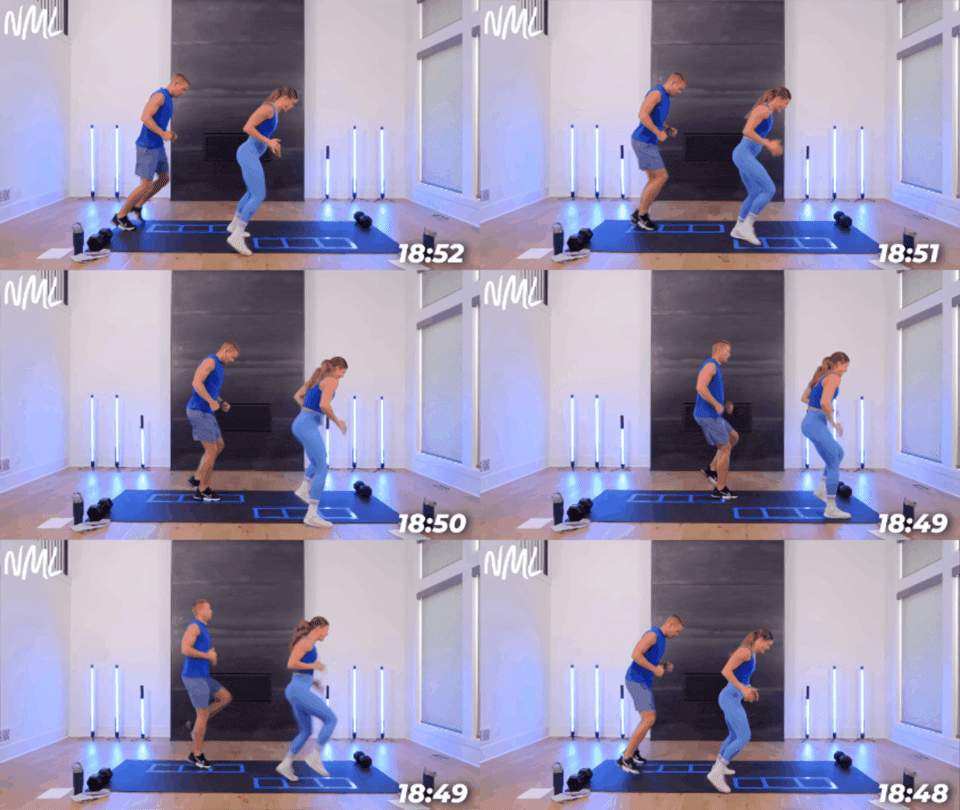
How to Do Wide/Narrow Runs
- Stand tall at the end of your taped agility ladder, feet hip-width apart and core engaged.
- Quickly run your feet inside the first box, one foot at a time, then outside the second box, moving quickly forward. Stay light on the balls of your feet and maintain a steady rhythm.
- Continue this pattern – in, in, out, out – as you move forward up the ladder, finishing by hopping both feet outside the far (last) box. Keep your arms pumping naturally at your sides to help drive speed and coordination.
- At the end of your agility ladder, run backwards, driving your knees up towards your chest to perform high knees as you reverse to the starting position.
7. Single Leg Lateral Hops
Targets: Glutes, quads, hamstrings, calves, core and hip flexors.
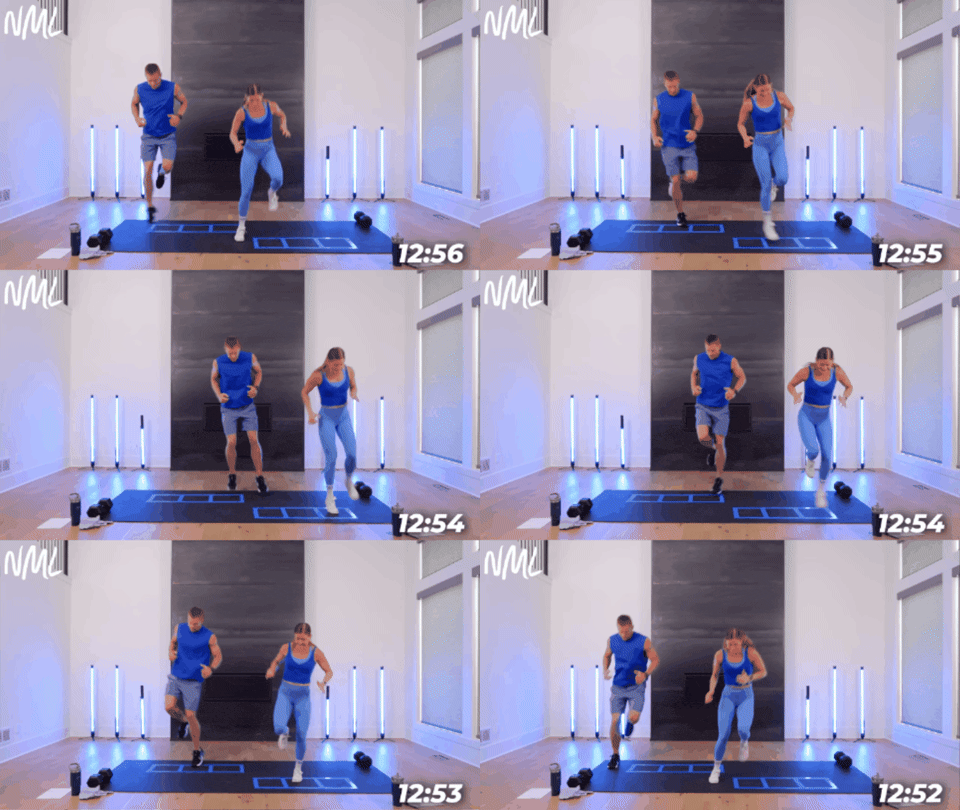
How to Do a Single Leg Lateral Hop
- Start at the far left end of your taped agility ladder, knees slightly bent and core engaged. Shift your weight onto your left leg, bending your right knee and floating your right foot off the ground.
- Perform a single leg hop to your right, jumping into the first, then the second and finally the third box.
- After the third box, switch legs, landing outside the furthest right box on your right leg. Think about keeping a soft bend in your knees and moving quickly and athletically.
- Repeat, alternating legs at the end of each ladder run.
8. Forward and Back Runs
Targets: Hip flexors, glutes, calves, quads, hamstrings and core.
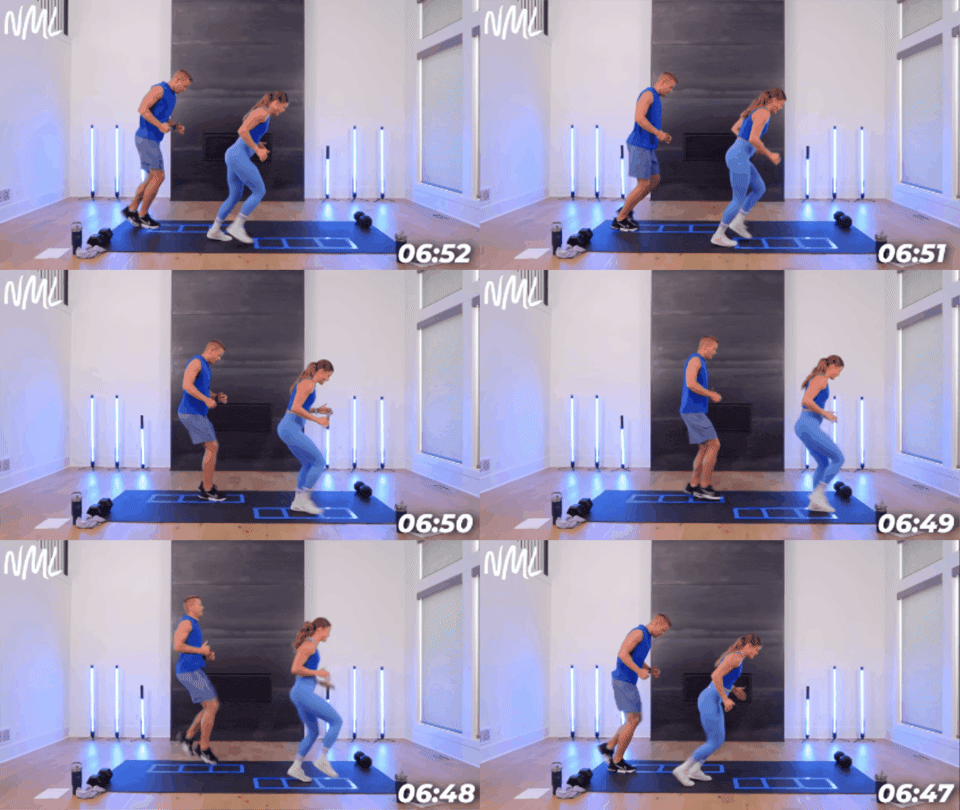
How to Do Forward and Back Runs
- Stand in front of the 3 boxes in your taped agility ladder, feet hip-width apart and knees slightly bent. Engage your core and keep your chest lifted.
- Leading with your right foot, quickly run your feet forward towards the first box, then the second box. Then, step back to the first box. Think “forward 2, back 1.” Stay light on the balls of your feet and maintain a steady rhythm.
- Repeat until you reach the end of your agility ladder, then run backwards, driving your knees up towards your chest to perform high knees as you reverse to the starting position.
FAQs
What training method is best for improving agility?
The most effective agility training program combines change-of-direction drills, reactive movements and core stability work. Exercises that challenge balance, coordination and deceleration (such as agility ladder drills, cone drills, l-drills, plyometric jumps, side shuffles and quick-feet patterns) train the nervous system and muscles to work together efficiently, which is key for real-world agility.
How can I increase agility and change-of-direction speed?
To improve agility and change-of-direction speed, focus on drills that require rapid acceleration, deceleration and re-acceleration in multiple directions. Pair explosive lower-body movements with core-strengthening exercises to improve control, stability and responsiveness during quick transitions. Reps that challenge side-to-side movement patterns, foot speed, high-intensity speed training and plyometric exercises all make sense in your agility workout.
What is the 5-10-5 agility test, and what does it measure?
The 5-10-5 agility test, also known as the pro agility shuttle, measures an individual’s ability to accelerate, decelerate and change direction quickly. These training drills are commonly used in sports performance testing to assess lateral speed, body control and overall agility.
How often should you train agility for optimal results?
Agility training is most effective when performed 2-3 times per week, allowing adequate recovery between sessions. Consistent, short sessions focused on quality movement and sharp mechanics yield better results than excessive volume.
What is the difference between agility, speed, and quickness?
Speed refers to how fast you move in a straight line, quickness is how rapidly you react or initiate movement, and agility is your ability to decelerate, shift into the opposite direction and perform lateral movement while maintaining balance and control. By blending speed and quickness with coordination, strength and stability, agility becomes essential not only for sport-specific athletic performance but also for functional fitness and real-life movement.
More Workouts
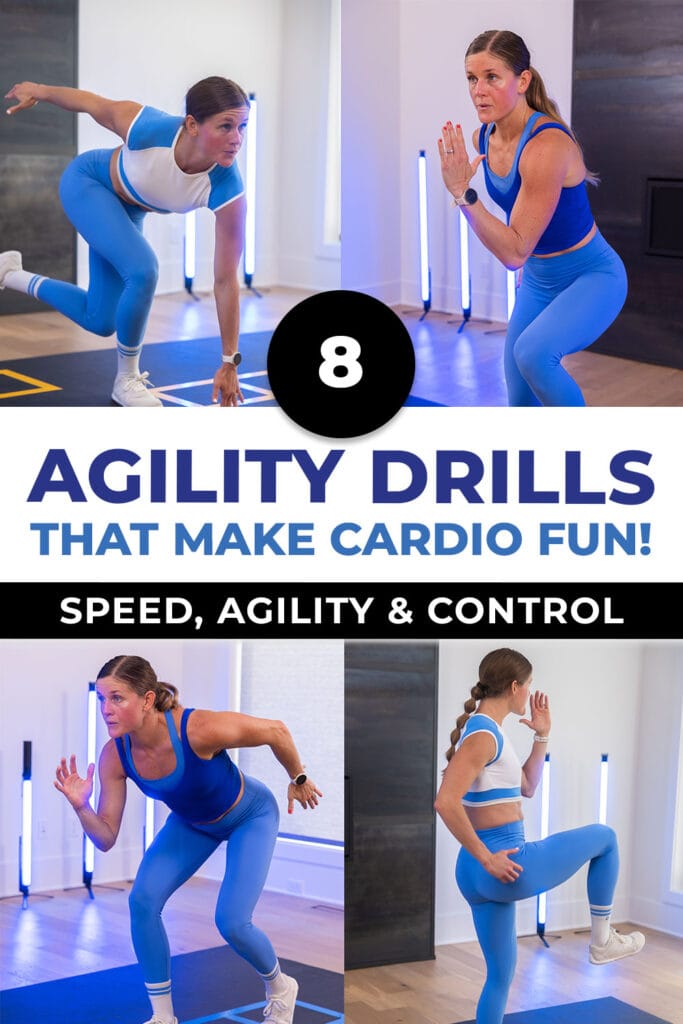
Athletic TrainingPin This: 8 Best Agility Exercises
4 comments

These moves are amongst my favorite; saw them originally in the Athlete 25 program. At more than 6 decades old, I realized I am not as agile as I was in my 20s. But, more than that I had stopped doing things like hopping on one foot, jumping more than a few inches. These moved got me moving again, releasing some fears because I was ‘old’ and enjoy a more fun movement time each day. Thank you!
Thank you for sharing this, Lucy! I am so glad to hear these agility moves have been helpful for you. So important and such a fun way to get some challenging agility work done! -Lindsey
what size is your tape agility ladder?
I eyeballed mine, but it’s about 3 feet long and a foot wide! -Lindsey