


10-Minute Beginner Jump Rope Routine
Hoping to raise your heart rate and burn some extra calories fast? Then it might be time to dig out the jump rope from elementary school! This 10-minute beginner jump rope routine is guaranteed to bring your aerobic fitness and endurance to the next level!
Jump rope routines are full-body workouts challenging the lower body, upper body and core evenly. These exercises are great for all fitness levels and can help you work toward fitness goals like fat loss, muscle building and increased endurance.
I love the simplicity of combining skipping rope with calisthenic exercises like lunges or push-ups to create a workout that helps build muscle and targets body fat. The best part is these bodyweight exercises are great for an on-the-go HIIT workout or a stay-at-home mama sneaking a quick, effective workout into a 20-minute nap time window.
Once you’ve mastered these beginner movements, you can progress to more advanced jump rope exercises such as High Knees, Double Unders, and Single Leg Jumps. Many athletes also combine Jack Jumps with traditional Jumping Jacks for a challenging cardio workout.
Workout Specifics
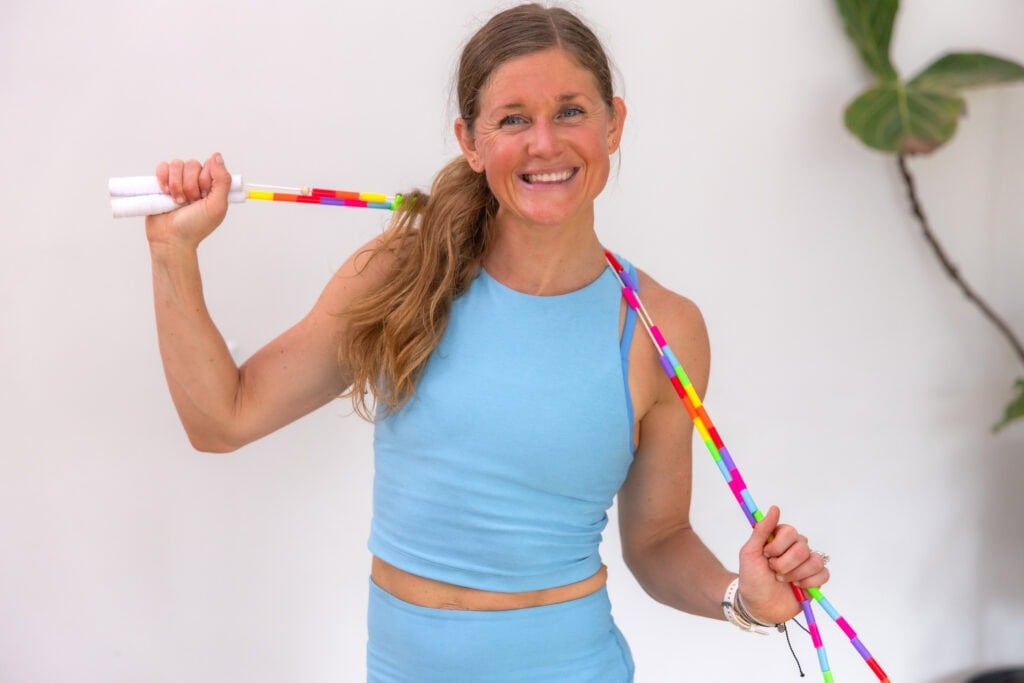
This beginner jump rope workout combines 7 foundational jump rope exercises to help you learn proper technique while improving cardiovascular fitness. As your fitness level improves, these movements can be incorporated into more advanced jump rope training, HIIT workouts or full-body workout routines.
Whether jumping rope along with your favorite playlist or following along with me in the video, jumping rope can be added to any fitness routine or warm-up and pairs especially well with HIIT. Beginners learning how to jump rope can safely complete 2-3 sessions per week.
Note: Individuals with osteoporosis or a high fracture risk should consult a healthcare professional for specific medical advice before starting high-impact exercise.
Workout Equipment
All you need is a jump rope and some open space. Consider purchasing a weighted jump rope as your skill improves. Also, an exercise mat is optional, but nice to have for protecting the floors or for calisthenics.
Workout Instructions
Be sure to follow along with me in the 10-Minute Beginner Jump Rope Routine Video where we will work through every exercise together!
Jump Rope Workout Outline
1. Basic Jump
Targets: Calves, quadriceps, hamstrings, gluteus maximus, deltoids, core, forearms, wrists and grip strength.
How to Do a Basic Jump
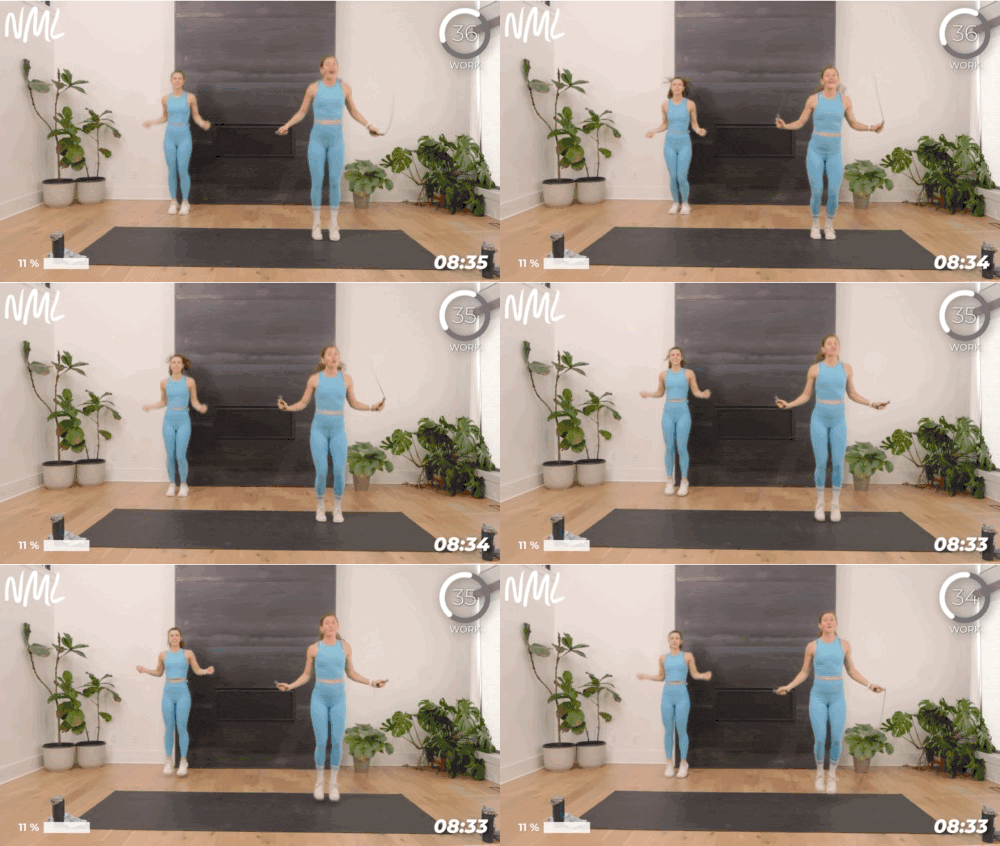
- Stand tall with your feet together and the jump rope positioned behind your heels. Hold the handles at your sides with your elbows close to your body.
- Engage your core, keep your chest up and look straight ahead.
- Rotate the rope using your wrists, keeping your arms relaxed and close to your sides.
- As the rope approaches your feet, jump a few inches off the ground, landing softly on the balls of your feet.
- Maintain a steady rhythm, keeping your jumps low and controlled while allowing the rope to pass underneath you with each rotation.
- Continue for the desired number of repetitions or time, then gradually slow the rope and return to a standing position.
2. Alternate Foot Jump
Targets: Calves, quads, hamstrings and glutes.
How to Do an Alternate Foot Jump
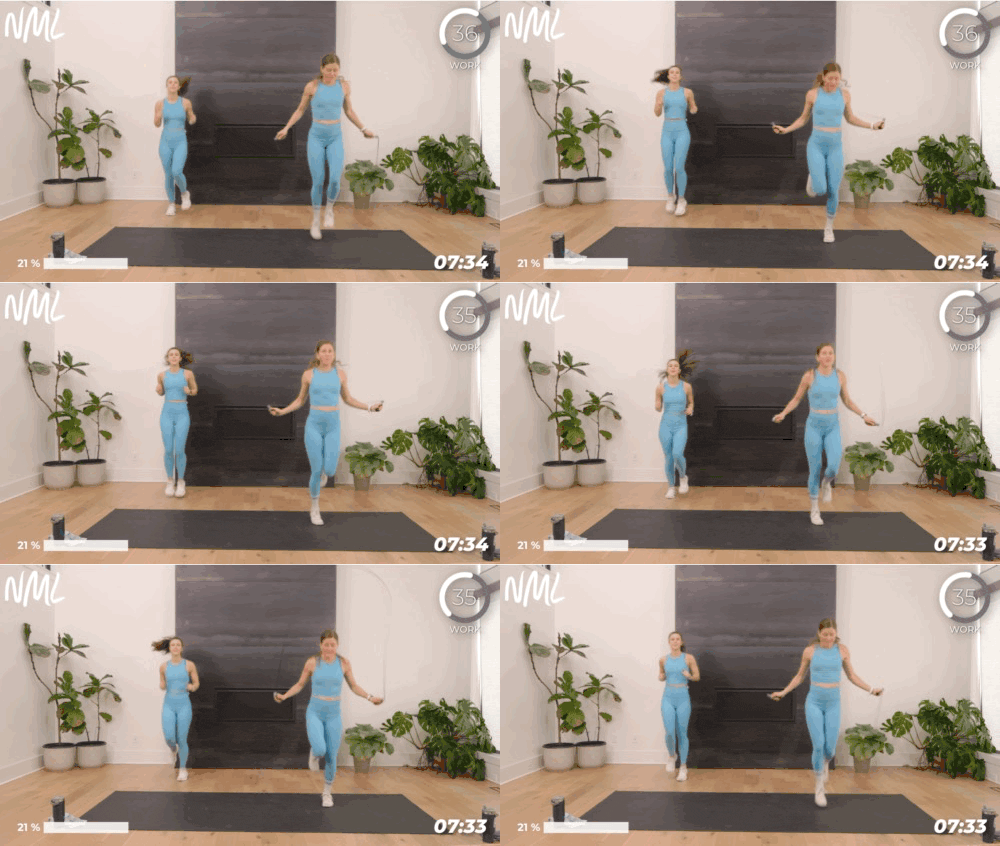
- Stand tall with your feet together and the jump rope positioned behind your heels. Hold the handles at your sides with your elbows close to your body.
- Engage your core, keep your chest lifted and look straight ahead.
- Rotate the rope using your wrists while lifting one foot slightly off the ground as the rope passes beneath you.
- On the next rotation, switch feet, landing softly on the opposite foot while lifting the other foot.
- Continue alternating feet with each jump, maintaining a smooth, rhythmic motion.
- Land softly on the balls of your feet and keep your jumps low and controlled throughout the movement.
Modification: Try slowing the pace and focus on alternating feet without a rope.
3. Ski Jump
Targets: Calves, quadriceps, hamstrings, glutes, core, hip abductors and adductors, hip stabilizers, shoulders and forearms.
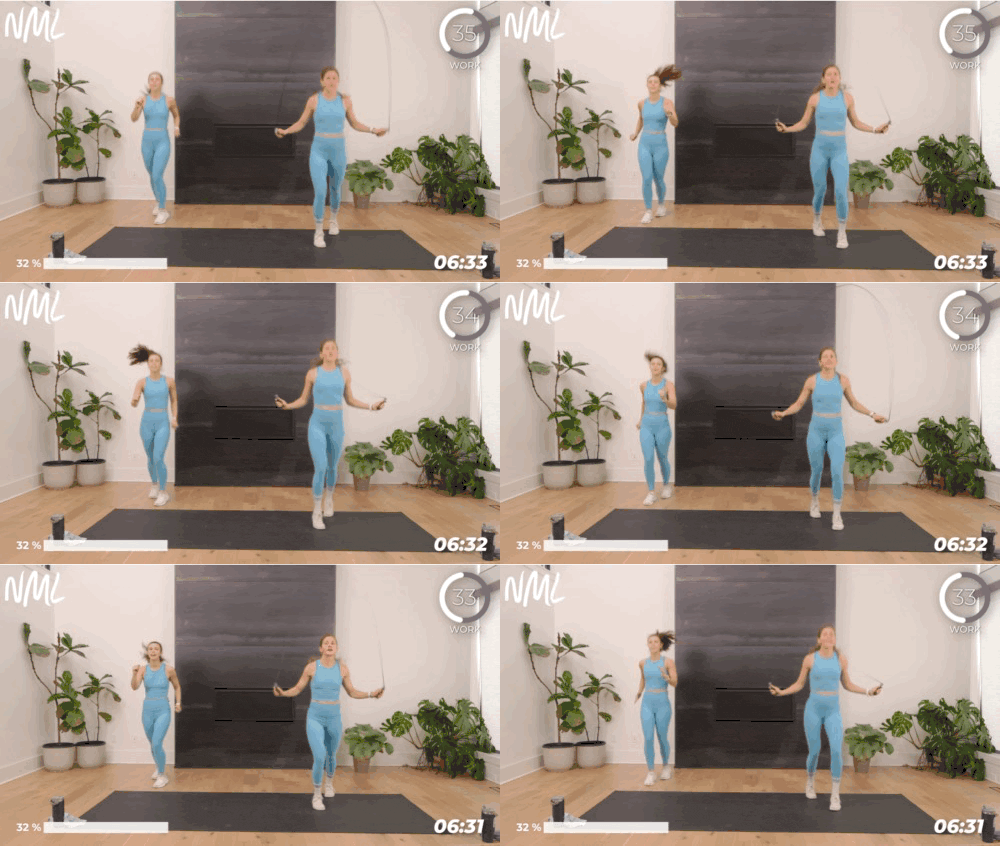
How to Do a Ski Jump
- Stand tall with your feet together and the jump rope positioned behind your heels. Hold the handles at your sides with your elbows close to your body.
- Engage your core, keep your chest lifted and look straight ahead.
- Rotate the rope using your wrists as you jump a few inches off the ground.
- As the rope passes beneath your feet, jump slightly to one side while keeping your feet together.
- On the next rotation, jump to the opposite side, maintaining a smooth side-to-side motion.
- Continue alternating directions with each jump, landing softly on the balls of your feet and keeping your jumps low and controlled.
4. 2-Count Single Leg Switches
Targets: Calves, quadriceps, hamstrings, glutes, core, hip stabilizers, ankle and foot stabilizers, shoulders and forearms.
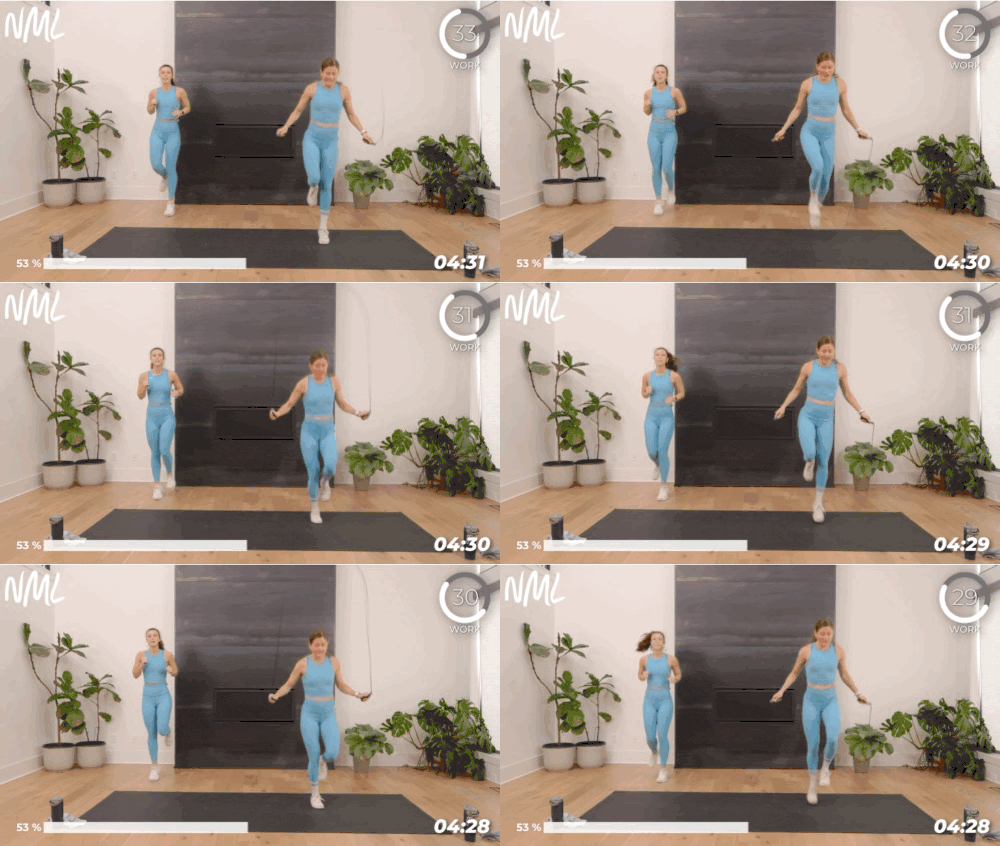
How to Do a 2-Count Single Leg Switch
- Stand tall with your feet together and the jump rope positioned behind your heels. Hold the handles at your sides with your elbows close to your body.
- Engage your core, keep your chest lifted and look straight ahead.
- Rotate the rope using your wrists and lift one foot slightly off the ground.
- Perform 2 consecutive jumps on your standing leg, landing softly on the ball of your foot each time.
- After the second jump, switch feet and perform 2 jumps on the opposite leg.
- Continue alternating sides every 2 jumps while maintaining a steady rhythm and controlled posture.
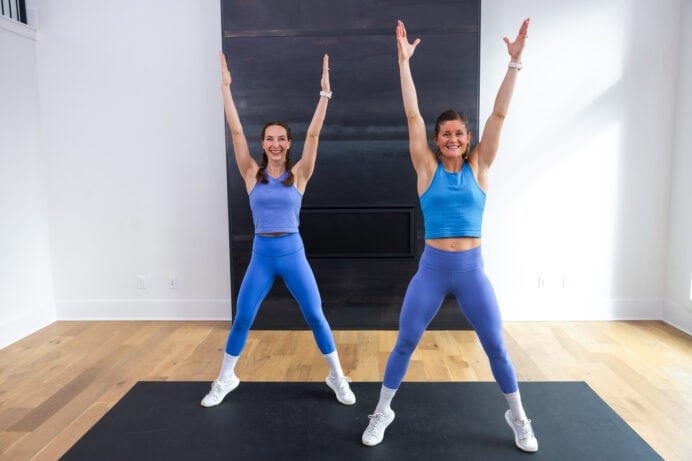
5. Jack Jumps
Targets: Calves, quadriceps, hamstrings, glutes, core, hip abductors and adductors, hip stabilizers, shoulders and forearms.
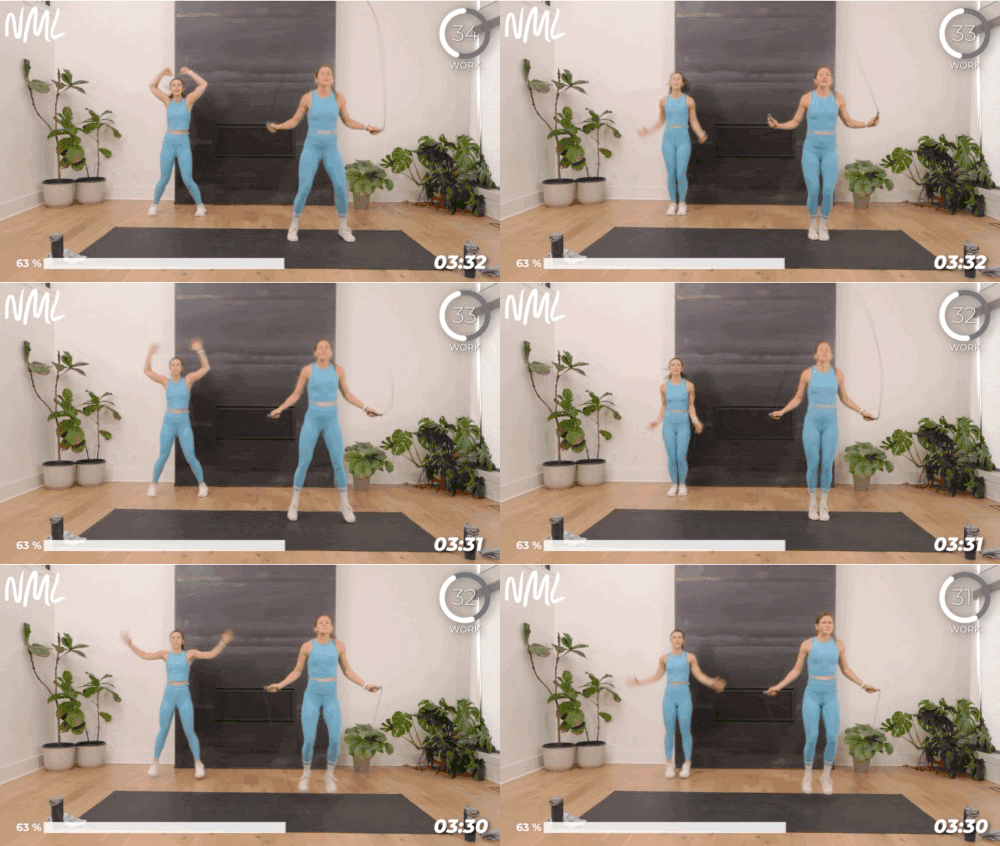
How to Do a Jack Jump
- Stand tall with your feet together and the jump rope positioned behind your heels. Hold the handles at your sides with your elbows close to your body.
- Engage your core, keep your chest lifted and look straight ahead.
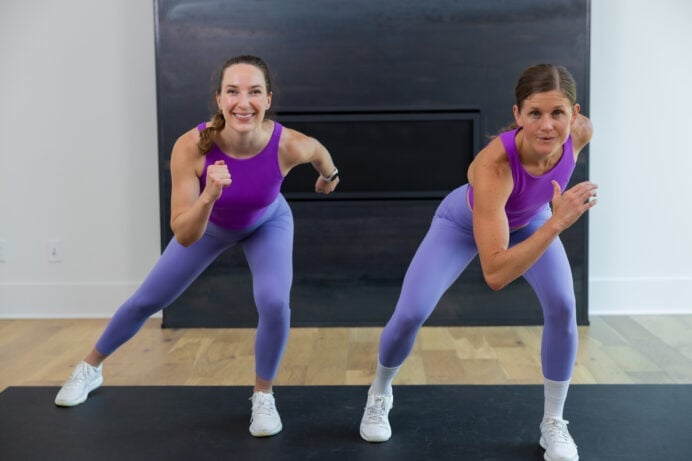
- Rotate the rope using your wrists as you jump your feet out wider than shoulder-width apart.
- On the next jump, bring your feet back together as the rope passes beneath you.
- Continue alternating between a narrow stance and a wide stance with each rotation of the rope.
- Land softly on the balls of your feet and maintain a steady rhythm throughout the movement.
6. 5-Count Single Leg Switches
Targets: Calves, quadriceps, hamstrings, glutes, core, hip stabilizers, ankle and foot stabilizers, shoulders and forearms.
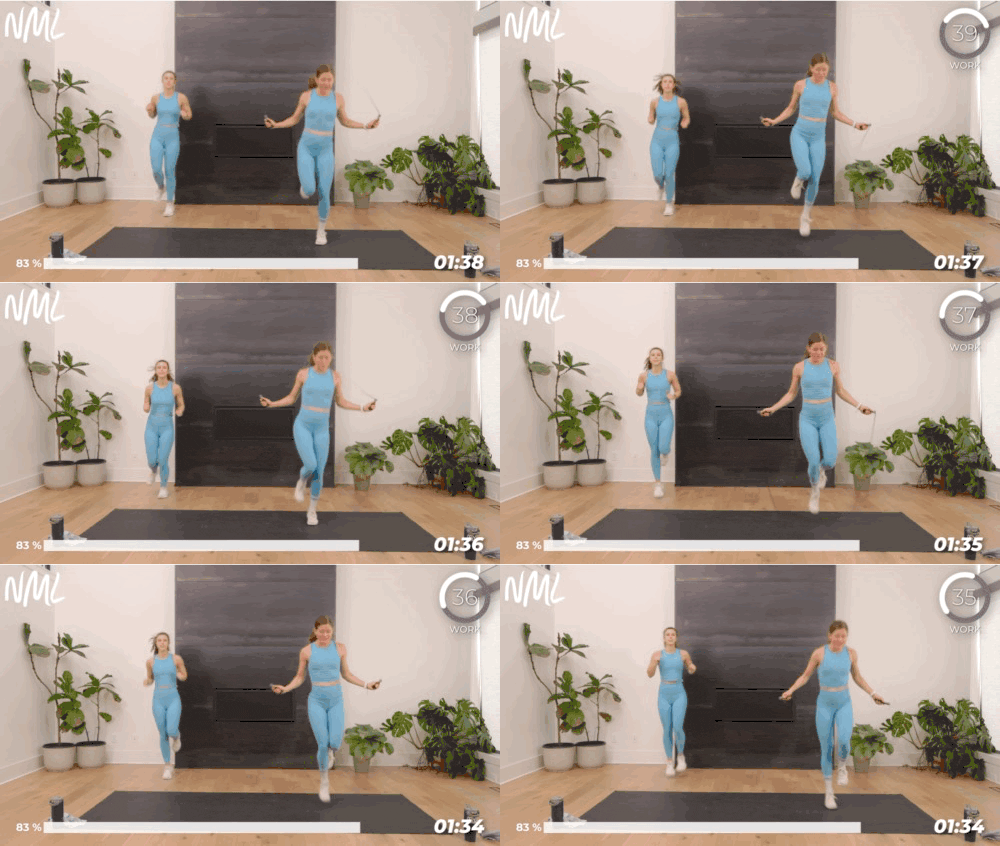
How to Do a 5-Count Single Leg Switch
- Stand tall with your feet together and the jump rope positioned behind your heels. Hold the handles at your sides with your elbows close to your body.
- Engage your core, keep your chest lifted and look straight ahead.
- Rotate the rope using your wrists and lift one foot slightly off the ground.
- Perform 5 consecutive jumps on your standing leg, landing softly on the ball of your foot with each repetition.
- After the fifth jump, switch feet and perform five jumps on the opposite leg.
- Continue alternating sides every 5 jumps while maintaining a steady rhythm and controlled posture.
7. Reverse Jump
Targets: Calves, quadriceps, hamstrings, glutes, core, hip stabilizers, ankle and foot stabilizers, shoulders and forearms.
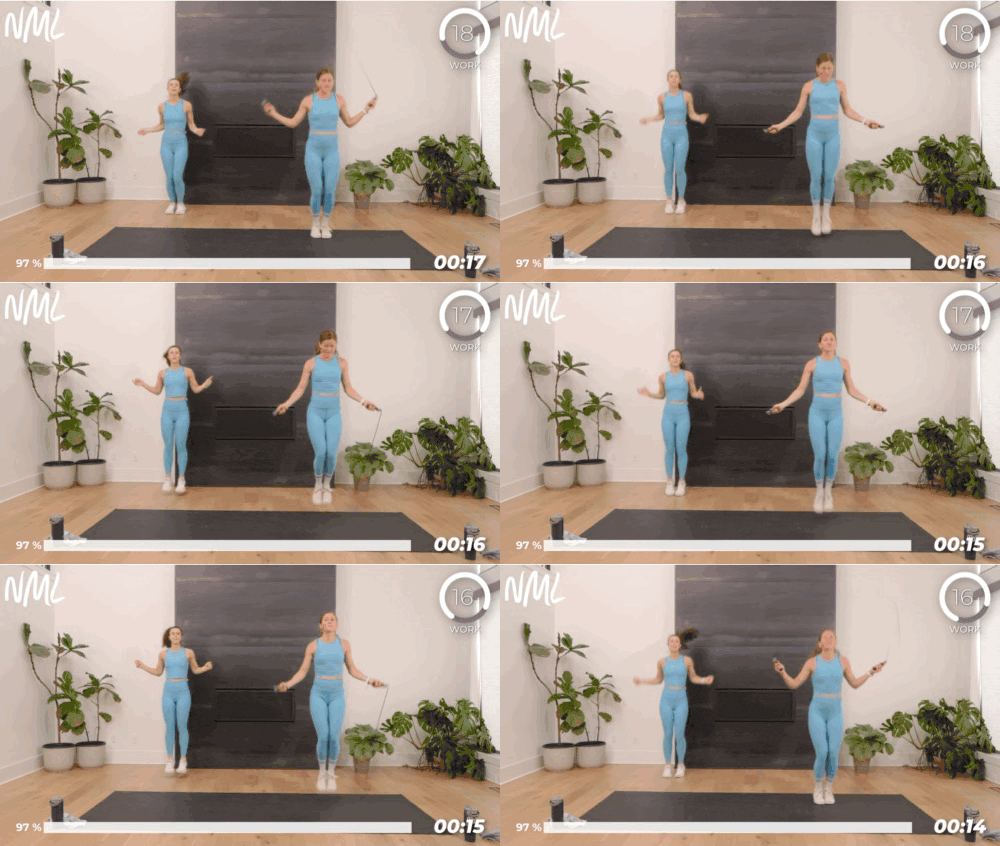
How to Do a Reverse Jump
- Stand tall with your feet together and the jump rope positioned in front of your toes. Hold the handles at your sides with your elbows close to your body.
- Engage your core, keep your chest lifted, and look straight ahead.
- Rotate the rope backward over your head using your wrists.
- As the rope approaches your feet from behind, jump a few inches off the ground and allow the rope to pass beneath you.
- Land softly on the balls of your feet with a slight bend in your knees.
- Continue rotating the rope backward, maintaining a smooth rhythm and controlled jumps.
FAQs
Is jump rope considered HIIT or LISS cardio?
Jumping rope can be either HIIT or LISS, depending on how you perform it. Short, hard intervals (for example, 20-60 seconds fast, repeated with rest) make it HIIT, while steady, moderate-paced jumping for several minutes at a conversational effort makes it LISS. The same exercise can fit either category based on intensity, work-rest ratio and duration.
How many calories can you burn during a jump rope workout?
While the number of calories burned from jumping rope depends on factors like body weight, intensity and workout duration, people burn between 10-20 calories per minute on average. That translates to roughly 300-600 calories in a 30-minute session. For reference, that is approximately 1/3 the time you would need to walk on a treadmill to burn the same amount.
High-intensity formats, such as HIIT, Tabata intervals and double-unders, can increase energy expenditure and support weight-loss efforts when combined with a balanced nutrition plan. Short answer: jumping is a great and efficient way to burn calories!
Is jumping rope good for bone health or osteoporosis?
Absolutely! One of the benefits of jumping rope is that it stimulates bone growth and helps to maintain bone density through repetitive weight-bearing impact. When combined with proper nutrition and resistance training, regular jump rope training can help strengthen bones and reduce the risk of osteoporosis.
More Workouts
CardioPin This: Beginner Jump Rope Workout (10 Minutes)
This post includes affiliate links. I do earn a commission for products purchased using these links (at no additional cost to you). Thank you for supporting Nourish Move Love, making the content you see on this blog possible.
no comments
More from
Beginner Workouts