





35-Minute Dumbbell Strength Training Circuit
This full-body strength circuit workout targets every major muscle group through upper and lower body push-and-pull exercises plus core work. Designed to build lean muscle, burn fat and improve functional strength, it’s ideal for anyone looking to get stronger and more efficient in daily movement. Expect compound, strength-based exercises like squats, deadlifts, rows and push-ups performed in fast-paced circuits for maximum results.
This full-body strength circuit workout is one of my favorite ways to train because it’s time-efficient and delivers real results.
I love the structure of circuit workouts, especially when I’m short on time but still want to challenge my entire body. Circuit-style training means performing a series of strength-based exercises back-to-back with minimal rest between moves. The quick pace challenges your muscular endurance and aerobic capacity. Instead of focusing on 1 muscle group at a time, I rotate through exercises that target different areas – upper-body exercises, lower-body exercises and core work.
For this workout, I’ve structured 4 total circuits: 2 push circuits and 2 pull circuits. This type of programming ensures I’m training opposing muscle groups evenly, which helps improve balance and overall functional strength. For example, pairing push movements like squats or push-ups with pull movements such as rows or deadlifts creates a balanced routine that mimics real-life movement patterns, like picking up a heavy box, carrying groceries or lifting a child. That’s what functional fitness is all about: building strength that supports daily life.
One of the biggest benefits of strength circuit training is efficiency. Because I’m moving from 1 exercise to the next with limited rest, my heart rate stays elevated while I’m still lifting heavy and building strength. It’s a blend of strength training and cardio exercises, helping to increase lean muscle mass, boost endurance and burn fat or promote weight loss.
Another key benefit is that circuit training keeps workouts engaging. I never feel like I’m just going through the motions. Each circuit targets a new set of muscles, so I’m constantly working different areas and moving in different planes of motion. I love including compound exercises – moves like squats, deadlifts, push-ups, pull-ups, lunges and planks – because they recruit multiple muscle groups at once. These functional, full-body movements help improve strength, coordination and stability all at the same time.
When it comes to how often to do a resistance training circuit workout, I recommend 2-4 times per week, depending on your fitness level and goals. I personally like alternating strength circuit days with active recovery or mobility work so my body can rest and rebuild between sessions. Recovery is where the strength gains actually happen.
Ultimately, strength circuit exercises are designed to build a stronger, more capable body.
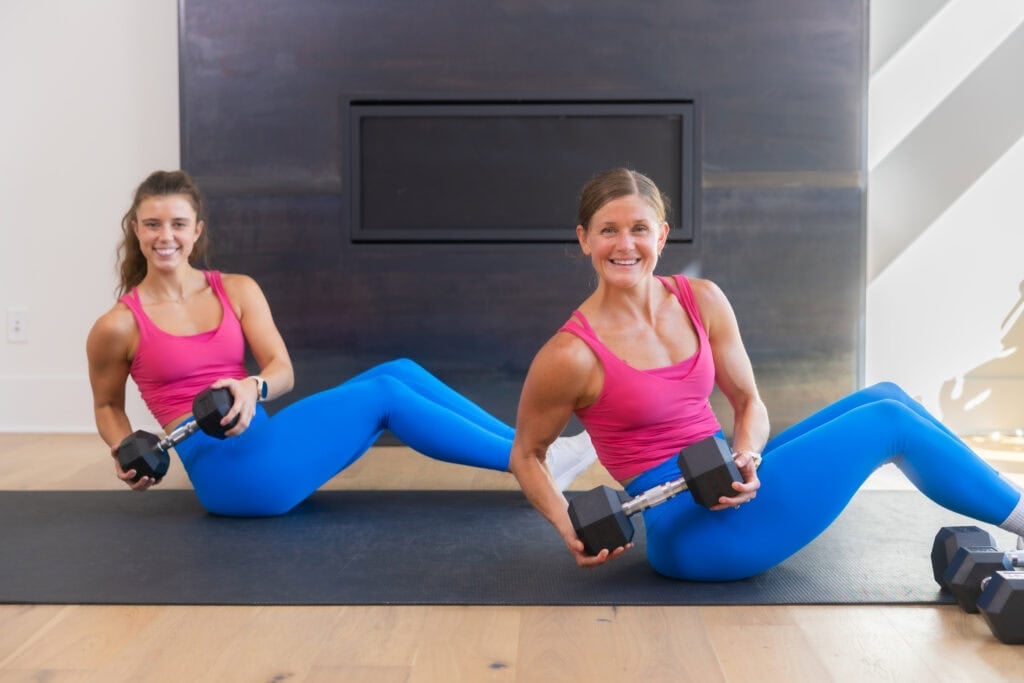
Read A 5-Star Review ⭐⭐⭐⭐⭐
“SOLID full body strength! Circuit 2 might be one of my all-time favorite circuits you’ve built!!! Loved the format, especially including abs/core. Will come back to this one when I want to lift HEAVY and feel strong.💪”
— Marietta S.
Workout Details
This full-body strength circuit workout blends upper and lower body push-and-pull exercises with core work to build lean muscle, improve endurance and support functional movement.
For best results, add full-body circuit workouts like this to your home training program 1-2 times per week. If you’re new to exercise, returning after a break or managing injuries, you should start with lighter resistance or modified movements.
Workout Equipment
Medium to Heavy Set of Dumbbells. I recommend between 5-25 lbs, depending on your fitness level. I’m using 15-25 lb dumbbells in today’s workout.
Workout Instructions
Follow along with the guided Circuit Training Workout on YouTube, led by me — your certified personal trainer, Lindsey Bomgren.
Your Workout Looks Like This:
- Guided Warm-Up and Cool-Down
- 4 Full-Body Strength Circuits
- 4 Exercises Per Circuit
- Timed Intervals (Perform each exercise for 40 seconds of work, followed by 20 seconds of rest. Complete as many reps as you can within the allotted amount of time.)
- Repeat Each Circuit X2 Sets
Workout Outline
Circuit 1:
Circuit 2:
Circuit 3:
Circuit 4:
1. Arnold Press
Targets: All 3 heads of the deltoids, also known as your shoulder muscles.
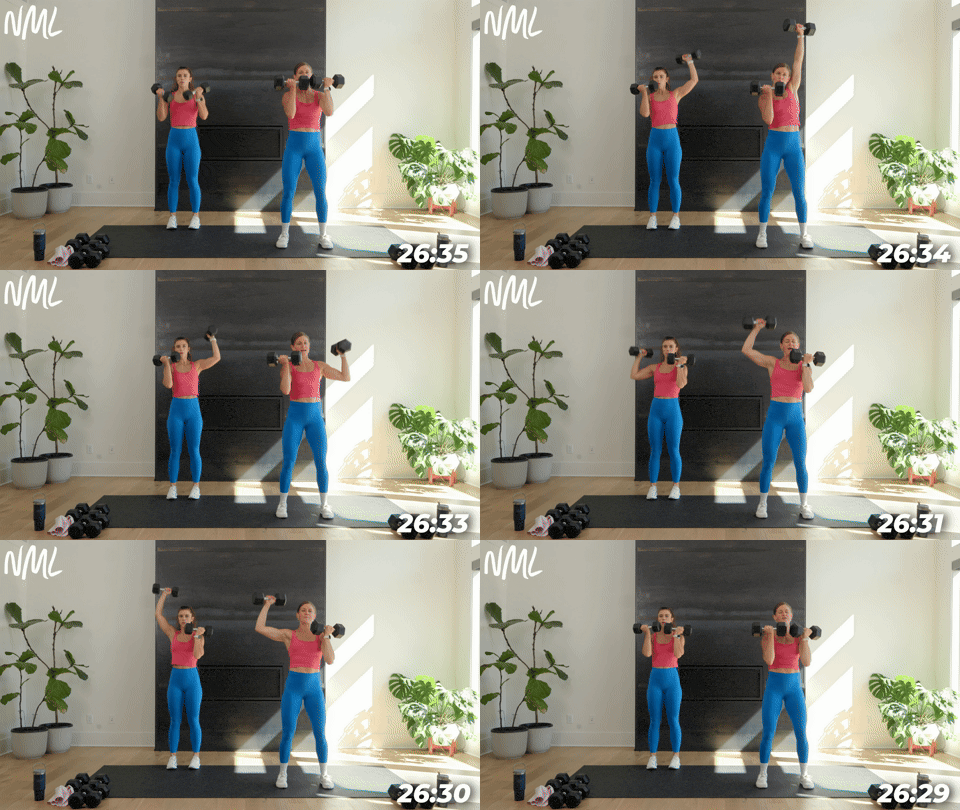
How to Do an Arnold Press
- Stand tall with your feet shoulder-width apart. Hold a pair of dumbbells directly in front of your face at eye level (overhand grip, palms face your body).
- Keep a slight bend in your knees, and be sure to engage your core and squeeze your glutes (to protect your lower back).
- Exhale as you perform an overhead shoulder press on the right arm. Push the weight in your right hand overhead. As you do so, rotate the arm so the palm is facing out. Lock out your elbow (bicep by your ear).
- Slowly lower the weight back down to the starting position, rotating your palm back in towards your face, and repeat, this time performing an overhead shoulder press on the left arm.
2. Split Lunge
Targets: Legs, glutes, quads, hamstrings and core.
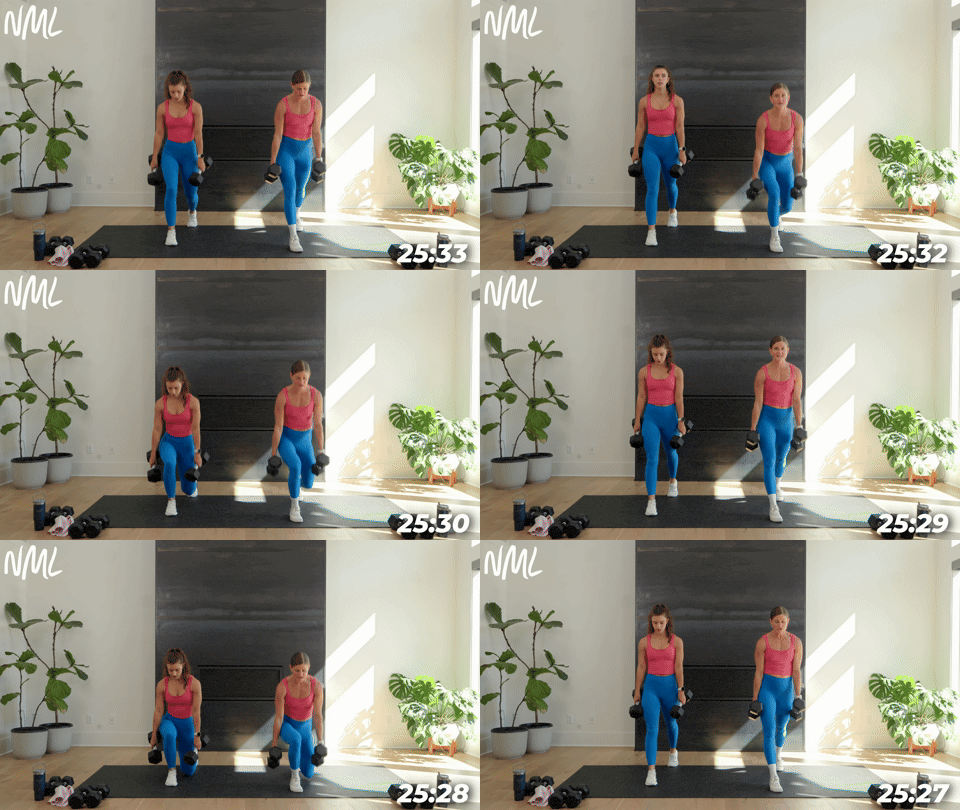
How to Do a Split Lunge
- Start standing feet hip-width apart, holding 1 dumbbell in each hand at your sides.
- Step your right leg back into a lunge position. Imagine your feet are on train tracks – front left foot planted on the mat and back right toes on the mat. Feet stay planted in this position throughout the entire movement.
- Lower your back knee towards the mat until your front thigh is parallel to the mat. Both knees are bent at a 90-degree angle. Shoulders remain stacked over hips.
- Drive up through your front heel to stand tall, returning to the top of the movement.
Modification: If lunges hurt your knees, substitute one of these lunge/squat alternatives.
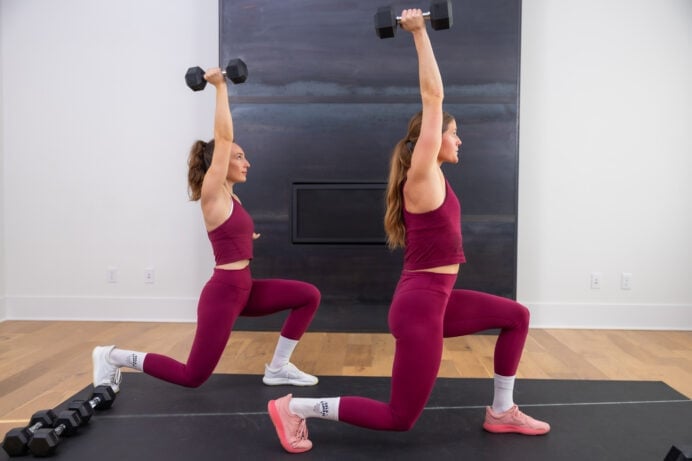
3. Uneven Lunge and Single-Arm Press
Targets: Legs, glutes, quads, hamstrings, hips, core muscles, biceps and shoulders.
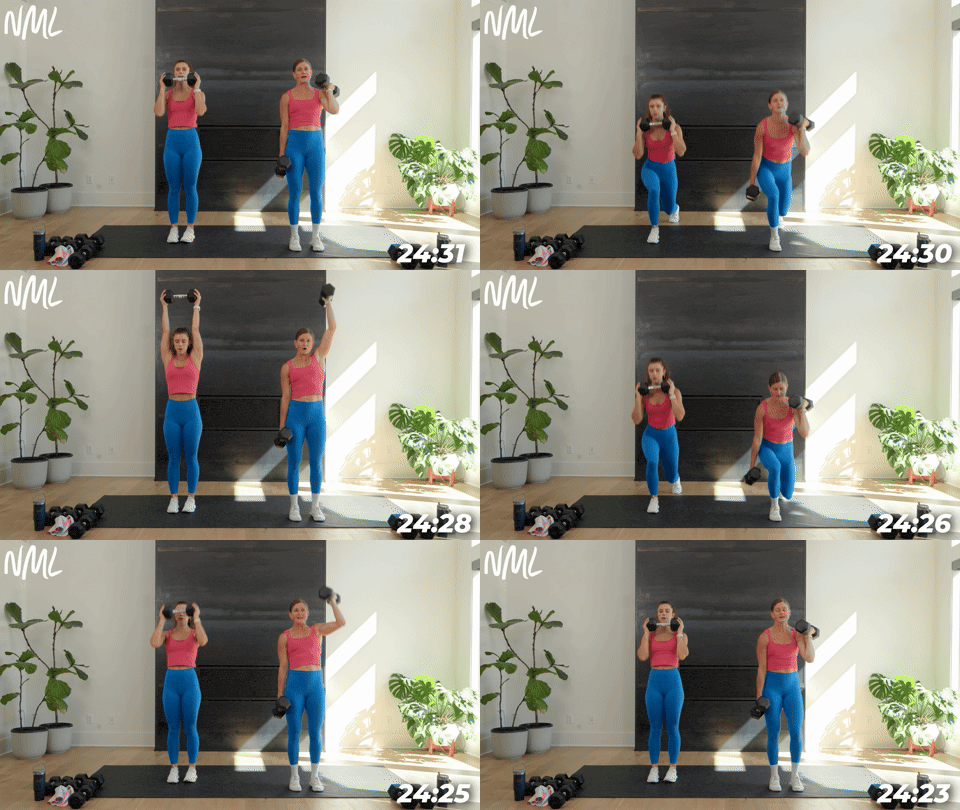
How to Do an Uneven Lunge and Single-Arm Press
- Start standing, feet hip-width apart. Hold a dumbbell in each hand; the dumbbell in your left hand is at your side, palm facing in (narrow-grip). The dumbbell in your right hand is racked at shoulder height.
- Step your right foot back into a reverse lunge, bending both knees at a 90-degree angle and lowering until your left thigh is parallel to the floor.
- Drive through your front heel to return to a standing position.
- As you stand tall, press the dumbbell in your right hand straight overhead, right wrist stacked over right shoulder (performing a single-arm shoulder press).
- With control, lower the dumbbell back down to your shoulder and repeat the reverse lunge.
Modification: Hold 1 dumbbell at your chest during this exercise.
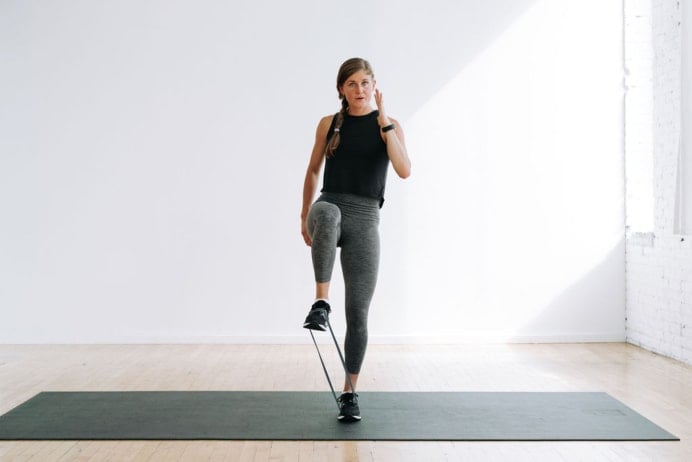
4. Goblet March
Targets: Low abs, obliques, glutes, hip flexors, chest and shoulders.
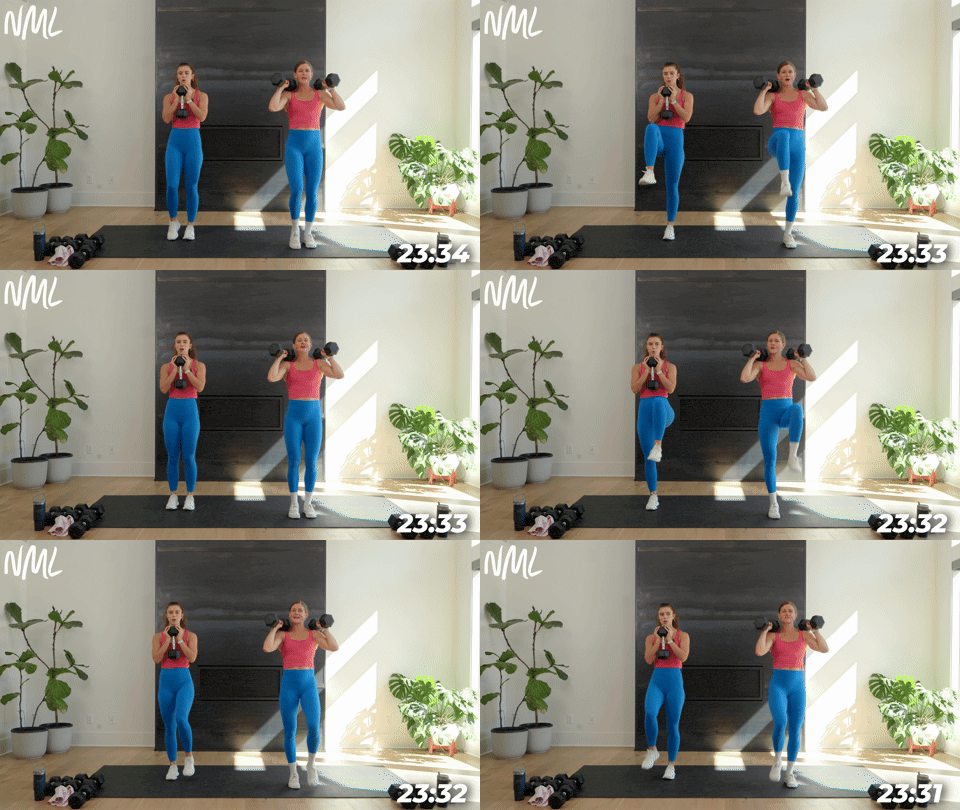
How to Do a Goblet March
- Start in a standing position, feet hip-width apart, holding a dumbbell vertically at your chest, elbows tucked in. To increase the intensity, hold two dumbbells in a front-racked position at shoulder height.
- Engage your core, then drive your right knee up in line with your right hip. Right knee bent at a 90-degree angle.
- Ground through your standing left leg for stability, then return your right foot to the ground.
- Switch sides, driving your left knee up in line with your left hip. Return to the starting position and repeat these alternating high knee lifts.
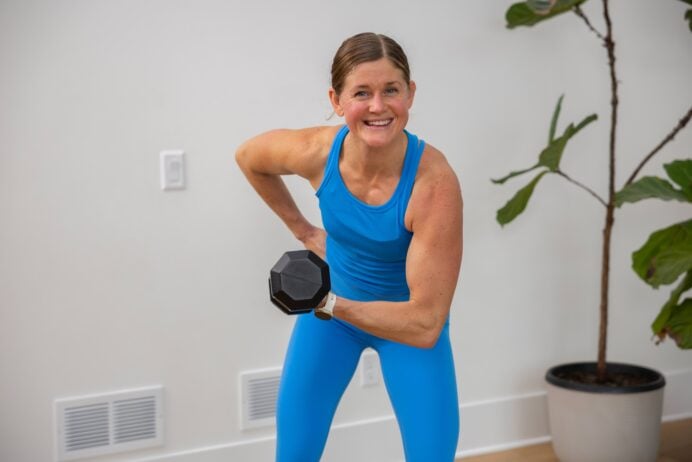
5. Bicep Curl
Targets: The biceps brachii (the front of your arms or the long head of the biceps muscle).
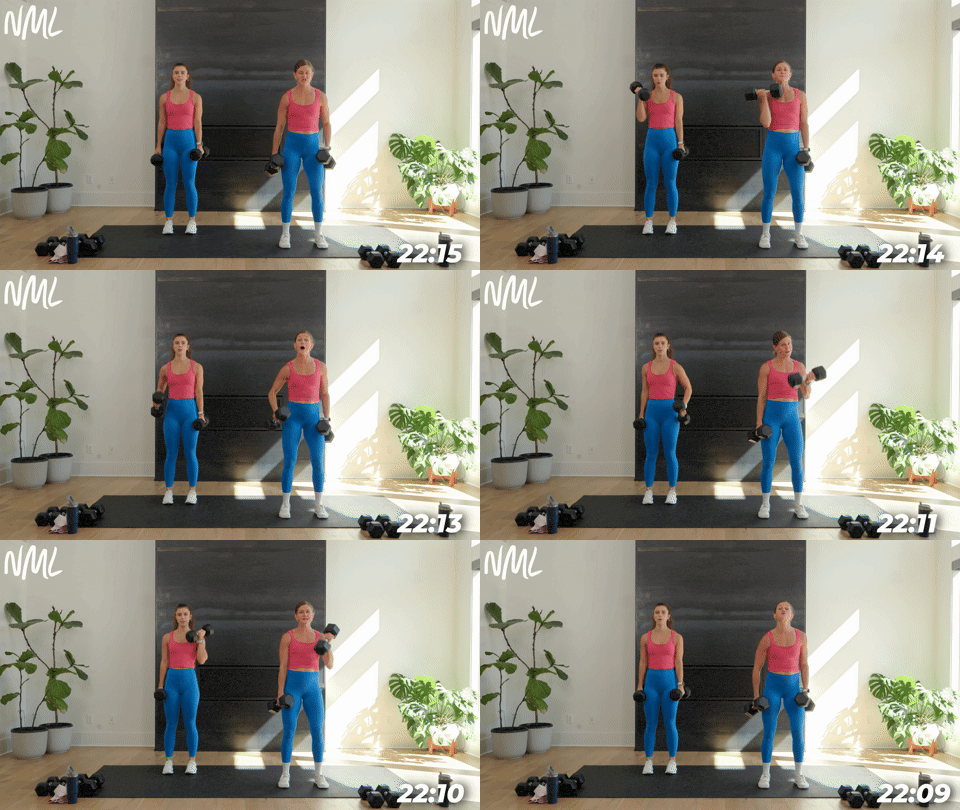
How to Do a Bicep Curl
- Start standing with your feet hip-width apart. Hold a dumbbell in each hand at your sides, palms facing in (hammer curl grip).
- Exhale as you squeeze your bicep muscle to curl the weight in your right hand up to shoulder height. As you lift the weight, rotate the palm so it’s now facing in (supine grip). Think about keeping your elbows tucked into your sides and your shoulder blades pulled down.
- With control, slowly lower the dumbbell down to your side, returning to the starting position
- Repeat, this time performing a bicep curl on the left arm.
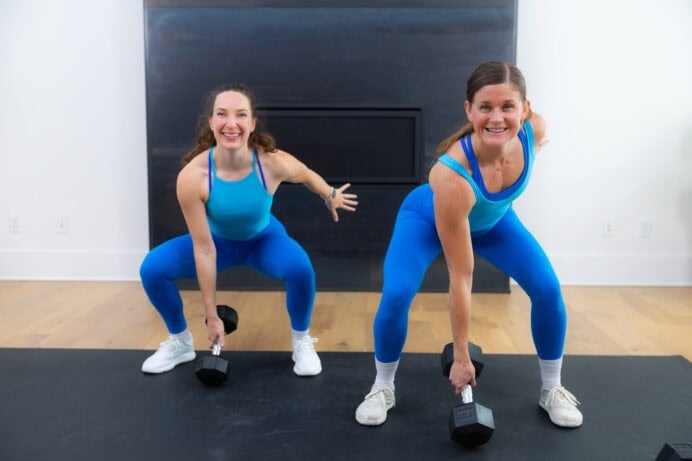
6. Deadlift
Targets: All the posterior chain muscles, including the hamstrings, glutes, core, lats and lower back.
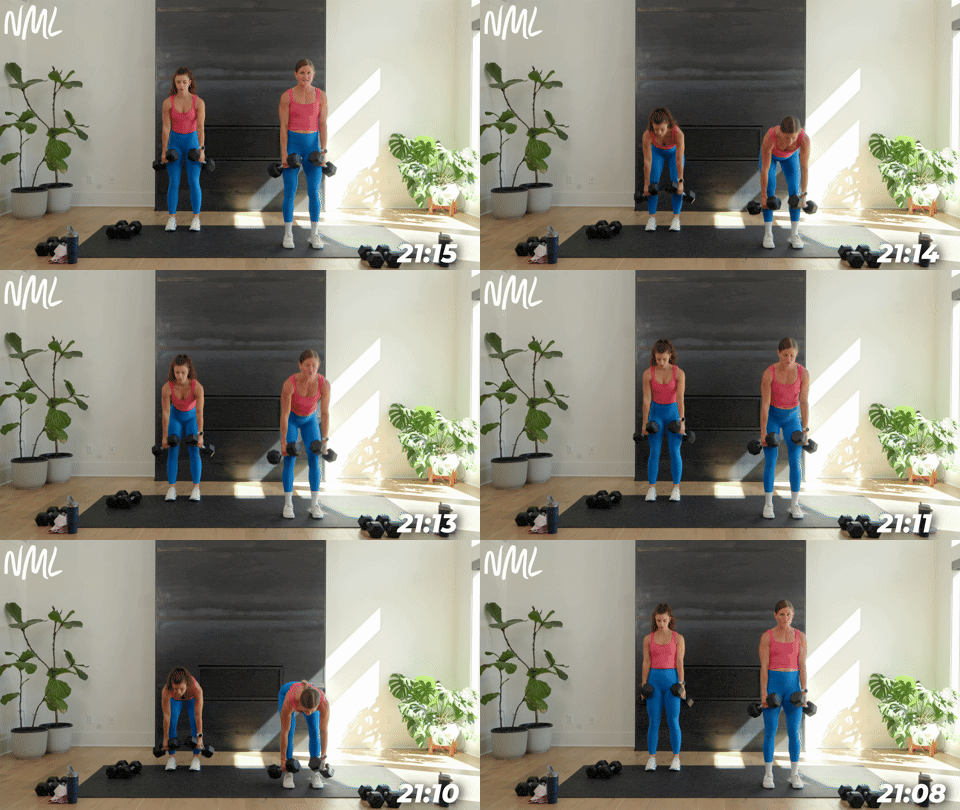
How to Do a Deadlift
- Stand with your feet hip-width apart, holding a dumbbell in each hand in front of your hips (palms facing in towards your body).
- Hinge at the hips, pushing your hips back towards the wall behind you as you glide the dumbbells down the front of your legs, keeping your core tight, slightly bending both knees. Lower your dumbbells until you feel a stretch in the hamstrings. The range of motion will look different for everyone.
- Drive through your heels to push your hips forward, pulling the dumbbells back up towards your hips and returning to the starting position. Aim for full hip extension at the top of the movement.
7. Deadlift and Bicep Curl
Targets: Hamstrings, glutes, core, lats, lower back and biceps.

How to Do a Deadlift and Bicep Curl
- Stand with your feet hip-width apart, holding a dumbbell in each hand in front of your hips (palms facing in towards your body).
- Hinge at the hips, pushing your hips back towards the wall behind you as you glide the dumbbells down the front of your legs, keeping your core tight, slightly bending both knees. Lower your dumbbells until you feel a stretch in the hamstrings. The range of motion will look different for everyone.
- Drive through your heels to push your hips forward, pulling the dumbbells back up towards your hips and returning to the starting position. Aim for full hip extension at the top of the movement.
- At the top of the movement, perform a single-arm bicep curl on the right arm by squeezing your bicep muscle to curl the weight in your right hand up to shoulder height.
- With control, slowly lower the dumbbell down to your side, returning to the starting position and repeat the dumbbell deadlift.
8. Seated Twist
Targets: Upper abs, lower abs, obliques, core, hips and biceps.
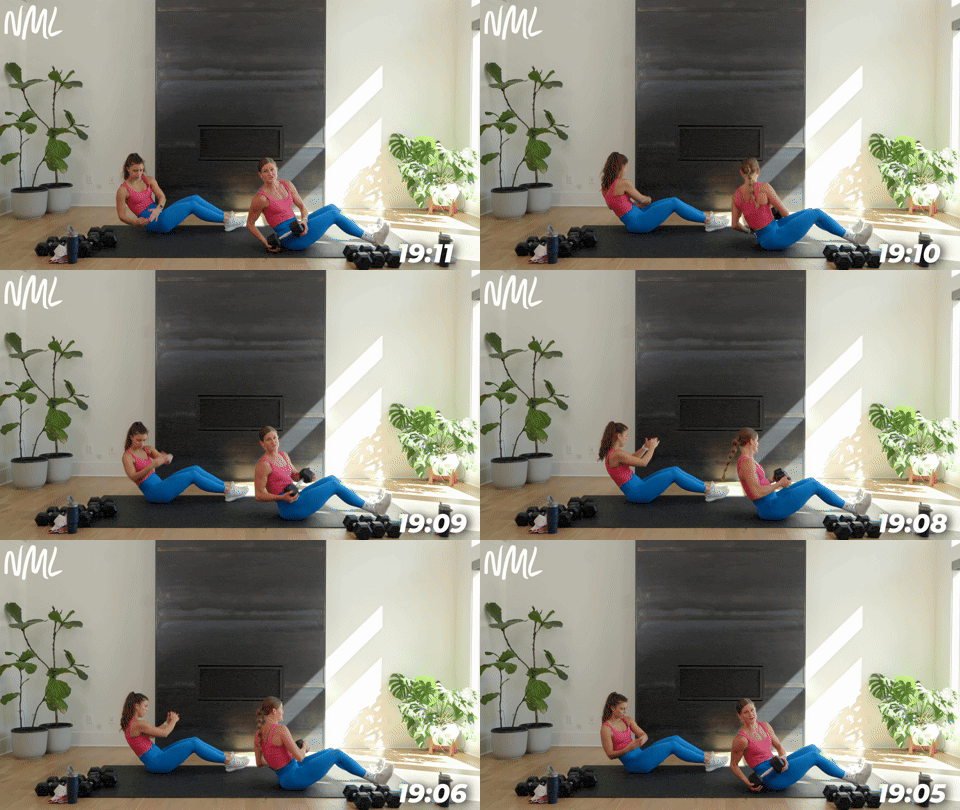
How to Do a Seated Twist
- Start in a seated position, sitting on your sit bones as you lean back; heels resting on the ground (option to float 1 or both feet to increase intensity). Hold a dumbbell horizontally at your chest.
- Pull your right elbow back towards your right hip as you rotate through your torso to tap the dumbbell to the mat near your right hip.
- Use your obliques and abs to return to center.
- Then reverse the movement, pulling your left elbow back towards your left hip as you rotate through your torso to tap the dumbbell to the mat near your left hip.
Modification: Omit the dumbbell hold, performing this exercise with your bodyweight.
9. Chest Press
Targets: Chest (pecs), shoulders (deltoids) and triceps.
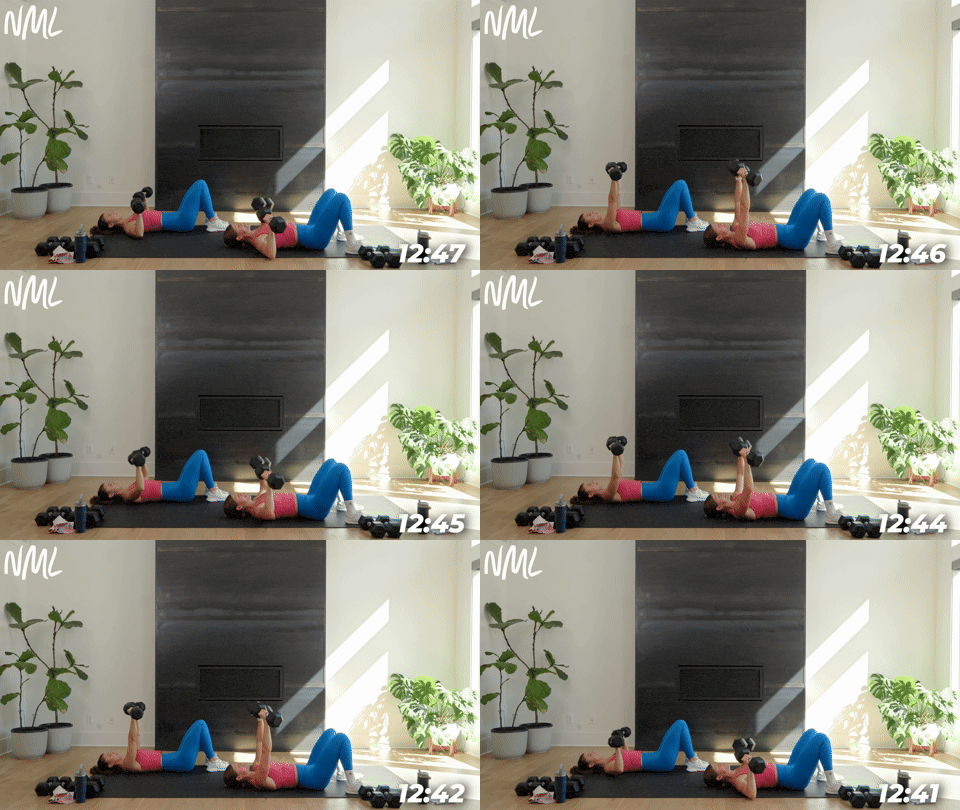
How to Do a Chest Press or Bench Press
- Lie flat on your back with your knees bent and feet flat on the floor. Hold 1 dumbbell in each hand (palms facing knees), elbows bent at a 90-degree angle.
- Exhale as you push both dumbbells overhead at the same time; dumbbells stacked over your shoulders at the top of the press. Make sure your wrists are strong and in line with your shoulders.
- Lower the dumbbells back towards your chest with control.
10. Wide Squat
Targets: Legs, glutes, quads, hamstrings, hips, outer thighs, glutes (gluteus medius and abductors) and inner thighs (adductors).

How to Do a Wide Squat
- Start standing with your feet wider than your hips for a wide squat stance, turning your toes slightly out. Hold a dumbbell in each hand in front of your body between your legs.
- Lower into a wide squat, sending your hips back and down until your thighs are parallel to the floor, keeping the dumbbells centered beneath your shoulders. Knees track over toes.
- Drive through your heels to return to standing, returning to the starting position.
11. Wide Squat and Push-Up
Targets: Legs, glutes, quads, hamstrings, hips, inner thighs (adductors), outer thighs, glutes (gluteus medius and abductors), chest, shoulders, triceps and core.
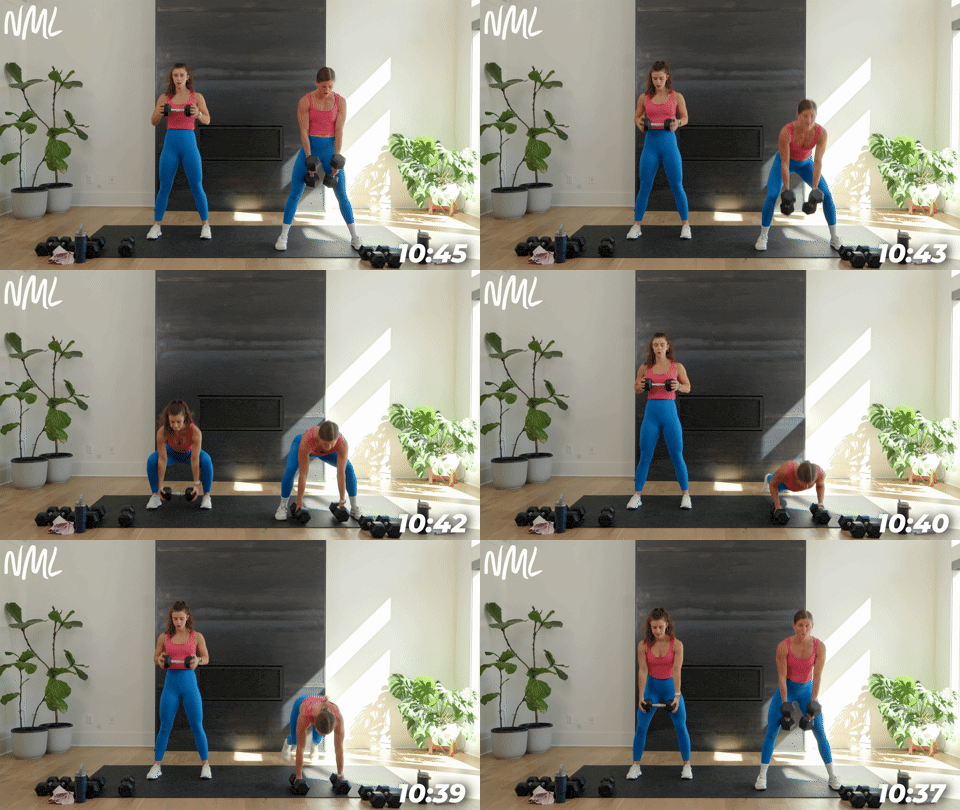
How to Do a Wide Squat and Push-Up
- Start standing with your feet wider than hip-width apart, toes turned slightly out and a dumbbell in each hand.
- Lower into a wide squat by pushing your hips back and down until your thighs are parallel to the floor, keeping your chest lifted and knees tracking over your toes.
- Drive through your heels to stand tall.
- Repeat the wide squat a second time, lowering with control and pressing back up.
- After the second squat, place the dumbbells down on the mat and jump or step your feet back into a high plank position, shoulders stacked over wrists and body in a straight line.
- Lower your chest toward the floor for 1 push-up, keeping your core braced and elbows at about a 45-degree angle.
- Press back up to high plank, then jump or step your feet forward to return to your wide squat stance.
- Stand tall to complete 1 full rep, then repeat the sequence.
Modification: Perform a wide squat to dumbbell press out, holding 1 dumbbell during the exercise.
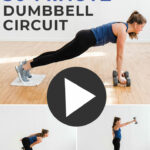
12. Plank Knee Drive
Targets: Core (rectus abdominis and obliques), shoulders, chest, arms and hip flexors.
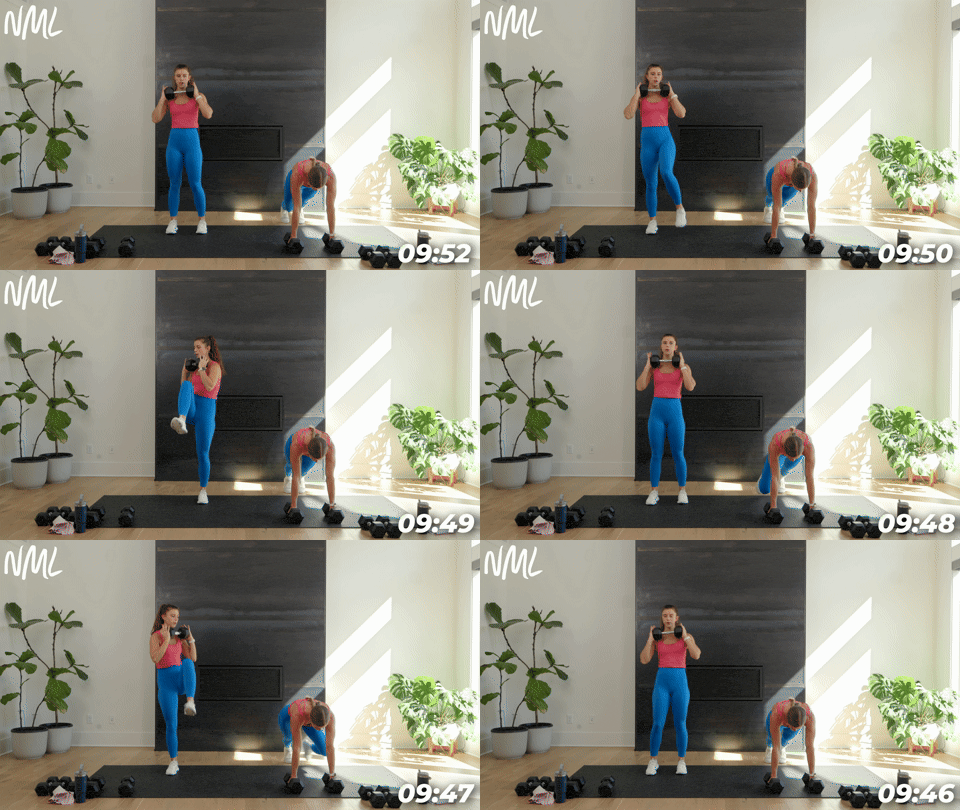
How to Do a Plank Knee Drive
- Start in a high plank position with your hands gripping a pair of dumbbells directly under your shoulders, arms straight and body forming a straight line from head to heels.
- Engage your core, keeping your hips level and your back flat.
- Drive your right knee toward your chest, keeping your spine neutral and your shoulders steady over your wrists.
- Extend your right leg back to the starting plank position.
- Repeat with your left knee, driving it toward your chest, then returning to the plank.
- Continue alternating knee drives at a controlled pace. If you want to make this a high-intensity exercise, pick up the pace and perform mountain climbers.
Modification: If you experience wrist pain during planks, place your hands on a pair of dumbbells. For a standing option, perform alternating cross-body crunches.
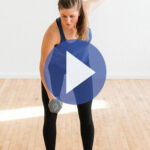
13. Back Row
Targets: Latissimus dorsi (or lats; the largest back muscle known for its large, flat “V” shape).
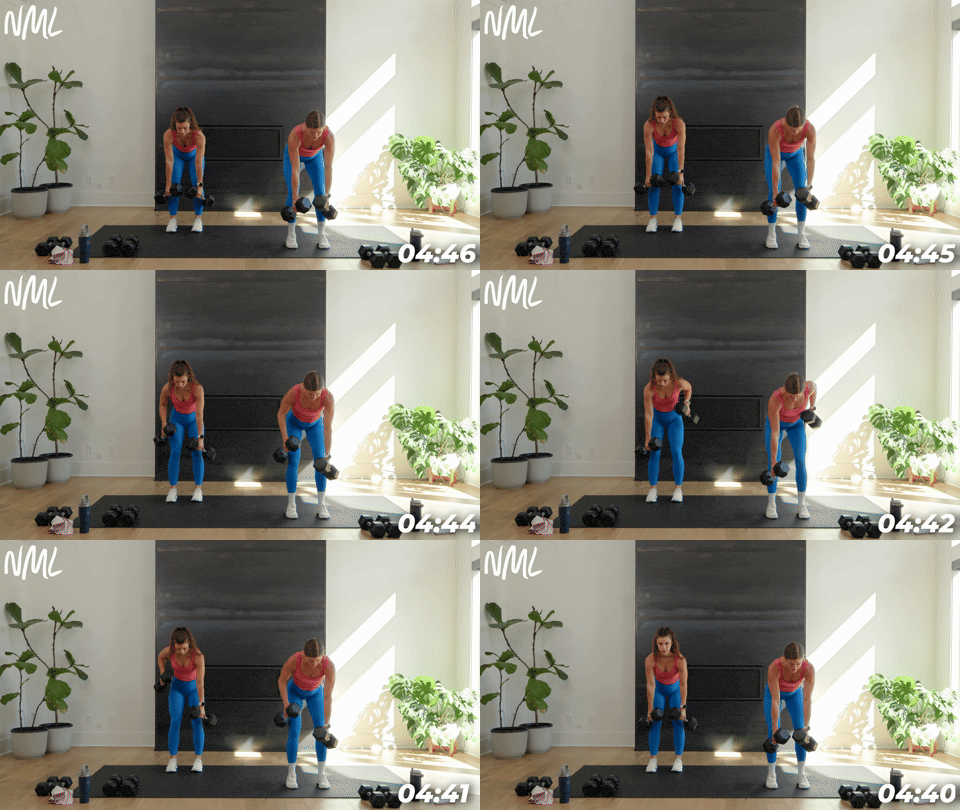
How to Do a Bent-Over Row
- Stand with your feet slightly wider than shoulder-width apart, knees slightly bent. Grip a set of dumbbells, palms facing in towards each other.
- Hinge forward at the hips until your body is in a straight line, neck in line with your spine, flat back, and belly button pulled back towards your spine.
- Pull the dumbbell in your right hand back towards your right hip in a rowing movement, and squeeze your shoulder blades together. Stop when your elbow is in line with your hip.
- With control, slowly lower the dumbbell back down to the starting position. Think up on a 1-count, down slow and controlled on a 2-count.
- Repeat, this time performing a back row on the left arm.
14. Glute Bridge
Targets: Glutes, hamstrings and hip abductor muscles.
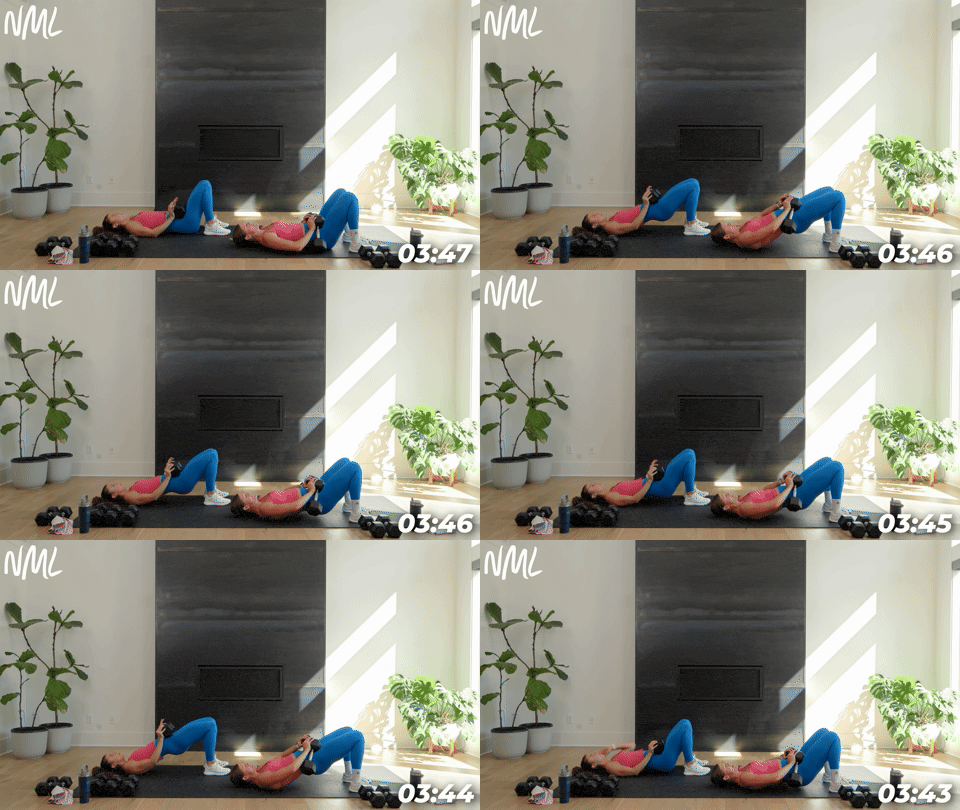
How to Do a Glute Bridge
- Lie on your back with your knees bent at 90 degrees and your feet flat on the ground. Hold a dumbbell across your hips, resting the dumbbell on your hip bones.
- Press through your heels to raise your hips off the ground until your knees, hips and shoulders form a straight line. Squeeze your glutes hard and keep your abs drawn in so you don’t overextend your back during the exercise.
- Lower your hips back down to a hovering position and repeat.
15. Dumbbell Pullover and Glute Bridge March
Targets: Gluteus maximus, gluteus medius, hips, hamstrings, back and core.

How to Do a Dumbbell Pullover and Glute Bridge March
- Lie flat on the floor on your back with your knees bent at 90 degrees and feet flat on the ground. Hold a dumbbell vertically, elbows slightly bent.
- Press through the heels to raise your hips off the ground until your knees, hips and shoulders form a straight line. This is a glute bridge. As you lift your hips, press the dumbbell straight overhead, wrists in line with your shoulders.
- Hold this glute bridge position, then slowly lower the dumbbell overhead towards the ground. Keep your arms straight, with a slight bend in the elbows.
- Engage the lats to pull the dumbbell back towards your chest. As you raise the dumbbell, balance on your left foot and drive your right knee towards your hands, right knee meeting the dumbbell when it is stacked over your shoulders.
- Continue this pattern, slowly lowering the dumbbell overhead as you alternate marches.
Modification: Omit the march, performing dumbbell pullovers as you hold a double leg glute bridge.
16. Bicycle Crunches
Targets: Rectus abdominis, transverse abdominal muscles and obliques.

How to Do a Bicycle Crunch
- Start lying flat on your back, lower back pressing firmly into the mat. Bring your legs to a raised 90-degree bend.
- Lift your head, neck and shoulders off the ground. Place your hands behind your head and think about pressing your head into your fingertips.
- Lift your right elbow towards your left knee as you extend your right leg long.
- Slowly return to the starting position and repeat on the other side. Pull your left elbow towards your right knee as you extend your left leg long.
- Continue to repeat this ‘bicycling’ movement, alternating knee to elbow crunches.
Modification: Perform with knees bent, reducing the range of motion.
FAQs
Can you build muscle with circuit training?
Yes, you can build muscle with circuit training, especially when using challenging weights and focusing on controlled, full-range movements. Because circuit training combines strength-based exercises with minimal rest, it helps increase muscle endurance and definition while still promoting hypertrophy (muscle growth) when performed with enough resistance and intensity.
Is circuit training suitable for beginners?
Circuit training can be easily modified to fit any fitness level. Beginners can start with no equipment or lighter weights, focusing on proper form and gradually increasing intensity over time. It’s an efficient way to target the whole body and learn foundational movements while building strength and stamina.
How long should a strength circuit training session last?
This training style will typically last between 30 to 45 minutes, depending on the number of circuits, exercises and rest periods. Shorter sessions can still be highly effective if you maintain good form and keep rest times brief to sustain intensity.
Free 2-Week Strength Program
More Workouts
Strength TrainingPin This At-Home Dumbbell Strength Training Circuit
16 comments
I loved this workout! Especially liked the uneven lunge single-arm press – is this a new move? I did the biceps with 20-lb. weights – alternating made it possible to go up in weights, as you suggested. I’ve been following along with the daily plans for a long time – NML is the best! Thanks and keep up the great work!
Hi Sarah! I am so glad you enjoyed this workout – and glad to hear you liked that uneven lunge and press! We’ll have to include that one in more workouts! Thanks so much for following along with NLM! -Lindsey
Love your workouts! Thanks for consistently providing interesting and doable workouts!
Hi Cherise! I’m so glad you’re loving the workouts! Thanks for giving this one a try! Nice Work! -Lindsey
Loved it! That was perfect for busy mornings when I still want to know I worked hard! Thanks!
Erika! Thanks for giving this 30 Minute Strength Workout a try. I’m so glad you liked it. It’s a go-to at home workout for those busy mornings!
This is quite educative and a better way to be healthy. Keep educating the populace and the world will leave healthy lives
Thanks for checking out this 30 minute strength workout!
This is quite educative and a better way to be healthy. Keep educating the populace
So glad you find this 30 Minute Strength Workout educational! Thanks for giving it a shot! -Lindsey
Did it today, my arms were sore from Sunday’s arm workout so pushups (which are not my strong suit anyway) were super tough. Was fast paced but covered a lot of muscle groups, that’s what I like about your workouts anyway!
Nice work Amanda! I feel you on pushups — they aren’t my strong suit either, but such a solid strength move! So glad you loved this workout, thanks for giving it a try and I hope you come back and do it again! -Lindsey
Hi! I cannot read your videos…Do I need to subscribe to be able to see your videos ??? Thanks a lot
Hi Gail — see my note below about pausing or turning off your ad blocker.
Hi! I’ve been trying to watch your videos but none of them work…Do I need to subscribe to be able to see your videos ??? Thanks a lot
Hi Gail — I’m guessing you cannot see my videos because you have your ‘ad blocker’ turned on…try turning off or pausing your ad-blocker. Or if you prefer, you can also view this video on YouTube Here — https://www.youtube.com/watch?v=UrhEwluoxDQ&feature=youtu.be
I hope that helps! – Lindsey