





25-Minute Abs and Agility (Athlete 25 Day 9)
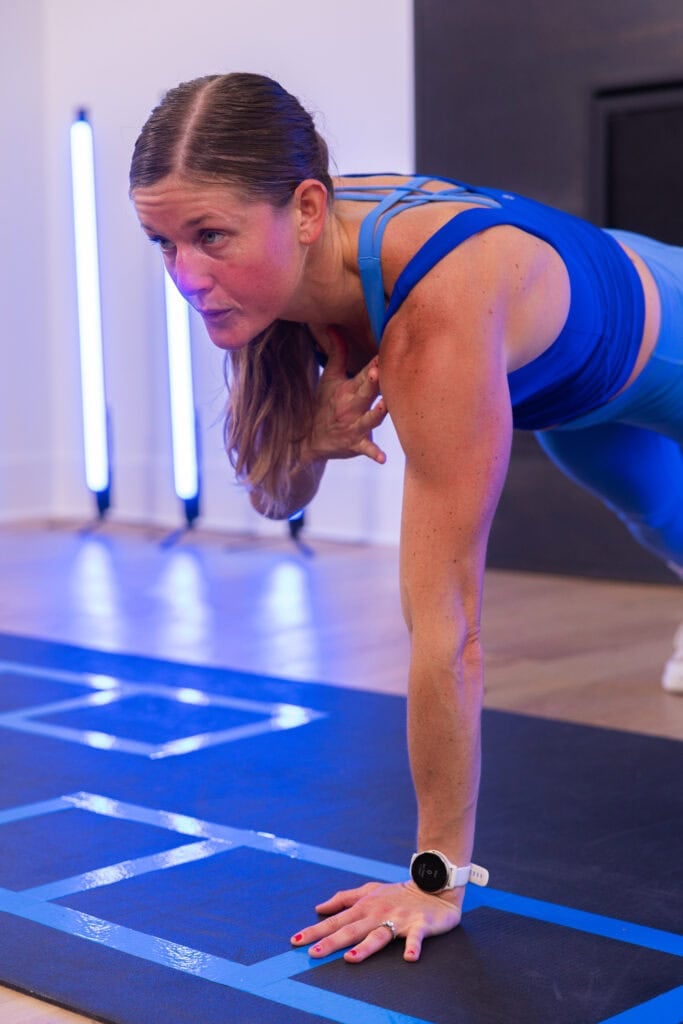
Level up your speed and athleticism with these agility exercises at home. This no-equipment cardio and core routine will improve your balance, coordination and reaction time in just 25 minutes. A combination of quick-feet drills and core stability exercises help you stay strong, mobile and resilient as you age.
This is DAY 9 of my Athlete 25 Program.
LET’S GET STARTED
Download Your FREE Workout Plan Here
Download the PDF calendar and tracking sheets here! Easily access your daily workouts and keep track of your progress over time.
Download Plan
Day 9 of my Athlete 25 Program is a key (and often overlooked) component of aging with intention: speed, agility and reaction time.
In Overload 30, you heard me say that age-related muscle loss starts around age 30. But there’s something else that begins to decline even sooner: reaction time.
Current research estimates that reaction time starts slowing at age 24. However, this doesn’t have to be permanent: studies show that agility exercises can improve reaction time, cognitive processing speed and memory in middle-aged and older adults (Frontiers in Public Health).
You may think of agility training as something most relevant to professional athletes looking to optimize sports performance. But the truth is we all rely on agility to navigate unpredictable environments. Think about every time you take a step only to find the ground is unexpectedly icy or lunge for a tumbling toddler. Agility is truly your ability to move quickly and easily in response.
If “use it or lose it” is the motto of this program, today’s workout is the perfect example of how you keep it. Factors like strength, power, endurance, balance and coordination all play a role in agility, which is why you’ll see them all in today’s workout!
I’m combining bodyweight speed and agility drills with unilateral and multi-planar core strength and stability exercises to keep you moving safely and athletically as you age.
Workout Details
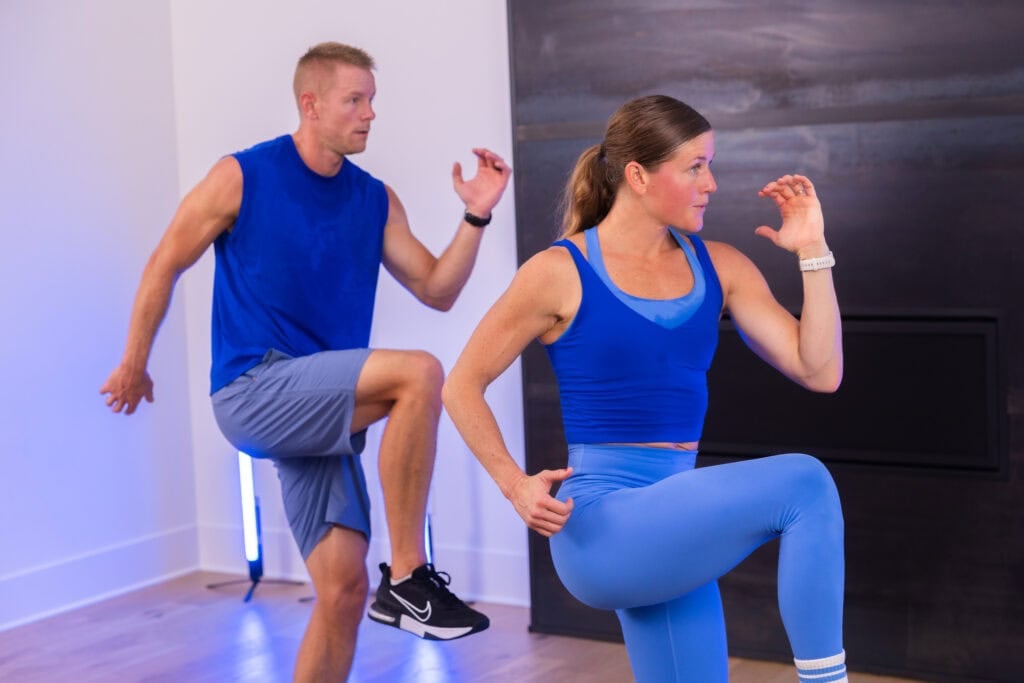
Increase speed, reaction time, endurance and athleticism with these abs and agility exercises at home.
I suggest doing this cardio and abs workout once a week as part of a well-rounded workout routine.
Have extra time? I love warming up with this ankle mobility routine to prime my lower body for impact.
Workout Equipment
None. Option to tape 3 boxes on the floor, creating an agility ladder.
Workout Instructions
Follow along with the guided 25-Minute Abs and Agility Workout on YouTube, led by me — your certified personal trainer, Lindsey Bomgren.
Your Workout Looks Like This:
- 2 Circuits (4 exercises per circuit; 2 agility exercises and 2 core exercises)
- Timed Intervals (Perform each exercise for 30 seconds of work, followed by 15 seconds of rest.)
- Strict Set (Repeat each exercise back-to-back x3 sets before moving onto the next exercise.)
Workout Outline
Buy-In: Plank Wide Climbers
Circuit 1:
- Double Hop to Single Leg Lateral Bound
- Side-to-Side Push-Up and Shoulder Tap
- Wide/Narrow Runs
- Plank Sprinter
Circuit 2:
1. Double Hop to Single Leg Lateral Bound
Targets: Hip flexors, glutes, calves, quads, hamstrings and core.
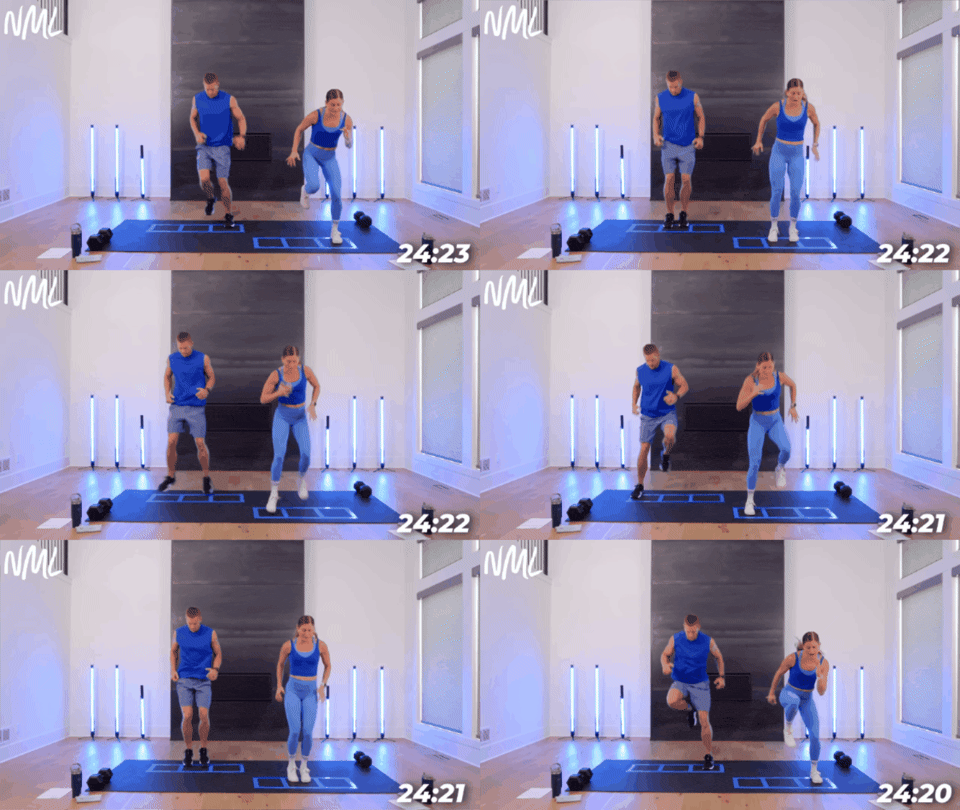
How To Do a Double Hop to Single Leg Lateral Bound
- Stand in the center box of your taped agility ladder, feet hip-width apart and knees slightly bent. Engage your core and keep your chest lifted.
- Perform two quick hops in the middle box, staying light on the balls of your feet.
- Then, hop to the left box, landing lightly on your left foot, right knee driving towards your chest.
- Reverse the motion, jumping both feet into the middle box.
- Repeat, performing two more hops in the middle box before hopping to the right box, landing lightly on your right foot and driving your left knee towards your chest.
- Keep your arms pumping naturally at your sides to help drive speed and coordination. Focus on control and precision with each step.
2. Side-to-Side Push-Up and Shoulder Tap
Targets: Chest, shoulders, triceps, core, obliques and back.
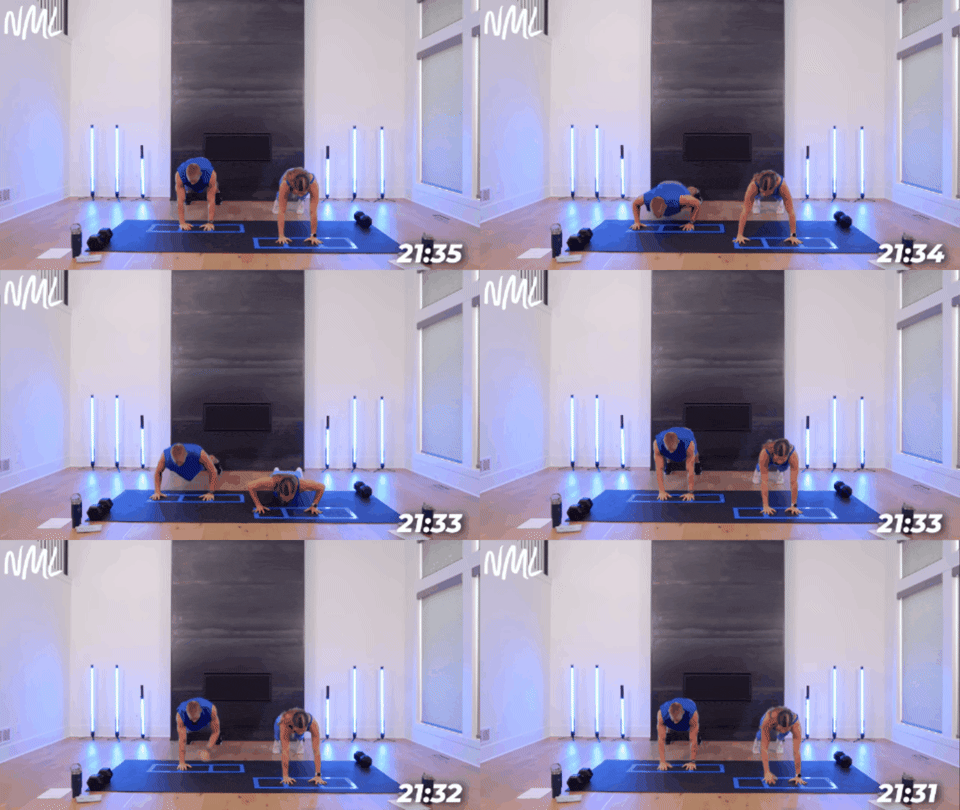
How To Do A Side-to-Side Push-Up and Shoulder Tap
- Start in a high plank position, shoulders stacked over wrists, body forming a straight line from head to heels and core engaged. Both hands are inside the center box.
- Step your left hand out into the left box, then lower your chest toward the mat, bending your elbows at a 45-degree angle to perform a push-up.
- Press up into a high plank position, keeping your hips lifted and core engaged. Return your left hand to the center box.
- Maintain a high plank position as you bring your right hand to tap left shoulder, then left hand to tap right shoulder. Focus on keeping hips stable and even.
Modification: Perform modified push-ups from your knees or at an incline. If push-ups hurt your wrists, try placing your hands on a set of dumbbells.
3. Wide/Narrow Runs
Targets: Hip flexors, glutes, calves, quads, hamstrings and core.
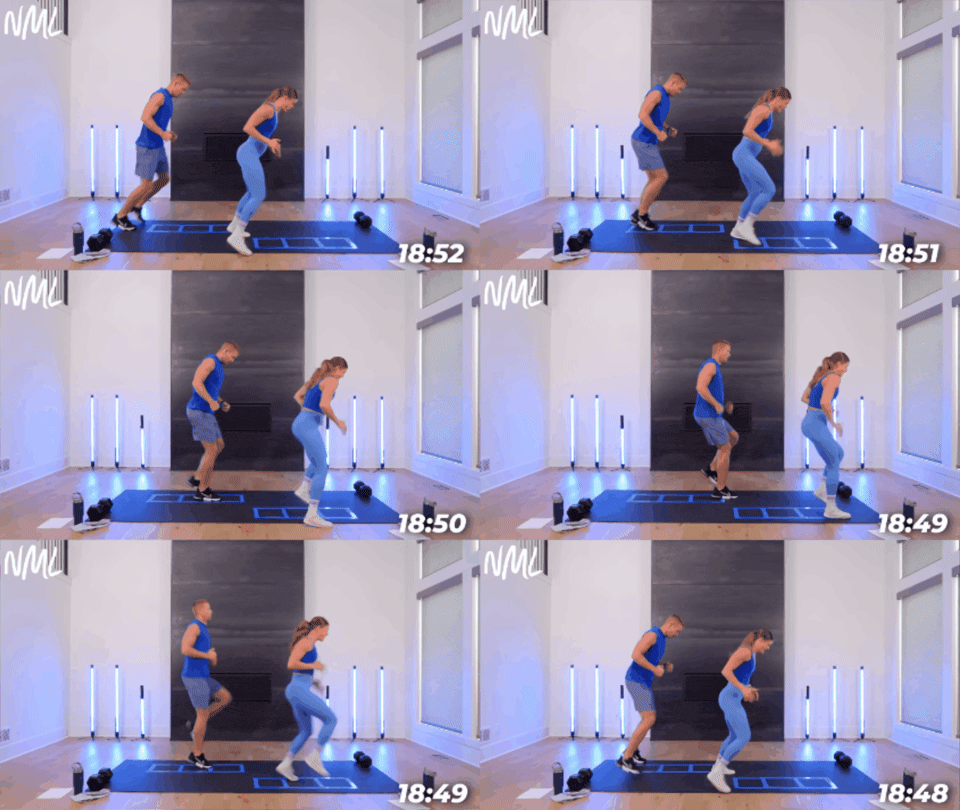
How To Do A Wide/Narrow Run
- Stand tall at the end of your taped agility ladder, feet hip-width apart and core engaged.
- Quickly run your feet inside the first box, one foot at a time, then outside the second box moving quickly forward. Stay light on the balls of your feet and maintain a steady rhythm.
- Continue this pattern – in, in, out, out – as you move forward up the ladder, finishing by hopping both feet outside the far (last) box. Keep your arms pumping naturally at your sides to help drive speed and coordination.
- At the end of your agility ladder, run backwards, driving your knees up towards your chest to perform high knees as you reverse to the starting position.
4. Plank Sprinter
Targets: Lower abs, core, hip flexors, glutes, shoulders, chest and arms.
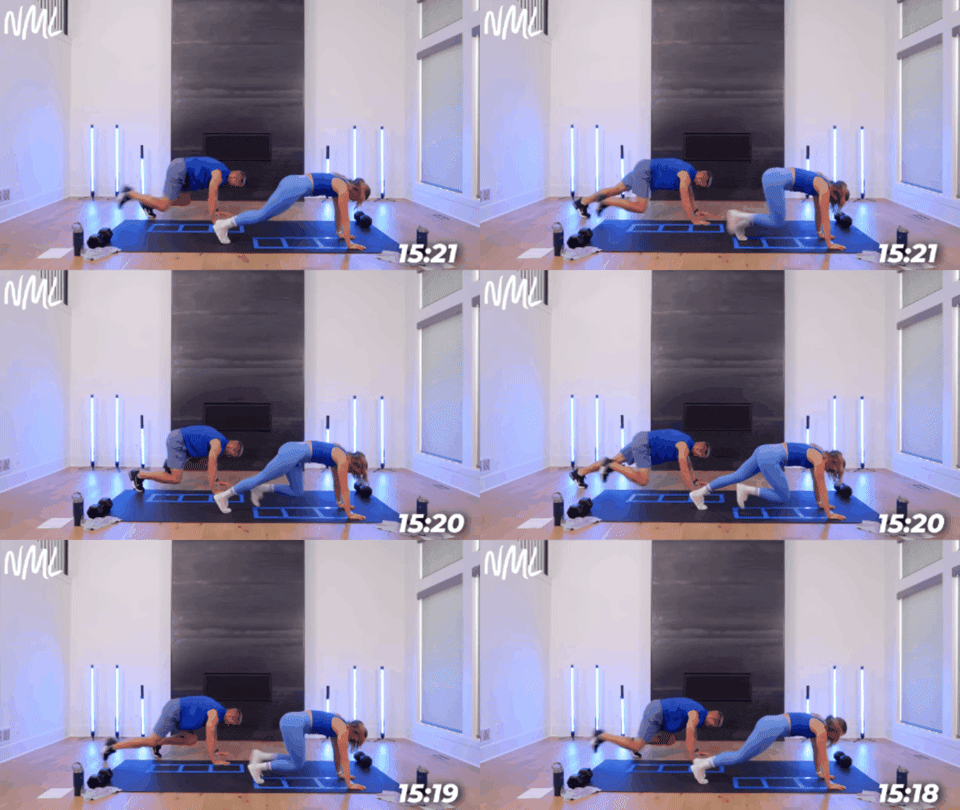
How To Do A Plank Sprinter
- Start in a high plank position with your shoulders stacked over your wrists, legs extended long and body forming a straight line from head to heels. Engage your core, keeping your hips level and back flat.
- Step your right toes in, right knee bent to 90 degrees and hovering off the ground, then drive your left knee towards your chest.
- Reverse the movement, returning to high plank position.
- Repeat, alternating lead legs on the next rep.
5. Single Leg Lateral Hop
Targets: Glutes, quads, hamstrings, calves, core and hip flexors.
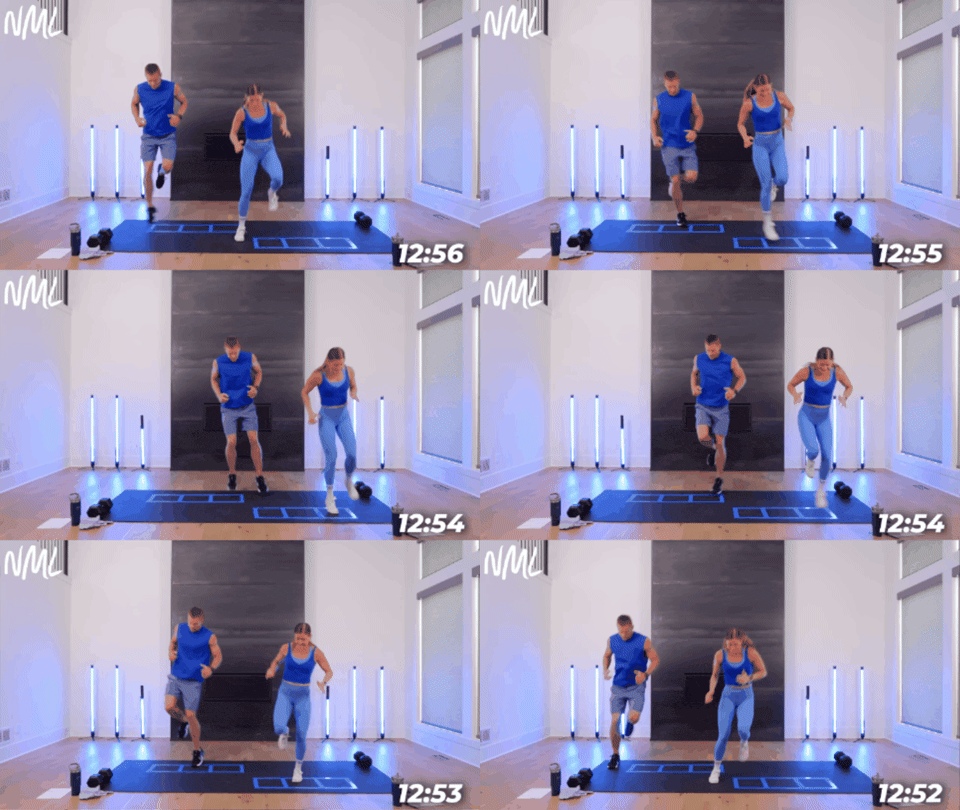
How To Do A Single Leg Lateral Hop
- Start at the far left end of your taped agility ladder, knees slightly bent and core engaged. Shift your weight onto your left leg, bending your right knee and floating your right foot off the ground.
- Perform a single leg hop to your right, jumping into the first, then second and finally third box.
- After the third box, switch legs, landing outside the furthest right box on your right leg. Think about keeping a soft bend in your knees and moving quickly and athletically.
- Repeat, alternating legs at the end of each ladder run.
6. Lateral Bear Crawl
Targets: Chest, triceps, back, lower back, deep transversus abdominis muscles, oblique muscles, hips, shoulders and core.
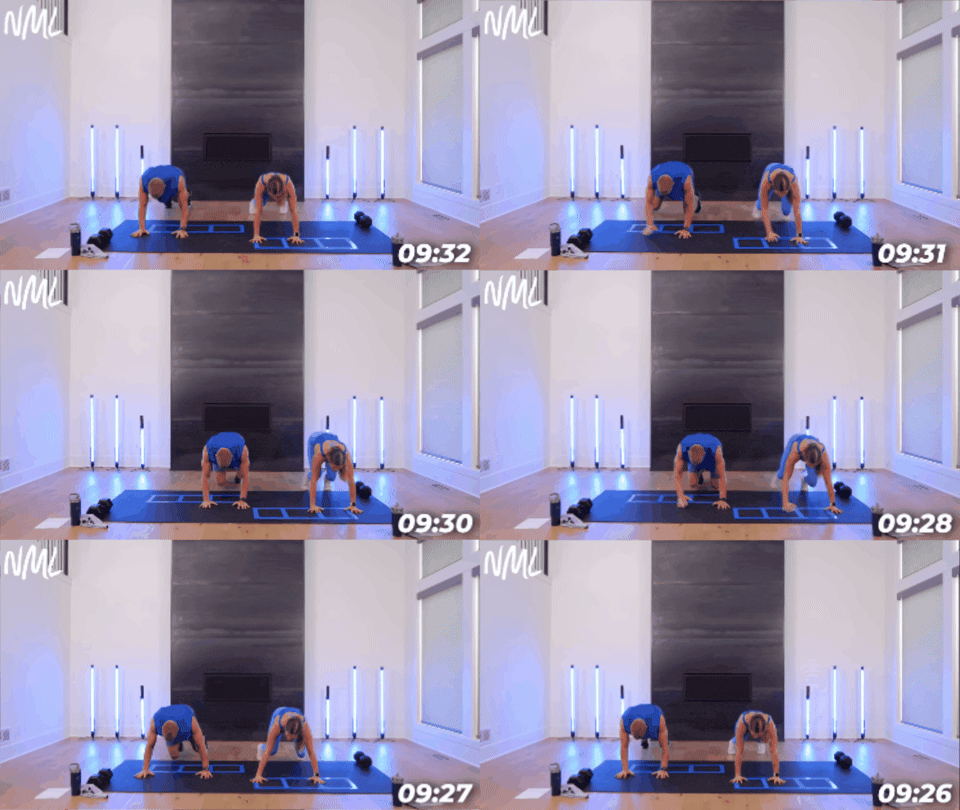
How To Do A Lateral Bear Crawl
- Start in a standard high plank position with your shoulders stacked over your wrists, weight evenly distributed amongst all 10 fingers. Pull your kneecaps up towards your belly, feet hip-width apart.
- Step or hop your feet in, finding a hovering table top position, or bear crawl. Knees are bent, hips stacked over knees and shoulders stacked over wrists.
- “Walk” your right hand and right toes a step out to the right, following with the left hand and left toes. Keep your back flat and hips as stable as possible. Repeat, completing two “walks” to the right.
- Then, step or jump your feet back, landing in high plank position.
7. Forward and Back Runs
Targets: Hip flexors, glutes, calves, quads, hamstrings and core.
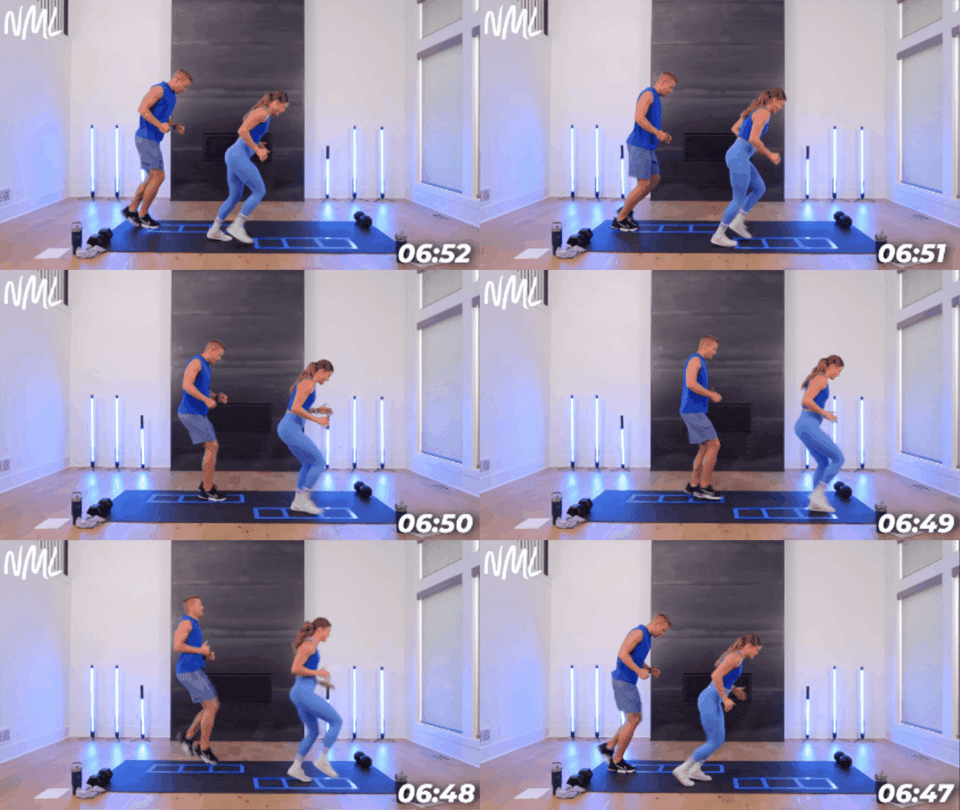
How To Do A Forward and Back Run
- Stand in front of the 3 boxes in your taped agility ladder, feet hip-width apart and knees slightly bent. Engage your core and keep your chest lifted.
- Leading with your right foot, quickly run your feet forward towards the first box, then the second box. Then, step back to the first box. Think “forward two, back one.” Stay light on the balls of your feet and maintain a steady rhythm.
- Repeat until you reach the end of your agility ladder, then run backwards, driving your knees up towards your chest to perform high knees as you reverse to the starting position.
8. Hollow Rock Hold Double Crunch
Targets: Lower abs, upper abs, obliques, hip flexors and core stabilizers.
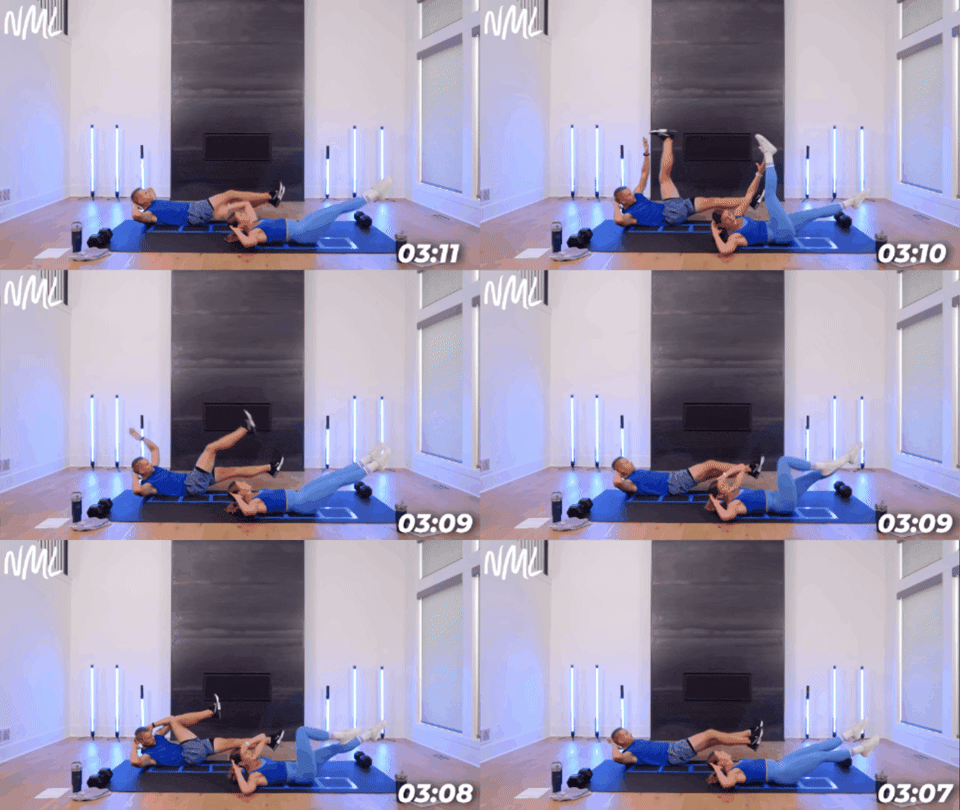
How To Do A Hollow Rock Hold Double Crunch
- Lie flat on your back and engage your core, pressing your lower back firmly into the mat. Extend your legs long and place your fingertips gently behind your head, then lift your shoulders, head and legs a few inches off the ground to find your hollow rock hold position. Your body should form a gentle curve, with core tension keeping you stable.
- Hold for a moment, maintaining a tight, controlled core.
- Bring your right elbow to your left knee, bending the left leg as you perform a crossbody crunch while keeping the opposite leg extended. Focus on rotating through your torso, not just your elbow.
- Extend the left leg, returning to a hollow rock hold position.
- Then, keep your left leg straight as you lift your left leg to meet your right fingertips.
- Continue this pattern, alternating one bicycle crunch with one straight leg crunch.
FAQs
How often should I do agility workouts?
I recommend performing cardio agility workouts 1-3 times a week as part of a well-rounded workout plan. If you’re a beginner, start with 10 minutes 1-2x/week. As you build confidence and skill, increase duration to 20-30 minutes 2-3x/week.
Can I combine agility exercises with strength or cardio on the same day?
Combining cardio and core in 1 session creates a dynamic, functional workout. I love that this approach strengthens muscles while also challenging coordination, balance and endurance. Agility exercises like ladder drills will naturally raise your heart rate, doubling as a cardio workout as well.
Do I need an agility ladder or cones?
You don’t need to purchase additional equipment for basic agility workouts like this one. Tape or chalk on the ground is a great visual marker for accountability, however you can perform agility exercises with just your bodyweight.
Athlete 25: FREE 2-Week Strength Training Workout Plan
A 2-week strength training workout program, designed to help you build muscle and train like an athlete at home.
If you liked these cardio and core exercises, download the FREE 2-Week Workout Plan.
Up Next:
See AllPin This At-Home Abs and Agility Workout
2 comments

Hi! I just wanted to let you know that I have been LOVING this workout plan! I’m in my twenties, but I’ve never been super athletic but I’ve seriously been feeling a difference. Thank you for putting in the effort, it is greatly appreciated. God has given you an amazing gift and personality and I’m glad you’re using it to honor Him!
Hi Katie! Thank you for the kind words – I am so happy to hear you’re enjoying the Athlete 25 Program! Thanks for choosing to work out with NML. Keep up the great work! -Lindsey