




How to Do a Romanian Deadlift
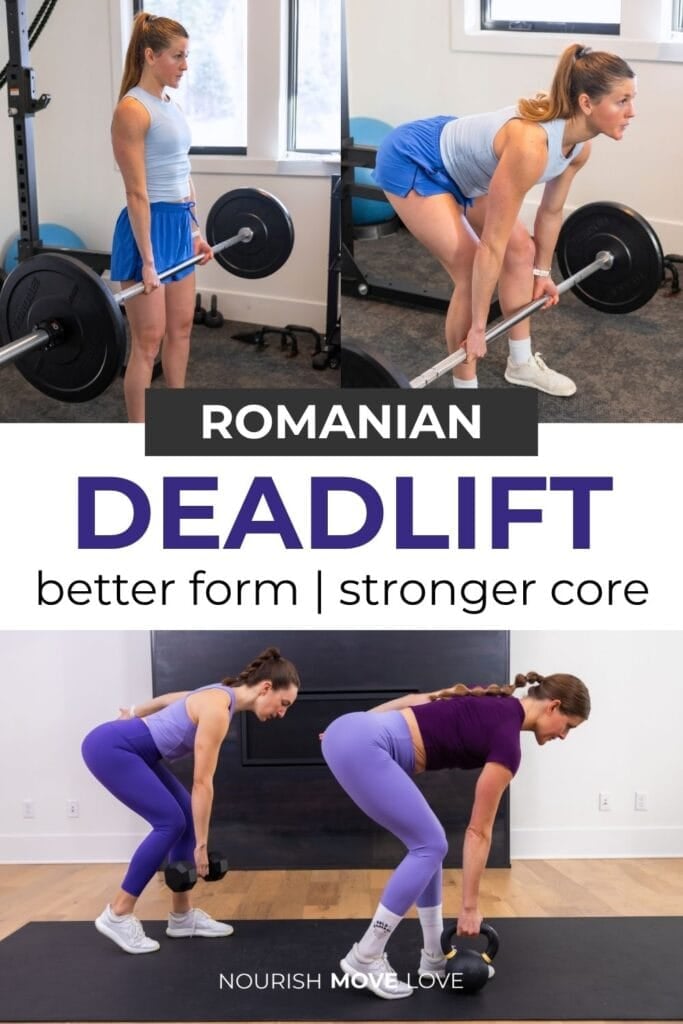
The Romanian Deadlift targets the gluteus maximus, hamstrings, erector spinae and your core and is a must for moms who spend their days picking up kids, as well as those who need to strengthen the posterior chain post pregnancy. Romanian Deadlifts can be done with a barbell, dumbbell or kettlebells, making them perfect to add to your at-home or on-the-run workout routine. If you’re suffering from lower back pain or even mild sciatica, this exercise can help strengthen and stabilize your posterior chain and relieve pain associated with discogenic and mechanical issues in the lower back.
Quick Links:
As a personal trainer, I love a good lower-body routine! It improves everything from functional fitness to metabolism and hormone regulation.
Romanian Deadlifts target a crucial muscle group in every woman’s life — what I like to call your “mom muscles.” Your legs and back do so much of the daily heavy lifting, whether you’re carrying kids, hauling groceries, lifting laundry baskets, or simply moving through a busy day. In a hip hinge movement with a slight knee bend and a neutral spine, you raise and lower the weight from below the knees to a fully erect standing position. Adding this lift into your regular glute workout routine will check the box for almost every muscle in the posterior chain, strengthening both your legs and back in one powerful move.
The movement pattern for Romanian Deadlifts differs from a regular deadlift in 2 main ways: the starting position and the functional aspect. The Romanian Deadlift starts in the standing position, while the conventional deadlift begins from the ground. Both the conventional and Romanian Deadlift target functional muscles; however, the conventional deadlift is essentially a functional movement that targets a majority of the body, while the Romanian Deadlift isolates the posterior chain specifically.
Note: Women who are recovering from a lower back or core injury or are currently pregnant should ask their doctor before adding any movement where the spine is under load to a workout routine.
How to Do a Basic Romanian Deadlift
Targets: Gluteus maximus, hamstrings, erector spinae and your core, also known as the posterior chain. Additionally, the Romanian Deadlift can challenge the lats, upper back, forearms and grip strength.
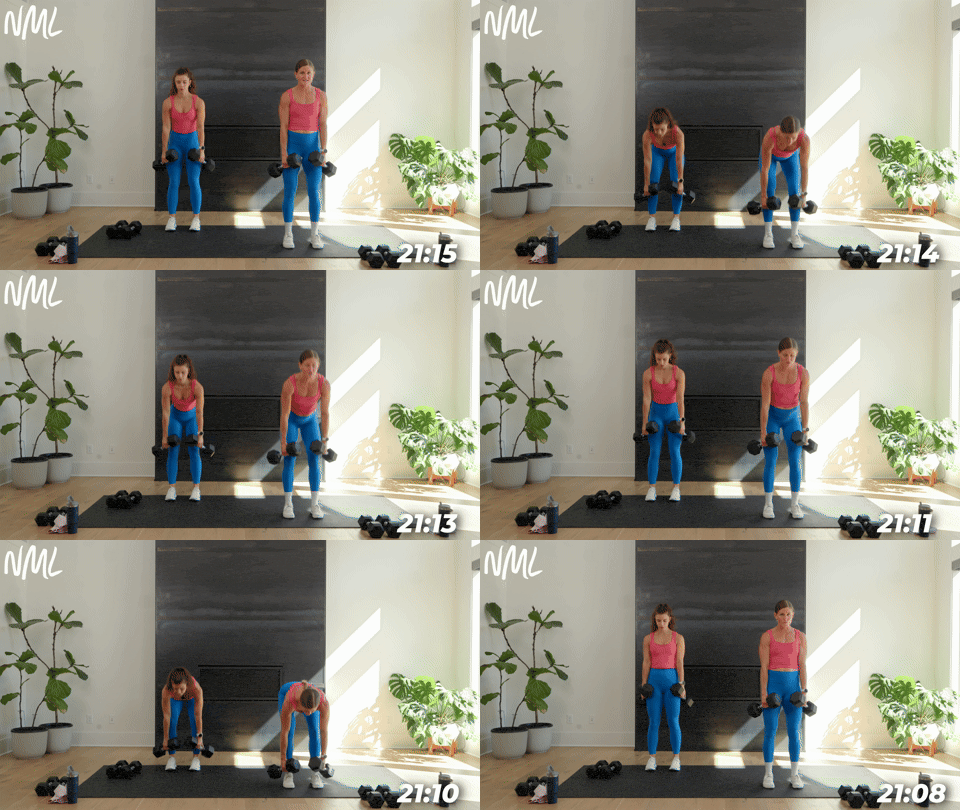
- Start with your feet about hip-width apart while holding your dumbbells. Hold your dumbbells in an overhand grip at or around hip level.
- From the start position, be sure to set your posture by pulling your shoulders back, keeping your chest proud and your spine neutral.
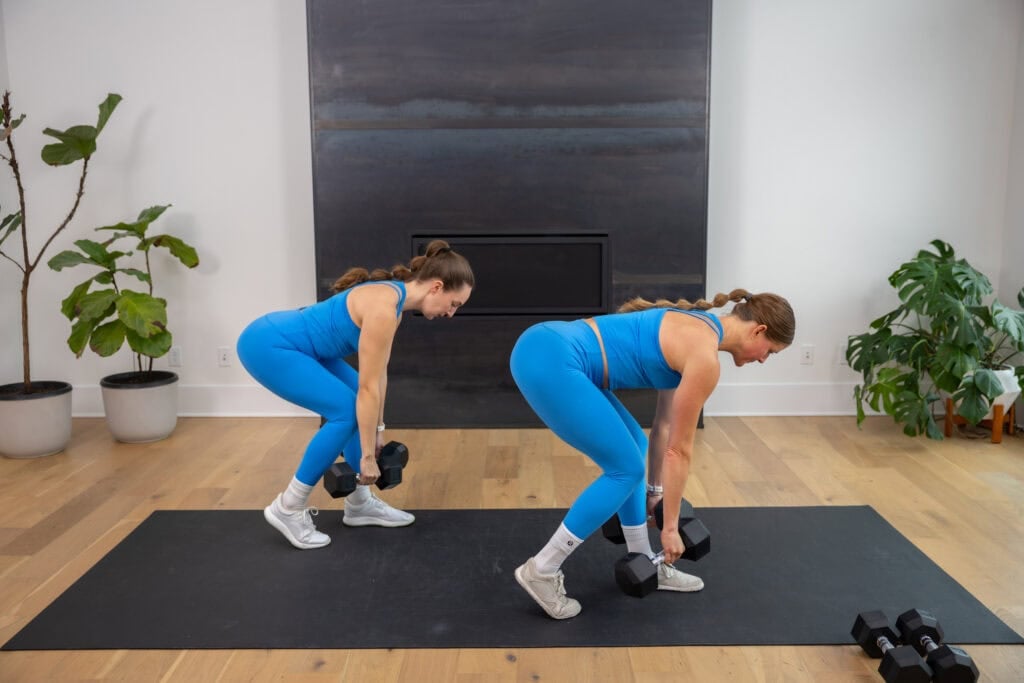
- Begin the movement by hinging at the waist and moving your hips back, keeping a slight bend in your knees.
- Lower the weight slowly and with control along your legs until you feel a strong stretch in your hamstrings. A good point of reference is about mid-shin.
- Be sure to keep the dumbbells close to your body throughout the movement.
- Maintain this position by driving your hips forward and returning to the standing position. Squeeze your glutes at the top of each rep for full engagement of the posterior chain.
Variations
Once you get the hang of Romanian Deadlifts, you can give these RDL variations a try:
- Single-Leg Romanian Deadlifts, which help increase balance and unilateral strength.
- Tempo Romanian Deadlifts, done slowly in the eccentric phase, will help build control.
- Deficit Romanian Deadlifts are performed on a small platform, increasing the available range of motion and further challenging the posterior chain while encouraging muscle growth.
Common Mistakes to Avoid
Here are a few common mistakes you’ll want to avoid when completing Romanian deadlifts:
- Do not swing the weight uncontrolled! Instead, focus on a smooth pull and controlling the weight.
- Avoid rounding your back, maintaining a neutral spine.
- Don’t go too low in form with the weight. Stop when you feel the stretch in your hamstrings.
- Avoid bending too much at the knees. Excessive knee bend creates a modified squat.
FAQs
What is the difference between a deadlift and a Romanian deadlift?
The main difference between RDLs and deadlifts is the starting position. With a traditional deadlift, you start from the floor in a more aggressive squat. This engages more of the body and is the foundation for all Olympic weightlifting lifts. You start the RDL with almost straight legs and hinge at the hips to isolate the posterior chain for targeted muscle development.
Are Romanian deadlifts harder or less fatiguing than conventional deadlifts?
The Romanian deadlift is technically less taxing on the body as a whole, but tends to feel harder on the hamstrings specifically. Deadlifts require more of the body to be activated throughout the lift, leaving the entire body more fatigued.
How can you incorporate Romanian deadlifts into your workout routine?
If you are looking for a way to add Romanian deadlifts into your regular workout routine, try tacking them onto the end of a good lower-body day. This is the perfect way to incorporate them into your workout routine and ensure your posterior chain is getting the attention it deserves!
More Workouts
Lower BodyPin This: Your Guide on How to Do a Romanian Deadlift
no comments