






7-Day Budget-Friendly Meal Plan
I know eating healthy and hitting your protein goals can feel overwhelming, especially when you’re trying to stay on a budget. That’s why I created this 7-day budget-friendly high-protein meal plan to help simplify your week with balanced breakfast, lunch and dinner ideas, plus a grocery list that keeps shopping easy and affordable. Eating more protein doesn’t have to be complicated or expensive — it can be simple when you follow a plan.
Quick Links:
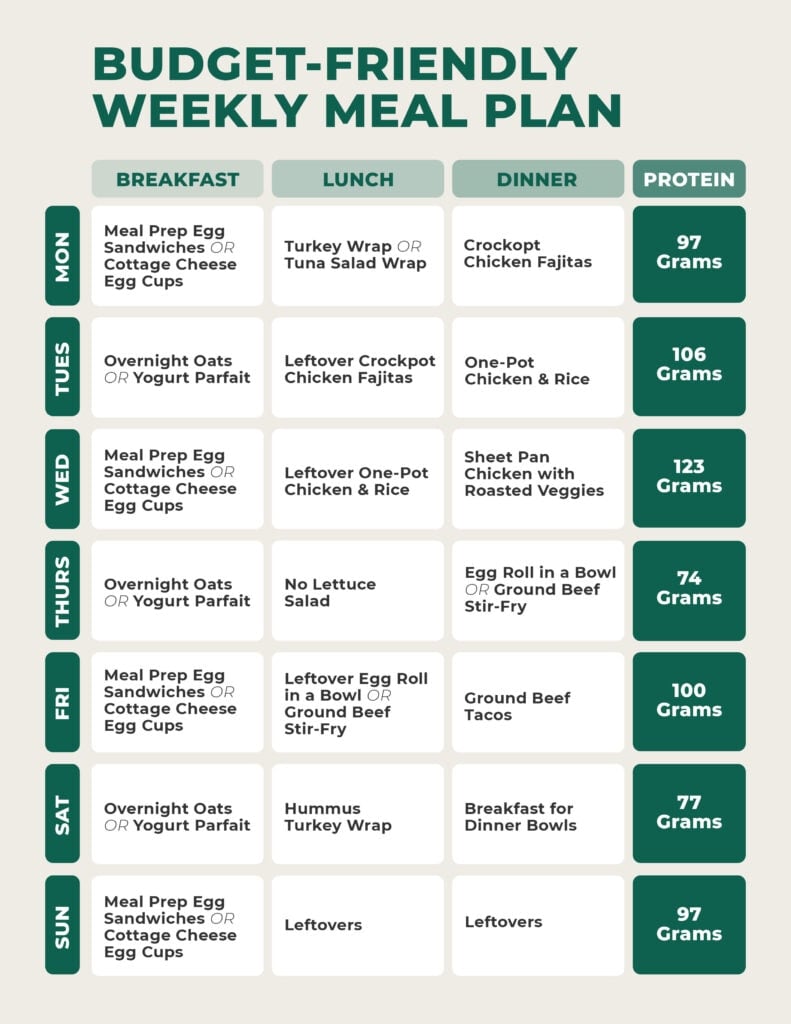
To reach my goals, I typically divide my protein across 3 meals. For example, if my goal is 130g of protein per day, I aim for at least 30-40g of protein for breakfast, lunch and dinner. Then add 2 high-protein snacks or desserts, around 20g each. This is one of the simplest ways to consistently reach 100-130g of protein a day without feeling overwhelmed.
Personally, I don’t count calories, but I do aim for at least 2,000 calories per day. Your needs may vary; for personalized guidance, consult a nutritionist or registered dietitian.
7-Day Meal Plan That’s Budget-Friendly
Weekend Breakfast Prep (Choose 1)
- Meal Prep Breakfast Sandwiches (39g of protein)
- Protein Overnight Oats (21 g protein)
- Cottage Cheese Egg Cups (12g of protein)
- Make Ahead Yogurt Parfaits (23 g protein)
Day 1
- Breakfast: Prepped High-Protein Breakfast
- Lunch: Hummus Turkey Wrap (24g protein) OR Tuna Salad Wrap (23.5g protein)
- Dinner: Slow Cooker Chicken Fajitas (34g protein)
Notes: Make extra for Day 2 lunch.
Day 2
- Breakfast: Prepped High-Protein Breakfast
- Lunch: Leftover Slow Cooker Chicken Fajitas (34g protein)
- Dinner: One Pot Chicken and Rice (49g protein)
Notes: Save leftovers for Day 3 lunch.
Day 3
- Breakfast: Prepped High-Protein Breakfast
- Lunch: Leftover One Pot Chicken and Rice (49g protein)
- Dinner: Sheet Pan Chicken with Roasted Vegetables (35g protein)
- To make this sheet pan meal more cost-effective, I will substitute chicken sausages for chicken thighs and use frozen veggies (I like the Tattooed Chef brand from Costco) instead of fresh produce.
Notes: Roast extra veggies for wraps or bowls.
Day 4
- Breakfast: Prepped High-Protein Breakfast
- Lunch: No Lettuce Salad (24g protein)
- Dinner: Egg Roll in a Bowl (23g protein) OR Ground Beef Stir Fry (27g protein)
Day 5
- Breakfast: Prepped High-Protein Breakfast
- Lunch: Egg Roll in a Bowl (23g protein) OR Ground Beef Stir Fry (27g protein)
- Dinner: Ground Beef Tacos (34g protein)
Day 6
- Breakfast: Prepped High-Protein Breakfast
- Lunch: Hummus Turkey Wrap (24g protein)
- Dinner: Breakfast for Dinner Bowls (30g protein)
Day 7
- Breakfast: Prepped High-Protein Breakfast
- Lunch: Leftovers to clean out the fridge and reset for the week
- Dinner: Leftovers to reduce food waste + grocery spend
Budget Breakdown
Below, you’ll find a realistic budget breakdown of what this 7-day meal plan costs for both 1 person and a family of 5, along with daily spending estimates.
This 7-Day Budget-Friendly Meal Plan was built around:
- Affordable protein sources (eggs, chicken breasts, ground meat, Greek yogurt)
- Budget carbohydrates (rice, oats, potatoes, beans, chickpeas)
- Strategic leftovers
- Seasonal, versatile produce
- Overlapping ingredients to reduce food waste
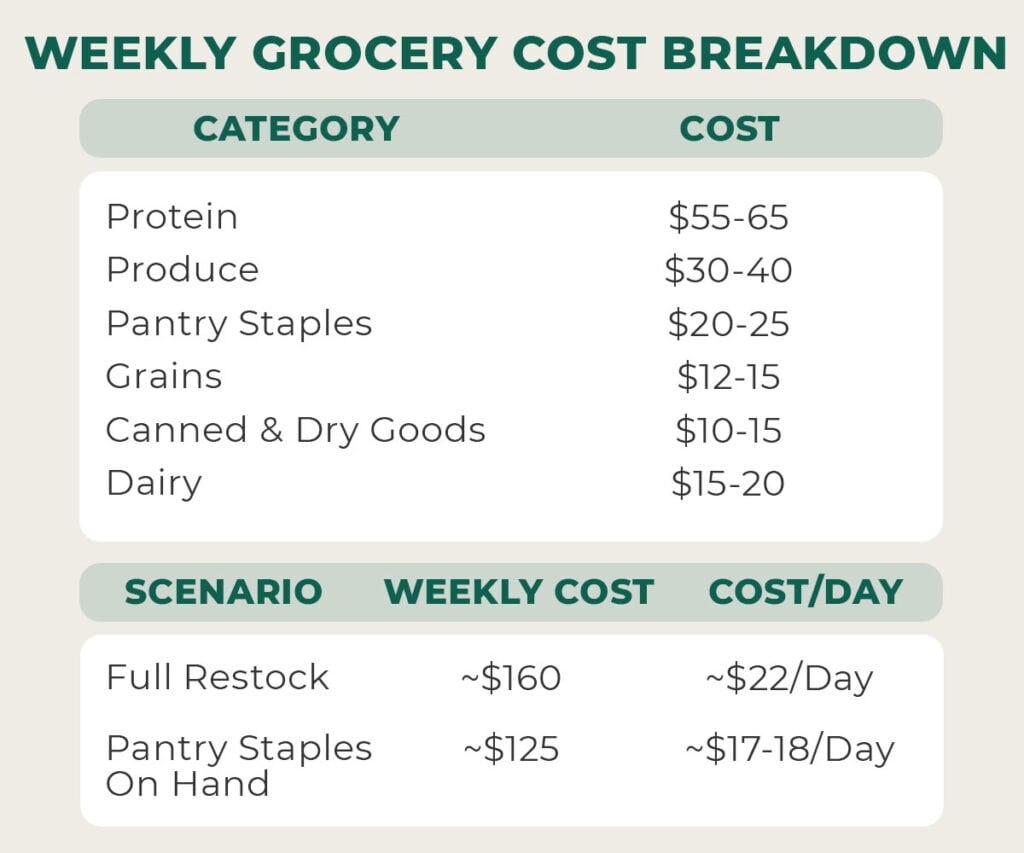
*Note: This breakdown is based on average U.S. pricing at budget-friendly stores like Aldi, Walmart, or Target. Also, pantry staples include oils, spices, condiments and seasonings. If you already have these, your grocery bill drops significantly.
For 1 Person
For 1 person, this meal plan averages $16-$23 per day, depending on whether you’re restocking pantry staples or already have basics on hand. This comes out to roughly $115-$140 per week for 3 high-protein meals plus high-protein snacks.
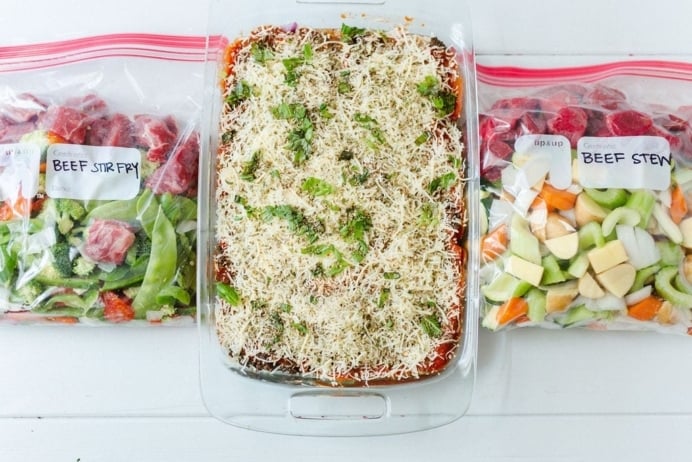
To keep this meal plan budget-friendly, I focus on buying versatile staples like rice, oats, eggs and chicken that I can use in multiple meals throughout the week so nothing goes to waste. I’ll batch cook proteins once or twice, and freeze anything I won’t use in a few days. I also stick mostly to store brands and frozen produce to keep it budget-friendly without sacrificing quality.
For a Family of 5
For a family of 5, this plan averages $11-$16 per person per day, or about $400-$475 per week for the whole family, especially when I buy proteins in bulk and cook larger batches with leftovers in mind.
When cooking for my family, I personally like sourcing high-quality meat from ButcherBox and stocking up at Costco for big tubs of Greek yogurt, eggs and grains to keep our weekly grocery bill manageable. I’m a big believer in “cook once, eat twice,” so I intentionally repurpose family meals throughout the week. I also lean on budget-friendly carbs like rice and potatoes to stretch meals while still making sure everyone feels satisfied and well-fueled.
Grocery List
Meat & Produce
Meat & Dairy
- 2 cups 2% cottage cheese
- 32 oz Greek yogurt
- Milk
- 20 eggs
- 1 lb lean ground beef
- 1 lb lean ground turkey
- 4 lbs boneless, skinless chicken thighs
- ½ cup shredded chicken
- 9 oz deli turkey
- 10 turkey sausage links
- Shredded Parmesan cheese
Produce
- 1 bag baby spinach
- 1 bag fresh kale
- 1 bag romaine lettuce
- 12 oz whole carrots
- 12 oz green beans
- 12 oz baby red potatoes
- 1 medium sweet potato
- 3 bell peppers
- 1/2 red cabbage
- 10 oz cherry tomatoes
- 5–6 mini cucumbers
- 2 avocado
- 1 small white or yellow onion
- 2–3 red onions
- 8 green onions
- Fresh chives
- 8–12 cloves garlic
- Fresh rosemary
- Fresh thyme
- Fresh ginger
- 2 limes
- 1 bag frozen berries
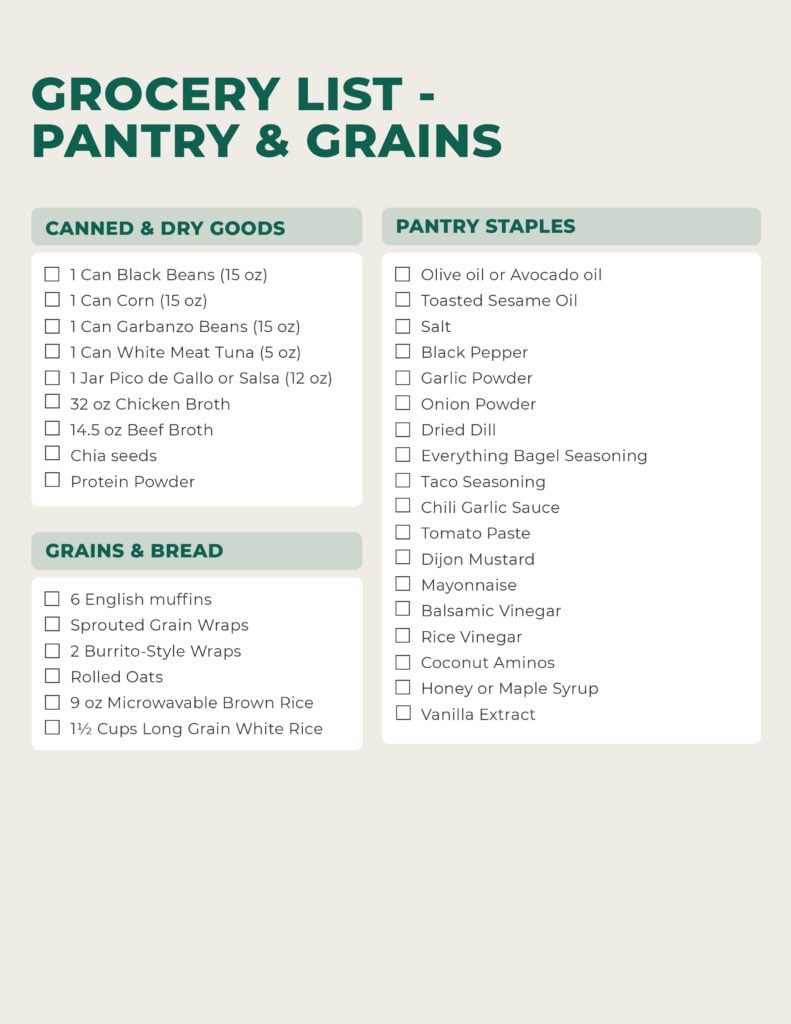
Pantry & Grains
Canned and Dry Goods
- 1 can black beans (15 oz)
- 1 can corn (15 oz)
- 1 can garbanzo beans (15 oz)
- 1 can white meat tuna (5 oz)
- Pico de gallo or salsa (12 oz)
- 32 oz chicken broth
- 14.5 oz beef broth
- Chia seeds
- Protein powder
Grain and Bread
- 6 English muffins
- Sprouted grain wraps
- 2 burrito-style tortillas
- Rolled oats
- 9 oz microwave brown rice
- 1 ½ cups long-grain white rice
Pantry Staples
- Olive oil or avocado oil
- Toasted sesame oil
- Salt
- Black pepper
- Garlic powder
- Onion powder
- Dried dill
- Everything bagel seasoning
- Taco seasoning
- Chili garlic sauce
- Tomato paste
- Dijon mustard
- Mayonnaise
- Balsamic vinegar
- Rice vinegar
- Coconut aminos or soy sauce
- Honey or maple syrup
- Vanilla extract
FAQs
Why should you use a budget meal plan?
I use a budget weekly meal plan because it takes the stress out of grocery shopping and helps me stay intentional with what I’m buying each week. Planning ahead means I’m less likely to grab random extras at the grocery store and more likely to use what I already have at home. It also helps me minimize food waste by building meals around overlapping staples.
How can you create a realistic grocery budget and stick to it?
Start by looking at your current grocery spending to set a baseline, then build a weekly plan around affordable protein sources, staple carbs and seasonal produce. I always rely on a shopping list, buy store brands and plan meals that reuse ingredients across the week to stay on track. Batch cooking and freezing extras are 2 of the biggest habits that help me stay consistent and avoid last-minute takeout.
What are the cheapest staple foods to include in a budget meal plan?
Some of the most affordable and versatile staples include eggs, oats, rice, potatoes, beans, lentils, frozen vegetables and budget-friendly proteins like chicken thighs or ground meat. These foods are versatile, filling and easy to use across breakfast, lunch and dinner.
Can you live on $200 a month for food?
Yes, living on $200 per month for food is possible, especially if you’re cooking most meals at home and relying heavily on simple staple ingredients. That said, staying on budget requires careful planning, bulk buying, relying on leftovers and being flexible with variety and convenience foods.
More Ideas and Tips
Meal PlanningPin This: Free Budget-Friendly Meal Plan (7 Days)
no comments



Leave a Comment