





How to Do Lateral Raises: Guide and Tips
In this guide, I walk you step-by-step through how to perform lateral raises with proper form, explore key variations and address common mistakes that limit results. This article is ideal for beginners building a foundation and experienced lifters who want to refine their form and get more out of every rep.
Quick Links:
How to Do a Lateral Raise
Targets: Primarily the lateral deltoids (or medial deltoids), while also engaging the anterior deltoid (front delts), posterior deltoid (rear delts), trapezius, rotator cuff and serratus anterior.
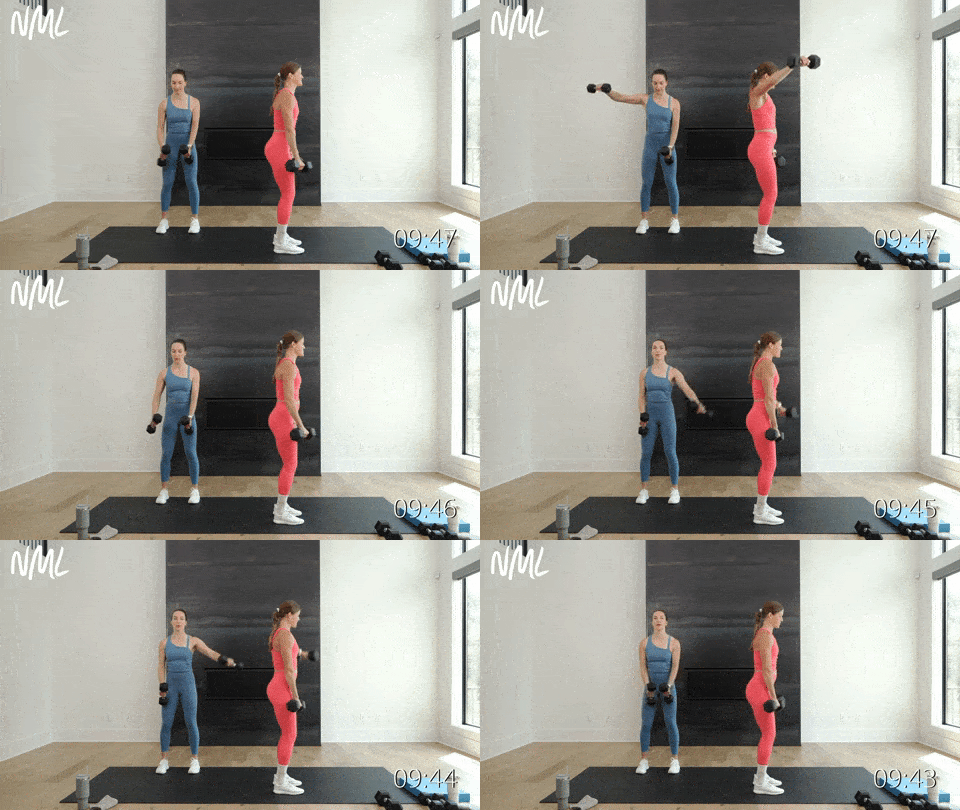
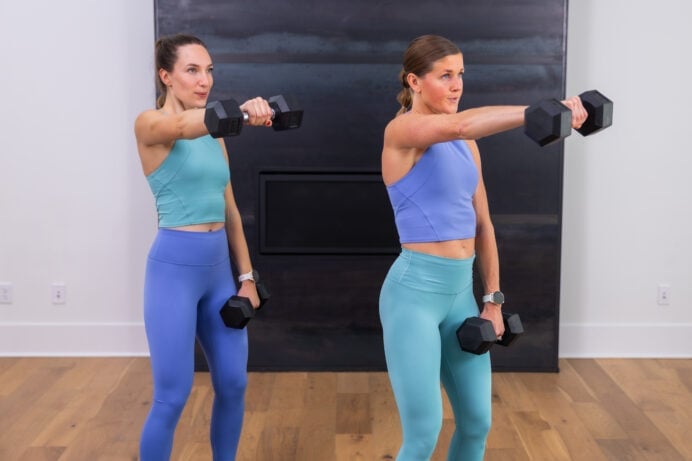
- Stand with your feet shoulder-width apart, with a slight bend in your knees. Hold a dumbbell in each hand at hip level, palms facing in towards each other.
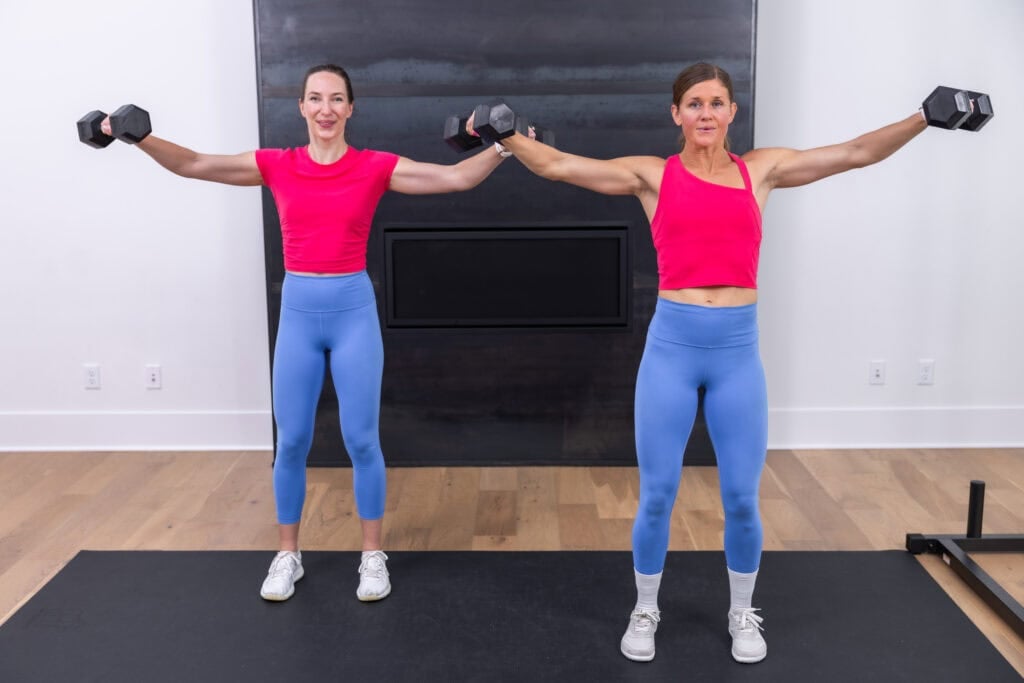
- Engage your core as you lift the dumbbell in your right hand out towards your right side, keeping a slight bend in the elbow. Lift the dumbbell just to shoulder height.
- Hold at the top of the movement for a moment, then slowly lower the dumbbell to the starting position.
- Repeat, this time performing a lateral raise with the dumbbell in your left hand.
- Note that you have the option to lift both dumbbells at the same time.
Variations and Tips
Lateral raises are one of my favorite isolation arm exercises targeting the lateral (side) deltoids. They’re great for shoulder stability and definition, though they can easily be performed incorrectly. Because the lateral delts are a relatively small muscle group, form matters more than load. My best cues are to:
- Lead With Your Elbows: Think about driving your elbows out to the sides rather than lifting the dumbbells. Your hands should follow your elbows, not the other way around.
- Keep a Soft Bend in the Elbows: Locking out your arms increases joint strain and makes the movement feel awkward. A slight bend protects the elbow and keeps tension where it belongs.
- Use Lighter Weight Than You Think: Most people go too heavy. The lateral delts respond well to moderate reps (8-15 range) with strict form and high time under tension. Ideally, you’d use light to moderate weights (likely in the 5-20 lbs range, depending on your fitness level).
Lateral raises are a great isolation exercise that you can do to build strong shoulders. While they look simple, small adjustments can change how the exercise feels and what it emphasizes. Trying different variations can also reduce joint irritation and help you continue progressing.
Lateral raise variations include:
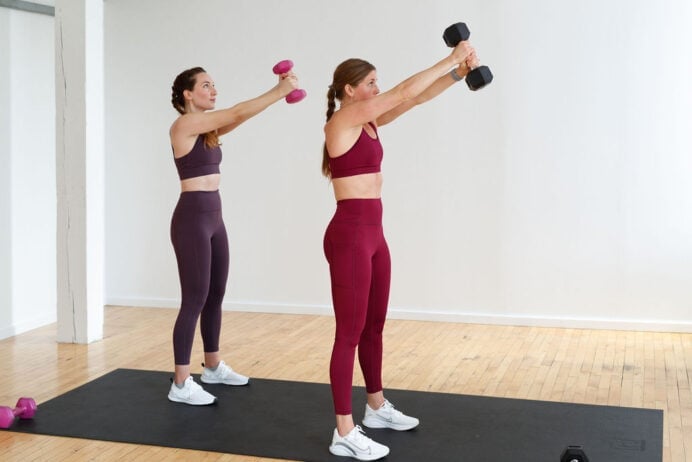
- Dumbbell lateral raises are the most accessible variation as they allow for natural arm movement and work well in hypertrophy-focused programs. These can be done standing or seated and with a pair of dumbbells. When using dumbbells, lean away from the movement to increase tension.
- Seated lateral raises remove help from the lower body, making it harder to raise the weight. This increases muscle tension and improves control.
- Cable lateral raises create constant tension because cables maintain resistance throughout the entire range of motion (especially at the bottom, where dumbbells provide minimal tension). Lean toward the cable machine to increase the range of motion. Variations include single-arm cable raises and cross-body cable raises.
- Machine lateral raises provide stability and consistent resistance, allowing you to focus on driving your elbows out without worrying about balance. They’re great for beginners or those with joint sensitivity, although you do need access to a specific machine to incorporate this variation.
Reps and Sets
I recommend including lateral raises in your shoulder workout or upper-body workout 1-2 times a week to build muscle mass and increase endurance.
Ultimately, the ideal amount of reps and sets will depend on your fitness goals. As a general guideline:
- Beginners: Aim for 2-3 sets of 8-10 reps
- Intermediate: Aim for 3-4 sets of 10-12 reps
- Advanced: Aim for 4-6 sets of 12-15 reps
Mistakes to Avoid
In order to get the most out of this exercise, it’s important to use the right amount of weight and focus on proper form. I’d recommend that you:
- Avoid Excessive Swinging: If you’re using your hips, leaning back or jerking the weight up, it’s too heavy. Lower the load and focus on control.
- Don’t Shrug the Weight Up: Keep your shoulders down and away from your ears, and don’t lift the weight past shoulder height.
- Stay in the Scapular Plane: Instead of lifting your arms directly out to 90 degrees from your torso, bring them slightly forward (about 15-30 degrees). This is more shoulder-friendly.
- Control the Eccentric: Lower the weight slowly (think about lowering down within 2-3 seconds). The lowering phase is where a lot of muscle stimulus and growth happen.
FAQs
Are lateral raises good for shoulder health and the rotator cuff?
When performed correctly, lat raises are good for both shoulder health and the rotator cuff. This exercise primarily targets the lateral (middle) deltoid muscles, but the rotator cuff muscles work in the background to stabilize the shoulder joint during the movement. Strengthening the delts helps improve shoulder stability, which can reduce injury risk over time. Dumbbell external rotations are a great way to strengthen the rotator cuff muscles.
What benefits do front lateral raises offer compared to side lateral raises?
Front raises primarily target the anterior (front) deltoid, while side lateral raises emphasize the lateral (middle) deltoid. The front delts are heavily involved in pressing movements like bench press, push-ups and overhead shoulder press. Side lateral raises train the lateral delts, which don’t receive as much direct work from pressing exercises.
Should beginners use dumbbells or cables for lateral raises?
For most beginners, dumbbell lateral raises are a good starting point. Dumbbells allow for natural arm movement, are more accessible, are easy to set up and help build basic coordination. I’d recommend that you start with light dumbbells and focus on your form. Progress slowly and add in cable work once your technique is solid.
Why You Should Incorporate Lateral Raises Into Workouts
Lateral raises may look like a simple arm day exercise, but when performed with intention and proper technique, they can be one of the most effective strength training exercises for strong, balanced and well-defined shoulders. By focusing on your form and programming them strategically, you can improve shoulder stability, enhance muscle development and reduce your risk of injury.
Focus on quality reps and keep showing up, because small improvements in exercises like this add up to big results over time.
More Workouts
Upper BodyPin This: How to Do Lateral Raises
no comments

Leave a Comment